
In this article:
- What Omakase Actually Means
- What Happens at the Counter, and How to Behave
- What Omakase Costs in Japan
- Omakase Beyond the Sushi Counter
- Omakase Meaning: Frequently Asked Questions

Introduction
The translation of “omakase” that travels abroad is often “chef’s choice.” You see it printed on boards outside restaurants in New York or London. While this translation is linguistically accurate, it is a poor description. It merely suggests a fixed set menu chosen by someone else.
In contrast, the original Japanese word embodies a relationship. You hand over a decision to another person. You do so with the trust that they know more than you do. Ultimately, you rely on them to use that expertise entirely on your behalf.
That distinction shows up the moment you sit down. There is no menu to read. Often, there are no printed prices either. The meal changes depending on what arrived at the market that morning. It also depends on how the chef reads the eight people sitting at the counter. Guests who understand this settle in quickly. Guests who expect a tasting menu with a laminated card spend the first twenty minutes looking for one.
Travelers always ask us the same three questions before booking. First, they ask what they are actually agreeing to. Second, they wonder how they should behave. Finally, they ask what the experience will cost. This article answers those, and then takes the word somewhere more useful — because omakase is not a sushi term. It is an ordinary Japanese word that sushi borrowed.

What Omakase Actually Means
Omakase is a conjugation, not a noun. Strip the polite prefix and you are left with the verb makaseru, meaning to entrust, to leave something in someone’s hands. The form you hear in a restaurant is a shortened version of a full sentence along the lines of “I will leave it to you.”
A Verb Before It Was a Menu
Japanese people use this word constantly, in contexts that have nothing to do with food. You say it to a hairdresser when you have no particular cut in mind. You say it to a colleague taking over a task. It carries a small amount of warmth and a small amount of obligation in both directions.
That two-way obligation is the part English loses. Entrusting someone is not the same as declining to choose. The chef who accepts your omakase has taken on responsibility for your evening, and the standard of care that follows is the reason the format exists at all.
Once you hear the word this way, the etiquette stops looking like a list of rules and starts looking like consequences. You do not check your phone through the meal for the same reason you do not talk through a friend’s toast.
Omakase, Okonomi, and Okimari
The word has two counterparts that rarely make it into English-language guides, and knowing them clarifies the whole system.
Okonomi means “as you like,” and it is the older way to eat at a sushi counter: you order piece by piece, in whatever order and quantity you want, and the chef makes each one to order. Okimari refers to a fixed, predetermined set — the sushi equivalent of a standard combination, usually the cheapest option on offer.
Omakase sits between them. The chef decides, as with okimari, but the sequence is built in real time rather than printed in advance. At most serious counters in Japan today, okonomi has quietly disappeared and omakase is the only format offered, which is why the word now reads like a menu category rather than a request.

Why the Word Attached Itself to Sushi
Sushi counters have always involved some degree of trust. What changed is when the word became the standard way to ask.
Several Japanese sources trace the restaurant sense of omakase to the bubble economy of the late 1980s and 1990s, when a wave of newly wealthy customers started appearing at high-end sushi restaurants without the vocabulary to order confidently. Asking the chef to decide let them eat well without having to admit they could not tell one white fish from another. Whether or not you find that origin story flattering, it explains the shape of the thing: omakase is a face-saving device that turned into a craft format.
The word is now in English dictionaries, which is its own kind of evidence. Merriam-Webster carries an entry for it.
Expert Tip
If you want to use the word correctly in the room, the phrase is “omakase de onegaishimasu” — roughly, “the omakase, please.” Saying just “omakase” is understood and slightly blunt. Attaching onegaishimasu takes one extra second and changes how the request lands, which is a reasonable return on effort for a single word.
What Happens at the Counter, and How to Behave
The physical setup does most of the work. You sit at a counter of bare wood, usually hinoki cypress, with somewhere between six and twelve seats. The chef stands on the other side, a metre away, with the fish in a refrigerated case in front of him. Nothing separates the kitchen from the room, because the counter is the kitchen.
Most omakase etiquette guides are far longer than they need to be. The rules that carry real weight are few, and they all follow from that arrangement: the counter is someone’s workspace and the food has a short window.
The Shape of the Meal
Most counters open with a short run of otsumami — small prepared dishes, often simmered, grilled, or dressed, eaten with chopsticks — before moving into nigiri. The nigiri section typically runs to ten pieces or more, served one at a time, and generally progresses from lighter white fish toward richer, fattier, and more strongly flavoured pieces. It usually closes with tamagoyaki, a slice of sweet omelette that chefs treat as a signature.
That progression is a deliberate argument about flavour, not a random assortment. Ask for the toro first and you have dismantled it.
The whole thing runs ninety minutes to two hours at most counters, and many run two seatings an evening, which is why arrival times are firm.
The Ten-Second Rule
When the chef sets a piece down in front of you, eat it. Not after you photograph it, not after you finish your sentence — within a few seconds.
Nigiri is assembled to be eaten at a specific moment. The rice is at body temperature, the fish is cooler, and the contrast between the two is a large part of what you paid for. Both drift within a minute. Chefs time each piece to the pace of the person in front of them, and a guest who lets three pieces stack up is quietly rewriting the meal.
Eat it in one bite. The piece is built as a single unit and biting it in half collapses the rice.
Talking to the Chef
Some chefs are talkative, some work almost silently, and neither is a judgement of you. Questions about the fish are always welcome — where it came from, why it is good this month, how it was aged. Questions about what things cost, or comparisons to another restaurant you ate at last night, are not.
With a Japanese-speaking guide the conversation opens up considerably, and in our experience that is where the evening turns. A chef explaining why the kohada is worth three days of work is a different meal from eating the kohada.

What to Settle Before You Book
Allergies, strong dislikes, and anything you cannot eat go in at the reservation stage, not at the table. Omakase counters buy for the exact number of seats they have sold, so a substitution requested on the night may be impossible rather than merely awkward.
Be specific and be honest about the difference between an allergy and a preference. A chef can work around either, given notice, but they will handle them differently.
Arrive on time, or five minutes early. Late arrivals at a two-seating counter do not shift the meal — they shorten it.
What You Bring to the Counter
Leave the counter itself clear. Phones, keys, bags, and cameras go on your lap, in the basket provided, or on the shelf under the seat. The surface belongs to the chef.
Skip the perfume or cologne that evening. The room is small and the aromas are delicate, and this is the single request chefs mention most often when asked what guests get wrong.
Dress smart casual unless the restaurant says otherwise. Japan is not formal about this, but the neighbouring seats are close enough that effort is noticed. Our broader guide to cultural taboos and dining rules in Japan covers the wider ground if you want it.
Soy Sauce, Ginger, and Your Hands
At most good counters the chef has already brushed each piece with nikiri, a seasoned soy glaze, and no soy dish appears at all. If one does, dip the fish side rather than the rice. Rice dipped in soy sauce falls apart and floods the flavour the chef balanced.
Gari, the pickled ginger, is a palate cleanser between pieces, not a topping.
Use your fingers if you prefer. Eating nigiri by hand is entirely normal at a sushi counter and slightly easier than chopsticks for a piece that wants to be handled gently. A damp cloth for your hands is provided for exactly this reason.
Paying, and Why You Do Not Tip
Tipping is not practised in Japan, and an omakase counter is not an exception. Leaving cash on the counter creates a small problem for staff who now have to decide what to do with it.
Confirm before booking whether tax and any service charge are included in the quoted price, and whether the restaurant takes cards. Both vary. The correct way to express appreciation is to say gochisousama deshita on the way out — the standard phrase at the end of a meal, and one that lands well at a counter where you have just watched someone work for two hours. If ordering in Japanese is new to you, our guide to ordering food in Japan from entering to paying goes through the rest of the sequence.
What Omakase Costs in Japan
Prices span a wider range than most visitors expect, and the top of the range is not where we would start.

The Price Bands
Broadly, Tokyo omakase sorts into three tiers. Casual counters and lunch courses commonly sit in the several-thousand-yen range. Serious mid-range counters generally run around fifteen to thirty thousand yen per person for dinner. The internationally famous names go well beyond that.
Lunch is the structural bargain. Many counters serve a shortened version of the same course at a meaningful discount, with the same chef and the same fish, and for a first omakase we think the shorter format is easier to absorb anyway.
Prices move, so treat these as bands rather than quotes, and confirm at booking.
Booking Lead Times
Mid-range counters typically want weeks of notice. The celebrated ones want months, and several take reservations only through a hotel concierge or an existing customer — which is a version of the same trust structure the word itself describes.
Most restaurants now hold a credit card against the booking and charge for late cancellation. Read that policy before you commit, particularly if your itinerary is still moving.
Where We Send First-Timers
A mid-range counter with an English-comfortable chef beats a famous one where you understand nothing that is said to you. The experience is largely conversational, and a meal you cannot follow is an expensive photograph.
We would also rather a traveler ate two mid-range omakase meals than one legendary one. The second counter is where you start noticing the differences, and noticing the differences is the whole point. For counter recommendations by neighbourhood, our guide to Tokyo omakase dining and booking high-end sushi goes into specifics.
Expert Tip
Book your omakase for the second or third night of the trip rather than the first. Jet lag from Europe or North America tends to peak in the evening on arrival day, and a two-hour meal built on attention is the wrong thing to attempt while fighting sleep. The reservation is also the least flexible thing in a Japan itinerary, so build the rest of the week around it rather than the other way round.
Omakase Beyond the Sushi Counter
Treating omakase as a sushi word is the mistake that keeps travelers from recognising it everywhere else. The structure — you entrust, a professional decides, the season supplies the constraint — runs through a large part of how Japan feeds people.
Kaiseki and the Ryotei Version
Kaiseki, the multi-course format served at ryotei and traditional inns, is the same principle at a different scale. You do not order. The courses arrive in a set sequence determined by the season and the house, and the only decision you made was choosing where to eat.
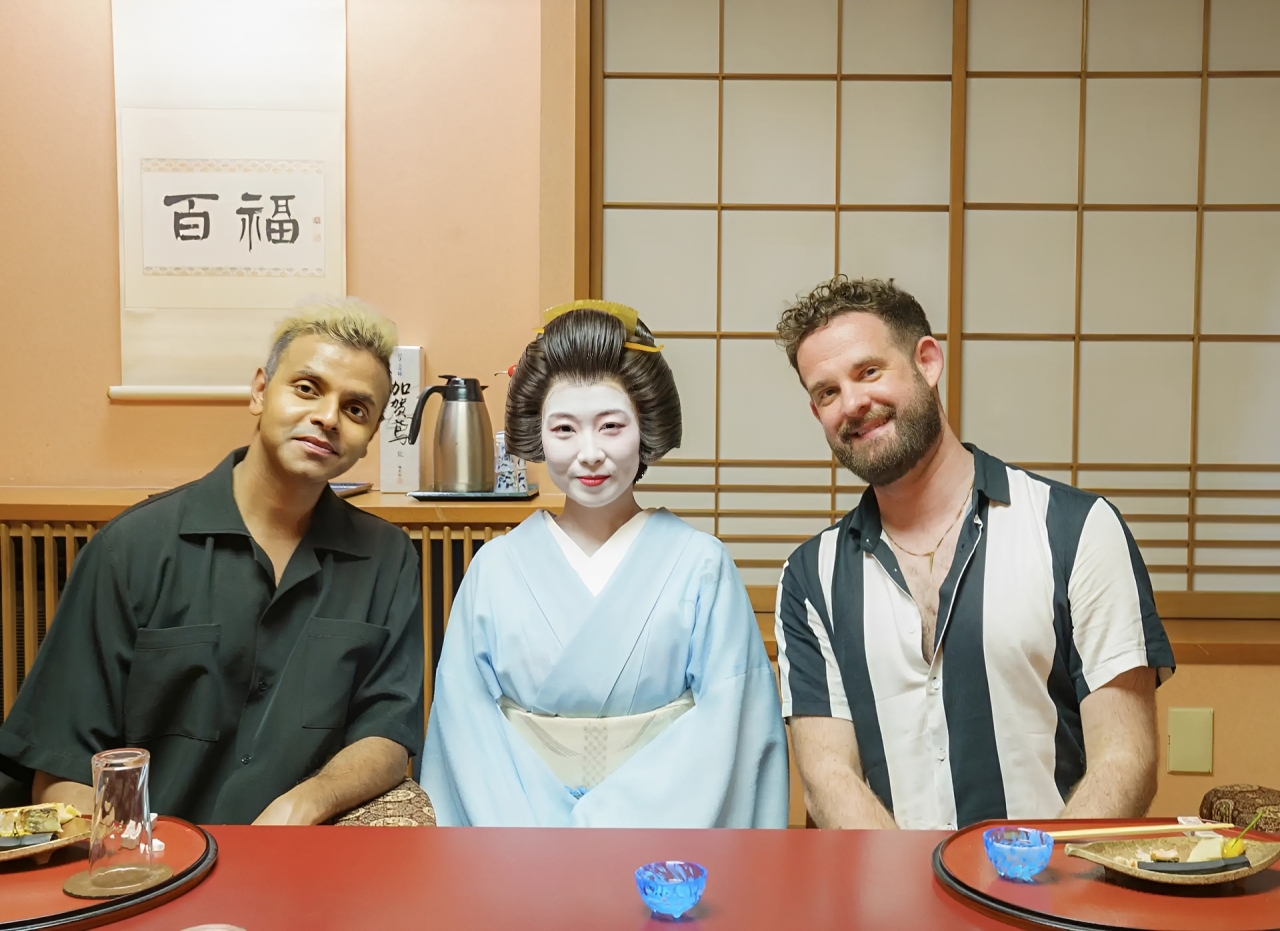
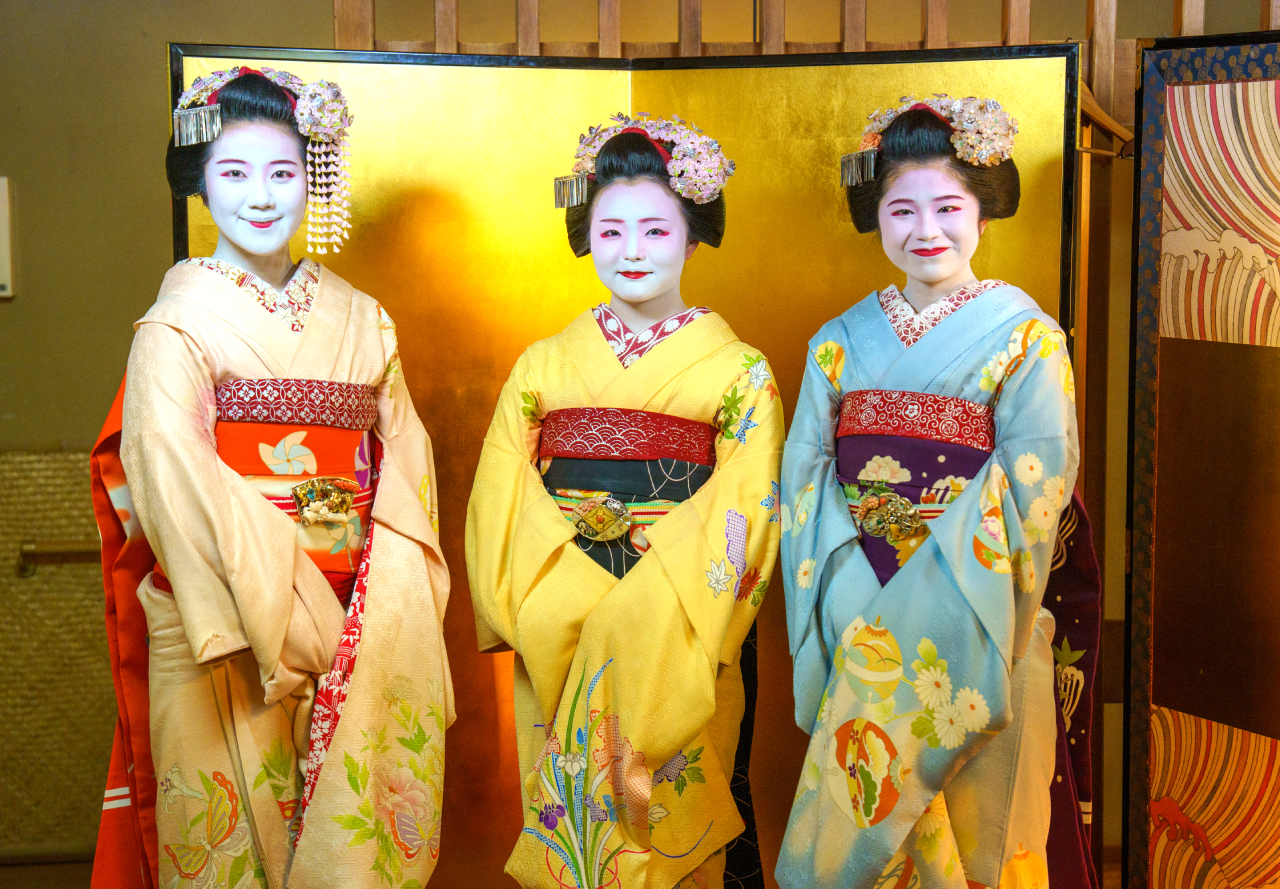
The ryotei version adds a layer that surprises people. On our private geisha dinner in Kagurazaka, a three-hour evening at a members-only ryotei, the kaiseki arrives course by course while a geisha performs and talks with you, with a certified guide interpreting. Nobody at the table chose a single dish. Kagurazaka is Tokyo’s own geisha quarter rather than Kyoto’s, and most visitors do not know the city still has one.
Tempura, Yakitori, and the Market Stall Version
Tempura counters and yakitori counters run on identical logic: you sit, the chef cooks in sequence, and you eat each piece as it lands. Tempura in particular is unforgiving about timing — the batter softens within a minute.
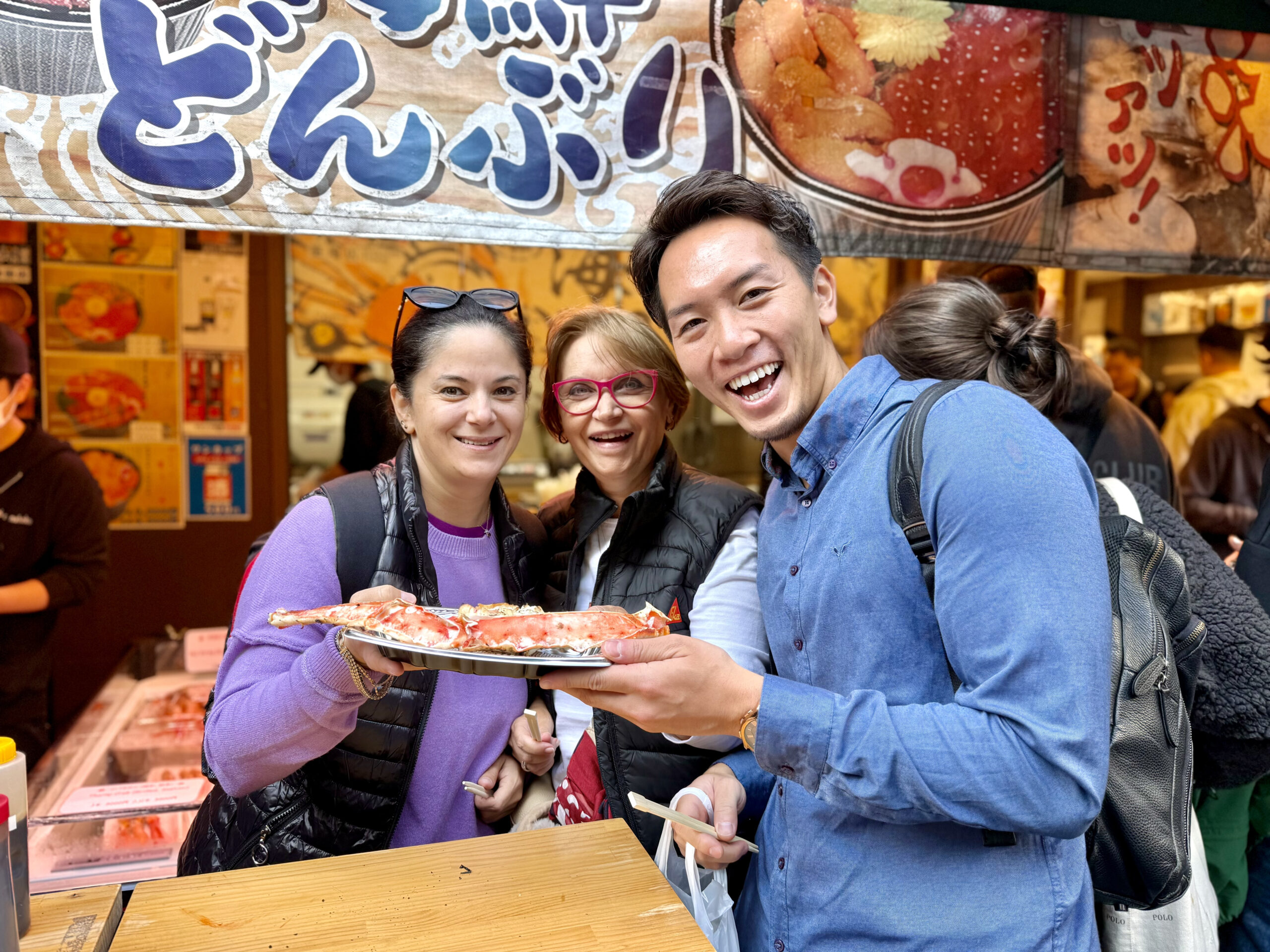
The informal end of this is a market stall, and it may be the best place to feel how the trust actually works. On our Tsukiji fish market street food tour, a two-hour walk through the outer market from around 6,000 yen, most of the eating happens standing up at counters where the guide asks what is good today and orders accordingly. The inner market moved to Toyosu, but the outer market stayed, and the family-run stalls there still supply a good part of Tokyo’s kitchens. If you want to know what to look for on your own, we have a full guide to eating at Tsukiji Outer Market.
The Word in Daily Life
Outside restaurants entirely, omakase turns up in hair salons, in bars where you describe a mood and let the bartender build something, and in subscription services that send you clothes chosen by a stylist you have never met. Fukubukuro, the sealed New Year mystery bags that Japanese department stores sell each January, are the same instinct in retail form.
None of that is a metaphor for the sushi counter. The sushi counter is one instance of it.

Omakase Meaning: Frequently Asked Questions
Does omakase always mean sushi?
No. Omakase means leaving the choice to the chef, and it is used at tempura, yakitori, kaiseki, and soba restaurants as well as sushi counters. Outside food it appears in hair salons, bars, and retail services. Sushi is where English-speaking travelers encounter the word most often, which is why it has come to sound like a sushi term abroad.
Can I tell the chef what I do not eat?
Yes, and you should — at the reservation, not at the counter. Restaurants buy their fish for the exact number of seats they have sold, so a request made in advance can be designed around and a request made on the night often cannot. Distinguish clearly between an allergy and a dislike, since a kitchen treats the two differently. Counters with a very short set course may decline bookings with strict dietary requirements altogether, which is better to discover at the booking stage.
How do I actually order omakase in Japanese?
Say “omakase de onegaishimasu.” That is the standard phrasing and it works at any counter. At most high-end restaurants in Japan today there is nothing else to order, so the sentence functions more as a greeting than a choice. At the end of the meal, gochisousama deshita is the phrase to leave on.
Related Tours
Conclusion
Reading omakase as “chef’s choice” sets the wrong expectation, because it frames the meal as something being withheld from you. The Japanese word frames it as something being handed over. You gave up the menu and received, in exchange, two hours of a specialist’s judgement about fish you would not have known to order.
Practically, that means the work happens before you arrive. Tell the restaurant what you cannot eat while you are still booking. Turn up on time, leave the counter clear, and eat each piece as it appears. Everything after that is the chef’s responsibility, which is the arrangement you agreed to when you said the word.
If Japan is still being planned, put the omakase reservation in first and build the days around it. It is the hardest thing in the itinerary to move, and the one most likely to be the meal people describe when they get home.
Plan Your Japan Trip with Local Experts
Our team has guided 40,000+ travelers across Japan. Tell us about your trip and we’ll get back to you within 24 hours.