

In this article:
- What Makes an Osaka Izakaya Different
- Osaka Izakaya Streets: Four Neighborhoods Worth the Evening
- What to Order in an Osaka Izakaya
- How the Night Actually Works
- Osaka Izakaya: Frequently Asked Questions

Introduction
Most visitors looking for an Osaka izakaya end up on Dotonbori, photograph the Glico sign, and eat at whichever place has the largest plastic crab. That is a fine first hour. It is not where Osaka drinks.
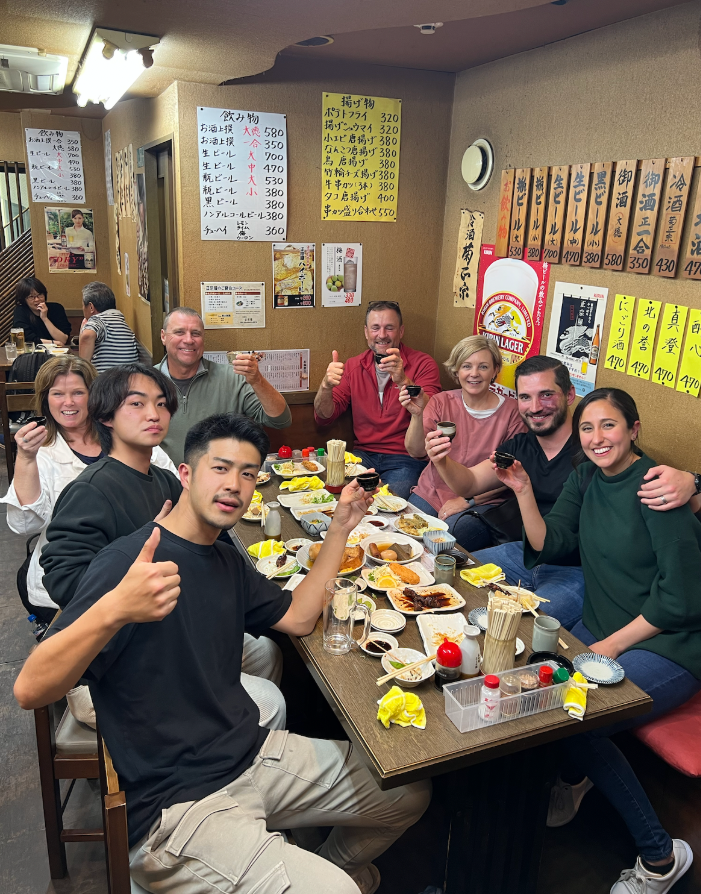
The city’s real drinking happens one or two blocks away, in lanes that look closed from the main street until you turn into them. A counter for eight people, a menu written on strips of paper taped to the wall, a cook who has been grilling the same chicken skewers since the 1990s. Half the customers are standing. Nobody is in a hurry, and somebody will probably ask where you are from.
We walk travelers through these streets most evenings, and the pattern is consistent: the people who enjoy Osaka most are the ones who stop treating the izakaya as a restaurant and start treating it as the city’s living room. What follows is how to find the right rooms, what to order in them, and the handful of rules that are worth knowing before you sit down.

What Makes an Osaka Izakaya Different
An izakaya anywhere in Japan is a place to drink with food, rather than a place to eat with drinks. Osaka pushes that formula further than any city we know. If the general idea is new to you, our guide to how Japanese izakayas work covers the basics; this article is about what changes once you are in Osaka.
Cheaper, Louder, and Built Around Food
Osaka has called itself the city of kuidaore, eating until you drop, for generations, and its izakayas reflect that. Portions are larger than in Tokyo, prices are lower, and the food is the point rather than an accompaniment.
The volume is different too. Tokyo izakayas can be quiet, almost formal, with groups keeping to their own table. In Osaka the counter becomes a conversation. That said, it is not a performance put on for visitors. It is how the city talks.
Tachinomi: The Standing Bar as the Default
A tachinomi is a standing bar, and in Osaka it is the default format rather than a novelty. No chairs means faster turnover, lower prices, and a room where strangers end up shoulder to shoulder.
Osaka’s tourism bureau notes that the standing bars of Uranamba, once the territory of older men after work, now draw younger crowds and women. In our experience that is accurate. On a weekday evening you will see office workers, couples on a date, and a retired man who has clearly had the same seat for twenty years, all at the same counter.
Standing is less tiring than it sounds. Most people stay forty minutes, have two drinks and three dishes, and move on.
Hashigo-zake: One Night, Several Rooms
Hashigo-zake means ladder drinking: one rung, then the next. Visiting a single izakaya for an entire evening is perfectly normal in Japan, but in Osaka the evening is more often a sequence. A skewer place, then a seafood counter, then somewhere for one last highball.
We recommend planning for three stops rather than one long dinner. The neighborhoods below are dense enough that the next room is rarely more than a two-minute walk away.

Osaka Izakaya Streets: Four Neighborhoods Worth the Evening
The phrase “Osaka izakaya street” gets searched a lot, and the honest answer is that there is no single street. There are districts, each with a different character, and choosing the right one matters more than choosing the right restaurant.
Uranamba: The Lanes Behind Namba
Uranamba, literally “the back of Namba”, is the grid of lanes running between Sennichimae and Nansan-dori, with Kuromon Market to the east. According to the Osaka Convention and Tourism Bureau, the name was coined by the shop owners themselves, and the area has been a bar-hopping destination since around 2010, with more than one hundred restaurants.
Many of those places are run by younger owners, and the food reflects it: yakitori, natural wine, oden, and small Western-leaning plates sit side by side. This is where we would send a first-time visitor who wants the local experience without the oldest, most closed-feeling rooms. Our longer guide to Ura Namba goes street by street.
Hozenji Yokocho: Stone Paving and Old Counters
Two narrow stone-paved alleys a minute from Dotonbori lead to Hozenji, a small temple whose statue of Fudo Myoo is covered in thick green moss. Visitors ladle water over the figure as they make a wish, and decades of that habit have grown the moss.
The alley around it is older and more settled than Uranamba: okonomiyaki, kushikatsu, and long-running izakayas behind wooden fronts. Come after dark, when the lanterns are on and the temple is quiet. It is the calmest few minutes you will spend in Minami.

Tenma: The Alleys Off Japan’s Longest Shopping Street
Tenma sits on the north side of the city around JR Tenma Station on the Osaka Loop Line. Tenjinbashisuji, a covered shopping arcade of about 2.6 kilometres usually described as the longest in Japan, runs past it.
The izakayas are not on the arcade itself but in the maze of alleys around the station. Rooms here are smaller, cheaper, and older than in Minami, and far fewer visitors find them. If you want the most local evening in the city and do not mind a menu with no English, Tenma is where we would go.
Shinsekai and Kyobashi: Kushikatsu and Daytime Drinking
Shinsekai, in the south below Tsutenkaku Tower, is the home of kushikatsu and a district that feels frozen somewhere in the mid-twentieth century. It is touristy now, but the skewer counters are still worth an hour.
Kyobashi, on the east side, is known for drinking that starts early. Its best-known spot is Izakaya Toyo, a mostly outdoor seafood standing bar that queues before it opens and closes in the early evening. Check its current days before going; they are limited.
Expert Tip
Arrive in Uranamba or Tenma between 5pm and 6:30pm on a weekday. The small counters fill fast after 7pm, and once a room of eight is full, there is no waiting list — you move on. Early arrival also means the cook has time to explain the menu rather than shouting over a full house.
What to Order in an Osaka Izakaya
Order small and often. The worst mistake we see is a table ordering six dishes at once in the first five minutes, then sitting with cold food. Two or three plates, a round of drinks, then look around and see what the people next to you are eating.

Kushikatsu and the Sauce Rule
Kushikatsu is meat, seafood, or vegetables on a skewer, breaded and deep-fried. Pork, prawn, lotus root, quail egg, and cheese are standard. It arrives in batches, and you dip each skewer into a shared metal tray of thin, dark sauce.
That tray is where the one rule lives: dip once, and never put a bitten skewer back in. Signs in English at many Shinsekai counters spell it out. If you want more sauce on a half-eaten skewer, use a leaf of the free raw cabbage to scoop some up and drip it on.
Doteyaki, Yakitori, and the Counter Classics
Doteyaki is beef sinew slow-cooked in a sweet miso until it falls apart, often served alongside kushikatsu. It is the dish we most often see visitors hesitate over and then reorder. Yakitori, karaage, and simple sashimi plates fill out most menus.
Beyond that, look for the dishes written by hand on the wall. These are the day’s specials, and in a small izakaya they are usually the best thing in the room. If you cannot read them, point and ask “osusume?”, meaning “what do you recommend?” — almost every cook will answer.
Highballs, Lemon Sours, and Sake
The highball, whisky and soda over ice, is the default drink in Osaka bars, often more popular than beer after the first round. Lemon sours, shochu with soda and lemon, are a close second and lighter.
Sake is everywhere, though small standing bars tend to keep a short list. If you want to go further, our Osaka food guide covers where the city eats beyond the izakaya.

How the Night Actually Works
Three practical details cause more confusion than anything on the menu. None of them is complicated once you know.
Otoshi, the Charge You Did Not Order
In many izakayas a small dish appears in front of you shortly after you sit down. This is otoshi, a cover charge in the form of food, and it appears on the bill whether you eat it or not. It is usually a few hundred yen.
It is not a scam, and querying it will only embarrass you. Standing bars often skip it, which is one more reason they are cheaper.
Cash, Bills, and Budget
Small izakayas in Osaka are still largely cash-only. Some standing bars take payment as each drink arrives; others keep a tally and settle at the end. Either way, carry notes rather than relying on a card.
Budget depends on how many stops you make. On our evening walks through Uranamba and Namba we tell guests to bring around ¥7,000 per person for food and drink across two venues, and that is generous by Tokyo standards. Tipping is not expected.
Smoking Rules After April 2025
Osaka Prefecture’s passive smoking ordinance came fully into force in April 2025. Restaurants with a customer area larger than 30 square metres are now non-smoking indoors, apart from designated smoking rooms.
However, many izakayas and standing bars are smaller than that, and those can still choose to allow smoking. Most of the rooms in Uranamba and Tenma are exactly that size. If smoke is a problem for you, check the sign at the entrance before you go in, and favour larger, newer places.
Expert Tip
When you leave a small izakaya, say “gochisousama deshita” to the cook on your way out. It means, roughly, “thank you for the meal”, and in a room of eight it is noticed. Of every Japanese phrase we teach guests in Osaka, it is the one that most often gets a smile back.
Osaka Izakaya: Frequently Asked Questions
Do I need to speak Japanese to go to an izakaya in Osaka?
No, although it changes which rooms work for you. Larger izakayas in Namba and Umeda usually have picture or English menus. The smaller counters in Tenma and parts of Uranamba often do not, and that is where pointing, a translation app, or a guide makes the difference between ordering safely and ordering well.
Is it rude to visit an izakaya and only have one drink?
Not in Osaka. Hashigo-zake is built on short stays, and at standing bars especially, one drink and a plate is a normal visit. Order at least one food item and one drink per person, settle up, and move on.
Can I go to an Osaka izakaya if I don’t drink alcohol?
Yes. Every izakaya serves oolong tea and soft drinks, and most now stock non-alcoholic beer. Strict dietary requirements are harder: dashi, meat stock, and shared fryers are everywhere, so vegans and travelers with severe allergies should plan ahead rather than walk in.
Related Tours

Conclusion
Pick a neighborhood before you pick a restaurant. Uranamba for a first night, Hozenji Yokocho for an older and quieter room, Tenma when you want to be the only visitor at the counter. Each rewards a different kind of evening, and none of them requires a reservation.
Then go early, carry cash, and order in small rounds. The best Osaka izakaya is rarely the one you planned to visit. It is the second or third room, the one you found because the first one was full, where the cook hands you something you did not order and waits to see what you think.
Plan Your Japan Trip with Local Experts
Our team has guided 40,000+ travelers across Japan. Tell us about your trip and we’ll get back to you within 24 hours.