In this article:
- Kanazawa’s Iconic Historic Landmarks
- Tea Districts and the Art of Gold Leaf
- Modern Masterpieces and Fresh Market Flavors
- Kanazawa’s Savory Local Cooking
- Getting to and Around Kanazawa
- Exploring Kanazawa: Frequently Asked Questions
Kanazawa’s Iconic Historic Landmarks
Kanazawa grew rich under the Maeda clan, the second most powerful feudal family in Japan, and unlike most of the country it came through the last war unbombed. The result is a city where the feudal layout, gardens, and districts survive intact. Start with its three great historic sights, all clustered together at the centre.
Kenrokuen Garden
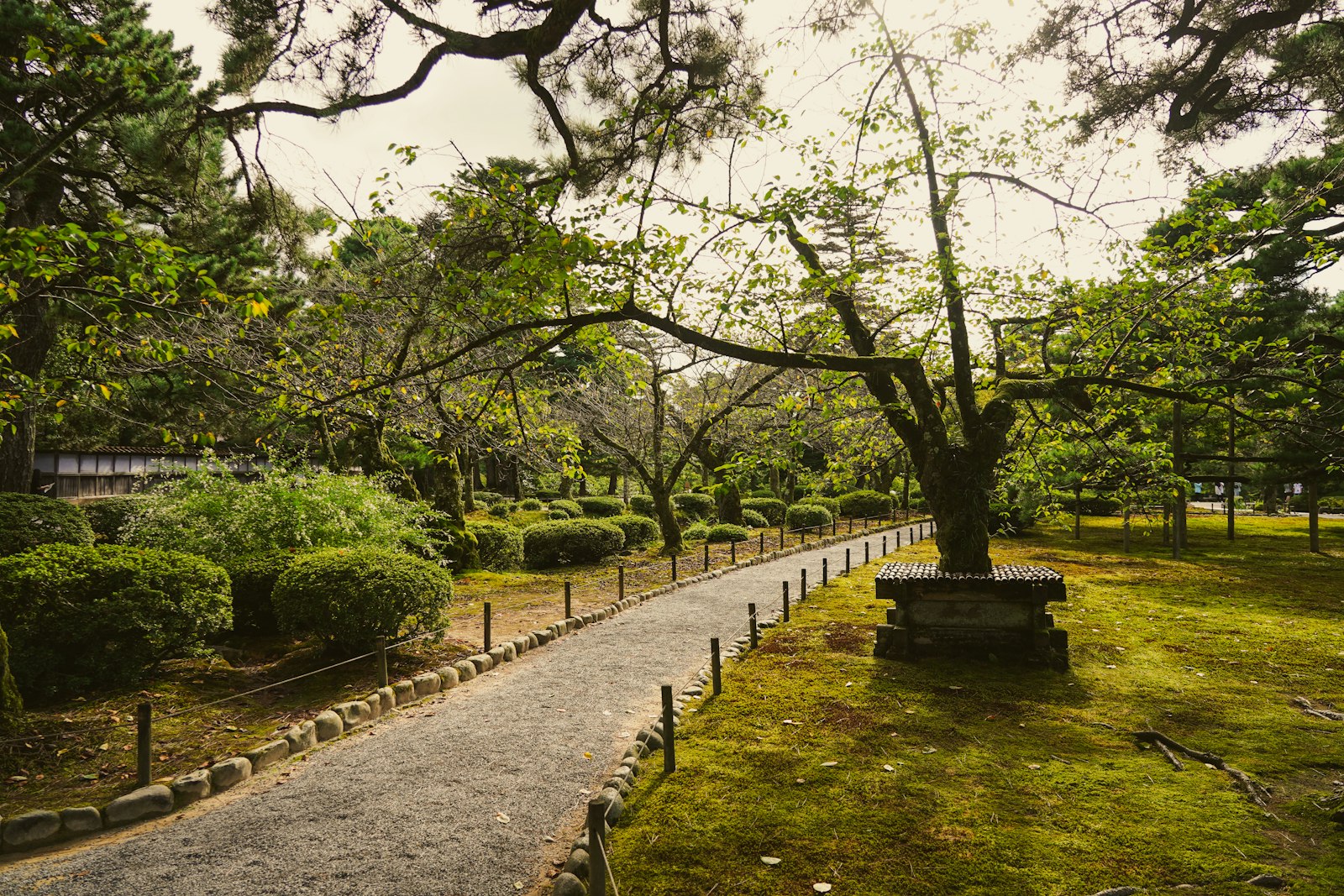
Kenrokuen is routinely ranked among the three finest landscape gardens in Japan, and it earns the place. Its name means “garden of six attributes,” the qualities a perfect garden should combine, and across its grounds you move through ponds, streams, teahouses, and the famous two-legged Kotoji stone lantern that has become the city’s emblem. It is beautiful in every season — plum and cherry in spring, maples in autumn, and elaborate rope supports protecting the pines under winter snow. Go at opening to have it near-empty.
Kanazawa Castle Park
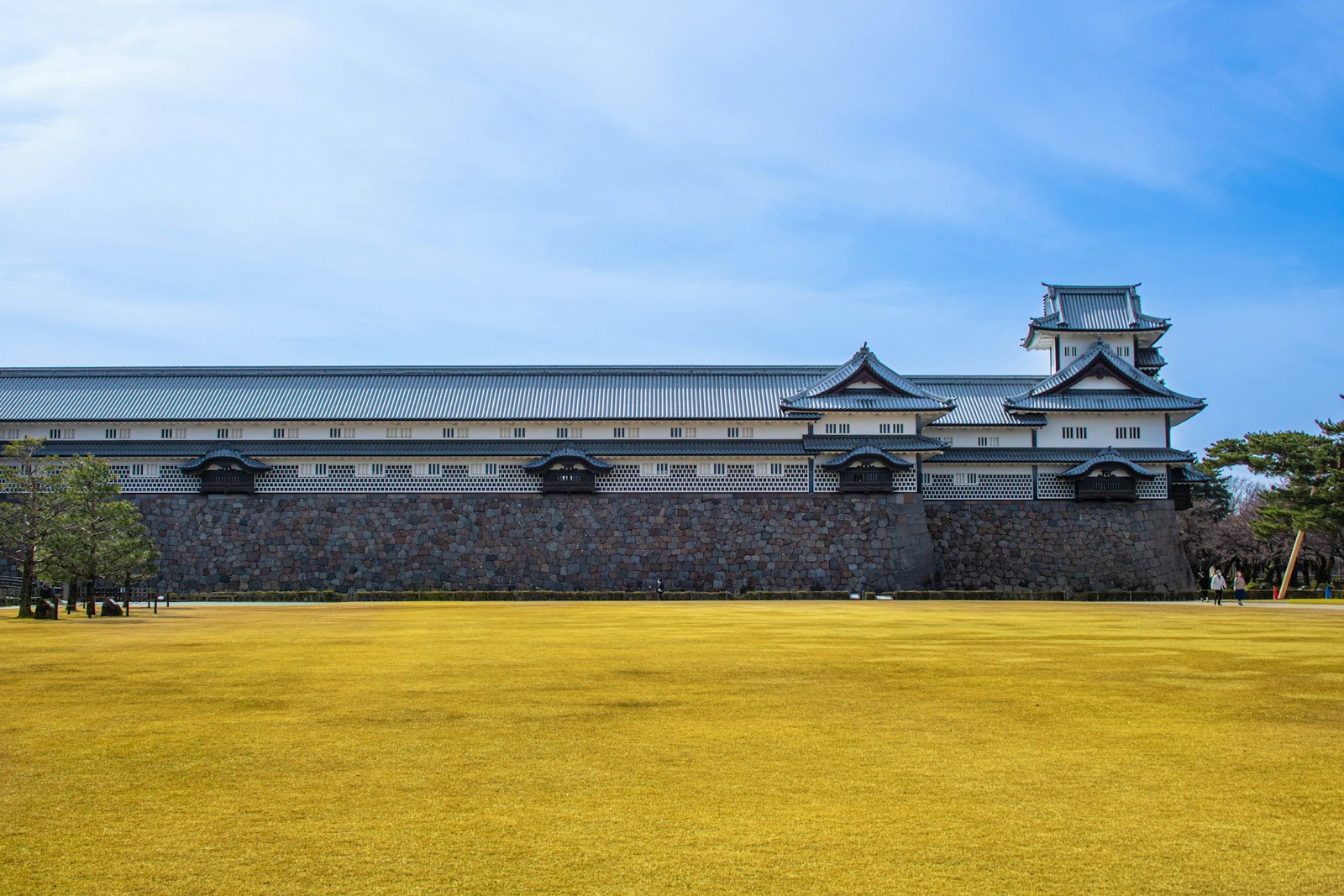
Beside the garden stands Kanazawa Castle, the Maeda seat, much of it reconstructed using traditional joinery after fires over the centuries. The restored turrets and the long, white-walled Hishi Yagura, with its distinctive lead roof tiles, are handsome, and the grounds are broad and uncrowded. It makes a natural pairing with Kenrokuen, connected by a bridge, and together the two fill an easy morning.
Nagamachi Samurai District
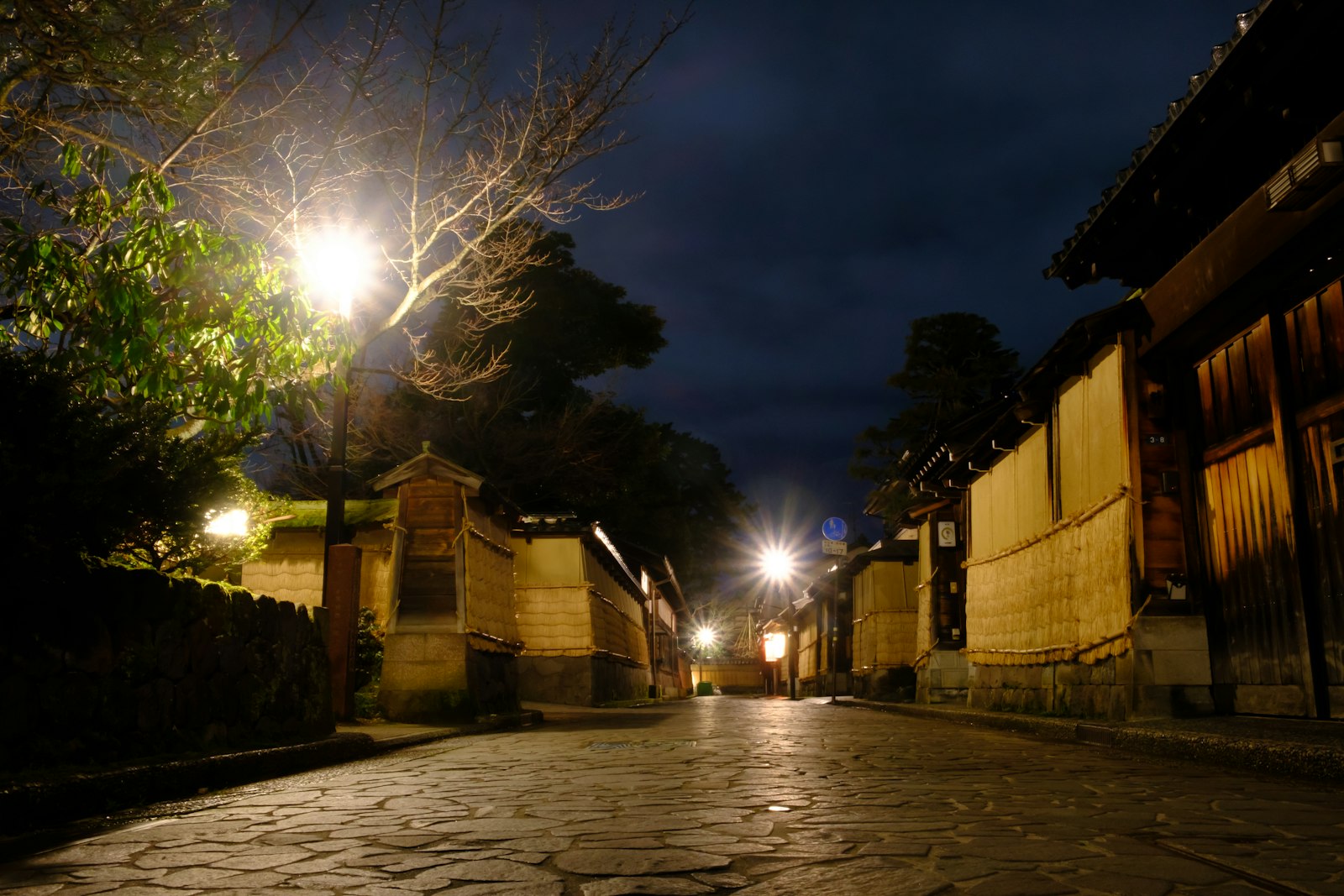
The Nagamachi district preserves the earthen-walled lanes where Kanazawa’s samurai once lived, and walking it is the closest the city comes to a feudal film set — narrow streets, mud-and-tile walls, and a small canal. Step inside the restored Nomura samurai house to see how a mid-ranking warrior family lived, with its jewel-box garden viewed from tatami rooms. It is quiet, atmospheric, and best in the early morning light.
Tea Districts and the Art of Gold Leaf
Kanazawa’s other great inheritance is craft — a geisha culture that still operates, and the gold leaf trade that made the city famous. Both come together in its preserved teahouse districts.
Higashi Chaya District
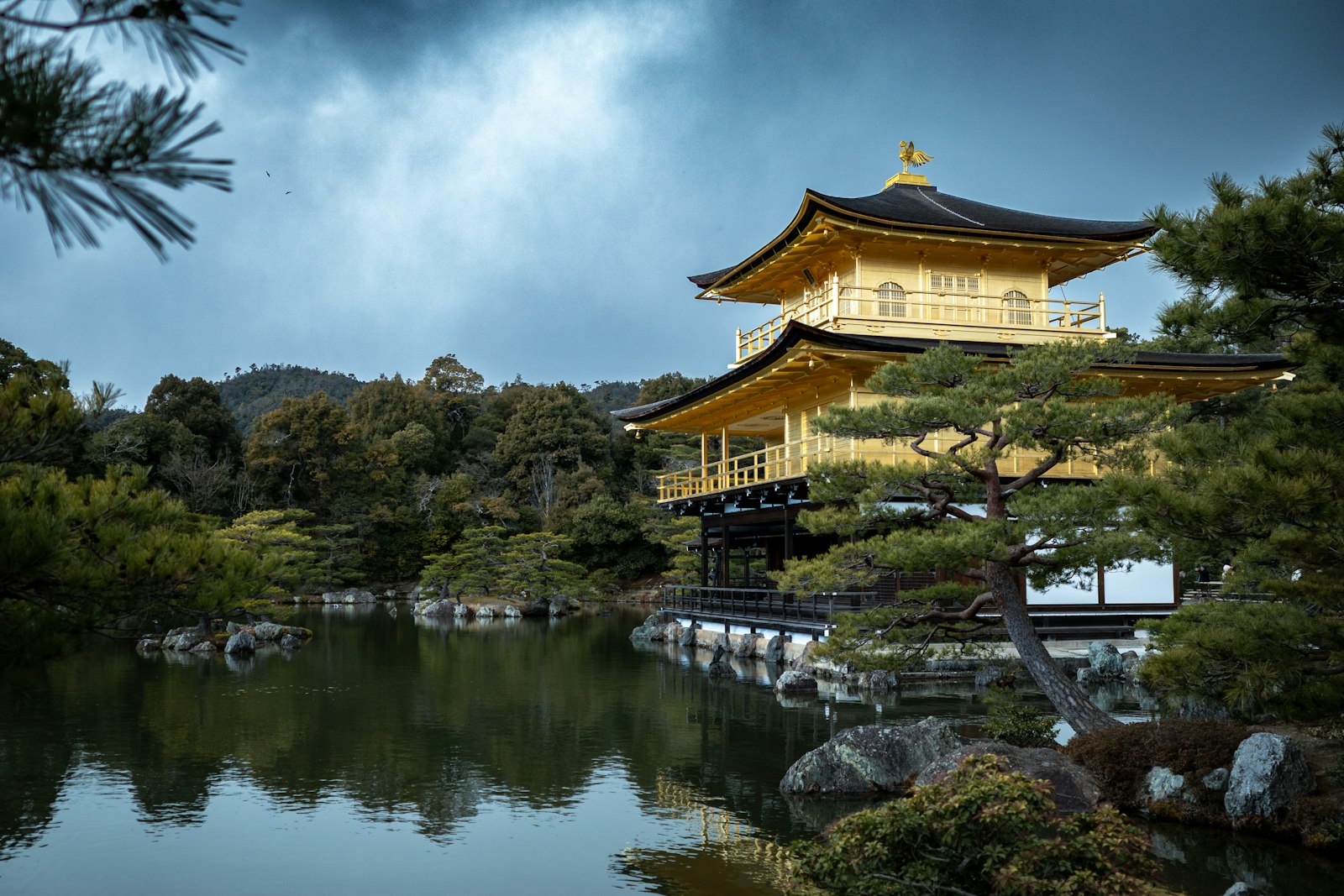
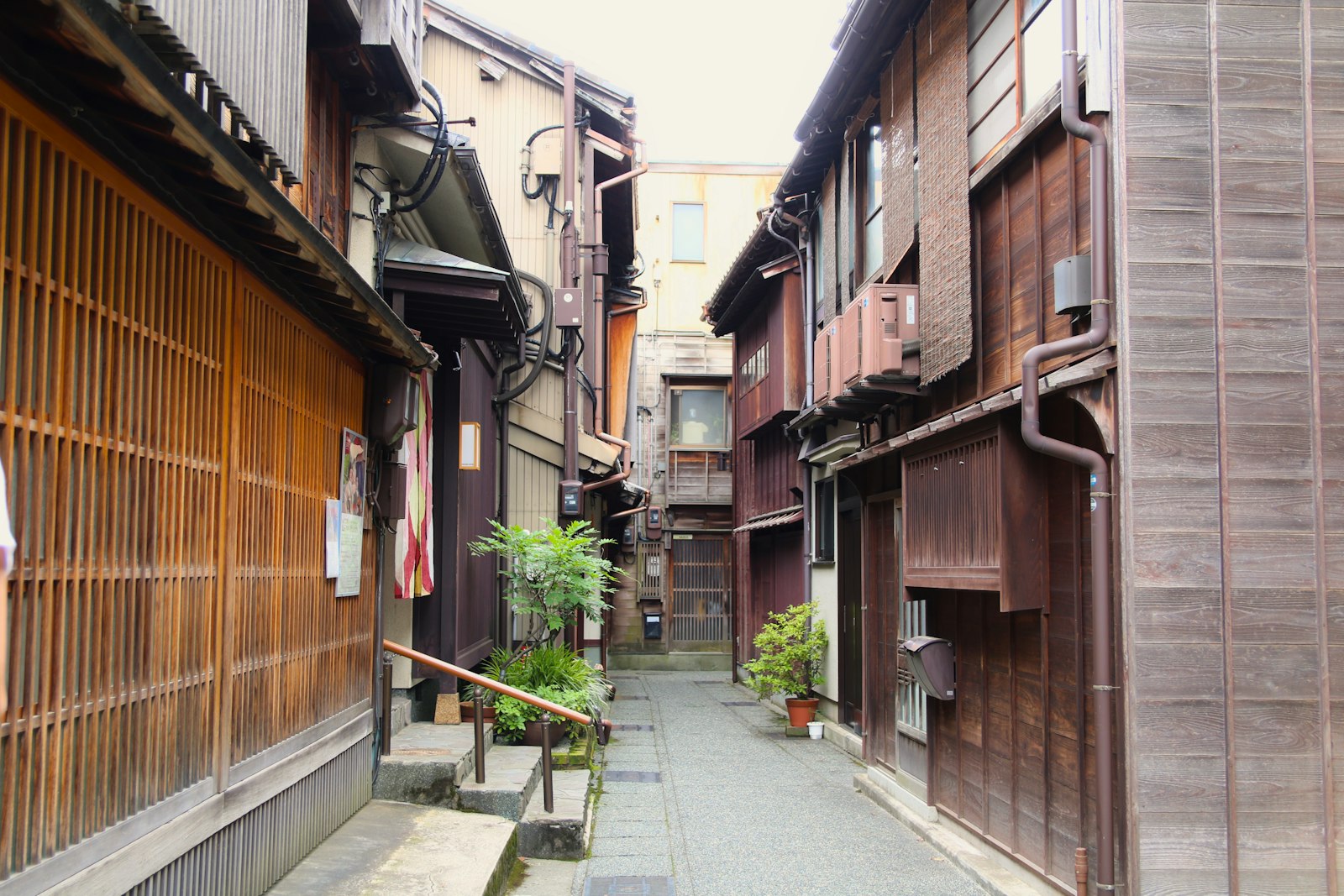
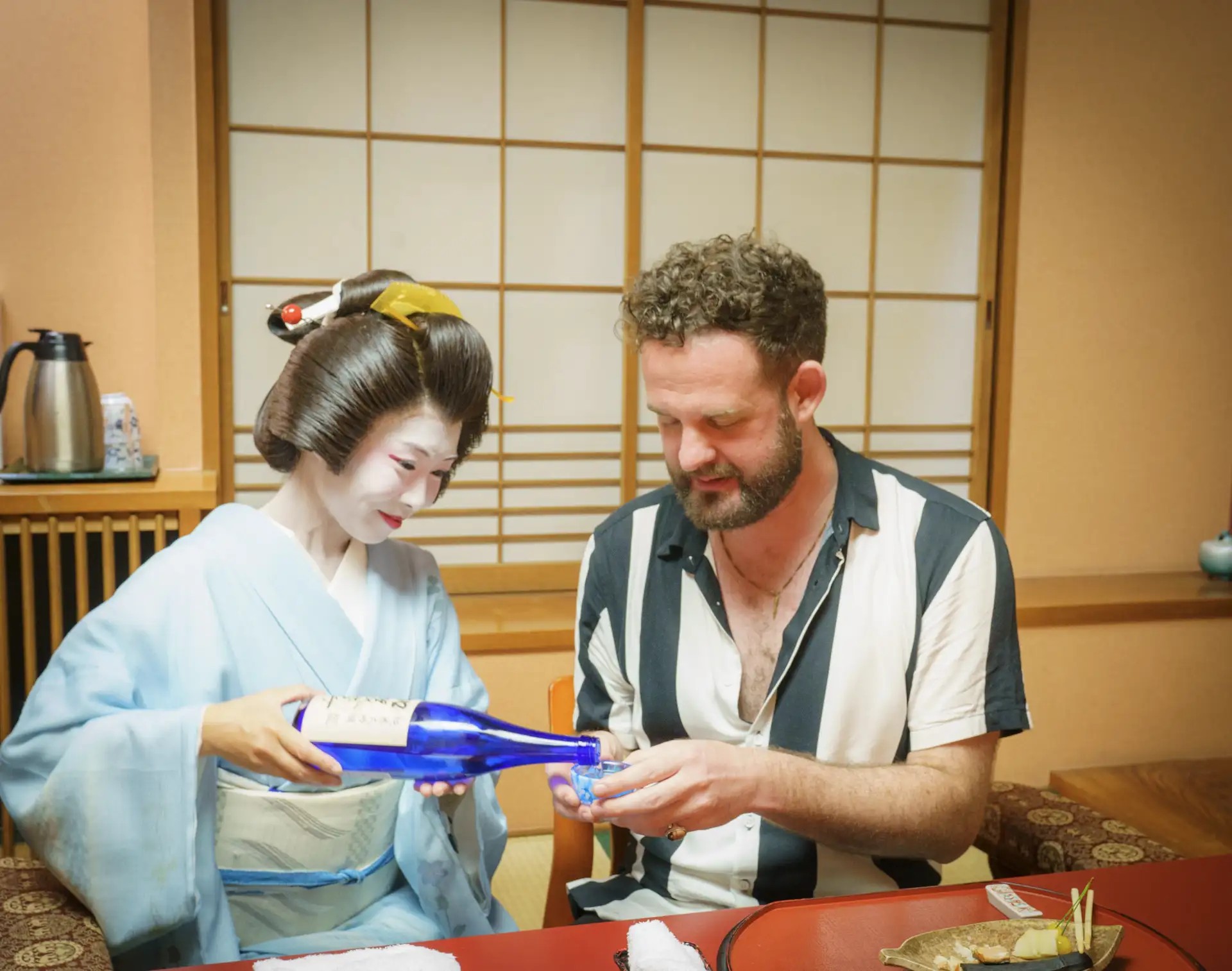
Higashi Chaya is the largest and best-preserved of the city’s old teahouse quarters, a grid of wooden buildings with fine latticed windows where geisha still entertain in the evenings. By day you can step inside restored and working chaya to see the tatami rooms and gold-leafed walls up close. Come early or late; the light on the dark wood is at its best, and the tour buses cluster in the middle of the day.
The Midas Touch: Gold Leaf
Kanazawa produces almost all of Japan’s gold leaf, hammered to a thickness measured in ten-thousandths of a millimetre, and the city has fun with it. The signature indulgence is a soft-serve ice cream sheathed entirely in a sheet of edible gold — more spectacle than flavour, but irresistible for a photograph. Craft workshops around the districts let you apply gold leaf to your own lacquer dish or chopsticks, a genuinely satisfying souvenir to make yourself.
The Quieter Tea Rows
For the same atmosphere with fewer people, seek out the smaller Kazue-machi and Nishi Chaya districts. Kazue-machi runs along a river between two bridges, its teahouses backing onto the water, and at dusk it is the most romantic corner of the city. These quieter rows are where to wander when Higashi Chaya feels crowded.
Modern Masterpieces and Fresh Market Flavors
Kanazawa is not only feudal. It also holds one of Japan’s best contemporary art museums and a market that has fed the city for centuries, and the contrast between old and new is part of its appeal.
The 21st Century Museum of Contemporary Art
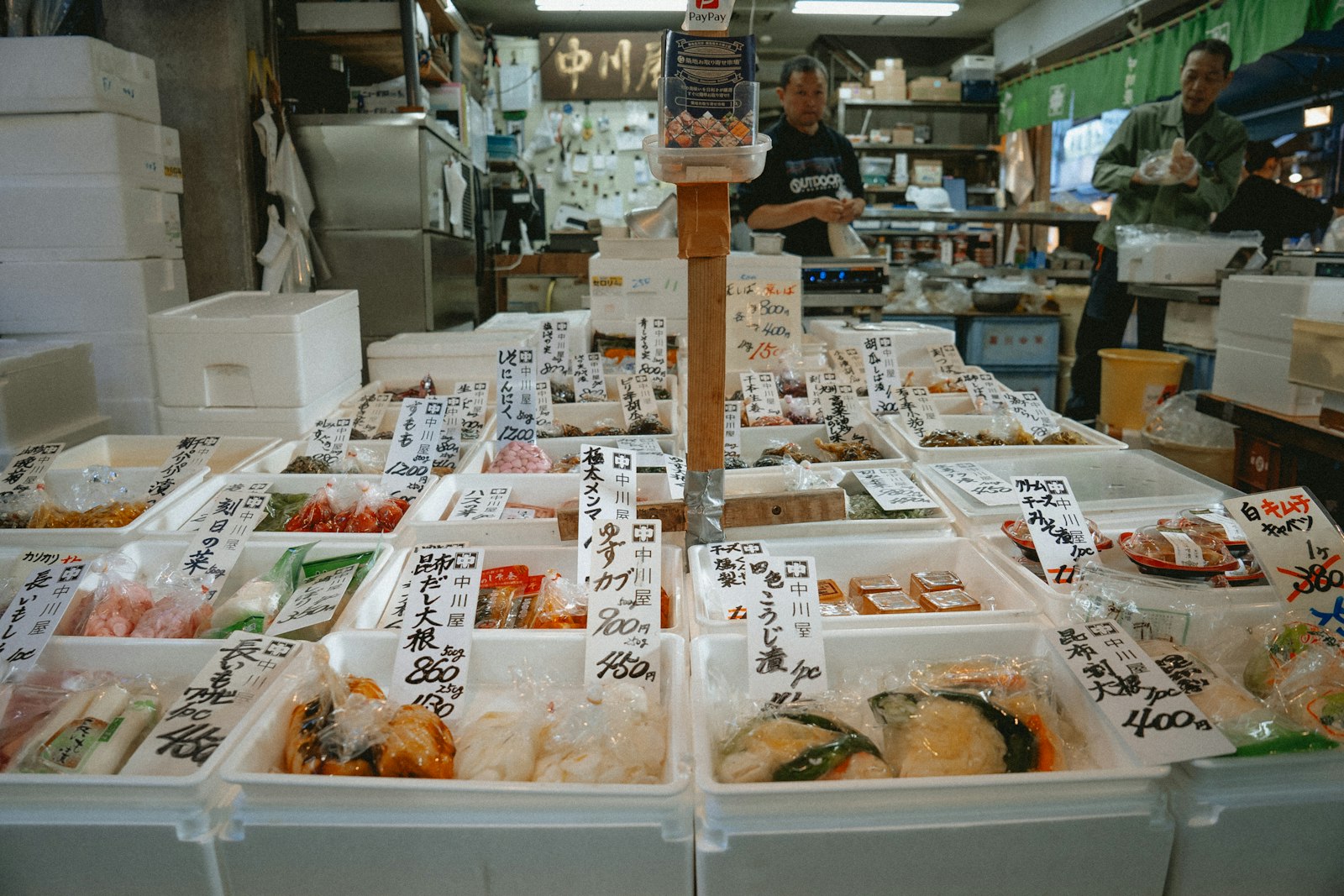
This low, circular glass museum broke the mould of the stuffy regional art gallery, and it is a genuine delight. Its most famous work is Leandro Erlich’s “Swimming Pool,” where visitors appear to stand at the bottom of a pool while others look down through the water from above — an optical trick that is far more charming in person than it sounds. Much of the building is free to enter; a ticket is only needed for the deeper galleries and to go inside the pool itself.
Omicho Market
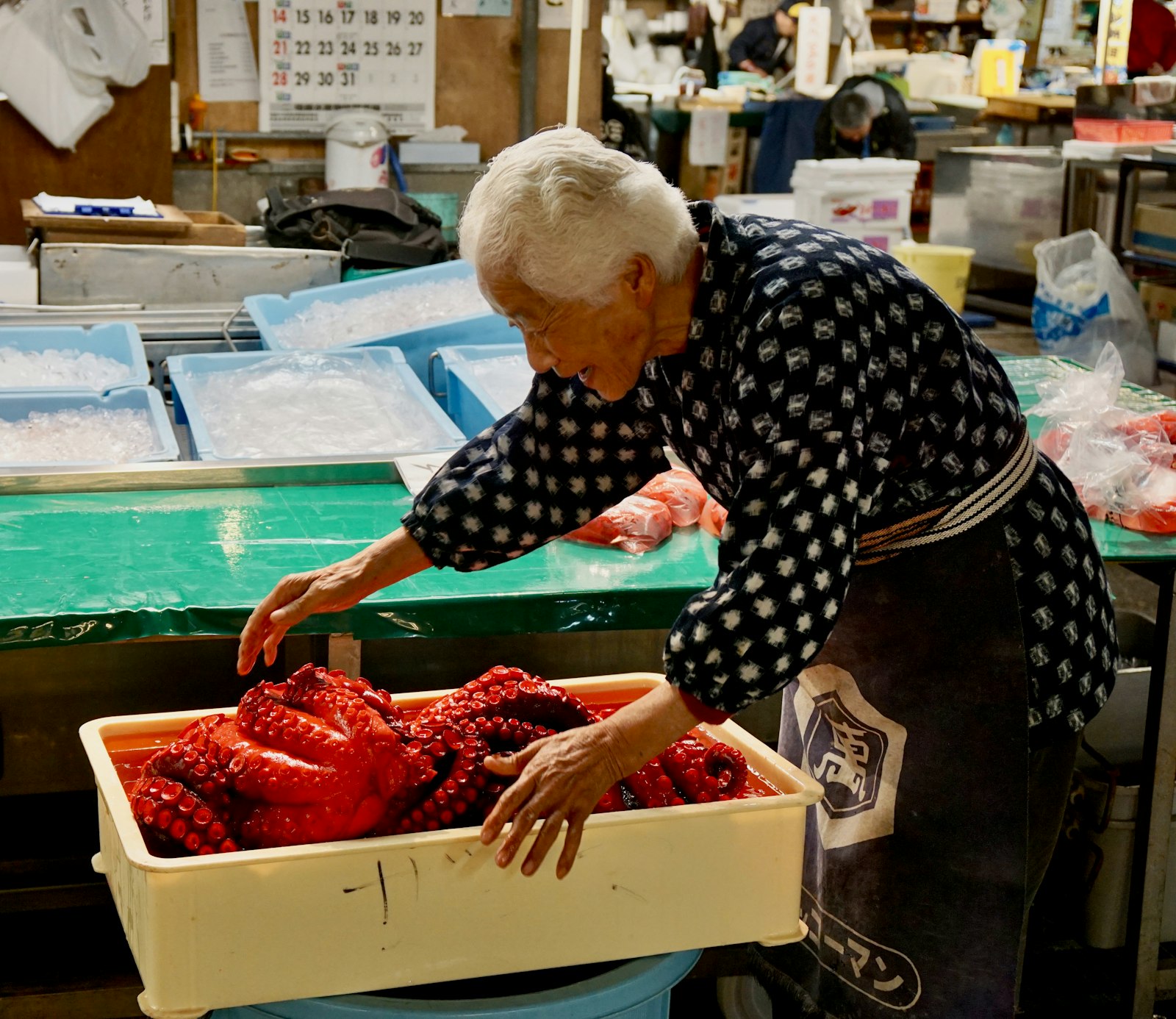
Omicho has been Kanazawa’s kitchen for nearly three centuries, a covered warren of stalls heavy with snow crab, sweet shrimp, and sea urchin from the Sea of Japan. The move is to eat here: several stalls and small restaurants serve kaisen-don, a bowl of rice heaped with the day’s raw seafood, as fresh as it gets. Go at lunch, follow the queue of locals, and order the seasonal catch.
Kanazawa’s Savory Local Cooking
Beyond the seafood bowls, Kanazawa has its own regional dishes, refined over generations of feudal wealth and worth seeking out.
Kanazawa Oden
Oden — ingredients simmered slowly in a light dashi broth — takes a local form here, with Kanazawa specialities like kuruma-fu, a ring of chewy wheat gluten that soaks up the broth, and seasonal seafood additions. Eaten at a counter on a cold evening, with sake, it is the city’s quiet comfort food. Look for the old oden specialists rather than general izakaya for the real thing.
Jibuni Stew
Jibuni is Kanazawa’s signature dish: duck or chicken dusted in flour and simmered with seasonal vegetables and wheat gluten until the broth turns silky and thick, finished with a dab of wasabi. The flour coating is the trick, thickening the sauce and clinging to the meat. It is warming, subtle, and hard to find outside the region, so order it while you are here.
Getting to and Around Kanazawa
Kanazawa became far easier to reach when the bullet train arrived, and once you are there, the city is small enough to cover simply.
The Hokuriku Shinkansen
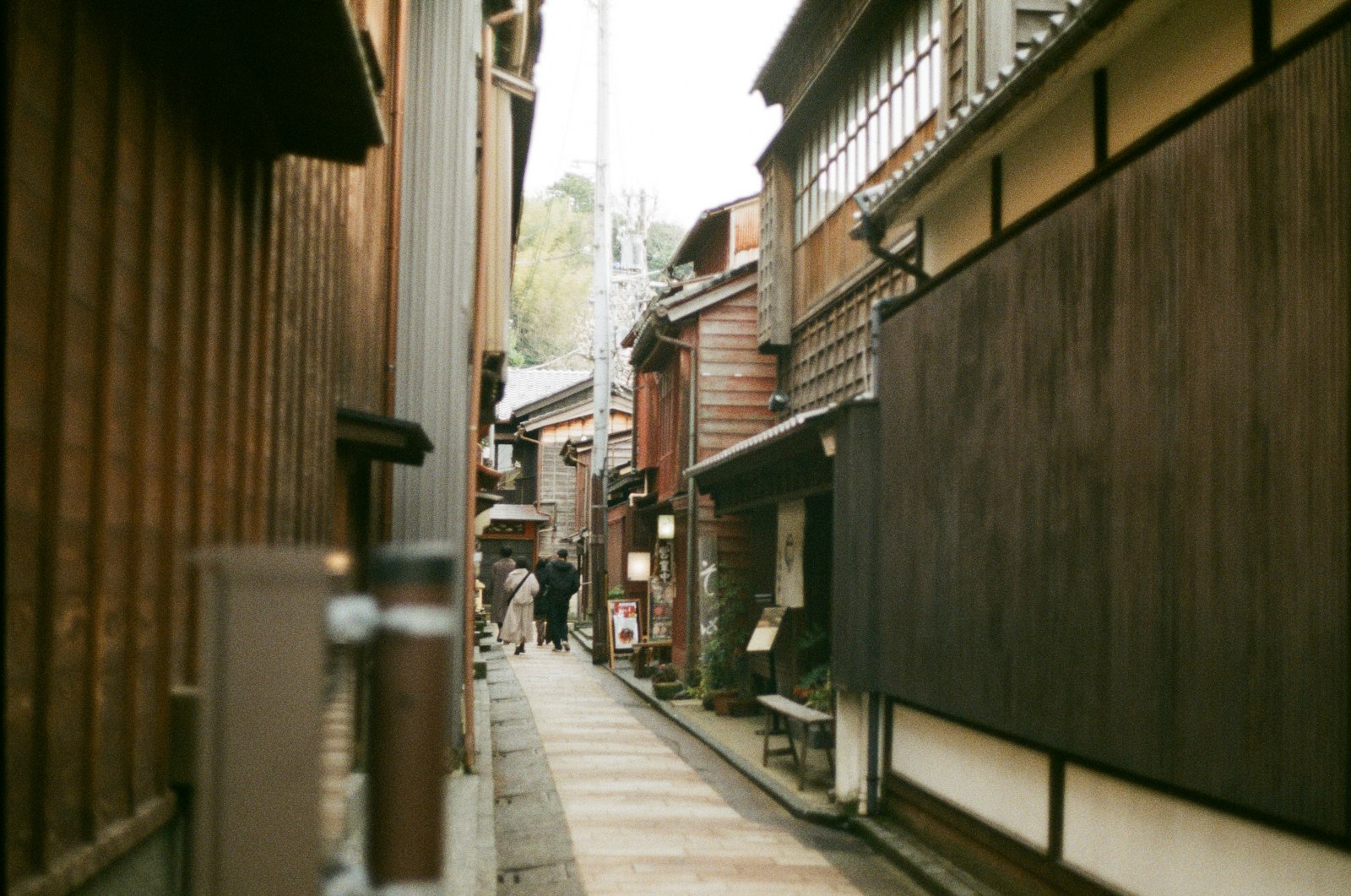
The Hokuriku Shinkansen connects Kanazawa directly to Tokyo in around two and a half to three hours, making it a realistic addition to a first-timer’s route. From the Kansai side, trains from Kyoto and Osaka reach it in a couple of hours. Arriving, you step out under the Tsuzumi-mon, the striking wooden gate at Kanazawa Station shaped like a traditional drum — one of the finest station forecourts in Japan.
Getting Around the City
Kanazawa’s main sights sit close together, and the flat centre is walkable, but the Kanazawa Loop Bus makes hopping between the castle, the chaya districts, and the market effortless. A day pass is worth it if you plan to move around. Between the loop bus and your feet, you will not need anything else.
Expert Tip
Kanazawa is often done as a rushed day trip from Tokyo or Kyoto, and we think that sells it short. Stay one night. The teahouse districts are at their most magical in the early morning and after dark, both times the day-trippers miss entirely — Kazue-machi at dusk, with the river and the lit chaya, is the memory people take home. An overnight also lets you experience a proper kaiseki dinner using the region’s superb seafood.
Related Tours

Exploring Kanazawa: Frequently Asked Questions (Q&A)
Is Kanazawa doable as a day trip, or should I stay overnight? It can be done as a day trip from Tokyo or Kyoto, and many people do, but we recommend at least one night. The historic districts are at their best early and late, precisely when day-trippers are absent, and an overnight lets you enjoy the local seafood over a proper dinner. A day gives you the highlights; a night gives you the city’s atmosphere.
Do I need to book gold leaf workshops in advance? For the popular studios in and around Higashi Chaya, yes — reserve ahead, especially on weekends and in peak seasons, as spots are limited and fill up. Many offer online booking. Applying gold leaf to a small dish or pair of chopsticks takes under an hour and makes a far better souvenir than anything off a shelf.
Can I see the 21st Century Museum’s “Swimming Pool” without a ticket? You can see it, but not fully. The pool is viewable from above in the free public zone, but going down into the pool area, where the illusion is complete, requires an exhibition ticket. Since the museum is a highlight of the city, buying the ticket is usually worth it — and it covers the changing contemporary exhibitions as well.
Conclusion
Kanazawa is the rare Japanese city where the feudal past survives not as a single restored monument but as whole districts you can walk through — samurai lanes, teahouse rows, a garden three centuries in the making — with a first-rate modern art museum and a great seafood market folded in. It is compact, walkable, and unhurried, and it makes an ideal counterpoint to the intensity of Tokyo and Kyoto.
Plan Your Japan Trip with Local Experts
Our team has guided 40,000+ travelers across Japan. Tell us about your trip and we’ll get back to you within 24 hours.