In this article:
- The Spirit Behind the Ceremony
- What to Wear and Bring
- Entering the Tea Room
- The Sweet Before the Tea
- Drinking the Matcha, Step by Step
- Admiring the Utensils
- Tea Ceremony Etiquette: Common Questions
The Spirit Behind the Ceremony
Before the rules, the point. The Japanese tea ceremony — chado or sado, the “way of tea” — is not really about drinking tea. It is a choreographed encounter between host and guests built to create a moment of shared attention and calm, and the etiquette exists to serve that, not to trip you up. Understanding the spirit makes every individual rule feel less like a test and more like a way of taking part.
A guest who grasps this relaxes. The host has spent far more effort preparing than you will spend attending, and your job is mainly to receive that effort with attention and gratitude. Get the broad gestures right, follow the lead of the host and other guests, and small mistakes will pass unnoticed.
The Four Principles
The philosophy of tea is traditionally summed up in four words: wa, kei, sei, jaku — harmony, respect, purity, and tranquillity. Harmony with the guests and the season; respect between host and guest and toward the utensils; purity in the cleaning of the implements and the clearing of the mind; and the tranquillity that the first three are meant to produce. You do not need to recite them, but holding them in mind explains almost every gesture you will be asked to make.
Ichigo Ichie
The other idea worth carrying in is ichigo ichie — “one time, one meeting.” The notion is that this particular gathering, with these people, in this season, will never recur exactly, and so it deserves your full presence. It is why the host treats even a simple bowl of tea with such care, and why phones and distraction are out of place. Attend as though the hour will not come again, because in this sense it will not.
What the Ceremony Asks of You
In practical terms, the ceremony asks for three things from a guest: presence, gratitude, and a willingness to follow form. You watch, you bow at the right moments, you handle the bowl as shown, and you express thanks. That is the whole of it. The detailed etiquette that follows is simply the specific shape these three things take, and none of it is hard once you have seen it done once.
Expert Tip
The single most useful thing you can do as a first-timer is to sit so you are not the first to act at any step. Watch the host, and if there are experienced guests, follow them — when they bow, you bow; when they turn the bowl, you turn it. Tea etiquette is learned by imitation far more than by instruction, and a host will always rather you copy the room a beat late than confidently do the wrong thing first.
What to Wear and Bring
A little preparation before you arrive removes most of the anxiety. The clothing rules exist largely to protect the utensils and the tatami, and they are simple to meet.
Remove Your Jewellery
Take off rings, watches, bracelets, and any hard jewellery before the ceremony. The reason is concrete: the tea bowls and utensils are often valuable, sometimes antique and handmade, and a ring can chip a bowl in an instant as you lift or turn it. Removing metal is an act of respect for objects the host treasures. Slip your rings into a pocket or bag before you enter the room, not at the last second over the bowl.
Clean Socks, and Modest Dress
You will be on tatami, so clean white socks — or traditional tabi — are expected; you remove your shoes before stepping onto the mats, and bare or grubby feet are out of place. Bring a fresh pair to change into if needed. For clothing, aim for modest and comfortable: avoid very short skirts and low-cut tops, since you will be sitting low and bowing, and skip strong perfume or cologne, which interferes with the delicate scent of the tea and incense.
The Fan and the Paper
A formal ceremony uses two small items a guest traditionally carries: a folding fan (sensu), placed on the floor behind you or before you at certain moments as a gesture of humility rather than for cooling, and kaishi, small folded papers used as a plate for your sweet. At a ceremony aimed at visitors, these are usually provided, so you need not buy them in advance — but knowing what they are means you will not be baffled when they appear.
Entering the Tea Room
How you move into and around the tea room matters as much as what you do with the bowl. The space itself is treated as something to be respected.
Mind the Borders and the Sills
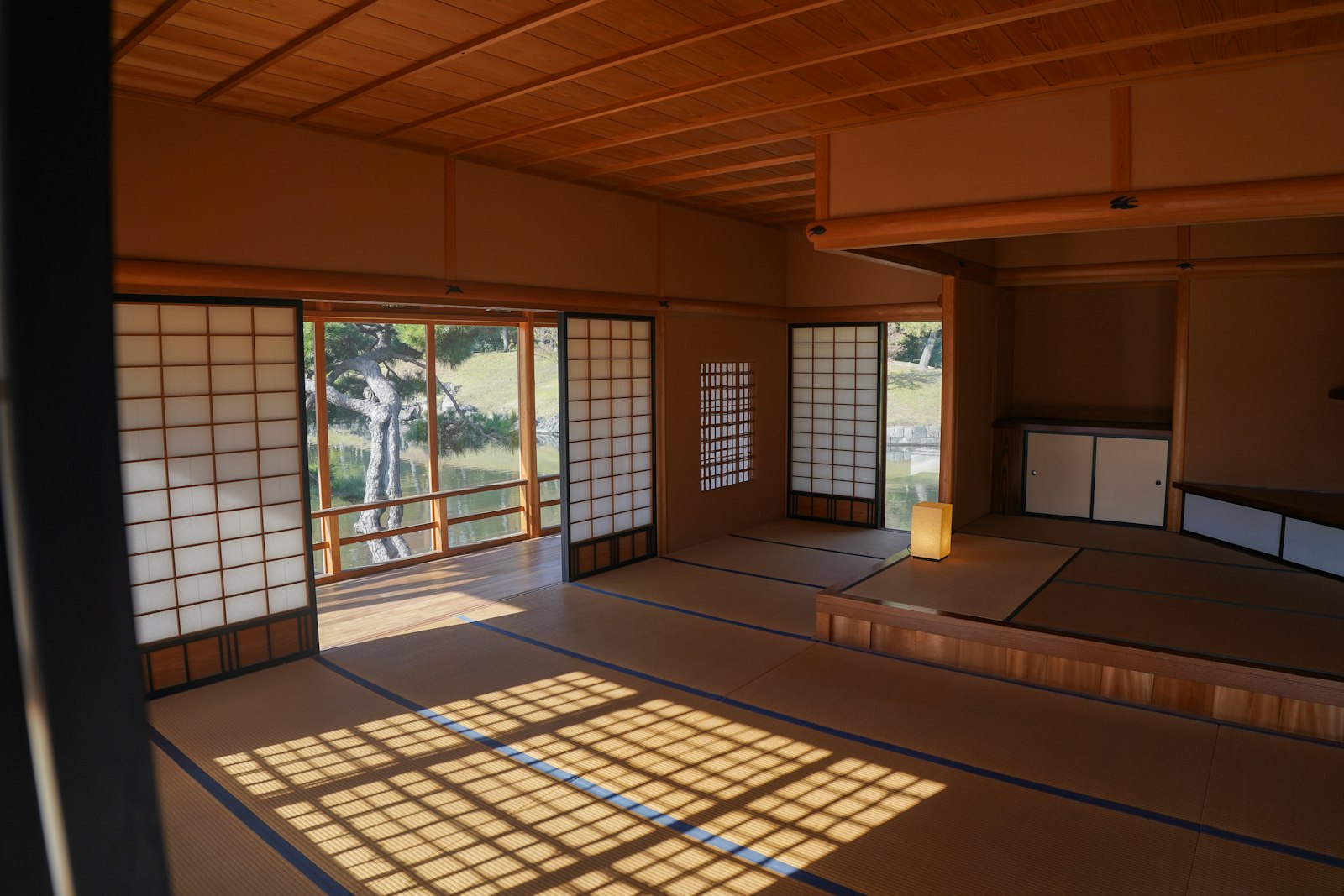
On tatami, do not step on the cloth borders of the mats — the heri — or on the wooden door sills as you enter; the convention is to step over them. Treading on the borders is considered careless of the room and, historically, of the household crests sometimes woven into them. So watch your feet at the threshold and along the edges of the mats: a small, deliberate step over each line is all it takes.
Sitting Seiza, and the Alternatives
The formal posture is seiza — kneeling with your weight back on your heels. Most newcomers cannot hold it long, and that is understood. Sit seiza when you can, especially for the key moments like receiving the bowl, and shift discreetly when your legs need relief. At a visitor-friendly ceremony, hosts often permit sitting cross-legged or to the side, and some provide low stools. Comfort that lets you stay present is better than rigid pain that distracts you.
The Bows
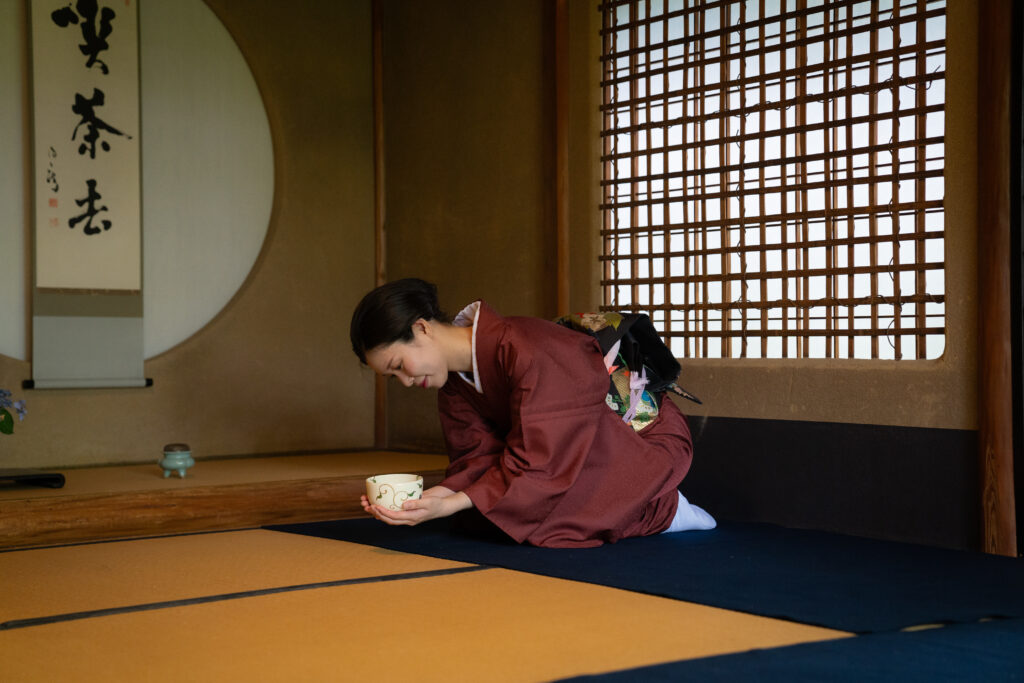
Bowing — ojigi — punctuates the ceremony, and you will bow to the host and to your fellow guests at several points: when receiving the sweet, when receiving and returning the bowl, and to acknowledge the guest beside you. The bows are small and seated, a lowering of the head and upper body with your hands placed on the mat or your knees. Follow the host’s lead on depth and timing; the gesture matters more than precision.
The Sweet Before the Tea
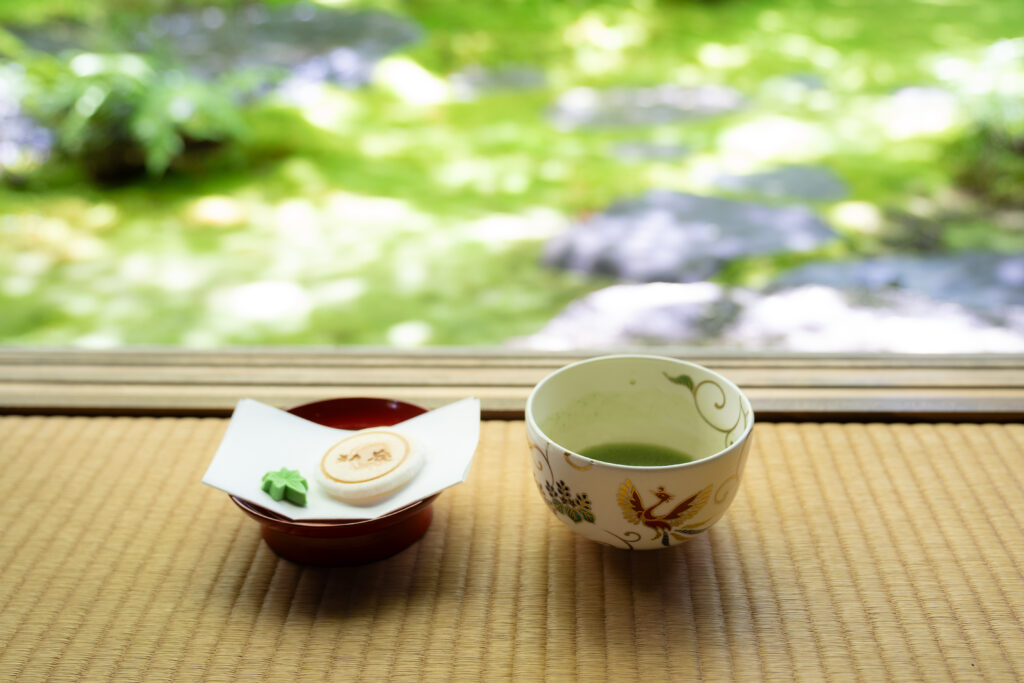
A traditional sweet, wagashi, is served before the matcha, and there is a logic and an etiquette to it that surprises first-timers.
Why You Eat the Sweet First
The sweet is eaten entirely before the tea arrives, not alongside it. The reason is balance: matcha, especially the stronger preparations, is genuinely bitter, and the sweetness lingering on your palate is designed to offset and complete it. So when the wagashi is offered, take it, and finish it before the bowl reaches you. Holding the sweet to nibble with the tea, as you might with coffee and a biscuit, misses the entire point of the sequence.
Using the Kaishi Paper
Your sweet is placed on the kaishi paper that serves as your personal plate. A soft sweet may come with a small wooden or metal pick to cut and eat it in pieces; a firmer one you may take in hand. Cut bite-sized portions, eat neatly, and keep everything over the paper. The paper makes you self-contained — you are not using the host’s dishes for crumbs — which is part of its quiet courtesy.
Leave No Crumbs
Finish your sweet completely and leave no crumbs scattered on the mat or the paper. Fold any used kaishi and tuck it away to take with you rather than leaving it behind. The principle running through all of this is that you leave your small space as clean as you found it, having handled your own portion entirely yourself. It is a tiny discipline, and it is noticed.
Drinking the Matcha, Step by Step
This is the heart of the ceremony and the part people most fear getting wrong. Taken one step at a time, it is simple, and the sequence has a clear internal logic.
Receiving the Bowl
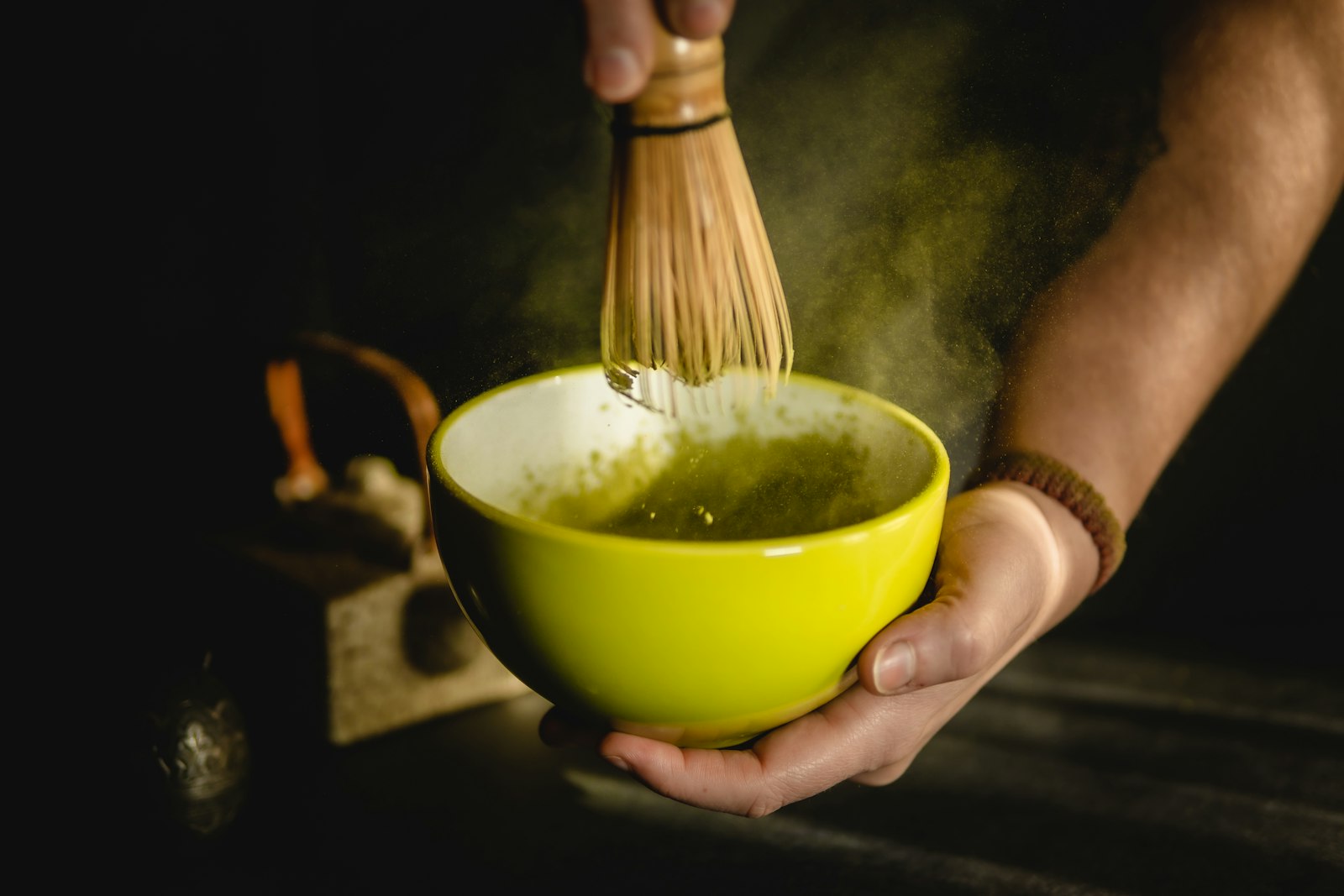
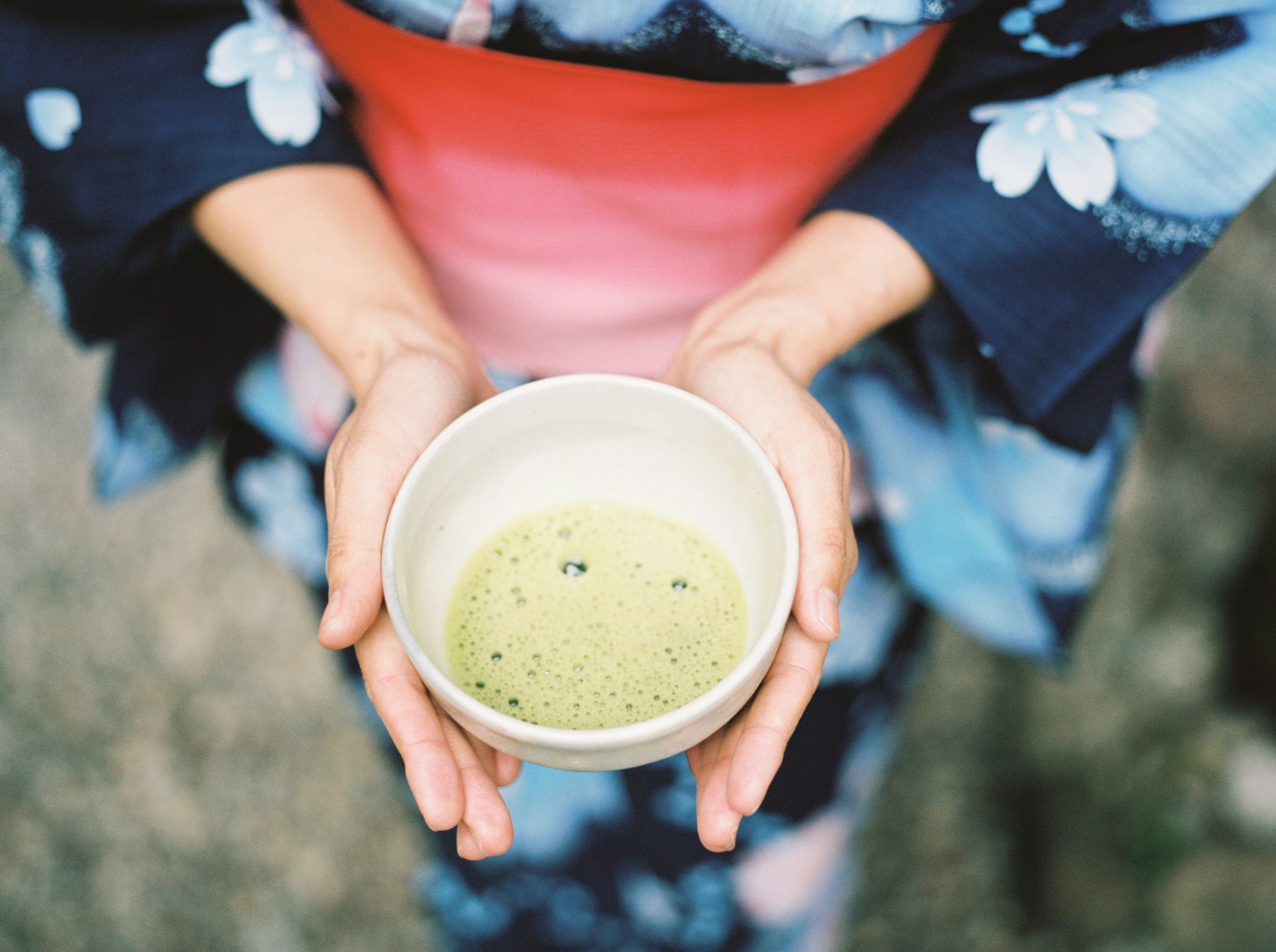
When the bowl — the chawan — is placed before you, bow to acknowledge it, and to the guest beside you if appropriate. Then lift it with both hands: your right hand at the side, your left hand cradling the base. Always two hands, always carefully. Raise it slightly toward yourself in a small gesture of thanks before you do anything else. The bowl is treated as something given, not merely served.
Turn the Bowl
The bowl has a “front” — its most beautiful face, deliberately turned toward you by the host as a gesture of respect. You return that respect by not drinking from it. Rotate the bowl clockwise, usually about two small turns, so that the front faces away from your lips before you sip. This is the most characteristic move of the whole ceremony: you avoid putting your mouth to the bowl’s finest point, out of humility toward the object and the host who chose it.
Drink
Drink the tea in a few measured sips — commonly three or four — rather than tiny tastes or one gulp. On the final sip, a slight, audible draw is traditional and entirely correct: it signals to the host that you have finished and enjoyed it, and it is one of the rare moments where a small slurp is good manners rather than bad. Take it steadily; the bowl is meant to be finished.
Wipe the Rim and Return the Bowl
After drinking, lightly wipe the part of the rim your lips touched with your thumb and forefinger, then clean your fingers on your kaishi paper. Turn the bowl back — counter-clockwise, reversing your earlier turns — so the front faces the host again, and set it down gently on the mat in front of you where it was placed. Then bow. You have returned the bowl as you received it: front forward, handled with care, with thanks.
Admiring the Utensils
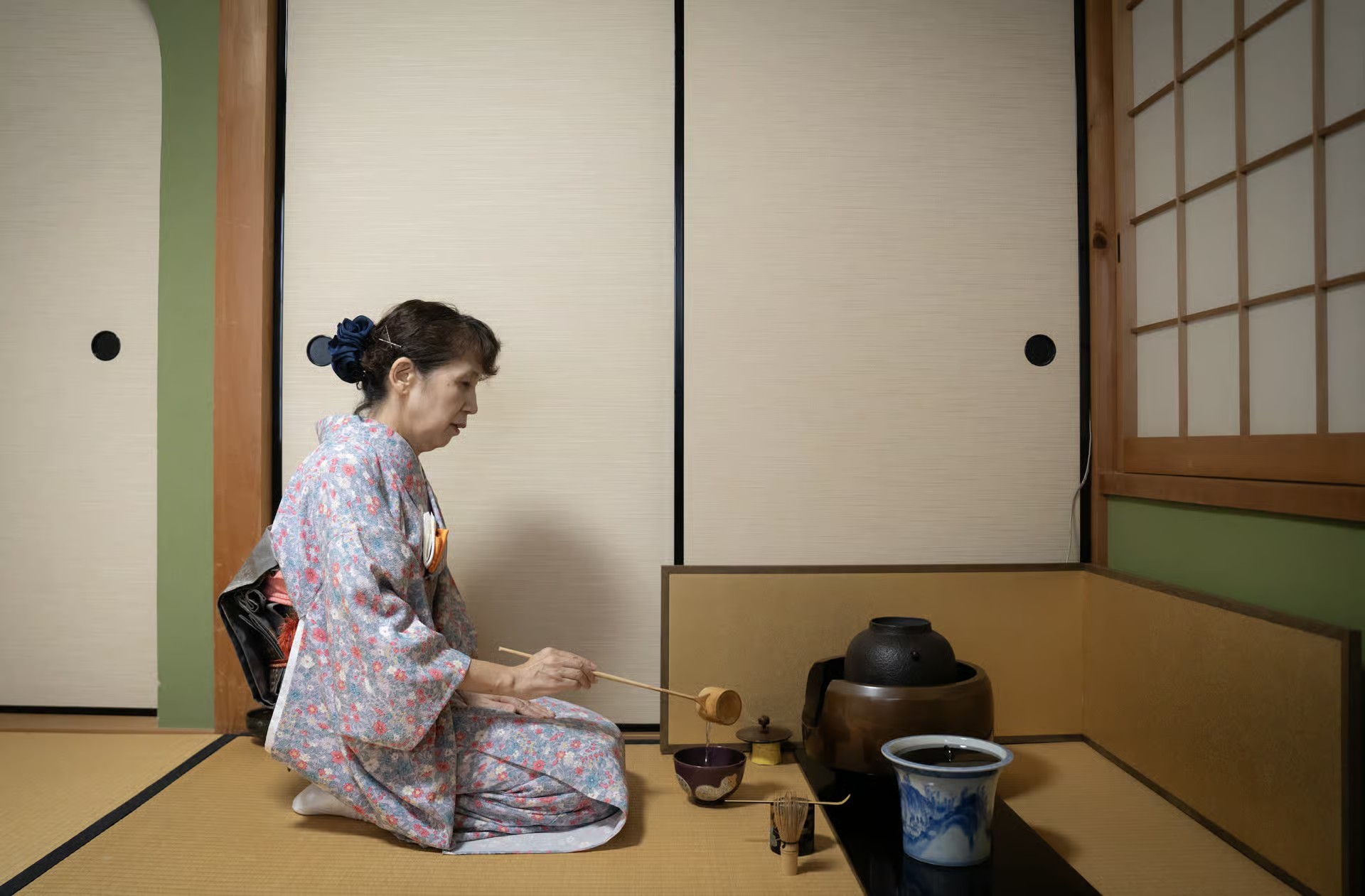
After the tea, there is often a moment to appreciate the implements the host has chosen — a quiet, appreciative coda to the ceremony called haiken.
How to Inspect Them
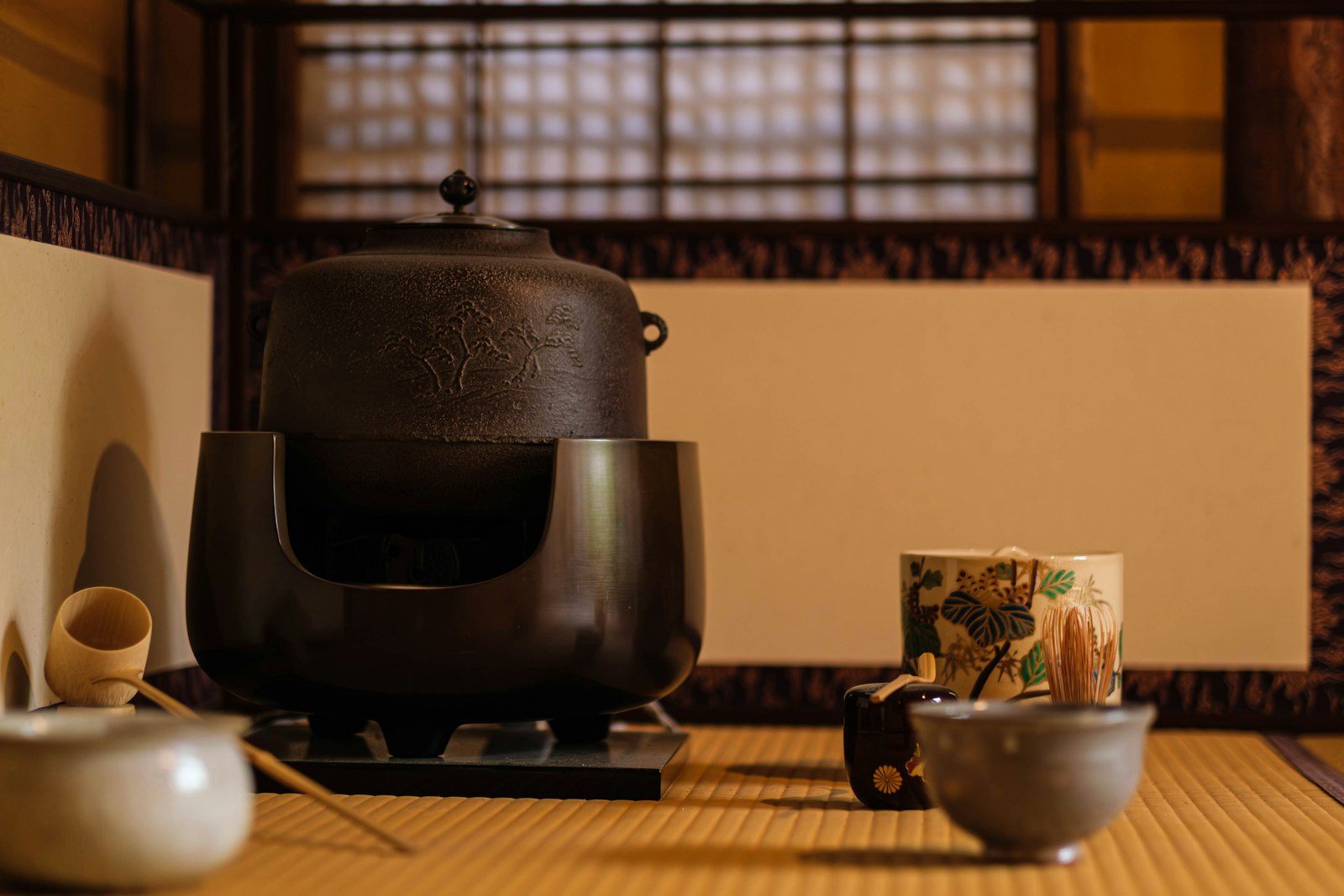
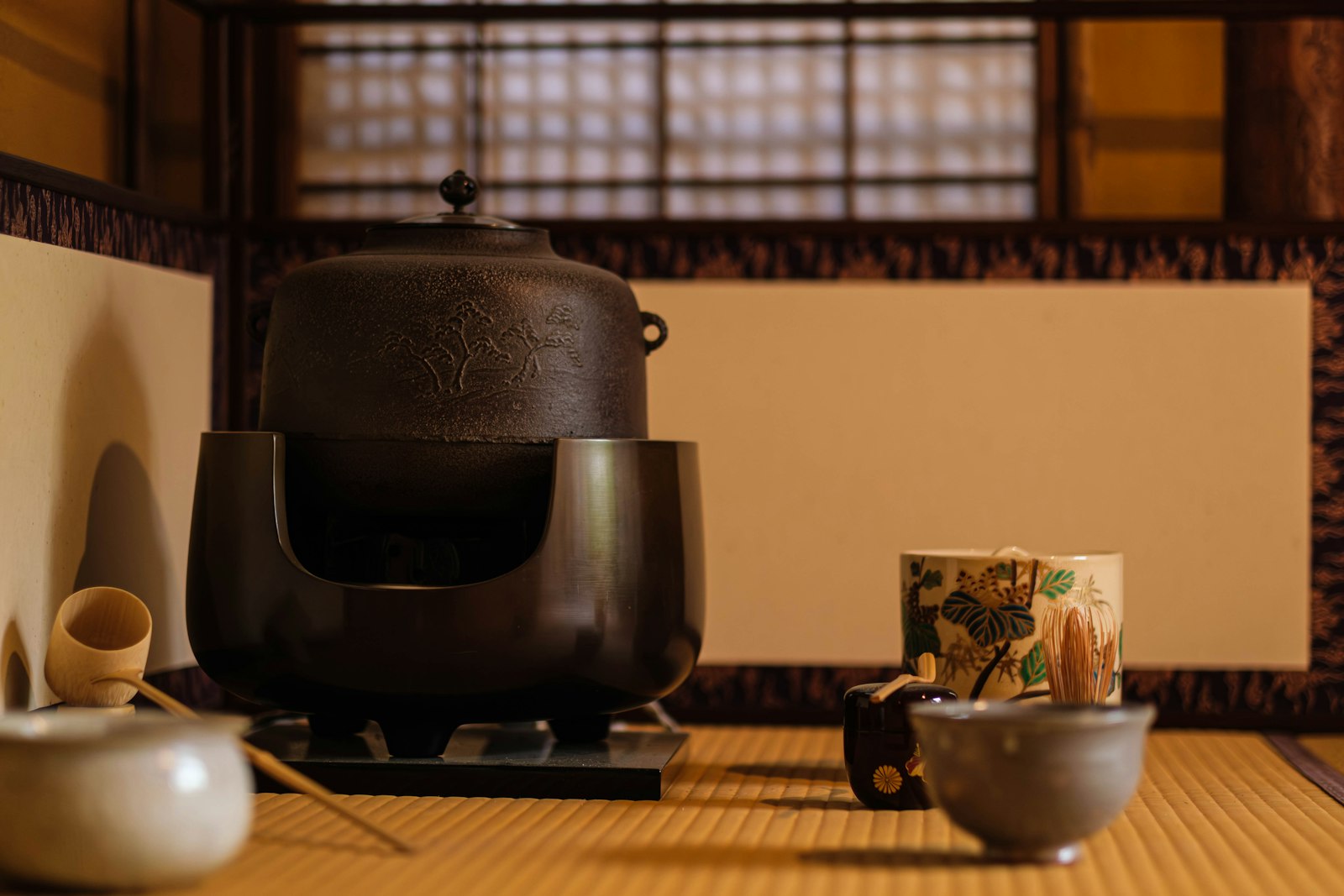
You may be invited to look closely at the tea scoop (chashaku), the tea caddy (natsume), and sometimes the bowl. These are frequently old, valuable, and personally meaningful to the host, who has chosen them for this specific gathering and season. Handle them only if invited, with both hands, and look rather than fuss. The act of admiring them is a way of honouring the host’s taste and the care behind their selection.
Keep It Low and Safe
When examining a utensil, keep it low — rest your elbows on your knees and hold the object just above the mat — so that if it slips, it has nowhere to fall. This single habit protects pieces that may be irreplaceable. It looks deliberate and humble, which it is, but its real function is purely practical: you cannot drop an antique tea scoop you are already holding an inch above the floor.
Ask About Them
This is the moment to ask the host about the utensils — the age of the bowl, the maker of the scoop, the poetic name of the tea caddy. Such questions are welcome; they show that you value the host’s choices and give them the pleasure of sharing the story behind each piece. A good question here is a gift to the host, and often the warmest part of the whole exchange.
Tea Ceremony Etiquette: Common Questions
What do I do if my legs go numb during seiza? Shift, discreetly. No host expects a foreign guest to hold seiza through a long ceremony, and quietly moving to relieve your legs — sliding them to one side, or to cross-legged where permitted — is entirely acceptable between the key moments. The thing to avoid is fidgeting during a central act like receiving the bowl. If you know your legs will struggle, sit at the end of the guest line and ask in advance whether alternative postures are allowed; they usually are.
Do I have to wear a kimono? No. Wearing a kimono to a tea ceremony is lovely and welcome, and many visitor experiences offer kimono rental, but it is not required. Clean, modest, comfortable clothing in which you can sit low and bow is perfectly appropriate. What matters far more than the kimono is the small etiquette — the removed jewellery, the clean socks, the careful handling of the bowl. Dress respectfully and you are correctly dressed.
What’s the difference between thick and thin tea? Two preparations of matcha appear in tea practice. Usucha, “thin tea,” is the lighter, frothier, more everyday version that most visitor ceremonies serve, made with less powder and whisked to a foam. Koicha, “thick tea,” is a more concentrated, intense preparation used in formal gatherings, often shared from a single bowl among guests, with its own stricter etiquette. As a first-timer you will almost always meet usucha, which is the gentler introduction.
Related Tours

Conclusion
The etiquette of the tea ceremony can look forbidding from outside, but it reduces to a few clear habits: remove your jewellery, mind the mat borders, eat the sweet first, turn the bowl before you drink and back when you finish, and handle everything with two careful hands and genuine thanks. Get those right, follow the room on the rest, and you will be a welcome guest.
Plan Your Japan Trip with Local Experts
Our team has guided 40,000+ travelers across Japan. Tell us about your trip and we’ll get back to you within 24 hours.