In this article:
- What the Ropeway Is
- Owakudani
- Mount Fuji and Lake Ashi
- Tickets and the Hakone Loop
- Wind, Gas, and Closures
- Hakone Ropeway: Frequently Asked Questions
Introduction
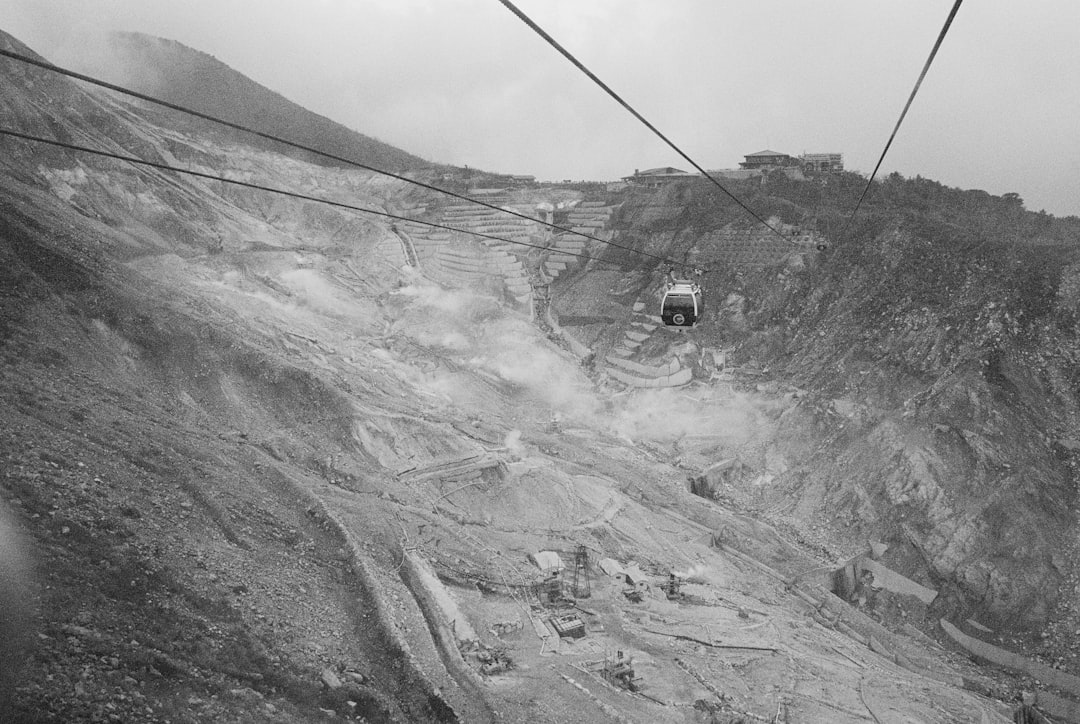
The gondola comes over the ridge at Owakudani and the ground below turns yellow and stops having trees on it.
There are steam vents, bare sulphur-stained slopes, and pipework running down the hillside collecting hot water for the onsen towns further down. It smells, faintly, of eggs, inside a sealed cabin at fifty metres. On a clear day Mount Fuji is directly in front of you as you begin the descent toward the lake.
This is the third leg of the Hakone loop and it is the one that justifies the whole exercise. The train and the cable car that precede it are pleasant; this part is genuinely dramatic.
What the Ropeway Is
A four-kilometre gondola line in two sections, operated by Odakyu, running between Sounzan and Togendai on Lake Ashi.
The Route
From Sounzan the line climbs over a ridge to Owakudani, then descends via Ubako to Togendai at the lake shore. End to end it takes about thirty minutes without stopping.
Almost nobody rides it straight through. Owakudani is the reason to be here, and the ticket permits getting off and rejoining a later gondola at no extra cost.
The stations are at 750 metres at Sounzan and 1,044 metres at Owakudani, which is high enough that the temperature is noticeably lower and the weather is often different from the valley you started in.
The Gondolas
Modern enclosed cabins seating around eighteen, with glass on all sides, departing continuously — roughly one a minute rather than to a timetable.
There is effectively no waiting except at peak times at Owakudani. You walk on, and if you want a seat by the window on the Fuji side, say so as you board and staff will generally arrange it.
The line uses a detachable system, meaning cabins slow to walking pace in stations and run fast between them. This makes boarding easy for people with limited mobility and for pushchairs.
Where It Fits in the Hakone Loop
The classic Hakone circuit is: Odakyu train from Shinjuku to Hakone-Yumoto, the Hakone Tozan mountain railway with its switchbacks to Gora, the cable car from Gora to Sounzan, the ropeway from Sounzan to Togendai, a sightseeing boat across Lake Ashi to Moto-Hakone, and a bus back to Hakone-Yumoto.
Doing the loop in that direction is the standard and is what the timetables assume. It also puts the ropeway in the late morning, which is when Fuji is most likely to be visible.
The whole circuit takes a full day at a comfortable pace, and it works as a day trip from Tokyo — roughly ninety minutes each way from Shinjuku.
Expert Tip
Run the loop clockwise, not anticlockwise, and start early. Fuji is most reliably visible in the morning and typically clouds over by early afternoon, and the standard clockwise route puts you on the ropeway between roughly ten and noon. Travelers who reverse the loop to avoid crowds arrive at the Fuji viewpoint at three in the afternoon and see a wall of cloud. The crowds are worth it.
Owakudani
The Great Boiling Valley, formed by an eruption of Mount Hakone roughly three thousand years ago, and still venting.
What You Are Looking At
A collapsed crater wall with active fumaroles — vents releasing steam and sulphurous gas from the volcanic system beneath. The yellow staining is sulphur deposition, and the absence of vegetation is the gas rather than the altitude.
The pipework running across the slopes collects hot water and channels it downhill to the onsen resorts of Hakone. The area’s usefulness and its danger come from the same source.
There is a viewing area at the station, a shop, a restaurant, and on clear days one of the better Fuji views in the region.
The Black Eggs
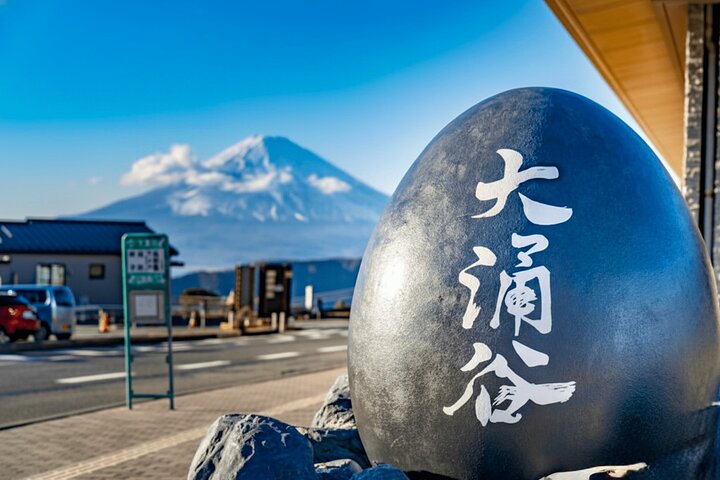
Kuro-tamago are ordinary chicken eggs boiled in the sulphurous hot springs. Iron in the water reacts with hydrogen sulphide and coats the shell in black iron sulphide.
The shell is black, the egg inside is an ordinary hard-boiled egg with a faint mineral note. They are sold in bags of five, warm, with salt.
The local claim is that each egg adds seven years to your life. Nobody believes this and everybody buys the eggs. They are the single most photographed food item in Hakone and eating one on the viewing platform with Fuji behind you is the correct thing to do here.
How Long to Stay
Thirty to forty-five minutes covers the viewing area, the eggs, and the shop.
Walking trails into the valley itself have been closed at various points since the volcanic alert level was raised in 2015, and access varies with current activity. Check what is open at the station rather than planning on a walk.
The restaurant does a passable curry with a black egg in it. The shop sells black-egg-branded everything, most of which is confectionery containing no eggs at all.
Mount Fuji and Lake Ashi
The view is the reason a lot of people come, and the honest position is that it depends entirely on the day.
Where Fuji Appears
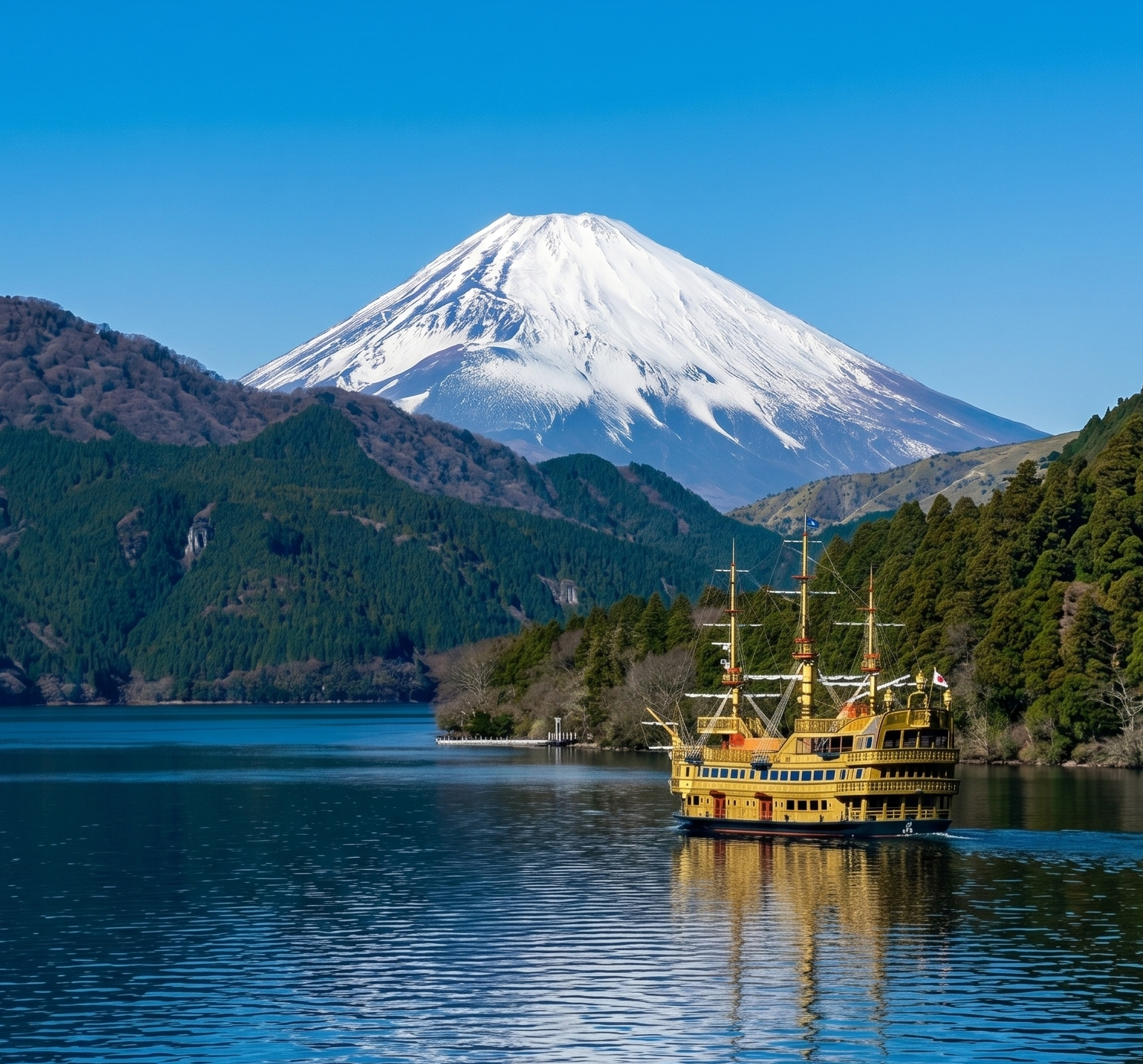
The best view is on the Owakudani side, both from the station platform and from the gondola on the section between Owakudani and Ubako as you begin the descent.
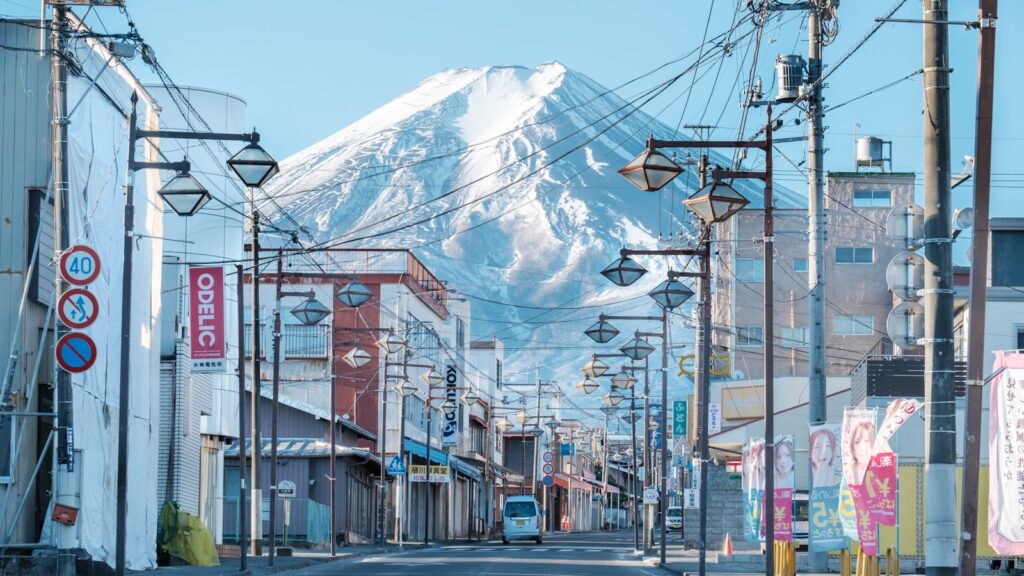
Sit on the right-hand side travelling from Sounzan toward Togendai, or simply stand and turn — the cabins are glazed all round.
Fuji is roughly 30 kilometres away and fills a satisfying amount of the frame. With the volcanic valley in the foreground it is one of the more distinctive compositions available, and it is not a view you can get from the ground.
When It Is Visible
Winter is far better than summer. Cold, dry air from December through February gives the highest probability of a clear summit, often with snow cover to the base. May through September is humid and hazy and Fuji is frequently invisible for days at a time.
Mornings beat afternoons in every season. Cloud builds around the mountain as the day warms.
We tell travelers to treat a Fuji sighting as a bonus rather than the purpose of the trip. Hakone is worth the day regardless, and building the itinerary around a mountain that hides two days in three produces disappointment.
The Descent to Togendai
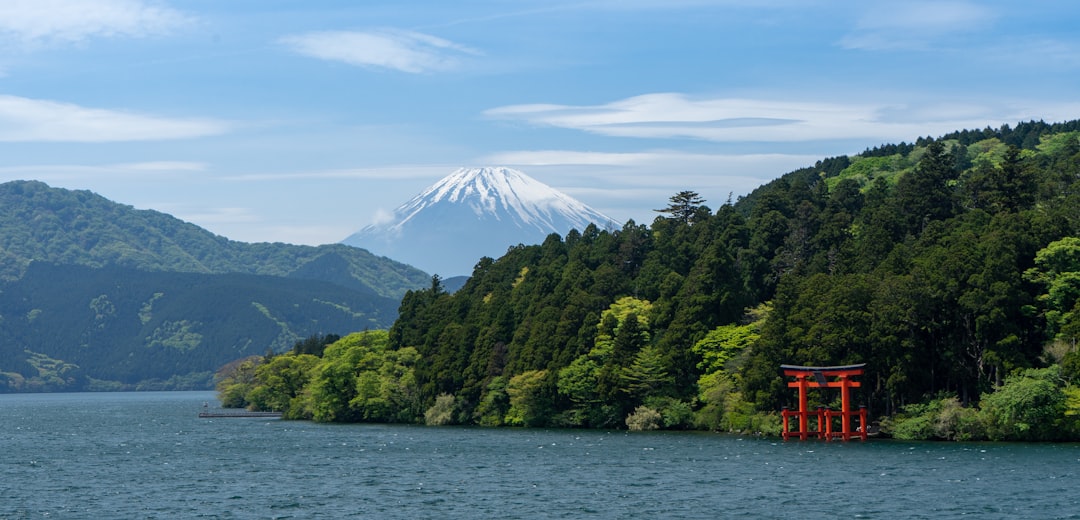
The final section drops toward Lake Ashi through forest, with the lake opening up ahead and the red torii of Hakone Shrine visible in the distance on the far shore.
Togendai is the northern boat terminal. The sightseeing vessels here are built as mock pirate ships, which is a decision nobody defends and everybody photographs.
The crossing to Moto-Hakone takes around half an hour and completes the loop. On a clear day Fuji sits behind the lake for much of it.
Tickets and the Hakone Loop
There is one obvious answer for almost everyone.
The Hakone Freepass
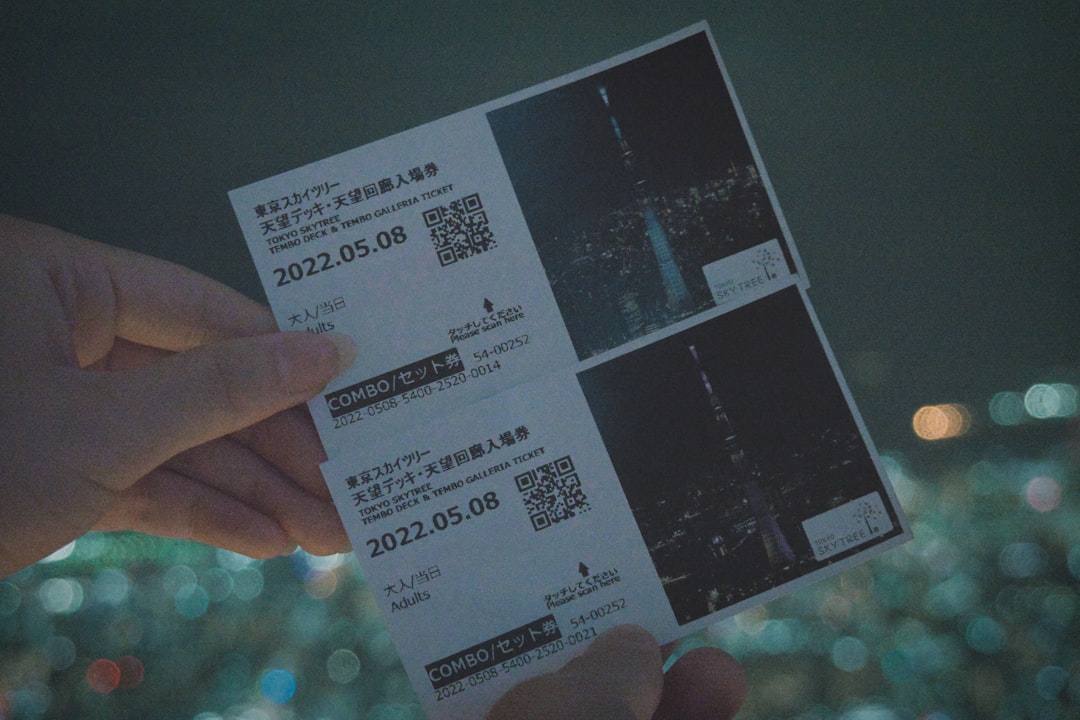
Odakyu’s Hakone Freepass covers unlimited use of the ropeway, the cable car, the mountain railway, the Lake Ashi boats, and the local buses, for two or three consecutive days. Versions including the return journey from Shinjuku are sold at Odakyu stations and online.
For anyone doing the loop, it costs less than the individual fares and removes every ticket transaction from the day. It also gives discounts at a number of museums and attractions in the area.
Buy it before you set off, at Shinjuku, rather than at Hakone-Yumoto. The Japan Rail Pass does not cover the Odakyu line, though it does cover the Shinkansen to Odawara if you prefer to route that way.
Buying Individually
Single and return tickets for the ropeway alone are sold at the stations. This makes sense only if you are staying in Hakone, have a car, and want the ropeway as a single excursion.
For a day trip from Tokyo, the arithmetic favours the Freepass decisively.
Connecting Services
The cable car from Gora to Sounzan is a funicular, not a gondola, and runs on a fixed timetable. Allow for the connection.
The Lake Ashi boats run to a published schedule with reduced winter frequency, and the last sailing is earlier than people expect. If you are running the full loop, check the final departure before you linger at Owakudani.
Buses from Moto-Hakone back to Hakone-Yumoto take about forty minutes and run frequently.
Expert Tip
Check the ropeway’s operating status on the morning of your visit, not the night before. Odakyu publishes live status in English, and high wind — the most common cause of suspension — develops on the day. Hakone in general is worth having a plan B for: the Hakone Open-Air Museum, the Pola Museum of Art, and the onsen at Yumoto are all indoors, all excellent, and all reachable by bus when the mountain section is shut.
Wind, Gas, and Closures
The ropeway stops more often than visitors expect, and it is worth understanding why before you build a day around it.
Wind
The most common cause. Gondolas suspend above a wind speed threshold, and the exposed ridge section is the constraint. Suspensions can last an hour or a day.
Replacement buses run between Sounzan and Togendai when the ropeway is closed, and they are covered by the Freepass. The route is fine and the view is not the same.
Winter and typhoon season see the most closures. Winter is also when Fuji is clearest, which is an unavoidable trade.
Volcanic Activity
Hakone is an active volcano and the alert level is monitored continuously. In 2015 raised activity closed the ropeway and the Owakudani area for several months.
Since reopening, the section over Owakudani has been subject to intermittent restrictions when gas concentrations rise. Sometimes the gondolas run without stopping at Owakudani; sometimes the section closes entirely.
Current status is published by Odakyu and by the Japan Meteorological Agency. This is a live situation rather than a historical footnote, and it is the reason to check on the day.
Maintenance
The line closes for scheduled maintenance for periods each year, usually announced well in advance on the official site.
These closures are not weather-dependent and cannot be worked around. If Hakone is fixed in your itinerary, check the maintenance calendar when you book accommodation rather than after.
Sulphur Gas and Who Should Be Careful
Warnings are posted at Owakudani advising people with asthma, bronchitis, heart conditions, or other respiratory sensitivity to take care, and in some cases to avoid the area.
The station and viewing platform are managed and monitored, and healthy visitors are not at risk under normal operating conditions. Anyone with a relevant condition should read the posted advisory and take it seriously — this is a genuine gas hazard rather than a formality, and the site closes to everyone when concentrations warrant it.
Very young children and pregnant travelers are also advised to limit time in the immediate vent area.
Hakone Ropeway: Frequently Asked Questions
Is the sulphur gas at Owakudani a problem for sensitive visitors?
For most people, no. The gondolas are sealed, and the station and viewing area are monitored with the whole site closing when concentrations rise. Warnings are posted advising people with asthma, respiratory conditions, or heart conditions to take care or stay away, and those advisories are worth following rather than testing. If you are affected, you can still ride the ropeway through without alighting at Owakudani on days when it operates that way, or take the replacement bus route and rejoin at Togendai.
Can I take large luggage in the gondola?
Small bags are fine and large suitcases are awkward and discouraged, particularly at busy times when cabins load to capacity. Coin lockers are available at Hakone-Yumoto and at Gora, which is where most travelers doing the loop leave their bags. If you are moving between hotels with luggage, use a same-day luggage forwarding service from your accommodation rather than carrying cases around the loop — Hakone is well served by them and it costs very little.
Which point has the best Mount Fuji photograph?
The Owakudani station viewing platform, where you can compose Fuji above the steaming valley without a window between you and it, and without the gondola moving. The second-best is from the cabin on the Owakudani-to-Ubako section, sitting on the right as you head toward the lake. From ground level later in the loop, the classic shot is Fuji behind the red torii of Hakone Shrine standing in Lake Ashi, reached from Moto-Hakone — a different composition and arguably the more famous one.
Related Tours
Conclusion
Check the operating status in the morning, run the loop clockwise, and be on the ropeway before noon. Those three decisions determine almost everything about how this day goes.
And book a night in Hakone rather than doing it from Tokyo if you can. The loop as a day trip works and it is rushed at both ends; staying means an onsen in the evening, an early start on the mountain, and a chance at Fuji on two mornings instead of one.
Plan Your Japan Trip with Local Experts
Our team has guided 40,000+ travelers across Japan. Tell us about your trip and we’ll get back to you within 24 hours.