In this article:
- What Otagi Nenbutsu-ji Actually Is
- Hours, Admission, and the Two Closed Days
- Getting There From Central Arashiyama
- Building a Half Day Around It
- Otagi Nenbutsu-ji Temple: Frequently Asked Questions
Introduction
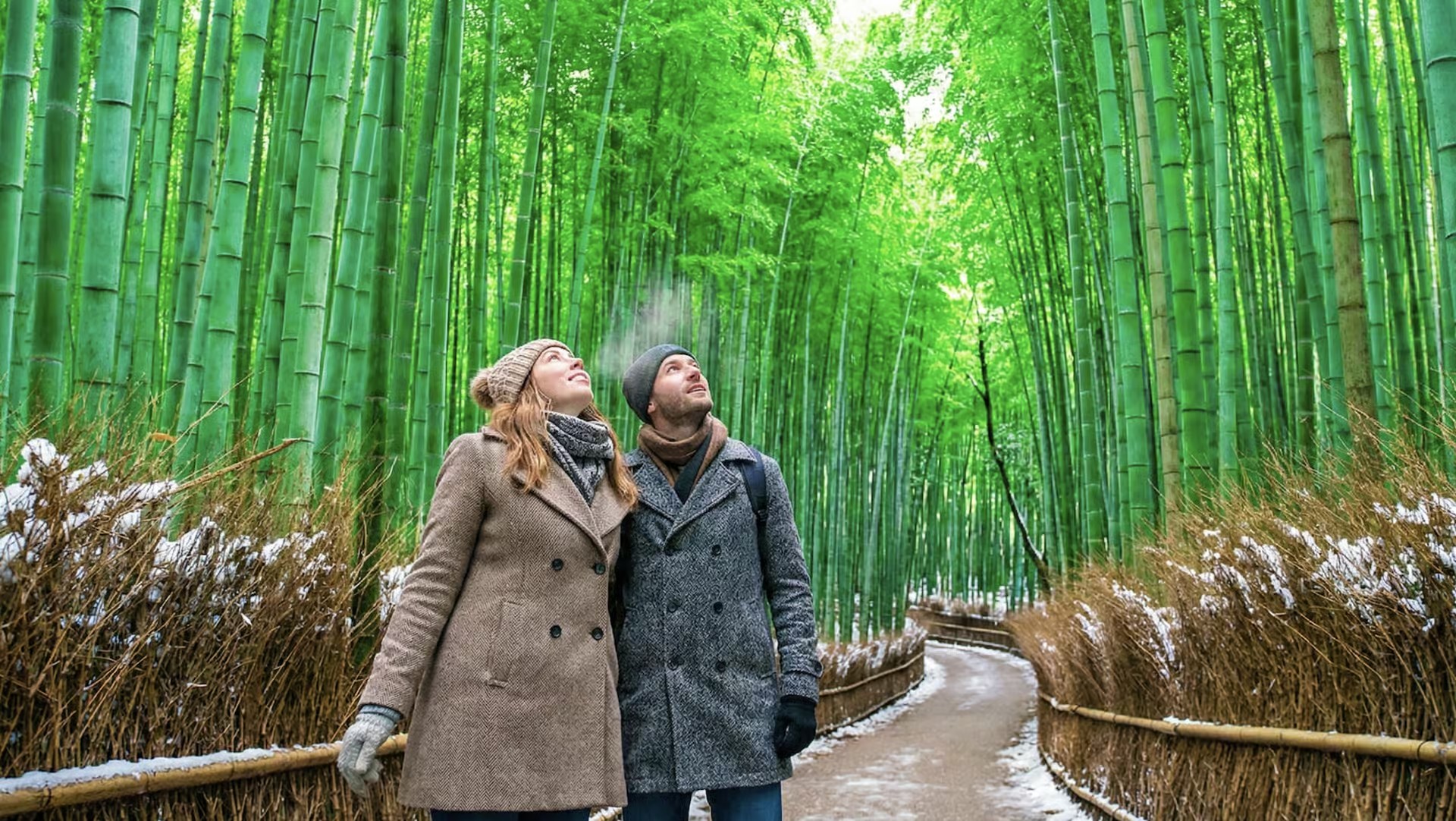
Most people who come to Arashiyama turn back at the bamboo. The road keeps going.
Follow it north and west and the shops thin out. The coaches disappear. Wooden houses and a few thatched roofs line a narrow lane where you arrive after twenty or thirty minutes. At the top of that lane is Otagi Nenbutsu-ji Temple. Twelve hundred small stone figures cover the hillside behind its gate, each one showing a different face.
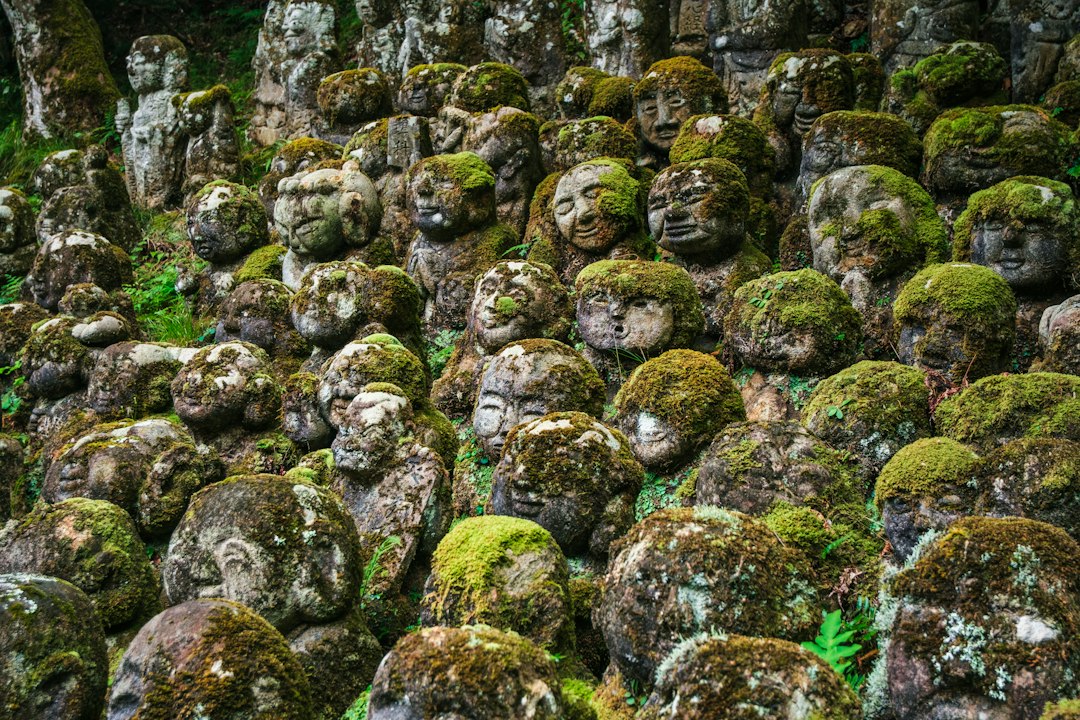
What makes them worth the climb is who made them. These are not the work of a workshop. Amateurs carved them between 1981 and the early 1990s. These were visitors who came, sat down with a chisel, and produced one figure. They did this under the supervision of the priest. Some are praying. One holds a tennis racket. Several are clearly laughing at a private joke. Thirty years of moss have settled into the cut lines, which has made them softer and considerably stranger.
What Otagi Nenbutsu-ji Actually Is
The temple is far older than its statues, and the two halves of the story do not obviously belong together.
The 1,200 Rakan, and Who Carved Them
Rakan — arhats — are the disciples of the historical Buddha, and temples across Asia depict them in sets. What is unusual here is the authorship. From 1981, the temple invited members of the public to carve their own. They learned the basics on site. Roughly 1,200 figures were dedicated over the following decade.
The result reads nothing like a formal sculpture programme. Because each carver was untrained. They worked on a figure they had chosen themselves. As a result, the expressions run from devout to comic to faintly unsettling. You will find one cradling a cat. Another has what appears to be a portable cassette player. You will see pairs sharing a cup of sake. There are also a great many with an ear-to-ear grin.
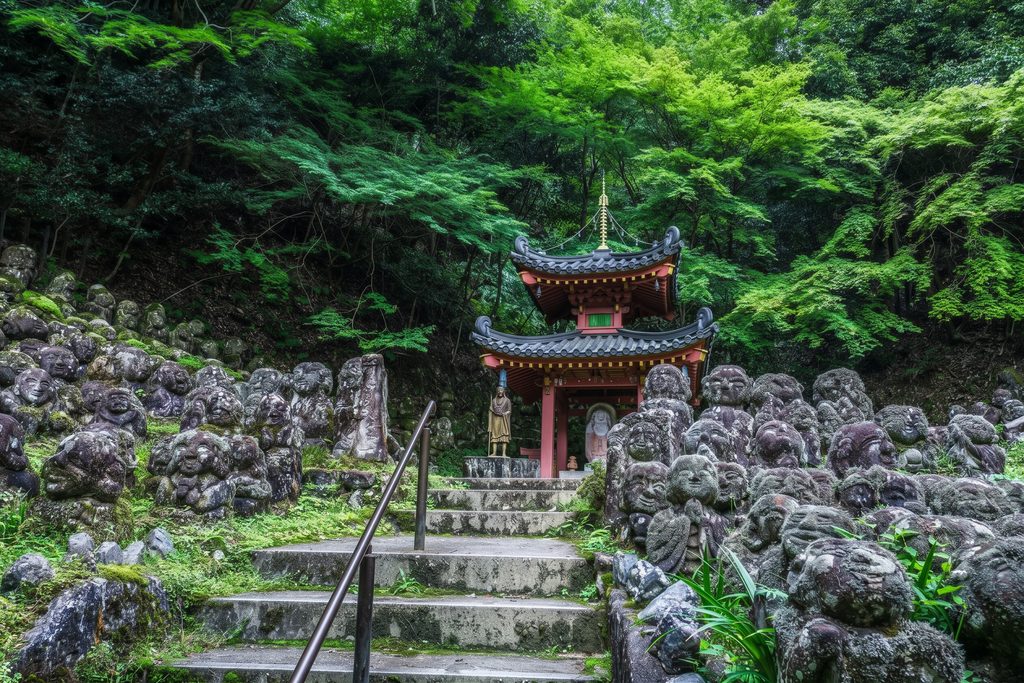
They are arranged in tiers up the slope, and the grouping matters more than any individual piece. Standing halfway up with several hundred faces angled toward you is the moment the place lands. Among the travelers we bring here, almost everyone ends up hunting for the one that looks like someone they know.
Kocho Nishimura and the Temple He Inherited
Kocho Nishimura (1915-2003) was a restorer of Buddhist statues before he became a priest, and he took over Otagi Nenbutsu-ji in 1955. He inherited a wreck. The buildings had been damaged by a typhoon in 1950 and the temple had no congregation to speak of.
His solution was to rebuild it with the hands of whoever turned up. The carving project was as much about drawing people back to an abandoned hillside as it was about producing art, and it worked — the temple’s popular name in Japanese translates roughly as the Temple of the Twelve Hundred Arhats.
That origin is the reason the place feels different from Kyoto’s famous temples. A shogun commissioned nothing here. It is a twentieth-century rescue operation wrapped around a medieval building, and it does not pretend otherwise.
The Older Buildings Most Visitors Walk Past
The main hall dates from 1318, was designated an Important Cultural Property in 1879, and was physically moved to this site in 1922 to save it from decay in its original location. The principal image inside is a Senju Kannon, the thousand-armed Kannon.
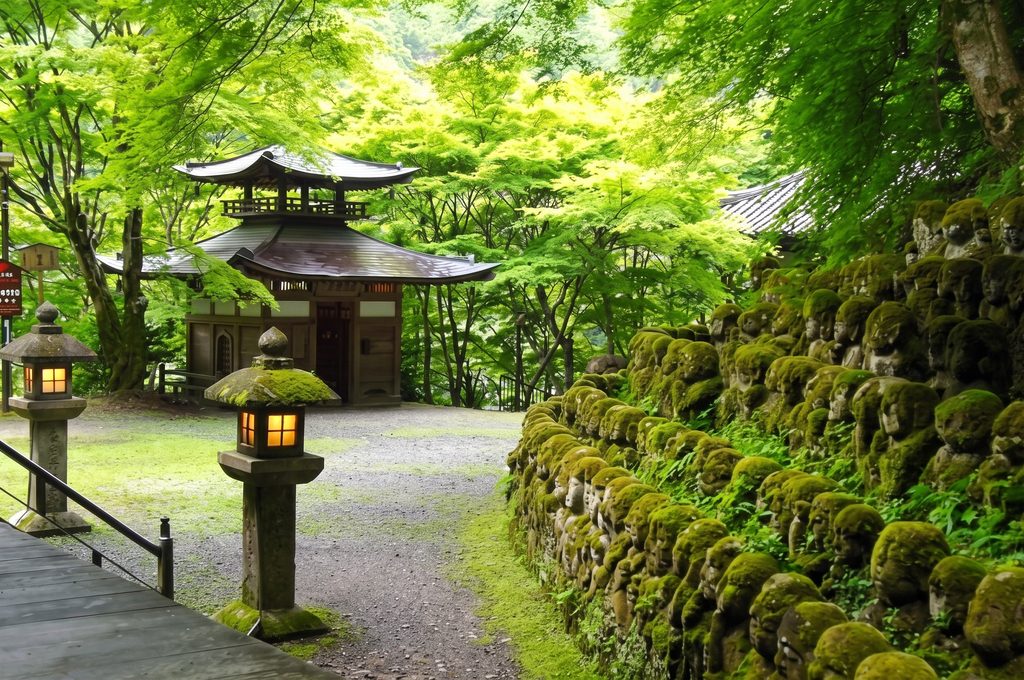
The Nio-mon gate you walk through on the way in is mid-Edo period and was taken apart and rebuilt in 1981, the same year the carving began. There is also a small hall housing the Fureai Kannon, a figure visitors are permitted to touch, which inverts the usual rule at Japanese temples.
Our advice is to walk the hall and the gate properly before you start on the statues. Once you are among the rakan you will not come back down for them.
Expert Tip
The statues face in every direction, and the ones on the upper tiers are angled to be seen from above, not from the path. Climb to the top of the slope first, then work your way down. Morning light comes over the ridge and hits the faces from the side, which is the only time the carved detail reads clearly in a photograph.
Hours, Admission, and the Two Closed Days
This is the section where most online information about Otagi Nenbutsu-ji is out of date, and one of the errors can cost you an afternoon.
Why Older Guides Get the Price Wrong
Admission is now 1,000 yen for adults, with children under ten admitted free. A large number of English-language pages still list 300 or 500 yen, which were earlier figures.
Bring cash. This is a small temple at the end of a bus route, not a site with card terminals, and the same applies to the teahouses on the road below.
Is it worth a thousand yen? We think so, but not as a fifteen-minute stop. If you are going to climb up here, give it the time that justifies the fare and the fee together.
Closed Wednesdays and Saturdays
Otagi Nenbutsu-ji closes on Wednesdays and on Saturdays. The Saturday closure is the one that catches people out, because almost no Kyoto temple shuts on a weekend and few travelers think to check.
The temple states that it opens on 31 December and 1 January regardless. Beyond that, treat Wednesday and Saturday as firm and plan the rest of your Arashiyama day around them.
We have had more than one traveler arrive at the gate on a Saturday after a forty-minute uphill walk. Check the day before you commit to the climb.
When to Arrive
Opening is 9am. Japanese listings, including Kyoto Bus, give the closing time as 4:15pm; the temple’s own English page says 4pm. Assume the earlier of the two and you will not be caught out.
Nine o’clock is the hour we recommend without hesitation. The temple receives a fraction of the traffic that the bamboo grove does, but the grounds are narrow and twenty people fill them. At opening there is often nobody else on the slope at all.
Late afternoon has its own argument — the light goes gold on the upper tiers — but the bus service back down is thin, and being stranded up here at dusk is a real possibility rather than a romantic one.
Getting There From Central Arashiyama
Otagi Nenbutsu-ji is roughly four kilometres from Togetsukyo bridge, uphill the whole way, at the point where the city gives up and the mountain starts.
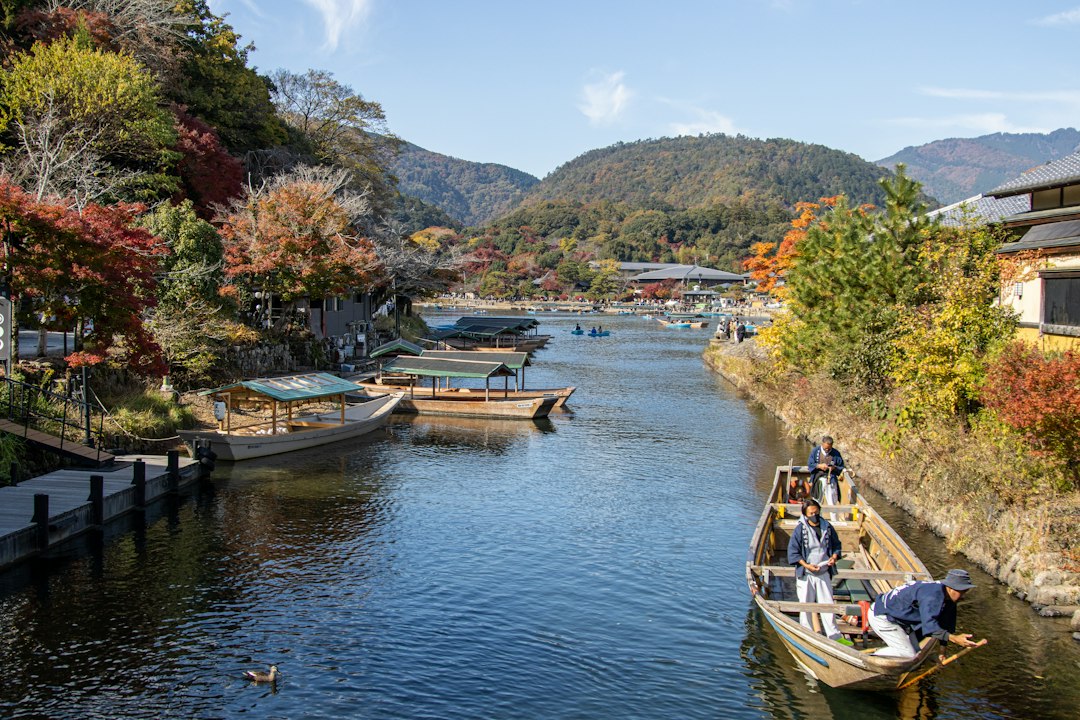
The Bus to Otagi-dera-mae
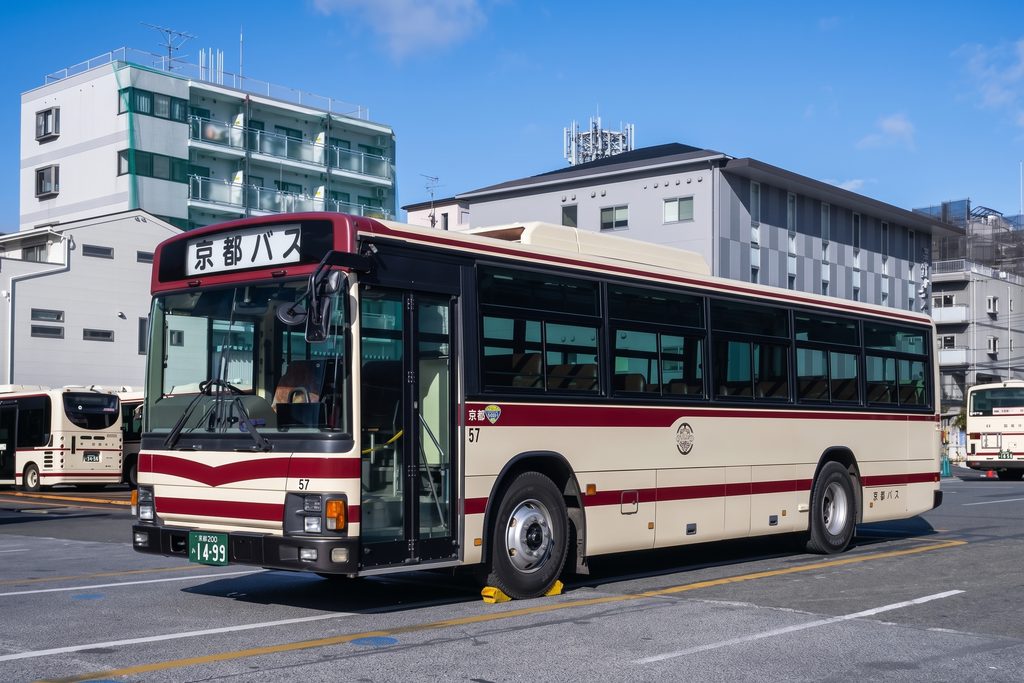
Kyoto Bus routes 92 and 94 run from Hankyu Arashiyama Station up to the Otagi-dera-mae stop, which is directly outside the temple. The temple’s own page directs visitors to route 94 from the Nonomiya stop, putting the ride at about 25 minutes and the fare at 230 yen.
The catch is frequency. These are mountain routes toward Kiyotaki, not city services, and they do not run every ten minutes. Photograph the return timetable at the stop when you get off — it takes five seconds and decides how long you can stay.
An IC card works on Kyoto Bus, so there is no need to hunt for coins. If you do not have one yet, a Suica or ICOCA is the single most useful thing to sort out on arrival in Japan.
Walking Up Through Saga-Toriimoto
The walk is the better experience, and we recommend it to anyone who can manage a sustained gentle climb. The temple’s page puts it at about an hour from JR Saga-Arashiyama Station; other sources say thirty-five to forty minutes. Either way it is longer than it looks on a map because of the gradient.
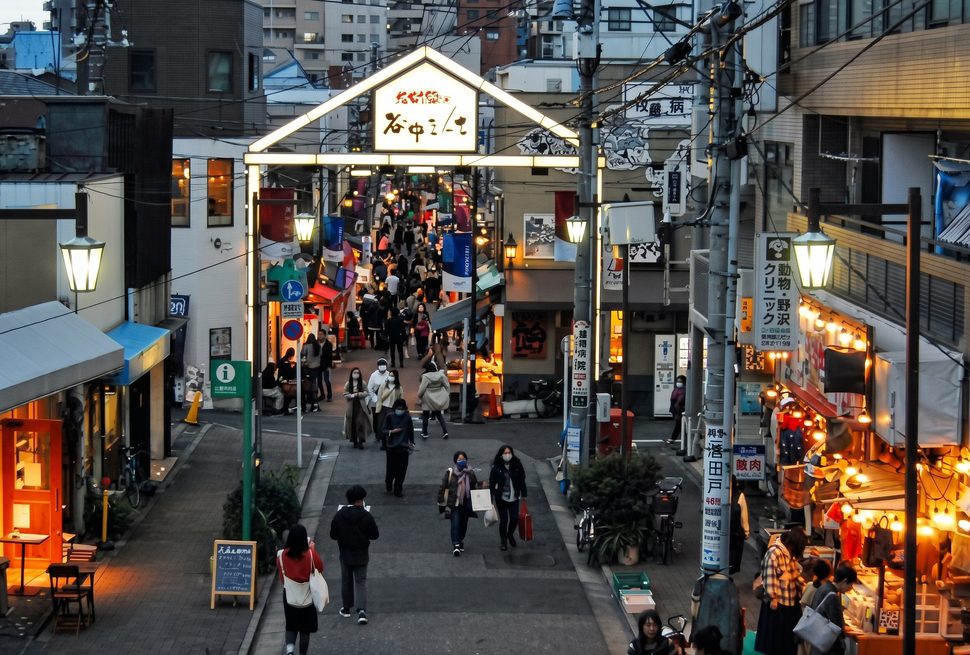
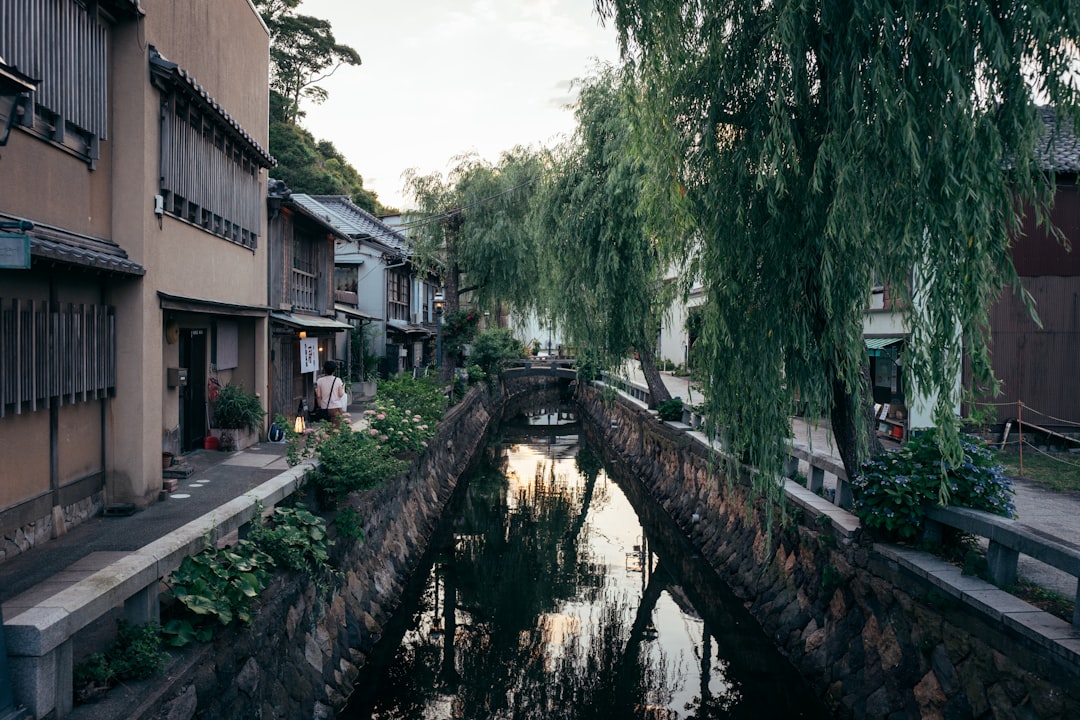
The reward is the road itself. The upper section runs through Saga-Toriimoto, designated one of Kyoto’s Important Preservation Districts for Groups of Traditional Buildings in 1979. Wooden townhouses, latticed windows, a few thatched roofs, and almost no traffic.
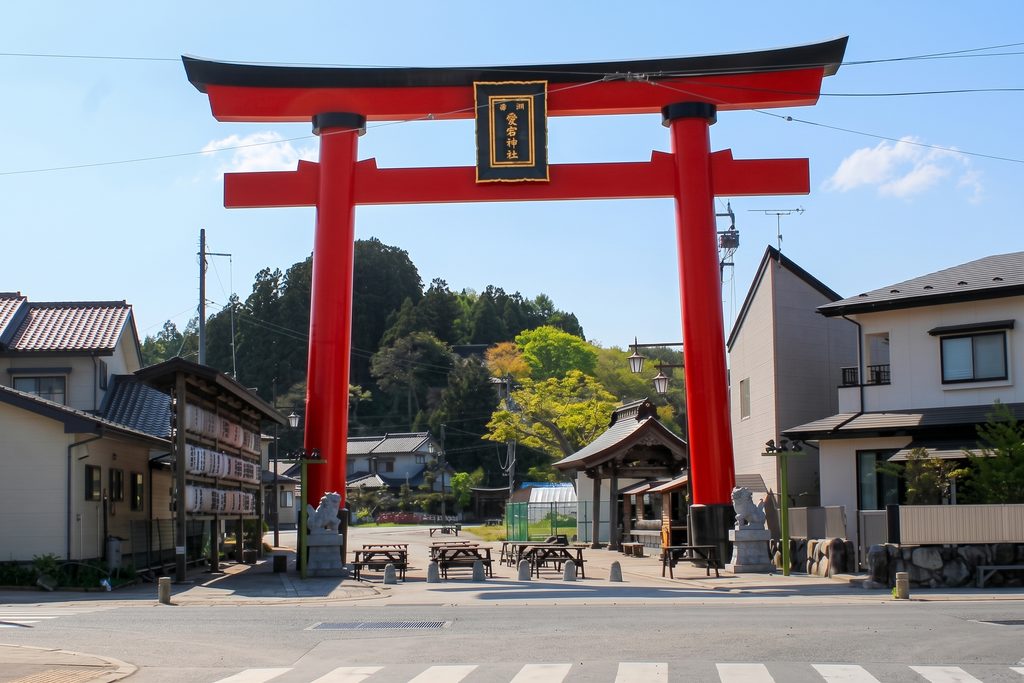
Two thatched teahouses, Hiranoya and Tsutaya, stand at the vermilion first torii of Atago Shrine, a short distance below the temple. Both served pilgrims walking up the mountain centuries before anyone came for statues.
Taxi, and Why We Often Use It One Way
A taxi from JR Saga-Arashiyama takes about five minutes and costs in the region of 1,500 yen. Split between two or three people that is less than the bus fares.
The arrangement we use most often with guests is taxi up, walk down. You arrive fresh at 9am with the slope to yourself, then descend through Saga-Toriimoto on foot with gravity on your side, stopping at whatever you like on the way. The uphill version of that same route in August heat is a different proposition entirely.
If you are travelling with anyone who is unsteady on their feet, the taxi is not a luxury. The temple grounds themselves involve stone steps between the tiers, and there is no way around that part.
Expert Tip
If you take a taxi up, ask the driver for a receipt and keep the temple’s phone number, which is posted at the entrance, saved on your phone. Taxis do not cruise for passengers this far out, and the walk down to a road where one might pass takes twenty minutes. Most Kyoto hotels will also book a return pickup for a set time if you ask at the desk in the morning.
Building a Half Day Around It
Otagi Nenbutsu-ji on its own is a forty-minute visit. The reason to come is the stretch of road it sits at the end of, and the second temple halfway down it.
Adashino Nenbutsu-ji, Further Down the Hill
Adashino Nenbutsu-ji is on the same road, below Otagi, close enough to walk between them without thinking about it. It holds roughly 8,000 stone images, gathered from unmarked graves across the area and arranged in dense rows.
The contrast between the two is the point of visiting both. Otagi’s rakan are individual, personal, and often funny. Adashino’s stones are anonymous, identical at a glance, and commemorate people whose names nobody recorded. Seeing them within an hour of each other says something about Japanese attitudes to the dead that neither does alone.
In late August, Adashino holds Sento Kuyo, a memorial service in which more than a thousand candles are lit among the statues after dark. It has traditionally fallen on 23 and 24 August, though the dates have moved in recent years — confirm before building a trip around it.
The Thatched Teahouses and the Atago Torii
Hiranoya, at the foot of the first torii, dates to the early Edo period and served pilgrims heading up Mount Atago to the fire shrine at the summit. It is known for ayu, the river sweetfish, and for shinko dango, a twisted rice sweet said to be shaped after the switchbacks of the mountain path.
Stopping here is what turns the walk from a transit leg into the reason you came. Sit outside with tea and a plate of dango, and the road in front of you is doing what it has done since the seventeenth century, minus the pilgrims.
The torii itself marks the start of the old climb to Atago Shrine, which is a serious two-hour mountain hike and not something to begin on a whim after a temple visit.
How It Fits With the Bamboo Grove and Tenryu-ji
Central Arashiyama and this upper road are two different half days. Trying to do both properly in one morning is how people end up rushing the part they travelled for.
Our own Arashiyama walking tour runs four hours and stays in the lower district — Tenryu-ji’s fourteenth-century garden, the grove, Nonomiya Shrine, a bowl of matcha, then the bridge and the monkey park above the river. Otagi Nenbutsu-ji is beyond that radius, and we would rather do the lower district properly than tack on a bus ride at the end.
The version that does include it is a private day, where the route is set with you rather than fixed in advance. A guide who knows the bus timings and the closure days can put Otagi and Adashino in the morning and bring you back down into Arashiyama for the afternoon, which is the order that works.
Otagi Nenbutsu-ji Temple: Frequently Asked Questions
Is Otagi Nenbutsu-ji worth the trip from central Arashiyama?
If you have a full day in Arashiyama, yes. If you have a single morning and have not yet seen Tenryu-ji or the bamboo grove, no — do the lower district first. The trip up costs you at least ninety minutes once travel is counted, and the temple rewards an unhurried visit rather than a dash. On a second trip to Kyoto, or on any day when the central sites feel unbearably crowded, it becomes one of the better decisions available in the district.
How long do you need at Otagi Nenbutsu-ji Temple?
Forty minutes to an hour inside the grounds. The site is compact but vertical, and the time goes on walking the tiers and looking at individual faces rather than on covering ground. Add the road below and a stop at Adashino Nenbutsu-ji and you have a comfortable half day from central Arashiyama and back.
What is the difference between Otagi Nenbutsu-ji and Adashino Nenbutsu-ji?
Otagi Nenbutsu-ji has around 1,200 rakan statues carved by members of the public from 1981 onward, each one individual and many of them humorous. Adashino Nenbutsu-ji has roughly 8,000 stone images collected from unmarked graves in the area, arranged in rows and uniformly solemn. They share a road and a name element but almost nothing else, and both are open to visitors for a separate admission fee.
Related Tours

Conclusion
Check the day of the week before anything else. Otagi Nenbutsu-ji closes on Wednesdays and Saturdays, and a Saturday is exactly the day a visitor with a free morning in Kyoto would choose to go looking for somewhere quiet. That single fact determines whether the rest of the plan is worth making.
Once the day is settled, go early and go up by taxi. Arriving at nine with the slope empty, then walking back down through Saga-Toriimoto with a stop for tea at the torii, is a sequence that takes about three hours and costs very little beyond the fare and the 1,000 yen at the gate.
What stays with people is not the count. Twelve hundred is a number on a sign. What stays is standing among several hundred faces that were made by people who had never carved anything before, and realising that the unevenness is the whole point.
Plan Your Japan Trip with Local Experts
Our team has guided 40,000+ travelers across Japan. Tell us about your trip and we’ll get back to you within 24 hours.