In this article:
- What Ameyoko Market Actually Is
- Eating Your Way Down the Street
- Shopping Without Wasting Your Money
- Timing the Visit, and What to Pair It With
- Ameyoko Market: Frequently Asked Questions
Introduction
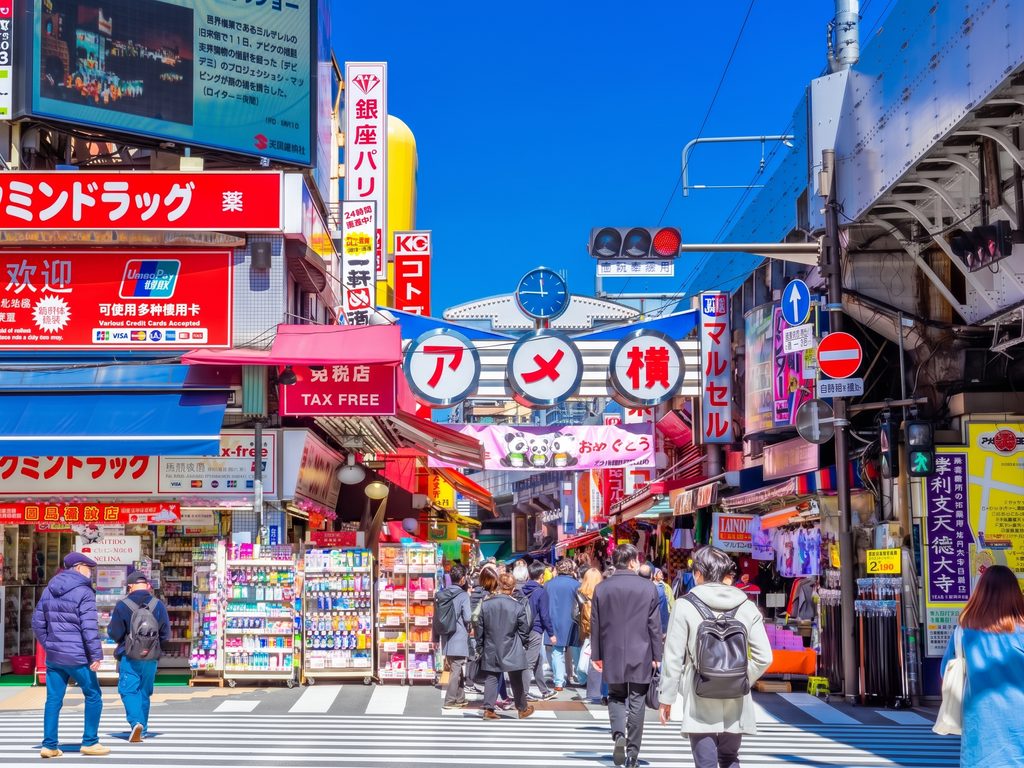
Ameyoko market is loud in a way almost nothing else in Tokyo is.
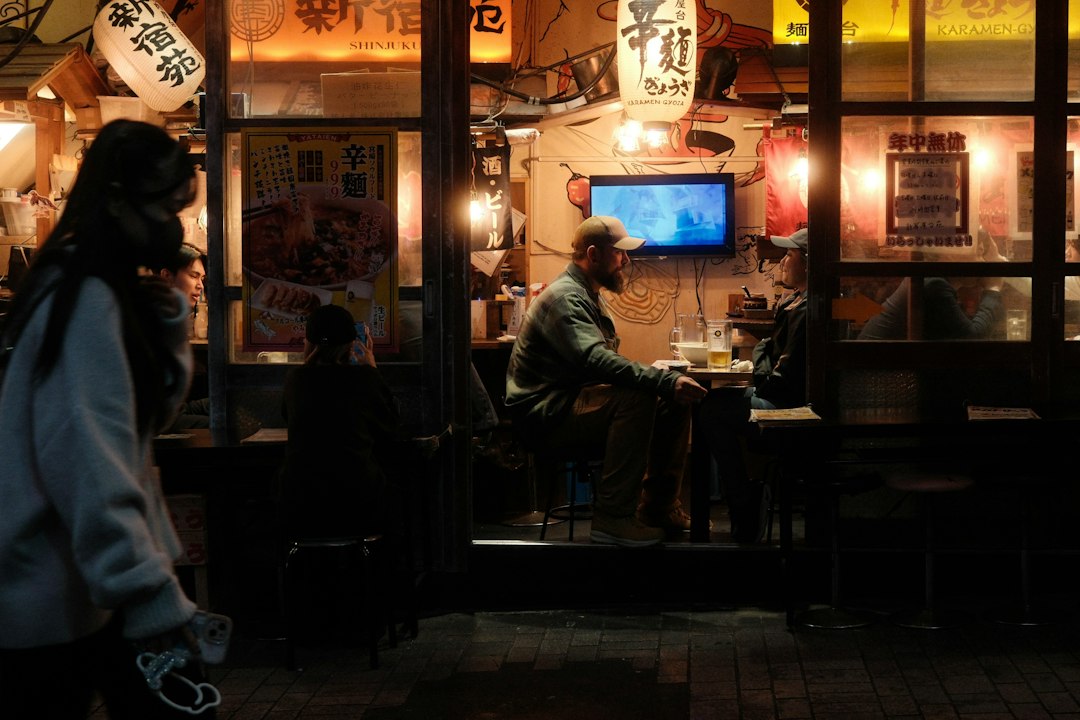
A fishmonger is shouting a price at you. A train passes overhead every ninety seconds and nobody looks up. Someone is grilling skewers into the walkway. A Turkish kebab stand sits next to a shop selling dried scallops by the kilo. A man with a microphone is halving the price of a box of crab in real time. This is because it is four in the afternoon. He would rather not carry it home.
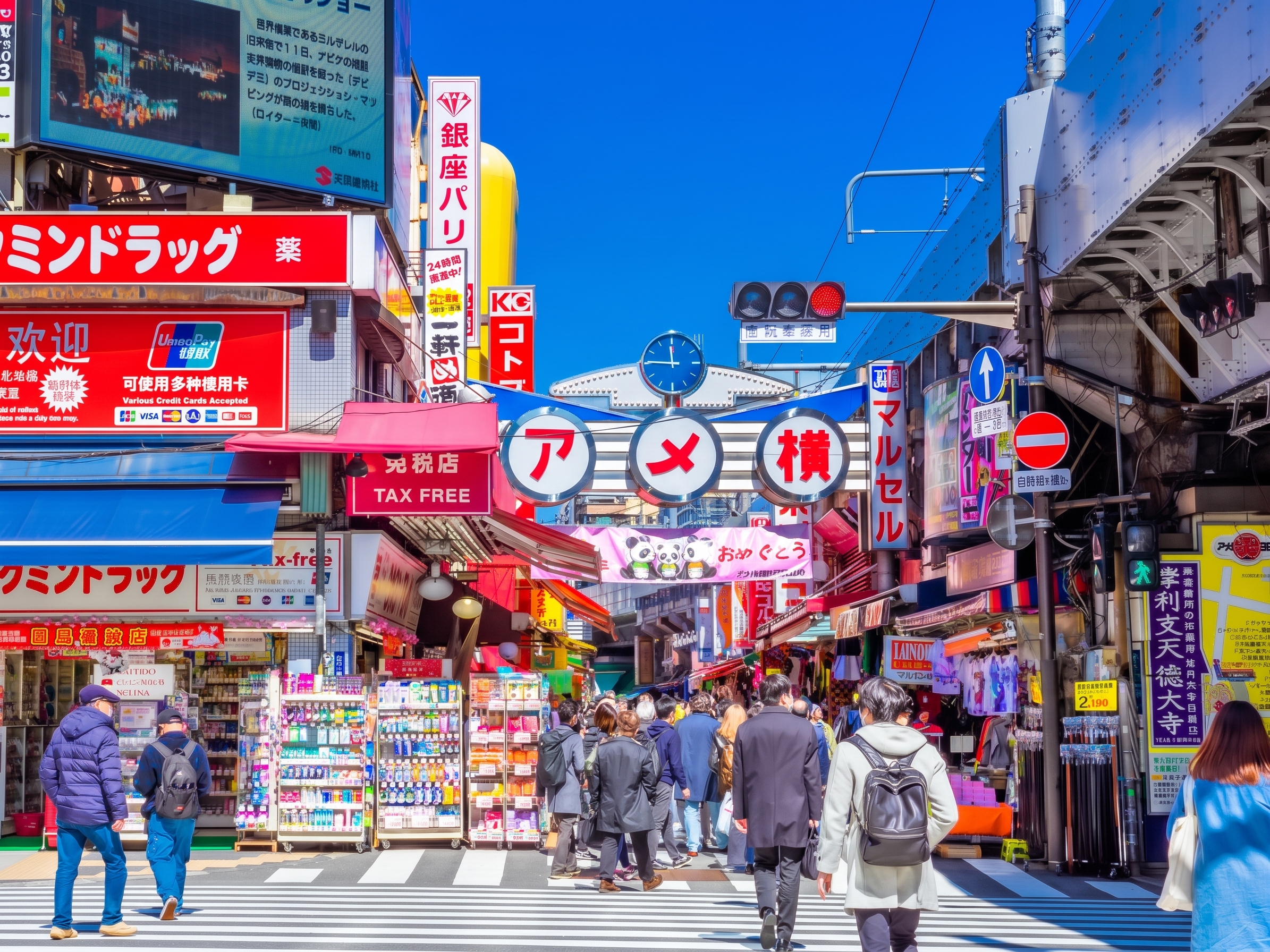
This is the part of the city that did not get tidied up. The street began as a black market in the ruins after the war. It was licensed into a legitimate shopping street in the 1950s. The commercial logic of that origin — sell it fast, sell it cheap, shout about it — never entirely left. Roughly four hundred shops sit along about five hundred metres of it. They run beside the Yamanote and Keihin-Tohoku tracks from Ueno station down to Okachimachi.
Travelers we work with often arrive expecting a food market. Instead, they find something stranger. It is a place selling raw tuna, counterfeit-looking sneakers, Thai fish sauce, and cosmetics within thirty metres of each other. The trick is knowing which of those things is actually worth your attention.
What Ameyoko Market Actually Is
Ameyoko is short for Ameya Yokocho, and the name carries its own history argument.
From Postwar Black Market to Licensed Shopping Street
One reading is literal. Ameya Yokocho means candy shop alley. Sweets were one of the few things sold in volume here. This was when sugar was scarce. Almost everything else was rationed at that time. The other reading is that “ame” stands for America. This is because surplus American goods moved through this street when it was a black market after the war.
Both explanations circulate, including on the market’s own association materials, and neither has clearly won. We are inclined to think both are true in sequence. First came candy, then American surplus. However, that is our reading rather than settled fact.
What matters more is the structure it left behind. The stalls are narrow because they were improvised. The aisles are tight because nobody planned them. The shops still operate on small margins and high turnover. That is why the prices are what they are.
The Geography: Ueno to Okachimachi, Under the Tracks
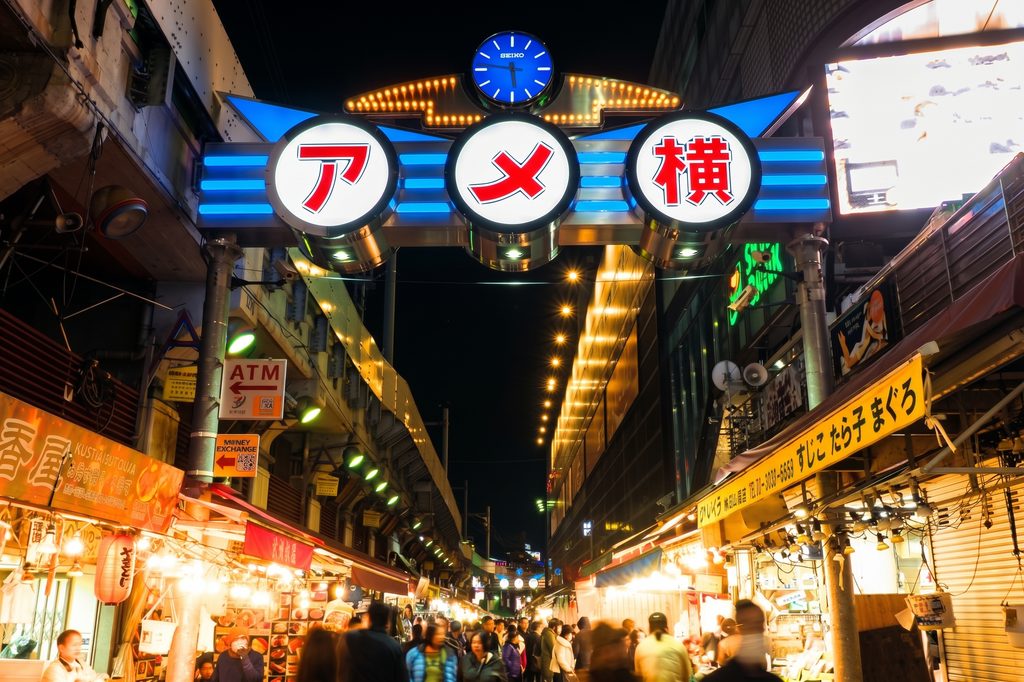
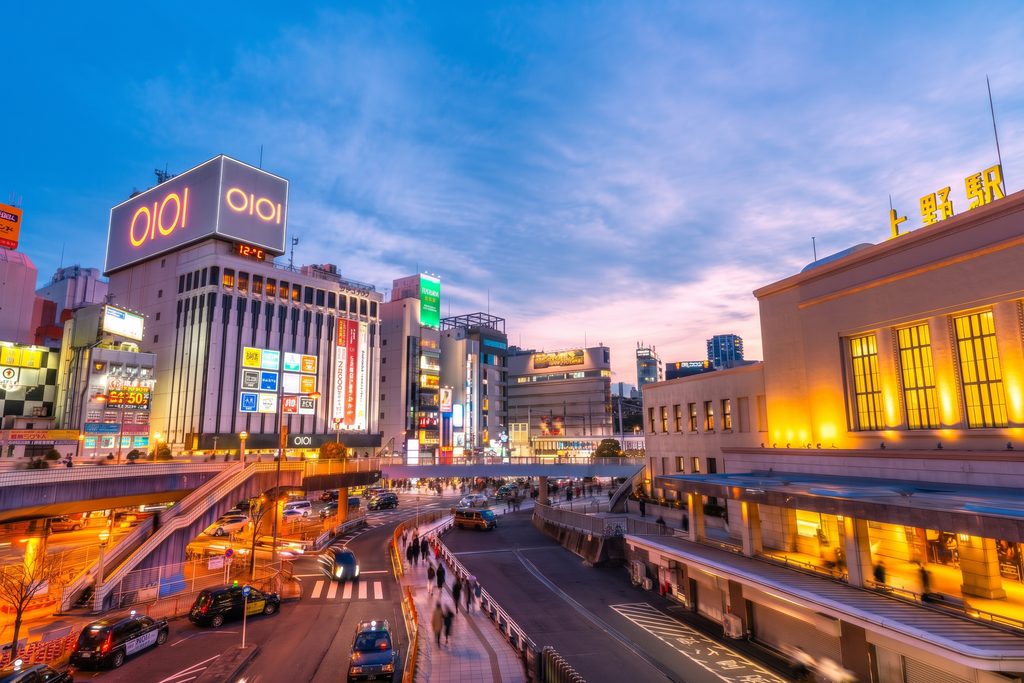
The market occupies the strip between two JR stations that are one stop apart. Come out of Ueno station at the Shinobazu exit, and the entrance arch is directly in front of you. Come out of Okachimachi, and you are at the other end. Walking the length of it takes about eight minutes if nobody is in your way. However, that is a condition that rarely holds.
There is more here than the main drag. Parallel lanes and covered arcades run off to either side, and the shops directly beneath the elevated railway are often the older ones. If you only walk the central avenue you will see maybe half of the market.
We generally tell people to walk the main street from Ueno to Okachimachi first at speed, without stopping, then turn around and work back through the side lanes. You cannot evaluate anything while you are being pushed forward by the crowd behind you.
What the Street Sells Now
The inventory splits into four rough categories: fresh and dried seafood, food to eat on the spot, clothing and bags and shoes, and cosmetics and drugstore goods.
The seafood end is concentrated toward Ueno. Dried fish, bonito flakes, sea urchin in boxes, frozen crab legs, and mounds of dried squid sold by weight. Much of it is aimed at Japanese shoppers buying for home, which is a useful signal about quality.
The clothing is mostly not for you. Sports brands at discount, military surplus, and an amount of bag that suggests a wholesale operation somewhere upstream. Some of it is legitimate discount stock and some of it is not, and telling them apart from the street is harder than it looks.
The drugstores and cosmetics shops are the ones doing the most visitor business now. They are also the ones most likely to be tax-free registered and to accept cards.
Expert Tip
Walk the market on a weekday afternoon rather than a weekend. Saturday and Sunday between roughly 13:00 and 17:00 is when the aisles genuinely stop moving, and the shops have no incentive to negotiate with anyone when there are forty people behind you. A Tuesday at 11:30 is a different street with the same stock. Note that many individual shops close on selected Wednesdays, so Wednesday is the one weekday we avoid.
Eating Your Way Down the Street
Eating in Ameyoko is not the curated experience that Tsukiji has become. It is faster, messier, and considerably more mixed in quality.
Seafood, Skewers, and the Standing Counters
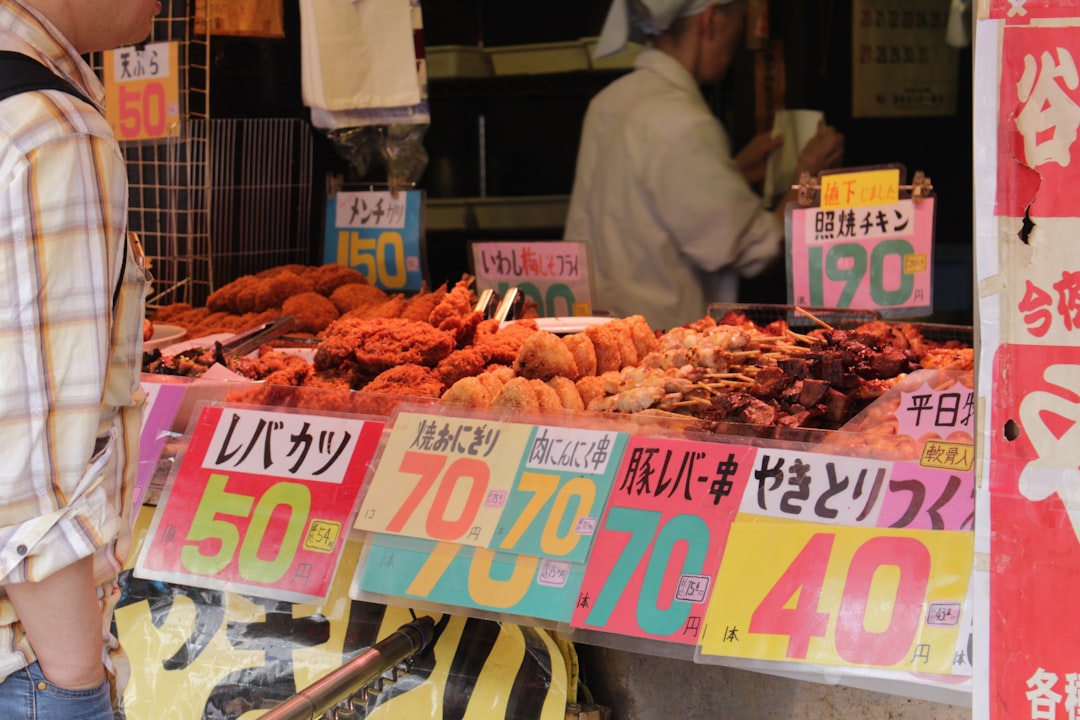
The strongest reason to eat here is the seafood, because the shops selling it raw are often the shops serving it. Sashimi on a stick, scallops grilled in the shell, oysters shucked while you wait, and sea urchin served in its own tray are all standard.
Grilled skewers and fried food fill the rest. Yakitori, karaage, takoyaki, and menchi katsu are all easy to find, and the international stands — Turkish kebab, Chinese street snacks, Thai and Korean food — have been part of the street for long enough that they are not a novelty.
The standing bars are the part most visitors walk past. Several places here pour beer and highballs from mid-morning, with a counter, no seats, and a plate of something salty. Daytime drinking is socially unremarkable in Ameyoko in a way it is not in most of Tokyo, and for a first-time visitor that alone is worth ten minutes of standing at a counter.
Tatakiuri: The Auction That Is Also a Performance
Tatakiuri is the selling style the market is known for. A vendor takes a box of something — crab, dried fish, sweets — announces a price, drops it, announces a lower one, and keeps going until the crowd bites.
It is theatre and it is also a genuine clearance mechanism. Perishable stock has to move before closing, so the same box really is cheaper at 17:00 than it was at 11:00.
The catch is volume. The price is good because the quantity is large, and a kilo of frozen crab legs is not a useful purchase if you are staying in a hotel room. Watch it, enjoy it, and buy only if you have a kitchen or a very committed group.
The Ameyoko Center Building Basement
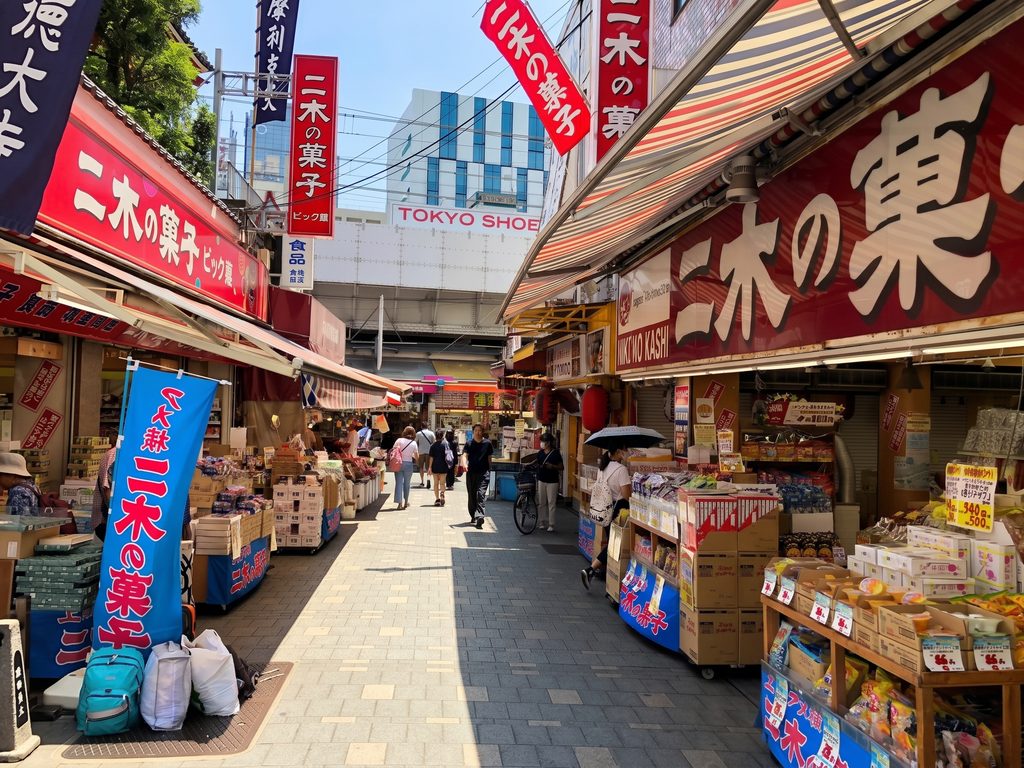
The basement of the Ameyoko Center Building is the single most interesting room in the market and the one almost nobody walks into.
It is an Asian grocery market: Chinese, Thai, Korean, and Vietnamese ingredients, whole spices, fish sauce, fermented vegetables, unfamiliar produce, and cuts of meat and seafood you will not see in a Japanese supermarket. The smell hits before you reach the bottom of the stairs.
You are not the target customer, and that is precisely the appeal. This is where Tokyo’s Asian restaurant kitchens shop, and walking through it tells you more about how the city actually eats than any food hall will. If you want the Tokyo equivalent aimed at visitors instead, read our guide to what to eat at Tsukiji Outer Market and compare the two.
Shopping Without Wasting Your Money
Ameyoko has a reputation for cheapness that is roughly half deserved.
Niki no Kashi and the Snack Aisle Problem
Niki no Kashi is the confectionery shop people mean when they say you should buy snacks in Ameyoko. The company dates to 1947 and has been on this street since 1949, and its main branch carries something on the order of five thousand product lines across two floors.
The scale is the point and also the difficulty. Regional Kit Kats, seasonal Pocky, rice crackers, dried squid, and an entire wall of things you have never seen are cheaper here than at an airport by a wide margin, but five thousand options is not a shopping trip, it is a decision problem.
Go in with a category rather than a list. Pick one — savoury rice crackers, or matcha-flavoured anything, or regional sweets — and buy within it. We have watched travelers spend forty-five minutes in that shop and leave with nothing.
Where Haggling Works, and Where It Does Not
Negotiating is possible in Ameyoko, which makes it unusual in Japan. It is not, however, expected everywhere, and getting this wrong is the fastest way to be mildly embarrassing.
It works at the open-fronted stalls selling fresh and dried food by weight, where the vendor controls the price and the stock is perishable. Buying more than one of something, and asking near closing time, are the two things that actually move a price. A polite question gets a yes or a no and no offence either way.
It does not work in the drugstores, the chain shops, or any place with barcodes and a register. Those are fixed-price retail operations and asking will simply confuse the staff. If a shop has a price sticker on every item, the price is the price.
Cash, Cards, and Tax-Free
Bring cash. The larger shops take cards and IC payment without difficulty, but a meaningful share of the small stalls — particularly the food vendors and the older family-run shops — still operate on cash, and the ones most likely to give you a good price are the ones least likely to take a card. Ten thousand yen in notes covers a normal visit comfortably.
Tax-free shopping is available at the bigger drugstores and at shops like Niki no Kashi, with the usual conditions: your passport, a minimum spend, and a purchase made in one store on one day. The small stalls do not offer it. Our explainer on tax-free shopping in Japan covers the current rules and the paperwork in detail.
One practical note on payment: the IC transit cards that open the train gates also work at most of the larger shops here, which is faster than cash for small purchases.
Expert Tip
If you intend to negotiate, do it at the end of your walk rather than the beginning. Prices on perishable goods soften as closing approaches, vendors are more willing to bundle, and you will have seen enough of the street by then to know whether the price you are being offered is actually good. Arriving at 16:30 and shopping until close is a better plan than arriving at noon.
Timing the Visit, and What to Pair It With
Ameyoko rewards planning around it more than most Tokyo attractions, because the same street is a genuinely different experience at three different hours.
The Best Hours, and the Worst
Most shops here run roughly 10:00 to 20:00, though hours vary shop by shop and many close on selected Wednesdays. Before 10:00 the shutters are down and there is nothing to see.
Late morning is the calmest hour with everything open — around 10:30 to 11:30 you can actually stop and look at things. Early evening, from about 17:00, is when the food stalls are busiest and the prices are at their softest, and it is our preferred slot if you are eating rather than shopping.
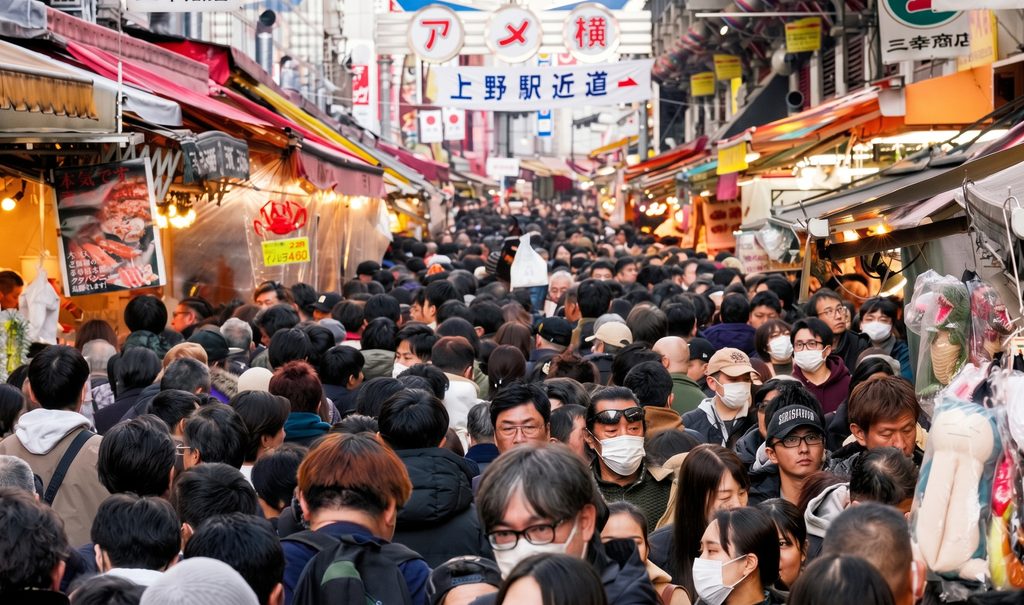
The hours to avoid are weekend afternoons. From about 13:00 to 17:00 on a Saturday the street is a queue that happens to be moving, and nothing about that improves the experience.
The Year-End Crush
Between roughly December 28 and 31, Ameyoko becomes a national news item. Tokyo households come here for the seafood that goes into osechi, the New Year food eaten in the first days of January — crab, herring roe, salmon roe, prawns — and press reports put daily footfall in the hundreds of thousands.
It is remarkable and it is almost impossible to shop in. If you are in Tokyo over New Year and want to see it, go to watch rather than to buy, go early in the morning, and accept that you will be moving at the pace of the crowd.
Everyone else should simply avoid those four days. The market is fully itself in October or in May, without the crush.
Ueno Park Before, Asakusa After
Ameyoko takes ninety minutes to two hours to do properly, which makes it an awkward standalone outing and an excellent component of a larger day.
The natural pairing on the front end is Ueno Park, which begins directly across from the station and holds the Tokyo National Museum along with several other major institutions. Museum in the morning, market in the early afternoon, and you have used one neighbourhood well. Travelers on our private Tokyo day tour often build exactly this sequence, since the route is agreed with the guide beforehand rather than fixed in advance.
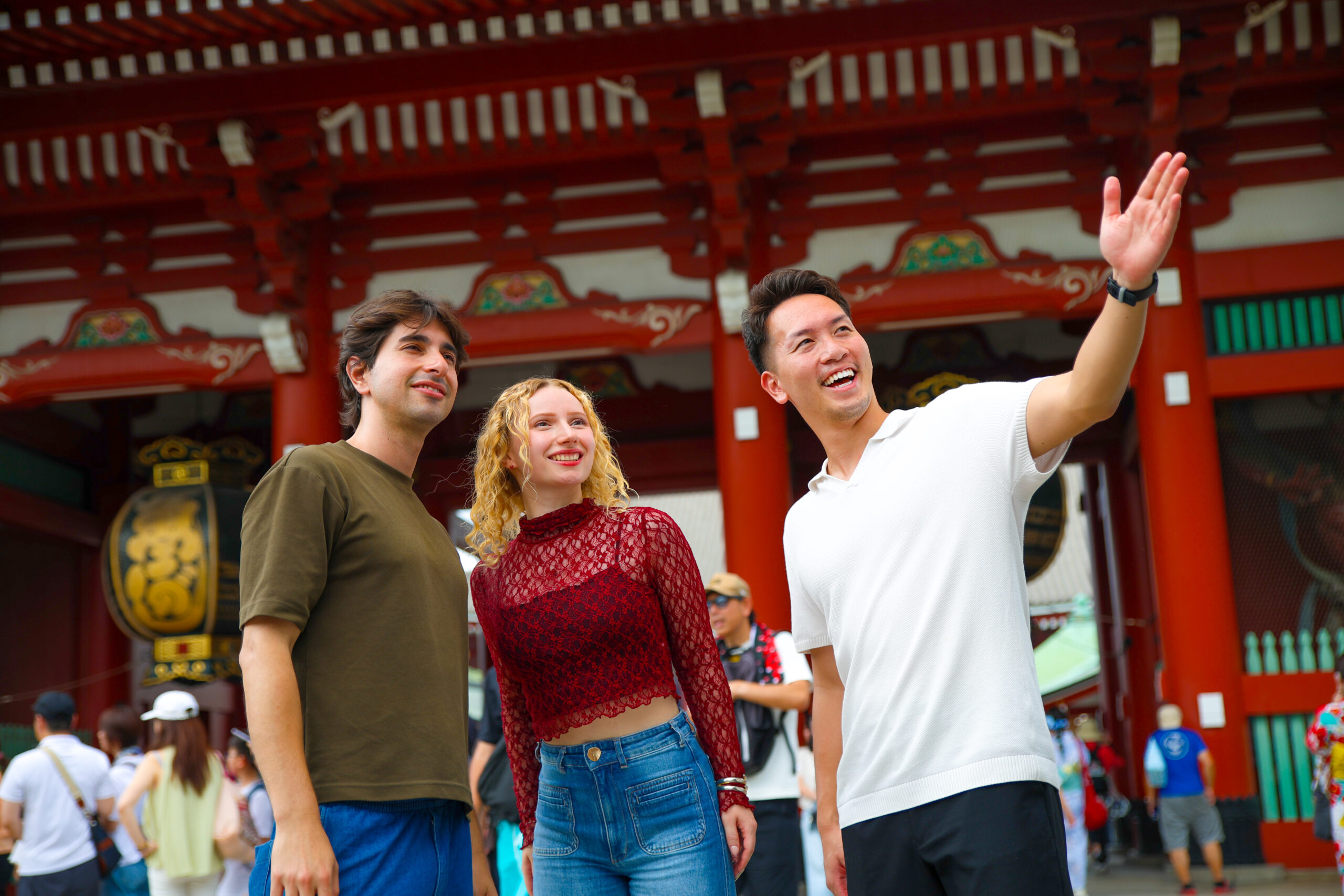
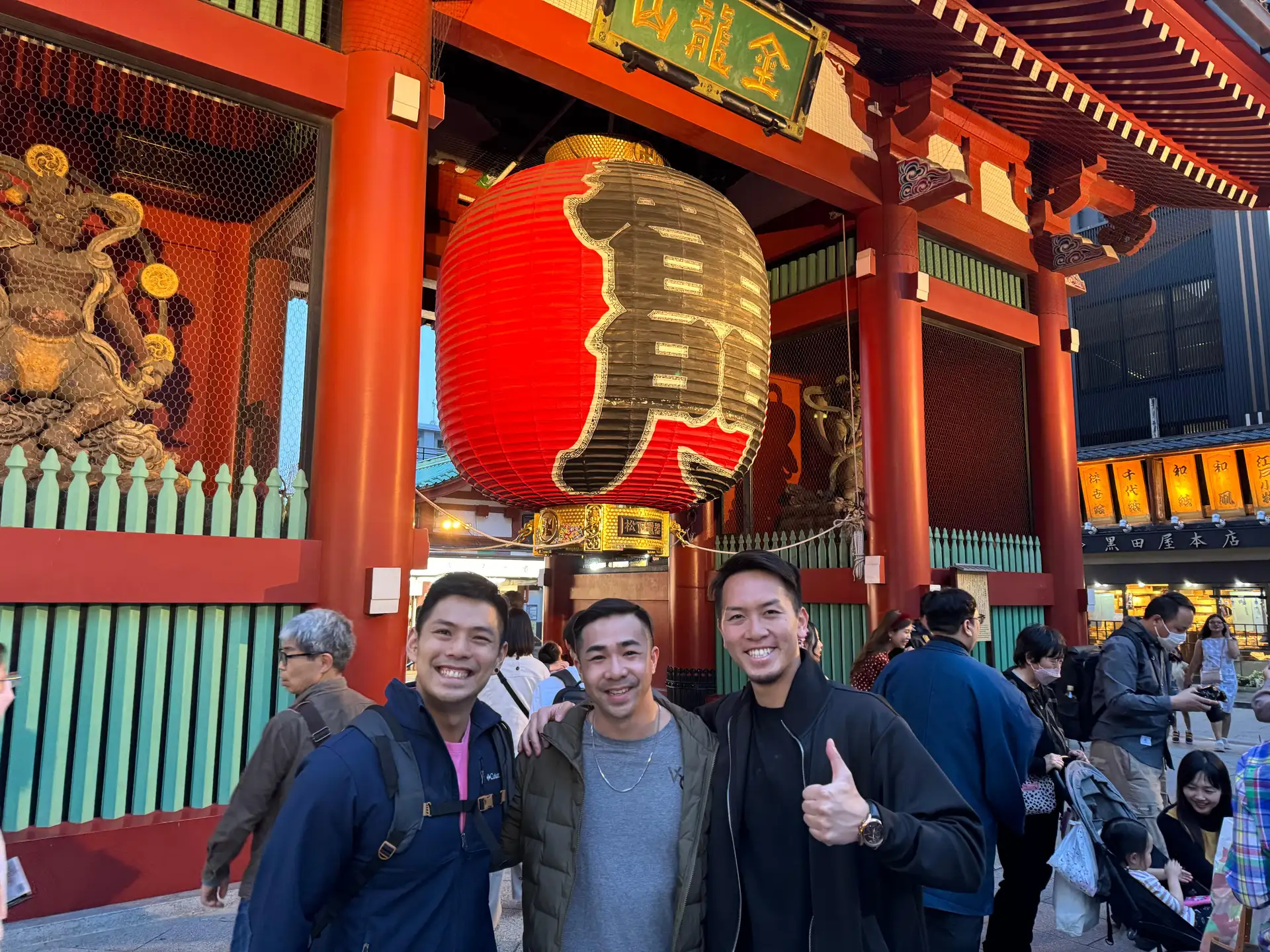
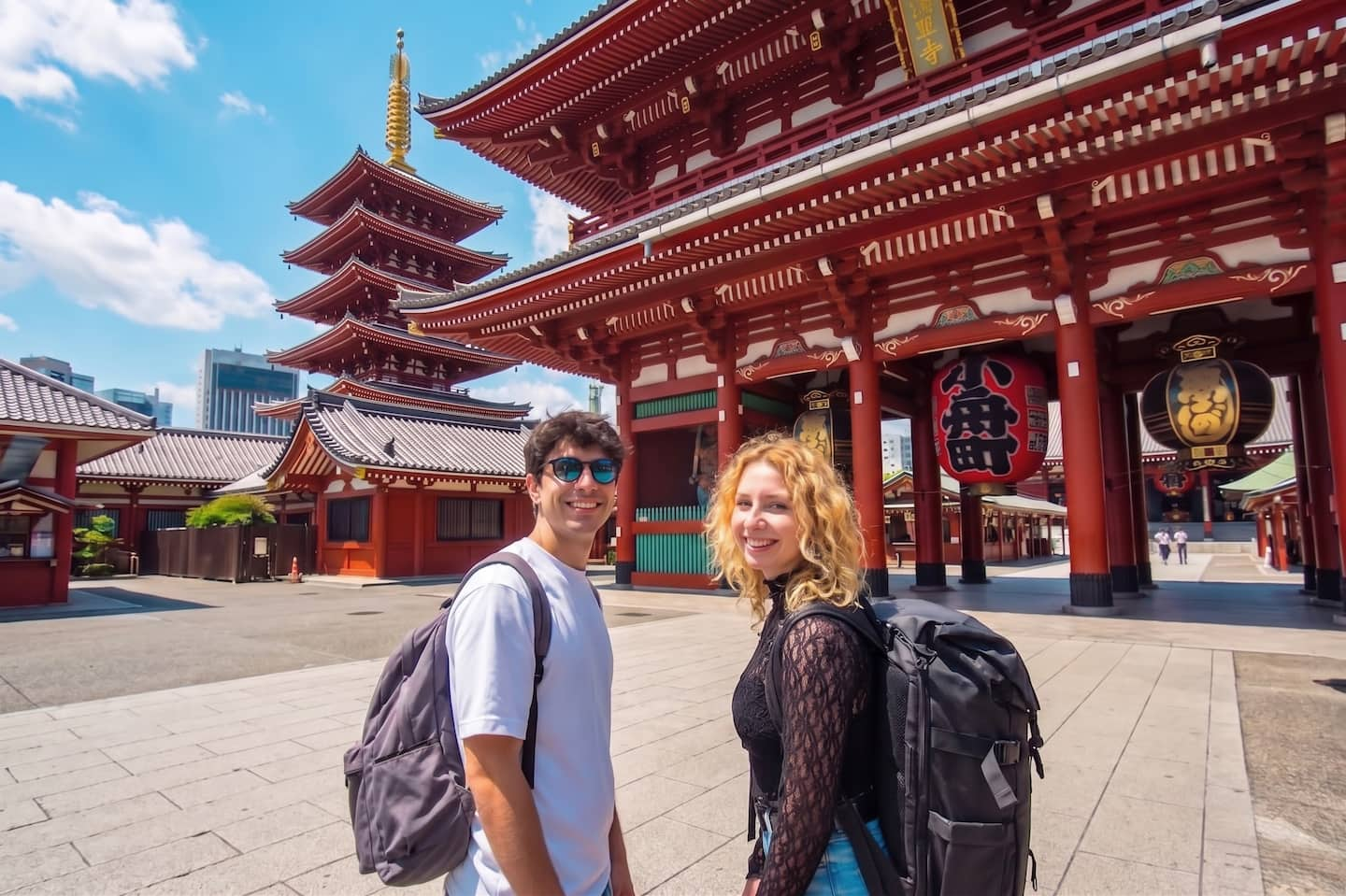
The back end is Asakusa. The Ginza subway line runs from Ueno to Asakusa in a few minutes, which means an afternoon in Ameyoko and an evening around Senso-ji is a single continuous plan rather than two separate trips. If you want to read ahead on that second half, our guide to Asakusa street food covers what to eat once you get there.
Ameyoko Market: Frequently Asked Questions
Is Ameyoko market worth visiting if I have already seen Tsukiji?
Yes, because they are not the same kind of place. Tsukiji Outer Market is a food market that has organised itself around visitors and sells a curated version of Japanese seafood and street food. Ameyoko is a general market that sells shoes and shampoo alongside sea urchin, and it has not been tidied for anyone. If you found Tsukiji polished, Ameyoko is the correction.
Can I pay by credit card in Ameyoko?
In the larger shops, yes. Drugstores, the big confectionery stores, and most of the chain retailers accept international cards and IC payment without trouble. The small food stalls, the seafood vendors, and the older family-run shops frequently do not, and those are the ones worth buying from. Carry cash and treat card acceptance as a bonus rather than an assumption.
What time does Ameyoko market open and close?
Most shops operate roughly 10:00 to 20:00, with restaurants and standing bars running later. Hours are set shop by shop rather than centrally, so there is no single opening time for the market as a whole, and many individual shops close on selected Wednesdays. Arriving before 10:00 is not useful; arriving at 19:30 means the food stalls are open and most of the shopping is not.
Related Tours
Conclusion
Treat Ameyoko as a walk rather than a shopping list. The value is in seeing a commercial street that has been operating on the same improvised logic since the 1940s, still selling to Tokyo residents rather than performing for anyone, and the things you buy there are incidental to that.
Go on a weekday, arrive around 11:00 or after 17:00, and bring cash. Walk the main street once without stopping, then come back through the side lanes and the basement of the Ameyoko Center Building, which is where the market stops resembling anything you have seen elsewhere.
If you have the afternoon free, the strongest version of this day ends three subway stops away. Ameyoko in the late afternoon, then Asakusa after dark — Senso-ji lit from below with the day visitors gone, and the izakaya on Hoppy Street filling up — is one continuous evening, and our Asakusa food tour meets at the Starbucks by Kaminarimon to run exactly that stretch over three hours.
Plan Your Japan Trip with Local Experts
Our team has guided 40,000+ travelers across Japan. Tell us about your trip and we’ll get back to you within 24 hours.