In this article:
- What a Tatami Mat Actually Is
- The History of the Japanese Room
- The Anatomy of a Washitsu
- Living on Tatami: Furniture and Sleeping
- Tatami Etiquette at a Ryokan
- Tatami in Japan: Common Questions
What a Tatami Mat Actually Is
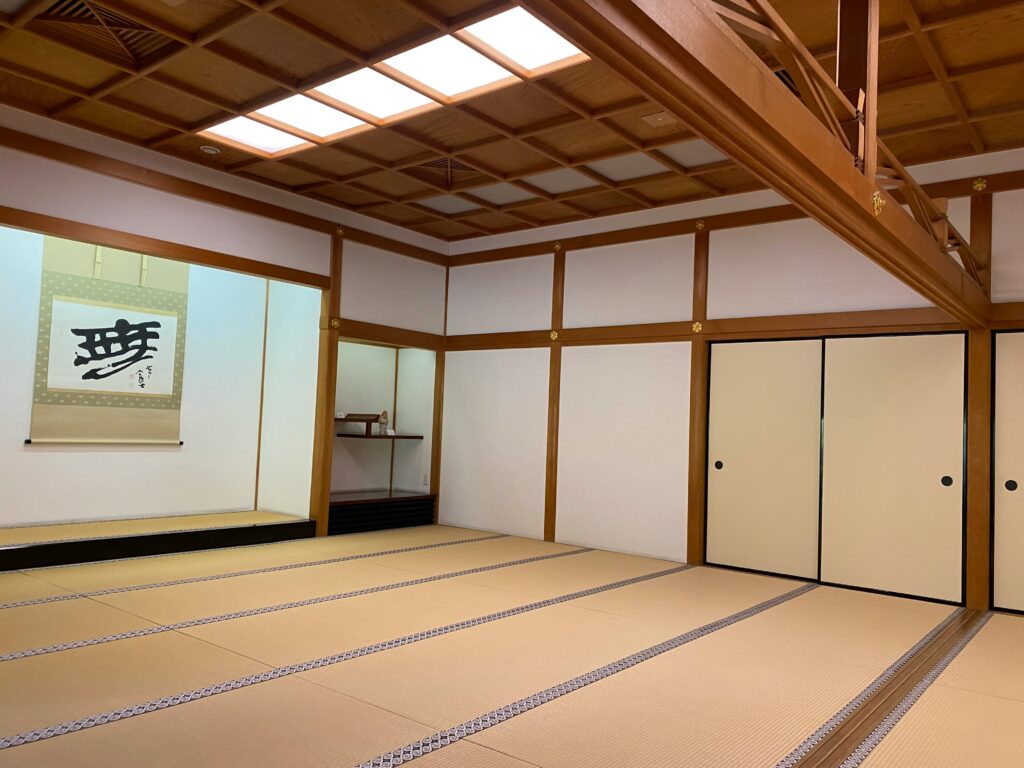
A tatami mat is a thick, firm floor mat made from natural materials, used as the flooring of traditional Japanese rooms. It is not a rug laid over a floor; it is the floor. That distinction shapes everything about how the room around it works, from the furniture to the way you walk across it.
Walk into a freshly matted room and the first thing you notice is the smell — a clean, grassy scent that fades over the months as the mats age from green to a soft straw-gold. That smell, for many Japanese people, is the smell of a grandparent’s house, a temple, or a good inn. It carries a lot of feeling.
The Anatomy of a Mat
A traditional tatami mat has three parts. The core, historically made of tightly compressed rice straw, gives it weight and firmness. The surface is a woven covering of soft rush grass, called igusa, which provides the texture and the scent. Around the long edges runs a cloth border, the heri, often plain black or patterned. Modern mats sometimes substitute compressed board or foam for the straw core, but the rush-grass surface remains the defining feature.
Why Mat Sizes Differ by Region
A tatami mat is roughly twice as long as it is wide, but the exact dimensions vary by region, and this still matters today. The larger Kyoma standard is common in western Japan around Kyoto and Osaka; the smaller Edoma is standard around Tokyo. Other sizes, like the Chukyoma of the Nagoya region and the compact Danchima used in apartment blocks, sit between or below them. A “six-mat room” in Kyoto is genuinely bigger than a six-mat room in Tokyo.
Borderless and Modern Mats
Not all tatami have the cloth border. Ryukyu tatami, originating in Okinawa, are square and made without the heri, giving a cleaner, more contemporary grid that designers now use in modern homes. If you see square mats laid in a checkerboard pattern in a stylish new apartment or café, you are seeing the borderless style — a way of adapting tradition rather than abandoning it.
How Rooms Are Measured in Mats
Japanese people still express room size in jo — the number of tatami mats a room holds. A small study might be four-and-a-half mats; a generous living room, eight. People often describe even rooms with wooden or modern flooring this way, and apartment listings routinely use it. Once you know the system, you can picture a room’s size from its mat count without ever seeing it.
Expert Tip
The four-and-a-half mat room — yojohan — is the classic size of the tea room, and the arrangement of those mats is deliberate, not random. Traditional mat layouts avoid having four corners meet at a single point, which is associated with funerary arrangements. If you ever see mats laid in a grid where four corners cross, in a traditional setting, it is usually a sign of an inauspicious or temporary arrangement.
The History of the Japanese Room
Tatami did not begin as flooring at all. Its evolution from a luxury seat for nobles into the standard floor of ordinary homes tracks the broader history of Japanese domestic life, and it explains why the washitsu room feels the way it does.
From Noble Seats to Everyday Floors
In the earliest periods, tatami were thick mats placed on bare wooden floors as seats or sleeping platforms for the aristocracy — portable status symbols rather than fixed flooring. Over time, and notably through the Muromachi period, the practice spread of covering an entire room’s floor with tatami. What had been a privilege of the few gradually became the standard surface of the Japanese home.
The Formal Shoin Style
The shoin style of room, which developed for the residences of the warrior class, is the formal ancestor of the modern washitsu. It features a fully matted floor and built-in elements — a decorative alcove, staggered shelves, and a built-in desk by a window. These rooms were designed for receiving guests and conducting affairs with appropriate ceremony, and their layout still governs what a “proper” traditional room contains.
The Rustic Sukiya Style
Running alongside the formal shoin tradition is the sukiya style, shaped by the aesthetics of the tea ceremony. Where shoin rooms project authority, sukiya rooms pursue understatement: natural, irregular materials, restraint, and a deliberate rusticity. Much of what the world finds most beautiful about Japanese interiors — the quiet, the imperfection, the warmth of unfinished wood — comes from this tea-influenced line.
The Anatomy of a Washitsu
A traditional Japanese room is a system of parts, each with a name and a purpose. Recognising them turns a ryokan stay from a pleasant blur into something you can actually read.
Fusuma and Shoji
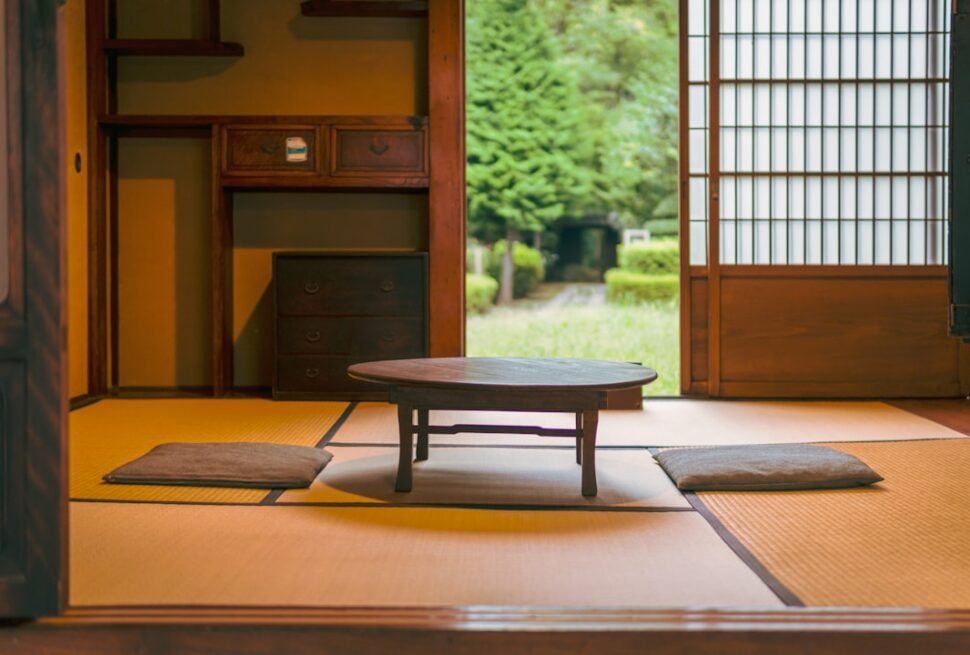
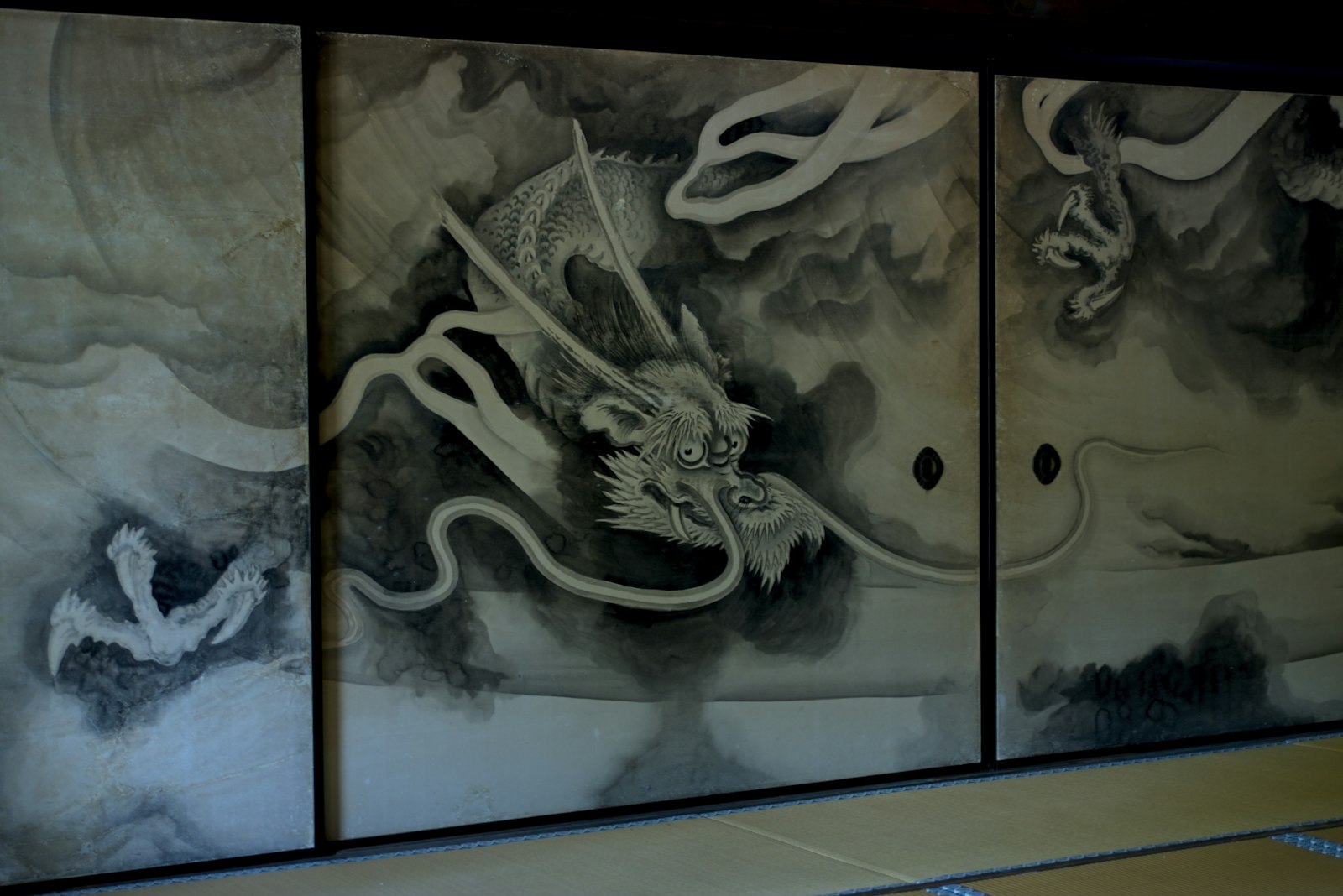
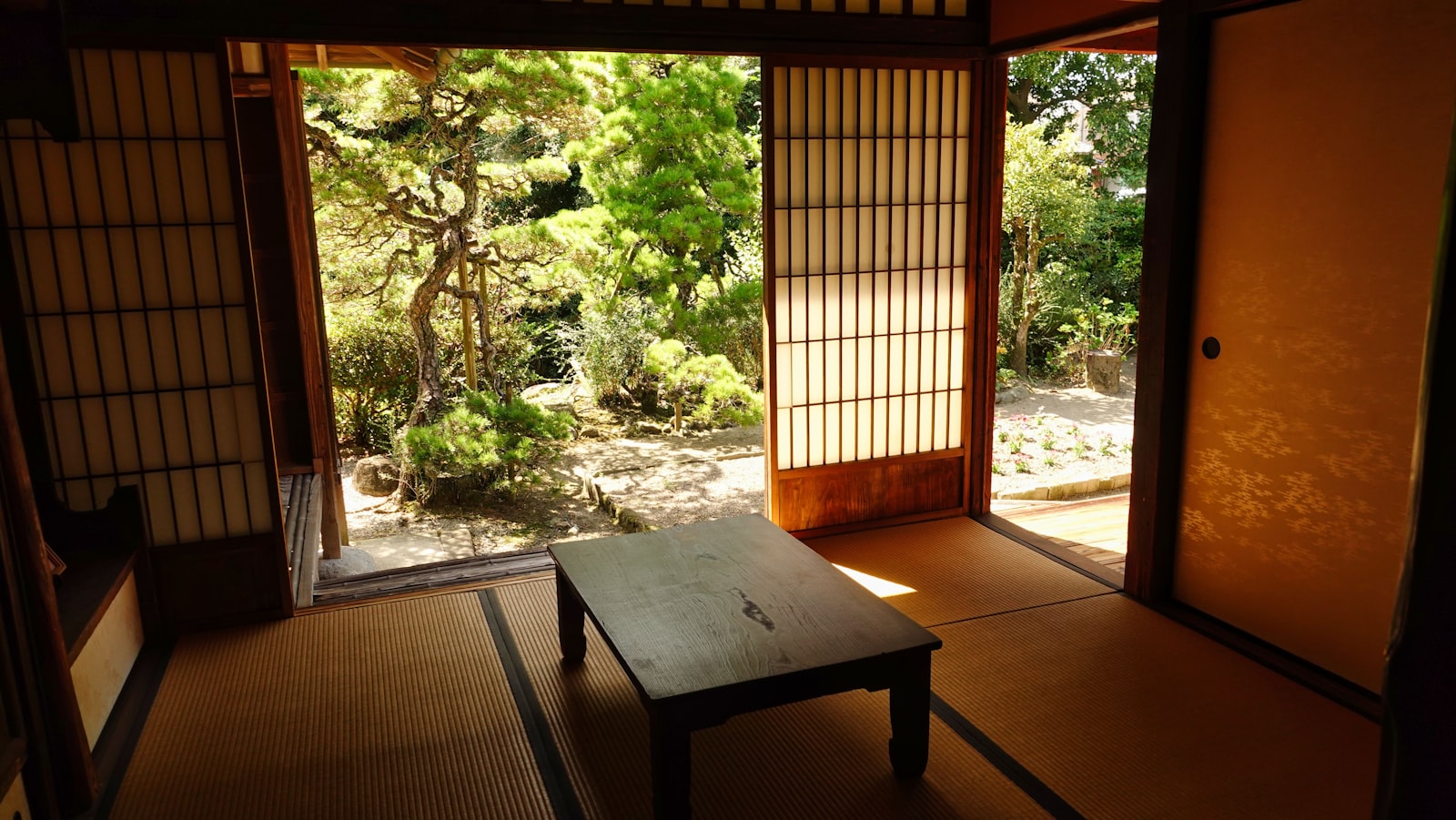
The two kinds of sliding panel are easy to confuse and worth telling apart. Fusuma are opaque sliding doors, often papered and sometimes painted, used to divide rooms and close off storage. Shoji are sliding screens of translucent paper over a wooden lattice; they admit a soft, diffused light while preserving privacy. The quality of light in a washitsu — gentle, even, never harsh — comes largely from the shoji.
Transoms and Ceilings
Above the sliding doors you will often find a ranma, a carved or latticed transom panel that lets air and light pass between rooms while adding ornament. The ceiling, too, is part of the design vocabulary; its construction and height signal a room’s formality. These are the details most visitors never look up to notice, and noticing them changes how considered the whole space reveals itself to be.
The Tokonoma Alcove
The tokonoma is the recessed alcove that anchors a formal room, used to display a hanging scroll and a seasonal flower arrangement. It is the room’s focal point and its most honoured spot. Alongside it you may find chigaidana, staggered display shelves, and a tsukeshoin, a built-in desk nook by the window. One rule worth knowing in advance: you do not step or place luggage inside the tokonoma. It is not storage; it is the room’s quiet altar to the season.
Living on Tatami: Furniture and Sleeping
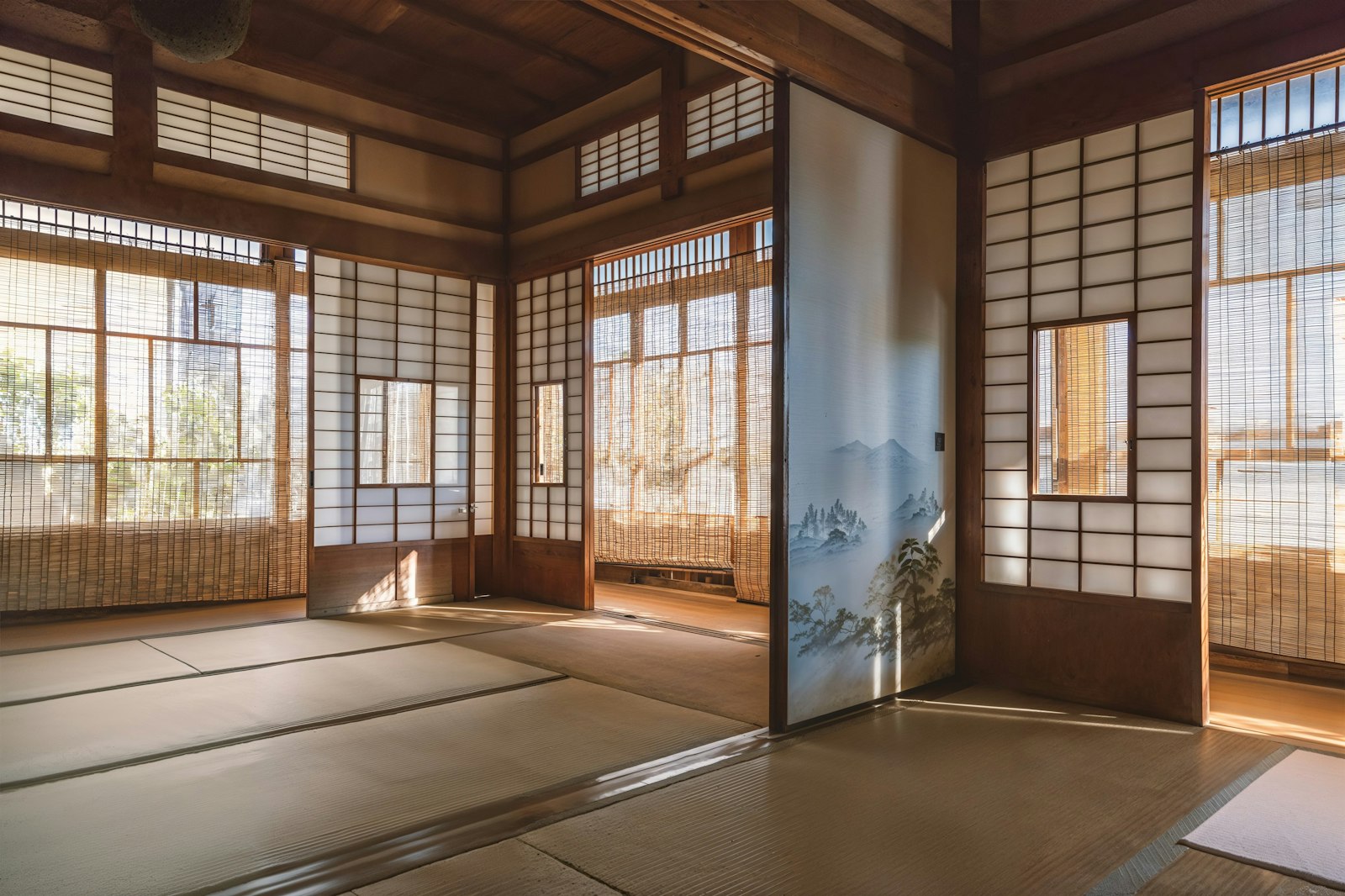
Furniture on tatami sits low and stays light, because the mat itself is the surface you live on. The whole arrangement assumes you will sit, and sleep, close to the floor.
Sitting: Cushions, Floor Chairs, and the Kotatsu
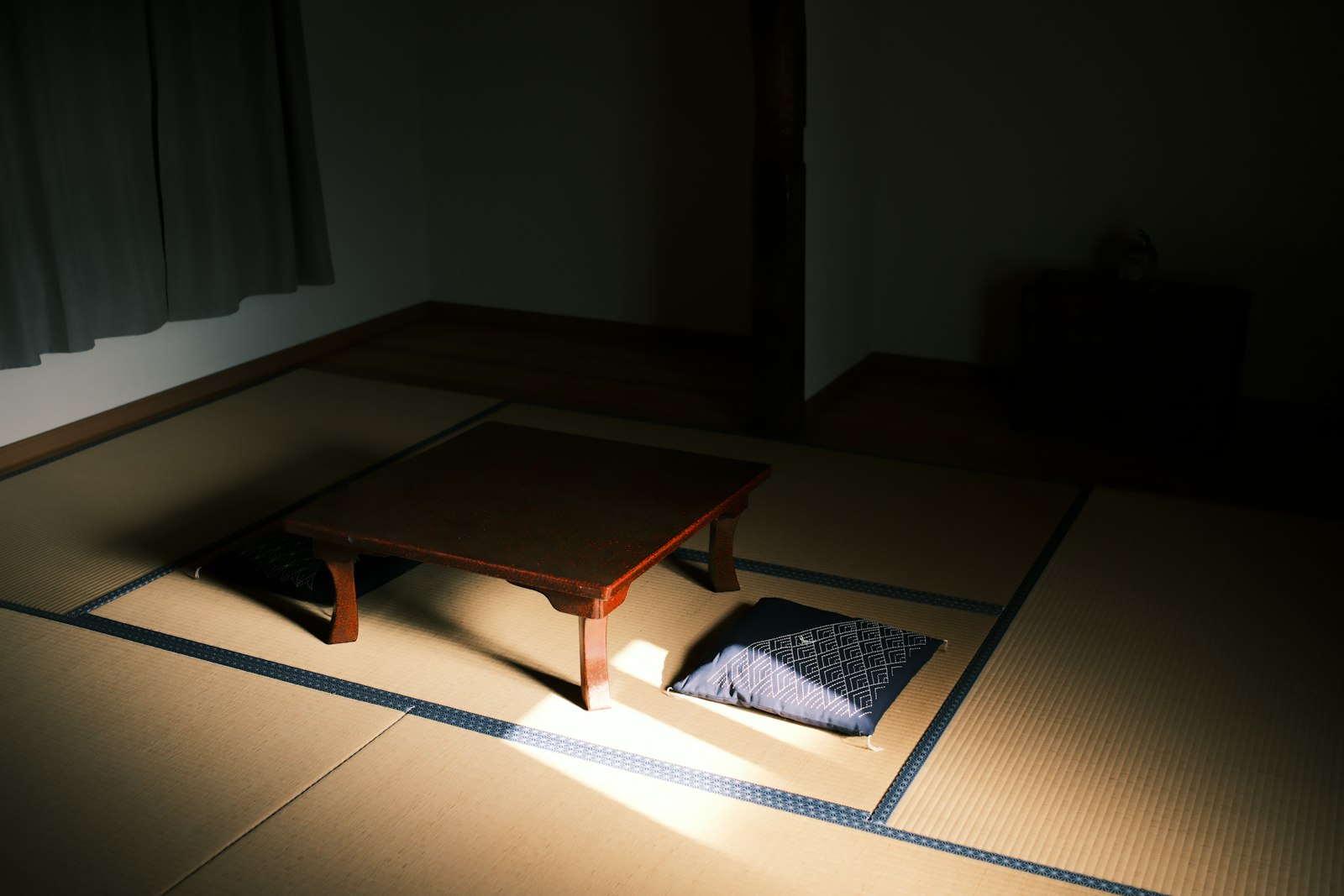
You sit on a zabuton, a flat floor cushion, often at a low table. For back support there is the zaisu, a legless chair with a backrest that sits directly on the mat. In winter, the kotatsu — a low table with a heater underneath and a quilt draped over the edges — becomes the warm centre of the household, the place everyone gathers and no one wants to leave. These low forms exist because chairs would damage the mats and break the line of the room.
Dividing the Space
Because a washitsu is often a single open space, it is divided with freestanding screens rather than walls. The byobu is a folding screen, sometimes painted and treated as art in its own right; the tsuitate is a single standing partition. Both can be moved or removed, so the same room can be open and communal one moment and private the next. Flexibility is built into the architecture.
The Futon
You sleep on a futon — a mattress and bedding laid directly on the tatami at night and folded away into a closet each morning. This is why a washitsu can be a sitting room by day and a bedroom by night: nothing is fixed. At a ryokan, the staff often lay out the futon for you while you are at dinner, which is part of the choreography of a good inn. Sleeping on the mat, low and firm, is something many travelers come to love.
Tatami Etiquette at a Ryokan
Behaving correctly on tatami is easy once you know the few rules that matter, and getting them right is one of the quiet pleasures of a ryokan stay. None of this is about stiffness; it is about not damaging a surface that someone made by hand and keeps with care.
Bare Feet or Socks Only
The basic rule: no shoes on tatami, and not even slippers. You remove your outdoor shoes at the entrance of the inn, wear the provided slippers through the corridors, and then leave those slippers at the edge of the tatami, stepping onto the mat in bare feet or socks. The mat is a clean surface meant for direct contact. Tracking the corridor onto it, even in house slippers, is the one mistake to avoid.
Don’t Step on the Cushions or the Borders
Two smaller courtesies mark someone who knows what they are doing. Avoid stepping on the zabuton cushions — you kneel or sit on them, but you do not walk across them. And try not to tread directly on the heri, the cloth borders between the mats; the traditional habit is to step over them. Neither is a serious offence, but observing them signals respect, and your hosts will register it.
Why Tatami Is Worth the Care
The reason for the care is that tatami earns it. Rush grass naturally regulates humidity, absorbing moisture in damp weather and releasing it when the air dries, which helps a room feel comfortable across Japan’s sticky summers and cold winters. It softens sound, cushions the body, and fills the room with that clean grass scent. A good tatami floor is a piece of environmental engineering disguised as something humble.
Tatami in the Bath: A Modern Innovation
A handful of hot-spring resorts have introduced water-resistant tatami in the wet areas around their baths. The reason is practical and humane: the soft, non-slip surface is far safer than wet tile for small children and elderly bathers, who are most at risk of falls in an onsen. It is a small example of a traditional material being re-engineered to solve a real, modern problem.
Tatami in Japan: Common Questions
Can I find tatami rooms in modern Tokyo and Osaka apartments? Yes, though fewer than before. Many modern apartments still include at least one washitsu, often a compact room used flexibly as a guest room, study, or nap space. Others have dispensed with it entirely in favour of all-Western flooring. If staying in a traditional room matters to you, the surest way to experience it is a night at a ryokan rather than a city apartment.
Is it okay to put a suitcase on tatami? It is better not to. The wheels and hard corners of a heavy Western suitcase can dent or scuff the rush-grass surface, which marks easily. At a ryokan, set luggage on the wooden or tiled entry area, on a provided stand, or on a towel rather than directly on the mat. Treat the surface as you would a fine wooden floor.
What if I can’t sit in the formal kneeling posture? You are not expected to hold seiza — the formal kneeling position — for long, and most travelers cannot. It is perfectly acceptable to sit cross-legged, to use the legless zaisu chair if one is provided, or simply to shift position when your legs go numb. At meals, hosts understand that foreign guests sit differently, and comfort is not considered rude.
Related Tours
Conclusion
Tatami is one of those Japanese things that looks plain and turns out to organise an entire way of living. It sets the size of the room, the height of the furniture, the place you sleep, and the way you carry yourself across the floor. Understanding it makes a night in a traditional room legible in a way it otherwise would not be.
Plan Your Japan Trip with Local Experts
Our team has guided 40,000+ travelers across Japan. Tell us about your trip and we’ll get back to you within 24 hours.