In this article:
- Quick-start guide: Japanese pronunciation tips
- Everyday greetings and polite expressions
- Essential dining and drinking phrases
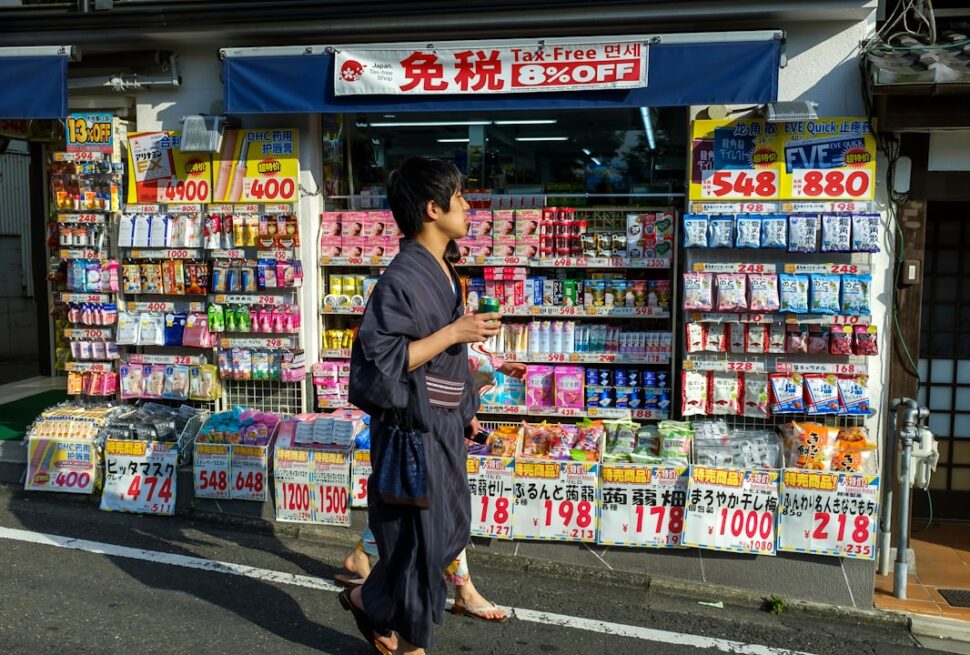
- Shopping phrases for retail and convenience stores
- Getting around: transit and navigation phrases
- Emergency phrases and health expressions
- Frequently asked questions
Introduction
Japanese is not a language you’ll pick up in a week. But that’s not the goal. The goal is to have ten phrases that work in the situations where language actually matters — ordering food when there’s no picture menu, asking which exit to take, getting someone’s attention without shouting across a room.
What most travelers don’t realize is that pronunciation matters more than vocabulary in Japan. A wrong word mispronounced correctly is less confusing than a right word mispronounced badly. Japanese has five pure vowel sounds that never change. Master those and you’ll be understood almost every time.
This guide is organized by situation, not grammar. No conjugation tables, no alphabet — just what to say, roughly how to say it, and why it works.
Quick-Start Guide: Japanese Pronunciation Tips
The 5 Essential Vowels
Every Japanese syllable ends in one of five vowels, and those vowels are always pronounced the same way:
- A — like “ah” (father)
- I — like “ee” (feet)
- U — like “oo” but short (suit)
- E — like “eh” (bed)
- O — like “oh” (go)
So “Sumimasen” (excuse me) is: soo-mee-mah-sen. “Arigatou” is: ah-ree-gah-toh. No silent letters, no vowel shifts.
The “Hold” Syllable Rule: Double Consonants
When you see a double consonant — like the “pp” in “Sapporo” — there’s a brief pause before it, like you’re holding the sound. “Sapporo” is not “sa-po-ro” but “sap-po-ro” with a tiny stop. This applies to “tt” in “Ittekimasu,” “kk” in “Ikkebukuro,” and so on. Getting this right makes a significant difference in how natural you sound.
The Dropped “U” Sound
In words ending in “-masu” and “-desu,” the “u” is often barely pronounced or dropped entirely. “Desu” sounds like “des.” “Tabemasu” sounds like “tabemas.” You don’t need to do this — any Japanese person will understand if you pronounce the full “u” — but it explains why native speakers can sound hard to follow at first.
Everyday Greetings and Polite Expressions
Time-Specific Greetings
Unlike English’s “hello,” Japanese greetings are time-of-day specific:
Good morning: Ohayou gozaimasu (oh-hah-yoh goh-zah-ee-mas) Good afternoon: Konnichiwa (kon-nee-chee-wah) Good evening: Konbanwa (kon-bahn-wah)
“Konnichiwa” is the safest all-purpose option if you’re unsure of the time window. Hotel staff, store workers, and restaurant hosts will all respond warmly to any of these used correctly.
The Multi-Purpose Phrase: Sumimasen
“Sumimasen” (soo-mee-mah-sen) is the single most useful phrase you’ll learn. It means “excuse me,” “I’m sorry,” “could you help me,” and “I’d like to get your attention” depending on context. Use it:
- To get a restaurant server’s attention
- When squeezing past someone in a crowded train
- Before asking anyone for directions
- When you’ve accidentally bumped someone
It’s softer and more versatile than “sumimasen” in European languages. Use it freely.
Expressing Gratitude
Thank you (formal): Arigatou gozaimasu (ah-ree-gah-toh goh-zah-ee-mas) Thank you (casual): Arigatou (ah-ree-gah-toh) Thank you very much: Doumo arigatou gozaimasu
Use the full formal version in restaurants, shops, and hotels. “Arigatou” alone is fine between people of similar age in casual settings.
Basic Introductions and Courtesies
Nice to meet you: Hajimemashite (hah-jee-meh-mash-teh) Yes: Hai (hah-ee) — also used as “I understand” and “I’m listening” No: Iie (ee-eh) — a single polite “no”
Bowing: A small nod or shallow bow (15 degrees) is appropriate for everyday interactions. You don’t need to master formal bowing — a natural nod of acknowledgement with eye contact works in almost every situation travelers will encounter.
Eating and Drinking: Dining Phrases and Etiquette
Asking for Menus and Recommendations
Do you have an English menu?: Eigo no menyu wa arimasuka? (eh-goh no men-yoo wah ah-ree-mas-kah) What do you recommend?: Osusume wa arimasuka? (oh-soo-soo-meh wah ah-ree-mas-kah)
If neither works and there’s no English menu, point to what someone else is eating and say: “Kore to onaji mono o kudasai” (koh-reh to oh-nah-jee moh-noh oh koo-dah-sigh) — “The same as that, please.”
Ordering Your Meal
This one, please (pointing): Kore o onegai shimasu (koh-reh oh oh-neh-guy shee-mas) Water, please: Omizu o onegai shimasu (oh-mee-zoo oh oh-neh-guy shee-mas) One more, please: Mou hitotsu onegai shimasu (moh hee-toh-tsoo oh-neh-guy shee-mas)
Expert Tip
For food allergy situations in Japanese restaurants, carry a written allergy card in Japanese — several free templates exist online (e.g., allergy card generators for Japan). Verbal communication of specific allergies is genuinely difficult even with the right phrases. A written card in Japanese handed to the chef is far more reliable and shows respect for the complexity of the request.
Table Etiquette Phrases
Before eating: Itadakimasu (ee-tah-dah-kee-mas) — said before you start eating, roughly “I gratefully receive this.” It’s not religious, but it’s universal and expected.
After eating: Gochisousama deshita (goh-chee-soh-sah-mah desh-tah) — said to the staff as you leave, meaning “that was a feast.” Using this when you exit a restaurant is noticed and appreciated.
Settling the Bill
Bill, please: Okaikei o onegai shimasu (oh-kah-ee-keh oh oh-neh-guy shee-mas)
The gesture equivalent: make an X with both index fingers in the air. This universally means “bill please” across Japan and is understood immediately in any restaurant.
Note: In Japan, you almost never pay at the table. After requesting the bill, you’ll typically pay at a register near the exit.
Shopping: Useful Phrases for Retail and Convenience Stores
Asking for Prices and Availability
How much is this?: Ikura desu ka? (ee-koo-rah des-kah) Do you have [item]?: [Item] wa arimasuka? (wah ah-ree-mas-kah) I’m just looking: Mite iru dake desu (mee-teh ee-roo dah-keh des)
The last phrase saves you from feeling obligated to buy when a shopkeeper approaches. Say it with a slight bow and they’ll leave you to browse comfortably.
Clothing and Sizes
Do you have another size?: Hoka no saizu wa arimasuka? (hoh-kah no sai-zoo wah ah-ree-mas-kah) May I try this on?: Shichaku shitemo iidesuka? (shee-chah-koo shee-teh-moh ee-des-kah)
Japanese sizing typically runs smaller than Western sizes. S in Japan often fits a European XS. Try before you buy whenever possible.
Payment Methods
Do you accept credit cards?: Credit card wa tsukaemasuka? (credit card wah tsoo-kah-eh-mas-kah)
Japan has become significantly more card-friendly in recent years, but some smaller restaurants, market stalls, and older establishments remain cash-only. Carrying 5,000–10,000 yen in cash at all times is still practical.
Getting Around: Phrases for Trains, Buses, and Navigation
Finding Your Way
Where is [location]?: [Location] wa doko desu ka? (wah doh-koh des-kah) Where is the ticket office?: Kippu uriba wa doko desu ka? Where is the exit?: Deguchi wa doko desu ka? (deh-goo-chee wah doh-koh des-kah)
Station exits in Japan are often labeled (North Exit, South Exit, etc.) in English on signs, but “Deguchi” with a gesture will get you pointed in the right direction quickly.
Checking Stops and Schedules
Does this stop at [station]?: [Station] ni tomarimasuka? (nee toh-mah-ree-mas-kah) When is the next train/bus?: Tsugi no densha/basu wa itsu desu ka?
Japan’s transit apps — Google Maps, Hyperdia, Navitime — are highly accurate and often more reliable than asking a stranger. Use them first; reserve these phrases for when your phone fails.
Exiting Crowded Vehicles
I’m getting off here: Orimasu (oh-ree-mas)
Say this clearly when your stop approaches on a crowded bus or train. People will move. “Orimasu” is one of the most practically useful words in this entire guide.
In Case of Emergency: Urgent Phrases and Health Expressions
Expert Tip
Save Japan’s emergency numbers in your phone before you travel: Police is 110, Fire/Ambulance is 119. These work from any phone, including foreign SIMs. In tourist areas, police boxes (koban) have staff who can often communicate in basic English and will assist with any emergency including lost items, medical issues, or being approached aggressively.
Requesting Urgent Help
Help!: Tasukete kudasai! (tah-soo-keh-teh koo-dah-sigh) Call an ambulance: Kyukyusha o yonde kudasai (kyoo-kyoo-sha oh yon-deh koo-dah-sigh) Call the police: Keisatsu o yonde kudasai (keh-sah-tsoo oh yon-deh koo-dah-sigh)
Describing Pain and Illness
It hurts: Itai (ee-tie) — point to the affected area I don’t feel well: Guai ga warui desu (goo-eye gah wah-roo-ee des) I have a fever: Netsu ga arimasu (neh-tsoo gah ah-ree-mas) I have a cough: Seki ga demasu (seh-kee gah deh-mas) I need a doctor: Isha ga hitsuyou desu (ee-shah gah hee-tsoo-yoh des)
Getting Medication
At a pharmacy (yakkyoku — yah-kyoh-koo), showing the symptom phrase and pointing to the affected area will generally get you to the right section. Japanese pharmacies stock effective equivalents for most common travel ailments. For anything more serious, head to a hospital — large public hospitals in major cities have international patients’ desks with English-speaking staff.
Frequently Asked Questions
Can I survive a month in Japan using only English? Yes, in Tokyo, Kyoto, and Osaka comfortably. Apps translate menus in real time; most tourist infrastructure has English signage. In rural Japan, English availability drops significantly — that’s where a few key phrases make a real difference.
Is it rude to use Google Translate in front of store clerks? Not at all. Japanese people are accustomed to translation apps and generally find it helpful, not offensive. Showing your phone screen with a translated question is a perfectly acceptable way to communicate.
What should I do if I can’t communicate a food allergy at a restaurant? Use a pre-printed allergy card in Japanese. For severe allergies — nuts, shellfish, gluten — this is not optional. Verbal communication of complex dietary restrictions in a busy restaurant kitchen is unreliable.
Related Tours
Conclusion
You don’t need many phrases to travel well in Japan. You need the right ones, pronounced well enough to be understood. Sumimasen opens every interaction. Itadakimasu and Gochisousama bracket every meal. Orimasu gets you off the train. A handful of others cover most situations you’ll actually face.
Plan Your Japan Trip with Local Experts
Our team has guided 40,000+ travelers across Japan. Tell us about your trip and we’ll get back to you within 24 hours.