In this article:
- Weather Across the Regions
- New Year Traditions and Closures
- Powder Snow and Ski Resorts
- Winter Scenery and Onsen
- What to Pack
- Japan in January: Frequently Asked Questions
Introduction
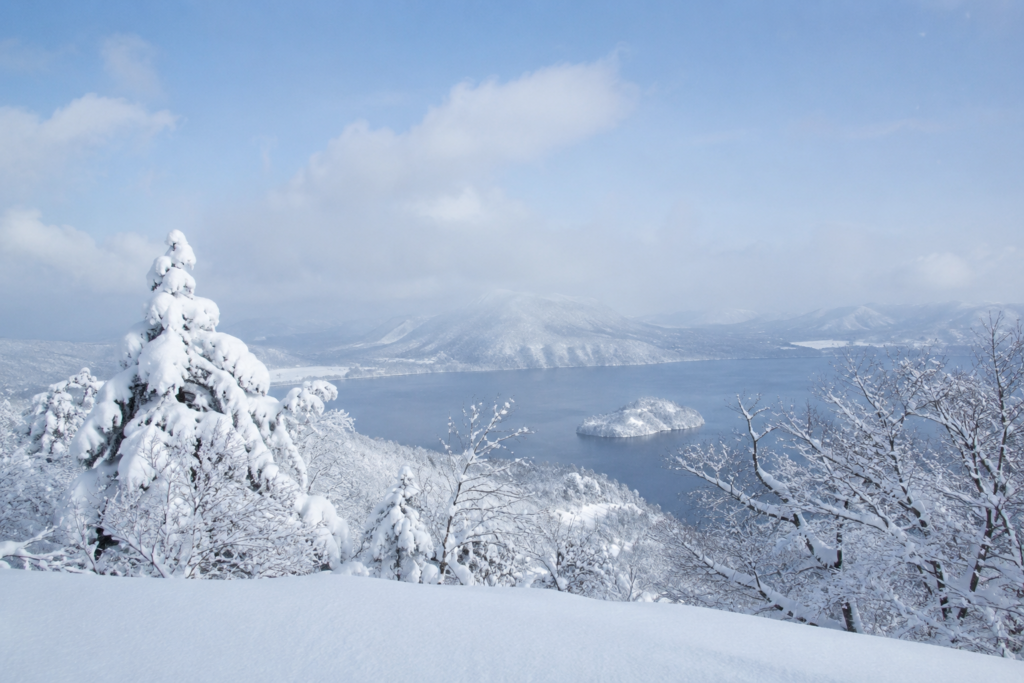
Tokyo in January is dry, cold, and remarkably sunny. The Pacific side of Japan gets most of its clear skies in winter, which means January delivers the best chance of the year to see Mount Fuji from the city — and the sharpest light for photographing anything.
Meanwhile, on the other side of the same mountains, the Sea of Japan coast is buried. The moisture that produces those clear Tokyo skies dumps as snow on Niigata, Nagano, and Hokkaido at a volume that ranks among the heaviest anywhere on earth.
The first three days belong to New Year and much of the country closes. After that, January is the cheapest, emptiest, and in some ways the most rewarding month to be here.
Weather Across the Regions
Japan spans 3,000 kilometres, and January makes that obvious.
Tokyo and Kyoto
Tokyo averages roughly 2°C to 10°C, dry, with frequent clear days and very little snow. Kyoto sits a degree or two colder and feels worse because of the humidity trapped in the basin — it gets a light dusting of snow a few times a season.
Snow on Kinkaku-ji, the golden pavilion, is one of the most sought-after photographs in Japan and happens perhaps three or four times a winter. It requires being in Kyoto and awake at dawn on the right day.
Hokkaido and the Alps
Sapporo averages around -7°C to -1°C, with metres of accumulated snow. Niseko records annual snowfall in the region of 14 to 15 metres, which is roughly twice what most Alpine resorts see.
The Japan Alps — Nagano, Gifu, Niigata — sit between the two extremes, with heavy snow at altitude and functional access by shinkansen from Tokyo.
Okinawa and the South
Okinawa runs 16°C to 20°C in January. It is too cold to swim comfortably and too mild to need a coat.
Kyushu is similar in feel — Fukuoka and Kagoshima are grey and cool rather than cold. If your trip cannot accommodate snow, the southern islands are the alternative.
Expert Tip
January and February give the highest probability of seeing Mount Fuji clearly from Tokyo or the shinkansen. Cold dry air from the continent produces exceptional visibility, and the mountain is fully snow-capped. If Fuji matters to you, this is objectively the best time of year for it, and the trade-off is temperature rather than cloud.
New Year Traditions and Closures
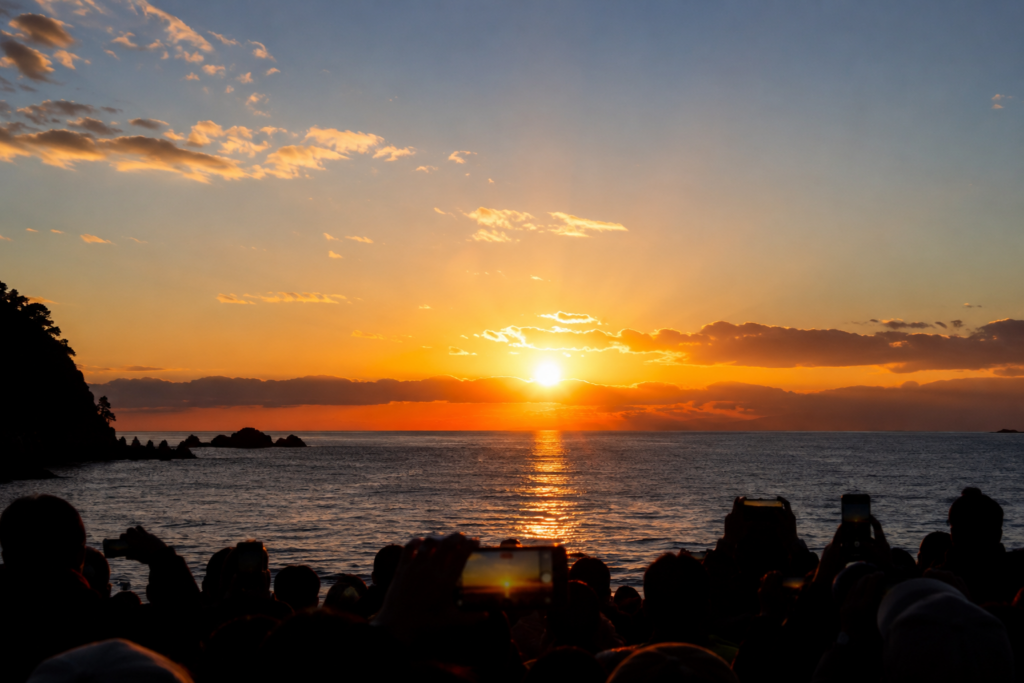
Shogatsu — New Year — is the most significant holiday in the Japanese calendar, and it changes how the country operates for about a week.
Hatsumode
Hatsumode is the year’s first shrine visit, made between 1 and 3 January. Meiji Jingu in Tokyo receives around three million people over those three days; Fushimi Inari and Naritasan draw similar numbers.
It is genuinely worth experiencing, with the caveat that the queue at a major shrine can run two hours. A smaller neighbourhood shrine gives you the same rituals — the offering, the omikuji fortune, the amazake — with none of the crush.
Fukubukuro
The New Year sales start on 1 or 2 January, and the signature item is the fukubukuro — a sealed lucky bag sold at a fixed price containing goods worth considerably more, with contents unknown until opened.
Department stores, clothing brands, and electronics retailers all participate. Queues form before opening. It is the most enthusiastic shopping event of the Japanese year and worth seeing even if you buy nothing.
What Closes
Many family-run restaurants, small shops, and some museums close from 1 to 3 January, and a few extend to the 5th. Major department stores typically close on the 1st and reopen on the 2nd.
Convenience stores, chain restaurants, and transport run normally. The practical effect is that a smaller independent restaurant you were counting on may simply be shut, so plan the first three days loosely.
Powder Snow and Ski Resorts
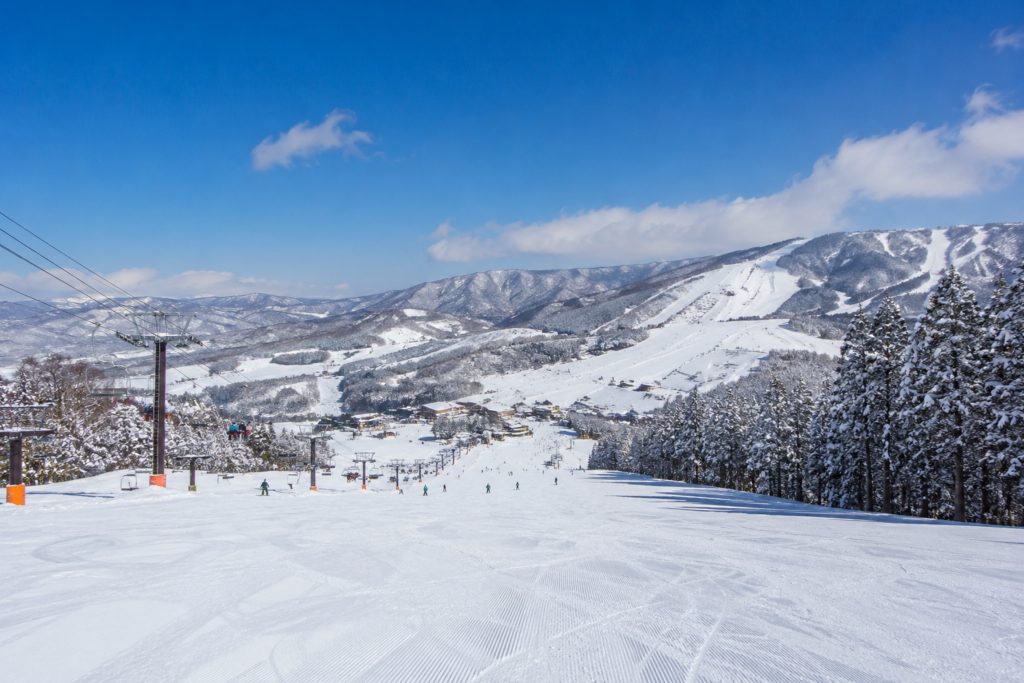
January is the peak of the Japanese ski season and the reason a substantial share of winter visitors come at all.
Why the Snow Is Different
Cold Siberian air crosses the Sea of Japan, picks up moisture, and drops it as extremely dry, light snow on the mountains. The resulting powder is what the international ski community calls JAPOW.
The snow’s low water content is the point — it stays light rather than compacting, which is why the tree runs at Niseko and Nozawa have the reputation they do.
Hokkaido and Nagano
Niseko is the international resort, with the deepest snow, the most English-language infrastructure, and the highest prices. Rusutsu and Furano are quieter Hokkaido alternatives with comparable conditions.
Nagano and Niigata are the practical choice from Tokyo: Hakuba, Nozawa Onsen, and Yuzawa are all reachable by shinkansen in under two hours, with Yuzawa’s slopes essentially at the station.
Onsen After Skiing
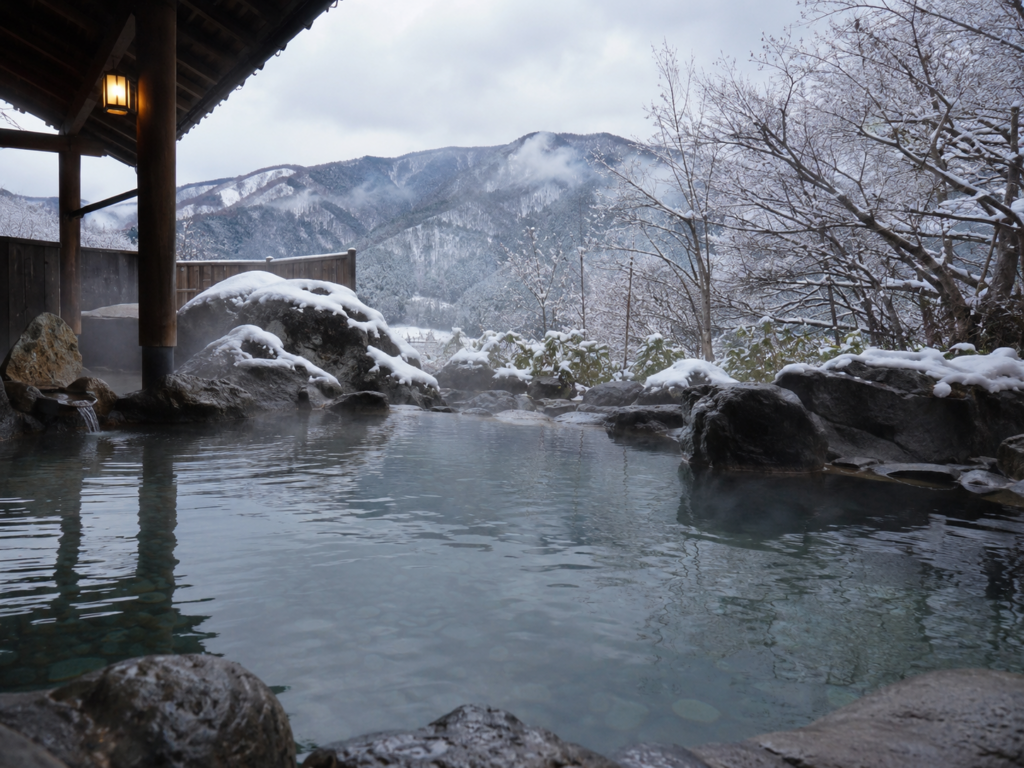
Most Japanese ski resorts sit on or near hot springs, and the standard end to a ski day is a bath rather than a bar.
Nozawa Onsen is the clearest example — a village of thirteen free public bathhouses, used by residents, with the ski lifts above them. This combination is rare outside Japan and is the strongest argument for skiing here over Europe or North America.
Winter Scenery and Onsen
The non-skiing case for January rests on three things.
Shirakawa-go
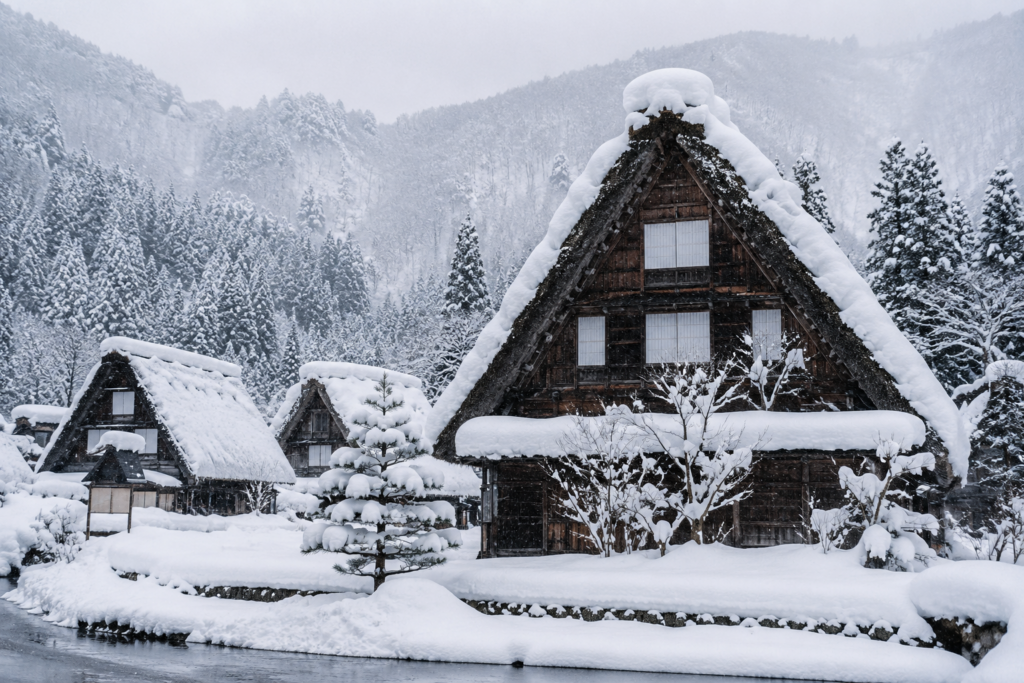
The gassho-zukuri farmhouses at Shirakawa-go, with their steep thatched roofs designed to shed snow, are at their most photogenic under a metre of it.
Winter illumination events run on a few designated evenings in January and February, and they require advance reservation with a lottery for parking and viewing platform access. Applications open months ahead.
Jigokudani Snow Monkeys
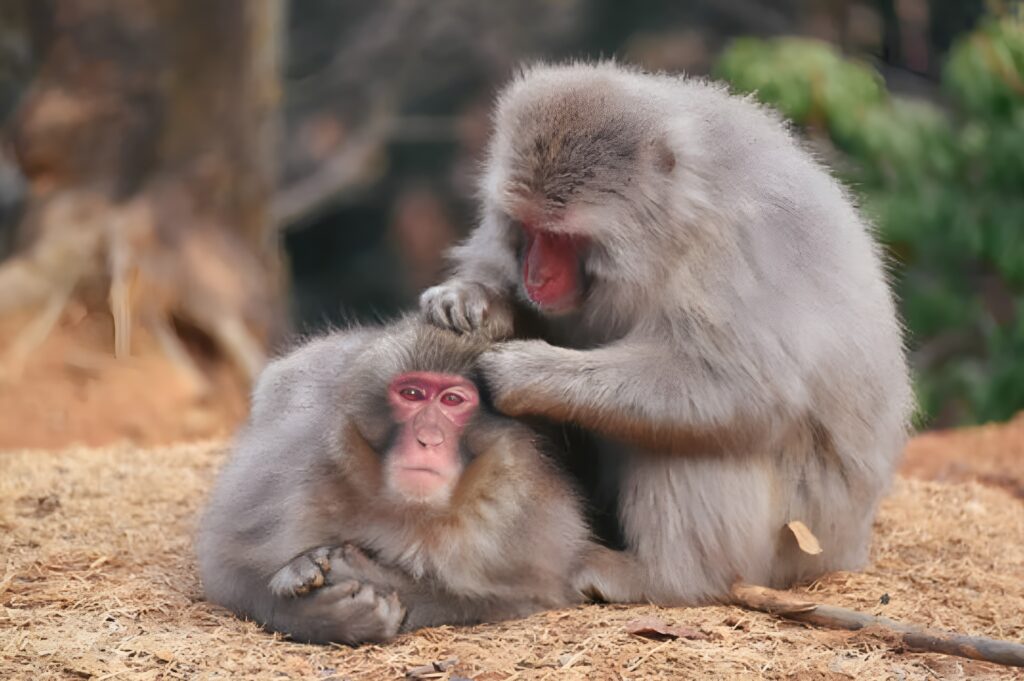
At Jigokudani in Nagano, wild Japanese macaques bathe in a hot spring pool, and January is the best month for it — the snow is deep and the monkeys use the water most in the coldest weather.
The park requires a 1.6-kilometre walk through forest on a snow-packed path. Proper footwear is essential; the route is not maintained beyond compacting.
Kinosaki and Kusatsu
Kinosaki Onsen in Hyogo is a canal-lined town where guests walk between seven public bathhouses in yukata and wooden geta, and snow makes it substantially better.
Kusatsu in Gunma has one of the highest-output springs in Japan, with the yubatake — a wooden field of channels cooling the water — steaming in the town centre. Both are ideal in January and neither is crowded outside weekends.
What to Pack
Japanese winter is manageable with the right layers and unpleasant without them.
Layering
Uniqlo’s Heattech base layers are cheap, widely available in Japan, and genuinely effective — buy them on arrival rather than carrying them. Add a fleece or wool mid-layer and a down jacket.
Indoor heating is aggressive. Trains, shops, and restaurants run warm enough that a heavy coat becomes uncomfortable within minutes, which is why layers beat a single thick garment.
Footwear and Grip
Cities are largely clear, but snow regions have compacted ice on pavements. Slip-on rubber shoe grips are sold in convenience stores and hardware shops in snow areas for a few hundred yen.
Waterproof boots are worth it for Hokkaido, Shirakawa-go, or the snow monkey park. For Tokyo and Kyoto, ordinary shoes are fine.
Skin and Kairo
Winter humidity in Tokyo drops sharply, and the combination of dry cold outdoors and heated interiors is hard on skin. Moisturiser and lip balm are worth packing.
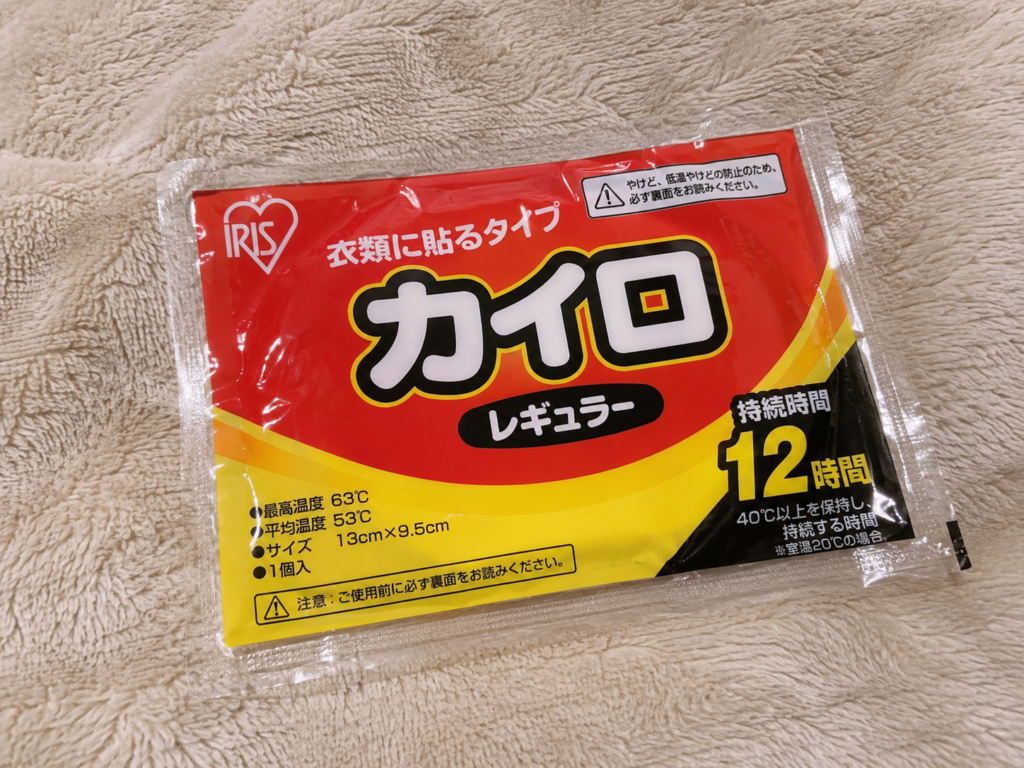
Kairo — adhesive heat pads that stick inside clothing and stay warm for around twelve hours — are sold everywhere for about a hundred yen. They are the single most useful cheap purchase for a Japanese winter.
Expert Tip
Book accommodation for the New Year period well before you would for any other date. Japanese families travel domestically between 29 December and 3 January, and ryokan in onsen towns are booked six months ahead at double the usual rate. From roughly 8 January onward, the same rooms are at their annual low.
Japan in January: Frequently Asked Questions
Is January expensive? It is two months in one. The New Year period, from about 29 December to 4 January, is among the most expensive of the year. From roughly the second week onward, January is the cheapest month for flights and city hotels. Ski resorts are the exception and stay expensive throughout.
Do trains run reliably in snow? Shinkansen services are extremely reliable and run through heavy snow, with the Joetsu and Hokuriku lines built specifically for it — occasional delays of 10 to 30 minutes rather than cancellations. Local lines in Hokkaido and along the Sea of Japan coast do get suspended in major storms. Build a buffer day if you are connecting to a flight from a snow region.
What should I eat in January? Nabe hot pots in all their regional forms, oden simmered in dashi from convenience store counters, and crab, which is at its peak. Also osechi ryori, the lacquered boxes of New Year food, which appear in department store food halls in late December.
Related Tours
Conclusion
Come in the second week if you can. You get the winter landscapes, the powder, and the clearest Fuji views of the year, at the lowest prices, in a country that has just emptied out after its biggest holiday.
If you do come for New Year, keep the first three days unstructured. Half of what you planned will be closed, and hatsumode at a small local shrine will be better than whatever you had scheduled anyway.
Plan Your Japan Trip with Local Experts
Our team has guided 40,000+ travelers across Japan. Tell us about your trip and we’ll get back to you within 24 hours.