In this article:
- The Sapporo Snow Festival
- Plum Blossoms
- Snow-Viewing Onsen
- Crab, Hot Pots, and Valentine’s Day
- Weather and Packing
- Japan in February: Frequently Asked Questions
Introduction
February is when Japan is coldest and least visited, and those two facts are related in a way that works in a traveler’s favour. Kyoto’s temples are quiet. Hotel rates are at their annual floor. The queues that define the rest of the year are largely absent.
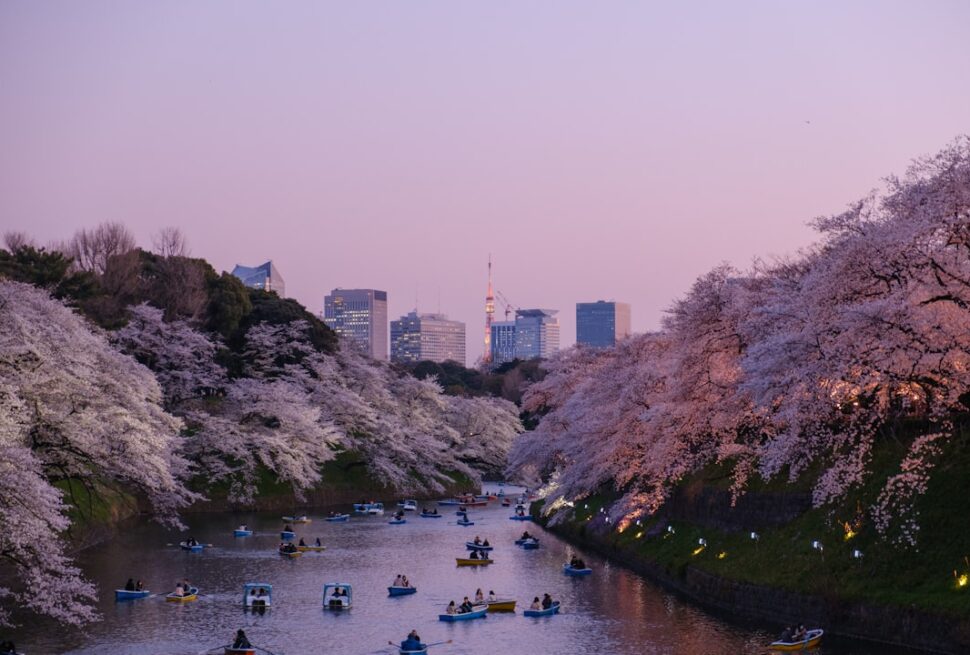
It is also the month with two of the best things in the Japanese calendar: the Sapporo Snow Festival in the first week, and the plum blossoms that open from mid-month onward — earlier, quieter, and considerably more fragrant than the cherry blossoms that get all the attention.
The catch is the temperature. February requires proper clothing in a way that October does not.
The Sapporo Snow Festival
Yuki Matsuri runs for about a week in early February and draws around two million people to a city of two million.
Odori Park
The main site runs along Odori Park, a strip of about 1.5 kilometres through central Sapporo, holding around 200 sculptures. The largest are built by the Japan Self-Defense Forces from thousands of tonnes of trucked-in snow, standing several storeys high.
The large sculptures are projection-mapped after dark, which is when to see them. Daytime shows the carving detail; night shows the scale.
Susukino Ice Sculptures
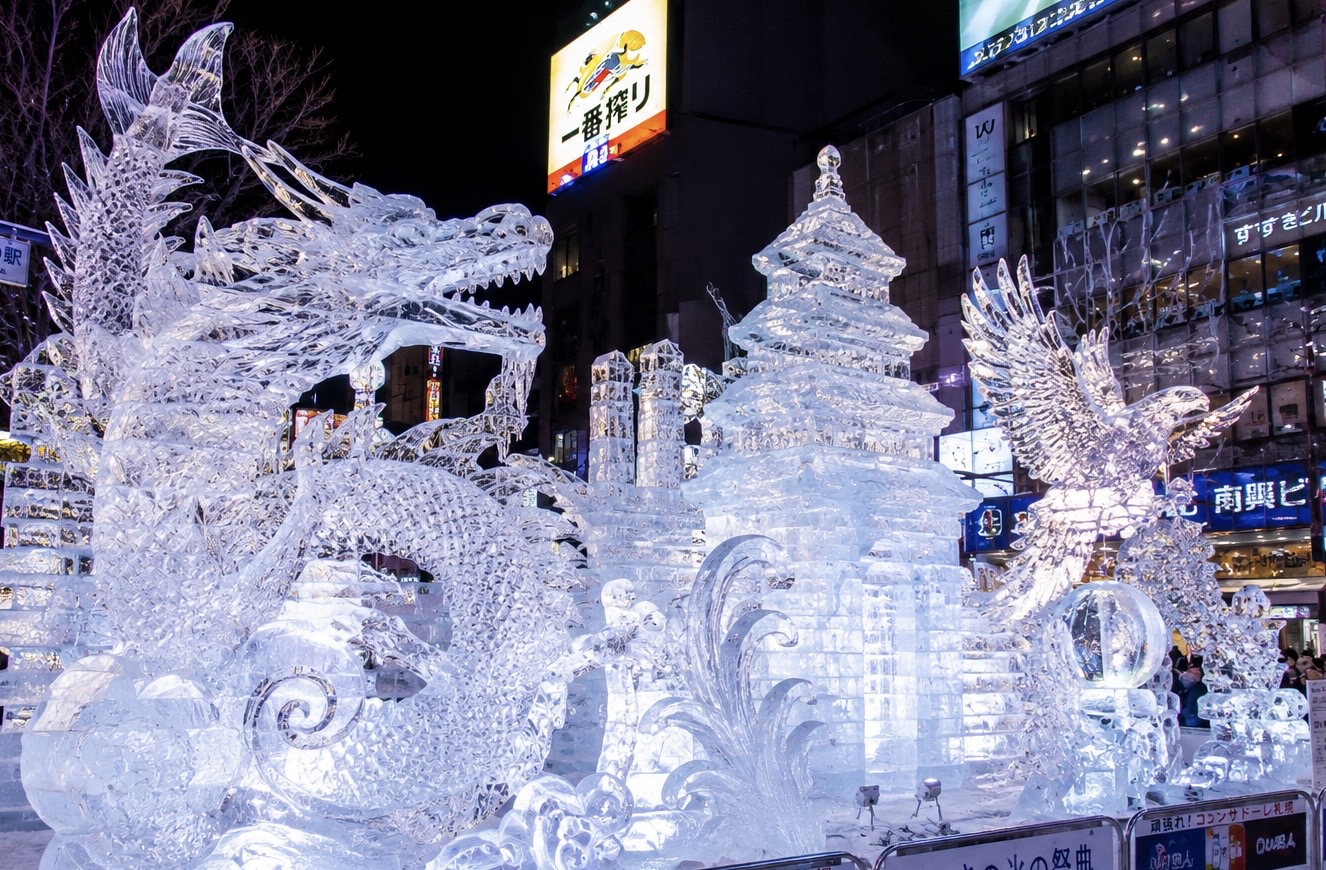
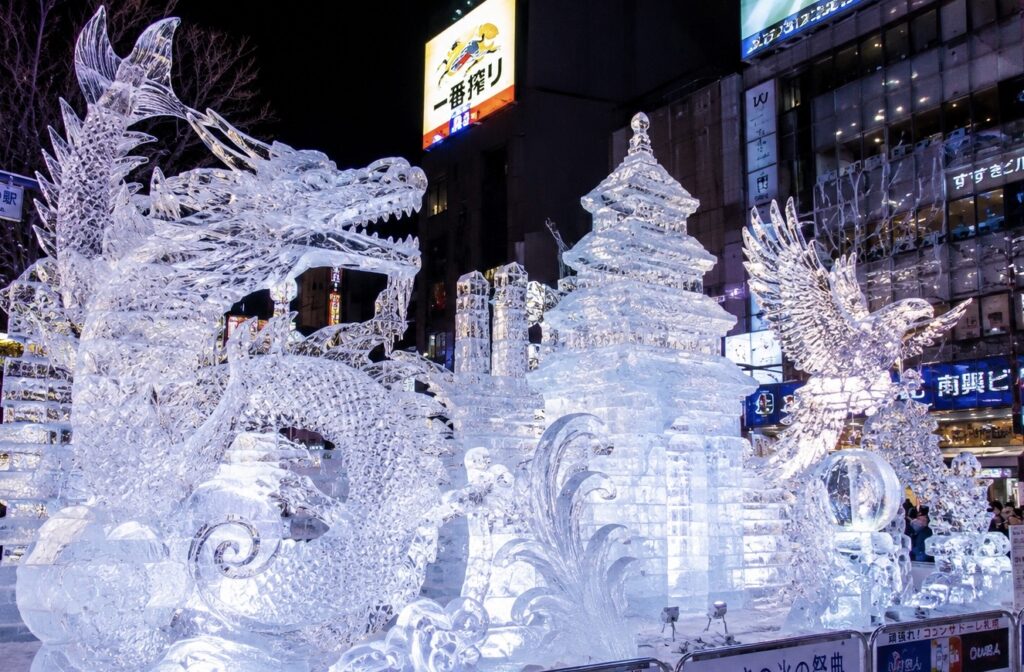
The Susukino site, in the entertainment district a few blocks south, holds ice rather than snow — clear-carved sculptures lit from within and from the surrounding neon.
It is smaller and takes about 40 minutes. The two sites are a fifteen-minute walk apart and are best done in one evening.
Otaru Snow Light Path
Otaru, 35 minutes by train, runs its own festival at roughly the same time — candles floating in the canal and set in snow lanterns along the old warehouse streets.
It is quieter, smaller, and better than Sapporo’s for atmosphere. Go in the late afternoon, walk the canal at dusk, and return to Sapporo for the illuminated sculptures.
Expert Tip
Sapporo hotels sell out for the Snow Festival five to six months in advance and prices double or triple. If you are late, base yourself in Otaru or Chitose and commute in — both are 35 to 40 minutes by train and a fraction of the price. The last trains back run late enough to see the evening illuminations.
Plum Blossoms
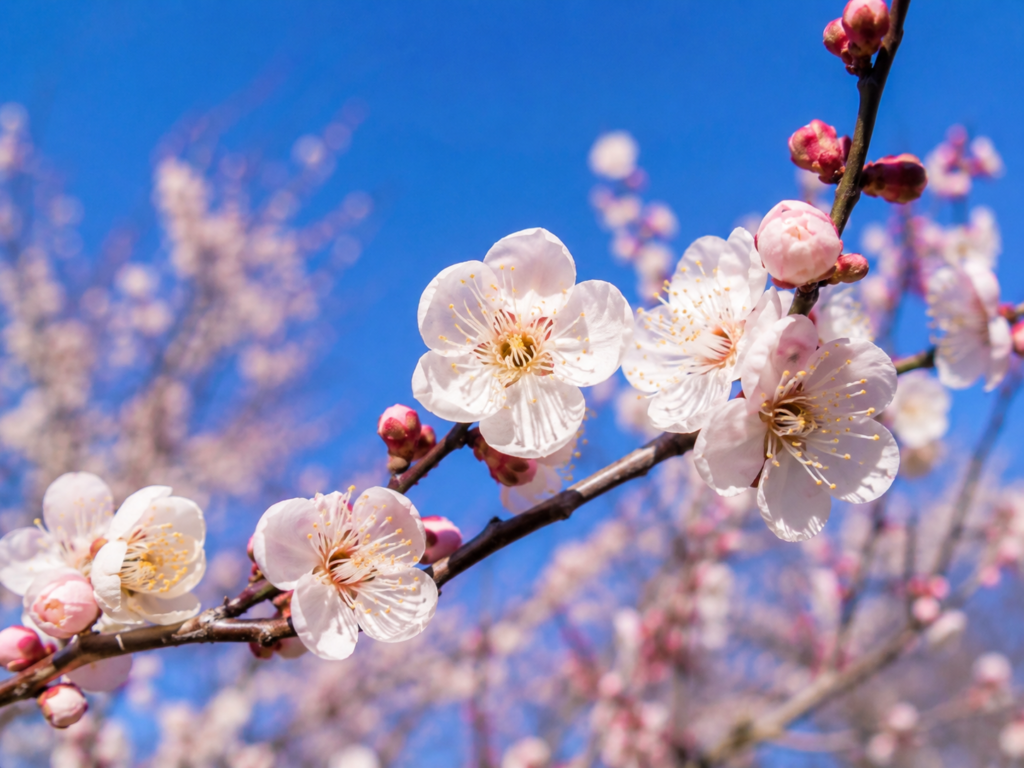
Ume bloom from February, and they are the underrated counterpart to the cherry blossom season.
How They Differ From Cherry Blossoms
Plum flowers have rounded petals with a small notch, grow directly on the branch with almost no stem, and range from white through deep pink to near red. Cherry blossoms have a cleft petal, cluster on stems, and are almost uniformly pale.
The decisive difference is scent. Plum blossom is strongly, sweetly fragrant; cherry blossom has essentially no smell. Standing in a plum grove is a different sensory experience entirely.
Where to See Them
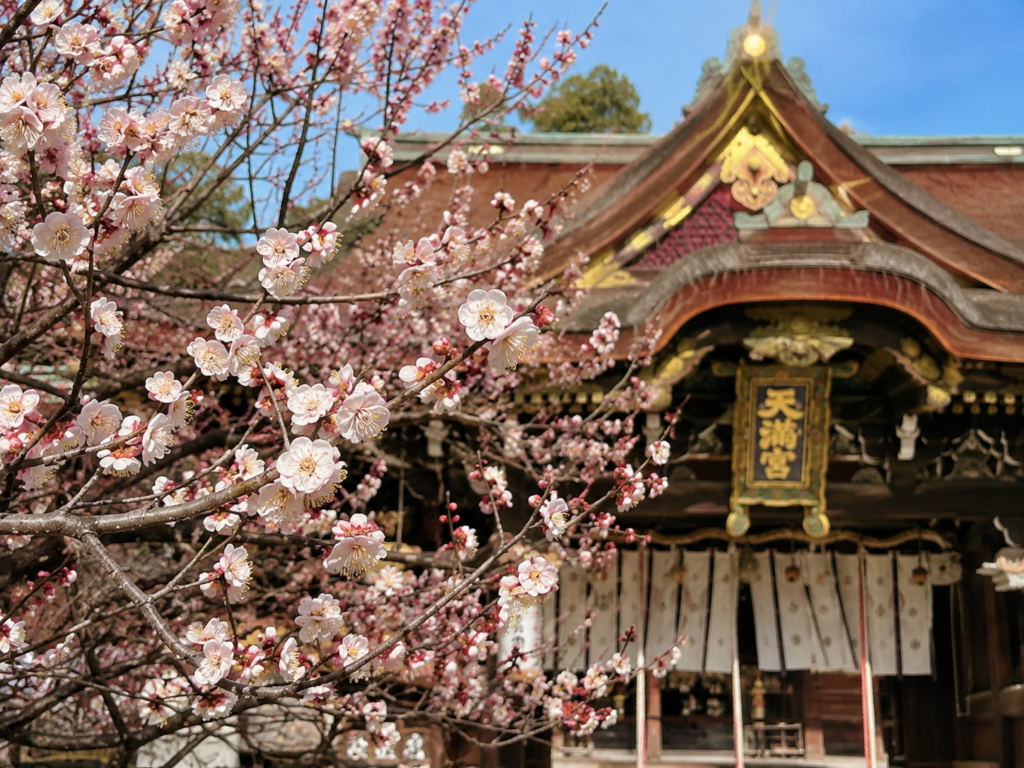
Kitano Tenmangu in Kyoto has around 1,500 trees and holds a plum festival on 25 February with an outdoor tea ceremony served by geiko and maiko. Yushima Tenjin in Tokyo is the compact city option.
Kairakuen in Mito, one of Japan’s three great gardens, has roughly 3,000 trees across a hundred varieties and is the largest plum garden in the country. It is 80 minutes from Tokyo and is the destination version.
Plum Festivals
Ume matsuri run at most major plum sites through late February and into March, with food stalls, tea, and sometimes performances.
Umeshu — plum wine, made from unripe green plums rather than the blossoms — is sold at these and is worth trying properly rather than as the sweet version served in bars.
Snow-Viewing Onsen
An outdoor bath in falling snow is the single best argument for visiting Japan in winter.
Yukimi-zake
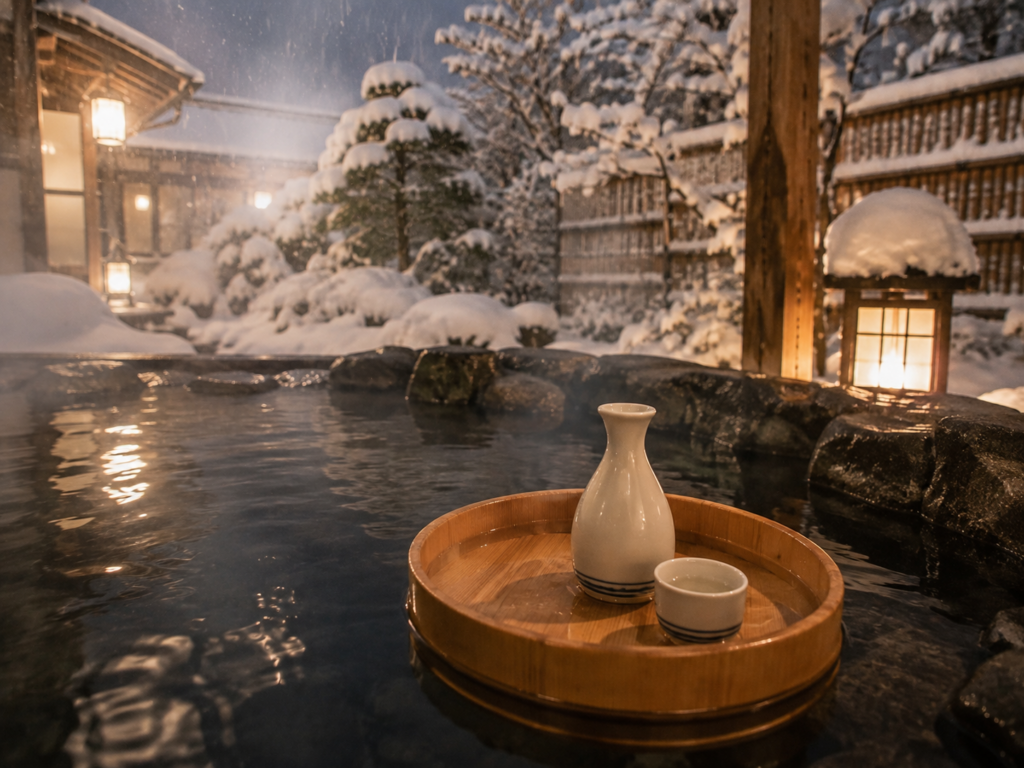
Yukimi-zake — snow-viewing sake — is warm sake drunk while soaking in an outdoor bath as snow falls. Many ryokan will serve it to you in the bath on a floating tray.
The physical experience is specific: air at minus five, water at forty-two, snow landing on your head and melting. It is the thing people come back for.
Ginzan Onsen
Ginzan in Yamagata is a narrow river gorge lined with three- and four-storey wooden inns from the Taisho era, lit by gas lamps. Under snow, at dusk, it is the most photographed onsen town in Japan.
Day visitors are restricted in winter and cars cannot enter the village. Staying overnight is effectively required to see it properly, and rooms book far ahead.
Nyuto Onsen
Nyuto in Akita is a scattering of seven remote inns in deep forest, reached by a road that is snowbound for months. Tsurunoyu, the oldest, has a milky white outdoor bath and thatched buildings that have barely changed in centuries.
It is genuinely rustic — shared bathrooms, minimal English, mixed-gender bathing in the main outdoor pool. It is also the closest thing to an unchanged Edo-period onsen experience still operating.
Crab, Hot Pots, and Valentine’s Day
February is the best eating month of the Japanese winter.
Snow Crab
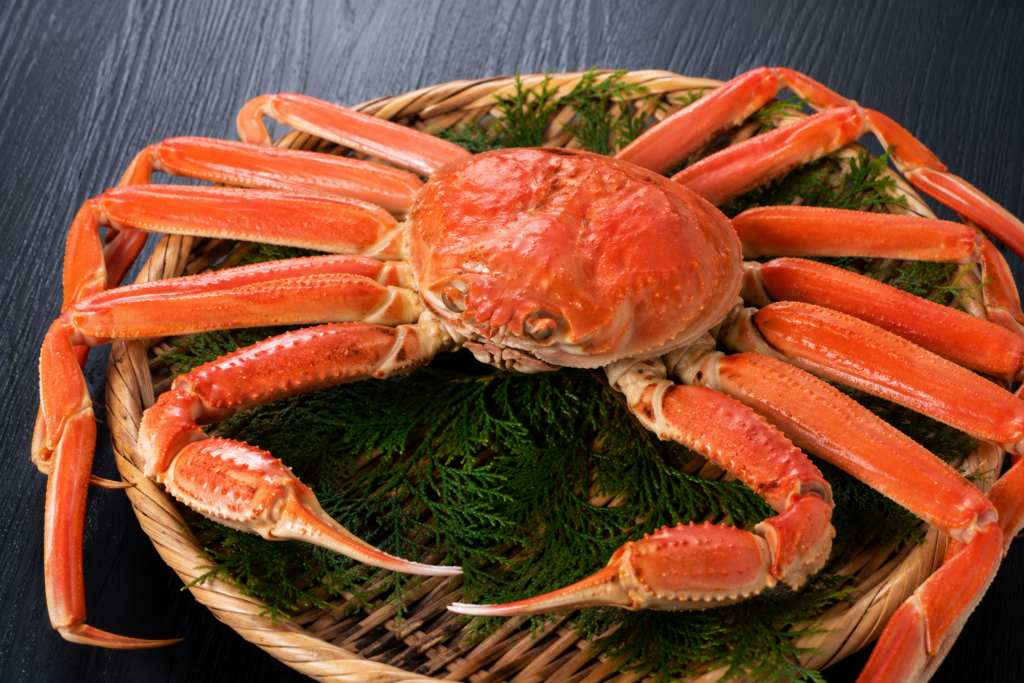
Snow crab season runs from November to March and February is the peak. Hokkaido, and the San’in coast around Tottori and Kanazawa, are where to eat it.
Regional brands — matsuba-gani in San’in, echizen-gani in Fukui — are tagged individually at the boat and priced accordingly. A full kani kaiseki course served across several preparations is the standard way to eat it, and it is expensive for good reason.
Nabe
Nabe hot pots are the domestic winter staple, cooked at the table. Chanko nabe is the sumo wrestlers’ version, dense with chicken and vegetables. Motsunabe from Fukuoka uses beef offal, garlic, and chives. Sukiyaki is the sweet soy version with beef dipped in raw egg.
Order the shime at the end — rice or noodles added to the remaining broth. Skipping it is the mark of someone who does not know how nabe works.
Valentine’s Day

In Japan, women give chocolate on 14 February — to partners, and giri-choco or obligation chocolate to male colleagues. Men reciprocate on White Day, 14 March.
The consequence for a visitor is that department store food halls mount enormous chocolate events for the first two weeks of February, with international chocolatiers taking temporary counters. The Isetan Shinjuku salon is the largest and is worth seeing as a spectacle regardless of whether you buy.
Expert Tip
Kairo heat pads come in two forms and most visitors only find one. The adhesive version sticks to the inside of a shirt over the lower back; the loose version goes in a pocket for your hands. Both cost around a hundred yen and last twelve hours. For a February trip involving outdoor sightseeing, buy a box of ten on your first day.
Weather and Packing
February is colder than most visitors plan for.
The Numbers
Tokyo averages roughly 2°C to 10°C, Kyoto slightly colder and damper, Sapporo around -7°C to -1°C with heavy accumulated snow.
Like January, the Pacific side is dry and often clear. Snowfall in Tokyo is rare and disruptive when it happens — a few centimetres will delay trains, because the city has no equipment for it.
What to Bring
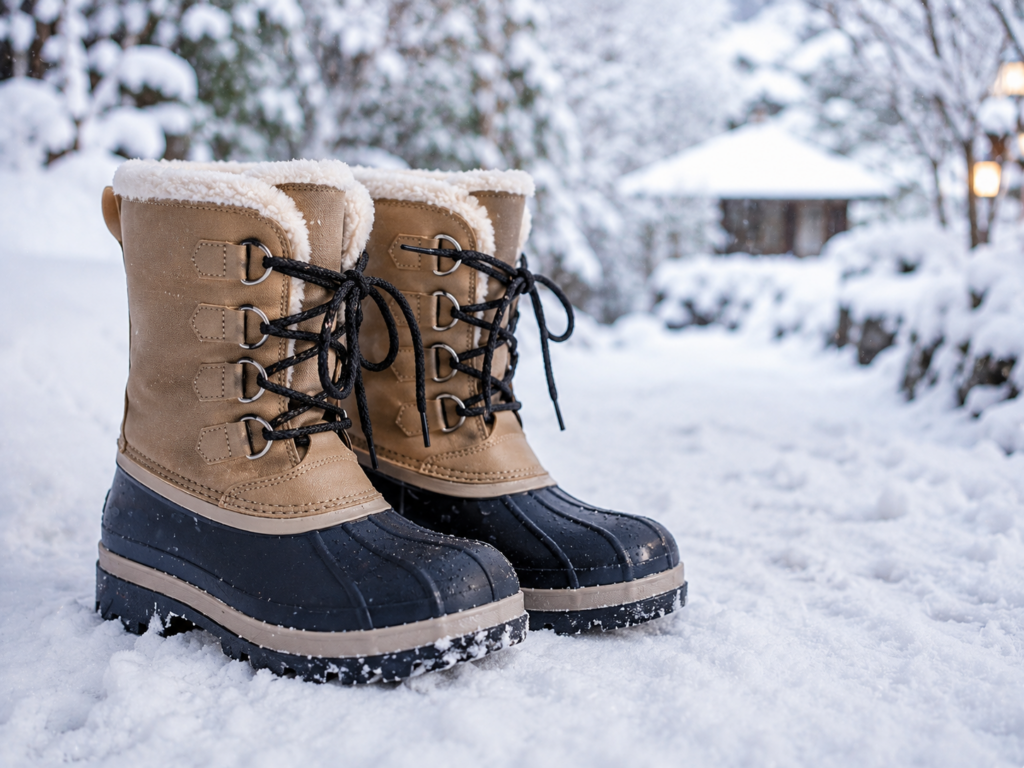
A windproof outer layer matters more than a thick one. A down jacket with a shell, a hat, gloves, and a scarf handle Tokyo and Kyoto comfortably.
For Hokkaido or the snow country, add waterproof boots with grip and thermal socks. Uniqlo Heattech and the equivalent lines are available everywhere in Japan and are cheaper here than abroad.
Indoor Heating
Trains, department stores, and restaurants are heated to a level that makes a winter coat immediately uncomfortable. Japanese people carry their coats indoors rather than wearing them.
Layers you can remove and stow are the answer. A thin down jacket that packs into its own pocket is more practical in Japan than a heavy overcoat.
Japan in February: Frequently Asked Questions
How far ahead should I book for the Snow Festival? Five to six months for central Sapporo. Rates double or more and the good hotels sell out first. Otaru, Chitose, and Jozankei are viable bases at normal prices, all within about 40 minutes.
Is February good for budget travelers? Yes, outside Sapporo’s festival week and the ski resorts. Flights and city hotels in Tokyo, Kyoto, and Osaka are at their annual low, and the major sights are at their least crowded. It is the best value month of the year for a city-focused trip.
Is there still good powder in late February? Yes. Hokkaido and Nagano hold excellent conditions through February and into March at altitude. Late February often has a better snow base than early January, with slightly longer daylight and lower prices once the festival week ends.
Related Tours
Conclusion
Build the trip around one snow-country night in a ryokan with an outdoor bath. Everything else in February is good; that one thing is the reason to accept the cold.
Then use the second half of the month for the cities. Kyoto in late February — plum blossom opening, temples empty, hotel rates at their lowest — is arguably the best version of Kyoto available in any month.
Plan Your Japan Trip with Local Experts
Our team has guided 40,000+ travelers across Japan. Tell us about your trip and we’ll get back to you within 24 hours.