In this article:
- A School Full of Comics
- The Wall of Manga
- Artists, Portraits, and Paper Theatre
- Exhibitions and the History Galleries
- The Café, the Shop, and Getting There
- Kyoto Manga Museum: Frequently Asked Questions
Introduction
On a fine afternoon the lawn outside the Kyoto Manga Museum is covered in people lying on their fronts reading, in a way that looks like a photograph of a school lunchtime from fifty years ago.
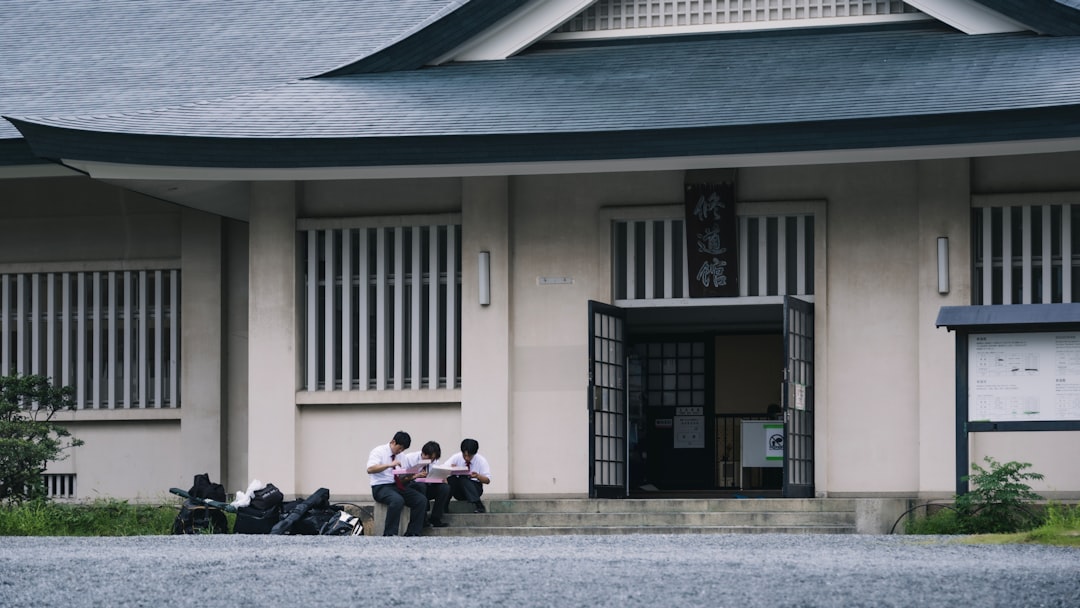
That is more or less what it is. The building was Tatsuike Elementary School, opened in the earliest wave of Japanese public education and rebuilt in the late 1920s, and the museum has kept the wooden floors, the corridors, and the scale of a room designed for children.
What was added is 300,000 items of manga and about two hundred metres of open shelving. The proposition is simple and it is the reason this place works: take whatever you like off the shelf, sit anywhere in the building or outside on the grass, and read.
A School Full of Comics
Opened in 2006, and unusual in its ownership: a joint project between Kyoto City and Kyoto Seika University, which runs one of the few university manga faculties in the world.
The Building
Wooden corridors, high windows, a small assembly hall, and stairs worn by decades of children. The 1920s structure is preserved rather than gutted, and the room proportions still read as classrooms.
Kyoto has a lot of historic buildings and very few from this period doing anything interesting. The pleasure of walking these corridors with an armful of comics is specific and hard to get elsewhere.
The former playground is now the lawn, which is the museum’s best room and is not indoors.
What Research Means Here
The academic side is real. The collection is a research archive as much as a display, holding rental-library volumes from the postwar period, magazines, and material that survives almost nowhere else.
Most of the archive is in closed storage and accessible by appointment for researchers. What is on the open shelves is a curated fraction, weighted toward what people actually want to read.
The distinction matters because it explains a common visitor complaint: the collection is 300,000 items but you can browse 50,000 of them. Both figures are accurate and they describe different things.
How the Ticket Works
Buy a ticket, get a hand stamp, and you may leave and re-enter the same day as often as you like. This is not a common arrangement in Japanese museums and it changes how you use the place.
Go in the morning, read for two hours, leave for lunch at Nishiki Market fifteen minutes away, come back and read for another two. Nothing prevents it.
The museum closes one day a week and over the New Year period. Confirm on the official site before making it the centre of a day.
Expert Tip
Bring a cushion or a light jacket to sit on if the weather is good. The lawn is grass and the wooden corridors are floor, and the museum provides very little in the way of soft seating — deliberately, because the intention is that you spread out. Three hours on a wooden floor is comfortable for a fifteen-year-old and less so for the rest of us, and the visitors who last longest here are the ones who brought something to sit on.
The Wall of Manga
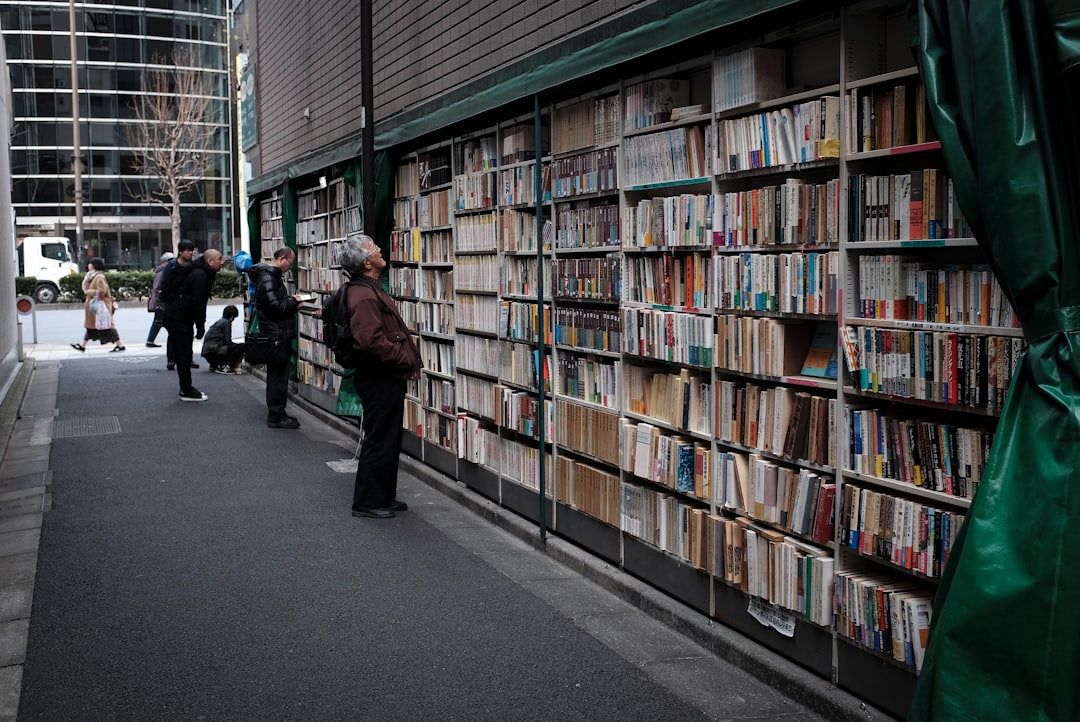
The central feature and the reason to come: roughly two hundred metres of shelving carrying about 50,000 volumes, organised and entirely open.
How It Is Arranged
The shelves run along the corridors and are arranged broadly by decade and by publishing demographic — shonen, shojo, seinen, josei — so you can walk from the 1970s to the 2000s in a few metres.
Everything is on open access. There is no request desk, no gloves, no reading room protocol. You take a volume, you carry it wherever you want in the building, and you put it back roughly where it came from.
Series are shelved in order, which means a long-running title occupies a substantial stretch of wall and finding volume forty of something is genuinely easy.
The English and Foreign-Language Section
There is a dedicated multilingual collection — English, French, Spanish, Chinese, Korean, and others — running to several thousand volumes.
This is the section every foreign visitor asks about, and the honest answer is that it is a real collection and a small fraction of the whole. You will find major titles in English and you will not find everything.
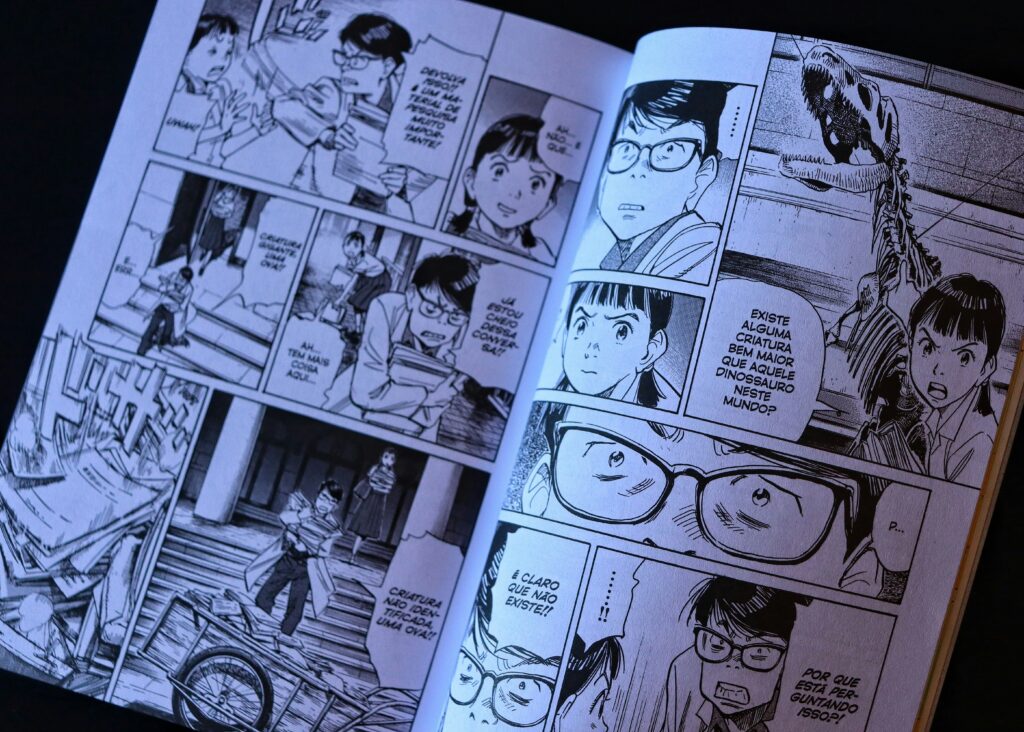
If you read no Japanese, budget for the foreign-language shelves to hold a few hours rather than a full day. If you read even a little, the art in the Japanese sections carries a great deal on its own, and the older material from the 1950s and 60s is worth looking at as drawing regardless of whether you can follow the dialogue.
Reading on the Lawn
Books may be taken outside onto the grass. This is the museum’s defining permission and it is what turns a collection into an afternoon.
In spring and autumn the lawn fills with people of every age lying down reading, and the atmosphere is closer to a park than a museum. In summer it is too hot and in winter too cold, and the corridors take over.
Books must come back inside before you leave and must not go beyond the grounds. Staff are relaxed and the rule is observed.

Artists, Portraits, and Paper Theatre
Three live elements run alongside the shelves, on varying schedules.
The Manga Studio
A working studio where professional artists draw at desks behind glass, visible to visitors, on published work rather than demonstrations.
Schedules vary and it is most reliably staffed at weekends. Watching pages being inked at professional speed is a genuinely different thing from reading the result.
Materials, screentones, and the physical apparatus of the trade are on display alongside, which is increasingly historical as the industry moves to digital.
Portrait Drawing
Resident artists will draw you in manga style, at a booth, for a fee. It takes ten to twenty minutes and the results are good.
This is the museum’s most popular paid activity and the queue forms early on busy days. If you want it, do it first rather than last.
Kamishibai
Kamishibai is paper theatre — a storyteller with a wooden frame and a stack of illustrated boards, performing to a small audience, a street entertainment that was ubiquitous in Japan before television and is now nearly extinct.
The museum runs performances on a daily schedule in a small hall. They are in Japanese and they are worth attending regardless, because the form is entirely visual and the performer’s delivery carries it.
This is the direct ancestor of the manga in your hands, and seeing the two in the same building makes the lineage obvious in a way no wall panel could.
Exhibitions and the History Galleries
The permanent displays are modest and the temporary exhibitions are where the museum spends its curatorial effort.
Manga Around the World
One permanent gallery covers the international spread of the form, with translated editions from dozens of countries displayed side by side.
Seeing the same title in Arabic, Portuguese, Finnish, and Thai makes a point about scale that statistics do not. It also raises the question of what changes in translation — pages flipped or not, sound effects redrawn or left, honorifics kept or dropped.
From Woodblock to Digital
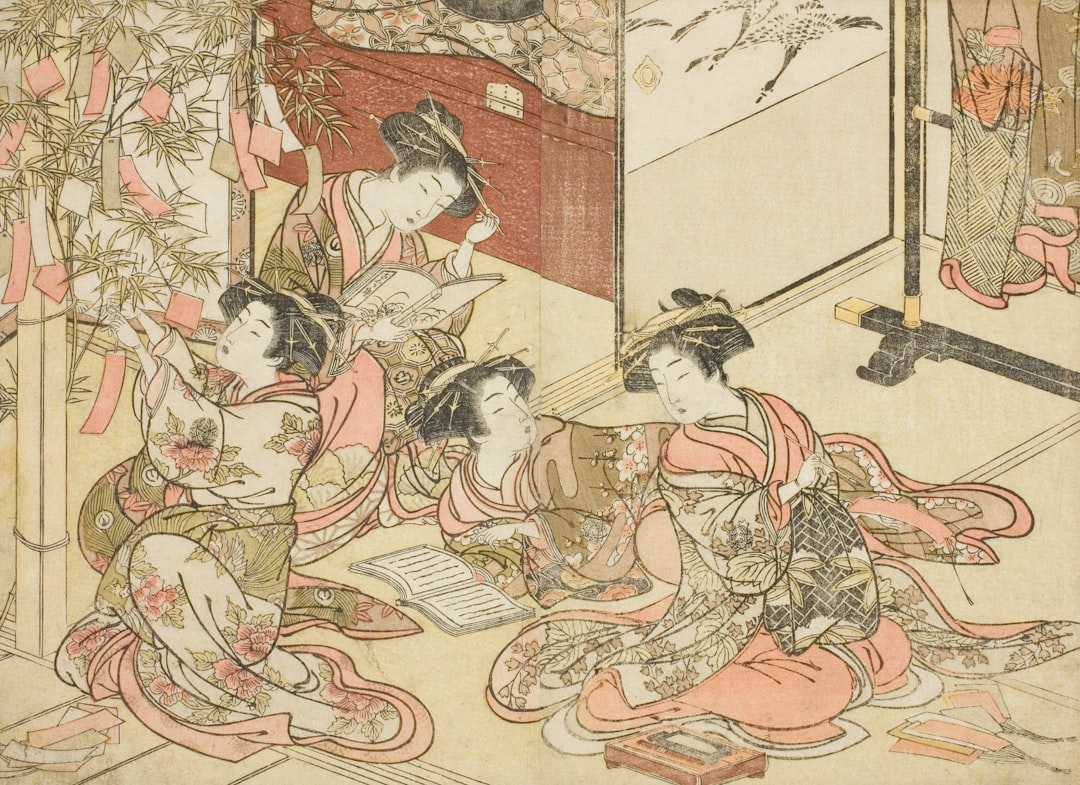
The history galleries trace the form backwards: postwar rental libraries, prewar children’s magazines, Meiji satirical cartoons, and behind all of it the Edo woodblock tradition and the picture scrolls.
The line drawn from twelfth-century animal caricature scrolls to modern manga is a contested one among scholars and the museum presents it with appropriate hedging.
English labelling exists throughout and is adequate rather than extensive. Audio guides and printed English material fill some of the gap.
Temporary Exhibitions
These rotate several times a year and are the reason to check the website before visiting. Recent programming has covered individual creators, specific genres, and the intersection of manga with other media.
Some are ticketed separately from general admission. The quality is high and they are usually the most substantially curated thing in the building.
Expert Tip
This is the best wet-weather option in central Kyoto and one of very few genuinely good ones. Almost everything else the city is known for involves walking outdoors between wooden buildings, and a rainy day in Higashiyama funnels every visitor into the same covered spaces. Keep the Manga Museum unbooked and deploy it on the day the forecast turns, rather than fixing it to a date in the itinerary.
The Café, the Shop, and Getting There
The practical business of a half-day here.
Café Mucha
The café occupies part of the old building and its walls carry signatures and drawings left by visiting manga artists from Japan and abroad — a growing, unplanned collection that is more interesting than the menu.
Food is light: coffee, cake, simple lunch dishes. Prices are reasonable and the room is pleasant.
Given the re-entry stamp, we would generally suggest eating elsewhere and using the café for coffee. Nishiki Market and the Karasuma restaurants are a short walk.

The Shop
Museum-original goods rather than mass-market character merchandise — stationery, prints, tote bags, and publications from the museum’s own research output.
The books are the distinctive stock, including exhibition catalogues that are not sold elsewhere. If you want Shonen Jump merchandise, that is a different shop in a different part of the city.
Access
Karasuma Oike Station, served by both the Karasuma and Tozai subway lines, is immediately adjacent — the museum is essentially at the exit. That makes it one of the easiest sites in Kyoto to reach and one of the few with no walk from the station.
From Kyoto Station it is two stops on the Karasuma line. From Gion, take the Tozai line from Sanjo Keihan.
Allow two to four hours. Manga readers routinely stay longer, and the re-entry stamp means you do not have to decide in advance.
Kyoto Manga Museum: Frequently Asked Questions
Is there enough manga in English to make it worth visiting?
There is a dedicated foreign-language section running to several thousand volumes across English, French, Spanish, Chinese, Korean, and other languages, and it holds a solid range of major titles. That is enough for a good few hours of reading. It is not enough to fill a whole day for someone who reads no Japanese, and it is a small proportion of the 50,000 volumes on open shelves. Set expectations accordingly: for a non-Japanese reader this is a two-to-three hour visit with real reading in it, plus the building, the exhibitions, and the lawn.
Can I leave and come back the same day?
Yes. Admission includes a hand stamp permitting unlimited same-day re-entry, which is unusual among Kyoto museums and worth exploiting. The standard pattern we suggest is a morning session, lunch somewhere better than the café, and an afternoon return. Books must stay in the building and grounds — you cannot take one out to lunch with you.
Is it worth going if I do not read manga?
For most people, yes, though not for a full day. The 1920s school building is genuinely interesting and is otherwise inaccessible, the kamishibai performances work regardless of language, the studio with artists drawing live is compelling to watch, and the international gallery is about publishing and translation more than about comics. The lawn on a fine day is one of the more pleasant places to sit in central Kyoto. Budget ninety minutes rather than four hours, and go with someone who does read manga so that the shelves are being used while you look at the building.
Related Tours

Conclusion
Treat it as a reading afternoon rather than a museum visit. Sitting in the building rewards you, and browsing the shelves without a plan does too. The re-entry stamp lets you stay as long as you like.
If the weather is good, take the books outside. Lying on the grass of a former school playground in central Kyoto with an armful of comics is not an experience the city advertises, and it is one of the better ones it has.
Plan Your Japan Trip with Local Experts
Our team has guided 40,000+ travelers across Japan. Tell us about your trip and we’ll get back to you within 24 hours.