In this article:
- Booking an Appointment
- The Words You Need
- What a Japanese Salon Actually Does
- QB House and the Ten-Minute Cut
- Prices, Payment, and No Tipping
- Haircut in Japan: Frequently Asked Questions
Introduction
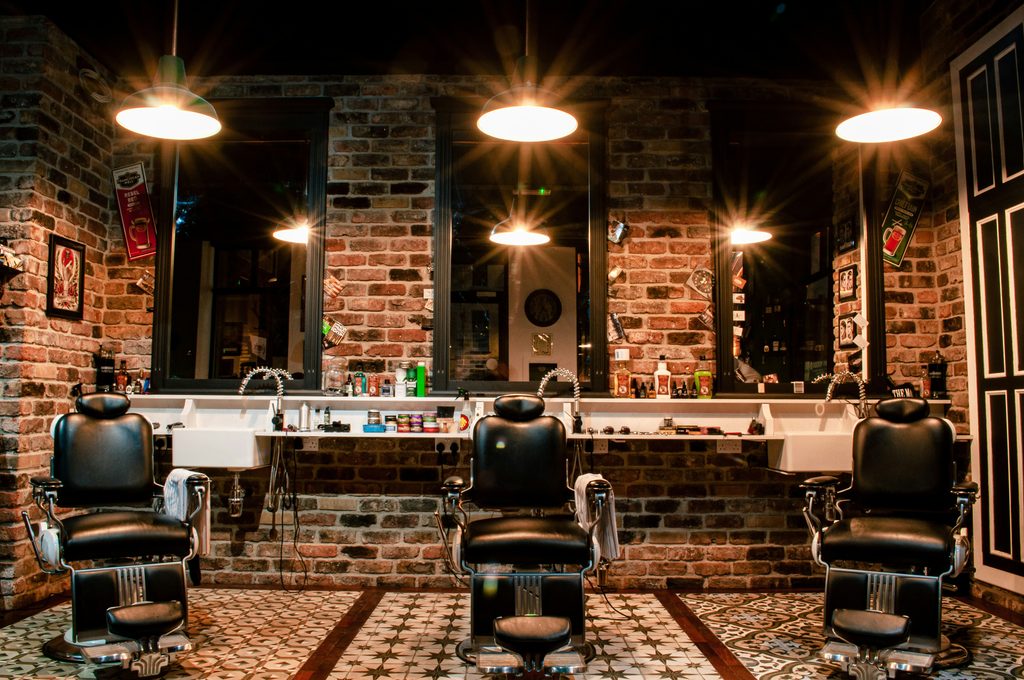
A haircut in Japan is not a transaction, it is a service, and the difference shows up in about ninety small ways over the course of an hour.
The shampoo is done twice with a gauze square laid over your face. The chair reclines to a position that would be unusual in a European salon. There is a head and shoulder massage that nobody mentions in advance and nobody charges for. Tea arrives. At the end the stylist walks you to the door and stands outside it until you are out of sight.
Whether the cut itself is what you asked for is a separate question, and it depends almost entirely on how you communicate before the scissors come out. That is what most of this article is about.
Booking an Appointment
Reservations are the norm and walk-ins are the exception.
Hot Pepper Beauty
Hot Pepper Beauty is the dominant booking platform in Japan — salon listings, photographs of stylists’ work, prices, and real-time availability, covering the overwhelming majority of the country’s salons.
It is Japanese-only, and some bookings require a Japanese phone number. Browser translation handles most of it and the interface is visual enough to navigate.
Its real value for a visitor is the photographs. Every stylist posts a portfolio of their own work, which lets you find someone who has actually cut hair like yours before rather than hoping.
English-Speaking Salons
Tokyo has a solid number of salons oriented toward foreign clients, concentrated in Shibuya, Harajuku, Omotesando, Roppongi, Hiroo, and Nakameguro. Many employ stylists who trained in London, New York, or Sydney.
They cost more than a neighbourhood salon and less than the equivalent at home. They book out further ahead.
Search in English and read recent reviews from people with hair like yours. A salon advertising English service is not the same as a stylist with experience of your hair type.

Walking In
Possible at some salons on weekday afternoons and unlikely at weekends. Most Japanese salons run a full appointment book and staff to it.
If you want to try, go early in the afternoon on a Tuesday or Wednesday. Mondays are the traditional closing day for salons across Japan.
QB House and the other quick-cut chains take walk-ins only, which is the point of them.
Expert Tip
Bring three photographs, not one: the front, the side, and the back of the result you want. Japanese stylists work from images as standard and expect them — every salon has a tablet of style photographs for exactly this purpose. One photograph from the front leaves the back entirely to interpretation, and the back is where haircuts go wrong. This single step matters more than any amount of vocabulary.
The Words You Need
Six phrases cover almost every haircut conversation, and they are worth having on your phone.

Length
To ask for shorter: 短くしてください (mijikaku shite kudasai).
To ask for a trim only, which is the request most often misunderstood: 少しだけ切ってください (sukoshi dake kitte kudasai), or better, 毛先をそろえるだけ (kesaki o soroeru dake) — just tidy the ends.
Specify in centimetres if you can. 2センチ切ってください is unambiguous in a way that “a little off” is not.
Thinning
Japanese cutting technique uses thinning shears heavily, and this is the single most common source of unpleasant surprise for Western clients, whose hair is often finer to begin with.
To ask for it: すいてください (suite kudasai). To ask them not to: すかないでください (sukanaide kudasai).
If your hair is fine, say the second one at the start, clearly, and be prepared to say it again.
Fringe and Layers
Fringe is 前髪 (maegami). Layers are レイヤー, pronounced roughly as in English.
For the fringe specifically, indicate the length with your fingers on your own face. Eyebrow-length versus eye-length is a large difference and one that translation apps handle badly.

Two Words to Remember
このままで (kono mama de) — leave it as it is. Useful when a stylist offers to do more.
もう少し短く (mou sukoshi mijikaku) — a bit shorter. Japanese stylists cut conservatively and check as they go; this is the phrase for the check.
What a Japanese Salon Actually Does
The service around the cut is substantial and is included in the price.
The Shampoo
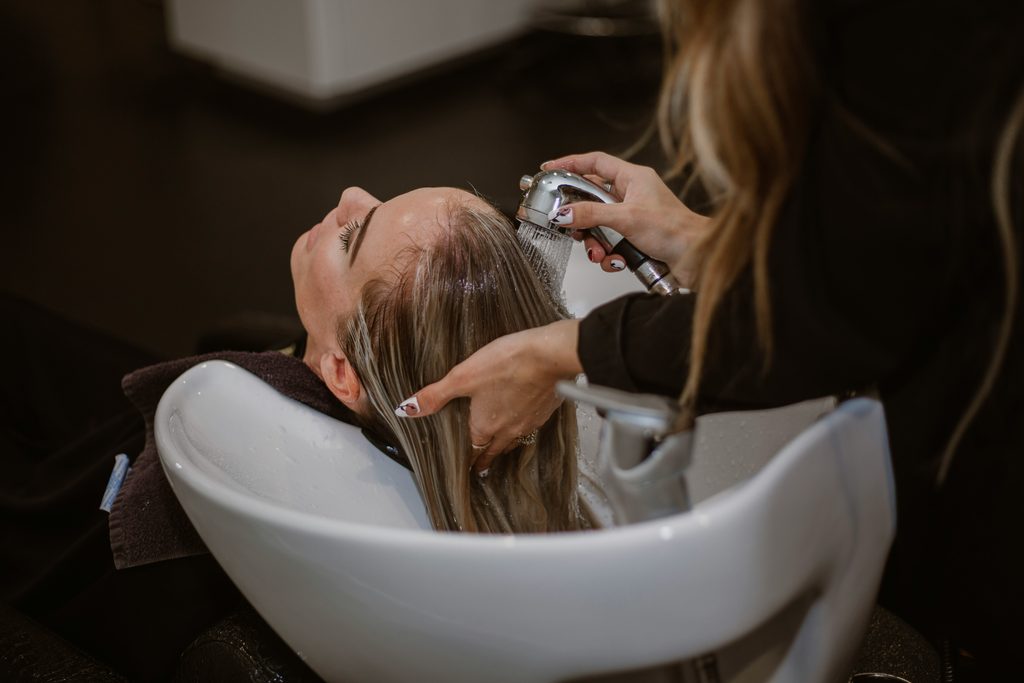
Done at a reclining basin with a light gauze cloth placed over your face, which is standard practice and not a comment on you.
It is thorough. Expect several minutes of scalp work, a rinse, a second shampoo, conditioner, and a scalp massage during the rinse.
You will usually be asked かゆいところはありませんか — is anywhere itchy, meaning is there anywhere you would like more attention. はい, and point.
The Massage
A head, neck, and shoulder massage of several minutes is included at most mid-range salons, either during the shampoo or after the cut.
It is not an upsell and there is nothing to decline or pay for. Many salons also offer a longer head spa as a paid add-on, which is a genuine treatment involving scalp cleansing, steaming, and massage, and which is one of the more pleasant hours available in Japan for around ¥3,000 to ¥6,000.
Drinks and the Rest
Tea or coffee, a tablet with magazines, a blanket over the knees, and a hanger and cover for your coat.
The blow-dry and styling at the end are included. So is the last check with a hand mirror at the back, at which point you should speak up if anything is wrong — this is the moment, not afterwards.
Time
A cut with wash and blow-dry runs sixty to ninety minutes. Colour or perm on top takes two to four hours.
Do not book a salon appointment on a day with something else scheduled two hours later.
QB House and the Ten-Minute Cut
At the other end of the market, and a genuinely good product.
How It Works
QB House is a chain of small cutting kiosks in stations, shopping centres, and under railway arches across Japan, offering a cut and nothing else in about ten minutes.
Buy a ticket from the machine at the entrance, sit on the bench, and wait. There is a light system outside each branch showing the current wait — green for none, yellow for about five minutes, red for longer.
The price is around ¥1,350 to ¥1,500 depending on branch and current pricing. The machines take cash and IC transit cards.
No Washing
There is no basin and no shampoo. Cut hair is removed with a suction device on an overhead arm — an air washer — which works better than it sounds and leaves you needing a shower rather than covered in hair.
Come with clean dry hair. They will not wash it and cutting wet hair is not part of the service.
Whether It Is Any Good
For a straightforward men’s cut or a trim, yes. The stylists are qualified, they do this all day, and the standard is consistent.
For anything requiring discussion, styling, or judgement, no — the ten minutes is the whole product and there is no consultation built into it.
Bring a photograph here too. Ten minutes does not leave room for a misunderstanding to be corrected.
Expert Tip
Do not tip, and do not leave money on the counter. Tipping is not practised in Japan and a stylist presented with extra cash will chase you down the street to return it, which is a more awkward interaction than either of you wants. The listed price is the price. If you want to express appreciation, say ありがとうございました on the way out and book again — repeat custom is the currency here.
Prices, Payment, and No Tipping
Broadly cheaper than equivalent quality in London or New York, with a wide internal range.
What Things Cost
A cut at a neighbourhood salon runs roughly ¥4,000 to ¥7,000. A mid-range Tokyo salon in Shibuya or Omotesando is ¥6,000 to ¥12,000. Salons oriented toward foreign clients and celebrated stylists go higher.
Colour adds ¥6,000 to ¥15,000 and up depending on process. Perms and straightening treatments are their own category and are a Japanese specialism.
QB House and the quick-cut chains sit at around ¥1,350 to ¥1,500.
Paying
Larger salons take cards and QR payments. Small neighbourhood salons are frequently cash only, and this catches people out.
Check when booking or bring cash. There is no service charge and no tax added at the till — the displayed price is inclusive.
Cancellation
Take it seriously. Missing a Japanese salon appointment without notice is a real breach, and Hot Pepper Beauty tracks no-shows against your account.
Cancel through the app or call. Salons are generally gracious about it if you tell them.
Haircut in Japan: Frequently Asked Questions
Do I need to speak Japanese for a simple trim?
No. Three photographs, a translation app, and the two or three phrases above will get you through a straightforward cut at almost any salon. Japanese stylists are used to working visually and will check with you repeatedly during the cut using gestures and the mirror. Where it goes wrong is not language but assumption — particularly around thinning shears, which are used far more heavily here than in most Western salons. Say すかないでください at the start if you do not want that, and say it before the cut begins rather than after.
Are Japanese stylists experienced with curly or textured hair?
Generally not, and this is worth being direct about. The overwhelming majority of Japanese salons see straight, thick, dark hair every day and train on it, and a stylist with no experience of tightly curled or Afro-textured hair will not produce a good result however skilled they are with a different hair type. Tokyo does have salons specialising in this, concentrated in areas with large international communities — Hiroo, Roppongi, Azabu, and parts of Yokohama — and they are worth travelling across the city for. Search specifically for that, look at portfolios showing hair like yours, and book ahead. Do not walk into a neighbourhood salon and hope.
What does a haircut cost in a mid-range Tokyo salon?
Roughly ¥6,000 to ¥12,000 for a cut with wash, massage, and blow-dry included, at a decent salon in Shibuya, Omotesando, or Nakameguro. Neighbourhood salons outside the central districts run ¥4,000 to ¥7,000. There is no tax to add and no tip, so the price you see is the price you pay. Given that it includes an hour of service that would be billed separately elsewhere, it is one of the better-value things a visitor can buy in Japan.
Related Tours
Conclusion
Book through Hot Pepper Beauty by looking at photographs rather than reading descriptions, take three images of what you want, and say すかないでください before anything starts if your hair is fine.
Then book the head spa as an add-on. It costs a few thousand yen, it takes half an hour, and it is one of those small Japanese services that has no real equivalent anywhere else and that nobody thinks to recommend to visitors.
Plan Your Japan Trip with Local Experts
Our team has guided 40,000+ travelers across Japan. Tell us about your trip and we’ll get back to you within 24 hours.