In this article:
- Multi-Symptom Cold Remedies
- Fever and Pain
- Sore Throat
- Talking to the Pharmacist
- Doses, Drowsiness, and Limits
- Cold Medicine Japan: Frequently Asked Questions
Introduction
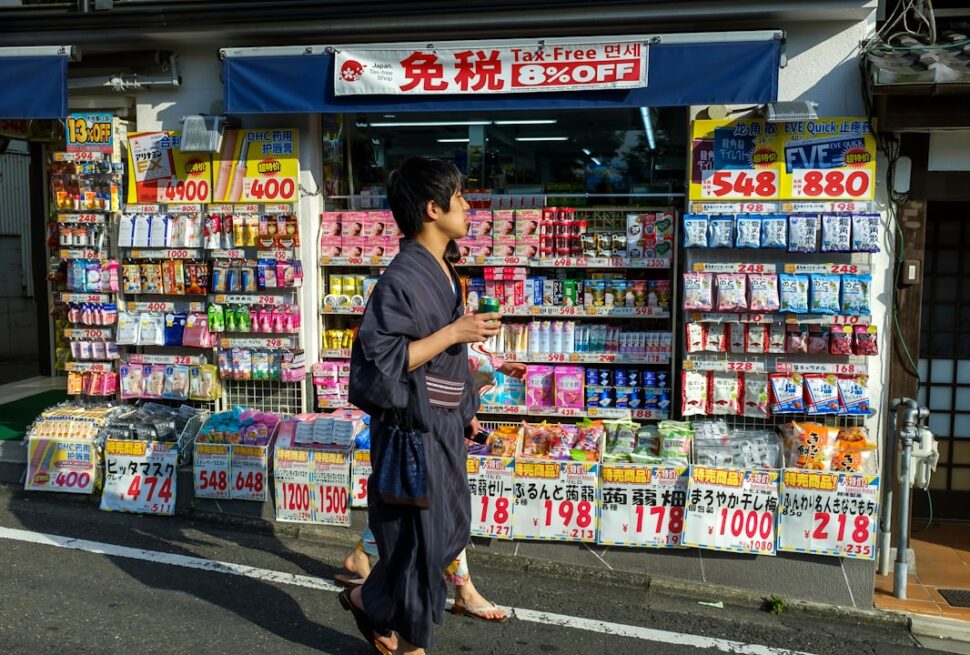
Japanese drugstores are excellent, open late, and everywhere, and the cold medicine aisle is completely impenetrable if you cannot read the boxes.
The good news is that the market is dominated by a small number of long-established products, most of them multi-symptom combinations, and knowing four or five names covers essentially every situation short of needing a doctor.
One structural difference to understand first: Japanese over-the-counter doses tend to be lower than their Western equivalents, and combination cold remedies here bundle several active ingredients into one product. That matters mostly because you should not take a cold remedy and a separate painkiller at the same time without checking what is in both.
Multi-Symptom Cold Remedies
The kaze-gusuri category — literally cold medicine — and the default purchase.
Pabron
Taisho’s Pabron is the most recognisable cold medicine in Japan and Pabron Gold A is the flagship: a multi-symptom combination available as granules in sachets or as tablets.
It addresses cough, congestion, sore throat, and fever together, and it is the sensible default if you have a general cold and do not want to make a decision.
The granule version is taken by tipping the powder into your mouth and drinking water. It is not pleasant and Japanese people are used to it. The tablets are available if you would rather.
There are numerous Pabron variants targeting particular symptoms. The plain Gold A covers most cases.
Lulu Attack
Daiichi Sankyo’s range, and the useful thing about it is that the variants are clearly differentiated by symptom.
Lulu Attack EX targets sore throat specifically. Other variants in the line focus on fever or on nasal symptoms. The packaging is colour-coded and the differences are real.
If one symptom dominates, this range lets you address it rather than taking a general combination.
Contac and Stona
Longer-acting capsule formulations aimed at nasal congestion and runny nose, taken twice daily rather than three or four times.
Useful if you are travelling through the day and do not want to be dosing every four hours.
Kampo Options
Japanese pharmacies also stock traditional kampo formulations, most commonly kakkonto — a herbal preparation taken at the very first sign of a cold, before symptoms are established.
It is widely used in Japan and is generally taken as a granule sachet. Whether you find it effective is a matter for you; it is genuinely part of how Japanese people treat a cold and it is inexpensive.
Expert Tip
Photograph the box of anything you take at home before you travel, including the ingredient panel. When you are standing in a Japanese drugstore feeling terrible, showing a pharmacist a photograph of the active ingredients you normally take is faster and more accurate than any attempt at describing your symptoms — they will find the closest Japanese equivalent immediately. Ingredient names are international; brand names are not.
Fever and Pain
The category to get right, because this is what you actually want at three in the morning.
EVE
SS Pharmaceutical’s EVE range is ibuprofen-based and is the best-selling painkiller in Japan. EVE A is the standard; EVE Quick contains an antacid component and is formulated to act faster and to be gentler on the stomach.
It is the default for headache, period pain, and fever, and it is available on the open shelf.
If you normally take ibuprofen at home, this is what you are looking for.
Loxonin S
Loxoprofen, sold by Daiichi Sankyo, and stronger than the standard shelf painkillers. It is available over the counter but as a Class 1 drug, which means it is kept behind the counter and can only be handed over by a licensed pharmacist.
That has practical consequences: a drugstore without a pharmacist on duty cannot sell it, and pharmacist hours are shorter than shop hours. You may need to come back in the morning.
You will also be asked to confirm a few questions about your health. This is a legal requirement, not an interrogation.
Paracetamol
Sold in Japan as acetaminophen. Tylenol A is available, as are various Japanese-brand equivalents.
This is what to look for if you cannot take NSAIDs, if you have a sensitive stomach, or for children. Ask the pharmacist for アセトアミノフェン — the word is a direct transliteration and will be understood.
Paediatric formulations in syrup and powder form are widely available.
Sore Throat
Japan takes throat symptoms seriously and the category is unusually well developed.
Ryukakusan
A herbal powder taken directly on the tongue and allowed to dissolve without water, in single-dose sachets. It has been made since the Edo period.
The mechanism is that the fine powder coats the throat. It tastes strongly herbal and it works better than expected.
Ryukakusan Direct is the modern sachet version and comes in peach and mint flavours that make it more tolerable. This is the item we would put in a traveler’s bag before any other.
Throat Sprays
Iodine-based disinfectant sprays with a long applicator that reaches the back of the throat are a Japanese staple, sold by Kobayashi and others.
They are unpleasant and effective. There is also a gargle version — the Isodine brand is the best known — used as a preventive routine by a large part of the population during winter.
Lozenges
Medicated throat drops are on every drugstore shelf and at every convenience store, in menthol, herbal, and propolis varieties.
Convenience stores stock a smaller selection and are open when drugstores are not, which matters at midnight.
Talking to the Pharmacist
Staff will help, and giving them the right information is your half of the job.

The Opening Sentence
風邪薬をください — kaze-gusuri o kudasai — please give me cold medicine. This alone will get you to the right aisle and someone will walk you through it.
Larger drugstores in tourist areas often have English-speaking staff or English product guides. Matsumoto Kiyoshi in particular has invested in this.
Symptom Words
熱 (netsu) fever. 咳 (seki) cough. のど (nodo) throat. 鼻水 (hanamizu) runny nose. 頭痛 (zutsuu) headache. 寒気 (samuke) chills.
Point at yourself and say the word. This works.
Two more that matter: 妊娠中です (ninshinchuu desu) — I am pregnant. アレルギーがあります (arerugii ga arimasu) — I have an allergy.
Drug Classes
Japanese OTC medicines are classified. Class 1 requires a licensed pharmacist to hand it over with written information — Loxonin S is the example most travelers meet. Classes 2 and 3 can be sold by a registered seller and are on the open shelf.
The practical consequence is that if a drugstore’s pharmacist is off duty, the Class 1 shelf is physically locked or the product cannot be sold. Shop signage indicates pharmacist hours.
Pharmacies Versus Drugstores
A drugstore — Matsumoto Kiyoshi, Sundrug, Welcia, Tsuruha, Cocokara Fine — sells OTC medicines alongside cosmetics and snacks.
A dispensing pharmacy, usually next to a clinic and marked 調剤薬局, fills prescriptions. You cannot get a prescription filled without a Japanese doctor’s prescription, and there is no walk-in equivalent.
Expert Tip
Antibiotics are not available over the counter in Japan under any circumstances, and no amount of asking will change this. If you have a bacterial infection, you need a clinic — and clinics in Japan are inexpensive by American standards even for an uninsured foreign patient, typically a few thousand yen for a consultation plus the medication. The JNTO visitor hotline on 050-3816-2720 operates around the clock in English and will find you one. Do not spend three days working through cold remedies for something that needs a doctor.
Doses, Drowsiness, and Limits
Three things worth knowing before you take anything.
Drowsiness
Most Japanese multi-symptom cold remedies contain an antihistamine and will make you sleepy. The boxes carry a warning about operating vehicles and machinery.
This is not incidental — the sedating effect is regarded as part of the treatment, on the reasoning that rest is what a cold requires.
Plan accordingly. Do not take a full-strength combination remedy and then attempt a full day of sightseeing or a drive.
Do Not Double Up
Combination cold remedies frequently contain a painkiller already. Taking Pabron and then EVE two hours later may mean exceeding the recommended dose of an ingredient you did not realise you had taken twice.
If you are unsure, show both boxes to a pharmacist.

Doses Are Lower
Japanese OTC formulations are generally milder than their American equivalents, which surprises visitors who find a standard dose does less than expected.
The instruction to follow is the one on the Japanese box, not the dose you are used to at home. Taking extra to compensate is the specific thing not to do, because the combination products contain other ingredients that scale up with it.
Children
Paediatric formulations in syrup, powder, and jelly form are widely available and clearly marked with age ranges on the front of the box.
Age limits are real and are printed prominently. Ask the pharmacist rather than estimating from an adult product.
Japan restricted codeine-containing preparations for young children some years ago; paediatric products on sale now reflect that.
Cold Medicine Japan: Frequently Asked Questions
Are Japanese cold medicines strong enough for real flu?
For an ordinary cold, yes — the multi-symptom combinations do what they claim. For genuine influenza they are symptom relief and nothing more, which is true of over-the-counter remedies everywhere. Japan does have effective prescription antivirals for influenza and they work best when started within the first day or two of symptoms, which is a strong argument for seeing a doctor early rather than working through the drugstore shelf. If you have a high fever, severe body aches, and sudden onset, that is a clinic visit rather than a Pabron purchase.
Can I buy antibiotics over the counter?
No. Antibiotics are prescription-only in Japan and are not sold in drugstores under any circumstances. There is no negotiation and no informal route. If you need them, you need a doctor — and seeing one is easier and cheaper than most visitors expect. Walk-in clinics are common, waits are short, and a consultation plus medication for an uninsured foreign patient typically runs a few thousand yen. Your accommodation will help you find one, or call the JNTO visitor hotline in English.
What works fastest for a bad headache or toothache?
Loxonin S, which is loxoprofen and is the strongest thing available over the counter, though it is a Class 1 drug kept behind the counter and requires a pharmacist to be on duty. EVE Quick is the next best option, is ibuprofen-based with an antacid component for faster absorption, and is on the open shelf. For a toothache specifically, both are stopgaps — Japanese dental clinics take walk-ins in most cities and treat pain readily, and a toothache that needs painkillers around the clock needs a dentist rather than a drugstore.
Related Tours
Conclusion
Buy a box of Ryukakusan Direct and a small pack of EVE at the start of your trip rather than at two in the morning on day nine. Both cost very little, both fit in a daypack, and having them removes the worst version of this problem entirely.
And if you have a fever, sudden onset, and body aches rather than a cold, skip the drugstore and see a doctor on day one. Japanese clinics are cheap, quick, and good, the antivirals only work early, and no combination remedy on that shelf is going to be the answer.
Plan Your Japan Trip with Local Experts
Our team has guided 40,000+ travelers across Japan. Tell us about your trip and we’ll get back to you within 24 hours.