In this article:
- What makes Asakusa worth a dedicated walking tour
- Senso-ji: beyond the famous gate
- The Nakamise shopping street: what’s worth your time
- Beyond the temple: the neighborhoods surrounding Asakusa
- Along the Sumida River
- Where to eat during the walk
- Practical route and timing
Introduction
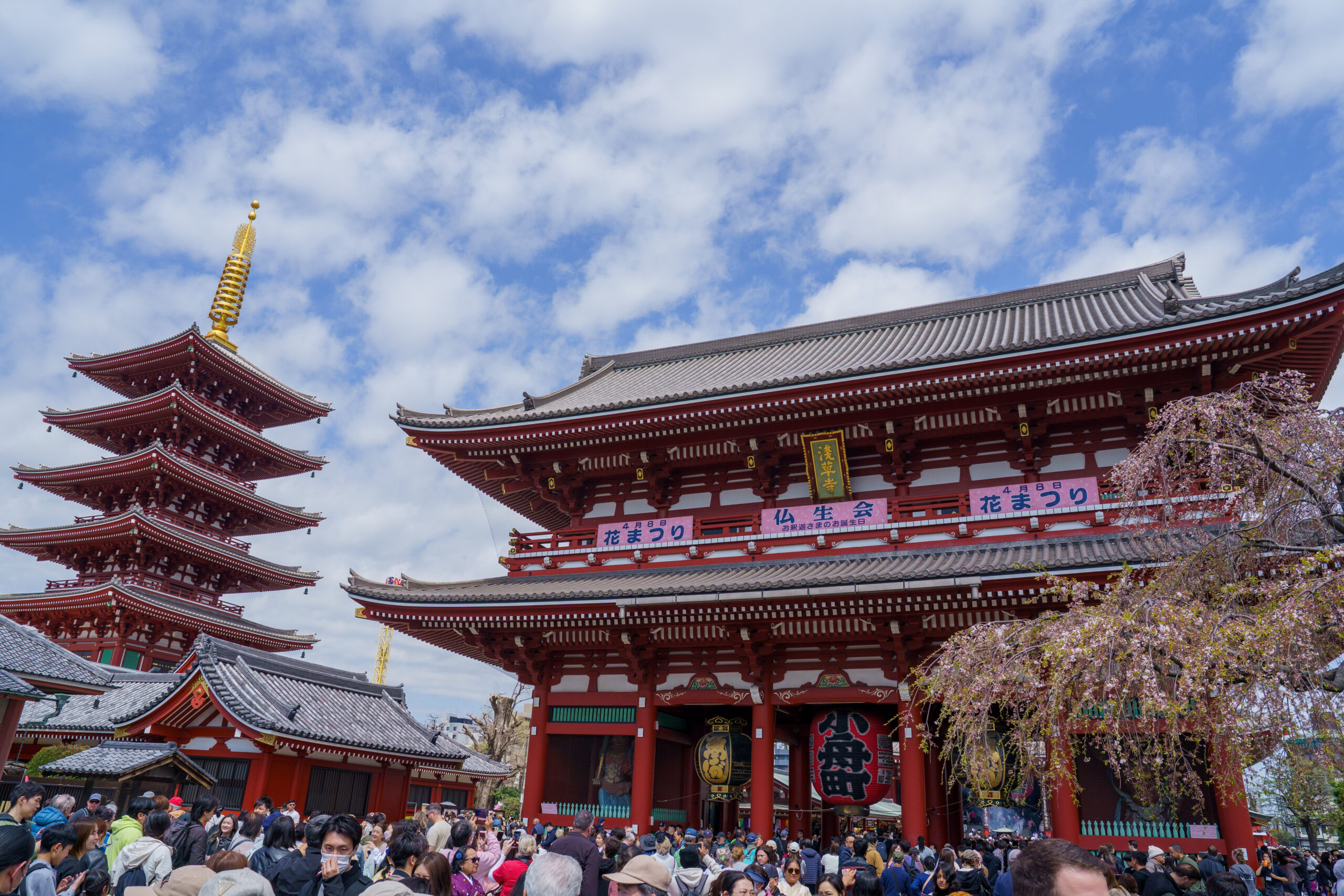
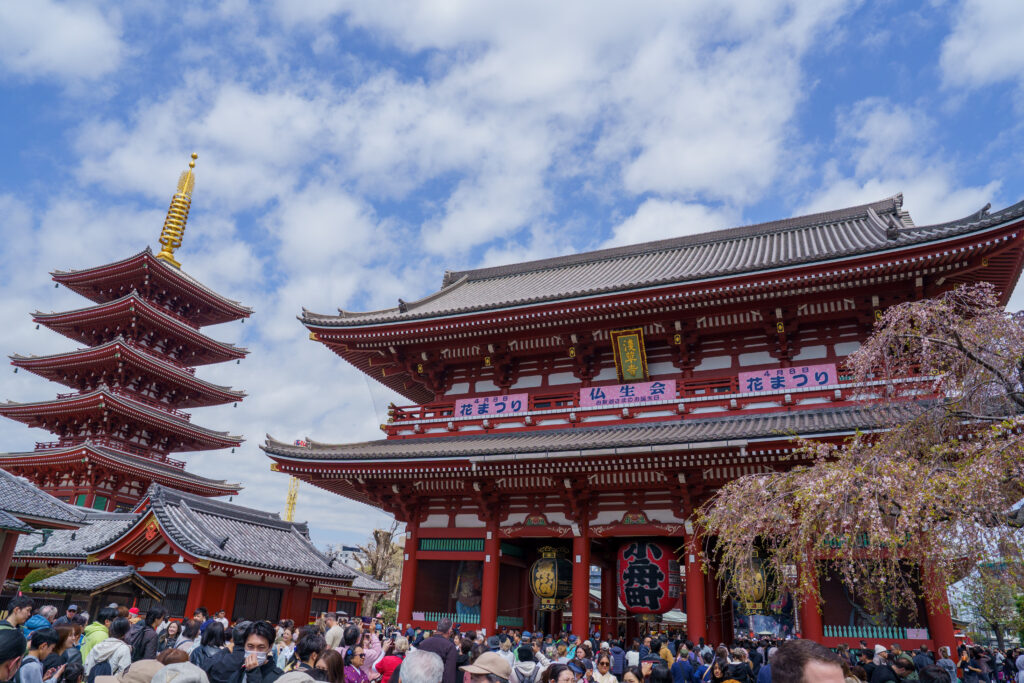
Asakusa is one of Tokyo’s most visited neighborhoods, and most visitors see the same one-hour version of it: the Kaminarimon gate, the Nakamise shopping street, the incense smoke at the temple courtyard, a photograph with the five-story pagoda in the background. This version is legitimate and worth doing. But it covers perhaps a fifth of what Asakusa offers.
The neighborhood extends well beyond the temple precinct into streets that survived the 1923 earthquake and the 1945 firebombing — patches of pre-war Tokyo that look and function differently from the rest of the city. The Sumida River waterfront has been developed over the past decade with a quality that rewards walking. The backstreets north and west of the temple contain craftspeople, specialty food shops, and residential culture that the tourist zone doesn’t touch.
A proper Asakusa walking tour takes three to four hours, covers the temple at the right time, and enters the neighborhoods that most visitors don’t reach.
Senso-ji: Beyond the Famous Gate
What Senso-ji Is
Senso-ji is Tokyo’s oldest Buddhist temple, founded according to tradition in 628 AD when local fishermen pulled a statue of Kannon (the bodhisattva of compassion) from the Sumida River. The temple has been destroyed and rebuilt multiple times — the current structures date mostly from the postwar reconstruction of the 1950s. Despite this, it remains a functioning religious site: the incense smoke in the courtyard is burned by worshippers seeking health and blessing, not for tourist atmosphere.
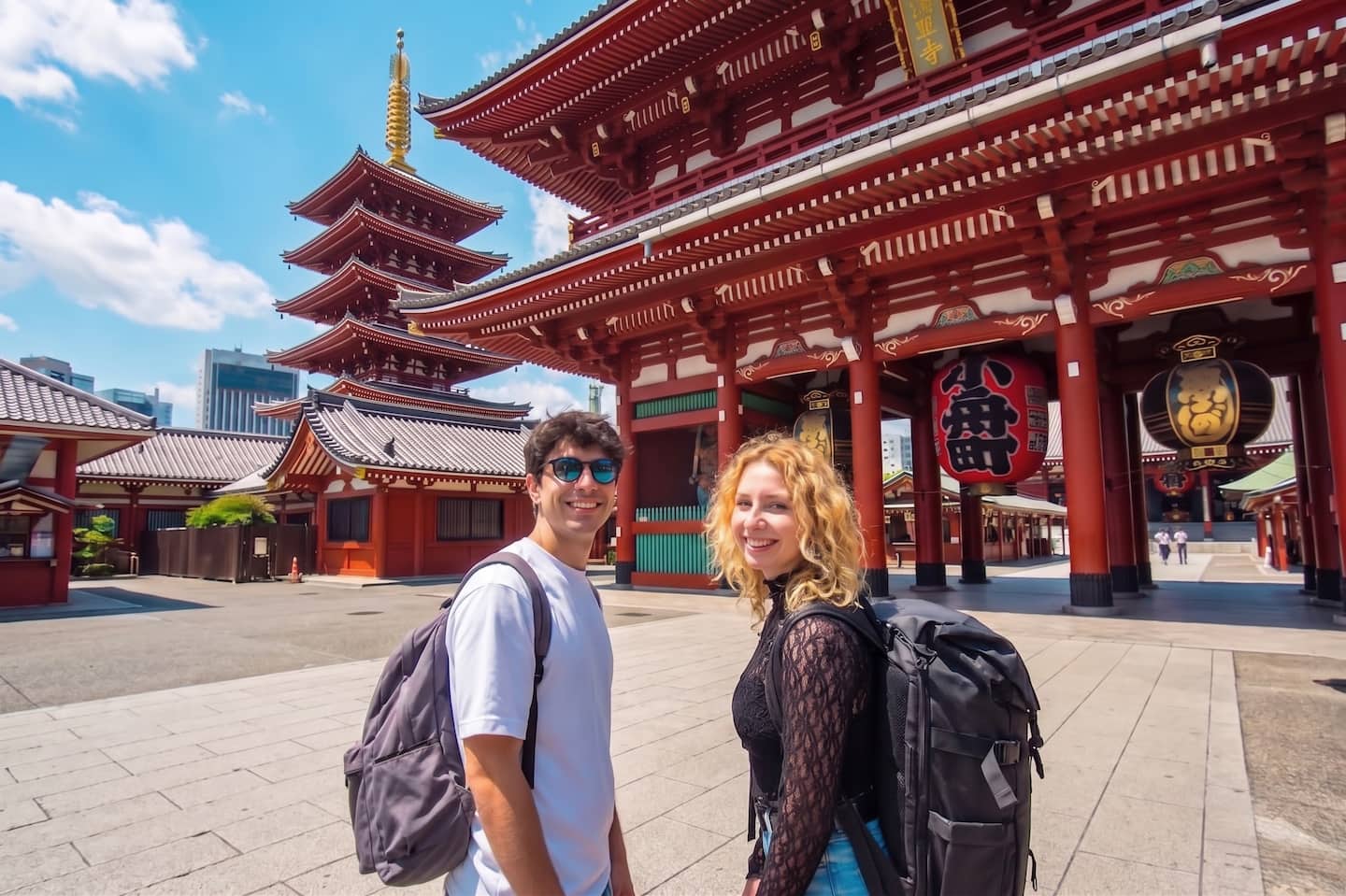
The Kaminarimon (Thunder Gate) at the entrance — the large red lantern, the fierce guardian figures — is one of the most photographed subjects in Tokyo. Beyond it, the path to the temple is lined with the Nakamise shopping street. Neither the gate nor the shopping street is the most interesting thing about Senso-ji.
The Main Hall and Inner Precinct
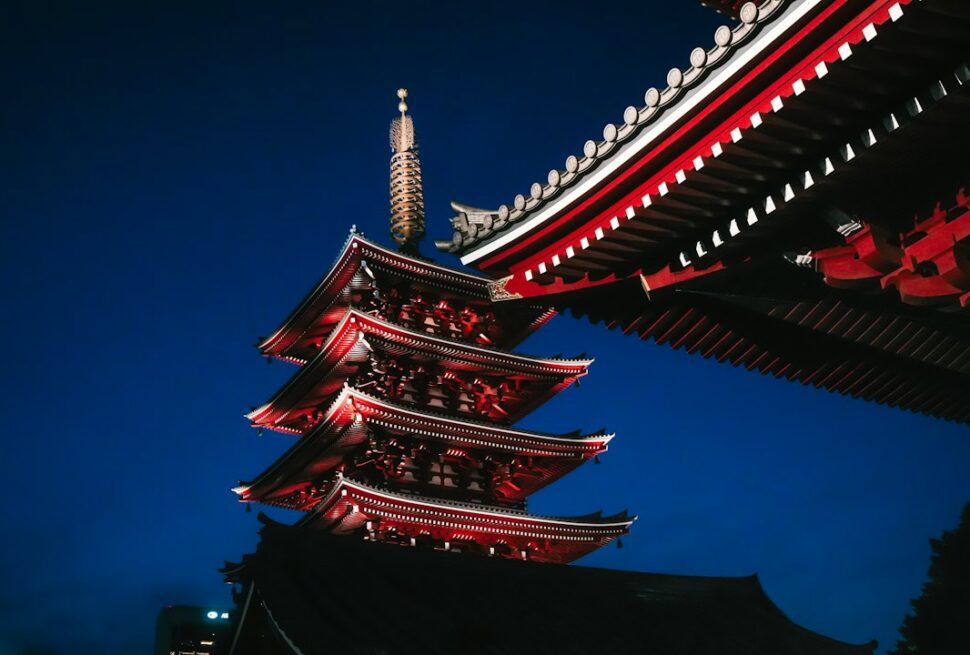
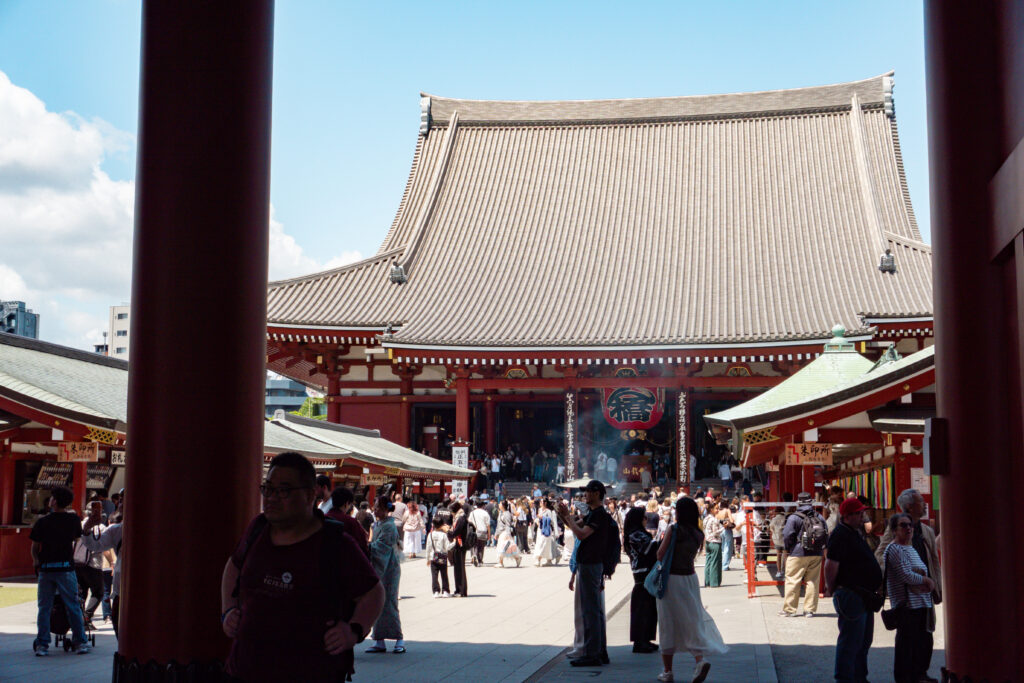
The main hall (Hondo) and the five-story pagoda form the inner precinct of the temple. At the main hall: the incense cauldron where worshippers pass smoke over their bodies, the heavy cloth curtain partially concealing the altar, and the offering box where coins are thrown and prayers made. These are functional religious practices, not performance.
The inner garden to the west of the main hall — Dempoin Garden, visible through a fence but not publicly accessible most days — is a formal Edo-period garden that has survived intact. On the few days when it opens, it’s worth the visit for the contrast between the garden’s quiet and the temple precinct’s activity.
Early Morning vs. Midday
Senso-ji before 8am is the temple for worshippers — local residents doing their morning prayers, monks beginning the day’s ritual work, shopkeepers opening the stalls along Nakamise. The incense smoke is fresh; the courtyard sounds are bells and birds rather than crowd noise. By 10am it’s the busiest temple in Tokyo. By noon on a weekend in peak season, it’s a crowd management situation.
Go early. The temple is open continuously, and the early morning is categorically different from the afternoon.
The Nakamise Shopping Street
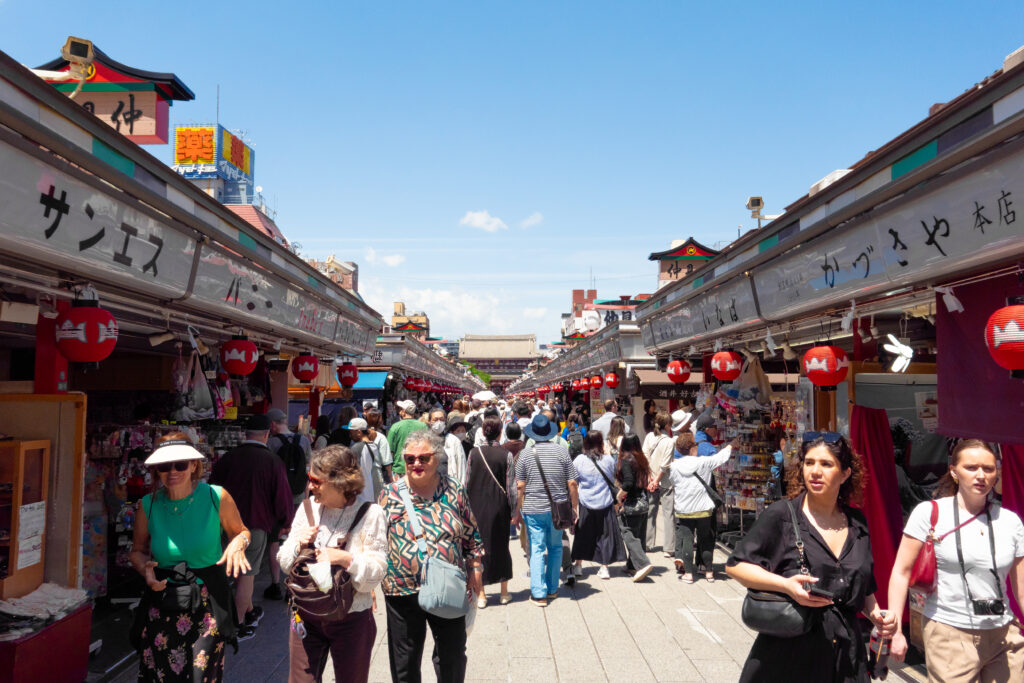
Nakamise’s 88 stalls include a mix: souvenir shops selling tchotchkes with no connection to Asakusa or Japanese craft tradition, and specialty shops that have been operating in the same family for multiple generations. The challenge is identifying which is which.
Worth stopping for on Nakamise: Kimono Asakusa (traditional textiles), the handful of tenugui (dyed cotton hand towels) shops that carry designs specific to the neighborhood, and the ningyoyaki stalls where the small cakes are made to order in front of you. The ningyoyaki is best eaten warm, standing in front of the stall, rather than bagged and carried.
The rest of Nakamise — the generic snacks, the plastic swords, the mass-produced key rings — can be walked through without stopping.
Beyond the Temple: Asakusa’s Other Neighborhoods
Kappabashi: Kitchen Street
Kappabashi-dori, running north-south about 400 metres west of Senso-ji, is Tokyo’s professional kitchen equipment district. Some 170 shops sell restaurant equipment, knives, ceramics, lacquerware, and the plastic food models used in restaurant windows across Japan. The food models — realistic plastic replicas of every dish imaginable — are one of Tokyo’s stranger attractions; the knife shops are among the best in the city for kitchen knives at fair prices.
A 30-minute walk through Kappabashi on the way to or from Senso-ji is useful and specific to this neighborhood — you can’t do this walk anywhere else in Tokyo.
Yanaka Connection
From Asakusa, a 25-minute walk north reaches the edge of Yanaka — the old-city neighborhood that survived the 20th century’s destruction events with its residential grid intact. The walk between Asakusa and Yanaka passes through Senzoku, a quiet neighborhood with several traditional workshops and a few good coffee shops. This walk is for visitors with time and curiosity; it’s not on any tourist map, which is the point.
The Backstreets West of the Temple
The streets between Senso-ji and Kappabashi — particularly Demboin Street and the lanes parallel to Nakamise — have a different character from the main temple approaches. Traditional craft shops, soy sauce shops that ferment on-site, and a few excellent small restaurants occupy spaces that have been continuously occupied for decades. The visual density of craft and trade is specific to this neighborhood.
Along the Sumida River
The east side of Asakusa borders the Sumida River. The riverfront has been substantially improved over the past decade — walkways, park space, and a continuous path connecting Asakusa to Sumida Park (cherry blossom season’s most popular Tokyo park) and further south toward Ryogoku and the sumo hall.
From the Sumida River waterfront in Asakusa, the view includes the Tokyo Skytree — now the world’s second tallest structure — directly across the water. The contrast between the Senso-ji compound on one side and the 634-metre tower on the other is specifically Tokyo: ancient and contemporary in the same frame.
Expert Tip
The best Asakusa walk timing: start at 7am at Senso-ji (while the morning worshippers are there and the Nakamise is quiet), walk west through Demboin Street for the craft shops, continue to Kappabashi for the knife shops (most open at 9:30am), then return to the temple precinct for a mid-morning break with ningyoyaki and coffee before the crowds arrive in force. This structure covers the neighborhood’s main layers in roughly three hours and ends before peak density.
Where to Eat During the Walk
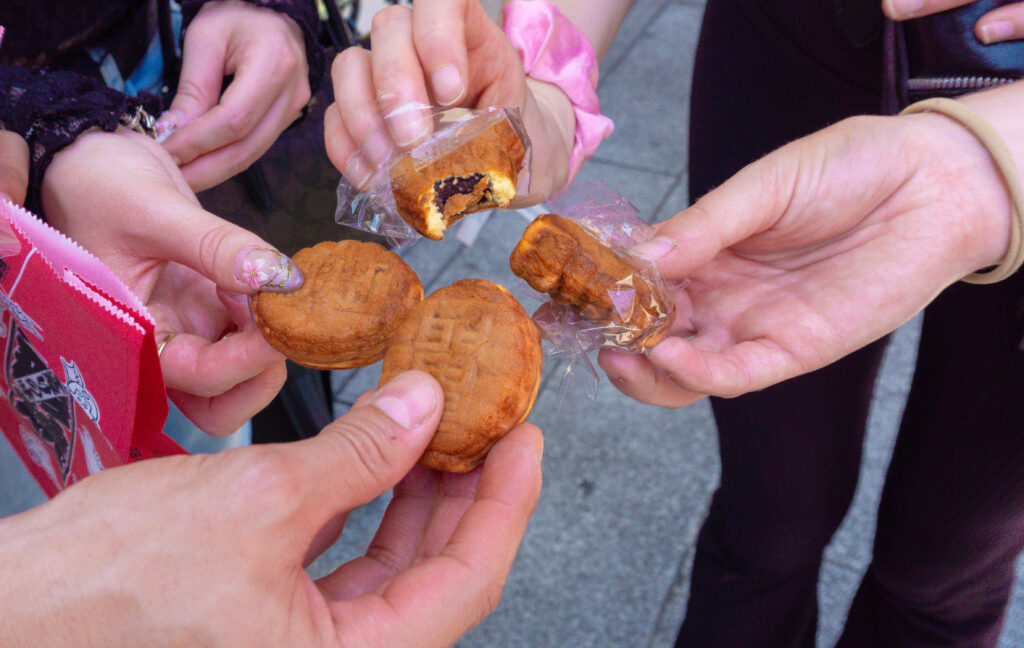
The walking route naturally passes the best food in Asakusa. Morning: ningyoyaki on Nakamise (¥500 for a bag), warm senbei from a charcoal roaster on Demboin Street (¥200–300 per piece). Late morning: tempura at a counter restaurant near Senso-ji (¥2,500–3,200 for a lunch set). Mid-afternoon: matcha and wagashi at one of the tea shops in the quieter streets west of the temple. Evening if you extend the walk: izakaya on Hoppy Street or yakitori in the covered market area near the temple.
Practical Route and Timing
Suggested route for a three-hour Asakusa walking tour:
7am: Senso-ji main hall — early morning worshippers, quiet courtyard. 7:30am: Walk Nakamise slowly, stopping at the ningyoyaki and tenugui shops. 8:15am: Demboin Street and the backstreet craft shops. 9am: Walk west to Kappabashi (20 minutes on foot). 9:30am: Kappabashi — knife shops, food model shops. 10:15am: Return east to Asakusa via a different street for variety. 10:30am: Sumida River waterfront walk, Skytree view. 11am: Early lunch at a tempura counter before the queue forms.
This structure uses the morning crowd advantage and covers the main elements without rushing.
Frequently Asked Questions
Is Asakusa worth a full morning? Yes — the temple alone is 45 minutes, but the neighborhood extends well beyond it. Three to four hours covers the meaningful content.
Is Asakusa too touristy to be worth visiting? The main temple corridor can feel very tourist-oriented during peak hours. Before 9am and in the backstreets west of the temple, it’s a different neighborhood. Both exist simultaneously; the question is which you seek out.
How far is Asakusa from central Tokyo? 15–20 minutes by subway from Shinjuku or Shibuya (Ginza Line from Shibuya to Asakusa). 10 minutes from Ueno. It’s accessible from almost anywhere in central Tokyo in under 25 minutes.
Related Tours

Conclusion
Asakusa at 7am is one of the better Tokyo mornings available to a visitor who goes looking for it. The temple before the crowds, the craft shops opening, the ningyoyaki warm from the iron mold, the Sumida River with the Skytree reflected in still water — these are experiences that require timing and attention rather than money or special access. That’s a good category of travel experience, and Asakusa offers it specifically.
Plan Your Japan Trip with Local Experts
Our team has guided 40,000+ travelers across Japan. Tell us about your trip and we’ll get back to you within 24 hours.