In this article:
- What Meiji Shrine is and why it matters
- The walking approach: the forested path as experience
- The main shrine complex: what to see and do
- Shinto culture: what’s happening and what it means
- Combining Meiji Shrine with Yoyogi Park and Harajuku
- Practical tips and timing
- Frequently asked questions
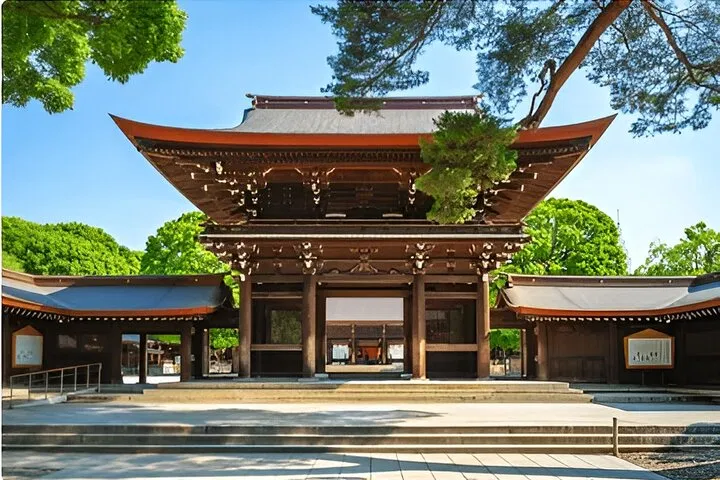
Introduction
Meiji Shrine sits inside 70 hectares of forested land in the middle of central Tokyo — 100,000 trees, planted when the shrine was built in 1920, now mature enough to create a genuine forest in what is otherwise one of the world’s most densely built environments. Walking from the Harajuku entrance through the cedar-lined path to the main shrine takes about 10 minutes at a normal pace. In that 10 minutes, the city disappears. This is the primary experience the shrine offers — the transition from urban density to forested quiet — and it’s genuinely striking, especially for first-time visitors who didn’t know a forest of this scale existed between Harajuku and Yoyogi.
The shrine itself is important: it’s dedicated to Emperor Meiji (1852–1912), the emperor under whose reign Japan transformed from a feudal society to a modern industrial state, and Empress Shoken, and it’s the destination for significant Shinto ceremonies including New Year (hatsumode), weddings, and Coming-of-Age ceremonies. Understanding what’s happening in the shrine compound — rather than walking through it as scenic backdrop — changes the experience completely.
What Meiji Shrine Is and Why It Matters
The Historical Context
Emperor Meiji presided over the Meiji Restoration (1868) — the period of rapid modernization in which Japan opened to the outside world, abolished the feudal system, built a Western-style constitutional government, and established itself as an industrial and military power within a generation. The transformation of Japan in this period was one of the most rapid in modern history. Meiji Shrine, built eight years after his death, commemorates the emperor who led this transformation while simultaneously representing the Shinto religious tradition that predates it by centuries.
The juxtaposition — one of Japan’s most important Shinto shrines dedicated to the emperor most associated with Westernization — says something specific about the relationship between tradition and modernization in Japanese culture that’s worth spending some time with.
Shinto vs. Buddhism
Meiji Shrine is a Shinto shrine, not a Buddhist temple. The distinction matters: Shinto is Japan’s indigenous religion, animistic and non-doctrinal, centered on the worship of kami (spirits or gods associated with natural features, ancestors, and historical figures). Buddhist temples (identifiable by their incense, multiple deity figures, and generally darker aesthetic) operate according to different rules and different ritual logic.
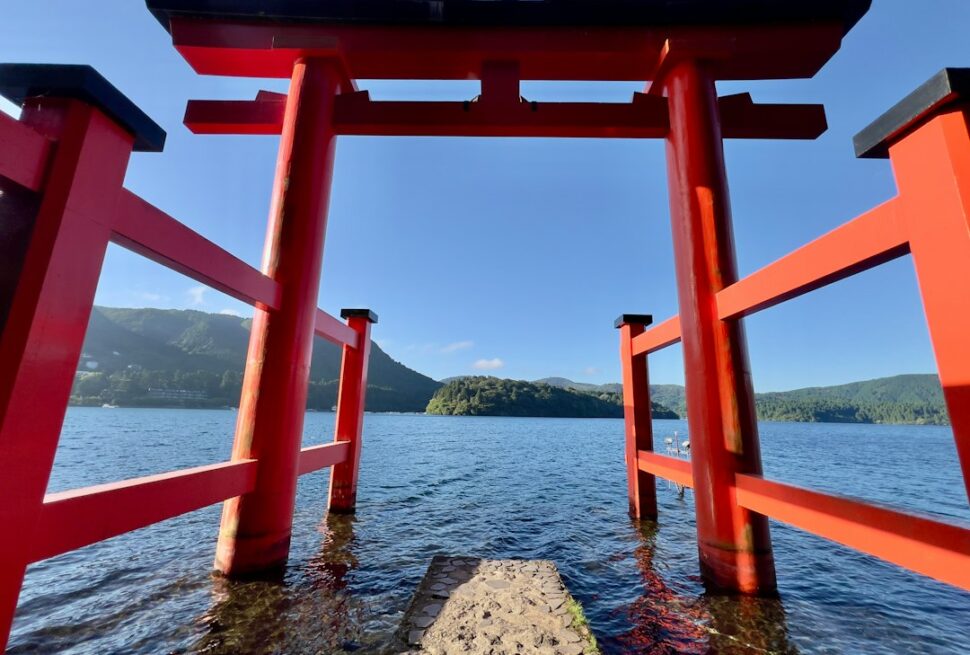
At a Shinto shrine, the ritual approach involves bowing at the torii gate, purifying hands at the temizuya (water trough), walking through the compound without talking loudly, and bowing and clapping at the main shrine building. Understanding this sequence — even at a basic level — transforms the visit from sightseeing to something more engaged.
The Walking Approach: The Forested Path as Experience
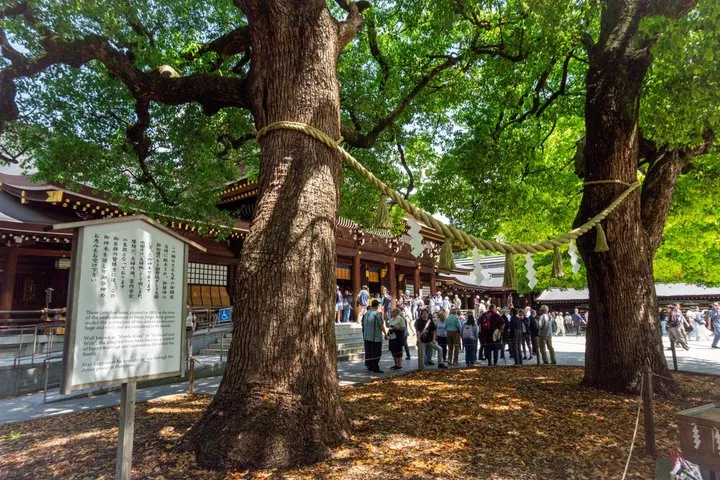
The approach to Meiji Shrine from either the Harajuku (south) or Kitasando (north) entrance is a walk through the forest that is itself the experience, not just the route to it. The cedar trees were planted over the years following the shrine’s founding; they’re now more than 100 years old and have created a genuine forest ecosystem in the middle of the city.
The path is gravel, wide, and slightly curving — a deliberate design that prevents you from seeing the main shrine complex until you’re nearly upon it. This visual concealment is intentional: the shrine should be encountered, not anticipated. Walk slowly. The transition from the street noise of Harajuku to the forest quiet within the first 200 metres is the most distinctive thing about the experience.
Expert Tip
The best time to walk the Meiji Shrine approach is early morning on a weekday — 7am to 8:30am before the organized school groups and tour buses arrive. The forest at this hour has birdsong, filtered light, and the occasional worshipper in traditional dress. By 10am the atmosphere changes. You don’t have to rush; the path is worth 20 minutes rather than five.
The Main Shrine Complex
The Temizuya: Hand Purification
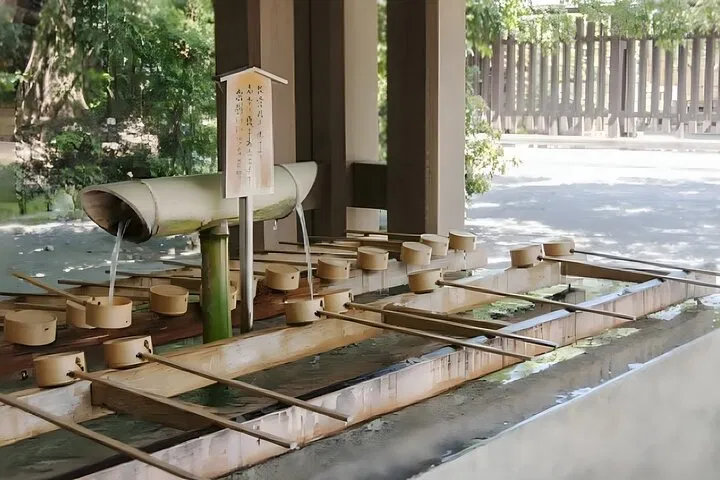
Before approaching the main shrine building, visitors purify their hands at the temizuya — a trough of running water with ladles. The correct sequence: ladle water, pour over the left hand, then the right, then the left again, rinse the mouth (optional for visitors), and rinse the ladle handle. This purification is not ceremonial decoration — it’s the physical enactment of the transition from the mundane world to the sacred space of the shrine.
At the Main Hall
At the haiden (main hall), the protocol for visitors who want to engage with the practice: approach the hall, bow twice (deep bows), clap twice, bow once more. The clapping is to get the attention of the kami — it’s an active, not passive, gesture. You don’t need to know what to pray for; the act of attention is the content.
If you’re observing rather than participating, stand to the side of the approach path rather than directly in front of the hall — this allows worshippers to approach without navigating around you.
The Sake Barrels and Ema
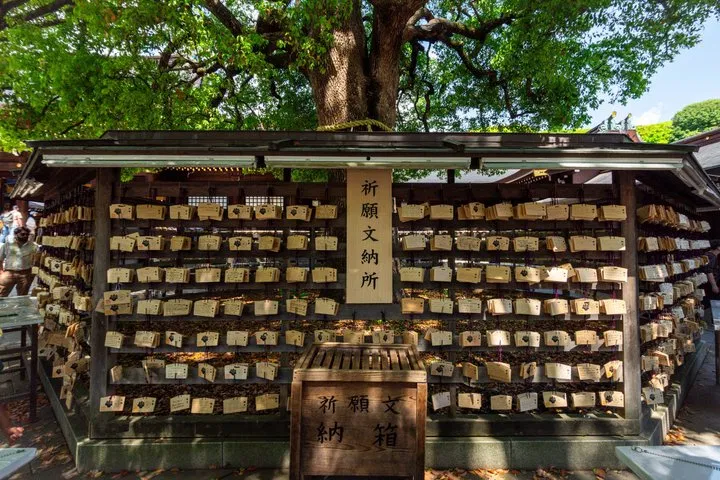
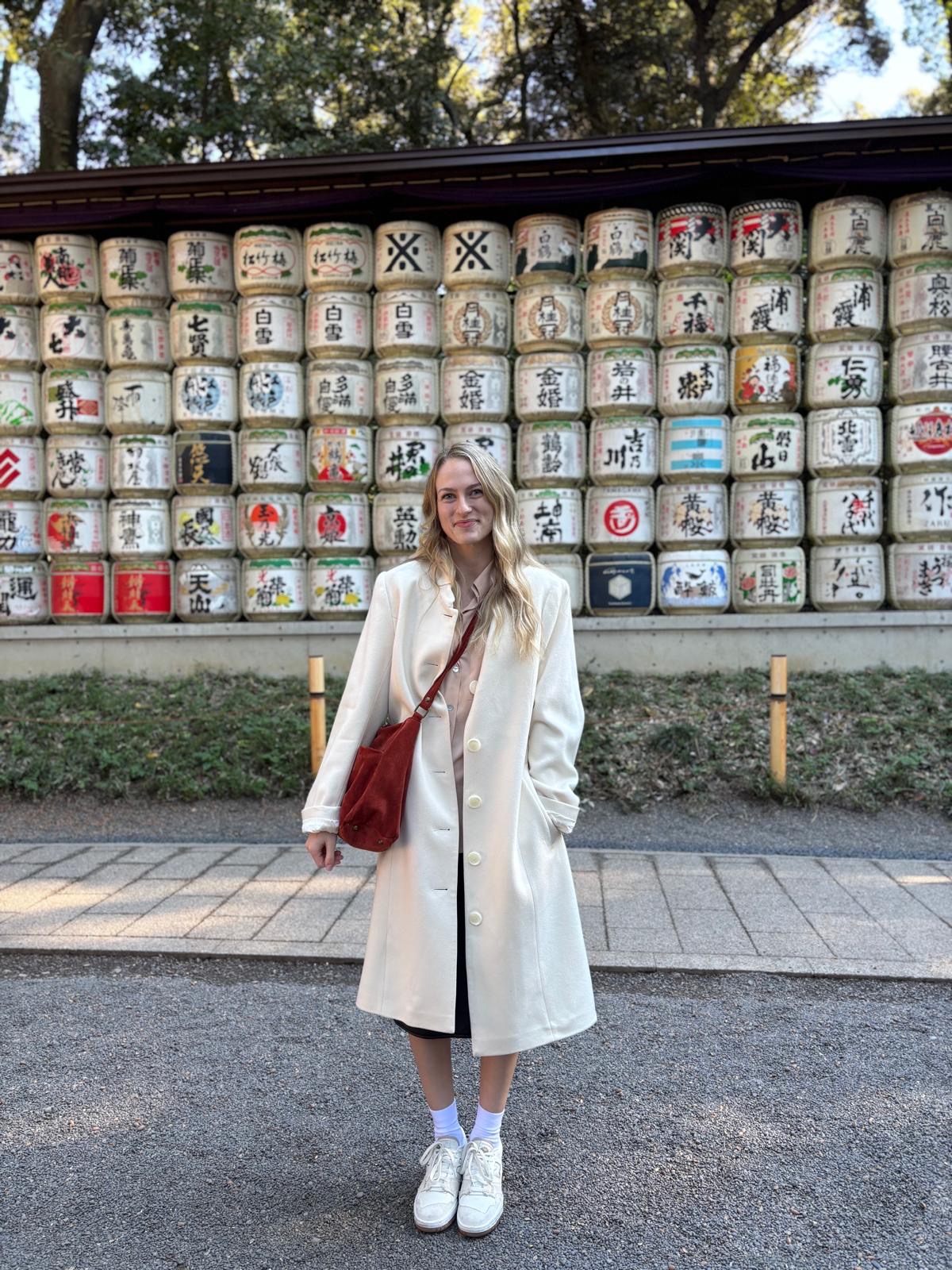
Along the inner path, 200 sake barrels wrapped in straw are stacked as an offering display — donated by breweries from across Japan as a ritual gift to the shrine. The ema (wooden prayer plaques) near the main hall are inscribed by visitors with prayers and wishes, hung on racks in the compound. Both are worth noticing as expressions of how the shrine functions as a living religious site rather than a museum.
Combining Meiji Shrine with Yoyogi Park and Harajuku
Meiji Shrine, Yoyogi Park, and Harajuku occupy adjacent territory and can be combined in a single morning or afternoon walk. A reasonable route: enter from Harajuku (Omotesando or Takeshita Street entrance), walk through the forest to the shrine, continue through the inner garden (Gyoen) if open, exit into Yoyogi Park for a rest if the day is pleasant, and walk back through Harajuku for shopping or food.
Yoyogi Park on a weekend is one of Tokyo’s genuinely enjoyable public spaces — large groups practice various activities (music, dance, sports), families picnic, and the park serves as a social space for Tokyo’s younger population in a way that larger parks in other neighborhoods don’t. The contrast with the formality of the shrine directly adjacent is specifically Tokyo.
Practical Tips and Timing
Meiji Shrine is open from sunrise to sunset. Admission to the outer grounds is free; the inner garden (Meiji Jingu Gyoen) charges ¥500. The shrine is busiest on weekends, national holidays, and during New Year (January 1–3, when millions of visitors come for hatsumode — the first shrine visit of the year). Weekday mornings are the calmest.
Weddings take place at Meiji Shrine year-round, most frequently on auspicious days in the traditional calendar. Witnessing a traditional Shinto wedding procession — white kimono, traditional court dress, drums — is one of the unexpected highlights of a weekday morning visit. It’s public; you can watch respectfully from the side of the path.
Frequently Asked Questions
Is Meiji Shrine worth visiting if you’ve already been to Fushimi Inari? Yes. They’re different experiences. Fushimi Inari is visually dramatic (the torii gate tunnels) and mountain-based. Meiji Shrine is forest-based and urban, and the shrine complex has a different character — quieter, more formal, less visually compressed. Both are worth visiting for different reasons.
How long should I spend at Meiji Shrine? The forest walk and shrine visit: 30–45 minutes. Adding the inner garden: 60–90 minutes. A full morning combining the shrine, Yoyogi Park, and Harajuku exploration: three to four hours.
Is Meiji Shrine primarily a tourist site or a functioning religious site? Both. It’s one of Japan’s most visited shrines (more than three million visitors for New Year alone) and simultaneously a functioning Shinto institution where weddings, ceremonies, and daily worship take place. The tourist and religious functions coexist without significant conflict.
Related Tours
Conclusion
Meiji Shrine in the morning is one of the few places in Tokyo that asks you to slow down and pay attention to something that isn’t noise, light, or speed. The forest path, the transition from city to quiet, the formal architecture of the shrine compound — these are experiences specific to Japan’s relationship with its own history and spiritual culture. They’re available free, in the middle of one of the world’s largest cities, on any weekday morning that isn’t a national holiday. The question is only whether you go early enough.
Plan Your Japan Trip with Local Experts
Our team has guided 40,000+ travelers across Japan. Tell us about your trip and we’ll get back to you within 24 hours.