In this article:
- What the Museum Is
- The Ticket Lottery
- The Interactive Floor
- Hanafuda, Burgers, and the Shop
- Getting There, and What Else Is in Uji
- Nintendo Museum Kyoto: Frequently Asked Questions

Introduction
Nintendo has been in Kyoto since 1889, and for most of that time it made playing cards.
That fact is the organising idea of the museum. This is not a gaming attraction; it is a company museum about a 135-year-old Kyoto manufacturer that happened to end up making the Game Boy, and it takes its own history from hanafuda cards through Ultra Hand and Love Tester to the Switch as one continuous line of the same activity.
It opened on 2 October 2024, and demand has not settled. Entry is by lottery, applications open roughly three months ahead, and there is no walk-up option at all. Plan this one before you book flights, not after.
What the Museum Is
A converted factory in a residential part of Uji, twenty minutes south of Kyoto Station.
The Site
The building is the former Nintendo Uji Ogura plant, opened in 1969, where playing cards were manufactured and later where hardware was serviced and repaired.
Nintendo restored the shell rather than replacing it, and the result is low, wide, and industrial, set behind a lawn in an ordinary suburb. There is no branding on the approach beyond a discreet sign, which is characteristic of the company.
The surrounding streets are houses and small shops. This is not a theme park district and there is nothing else here.
The Exhibition Floor
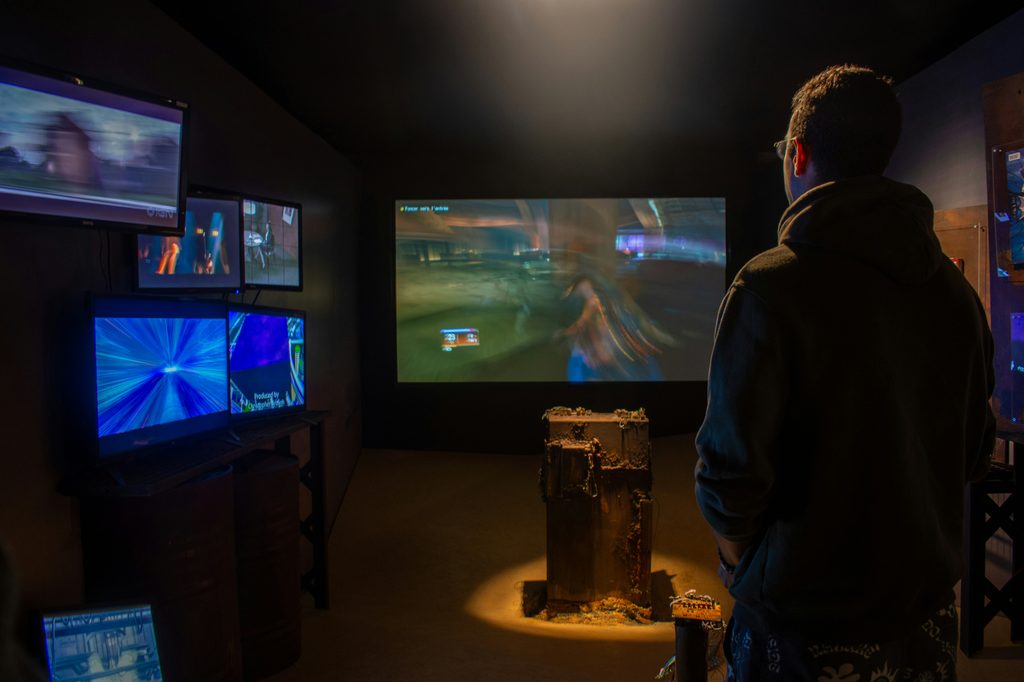
The upper floor is the collection: essentially everything Nintendo has produced, in chronological order, in cases that run the length of the room.
Hanafuda and Western playing cards. The toys of the 1960s and 70s — the Ultra Hand, the Love Tester, light gun games. The Game & Watch series. Famicom, Super Famicom, Nintendo 64, GameCube, DS, Wii, Switch, with the peripherals, the failures, and the regional variants.
The failures are the interesting part, and Nintendo displays them without embarrassment. The Virtual Boy is there. So are products that never reached market.
Presentation is deliberately sparse — objects, dates, minimal interpretation. Visitors expecting a narrative walkthrough sometimes find this cool. Visitors who recognise the objects find it absorbing for an hour and a half.
How Long to Allow
Two to three hours covers the museum comfortably, including the interactive floor and time in the shop.
Entry is by timed slot. Once inside there is no fixed exit time, but the practical constraint is that the last slot of the day gives you less room to linger.
Combined with travel from central Kyoto and something in Uji itself, this is a half-day rather than a full one.
Expert Tip
Apply for a weekday slot in the middle of the day. Weekend and school-holiday slots draw the heaviest application volume and the lowest success rate, and the interactive floor on a Saturday involves queueing for the popular exhibits with ten coins that will not stretch to everything anyway. A Tuesday in February is a fundamentally different museum from a Sunday in August.
The Ticket Lottery
This is the part that determines whether you visit, and it catches out travelers who assume they can decide when they arrive.
How the System Works
Tickets are allocated by random draw, applied for through the museum’s official site with a linked Nintendo Account. Applications open several months in advance for a given month, run for a fixed window, and results are notified by email.
There is no queue-based release, no on-sale moment to be awake for, and no advantage to applying early within the window. It is a genuine lottery.
If you are not selected, you can apply again in the following month’s draw. Some travelers apply across two or three consecutive months to cover a trip.
Timing Your Application
Work backwards from your travel dates and identify the application window that covers them, then set a reminder. Missing the window is the most common way people fail to visit — not losing the draw.
Because the draw resolves months ahead, you will usually know whether you have tickets before finalising accommodation in Kyoto. Do not book the trip around the museum on the assumption you will get in.
Application rules, pricing, and windows have been adjusted since opening. Check the official museum site rather than any article, including this one, for the current process.
Identity Checks at the Gate
Tickets are issued to a named individual and are not transferable. At entry, the QR code is scanned and photo identification is checked against the booking — a passport, for a foreign visitor.
Bring the passport, not a photograph of it. Resale tickets from third-party sites will not admit you and the money is not recoverable.
Everyone in your party needs to be named on the booking. Add companions at the application stage rather than trying to amend later.
Pricing
Adult admission is modest by museum standards, with reduced rates for university, high school, and elementary or junior high school students, and free entry for pre-school children.
Payment is cashless. The workshop and the café are charged separately on the day.
The Interactive Floor
The ground floor is where the museum stops being a display case. You are given ten digital coins on your entry pass and each activity costs one or two.
The Coins, and the Constraint
Ten coins do not cover everything, and this is deliberate. You choose, and the choosing is part of the design.
Groups can pool coins, which is worth planning at the entrance rather than discovering at the third exhibit. Two people with twenty coins between them can cover most of the floor.
Coins cannot be topped up. Decide what you actually want before spending three on the first thing you see.
The Big Controller
The signature exhibit. Enormous replica controllers — Famicom, N64, Wii — are operated by two people together, one taking each half, playing an actual classic game on a large screen.
It is very difficult and very funny, and it produces the best photographs in the building. It also draws the longest queue.
The design point underneath it is real: it makes you notice how a controller is held, which is what Nintendo spent forty years thinking about.
Zapper, Ultra Hand, and Shigureden
The other exhibits reconstruct Nintendo’s pre-video-game products at scale. A light gun shooting range built around the classic Zapper. A giant version of the Ultra Hand, the extending grabber toy from 1966 that was the company’s first hit under Gunpei Yokoi.
Shigureden SP is a version of the traditional hyakunin isshu card game, played on a large floor display — a direct link back to Nintendo as a card manufacturer, and a game most foreign visitors have never encountered.
There is also a room of playable historical hardware, which is where people who grew up with a Super Nintendo lose twenty minutes without noticing.
Hanafuda, Burgers, and the Shop
Three things are worth budgeting time and money for beyond the exhibits themselves.
Making Hanafuda
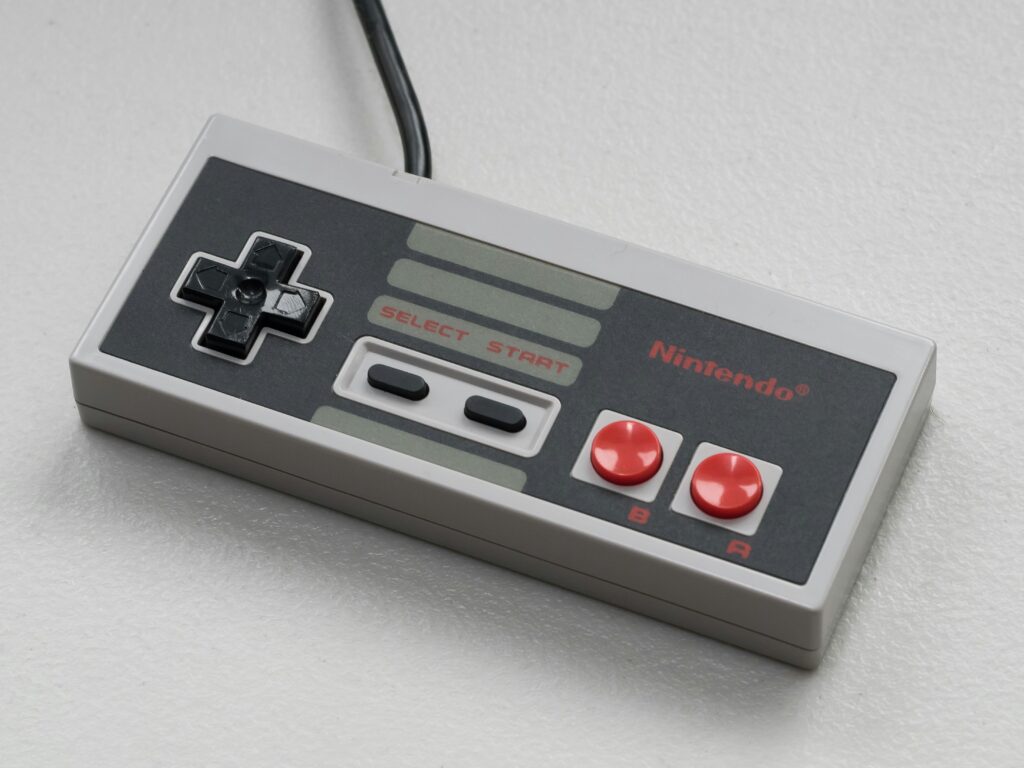
The workshop lets you produce your own hanafuda cards using the traditional layering and finishing process, guided by staff, and take them home.
Hanafuda are the flower cards Nintendo has manufactured since 1889 and still produces. Making a set connects the whole museum together in a way that reading the labels does not.
It carries an additional fee and is booked separately. Capacity is limited and it can sell out, so handle it early in the visit rather than at the end.
HATENA Burger
The café’s format is a build-your-own burger with a large number of possible combinations, ordered on a screen — the question-mark block made edible.
It is decent food rather than remarkable food, and the queue at lunchtime is long. If you are on an early slot, eat before you come and use the café for coffee instead.
There is a separate counter selling drinks and lighter items.
The Shop
Merchandise here is museum-exclusive and not sold at the Nintendo stores in Tokyo, Osaka, or Kyoto. Hanafuda decks, apparel, and items referencing the older hardware are the distinctive stock.
Purchase limits apply to popular items. The shop is accessible only to ticket holders, which is unusual and is why the exclusives hold their value.
Budget more time here than you expect to need.
Expert Tip
The museum and the Kyoto Manga Museum are the two best options in Kyoto for a rainy day or for travelers who have reached their limit on temples, and they sit at opposite ends of the city. If your Kyoto itinerary is heavy on shrines, deliberately place one of them mid-trip. In our experience the point at which a first-time visitor stops absorbing temple architecture arrives around day four, and having something entirely different scheduled for day five preserves the rest of the trip.
Getting There, and What Else Is in Uji
Uji is a genuinely worthwhile destination in its own right, and treating the museum as the only reason to come here wastes the trip.
Trains
Two lines serve the museum and both stop at a station called Ogura, which causes predictable confusion. The JR Nara Line Ogura Station and the Kintetsu Kyoto Line Ogura Station are different stations, several minutes apart, and both are within a short walk of the museum.
From Kyoto Station, the JR Nara Line takes roughly twenty minutes on a local train. From Osaka, route via Kyoto or take the Kintetsu line from Kyoto Station.
Check which station your route uses and follow the signs from that exit. The walk is about five to eight minutes through residential streets.
Opening Days
The museum closes one day a week and over the New Year period. Confirm the closure day on the official calendar before applying for a slot, because the lottery will not save you from choosing badly.
Byodoin and the Tea
Uji has two things of real significance and both are ten minutes from the museum by train.
Byodoin, built in 1053, is the Phoenix Hall on the reverse of the ¥10 coin — one of the most important surviving buildings of the Heian period, sitting in a reflecting pond. It is a short walk from Uji Station and worth an hour.
Uji is also the most prestigious green tea region in Japan, and the street between the station and Byodoin is lined with tea houses that have been trading for centuries. Nakamura Tokichi, founded in 1854, is the best known; the queue is real and the matcha is worth it.
Making a Day of It
The efficient shape is museum in the morning on an early slot, train two stops to Uji, Byodoin and lunch, tea in the afternoon, back to Kyoto by five.
That gives a full day that has nothing to do with temples in Higashiyama and produces a completely different impression of Kyoto Prefecture. We suggest it often, and it is one of the itinerary changes travelers most consistently thank us for afterwards.
Nintendo Museum Kyoto: Frequently Asked Questions
Can I buy tickets at the door?
No, and there is no exception to this. The museum does not sell same-day tickets, does not maintain a standby queue, and does not release returns at the gate. Every visitor must have won a slot in the advance lottery, applied for months earlier through a Nintendo Account. Travelers do arrive at the building hoping to talk their way in and are turned away. Third-party resale tickets are also worthless, because identification is checked against the name on the booking.
Are ten coins enough to try everything?
No, and that is intentional. The coins force a choice between exhibits, most of which cost one or two each. If you are visiting as a pair or a group, pool the coins and split the activities so that between you the floor is covered — one person doing the shooting range while the other does the card game, then swapping seats to watch. Solo visitors should look at the full list at the entrance and pick three or four rather than spending on the first thing encountered. Coins cannot be bought and do not carry over.
Is photography allowed inside?
Partly. Photography is generally permitted in the interactive areas and around the building, and restricted in the main exhibition rooms upstairs. Rules have been adjusted since opening and are posted at the entrance to each area, so check the signage on the day rather than assuming. Staff are polite about it and will tell you where the boundary is. Tripods and commercial photography are not permitted anywhere.
Related Tours

Conclusion
Find the lottery window that covers your travel dates and set a calendar reminder for the day it opens. That single action is the whole difference between visiting and not, and no amount of flexibility on the ground compensates for missing it.
Then build the day around Uji rather than around Nintendo. Byodoin has been standing since 1053 and the tea shops on the approach have been trading for four hundred years, and the combination of those two with a factory that made playing cards before it made Mario is a better day than any of the three on its own.
Plan Your Japan Trip with Local Experts
Our team has guided 40,000+ travelers across Japan. Tell us about your trip and we’ll get back to you within 24 hours.