In this article:
- Peak Sakura Season
- The April Viewpoints
- Spring Festivals
- April Weather
- Managing the Crowds
- Japan in April: Frequently Asked Questions
Introduction
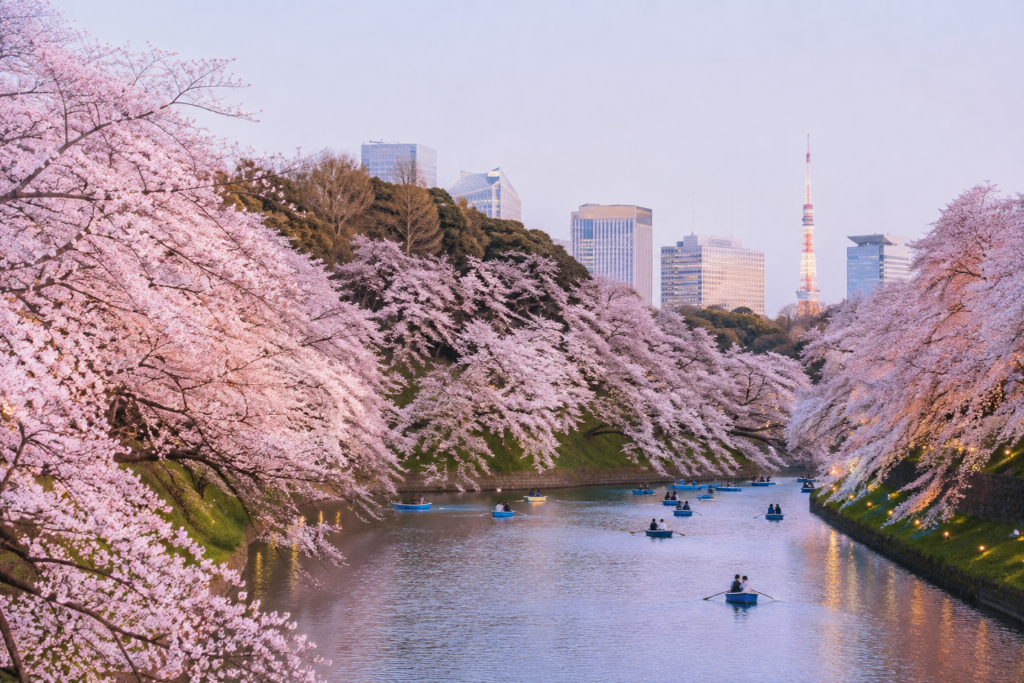
April is the month Japan sells itself on, and for once the images are accurate. The first week delivers full bloom in Tokyo and Kyoto, the trees hold for about a week, and then the petals come off in drifts that collect in gutters and float down rivers.
It is also the month when every hotel in Kyoto is booked, the shinkansen reserved seats sell out, and the price of everything moves. That is the trade, and it is a real one.
The other thing April offers, which gets less attention: the weather is genuinely the best of the year. Mild, dry, and clear, with none of the humidity that makes summer in Japan hard work.
Peak Sakura Season
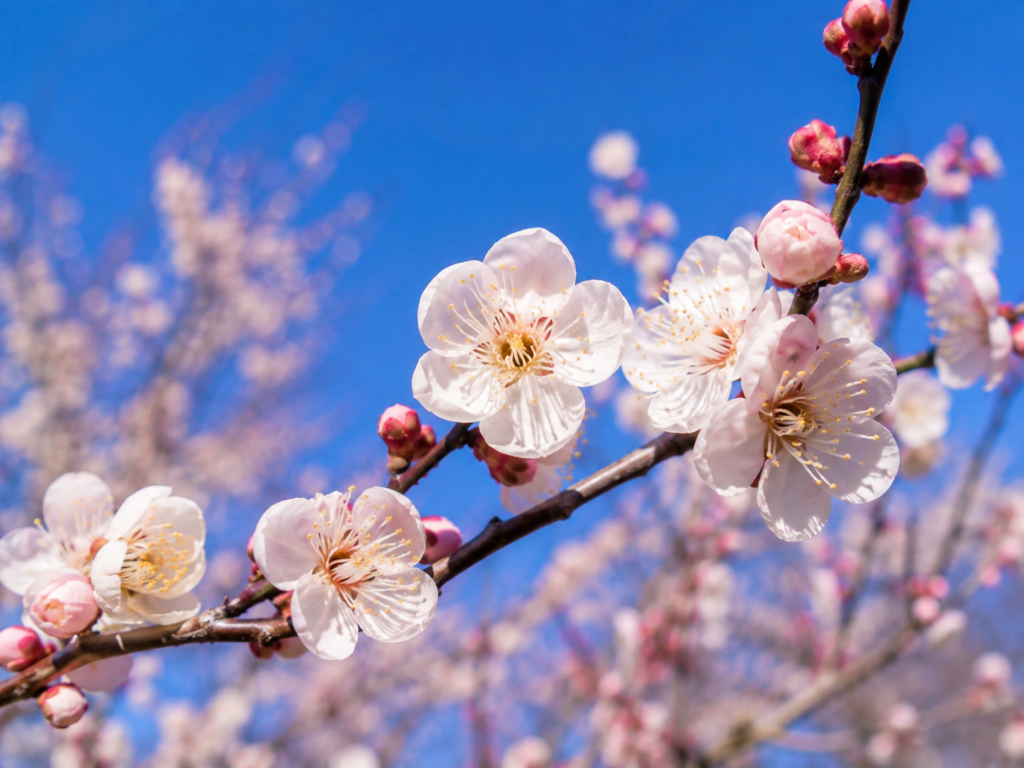
The blossom front moves north through the month, which means April always has cherry blossoms somewhere in Japan.
Full Bloom in Tokyo and Kyoto
Mankai — full bloom — usually arrives in Tokyo in the first few days of April, with Kyoto two to four days behind. The trees hold their peak for roughly a week, weather depending.
Rain and wind are what end it. A single heavy storm at peak can strip the trees in a day, which is why the safest approach is to arrive slightly before predicted full bloom rather than after.
Hana Fubuki
The petal fall — hana fubuki, blossom blizzard — comes about a week after peak and is, in our view, better than the peak itself. Petals come off in sheets and collect on water.
The Meguro River in Tokyo and the Philosopher’s Path in Kyoto both develop a solid pink layer of fallen petals on the water, called hanaikada, flower rafts. This is the photograph people actually remember, and it happens after most visitors have concluded the season is over.
Late April in the North
If your dates are late April, go north. Hirosaki in Aomori peaks around the third week, and Hokkaido’s blossoms open at the very end of April into early May.
This is the reliable fallback for anyone who cannot travel in the first ten days. Tohoku and Hokkaido also carry a fraction of the crowds that Kyoto does at the same time.
Expert Tip
Book accommodation on refundable terms and lock in your dates before the forecast exists — six to nine months ahead for Kyoto. The forecast becomes reliable about four weeks out, by which point nothing is available. Booking early with the ability to shift by a few days is the only strategy that works for both problems at once.
The April Viewpoints
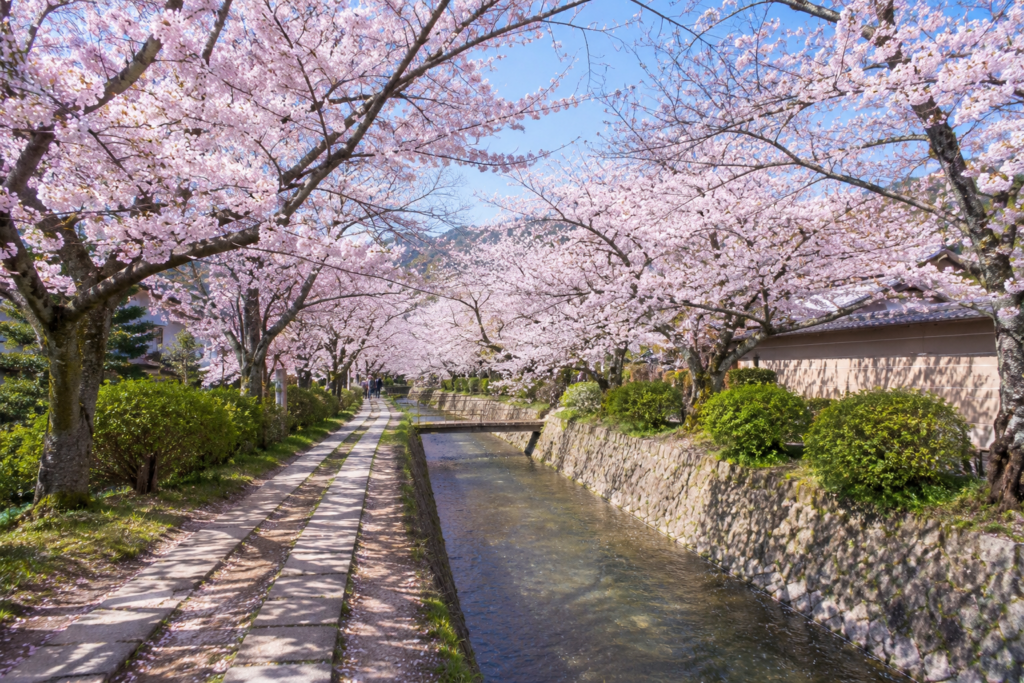
Some blossom sites justify their reputation and some are simply the nearest park to a station.
Meguro River
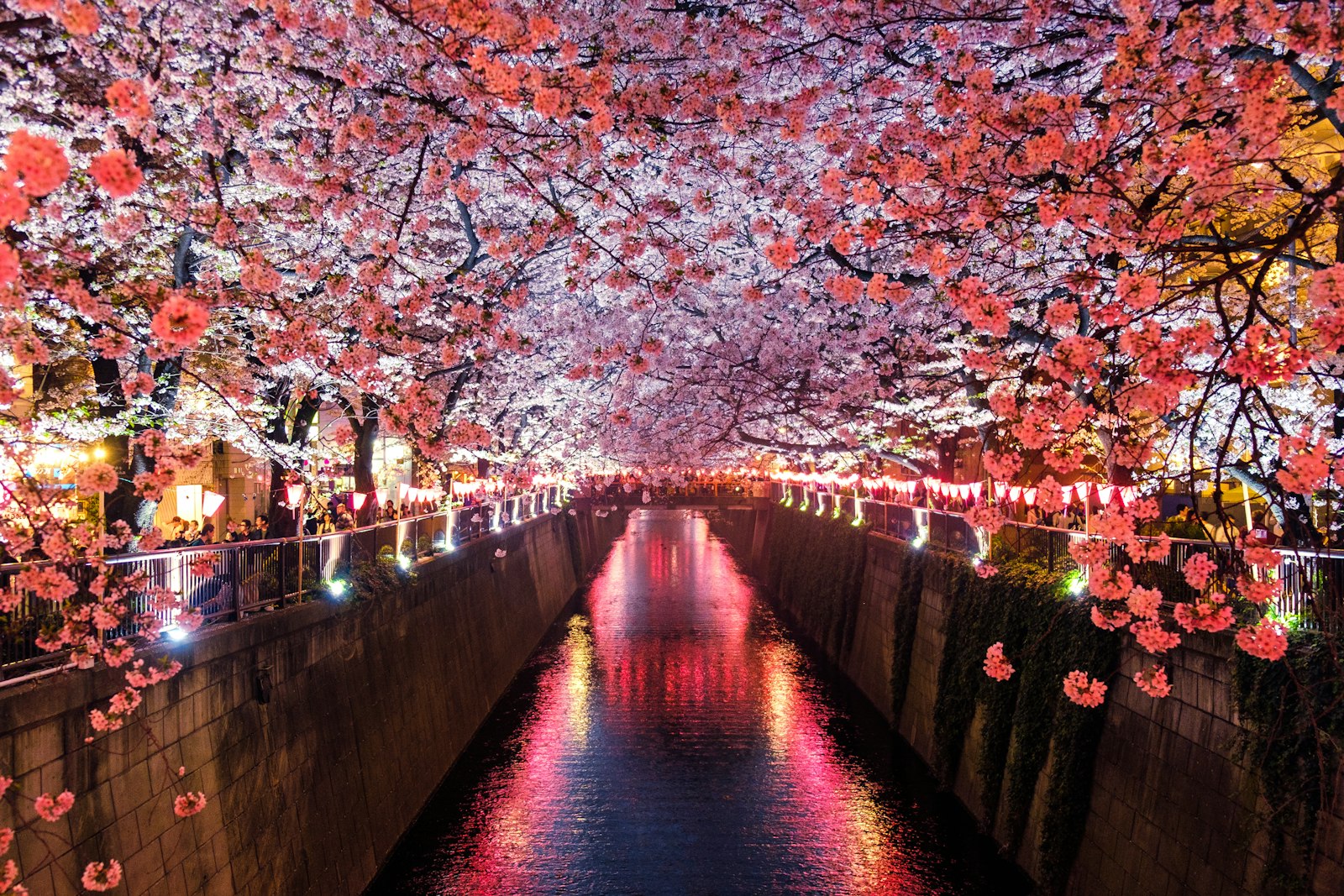
Roughly 800 cherry trees line about four kilometres of a narrow Tokyo canal, arching over the water from both banks so the branches meet in the middle.
Lanterns light it at night and food stalls set up along the walkways. It is extremely crowded in the evening; go at seven in the morning, when it is nearly empty and the light is better.
Mount Yoshino
Yoshino in Nara has around 30,000 cherry trees planted across a mountainside in four zones at different altitudes, which staggers the bloom over roughly two weeks from the lower slopes upward.
It has been a blossom site for over a thousand years and it is unlike anything else in Japan — an entire mountain rather than an avenue. Stay overnight in the town; the day-trip version means arriving after the coaches.
Chureito Pagoda and Hirosaki
The Chureito Pagoda at Arakurayama gives the composition of a five-storey pagoda, cherry blossoms, and Mount Fuji in a single frame. It requires nearly 400 steps and it is very crowded at peak.
Hirosaki Castle in Aomori surrounds its moat with about 2,600 trees, and the moat fills with fallen petals so densely that the water disappears. It peaks around the third week of April and is the best late option in the country.
Spring Festivals
Three April events are worth building an itinerary around.
Takayama Spring Festival
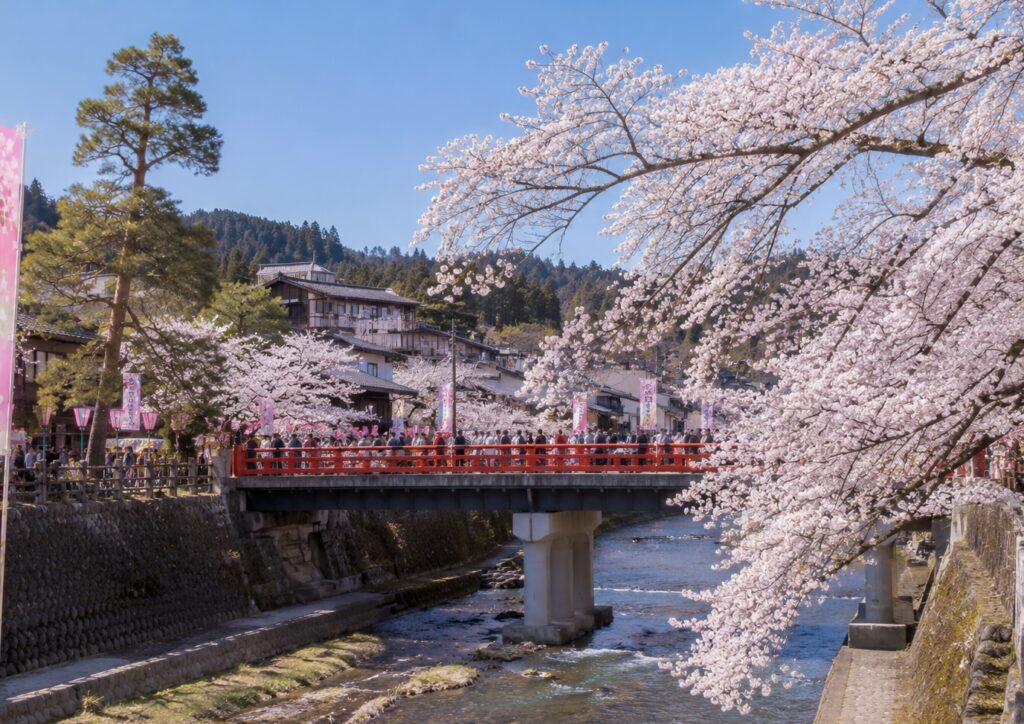
The Sanno Festival, on 14 and 15 April, brings out twelve gilded and lacquered floats, several carrying karakuri marionettes operated by hidden puppeteers using strings and levers.
The evening procession, with the floats lit by around a hundred lanterns each, is the part to see. Accommodation in Takayama books out six months ahead for these two dates.
Yabusame at Kamakura
Kamakura Matsuri runs in mid-April at Tsurugaoka Hachimangu, and its centrepiece is yabusame — mounted archery, with riders firing at three targets from a galloping horse in traditional Kamakura-period dress.
It is free to watch and the viewing areas along the track fill early. Arrive at least ninety minutes before the start.
Miyako Odori
Miyako Odori is the annual public dance performance by the geiko and maiko of Kyoto’s Gion Kobu district, staged through April at the Gion Kobu Kaburenjo theatre.
It is the most accessible way for a visitor to see geiko perform — ticketed, public, and without the introduction requirements that ordinary ozashiki engagements involve. Tickets go on sale in advance and the tea ceremony option before the show is worth the supplement.
April Weather
The climate in April is the best argument for the month after the blossoms themselves.
Temperatures
Tokyo and Kyoto run roughly 10°C to 19°C, warming through the month. Early April still needs a jacket in the evening; by the end of the month a light layer is enough.
Hokkaido remains considerably colder and still has snow at altitude in early April. Okinawa is already warm at around 21°C to 25°C.
Rain
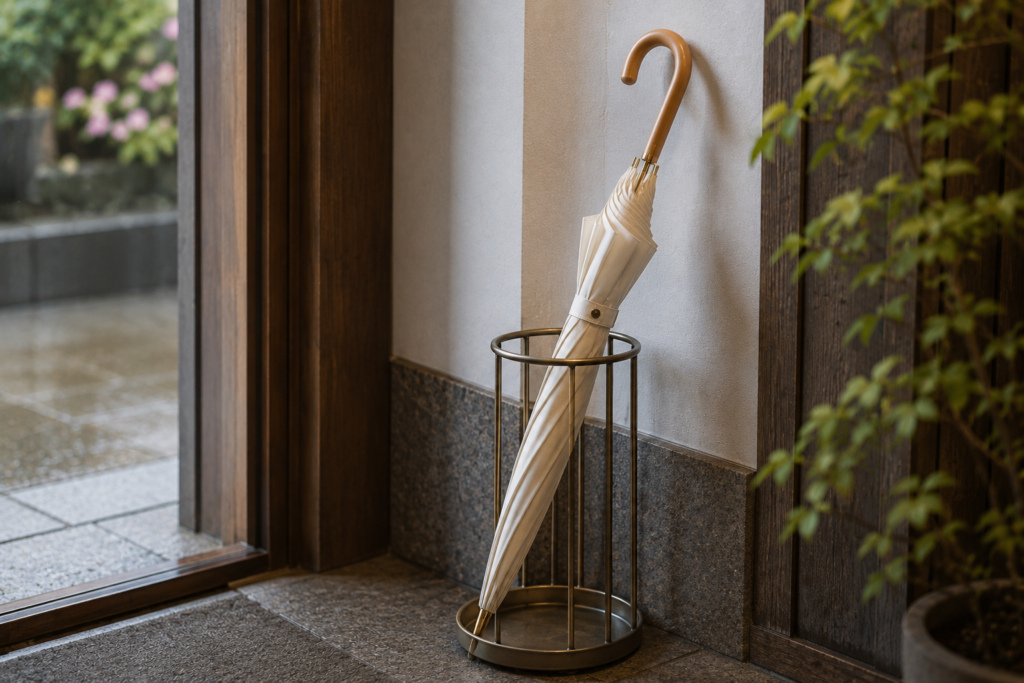
April is one of the drier months, well ahead of the June rainy season, with frequent clear days.
The exception matters for blossom viewing: spring storms do occur and a windy rainy day at peak bloom will end the season locally. There is no way to plan around this beyond having a few days of margin.
What to Wear
Layers again — a light sweater or cardigan with a jacket for evenings. Comfortable walking shoes matter more in April than any other month, because the weather makes long walking days possible and blossom viewing involves a lot of ground.
A compact umbrella is worth carrying. April rain is usually brief but arrives without much warning.
Managing the Crowds
April is the hardest month to book in Japan and the planning burden is genuinely front-loaded.
Accommodation
Six to nine months ahead for Kyoto in the first two weeks of April. Tokyo has more capacity and holds out slightly longer, but rates rise sharply.
Consider basing in Osaka and commuting to Kyoto — 15 minutes by shinkansen or about 30 by rapid train, at substantially lower rates. This is what a lot of experienced travelers do in blossom season.
Golden Week Begins
Golden Week starts on 29 April, and the last days of the month are already affected. It is a cluster of national holidays running into the first week of May, and it is the heaviest domestic travel period of the year.
If your trip runs to the end of April, either finish before the 27th or accept that transport and accommodation will be at maximum load. This is domestic travel, not international, and it is not avoidable by going somewhere less touristy.
Reserved Seats
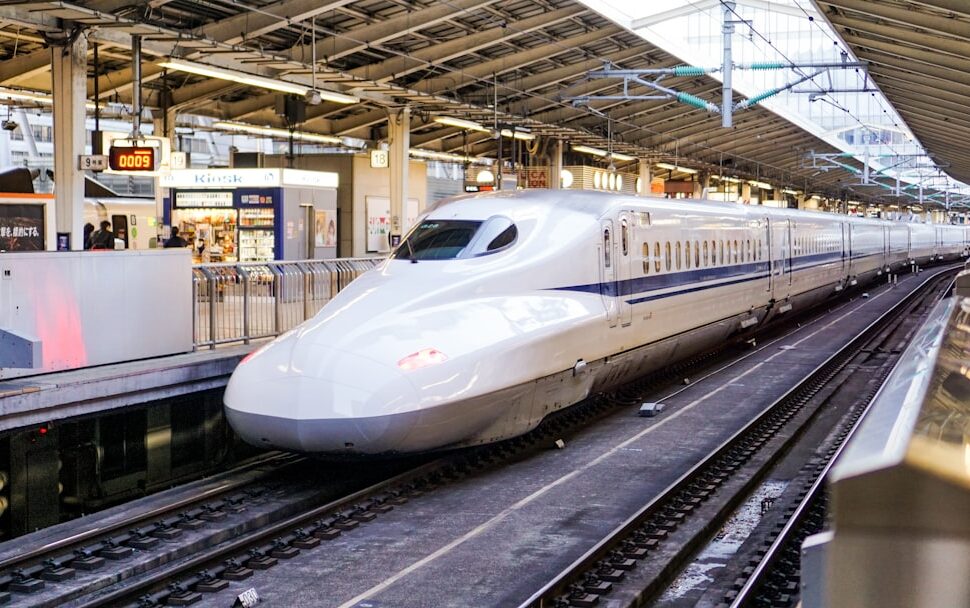
Shinkansen reserved seats for early April sell out, particularly Tokyo to Kyoto in the morning. Reservations open one month before departure and popular services fill within hours.
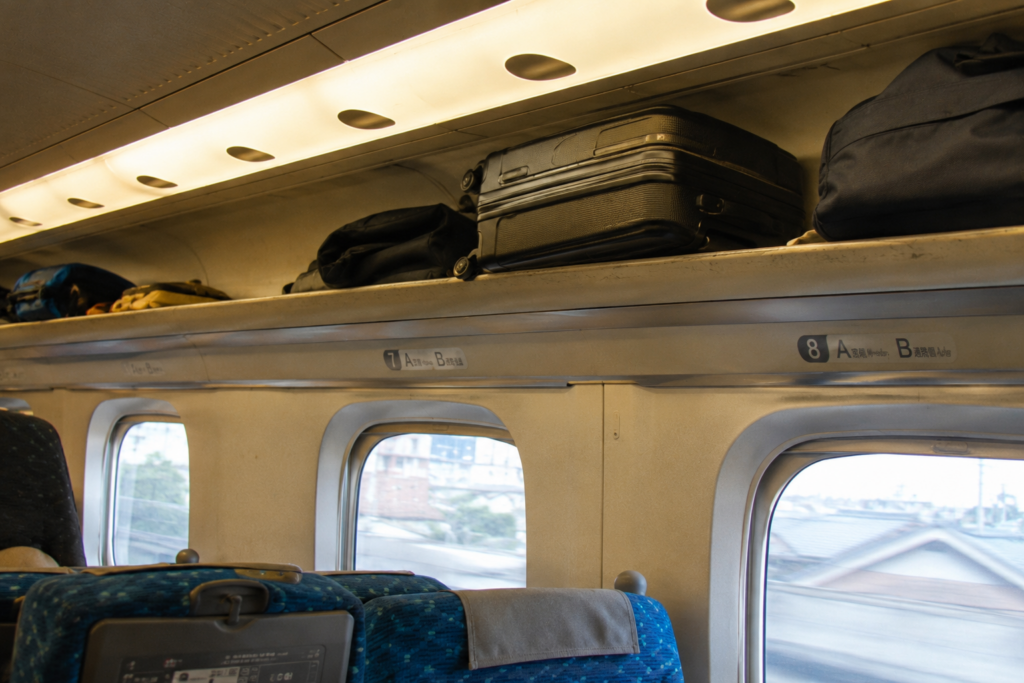
Non-reserved cars exist on Tokaido services and you can usually stand or find a seat outside peak hours. For Golden Week, non-reserved is standing room only for the full journey.
Expert Tip
The blossoms are best at 6.30am and essentially unusable from 10am to 4pm at any famous site. This is more important in April than at any other time of year. Adjust your whole day around it — early start, long lunch, late afternoon — rather than trying to fit famous parks into a normal sightseeing schedule.
Japan in April: Frequently Asked Questions
Which April dates give the best chance of full bloom? For Tokyo and Kyoto, roughly 1 to 10 April in an average year. Arriving on the 1st and staying a week gives the widest coverage of a variable peak. For guaranteed blossoms later in the month, go north to Hirosaki or Hokkaido.
Is it easy to reserve shinkansen seats in early April? No. Reservations open exactly one month ahead and popular Tokyo to Kyoto services sell out quickly. Book the moment the window opens, or use non-reserved cars outside peak hours. A JR Pass does not guarantee a seat, only the fare.
What should I pack? Layers for 10°C to 19°C, a light jacket for evenings, comfortable walking shoes, and a compact umbrella. Nothing heavy is needed unless you are going to Hokkaido, which is still cold in early April.
Related Tours
Conclusion
Book early, book flexibly, and plan to be at the famous places at dawn. Those three decisions determine whether April in Japan is the trip people describe or an expensive week spent in queues.
And stay through the petal fall if you can. Hana fubuki is better than full bloom, it happens after the crowds thin, and almost nobody plans for it.
Plan Your Japan Trip with Local Experts
Our team has guided 40,000+ travelers across Japan. Tell us about your trip and we’ll get back to you within 24 hours.