In this article:
- The history and culture of Gion
- Top attractions and must-do experiences
- Where and what to eat in Gion
- Walking from Gion into the Higashiyama area
- How to visit Gion responsibly
- Frequently asked questions
Introduction
Gion has a problem that success creates. The district — Kyoto’s historic entertainment and geisha quarter — is so closely associated with a particular image of Japan that it draws visitors who come specifically to photograph that image, sometimes without much interest in understanding what the place actually is.
This matters practically: the restrictions on photography in Gion’s private alleys now include fines. The behavior that prompted those rules — tourists following geiko and maiko through lanes, blocking their path, touching their kimono — still happens. Understanding what Gion is, how it functions, and what it asks of visitors makes for a better experience and a less extractive one.
At its best, Gion on a weekday evening offers something genuinely rare: a functioning traditional neighborhood that happens to be extraordinarily beautiful. The machiya architecture, the lantern-lit lanes, the sounds of shamisen from behind closed screens — this is not reconstructed. It is still in use.
The History and Culture of Gion
From Medieval Rest Stop to Geisha District
Gion developed as a rest and entertainment quarter for pilgrims visiting Yasaka-jinja (Gion Shrine) during the Heian period (794–1185). As the shrine’s importance grew, so did the commerce around it — tea houses, food stalls, and eventually the formal entertainment establishments (ochaya) that defined the district’s character for centuries.
The geisha system — better described by the Kyoto term “kagai” — reached its peak in the late 19th and early 20th century. At that peak, Gion had over 3,000 geiko and maiko. Today there are fewer than 200 in all of Kyoto, concentrated in five kagai districts of which Gion Kobu is the largest and most prestigious.
Machiya Architecture: The Wooden Townhouses
Gion’s distinctive appearance comes from its machiya — narrow wooden townhouses built to Edo and Meiji-period specifications. The narrowness is a consequence of a historical tax system that assessed property by street frontage, producing deep lots with minimal width. Inside, the buildings extend back considerably further than their facades suggest, often opening onto interior gardens. The exteriors are characterized by latticed wooden screens (koshi) at street level, which allow air circulation while obscuring the interior.
Many of Kyoto’s machiya have been converted to restaurants, shops, and guesthouses. A smaller number remain as functioning ochaya — the private establishments where geiko and maiko entertain clients. These are not open to the public and operate entirely by introduction.
Geiko and Maiko: Understanding the Distinction
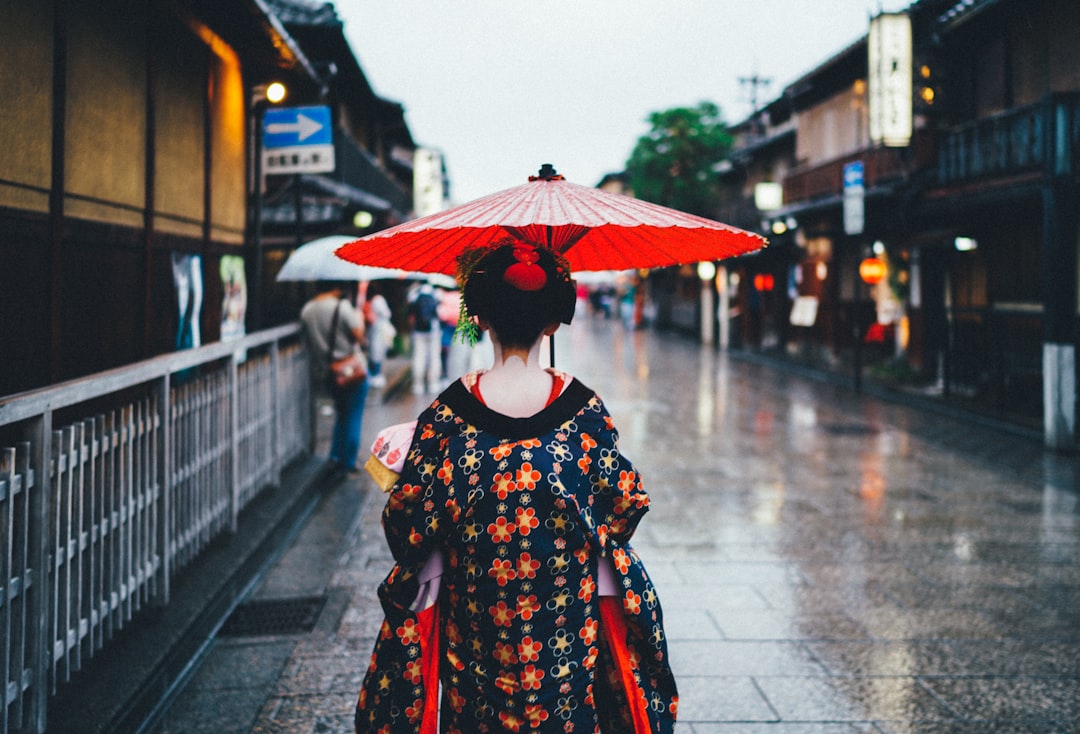
Maiko are apprentice geisha, typically between 15 and 20 years old, identifiable by elaborate kimono with long trailing obi, platform wooden sandals (okobo), and heavy white makeup with red accents. Geiko (the Kyoto term for geisha) are the fully trained professionals — the training typically takes five or more years. Their appearance is more restrained: smaller wigs, simpler kimono, less elaborate footwear.
Both are trained in traditional arts — shamisen, Japanese dance (Kyomai), tea ceremony, and the art of conversation and hospitality. They are working professionals heading to and from appointments, not tourist attractions.
Top Gion Attractions and Experiences
Hanamikoji Street and Shinbashi Street
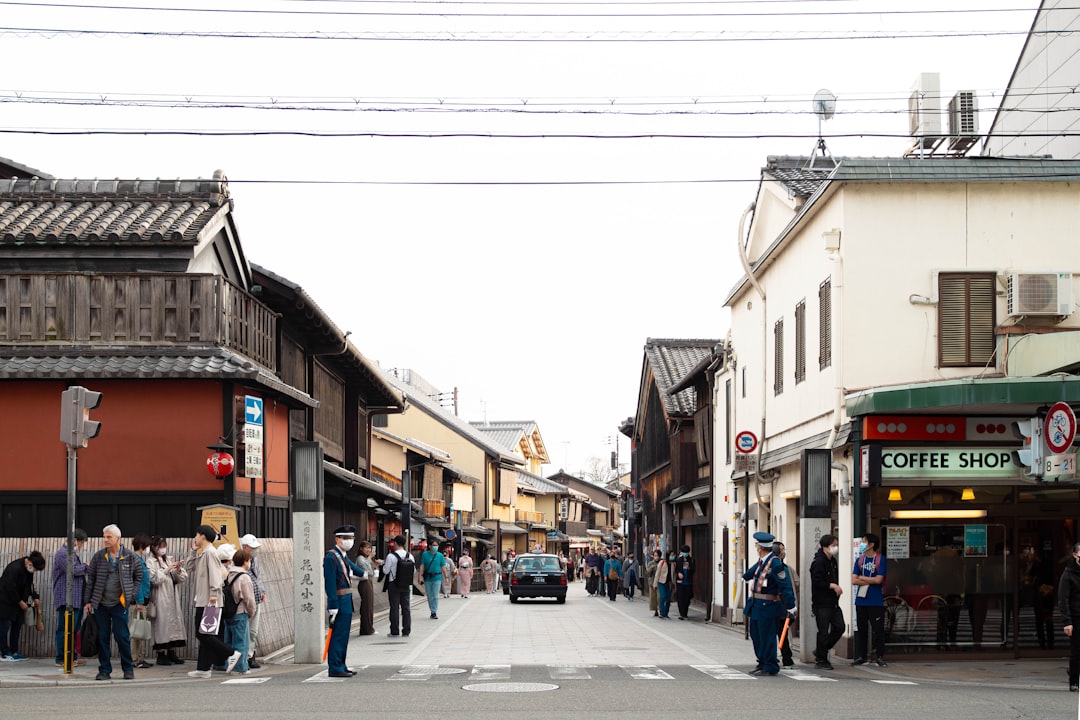
Hanamikoji (花見小路通) is the main street most visitors come to photograph — 600 metres of stone-paved lane with ochaya and restaurants on both sides, lantern-lit in the evenings. The southern half is more commercial; the northern half, above Shijo Street, retains more of the original character. Evening is the right time: the lanterns come on around 5pm, and if you’re there on the right night, you may see a geiko or maiko making her way to an appointment.
Shinbashi (白川南通) is one street over and considerably more atmospheric. A small canal runs along it, lined with willows that overhang traditional teahouses. During cherry blossom season, the combination of pink blossoms reflected in the canal and the machiya facades is one of the most photographed scenes in Kyoto. On ordinary evenings it’s quiet and largely to yourself.
Yasaka-jinja Shrine and Maruyama Park
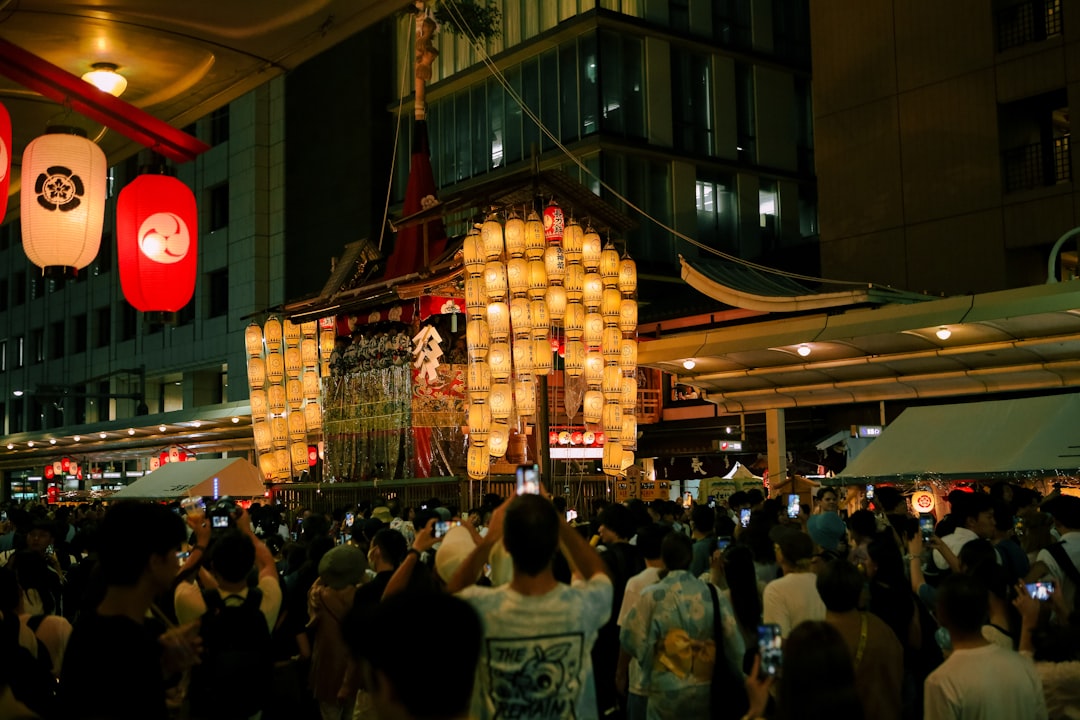
Yasaka-jinja anchors the eastern end of Shijo Street. The shrine is free to enter and worth more than a quick walk-through: the haiden (worship hall) dates to 1654, the side shrine Oku-no-in has a spring said to have beautifying properties, and the complex comes alive during Gion Matsuri in July — one of Japan’s three great festivals. Arrive for the festival on the evening of July 17 to watch the Yamahoko procession of massive floats through central Kyoto.
Maruyama Park behind the shrine is Kyoto’s most popular hanami spot during cherry blossom season. Outside that period it’s a quiet urban park worth passing through.
Kennin-ji Temple: Kyoto’s Oldest Zen Temple
Founded in 1202 by the Buddhist monk Eisai (who also introduced tea cultivation to Japan), Kennin-ji sits at the southern end of Hanamikoji. The temple is less crowded than most major Kyoto sites, with several notable elements: the twin dragon ceiling painting in the Dharma Hall (a modern commission, completed in 2002 but executed in the classical style), a garden attributed to the master garden designer Kobori Enshu, and a small sub-temple (Ryosoku-in) with a contemporary moss garden. Admission 800 yen.
Gion Corner
Gion Corner (in the Gion Hatanaka building near Yasaka Hall) presents evening performances of seven traditional arts — Kyomai dance, kado (flower arrangement), sado (tea ceremony), koto, bunraku (puppet theater), and gagaku court music — in a single 75-minute program. It’s a condensed introduction designed for visitors, not the real thing — a geiko recital in a private ochaya is a different experience entirely — but as an accessible entry point to forms that would otherwise require introduction and considerable expense, it’s worthwhile. Check current schedules and book in advance.
Gion Gastronomy: Where and What to Eat
Kaiseki Dining in Gion
Gion hosts several of Kyoto’s most serious kaiseki restaurants. Gion Nanba has been operating in the same family since the 18th century; a kaiseki lunch starts around ¥15,000 per person and requires advance booking. Gion Kappa is more approachable — lunch sets from ¥8,000 — and takes reservations via online platforms.
For travelers wanting the kaiseki experience without the language barrier of a traditional ochaya-style restaurant, the ryokan kaiseki model — dinner served in your room at a traditional inn — is often a more reliable first encounter.
Izuju: Historic Kyoto-Style Sushi
Izuju, near the corner of Hanamikoji and Shijo, has been serving saba-zushi (mackerel pressed sushi) and inari-zushi (sweet tofu pockets) since the Edo period. This is not the nigiri sushi of Tokyo — it’s Kyoto’s older preservation-based approach to fish, vinegar-cured and pressed. Lunch queue typically forms by 11:30am. Worth it.
Casual Dining and Coffee
Gion Yata on the west side of Hanamikoji serves izakaya food at reasonable prices without the tourist-trap pricing some Gion restaurants have adopted. For coffee, % Arabica’s original Kyoto location on Reikado-cho is a ten-minute walk from Gion — a small counter in an old townhouse, extremely well-reviewed coffee, consistently crowded.
Expert Tip
For a genuine taste of Kyoto’s traditional sweets without the queue: Kagizen Yoshifusa on Hanamikoji (the oldest confectionery in Gion, operating since the Edo period) has a small tearoom at the back where you can eat kuzukiri (kudzu jelly with black sugar syrup) in quiet. It’s through the shop, past the display cases. Most visitors walking Hanamikoji don’t find it.
Matcha Desserts on Shijo Street
Gion’s Shijo Street has accumulated a concentration of matcha dessert shops — some excellent, some tourist-oriented. Nakamura Tokichi’s Gion branch is the most established: their matcha parfaits are made with tea from their own Uji plantation and are noticeably better than similar-looking versions at competitors. Queue or book a table at the attached tearoom.
Walking from Gion into the Higashiyama Area
Chion-in and Shoren-in
Heading north from Yasaka-jinja along Shijo Street and then climbing into the Higashiyama hills leads to Chion-in — the head temple of the Jodo Buddhist sect, with the largest sanmon gate in Japan (24m high) and a 74-ton bell that requires 17 monks to ring. The complex is rarely crowded despite its scale. Shoren-in next door has a grove of 800-year-old camphor trees in its courtyard that most visitors walk past without recognizing what they’re looking at.
The Philosopher’s Path to Ginkakuji
The Philosopher’s Path (Tetsugaku no Michi) is a 2km canal-side walk connecting Nanzen-ji in the south to Ginkakuji (Silver Pavilion) in the north, lined with cherry trees. Outside blossom season it’s a pleasant walk through a residential canal neighborhood — craft shops, small cafes, temple gates half-hidden behind garden walls. Ginkakuji itself is less famous than its gold counterpart but arguably more interesting: a wabi-sabi aesthetic of sand garden, moss, and understated architecture that Kyoto’s design culture prizes above showiness.
Nanzen-ji and Eikando
Nanzen-ji’s sanmon gate offers one of the better elevated views of Kyoto’s eastern hills, accessible for ¥600. The aqueduct behind the main temple — a Meiji-era brick structure that looks entirely out of context among the cedar trees — is genuinely surprising. Eikando, a short walk south, is Kyoto’s premier autumn foliage destination after Tofukuji, with a pagoda visible above the maple canopy.
Kiyomizudera Area
The climb to Kiyomizudera from Higashiyama passes through the Sannen-zaka and Ninen-zaka stone lanes — some of the most preserved streetscapes in Kyoto, lined with craft shops selling ceramics, lacquerware, and textiles. The potters of Kiyomizuyaki, a Kyoto ceramic tradition dating to the 17th century, have workshops and showrooms in this neighborhood. The Kawai Kanjiro Memorial House, home studio of one of Japan’s most important 20th-century ceramicists, is a ten-minute detour that most visitors skip.
How to Visit Gion Respectfully
Photography Rules: Private Alleys and Fines
Since 2019, several private alleys in Gion (including those accessed from Hanamikoji) have posted photography restrictions with fines up to ¥10,000 for violations. The restricted areas are clearly signed in Japanese and English. These rules were implemented in response to behavior that was disrupting residents’ daily lives. They are enforced.
Photography on public streets remains permitted, but photographing into private establishments, blocking pedestrian traffic to set up shots, or following individuals to photograph them are all behaviors that have caused real harm to Gion’s community.
Geisha Etiquette: Approach, Distance, and Decency
Geiko and maiko are heading to and from work. Approaching them, calling out, touching their clothing, or blocking their path to photograph them is not acceptable behavior — this isn’t a cultural nuance, it’s a basic matter of not harassing working people. The appropriate response when you happen to see one is the same as when you pass any elegantly dressed professional on any street: acknowledge with a brief appreciative glance and continue walking.
Getting to Gion
City buses 100 and 206 stop directly at Gion, as does the Keihan Line (Gion-Shijo Station) and Hankyu Line (Kawaramachi Station, ten minutes’ walk). From Kyoto Station, the 100-series bus to Gion takes approximately 20 minutes; evenings are faster. Walking from Kawaramachi along Shijo Street to the heart of Gion is a pleasant 10-minute walk along a busy commercial street.
Frequently Asked Questions
What is the best time of day to see a geiko or maiko? Between 5pm and 7pm on a weekday evening, particularly in the Hanamikoji and Shinbashi areas. Geiko and maiko are heading to evening appointments during this window. There is no guarantee — sightings are not stage-managed — but the probability is higher in this window than at any other time.
Do I need to dress in a kimono to visit Gion? No. Kimono rental is popular in Kyoto and perfectly appropriate if you want to; it’s a genuine cultural practice and most rental shops provide proper fitting. It is entirely optional — Western clothing is fine anywhere in Gion.
How long should I spend in Gion and Higashiyama? Half a day covers the core of Gion and the main Hanamikoji-to-Yasaka Shrine walk. A full day allows you to add the Higashiyama hills walk, Kennin-ji, Nanzen-ji, and the Philosopher’s Path. If you’re staying in Kyoto for multiple nights, splitting the area into two visits — one evening in Gion, one morning for Higashiyama’s hills — produces the best experience of each.
Related Tours

Conclusion
Gion at its best is a place of extraordinary aesthetic coherence — a neighborhood that has maintained its character across centuries through a combination of deliberate preservation, commercial continuity, and a culture that takes its own traditions seriously. Visiting it well means understanding it as a place people live and work, not a photographic backdrop. That understanding doesn’t complicate the visit; it deepens it.