In this article:
- What a geisha dinner actually is (and what it isn’t)
- Tokyo’s geisha culture vs. Kyoto’s
- How the ryotei system works
- What happens during an evening with a geisha (geiko)
- The traditional arts performed
- How to arrange a genuine geisha dining experience
- Practical details and what to expect
Introduction

A geisha dinner — an evening at a traditional Japanese ryotei with geisha entertainment — is one of the most exclusive and most misunderstood experiences available in Japan. The misunderstanding typically runs in two directions: it’s either romanticized to the point of fantasy, or reduced to a transactional “hire a geisha” framing that misses what the practice actually is.
The reality is more interesting than either version. A genuine geisha (in Kyoto, called geiko) evening is a highly refined form of hospitality — the host, the food, the sake, and the entertainer are coordinated components of a single experience. The geiko or maiko are skilled professionals trained in traditional arts including music, dance, and the specific social art of making guests comfortable. The food is kaiseki at the highest level. The setting is a private room in a building that has been doing this for generations.
Access to this experience requires either an introduction through established networks or working with an operator who has those connections. TJT arranges private ryotei evenings in Tokyo for small groups of travelers for whom this kind of experience is the point of coming to Japan.
What a Geisha Evening Is (and What It Isn’t)
The Correct Frame
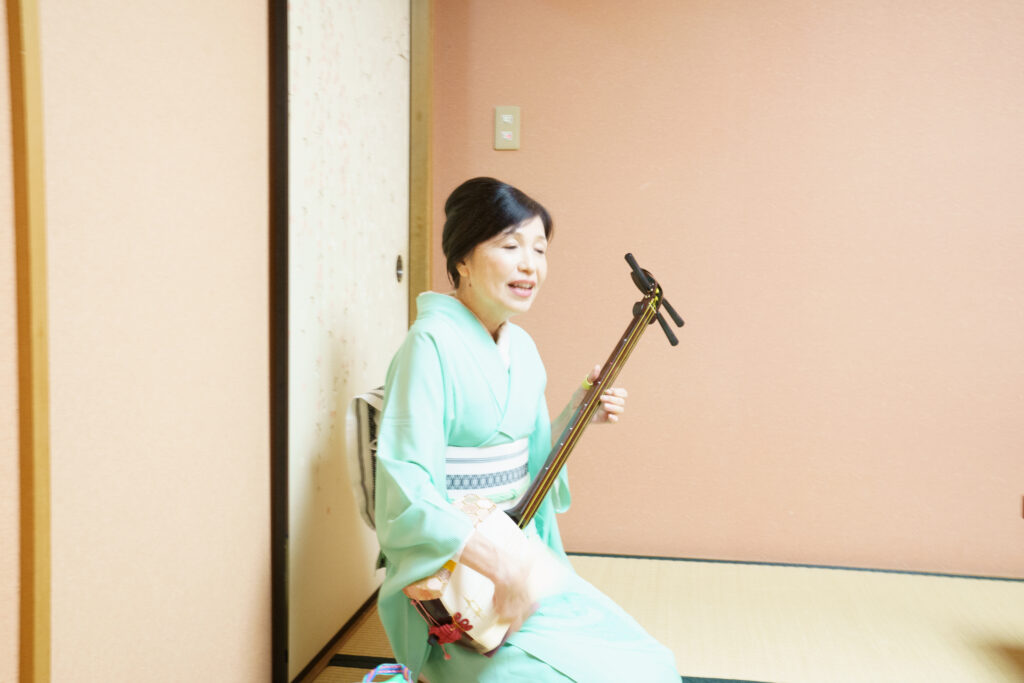
The geisha system (called kagai or hanamachi in Japanese) is a professional entertainment culture with roots in the 17th century. Geisha — or geiko, as they’re called in Kyoto — are women who have undergone years of training in traditional arts: shamisen (three-stringed instrument), traditional dance (nihon buyo), singing, tea ceremony, flower arrangement, and the social art of hospitality. Maiko are apprentices, typically between 15 and 20 years old, still in training.
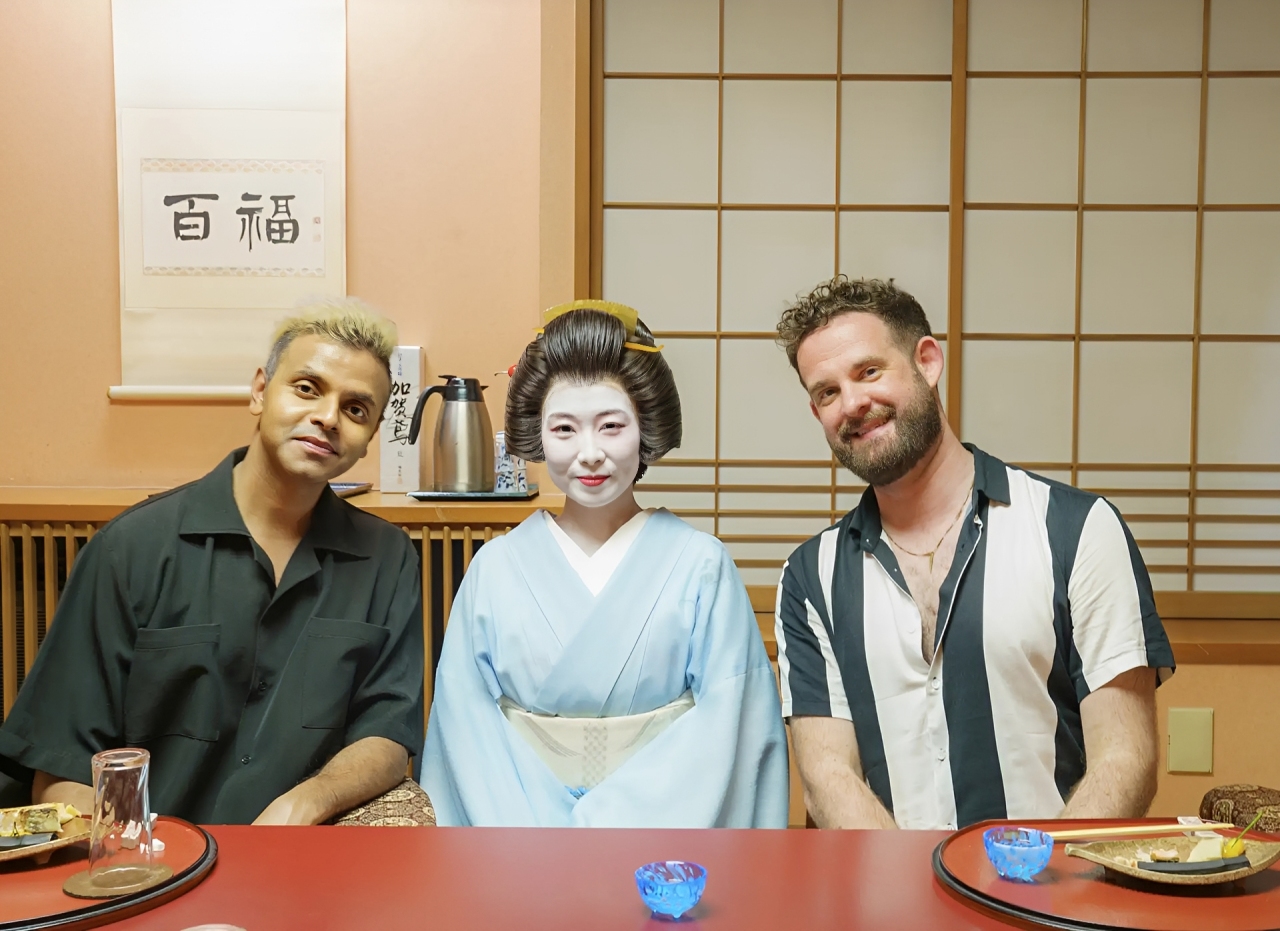
An evening with a geiko involves the arts she practices: she performs, plays, and facilitates conversation and games at the table. The relationship between the guest and the geiko is not romantic — it’s similar to having a highly skilled musician and conversationalist at your dinner, someone whose professional excellence creates an atmosphere that a standard restaurant meal cannot produce.
What It Is Not
It is not what Western media frequently implies. The geisha system is distinct from the sex industry — this conflation has existed since the postwar period and persists in some Western writing about Japan. A ryotei evening with geiko entertainment is a formal dining experience with traditional performing arts, nothing more or less.
Tokyo’s Geisha Culture vs. Kyoto’s
The Tokyo Geisha Districts
Tokyo has five active geisha districts (hanamachi), the most prominent of which are Asakusa (Asakusa hanamachi), Shimbashi, and Kagurazaka. These are smaller than Kyoto’s kagai and receive less international attention, but operate with the same professional standards. The geisha of Tokyo (called geisha rather than geiko, using the standard term) are active, working professionals.
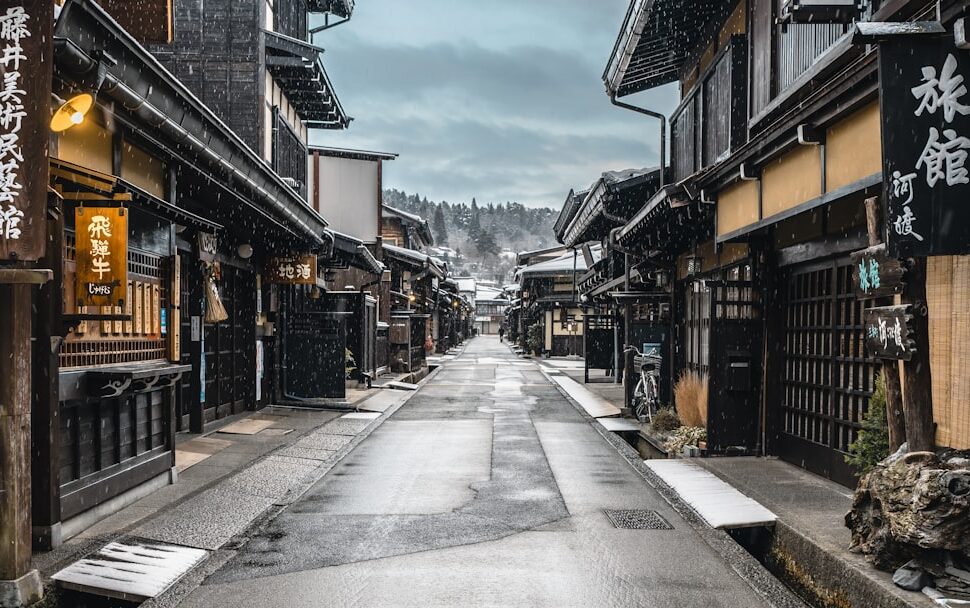
Unlike Kyoto’s geisha districts, Tokyo’s are less visible to casual observation — the districts don’t have the preserved architectural character of Gion’s machiya streets. The experience of an evening at a Tokyo ryotei is internally the same quality; the exterior neighborhood context is less dramatic.
Why Tokyo for This Experience
For travelers whose Japan itinerary is Tokyo-based, arranging a ryotei evening in Asakusa or Kagurazaka makes practical sense. The experience is equivalent in quality to what Kyoto offers; the logistics don’t require adding a city to the itinerary. Still, Kyoto’s Gion hanamachi has the additional atmospheric context of the preserved streetscape — for travelers who can access both, a Kyoto ryotei evening carries more visual weight.
How the Ryotei System Works
The Introduction System
Traditional ryotei in Japan are reservation-only establishments that, historically, only accept guests through existing client introductions. The logic was that an unknown guest, without established relationships, couldn’t be trusted to understand the cultural context — and that the relationship between the establishment and its clients was itself part of what was being protected. This system has relaxed considerably in recent decades, particularly for international visitors through established operators.
However, the most traditional ryotei still operate with this system. A legitimate introduction — through a cultural operator, a business connection, or a long-standing hotel concierge relationship — remains the surest way to access the highest-quality establishments.
What the Evening Involves
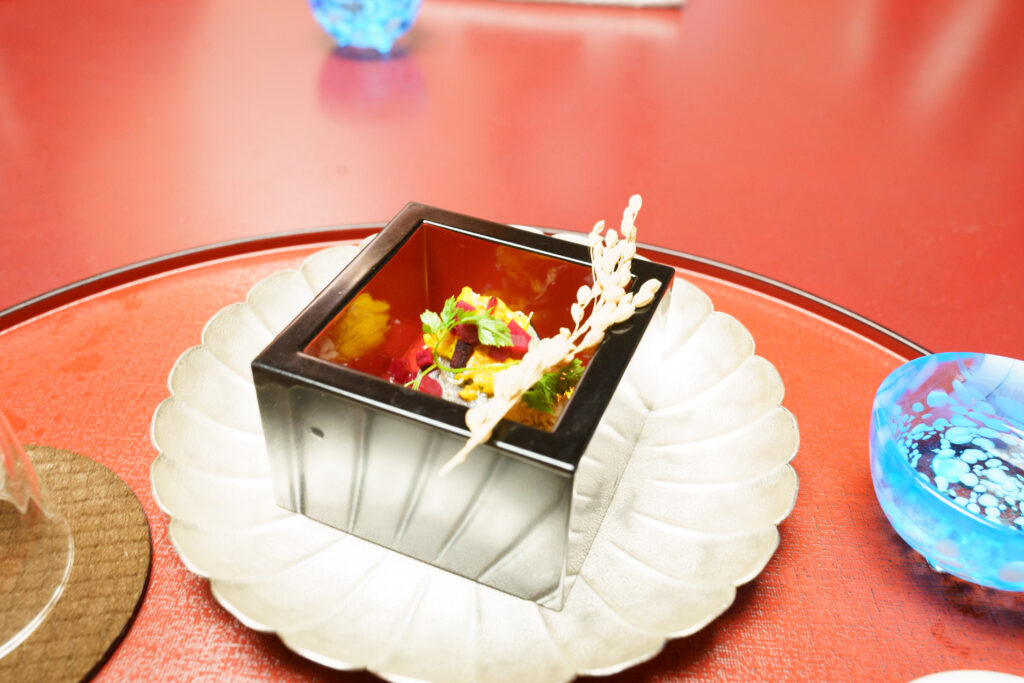
A standard ryotei evening with geisha entertainment: you arrive at the private entrance (ryotei almost never have visible street presence), are shown to a private tatami room, and the kaiseki meal begins. Each course is seasonal and presented as a coherent progression. Mid-meal, the geisha or geiko enter — typically two, sometimes one maiko and one geiko — and the entertainment begins.
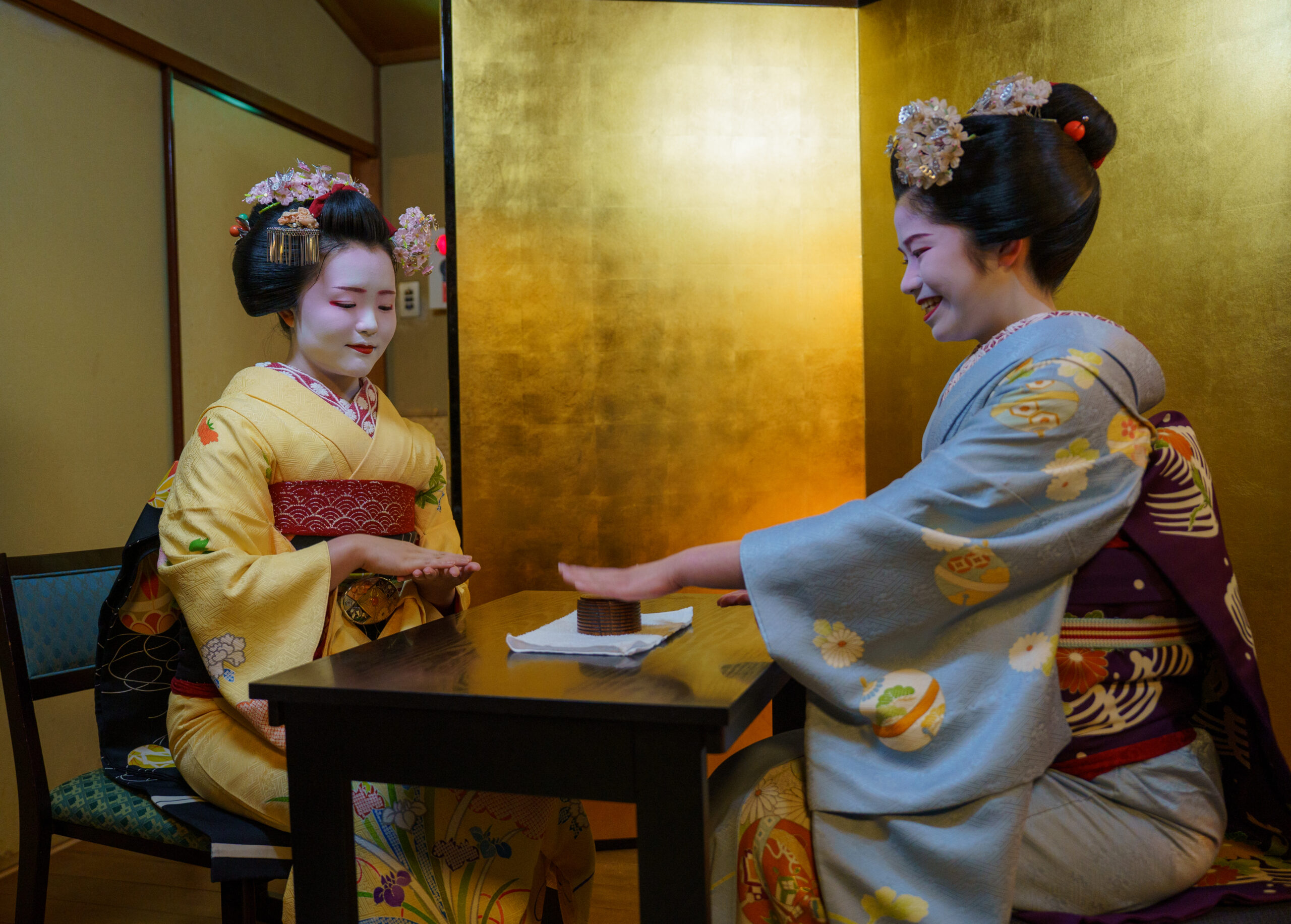
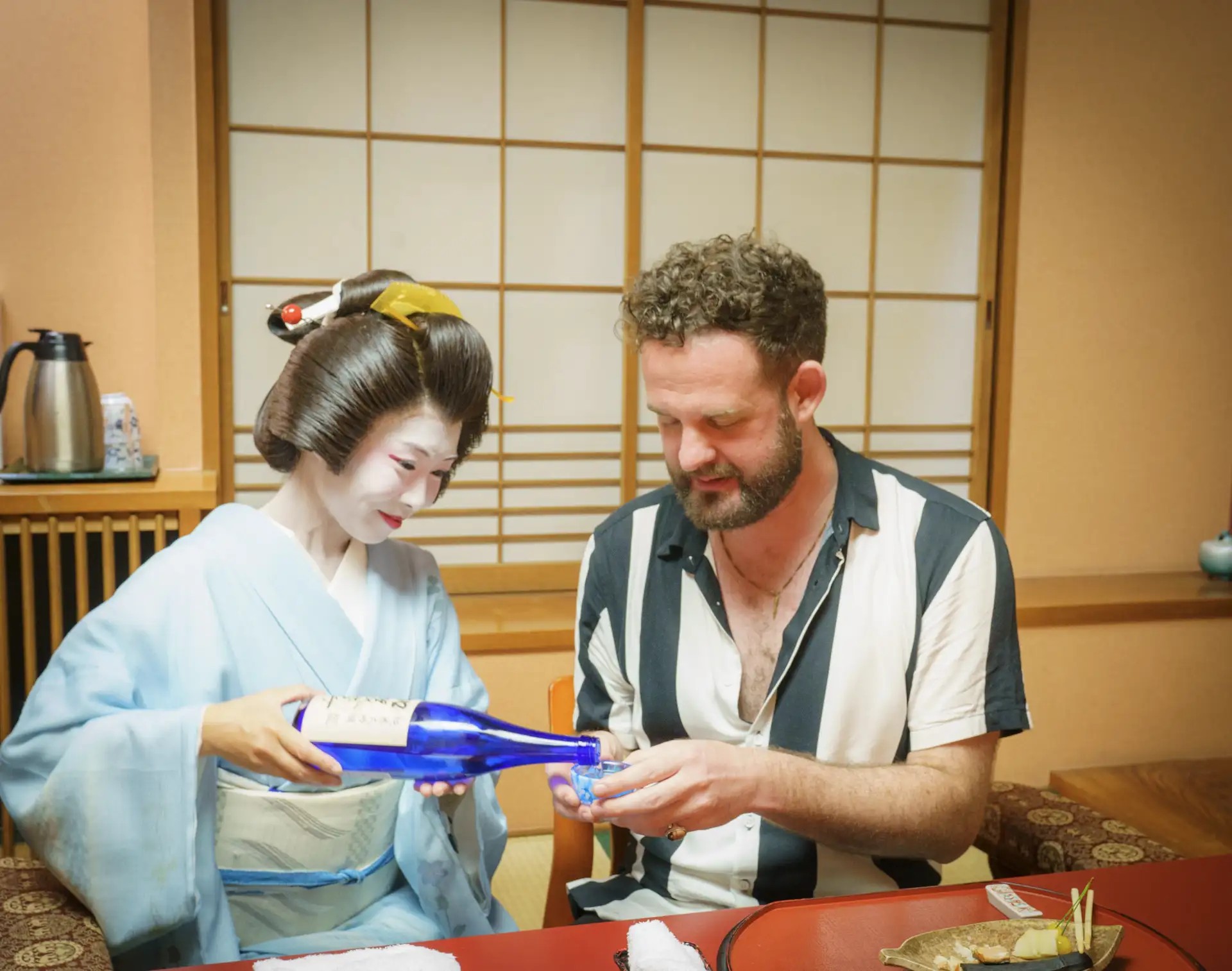
The entertainment includes: a musical performance (shamisen, typically, or occasionally koto), traditional dance, and ozashiki games (traditional party games played between guests and the geisha, involving skill and sake). The games are designed to be accessible to non-Japanese guests; the best geiko can conduct the entire evening in a mixture of Japanese and English, or work through a Japanese-speaking guide.
The meal and entertainment combined run approximately three hours.
Expert Tip
The ozashiki games — the traditional party games played during a geisha dinner — are the part of the evening most visitors are least prepared for and most pleasantly surprised by. They’re competitive (in a light way), skilled (the geisha have practiced them for years), and funny. The most famous, Tora-tora, is a three-player elimination game with a rock-paper-scissors logic; the one who loses takes a drink. The atmosphere at this point of the evening is the furthest possible thing from solemn cultural observation — it’s genuinely good fun.
The Traditional Arts Performed
Shamisen performance is the most common musical element: the three-stringed instrument produces a sound that is specific to this tradition — neither quite like Western strings nor like other Japanese instruments. Traditional dance (Kyomai in Kyoto, Edo-style in Tokyo) is more formal than casual — precise, slow, and visually codified in a way that requires some context to appreciate. If you have the opportunity to watch one before the evening, a brief online search for “Nihon Buyo” gives you the visual context.
The geisha’s conversation and social facilitation — knowing when to guide the mood, when to create levity, when the guest needs more sake and when they’ve had enough — is the non-performative art that the other skills support. It’s the hardest to describe and the most central to what the evening is.
How to Arrange a Genuine Experience
Legitimate ryotei evenings with geisha entertainment are arranged through:
- Established cultural operators with ryotei relationships (TJT is one such operator in Tokyo)
- High-end hotel concierges at properties with longstanding Japanese client networks (Park Hyatt, Four Seasons, Aman Tokyo)
- Direct contact with hanamachi offices in the geisha districts, which sometimes facilitate introductions for visitors
Budget ¥50,000–120,000 per person for a full evening including kaiseki and geisha entertainment. This range reflects the actual cost: the food is high-level kaiseki, and the geisha’s fee is professional.
Frequently Asked Questions
How much does a geisha dinner cost? A legitimate ryotei evening with geisha entertainment runs ¥50,000–120,000 per person (approximately $330–800 USD at current rates). This is expensive by any standard, and the cost reflects the caliber of the food and the professional fees involved.
Can non-Japanese guests attend? Yes, with the right arrangement. TJT facilitates introductions specifically for international visitors. An English-speaking guide or a bilingual facilitator at the table makes the evening accessible regardless of Japanese language ability.
Is a geisha dinner appropriate for business purposes? Yes. Tokyo ryotei evenings have historically served as business entertainment venues for senior Japanese business relationships. They remain appropriate for that context. A cultural operator can advise on the etiquette specific to business settings.
Related Tours
Conclusion
A genuine geisha dinner is the highest expression of traditional Japanese hospitality culture — food, setting, performance, and social facilitation coordinated at a level that has no equivalent in Western dining. For travelers whose interest in Japan runs deep enough to seek out what’s behind the visible culture, an evening at a ryotei is worth the planning and the cost. It’s not a tourist experience. It’s an experience that happens to be accessible to tourists who know how to find it.
Plan Your Japan Trip with Local Experts
Our team has guided 40,000+ travelers across Japan. Tell us about your trip and we’ll get back to you within 24 hours.