
In this article:
- Entering and Being Seated
- The Phrases That Actually Work
- Asking for Changes and Flagging Allergies
- Ticket Machines, Izakayas, and Conveyor Sushi
- Paying the Bill
- Ordering Food in Japan: Common Questions
Entering and Being Seated
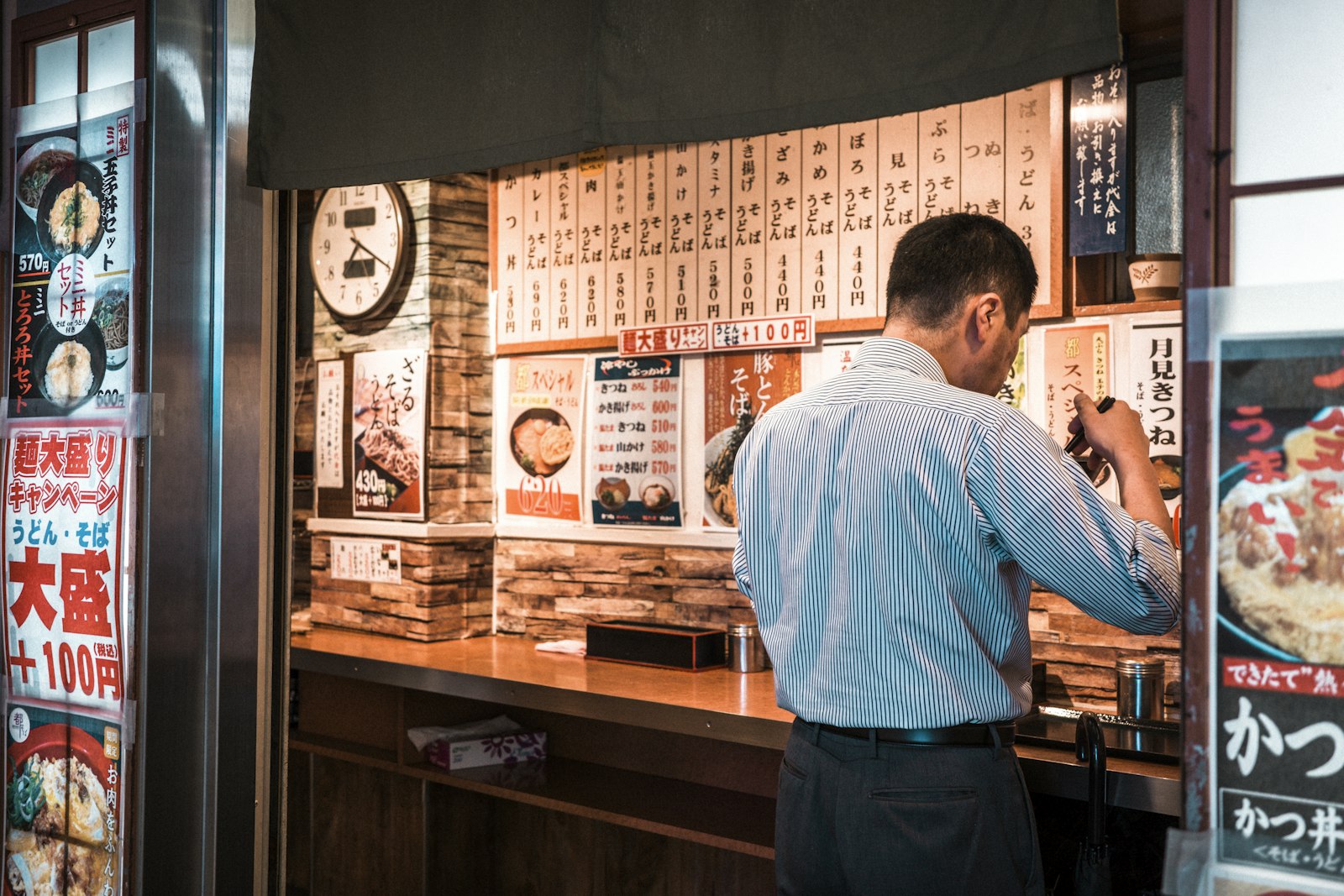
The moment you step into a Japanese restaurant, a small choreography begins, and knowing the steps takes all the stress out of it. None of it requires fluent Japanese — it requires knowing what is about to happen so you can play your part.
The Greeting at the Door
As you enter, the staff will call out “irasshaimase” — a welcome that you do not need to answer. Someone will then usually ask how many are in your party, often “nan-mei sama?” The simplest response is to hold up the right number of fingers and say the count, or just smile and show fingers. They will then seat you or point you to a machine, a counter, or a table. You rarely seat yourself in a staffed restaurant; wait to be directed.
The Welcome Extras
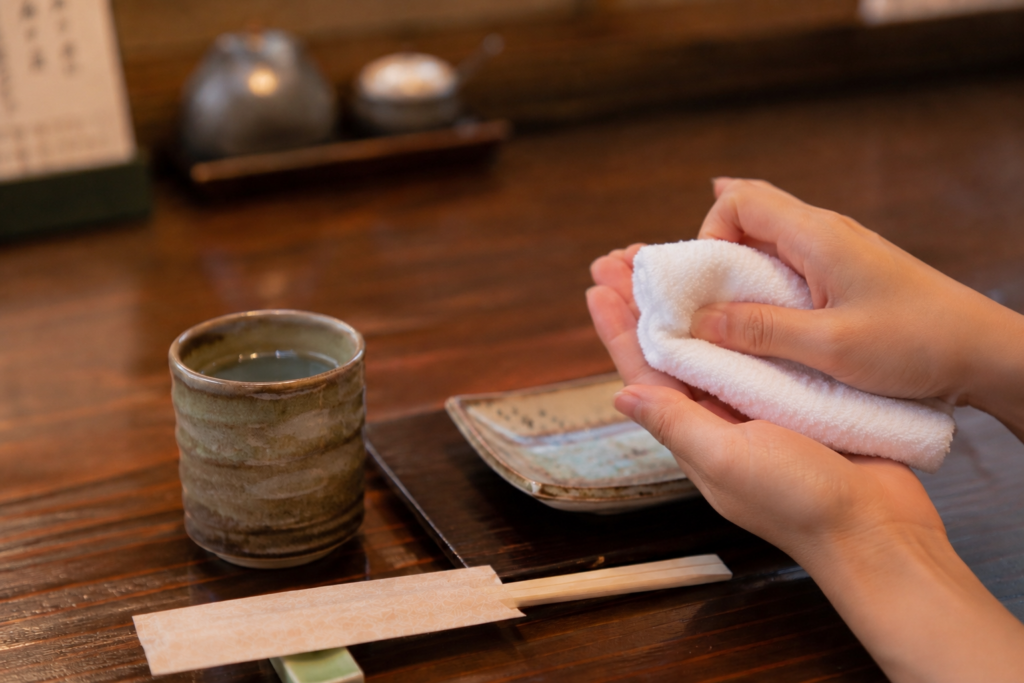
Once seated, you will often be handed an oshibori — a hot or cold damp towel — for your hands. Use it for your hands, not your face or the table. Water or tea, called ohiya, usually arrives free and unbidden, and refills are typically free too. These are standard hospitality, not items you have ordered or will be charged for. The towel and the water are simply how a meal begins.
Getting the Server’s Attention
Japanese restaurants do not expect you to wait silently for a server to drift past. At many places there is a call button on the table — press it and someone comes. Where there is no button, a clear, polite “sumimasen!” (“excuse me!”) across the room is completely normal and not rude. This surprises visitors from cultures where calling out is frowned upon; here, it is simply how you signal you are ready.
Expert Tip
Learn one phrase above all others: “sumimasen.” It means “excuse me,” “sorry,” and “thank you for your attention” all at once, and it is the master key to interacting in any Japanese restaurant. Use it to call a server, to apologise for squeezing past someone, and to open almost any request. Paired with pointing and a smile, it will carry you through nearly every meal of your trip.
The Phrases That Actually Work
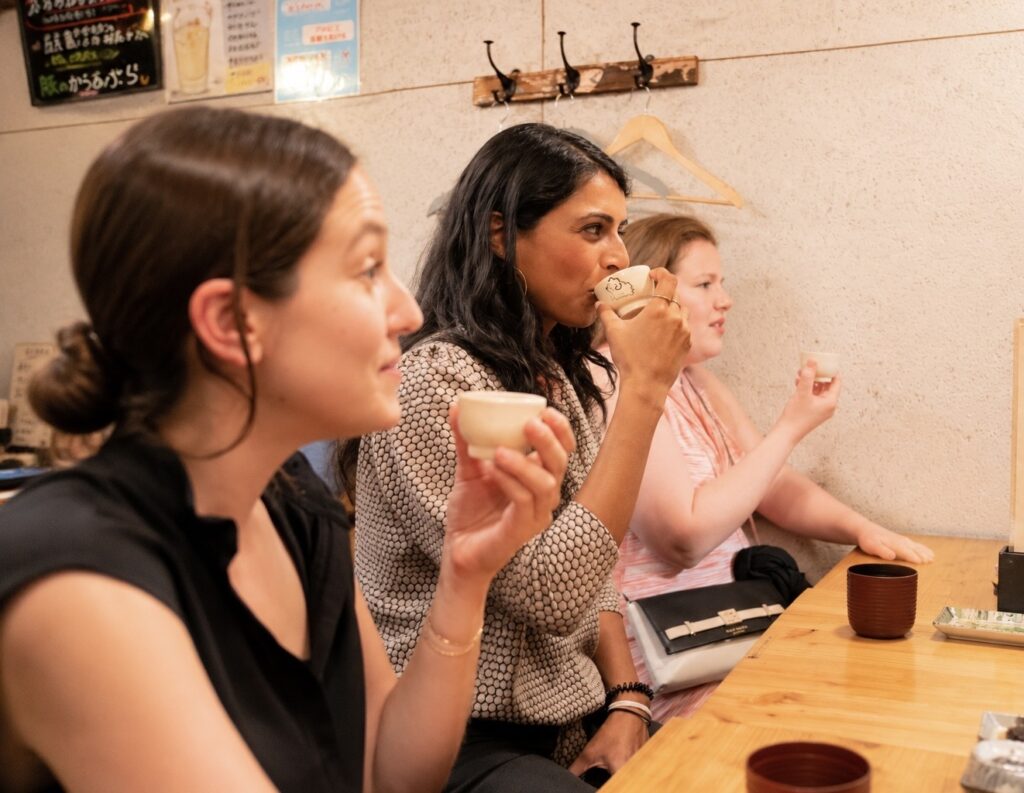
You do not need much Japanese to order well, but a few reliable phrases make the whole process smoother and tend to delight the staff. These are the ones worth memorising.
The Two Ways to Order
To order an item, point at the menu and add one of two phrases. “~ o onegai shimasu” is the polite, all-purpose “I’d like ~, please.” “~ kudasai” means roughly the same — “please give me ~” — and is slightly more direct. Either works anywhere. So “kore o onegai shimasu” (“this one, please”), while pointing, is a complete, courteous order. Master that single construction and you can order anything on any menu.
Counting Your Order
To say how many you want, the easy traditional counters are hitotsu (one), futatsu (two), mittsu (three), yottsu (four). So “kore o futatsu kudasai” — “two of these, please.” These general-purpose numbers work for most food items without needing to learn the specific counter words Japanese normally uses for different objects. When in doubt, hold up fingers alongside the word; the combination never fails.
Asking What’s Good
For a recommendation, ask “osusume wa arimasu ka?” — “do you have a recommendation?” Servers often have a genuine answer, especially for the day’s fresh fish or a house speciality, and ordering it is a good way to eat the best thing in the building. It also signals that you are interested in the food rather than just feeding yourself, which tends to bring out the staff’s enthusiasm.
Specifying Size
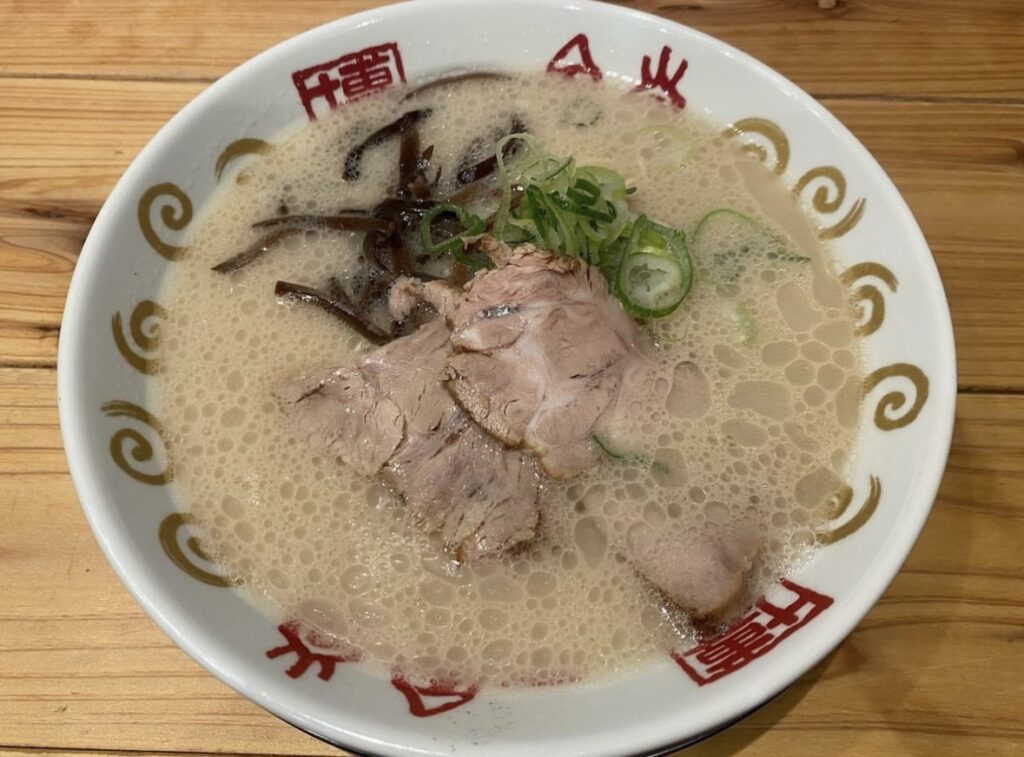
At casual chains — rice bowls, ramen, curry — you can often choose a portion size at no or little extra cost. “Nami” is regular; “omori” is a large portion; some places offer “ozaru” or other steps. So “omori de” (“make it large”) after your order bumps up the size. Learning this one word stops the common disappointment of a too-small bowl at a hungry moment.
Asking for Changes and Flagging Allergies
Customising an order is more limited in Japan than in some countries — many dishes are made one correct way — but the essentials of leaving something out or flagging an allergy are entirely doable, and on allergies it is important to be clear.
Leaving an Ingredient Out
To order something without a particular ingredient, the construction is “~ nuki de” — “without ~.” For example, “wasabi nuki de” gets your sushi made without wasabi, a common request. If you do not know the Japanese word for the thing you want removed, point at it on the menu or a picture and say “kore wa irenaide kudasai” — “please don’t include this.” Keep it simple; pointing plus a clear phrase works.
Communicating an Allergy
Allergies are serious and deserve more than a casual phrase, because cross-contamination and hidden ingredients — fish stock in particular — are common. Learn or write down “watashi wa ~ no arerugii ga arimasu” (“I have a ~ allergy”), and carry an allergy card in Japanese listing what you cannot eat. For a severe allergy, do not rely on a spoken phrase alone in a busy kitchen; a written card that staff can read and show the chef is far safer.
Watch for Hidden Dashi
The most common pitfall for vegetarians and those avoiding fish is dashi, the bonito-and-kelp stock that flavours a huge range of savoury dishes, many of which look entirely plant-based. If avoiding fish matters to you, ask specifically whether dashi is used, rather than assuming a vegetable dish is fish-free. This single ingredient catches out more careful eaters in Japan than anything else.
Ticket Machines, Izakayas, and Conveyor Sushi
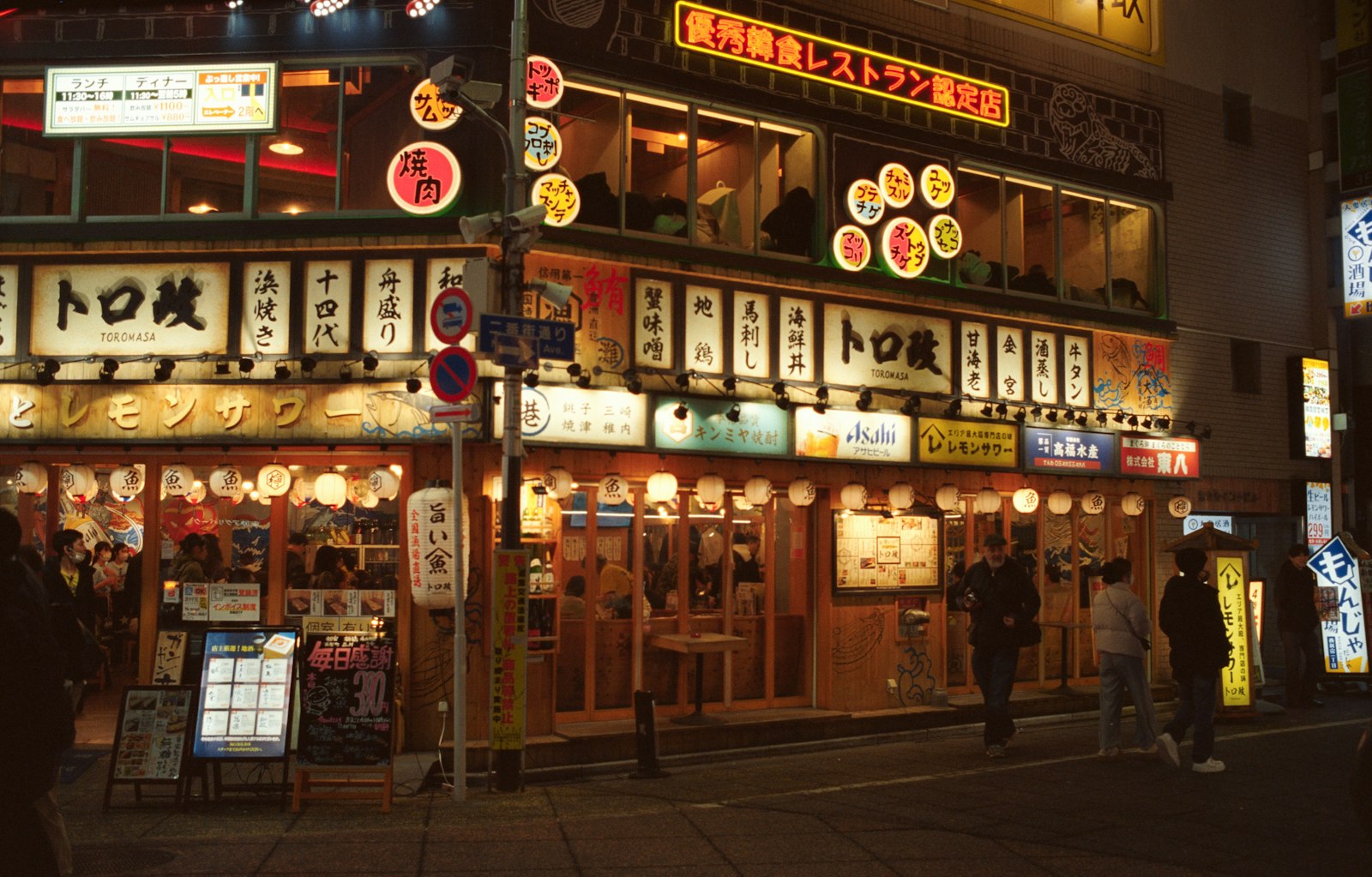
A few Japanese dining formats work differently enough to throw first-timers. Knowing the system before you walk in turns each from a moment of panic into a simple routine.
The Ramen Ticket Machine
Many ramen shops and casual eateries use a ticket vending machine — shokkenki — usually just inside the door. The system: insert your cash first, then press the button for the dish you want, take the printed ticket that drops out, and hand it to the staff at the counter. Buttons increasingly have photos or English, but if not, the top-left button is often the shop’s signature bowl. Buy your ticket before you sit, and you have effectively ordered and paid in one motion.
The Izakaya and the Otoshi
At an izakaya — a Japanese pub — expect a small dish to arrive that you did not order, along with a corresponding charge called otoshi or tsukidashi. This is not a scam; it is a standard seating charge, typically a few hundred yen per person, that functions like a cover charge and comes with a small appetiser. Accept it as the cost of the table. It is also customary to order at least one drink per person on sitting down — the izakaya runs on drinks as much as food.
Conveyor-Belt Sushi
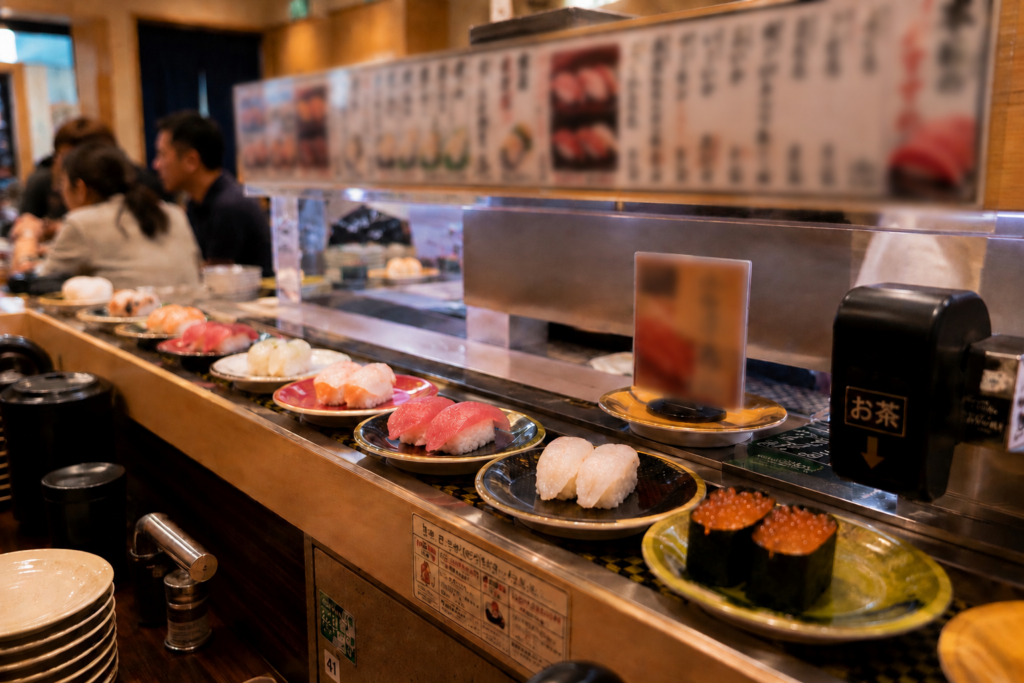
At kaiten-zushi, plates of sushi circulate on a belt, and in modern shops you also order specific items on a touchscreen, often with English and pictures, which are then delivered to your seat. You either take plates off the belt or order to order. Crucially, the bill is calculated by counting your stacked plates, which are colour-coded by price — so keep your empties at the table rather than disposing of them. It is one of the easiest, most fun, and most foreigner-friendly ways to eat in Japan.
Paying the Bill
Paying is straightforward once you know two things: how to ask for the bill, and that you must not tip. Both are quick to learn.
Asking for the Check
To request the bill, say “okaikei o onegai shimasu,” or catch a server’s eye and make the small crossed-fingers gesture — crossing your two index fingers into an X — which is widely understood to mean “the check, please.” In many casual places, your bill or a slip is already sitting on your table, ready to carry to the register.
Where to Pay
At a large share of restaurants, you do not pay at the table. Instead you take the slip from your table to a register near the entrance and pay there as you leave. At others, particularly izakayas and nicer restaurants, you pay at the table. If you are unsure, the default move is to pick up the slip and walk to the front counter; staff will redirect you if they would rather come to you.
Do Not Tip
There is no tipping in Japan, full stop. Good service is the standard and is already included in the price; leaving extra cash causes confusion, and a server may chase you to return money you “left behind.” To express thanks, say “gochisousama deshita” — a phrase that thanks the staff for the meal as you leave. It is the perfect, correct alternative to a tip, and it always lands well.
Ordering Food in Japan: Common Questions
Can I rely on Google Translate’s camera for handwritten menus? For printed menus, the camera translation is genuinely useful and worth using. For handwritten kanji menus — common at traditional izakayas and older shops — it struggles, because the app is poor at cursive and stylised handwriting. In those places, fall back on asking for a recommendation, pointing at what a neighbour is eating, or asking if there is an English or picture menu. Treat the camera as a helpful tool, not a guarantee.
Is it okay to order one dish to share? At an izakaya, sharing is the entire point — dishes are small and meant to be ordered communally for the table, so ordering several to share between two people is exactly right. At a restaurant serving individual set meals, ordering a single dish for two people is less expected and, in a busy place with limited seats, may be discouraged, especially if each person is occupying a seat. As a rule, share freely at izakayas; order per person at sit-down set-meal restaurants.
What if a place is cash-only and I’ve already eaten? Some smaller and older restaurants still take cash only, and discovering this after your meal is a genuine risk. The safest habit is to check before you order — look for card or IC logos at the door or register, or simply ask “kado wa tsukaemasu ka?” (“can I use a card?”). Carry enough yen to cover a meal as backup. If you are caught short, staff will usually point you to the nearest ATM, often at a convenience store nearby.
Related Tours
Conclusion
Ordering food in Japan rewards a handful of small habits: respond to the welcome with a smile and your party size, point and say “onegai shimasu,” learn “sumimasen” and “osusume,” watch for the ticket machine and the otoshi charge, and pay at the front without tipping. None of it is hard, and all of it makes you a more confident, more welcome guest.
Plan Your Japan Trip with Local Experts
Our team has guided 40,000+ travelers across Japan. Tell us about your trip and we’ll get back to you within 24 hours.