In this article:
- Navigating Golden Week
- Wisteria, Nemophila, and Moss Phlox
- May Weather
- The First Tea Harvest
- Hiking, Cycling, and Sumo
- Japan in May: Frequently Asked Questions
Introduction
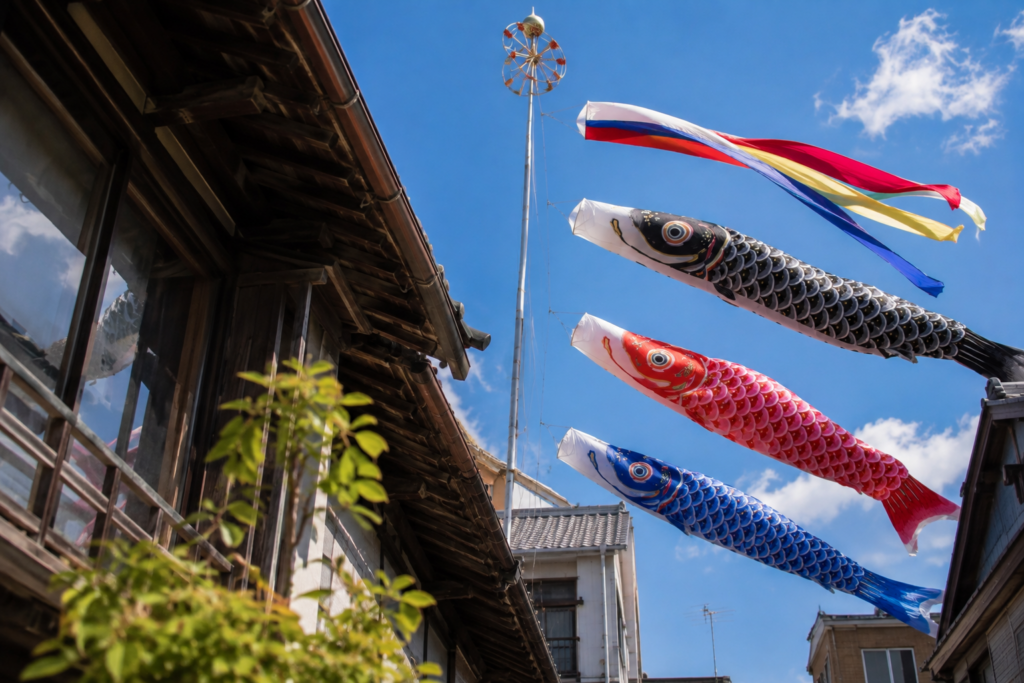
May in Japan is two different months separated by a single date. Until about 6 May the country is on holiday and moving en masse. After that, it empties, and what remains is the most comfortable weather of the year with none of the pressure of blossom season.
The second half of May is our standard recommendation for anyone whose dates are flexible and who does not specifically need cherry blossoms. Temperatures sit in the low twenties, humidity has not arrived, and the new foliage — shinryoku — is at its most vivid.
If your dates fall in the first week, that is workable too, but it requires planning of a different kind.
Navigating Golden Week
Golden Week is the largest domestic travel event in the Japanese calendar and it dominates the start of the month.
What It Is
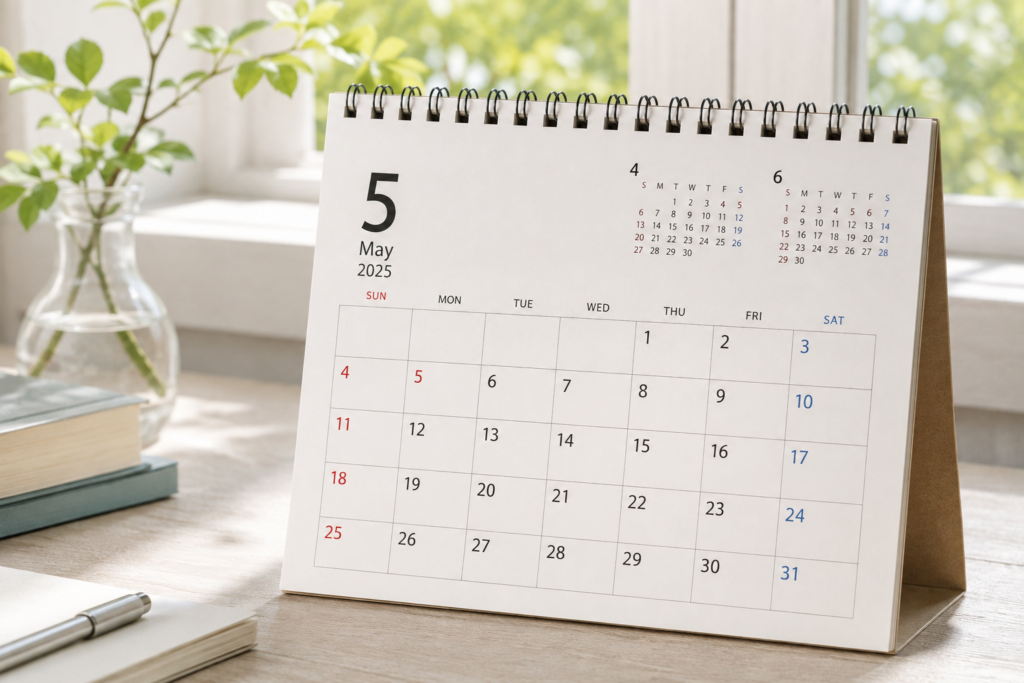
Four national holidays cluster between 29 April and 5 May — Showa Day, Constitution Memorial Day, Greenery Day, and Children’s Day. Depending on how they fall against weekends, many people take a continuous week or more.
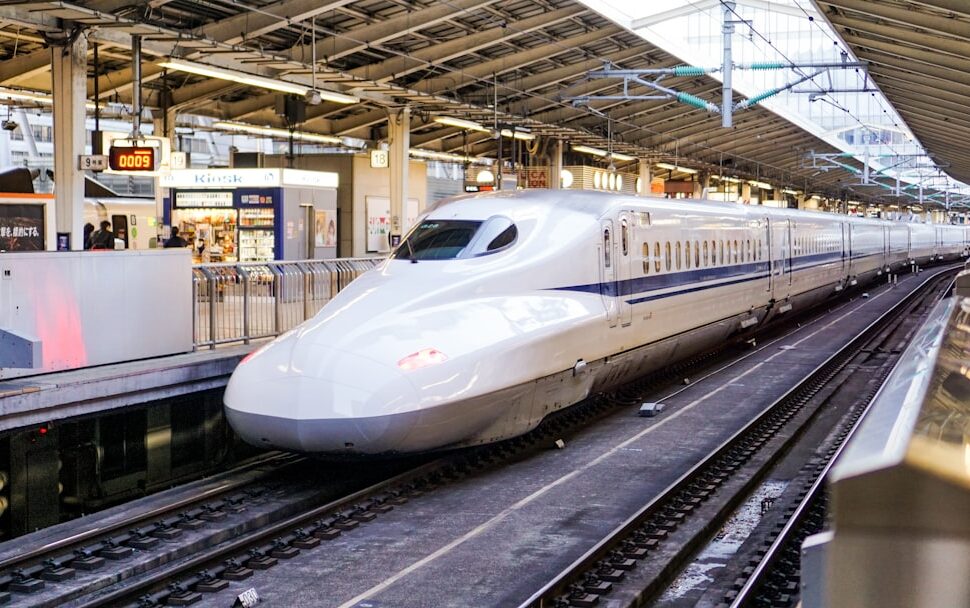
Domestic tourism runs at maximum. Shinkansen reserved seats sell out, expressways jam, ryokan double their rates, and popular sites reach capacity. International visitors are a minor contributor to this; it is the Japanese population travelling at once.
If You Must Travel Then
Reserve everything the moment booking opens — shinkansen seats exactly one month ahead, accommodation several months ahead. Do not plan to buy train tickets on the day.
Counter-programming works: stay in one city rather than moving, visit major sites at opening, and go to places Japanese families do not — contemporary art museums, smaller regional cities, and neighbourhoods rather than landmarks.
After Golden Week
From roughly 7 May the country resets. Hotel rates drop sharply, trains empty, and the major sites return to normal volumes.
The two weeks from 7 to 21 May are, in our view, the single best travel window in Japan. Nothing else combines this weather with this level of quiet.
Expert Tip
Golden Week is also when domestic travelers vacate the cities, which means Tokyo itself is unusually quiet during the holiday even as the countryside fills. If your dates are fixed to early May, staying in Tokyo and doing city sightseeing inverts the problem entirely — museums, neighbourhoods, and restaurants are more available than usual, not less.
Wisteria, Nemophila, and Moss Phlox
May is the strongest flower month after April, and the displays are on a scale that surprises people.
Ashikaga Flower Park
Ashikaga in Tochigi is built around a wisteria — fuji — of roughly 160 years old, its trained canopy covering about a thousand square metres, plus an 80-metre tunnel of white wisteria.
Peak runs from late April into mid-May, with white varieties last. Evening illumination lights the canopy from beneath, which is when to go. It is about 90 minutes from Tokyo.
Hitachi Seaside Park
Hitachi Seaside Park in Ibaraki plants around 5.3 million nemophila across a hill overlooking the sea, producing a pale blue slope that blends into the sky at the horizon.
The peak is short — roughly the last ten days of April into the first week of May — and it overlaps Golden Week, which makes it very crowded. Go on a weekday at opening.
Fuji Shibazakura
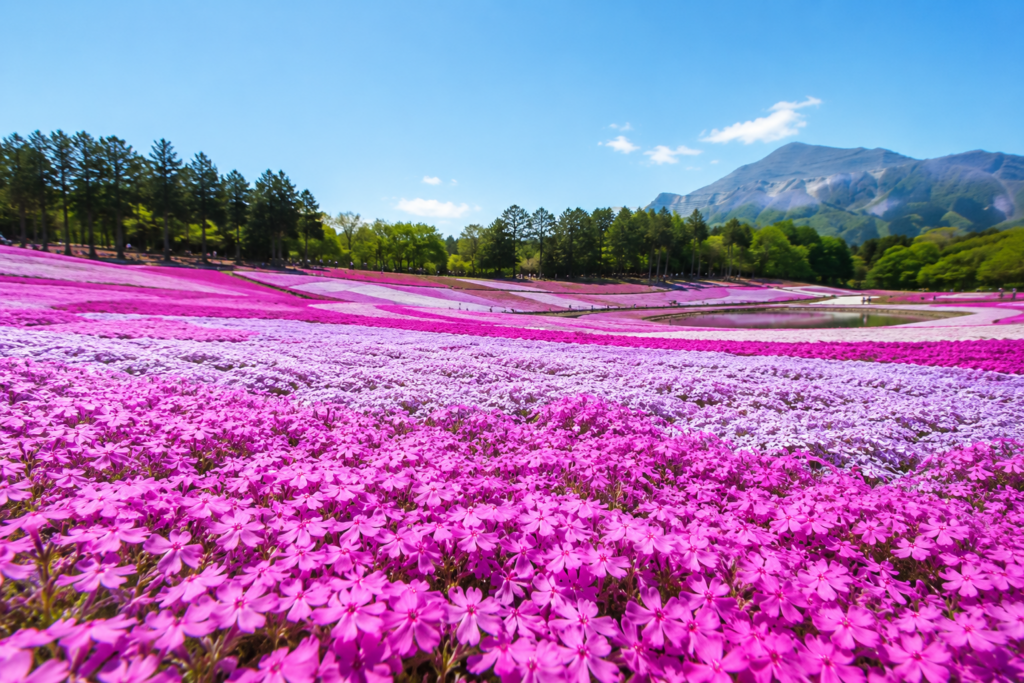
The Fuji Shibazakura Festival plants around 800,000 moss phlox in pink, white, and magenta bands at the foot of Mount Fuji, running from mid-April to late May.
Whether it works depends entirely on whether Fuji is visible, which is far from guaranteed in May. Check the mountain’s visibility forecast the morning you go rather than committing in advance.
May Weather
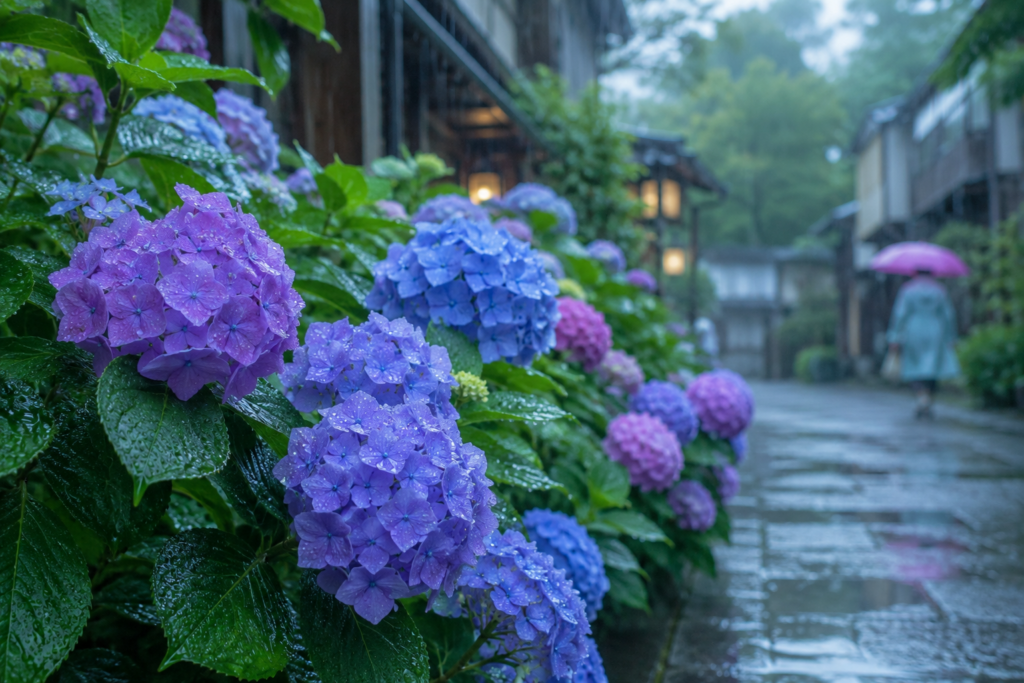
The climate is the quiet reason to prioritise this month.
Temperatures
Tokyo and Kyoto run roughly 15°C to 24°C, warming steadily. Days are comfortable in a shirt; evenings occasionally want a light layer.
Hokkaido is around 10°C to 19°C and is where the cherry blossoms are in early May. Okinawa enters its own rainy season in early May, which is worth knowing before booking it as a May beach destination.
Low Humidity
May sits between the spring rains and the June tsuyu, and humidity stays low. This is the practical difference from summer: the same temperature feels entirely different at 50 percent humidity than at 85.
Clear days are frequent, which also means May offers good Mount Fuji visibility relative to the summer months.
Shinryoku
Shinryoku — new green — refers to the fresh foliage of late spring, and it is treated in Japan as a season worth travelling for in its own right, much as autumn colour is.
Temple moss gardens, bamboo groves, and mountain valleys are all at their most saturated. Kyoto’s Rurikoin and the Ohara valley, and Nara’s Kasugayama primeval forest, are the standard destinations for it.
The First Tea Harvest
May is the only month for shincha, and it does not travel well enough to reach export markets.
Shincha
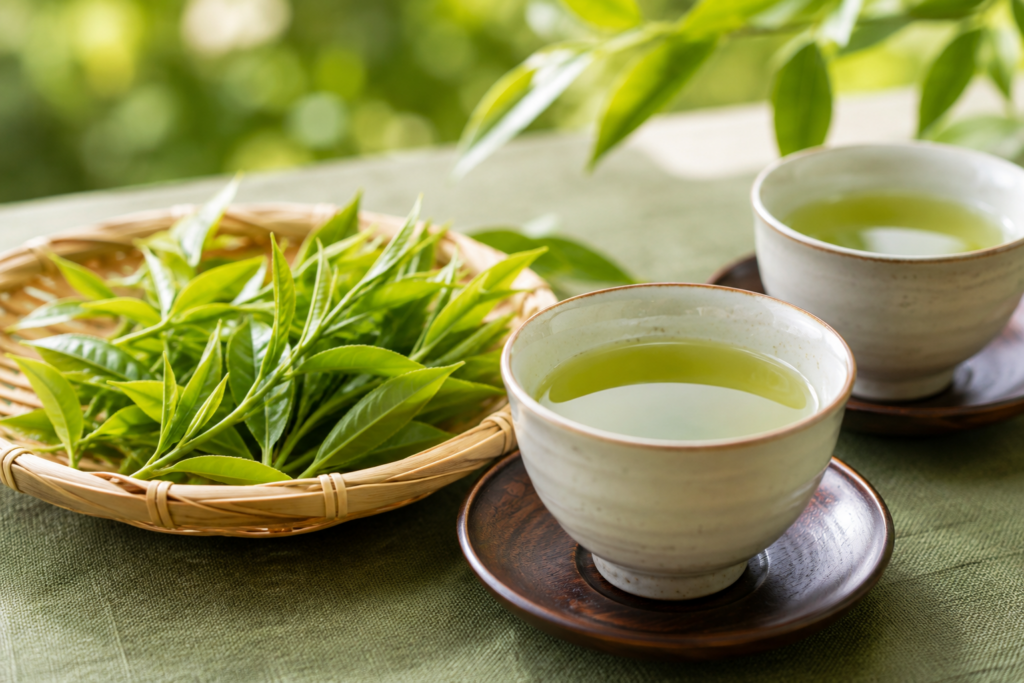
Shincha is the first flush, picked from late April through May, and it is sweeter and more aromatic than tea from later harvests — lower in the bitterness that develops through the season.
It is drunk fresh and its character fades within months, which is why it is essentially a domestic-only product. Buying a small quantity from a tea shop in May is one of the more genuinely seasonal things a visitor can do.
Shizuoka and Uji
Shizuoka produces roughly 40 percent of Japan’s tea, on terraced hillsides with Mount Fuji behind them on clear days. Uji, south of Kyoto, is the historic centre for matcha and gyokuro.
Both offer plantation visits and tastings in season, and Uji is a straightforward half-day from Kyoto by train.
Matcha Sweets
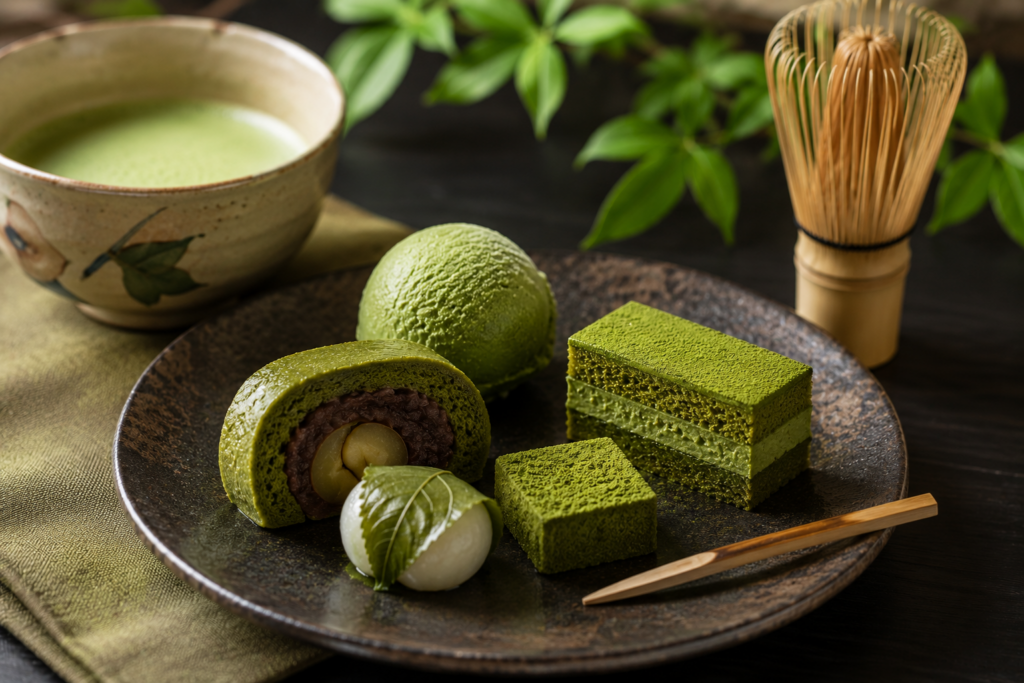
The matcha soft-serve, parfaits, and confectionery available in Uji are a considerable step above what is sold in tourist districts elsewhere.
Nakamura Tokichi and Itohkyuemon are the two long-established houses. Both queue at weekends; a weekday morning is straightforward.
Hiking, Cycling, and Sumo
May is when the outdoor season properly opens.
Kamikochi
Kamikochi, the alpine valley in the Northern Japan Alps, opens to visitors in mid-April and is at its best in May — the Azusa River running clear, snow still on the peaks, and the valley floor in new leaf.
Private cars are banned; access is by bus from Hirayu or Sawando. The flat riverside walk from Taisho Pond to Myojin Pond takes about three hours and requires no equipment.
Shimanami Kaido
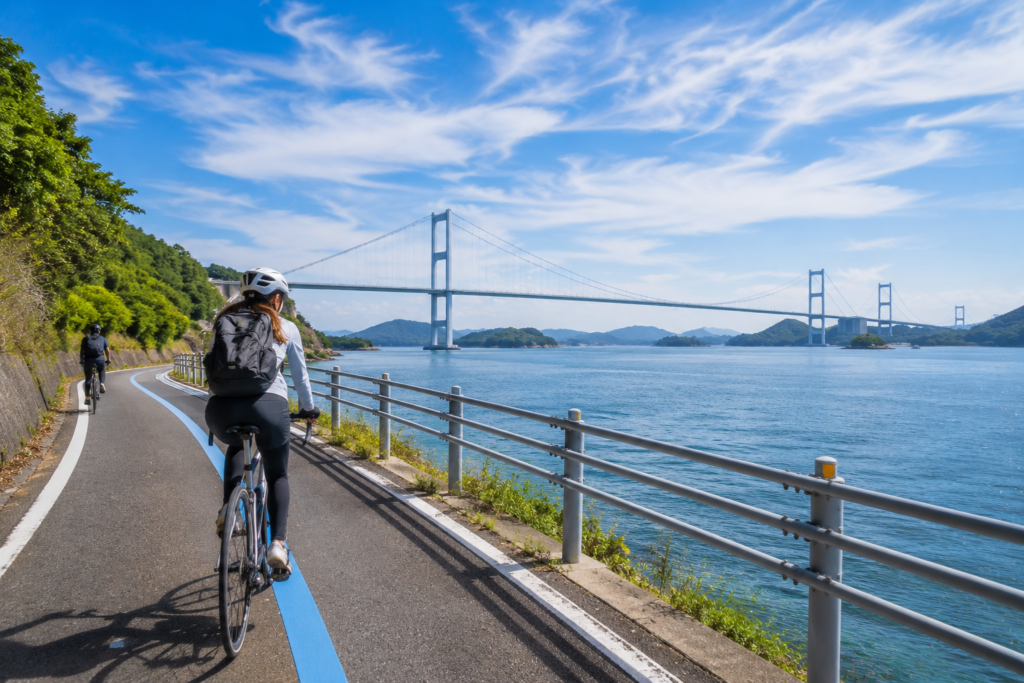
The Shimanami Kaido is a 70-kilometre cycling route across six islands of the Seto Inland Sea on dedicated bridge cycleways, and May is the ideal month for it — warm, dry, and before the summer heat.
Rental bikes are available at terminals on both ends with one-way drop-off. The full route takes a day at a moderate pace; shorter island-hopping sections are straightforward for casual riders.
May Sumo
The Natsu Basho runs fifteen days in May at the Ryogoku Kokugikan in Tokyo, one of three annual Tokyo tournaments.
Tickets open about a month ahead. Arriving early afternoon lets you watch the junior divisions in a near-empty hall, which is a better introduction to the sport than dropping in for the final hour.
Expert Tip
Okinawa’s rainy season starts in early May, roughly six weeks before the main islands, and runs into late June. Travelers often assume Okinawa is the reliable May beach option and book into the wettest part of its year. If you want the southern islands, April or late June onward are the better windows.
Japan in May: Frequently Asked Questions
Should I avoid Golden Week entirely? If your dates are flexible, yes — travel from 7 May instead. If they are not, stay in one city rather than moving between them, book everything months ahead, and use Tokyo, which is quieter than usual during the holiday because residents leave.
What should I pack for May? Light layers for 15°C to 24°C, a light jacket for evenings, and comfortable walking shoes. Add a warmer layer for Hokkaido, which runs about five degrees colder. A compact umbrella is worth carrying but May is one of the drier months.
Can I still see cherry blossoms in May? Yes, in Hokkaido. Sapporo and Hakodate typically bloom in the first week of May, and the Nemuro Peninsula in the far east can run to mid-May. Nowhere on Honshu will have them.
Related Tours
Conclusion
If you can choose your dates, choose the second half of May. It is the best combination of weather, cost, and quiet available in the Japanese year, and it is the recommendation we make most often to people who do not have their heart set on blossoms.
If you land in Golden Week instead, stay put. Pick one city, book early, and let the country move around you rather than trying to move with it.
Plan Your Japan Trip with Local Experts
Our team has guided 40,000+ travelers across Japan. Tell us about your trip and we’ll get back to you within 24 hours.