In this article:
- What Tsuyu Actually Means
- Hydrangeas
- Indoor Alternatives
- Low Crowds and Low Prices
- Packing for Humidity
- Japan in June: Frequently Asked Questions
Introduction
June is the month people are told to avoid, and it is consequently the month when Fushimi Inari has space to walk in, Kyoto hotel rates are at their lowest, and restaurants take walk-ins.
Tsuyu — the rainy season — is real, but it is not what most visitors imagine. It is not monsoon. It is a period of grey skies with rain arriving in bands, often for a few hours, often overnight, interspersed with days that are entirely dry.
There is also a straightforward exit: Hokkaido has no tsuyu. If rain is unacceptable, the northern island in June is cool, dry, and in full flower.
What Tsuyu Actually Means
Understanding the pattern makes June much easier to plan.
The Pattern
Tsuyu typically runs from early June to mid-July on Honshu, arriving earlier in the southwest and later in the northeast. It is caused by a stationary front sitting across the archipelago.
Rainfall comes in periods rather than continuously. A typical June week in Tokyo might have two or three days of significant rain, several overcast days, and one or two clear ones. Umbrella in the bag, plans unchanged, is the correct posture.
The Hokkaido Exception
Hokkaido is north of the front and has no rainy season at all. June there runs roughly 13°C to 21°C, dry and clear, with lavender beginning and the whole island in new growth.
Furano, Biei, and Shiretoko are all at their best. For a June trip with no tolerance for rain, this is the answer, and it costs no more than anywhere else that month.
Humidity
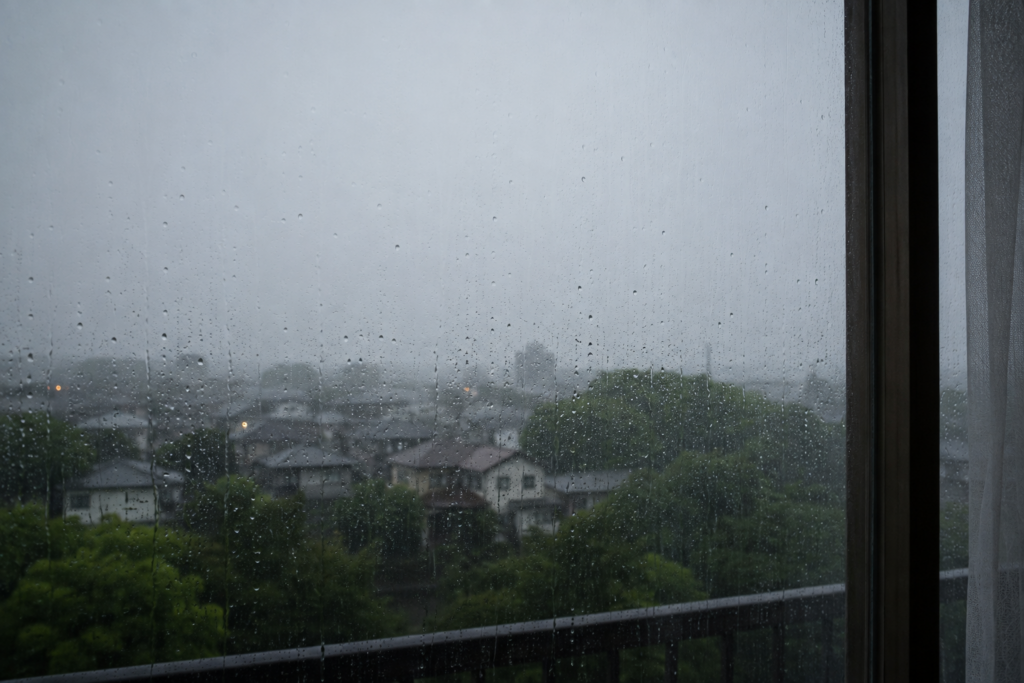
Temperatures run 19°C to 26°C on Honshu, which sounds mild and does not feel it. Humidity climbs through June and the combination is heavier than the numbers suggest.
Late June begins to feel like the summer that follows. Air conditioning is universal indoors, so the discomfort is confined to time spent outside.
Expert Tip
The Japan Meteorological Agency announces the start and end of tsuyu by region, and the declarations are widely reported. If your trip is in late June, check whether the agency has declared tsuyu-ake — the end of the rainy season — for your region. In some years it lifts in the last week of June, turning the back half of the month into early summer.
Hydrangeas
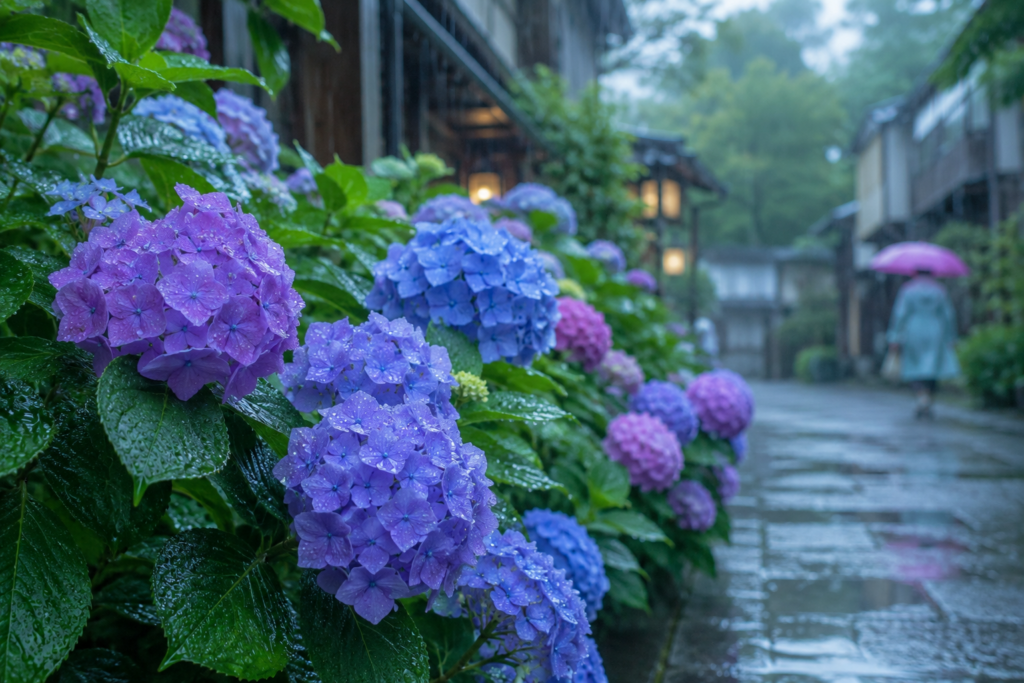
Ajisai are Japan’s June flower and they are one of the few things that genuinely look better wet.
Kamakura’s Temples
Meigetsu-in in Kamakura is known as the hydrangea temple, its approach stairway banked on both sides with a variety in a particular blue that the local soil produces. Hasedera has around 2,500 plants on a hillside path with views over the sea.
Both are heavily visited in June despite the month’s reputation. Meigetsu-in operates a numbered entry system at peak and opens early specifically to manage it; arriving at opening is the only comfortable option.
The Hakone Hydrangea Train
The Hakone Tozan Railway, a steep mountain line with switchbacks, runs between banks of hydrangeas planted along the track, and services are lit at night during the season.
Night runs require reservation. The line is worth riding regardless — it is one of the steepest adhesion railways in Japan and reverses direction three times climbing the mountain.
Rain Aesthetics
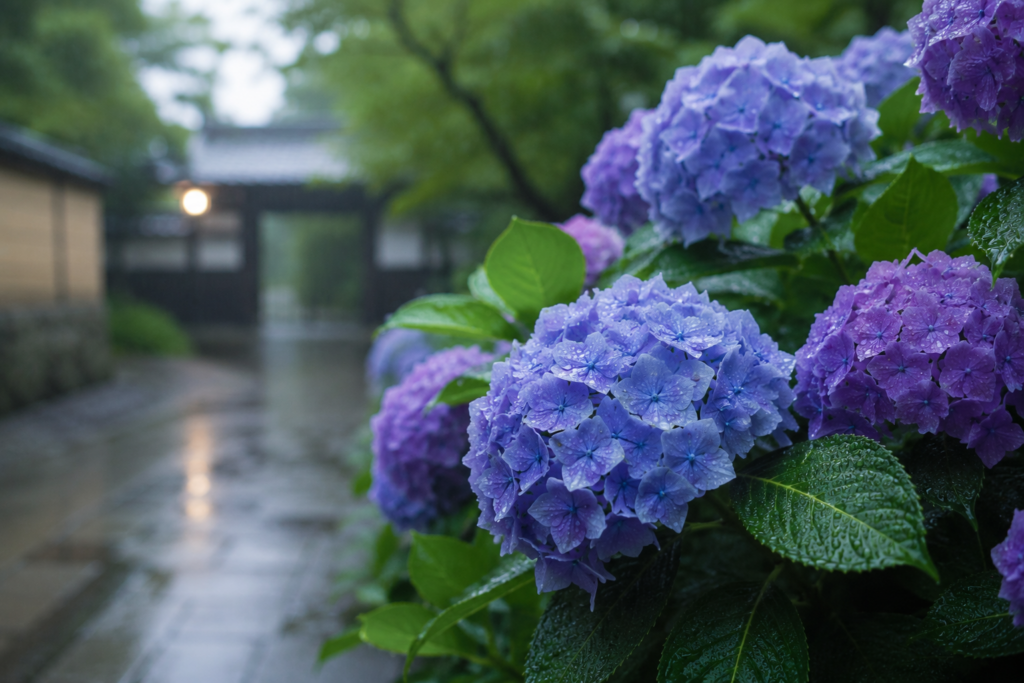
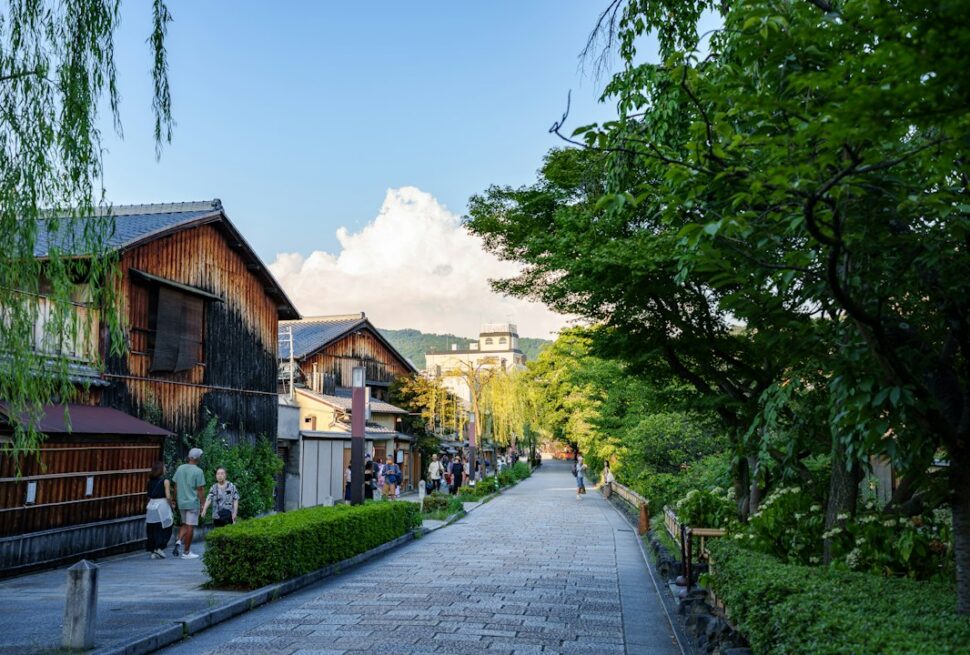
Japanese gardens are designed with rain in mind. Moss saturates and glows, stone darkens, and the reflections on wet paving are the reason temple photographs from June look the way they do.
Saiho-ji and Gio-ji in Kyoto, both moss gardens, are at their peak in June. This is not a consolation for bad weather; it is the intended condition.
Indoor Alternatives
Japan is unusually well equipped for wet days, largely because it has to be.
Digital Art Museums

teamLab Planets in Toyosu is a barefoot installation where you wade through water and walk over uneven surfaces in the dark, and it is completely weather-independent.
teamLab Borderless in Azabudai Hills is the larger and more disorienting of the two. Both require advance timed tickets and both sell out in wet weather, so book ahead in June rather than treating them as a fallback.
Covered Arcades
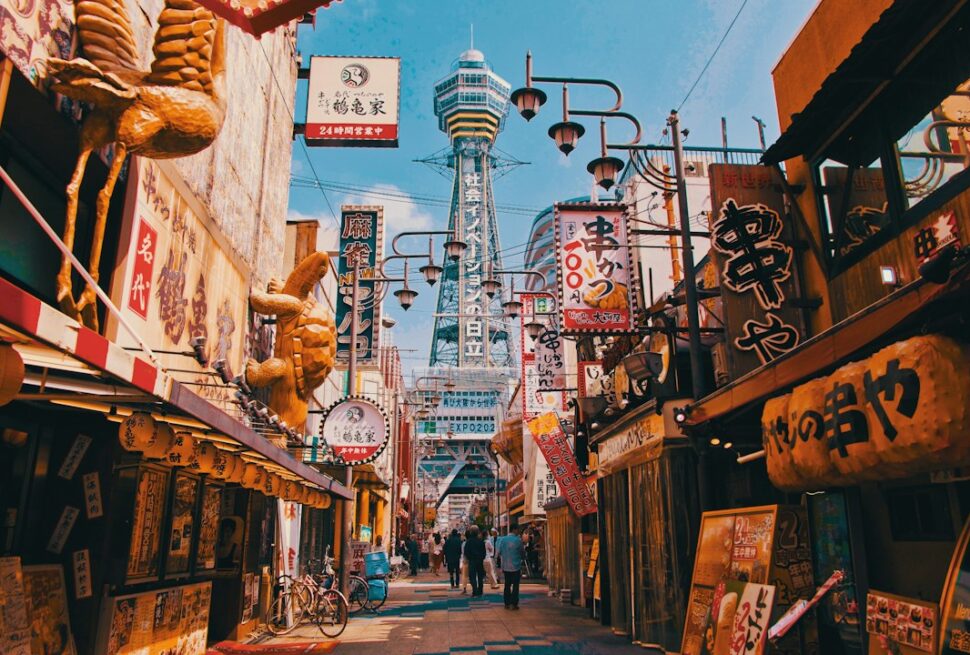
Shotengai — covered shopping streets — run for kilometres in some cities. Osaka’s Shinsaibashi-suji and Tenjinbashisuji, the latter around 2.6 kilometres and the longest in Japan, are entirely roofed.
Kyoto’s Nishiki Market and the Teramachi and Shinkyogoku arcades connect into a large covered network. You can spend a full wet day in these without emerging.
Depachika and Underground Cities
Department store food halls are worth a rainy afternoon on their own, and several Japanese cities have extensive underground shopping networks connecting stations to buildings.
Osaka’s Umeda underground, Tokyo’s Yaesu and Shinjuku networks, and Nagoya’s Sakae area all let you cross substantial distances without going outside.
Low Crowds and Low Prices
The compensation for the weather is substantial and specific.
Flights and Hotels
June sits between Golden Week and the summer peak, and international flights and city hotels are at or near their annual lows outside the depths of winter.
Ryokan in onsen towns discount heavily. This is the month to book somewhere that would be out of budget in October.
Shorter Queues
Fushimi Inari, Senso-ji, Kiyomizu-dera, and the Arashiyama bamboo grove all operate at a fraction of their autumn volumes in June.
The difference is dramatic at the sites that are otherwise impassable. A rainy Tuesday at Kiyomizu-dera is a different experience from a dry Saturday in November, and not a worse one.
Restaurant Availability
Restaurants that require booking weeks ahead in peak season often have availability in June, including at the higher end.
If there is a specific restaurant you want, June is the month it is achievable. Hotel concierges can generally secure tables that would be impossible in spring or autumn.
Packing for Humidity
Two adjustments make June comfortable rather than unpleasant.
Umbrellas
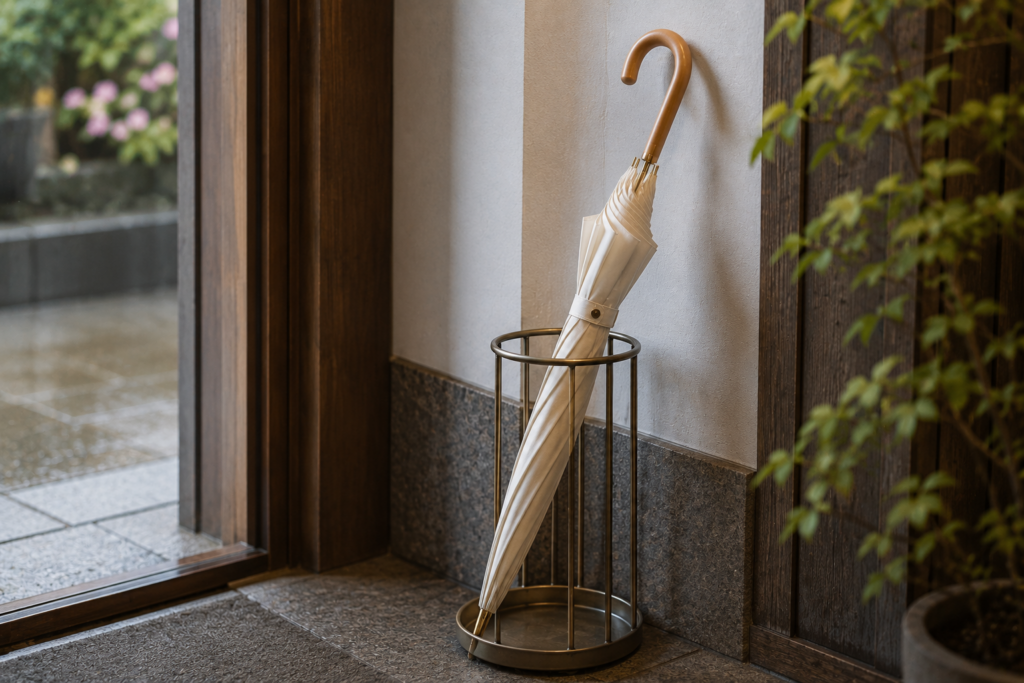
Do not pack one. Clear plastic umbrellas are sold in every convenience store for a few hundred yen, and they are the default Japanese rain solution.
Shops, restaurants, and museums have umbrella stands or lockers at the entrance, and taking a wet umbrella inside is discouraged. Many buildings provide plastic sleeves for them.
Quick-Dry Fabrics
Linen, technical fabrics, and anything that dries fast will be more comfortable than cotton, which stays damp in high humidity.
Water-resistant shoes matter more than waterproof ones. Full waterproofing traps heat, which is the wrong trade-off at 26°C and high humidity.
What to Buy There
Convenience stores stock rain ponchos, waterproofing spray, and small towels. Drugstores sell anti-humidity hair products and cooling sheets.
The Japanese have engineered a great deal of specialised product around this season. Most of it is cheap and most of it works.
Expert Tip
Restaurants and museums often have umbrella lockers with a key, and it is normal to leave your umbrella at the entrance in an open stand. Theft is essentially unheard of, but identical clear convenience-store umbrellas do get taken by mistake constantly. Tie something to the handle if you have bought a good one.
Japan in June: Frequently Asked Questions
Does it rain every day? No. A typical June week on Honshu has two or three days with significant rain, several overcast days, and one or two clear ones. Rain often falls overnight or in bands rather than continuously. The month has more rain than average, not constant rain.
Is Hokkaido a good June alternative? Yes, and it is the clearest answer to the rainy season. Hokkaido has no tsuyu, runs 13°C to 21°C, and June is when the lavender starts and the landscape is at its greenest. It is also not crowded until July.
What indoor activities work for families? teamLab Planets and Borderless, the Osaka Aquarium Kaiyukan, the railway museums in Nagoya and Saitama, and covered arcades. Book the teamLab venues ahead — they fill on wet days.
Related Tours
Conclusion
Come in June and accept the umbrella. In exchange you get the major sites at a fraction of their normal density, the lowest prices of the travel year, and moss gardens in the condition they were designed for.
If rain is genuinely unacceptable, book Hokkaido instead. It is the same country, the same month, and no rainy season at all.
Plan Your Japan Trip with Local Experts
Our team has guided 40,000+ travelers across Japan. Tell us about your trip and we’ll get back to you within 24 hours.