In this article:
- How to Choose: Stations Before Neighborhoods
- The Neighborhoods, One by One
- Matching the Area to Your Trip
- Booking Details That Matter More Than Stars
- Where to Stay in Tokyo: Frequently Asked Questions
Introduction
Most advice on where to stay in Tokyo starts with a map, and a map of Tokyo misleads. Two hotels that look close can sit on opposite sides of a station. The station may be very large. Walking between the two hotels can take longer than the train ride you were trying to save.
Meanwhile, a hotel in Asakusa and another in Shibuya may sit at opposite ends of the city. Yet they are joined by a single subway line with no change.
We meet travelers at hotels all over central Tokyo, and the pattern is consistent. Guests who chose their base for its train lines start the day early and unhurried. Guests may choose it because of a photograph of the neighborhood. They then spend the first part of every morning finding the right exit.
What follows is how we would choose, area by area, for the kind of trip our travelers take: a first or second visit, four to eight nights, more interested in how the city lives than in ticking off its landmarks.
How to Choose: Stations Before Neighborhoods
Tokyo rewards whoever sleeps closest to the right platform. Before you compare lobbies or rooftop bars, decide which train lines you want outside your door.
The Yamanote Line Is Your Frame
The JR Yamanote Line is a loop of 30 stations around central Tokyo, and a full circuit takes roughly an hour. Shibuya, Harajuku, Shinjuku, Ueno, Tokyo, and Shinagawa all sit on it. A hotel a few minutes’ walk from a Yamanote station puts most first-visit sights within half an hour.
Subway lines fill in what the loop misses. Asakusa, Roppongi, and Omotesando are not on the Yamanote at all. That is not a reason to avoid them, only a reason to know which subway line you will be using instead.
Every one of these lines accepts the same IC transit card, so switching between JR and the subway involves no tickets and no fare decisions. In practice, the network behaves like one system, even though several companies run it.
Minutes to the Platform, Not Minutes to the Station
Hotel listings say “three minutes from the station.” In Tokyo that often means three minutes to an exit, and some exits are a long underground walk from the platform you need.
Shinjuku, Tokyo, and Shibuya stations are each large enough that the exit you use decides which neighborhood you surface into. We treat anything over ten minutes on foot to the platform as a real cost. You pay it twice a day, every day of the trip.
Airport and Shinkansen Links
If you land at Haneda, Keikyu trains run through onto the Toei Asakusa Line, so Shinbashi, Nihonbashi, and Asakusa can be reached from the terminal without changing trains on through services. Our Haneda arrival guide compares this route with the monorail and the limousine buses.
Narita is further out. The Keisei Skyliner reaches Keisei Ueno in about 41 minutes at its fastest, which is the strongest single argument for staying in Ueno. Some Keisei Access Express trains also run directly through to Asakusa.
Onward travel matters as much as arrival. If your itinerary continues to Kyoto by Shinkansen, a hotel near Tokyo or Shinagawa station saves a transfer with suitcases on the morning you leave.
Expert Tip
Before booking, open each candidate hotel in a map app and route it to the three places you most want to see, departing at 8:30am on a weekday. The travel times will tell you more than any neighborhood guide, including this one. If one of those routes needs two changes, keep looking.
The Neighborhoods, One by One
Five areas cover almost every sensible choice for a first or second visit. Each has a clear strength, and each has a trade-off that the listings do not mention.
Marunouchi, Nihonbashi, and Ginza
This is where we place most travelers on a first visit, and the reasoning is logistical. Tokyo Station puts the Shinkansen, the Narita Express, the Yamanote Line, and several subway lines under one roof. The Imperial Palace East Gardens are a short walk west.
Much of the upper end of the hotel market is here. Aman Tokyo occupies the top floors of Otemachi Tower, and Four Seasons Hotel Tokyo at Otemachi takes the top of Otemachi One nearby. Ginza and Nihonbashi add the old department stores, serious sushi counters, and quieter side streets lined with specialist shops.
The trade-off is the evening. Marunouchi is an office district, and once the offices close the streets thin out quickly. Ginza, a short walk south, fills that gap with restaurants, though at Ginza prices.
Shibuya and Omotesando
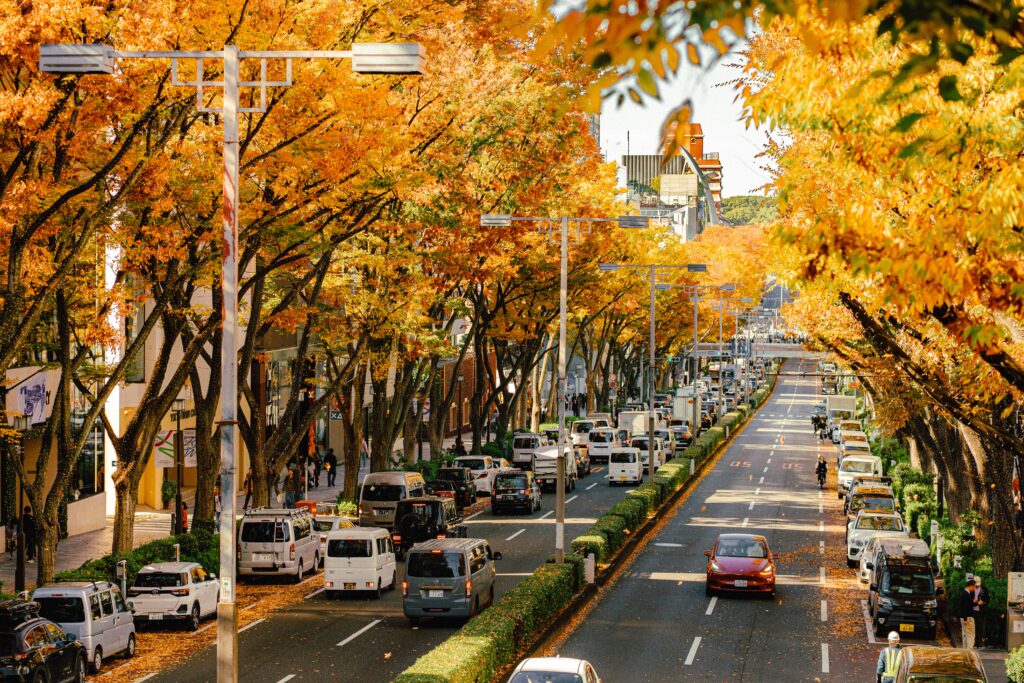
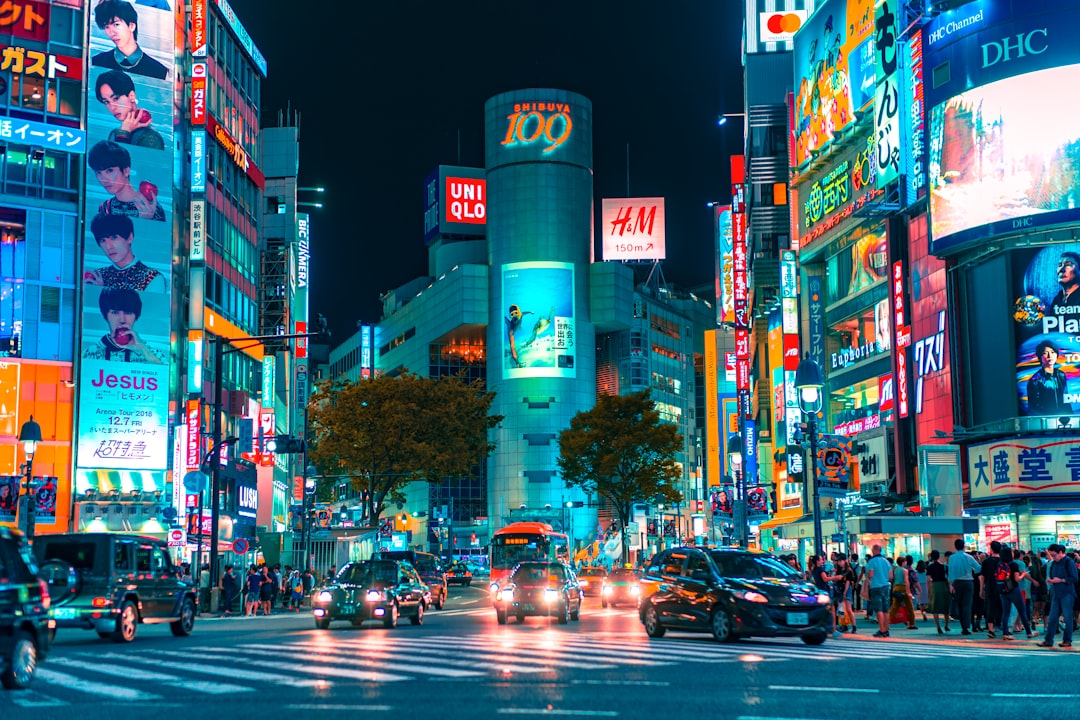
Shibuya is our recommendation for travelers who want the city’s energy at the door and a short ride to everything else. The Yamanote, the Ginza Line, the Hanzomon Line, and several private railways meet here. Harajuku and the forest around Meiji Shrine are one stop away.
Staying slightly off-center is the better version of Shibuya. Hotels toward Omotesando and Aoyama, or down toward Ebisu and Daikanyama, keep you within walking distance of the crossing without the crowds that make the station itself hard work with a suitcase.
If you do stay in the station area, ask for a high floor. The scramble is a spectacle. Its noise at street level at midnight is less of one.
Shinjuku
Shinjuku is the most commonly recommended base, and in our view it is overrated for a first visit. The station is hard to read on your first few days, and it sits on the western side of the loop. Asakusa, Ueno, and Tokyo Station are all a longer ride from here than from anywhere else on this list.
Still, it is the right base in one situation: when day trips west are the point of the stay. The Odakyu Romancecar to Hakone leaves from Shinjuku, and highway buses to Lake Kawaguchiko and the Fuji Five Lakes leave from Busta Shinjuku, the bus terminal built over the station.
If you choose Shinjuku, stay on the west side, where the towers of Nishi-Shinjuku hold the larger hotels, or on the south side toward Shinjuku Gyoen. Kabukicho, north-east of the station, is where the late nights happen. It is a better place to visit than to sleep.
Asakusa and Ueno
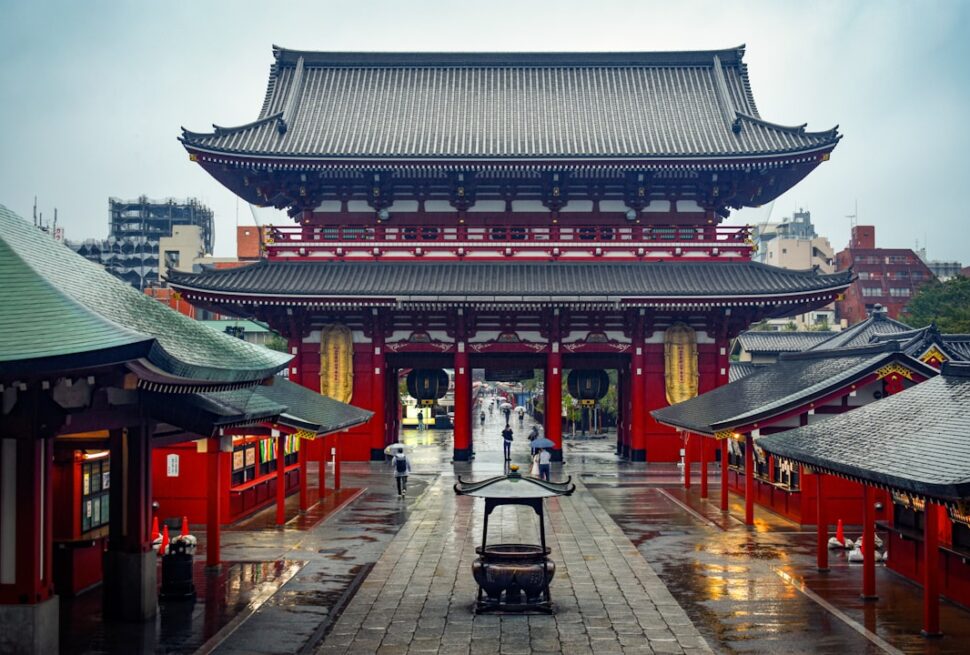
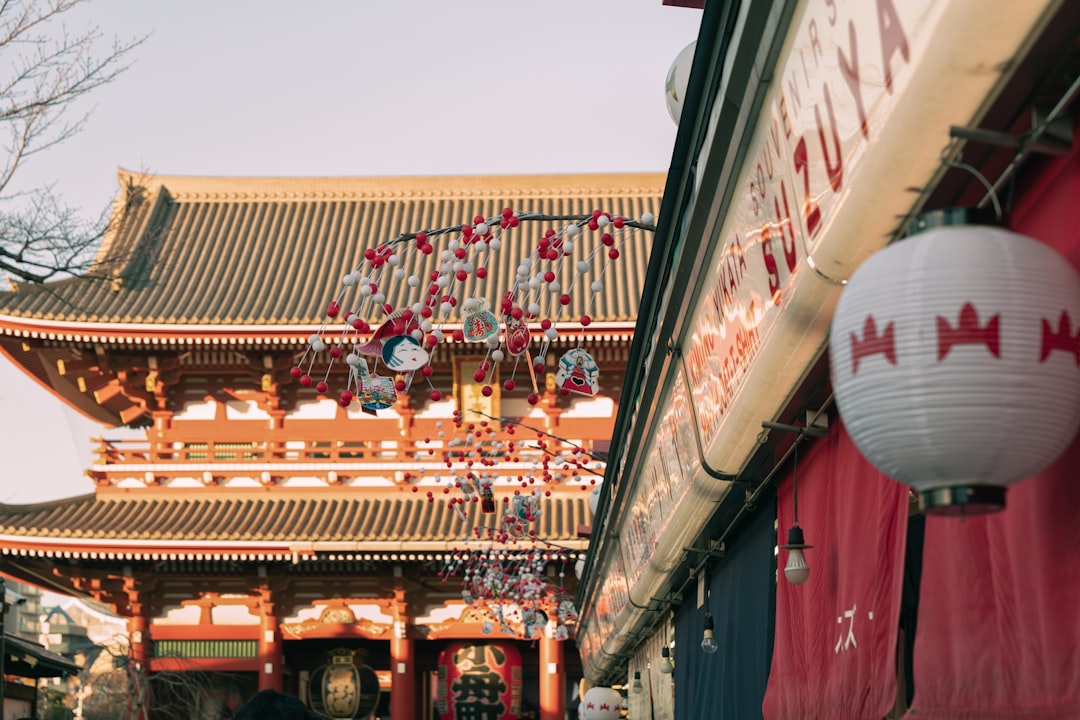
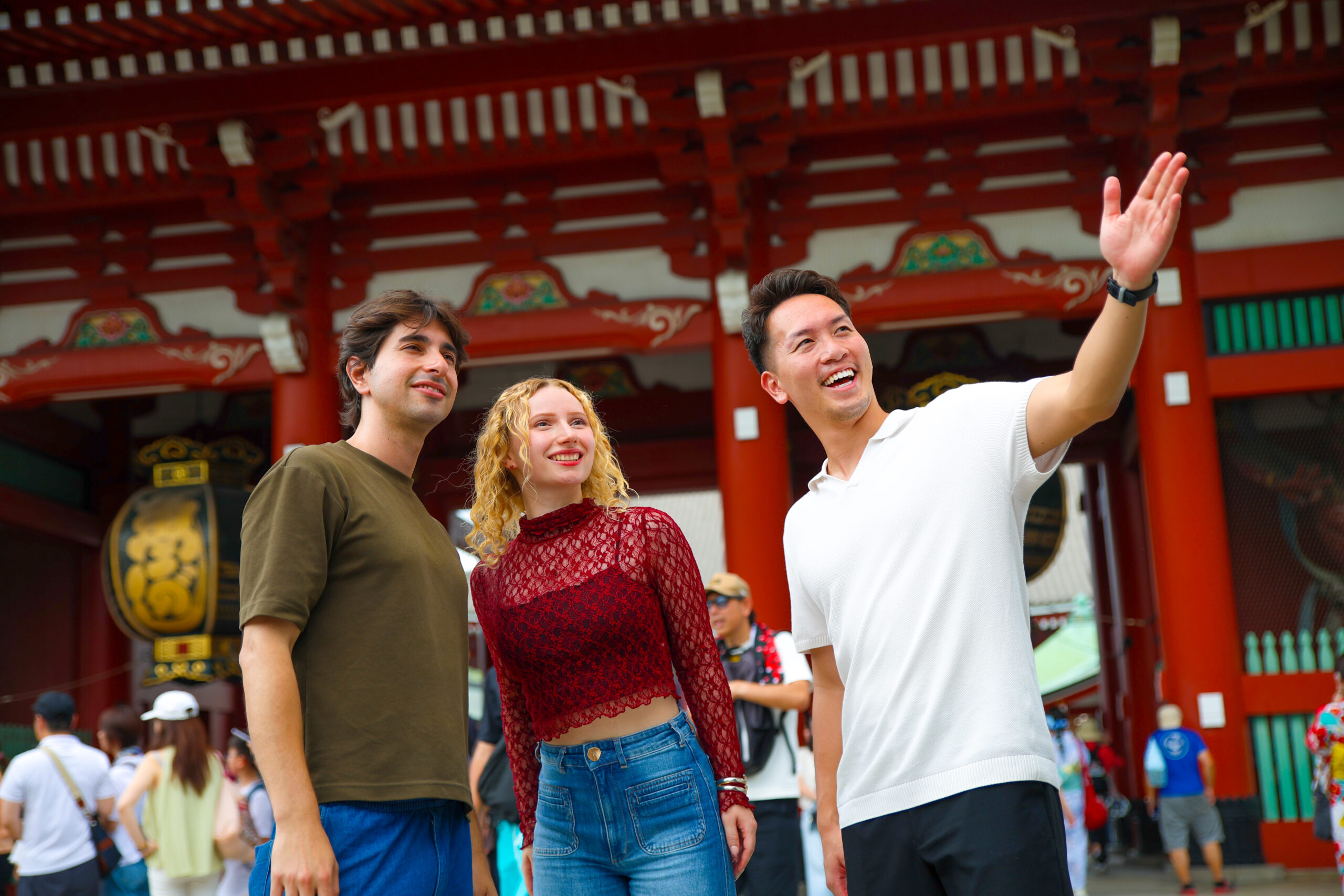
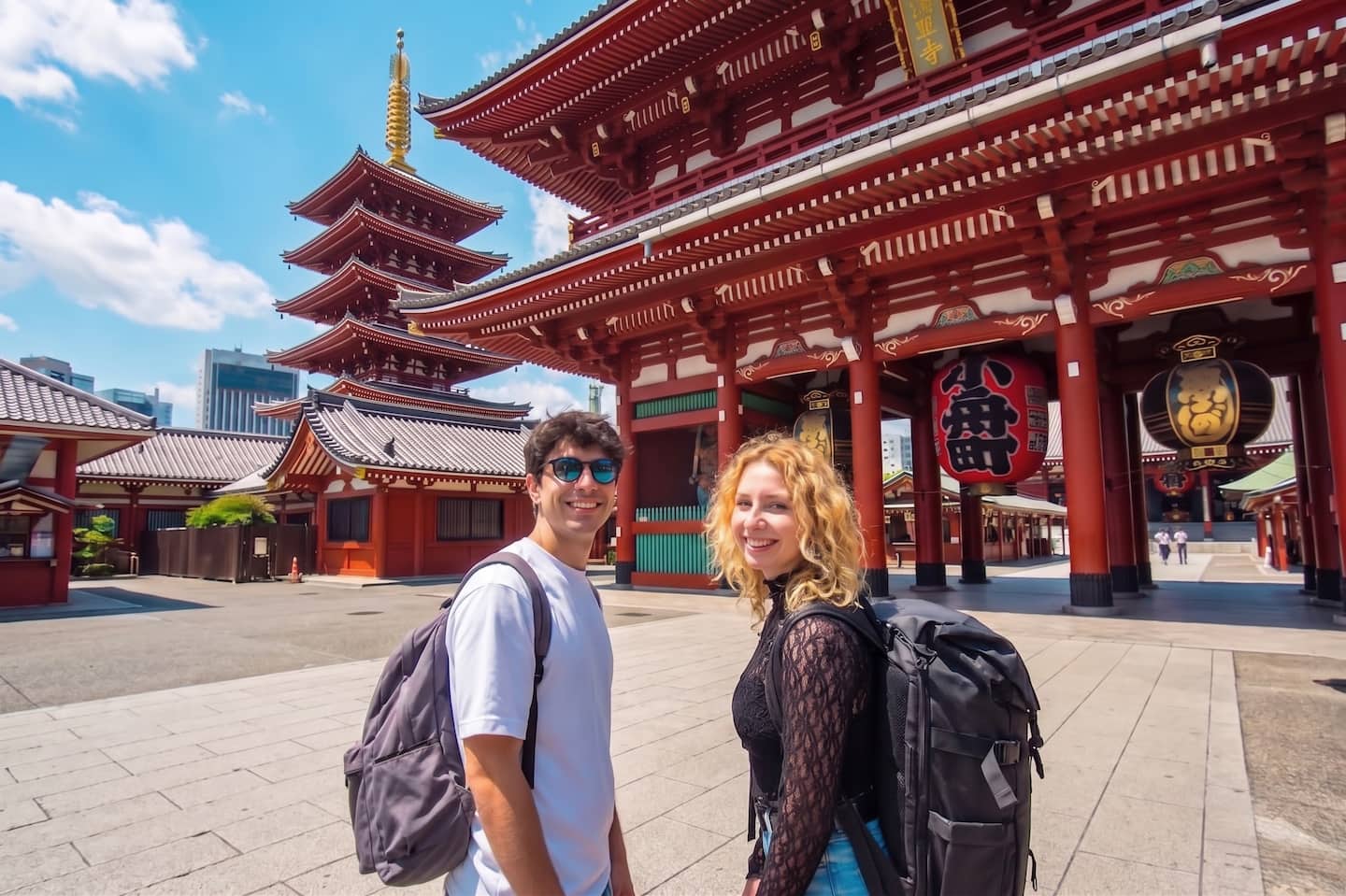
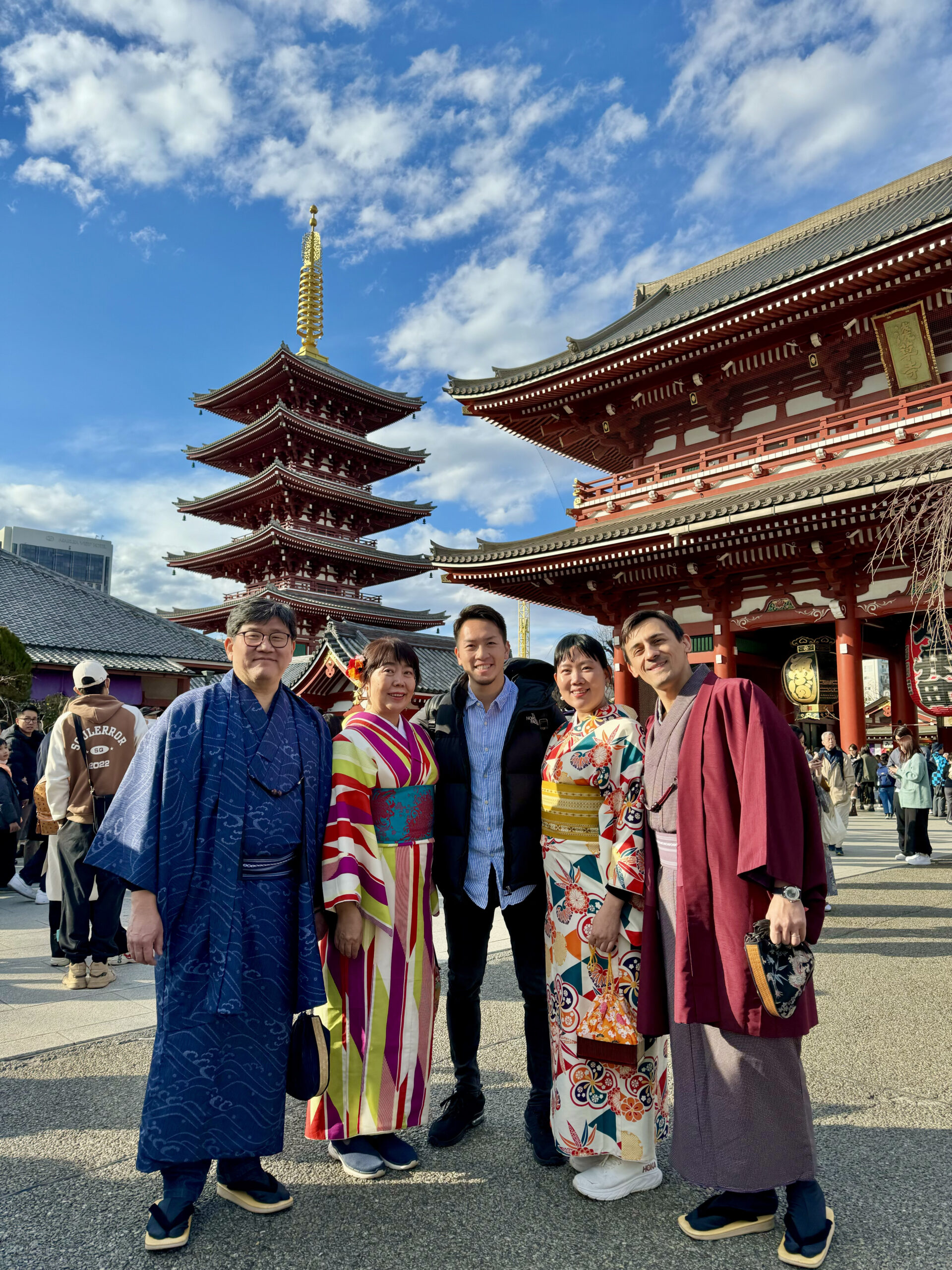
Asakusa is where we would stay if the point of the trip were old Tokyo. Early in the morning, Senso-ji belongs to neighbors walking dogs and office workers stopping at the main hall on their way to the station. By late morning, Nakamise is shoulder to shoulder.
Guests on our Asakusa walking tour who are staying in the neighborhood arrive at the meeting point beside Kaminarimon relaxed and on time. Those crossing from the west side of the city arrive having already spent part of the morning on a train. That difference shows in the first half hour.
Asakusa is not on the Yamanote Line. Even so, the Ginza Line, Asia’s oldest subway, opened in 1927, runs from here through Ueno and Ginza to Shibuya, and the Toei Asakusa Line connects on through services to both airports. Evenings are quiet, as the shopping streets close early and the neighborhood goes to bed before the rest of the city. For some travelers that is exactly the appeal.
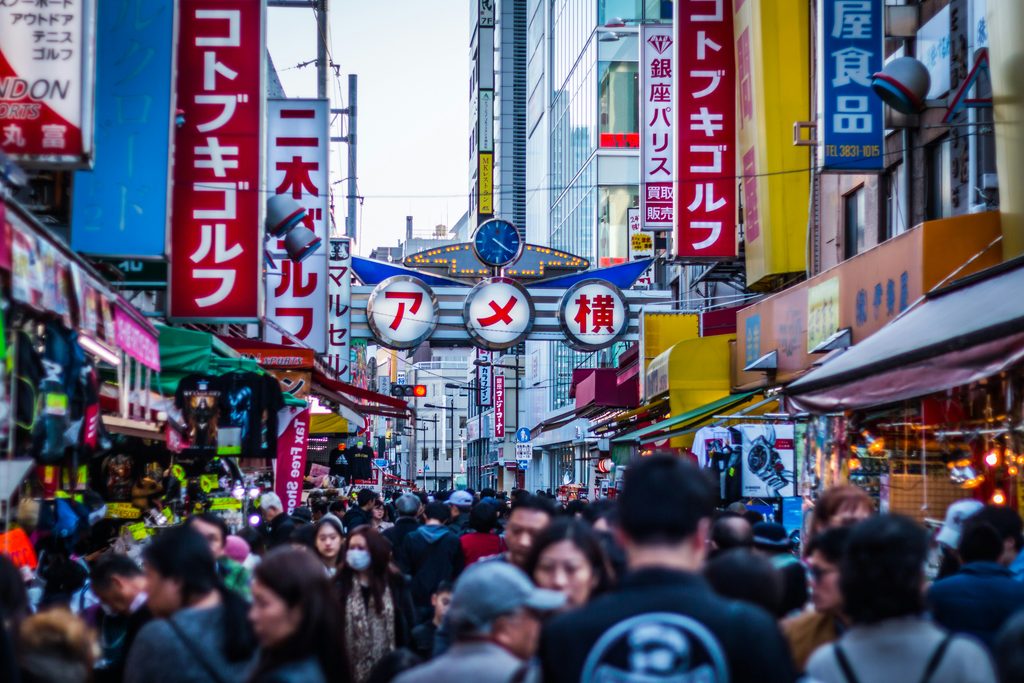
Ueno, three stops west on the Ginza Line, is the practical alternative. It has the Skyliner from Narita, Shinkansen platforms, the museums of Ueno Park, and the Ameyoko market running alongside the tracks. Hotels here are generally more affordable than in Marunouchi or Shibuya, and the area suits a first night after a late Narita arrival.
Roppongi, Toranomon, and Azabudai
Several of Tokyo’s recent luxury openings are here, in the tower developments of Toranomon Hills and Azabudai Hills, alongside the older Roppongi Hills and Tokyo Midtown. The Mori Art Museum sits at the top of Roppongi Hills, and the streets between the towers are calmer than the name Roppongi suggests.
None of these areas is on the Yamanote Line. For that reason we recommend them to repeat visitors, who already know the subway, and to families who want space. Rooms in the newer towers tend to be larger than the Tokyo norm, and that alone can decide it.
Matching the Area to Your Trip
The right neighborhood depends on what your mornings look like. Three kinds of trip cover most of the travelers we work with.
A First Visit of Four or Five Nights
Choose one base, on or near the Yamanote Line. We would pick Marunouchi or Ginza if you are continuing to Kyoto by train, and Shibuya if you want evenings with some life in them.
Moving hotels on a short stay costs half a day you do not have. Check-out, a cross-city ride with luggage, and a wait for the next check-in add up quickly.
A Week or Longer
Split it. Four nights on the west side, in Shibuya or Omotesando, and three in the east, in Asakusa or near Tokyo Station, gives you two different cities for the effort of one move.
Hotel front desks can arrange for your cases to be delivered to your next hotel, so with a day’s notice you can make the move carrying only a day bag. By contrast, dragging two large suitcases through Shinjuku Station at 9am is an experience nobody repeats voluntarily.
Families and Multi-Generational Groups
Space becomes the deciding factor, and it points toward Roppongi, Toranomon, or apartment-style hotels. Ueno is worth a look too. Ueno Park and its museums, including the National Museum of Nature and Science, give children somewhere to run between train rides.
With older parents in the group, the tiring part of a Tokyo day is rarely the sightseeing. It is the stairs, the transfers, and the search for an exit with an elevator. A private guide who meets you at the hotel and paces the day around the group removes most of that. On our private Tokyo day, the guide can start from your hotel anywhere in central Tokyo and adjust the route as the day goes.
Expert Tip
If you travel with large suitcases or older family members, check the exit map of your hotel’s nearest station before you book. Not every exit has an elevator, and in older subway stations the one that does may be at the far end of the platform from your hotel. Knowing the right exit number turns a difficult first arrival into an easy one.
Booking Details That Matter More Than Stars
A star rating tells you less in Tokyo than three details on the listing. These are the ones we check for every traveler before confirming a room.
Room Size
Tokyo hotel rooms are small by international standards, and most listings state the floor area in square metres. Read it. For two people with full-size suitcases, we look for at least 25 square metres. Below that, one case lives open on the bed for the whole stay.
The Accommodation Tax
Tokyo charges an accommodation tax on hotel and ryokan stays, collected by the property. For stays up to 31 March 2027, it is ¥100 per person per night on room rates from ¥10,000 to under ¥15,000, and ¥200 at ¥15,000 and above. Rates under ¥10,000 are not taxed.
From 1 April 2027 the system changes to 3% of the room rate, with stays under ¥13,000 per person per night exempt, and vacation rentals are brought in for the first time. For a longer family stay in a high-end hotel, the difference is noticeable, though rarely large enough to change where you book.
Arrival Day and Luggage
Check-in in Tokyo is usually mid-afternoon, and a morning arrival leaves hours to fill. Hotels will hold your bags before check-in. Better still, send them.
At Narita, Yamato Transport’s airport counters offer same-day delivery to Tokyo hotels for bags dropped off by 10:30am (9:50am at Terminal 3), and Haneda has a comparable service. The delivery time cannot be specified, so keep anything you need before evening in a day bag. You spend the first afternoon in the city with light hands and find the cases waiting at the hotel.
Where to Stay in Tokyo: Frequently Asked Questions
Which area should first-time visitors stay in?
For most first visits we recommend the Marunouchi and Ginza area around Tokyo Station, or Shibuya. Both are on the Yamanote Line with strong subway connections, which keeps most first-visit sights within a short ride. Choose Asakusa instead if traditional Tokyo matters more to you than nightlife, and accept a longer ride to the west side of the city.
Is it better to stay in Shinjuku or Shibuya?
For a first visit, Shibuya. It is easier to navigate on foot, sits next to Harajuku, Omotesando, and Meiji Shrine, and connects directly to Ginza and Asakusa on the Ginza Line. Shinjuku is the better choice when your plan includes day trips to Hakone or the Mount Fuji area, which leave from its station and bus terminal.
Should I change hotels during a week in Tokyo?
With seven nights or more, yes. Splitting the stay between a western base such as Shibuya and an eastern one such as Asakusa or Tokyo Station cuts daily travel time and shows you two different sides of the city. With five nights or fewer, stay put, because the move costs more time than it saves.
Related Tours
Conclusion
Pick the station first. Decide which two or three places matter most to you, route them from each candidate hotel on a weekday morning, and let the shortest total win. The neighborhood’s character is the tie-breaker, not the starting point.
If you are still undecided, choose Tokyo Station for trips that continue by Shinkansen and Shibuya for trips that stay in the city. Book early for cherry blossom season in late March and early April, and for the autumn leaves in late November, when the well-located rooms go first.
Plan Your Japan Trip with Local Experts
Our team has guided 40,000+ travelers across Japan. Tell us about your trip and we’ll get back to you within 24 hours.