In this article:
- How the Route Works Since 2024
- Tickets, Passes, and What the Trip Costs
- Luggage, Seats, and the Ride Itself
- Your First Hours in Kanazawa
- Kyoto to Kanazawa: Frequently Asked Questions
Introduction
Getting from Kyoto to Kanazawa takes about two hours by train, and few two-hour journeys in Japan change the scenery so completely. You leave a city of temples and wooden townhouses and arrive, before lunch, in a city of gardens, gold leaf, and teahouse streets that were never bombed and never rebuilt.
The route changed in 2024. For decades the Thunderbird ran straight through from Kyoto to Kanazawa, and a lot of travel advice online still describes it that way. Now every passenger changes trains at Tsuruga, a port town on the Sea of Japan coast, and the second half of the trip is on the Hokuriku Shinkansen.
None of this is difficult. Still, a transfer you did not plan for, with two large suitcases and eight minutes on the clock, is a poor way to start a stay in Kanazawa. What follows is how we set up this journey for the travelers we work with, and why.
How the Route Works Since 2024
The journey is two trains, one change, and roughly two hours door to platform.
On 16 March 2024 the Hokuriku Shinkansen was extended south from Kanazawa to Tsuruga in Fukui Prefecture. On the same day, the Thunderbird limited express from Osaka and Kyoto was cut back to terminate at Tsuruga. There is no longer a through train between Kyoto and Kanazawa, and there is no way to avoid the change.
Thunderbird to Tsuruga
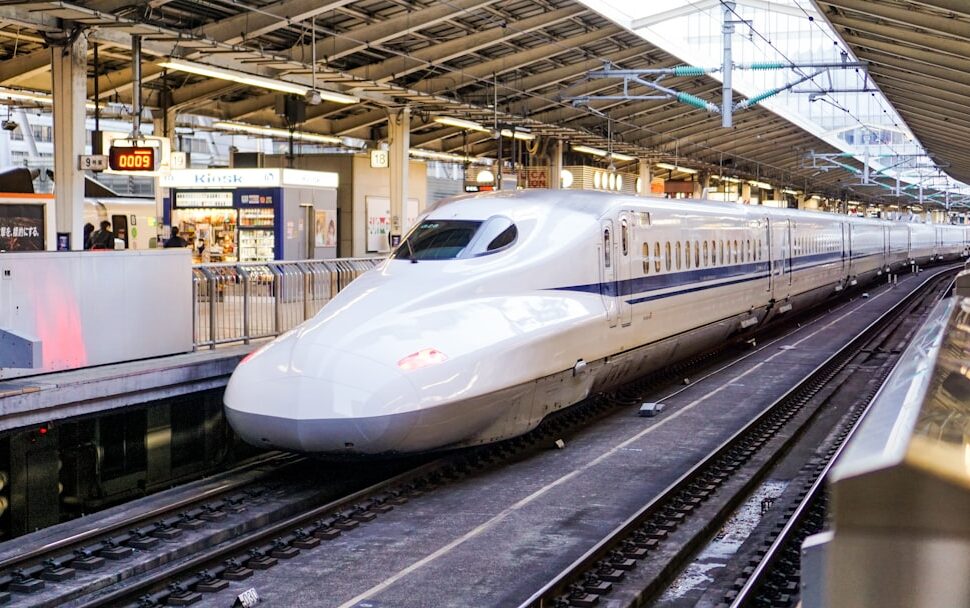
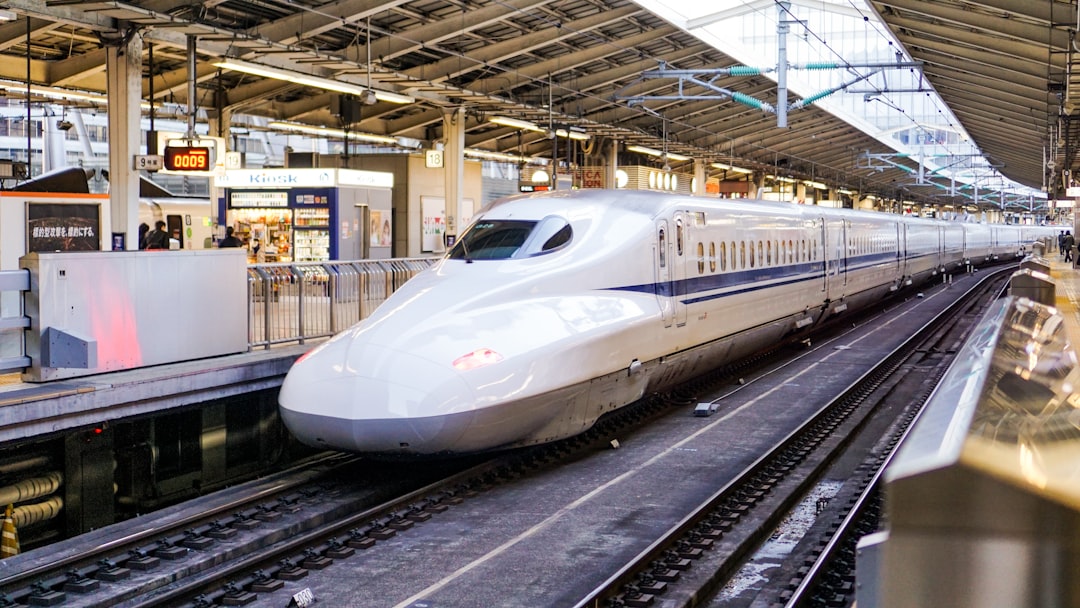
The Thunderbird leaves Kyoto Station from the JR platforms and takes a little under an hour to reach Tsuruga. It runs north along the western shore of Lake Biwa on the Kosei Line, then climbs through the hills to the coast.
Every seat on the Thunderbird is now reserved. There are no non-reserved cars, so a seat reservation is part of the ticket rather than an optional extra. If you board without one, expect to pay the difference on board and hope a seat is free.
Trains run through the day at frequent intervals, with the Thunderbird timed to connect with a shinkansen at Tsuruga. In practice you choose the Thunderbird departure you want from Kyoto and the connecting shinkansen follows from it.
The Change at Tsuruga
Tsuruga Station was rebuilt around this transfer. The Thunderbird arrives at conventional platforms on the ground level, and the shinkansen platforms sit on the third floor of the new station building, well above the street.
Between them is a second-floor concourse with transfer gates. You go up, through the gate, and up again. Signage is in English, the route is short, and the connection is scheduled with this walk in mind.
Where people come unstuck is not the distance but the luggage. Escalators handle one suitcase per person comfortably. Two cases each, plus a daypack, is when the change stops feeling routine and starts feeling rushed.
Tsuruga to Kanazawa by Shinkansen
The shinkansen covers the rest of the distance in about an hour, stopping at Fukui and a few smaller stations before Kanazawa. Sit back. This is the easy half.
A through ticket from Kyoto covers both trains, and you will hold a separate seat reservation for each. Keep both tickets in hand until you exit at Kanazawa. The gates there need the full set.
The Highway Bus Alternative
Highway buses run between Kyoto Station and Kanazawa Station, operated by companies including West JR Bus and Kintetsu Bus. The ride takes around four hours, roughly double the train, and fares vary widely with operator, seat type, and date.
We rarely recommend the bus to the travelers we work with. The saving is real, but it costs half a day. The one point in its favour is the luggage hold under the bus, which spares you carrying cases through a transfer. For a traveler on a Japan Rail Pass, the bus saves nothing at all.
Expert Tip
Choose a Thunderbird that leaves Kyoto mid-morning rather than the first train of the day. Kyoto Station at 7am on a weekday is crowded with commuters, and a late-morning departure puts you in Kanazawa around lunchtime, which is when Omicho Market is at its most useful and the light in Kenroku-en is still good for the afternoon.
Tickets, Passes, and What the Trip Costs
There are three sensible ways to pay for this trip, and the right one depends almost entirely on what else you are doing in Japan.
A Regular Ticket
A standard reserved-seat ticket from Kyoto to Kanazawa, covering both the Thunderbird and the shinkansen, costs roughly ¥7,700 for an adult. Reserved seat charges shift slightly with peak and off-peak seasons, so treat that as a guide rather than a fixed number.
You can buy it at the ticket machines or the ticket office at Kyoto Station, or through JR West’s online reservation service before you travel. Buying online a few days ahead is what we suggest in cherry blossom season, Golden Week, and the autumn leaf weeks in November, when morning trains fill up.
The Hokuriku One-way Ticket
JR West sells a discounted one-way ticket for foreign visitors that covers the Thunderbird and the Hokuriku Shinkansen. From Kyoto to Kanazawa it costs ¥6,500 for an adult and ¥3,250 for a child, with reserved seats in ordinary cars included.
The catch is where you buy it. The ticket is sold as an exchange order through overseas travel agencies and cannot be bought inside Japan. You then exchange it in Japan, with your passport, within three months.
For a traveler who is only making this one journey and plans ahead, it is the cheapest train option. For anyone who reads about it on the platform at Kyoto, it is already too late.
Japan Rail Pass and the Kansai-Hokuriku Area Pass
The nationwide Japan Rail Pass covers both the Thunderbird and the Hokuriku Shinkansen, so the journey costs nothing extra. It is rarely worth buying a national pass for this trip alone, but if you already hold one, this is one of the easier routes to use it on.
JR West’s Kansai-Hokuriku Area Pass is the regional option. It costs ¥19,000 for seven days and covers the Thunderbird, the Hokuriku Shinkansen between Tsuruga and Joetsu-Myoko, the Haruka airport express, and JR West lines across Kansai and Hokuriku. It is available only to foreign passport holders visiting as temporary visitors.
Our view is that the area pass earns its price when the trip is shaped like a loop. Kansai Airport into Kyoto on the Haruka, up to Kanazawa, a day across to Toyama, and back to Osaka will use it well. A single Kyoto to Kanazawa journey will not.
Luggage, Seats, and the Ride Itself
The train is the easy part. The bags are what shape the day.
Sending Bags Ahead
Our strongest single recommendation for this route is to send large suitcases from your Kyoto hotel to your Kanazawa hotel by luggage courier. Most hotels in Kyoto arrange this at the front desk, and bags sent in the morning normally arrive the following day.
This means you ride the Thunderbird with a daypack, walk the change at Tsuruga in a couple of minutes, and arrive in Kanazawa free to start the afternoon rather than hunting for a coin locker. Our guide to luggage forwarding in Japan covers how the service works and what it costs.
If you must travel with suitcases, the Thunderbird has overhead racks and limited floor space, and the shinkansen has larger racks and some space at the ends of cars. Board early and settle the bags before the aisle fills.
Which Side to Sit On
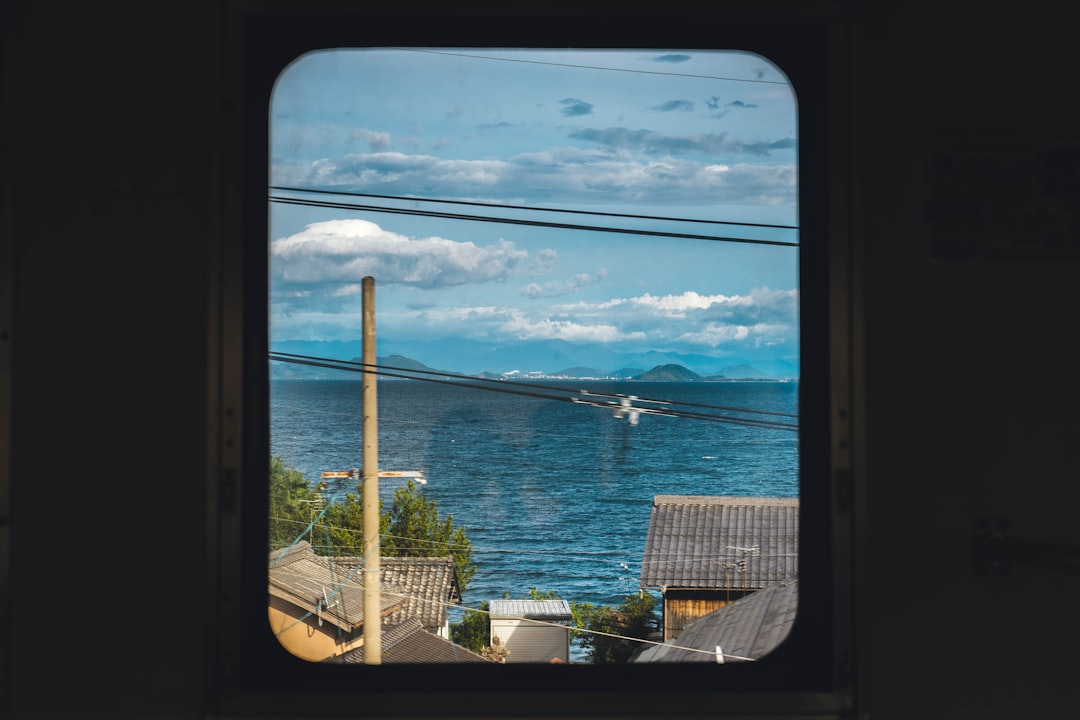
Heading north from Kyoto, the Kosei Line runs along the west shore of Lake Biwa, so the water is on the right-hand side of the train. On a clear morning the lake is wide and flat and pale, with the hills of the eastern shore behind it.
When you reserve, ask for a window seat on the right. It costs nothing and it turns the first half hour into the best part of the ride.
Wind, Snow, and Delays
The Kosei Line is exposed. Strong winds off the mountains west of the lake can slow or suspend services, and on those days the Thunderbird is sometimes rerouted around the east side of the lake via Maibara, which adds time.
Winter brings snow to the Hokuriku side, and Kanazawa gets a lot of rain in every season. Delays of this kind are uncommon but not rare. If you have a timed dinner or tour in Kanazawa on arrival day, leave an hour of slack.
Expert Tip
If the Thunderbird runs late and you miss your connection at Tsuruga, go to the staffed transfer gate rather than a ticket machine. Staff there can arrange a seat on a later shinkansen. Your original train will not wait for you, so do this before heading upstairs.
Your First Hours in Kanazawa
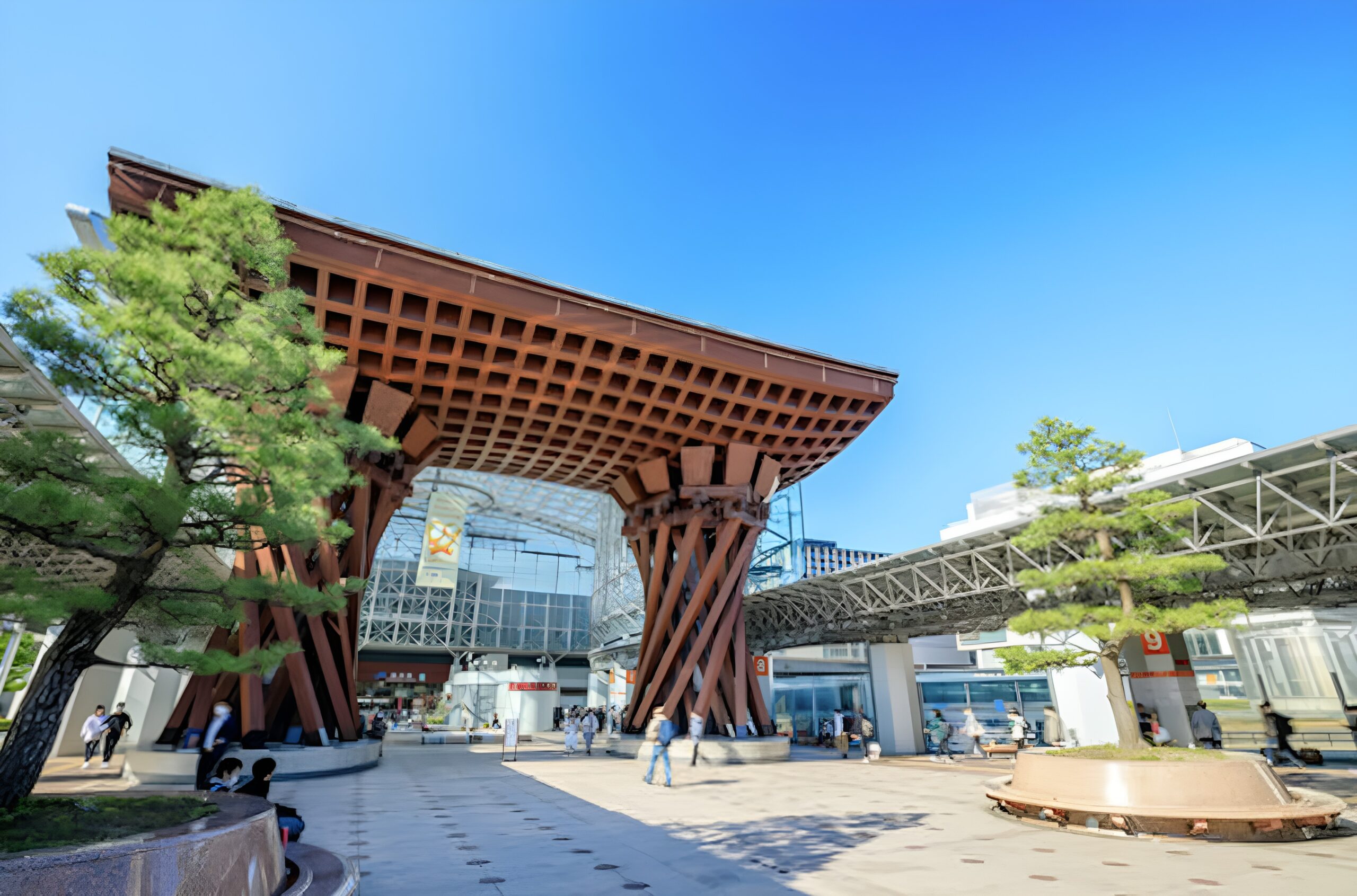
Kanazawa Station is a good place to arrive. The east exit opens under the Tsuzumi-mon, a huge wooden gate modelled on a Noh drum, set in front of a glass dome, and it tells you in one glance that this city takes craft seriously.
Getting Out of the Station
The historic centre is a short bus ride from the station. The loop buses leave from the east exit and circle past Omicho Market, Kenroku-en, and the Higashi Chaya district, and a one-day bus pass covers most local routes. Taxis wait at the same exit and are reasonable for three or four people.
Once you are in the centre, most of Kanazawa is walkable. Kenroku-en and Kanazawa Castle face each other across a road that was once a moat. The teahouse streets of Higashi Chaya and the samurai lanes of Nagamachi are each a short walk from there.
Our longer guide to Kanazawa’s samurai districts, gold leaf, and gardens goes into each area in depth.
Day Trip or Overnight
Kanazawa can be done as a day trip from Kyoto. Two hours each way leaves you six or seven hours on the ground if you leave mid-morning, which is enough for Kenroku-en, Omicho Market, and one of the old districts.
We still recommend at least one night. Kanazawa after dark is a different city: the lanterns come on in Higashi Chaya, the day visitors leave, and the counter restaurants start serving crab, sweet shrimp, and yellowtail from the Sea of Japan. Most of the travelers we guide there stay one or two nights.
If you arrive around lunchtime, our four-hour Kanazawa walking tour is timed well for a first afternoon. It meets at the Kenjotei tea house beside Kenroku-en and covers Omicho Market, the garden, and the samurai and teahouse quarters on foot. For a longer day built around your interests, the private tour runs five hours from the Kodatsuno Gate of Kenroku-en and can include the 21st Century Museum of Contemporary Art and a gold leaf workshop.
Kyoto to Kanazawa: Frequently Asked Questions
Is there still a direct train from Kyoto to Kanazawa?
No. Since 16 March 2024 the Thunderbird terminates at Tsuruga, and every passenger changes there to the Hokuriku Shinkansen. The connection is timed and the walk between platforms is short, so the total journey still takes about two hours. Any guide describing a single through train was written before the change.
Can I buy the Hokuriku One-way Ticket at Kyoto Station?
No. JR West sells it only as an exchange order through overseas travel agencies, and it cannot be purchased in Japan. You exchange the order at a JR West ticket office on arrival, with your passport. If you are already in Japan without one, a regular ticket or the Kansai-Hokuriku Area Pass are your options.
Is Kanazawa worth a day trip from Kyoto?
It works, but it is a compromise. A mid-morning departure gives you roughly six or seven hours in the city, enough for the garden, the market, and one old district at a steady pace. You will miss Kanazawa in the evening, which is when the teahouse streets are at their best, so we suggest a night if your itinerary allows. Our two-week Japan itinerary shows one way to fit it in.
Related Tours

Conclusion
Book the Thunderbird for mid-morning, ask for a window on the right, and send your suitcases ahead the day before. Those three decisions do more for this journey than any choice of ticket.
Then decide on the ticket by looking at the rest of your trip, not this one leg. If you are making a single journey and planning from home, the Hokuriku One-way Ticket is the cheapest route. If you are looping through Kansai and Hokuriku, the area pass pays for itself. Otherwise a regular ticket bought a few days ahead is fine.
Kanazawa deserves more than an afternoon. Arrive by lunch, give the city at least one evening, and leave the day after with the Sea of Japan still on your mind.
Plan Your Japan Trip with Local Experts
Our team has guided 40,000+ travelers across Japan. Tell us about your trip and we’ll get back to you within 24 hours.