In this article:
- What Takkyubin Is
- How to Send a Bag
- Costs, Sizes, and Timings
- Filling In the Waybill
- The Shinkansen Rule
- Luggage Forwarding in Japan: Frequently Asked Questions
Introduction
The single most useful piece of advice we give people travelling in Japan has nothing to do with where to go.
Hand your suitcase to the hotel front desk in Tokyo in the morning, take the Shinkansen with a daypack, spend the afternoon in Kyoto walking around Higashiyama unencumbered, and find the case in your room when you check in that evening. It costs roughly ¥2,000 to ¥3,000.
Japanese travelers do this as a matter of course. Foreign visitors overwhelmingly do not, and instead drag large cases up station staircases, through Kyoto’s narrow buses, and into ryokan with no lift. There is no reason for it.
What Takkyubin Is
A domestic door-to-door parcel network, used for everything, and unusually good.
The Name
Takkyubin is Yamato Transport’s trademark and is used colloquially for the whole category. The generic term is takuhaibin, and the equivalent services from other carriers have their own names.
You will be understood using either word. Hotel staff will also understand “luggage delivery” and “takkyubin” in English.
The Carriers
Yamato Transport, identifiable by the black cat carrying a kitten in its mouth, is the largest and the one most hotels use.
Sagawa Express and Japan Post’s Yu-Pack are the other two national networks. All three are reliable and prices are broadly comparable.
You do not choose the carrier in practice. You use whichever one your hotel or the counter in front of you works with.
Why It Works So Well
Next-day delivery is the standard across most of the country for parcels sent before the afternoon cutoff. Tracking is real time. Loss is rare enough that Japanese people do not think about it.
Delivery is to a named person at an address, with redelivery available and time slots selectable. Hotels receive parcels for guests as routine.
The network handles a staggering volume — this is how a large proportion of Japanese domestic commerce moves — and the reliability follows from that scale.
Expert Tip
Send the bag the day before you travel, not the morning of. Hotel-to-hotel between major cities is usually next-day, and a bag handed in at nine in the morning generally arrives at the destination hotel the following afternoon — not that same evening. The pattern that works is: hand it in on your last full day, travel the next morning with a daypack, and the case is waiting or arrives shortly after you do. Same-day services exist between some hotels but are limited and need checking in advance.
How to Send a Bag
Three routes, in order of how easy they are.
The Hotel Front Desk
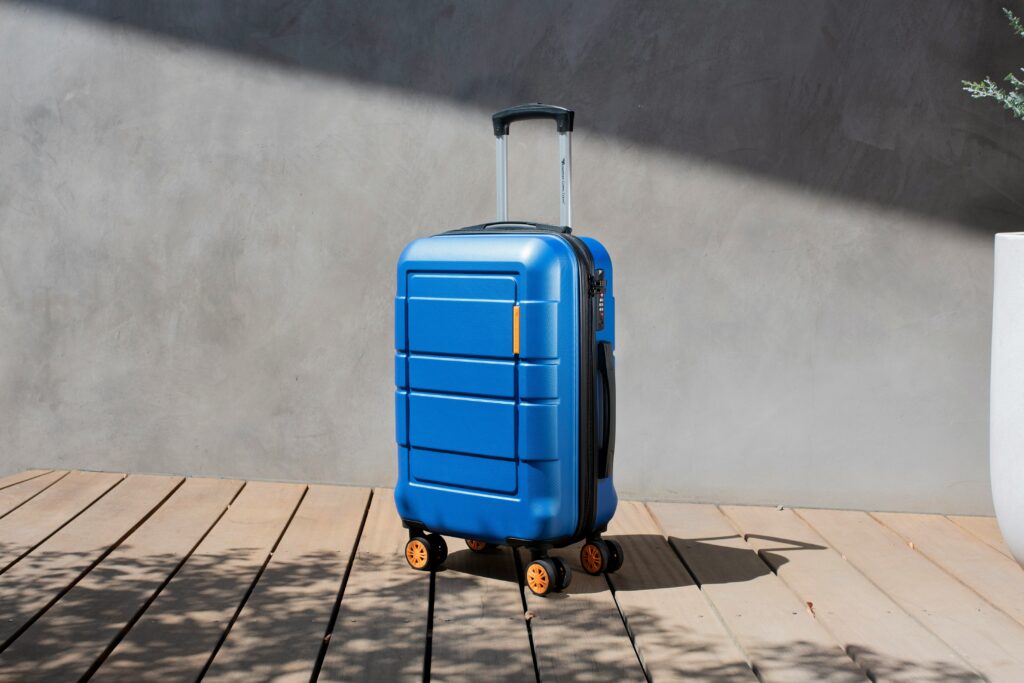
The simplest, and what we recommend for almost everyone. Every business hotel and ryokan in Japan handles this daily.
Tell the desk you want to send a bag, give them the destination hotel’s name and your arrival date, and they will produce the waybill, help you fill it in, weigh the bag, take payment, and hand it over.
Payment is usually cash and sometimes chargeable to the room. Do it the evening before or first thing in the morning, before the daily collection.
Ask what time the collection is. Missing it costs you a day.
Airport Counters
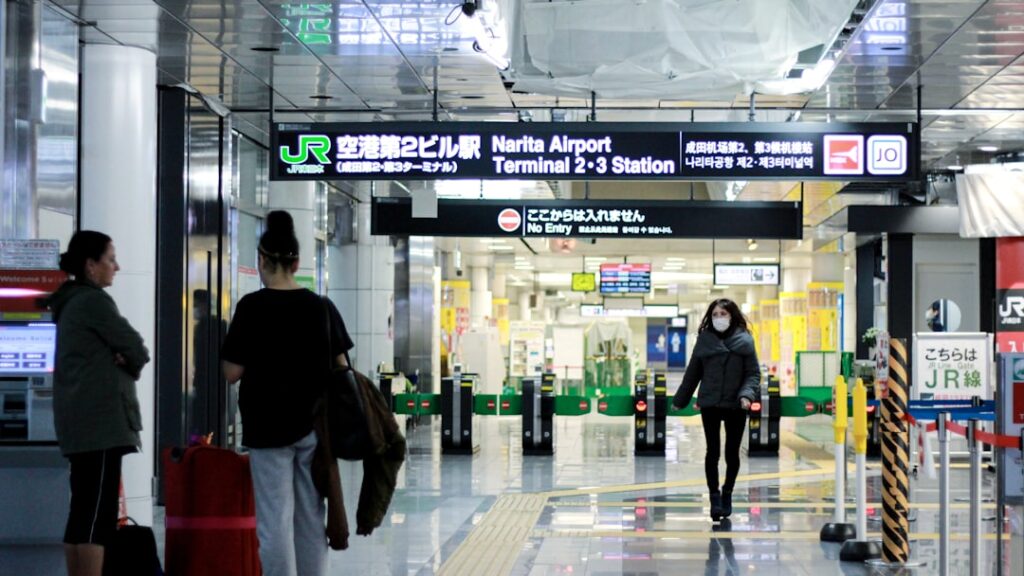
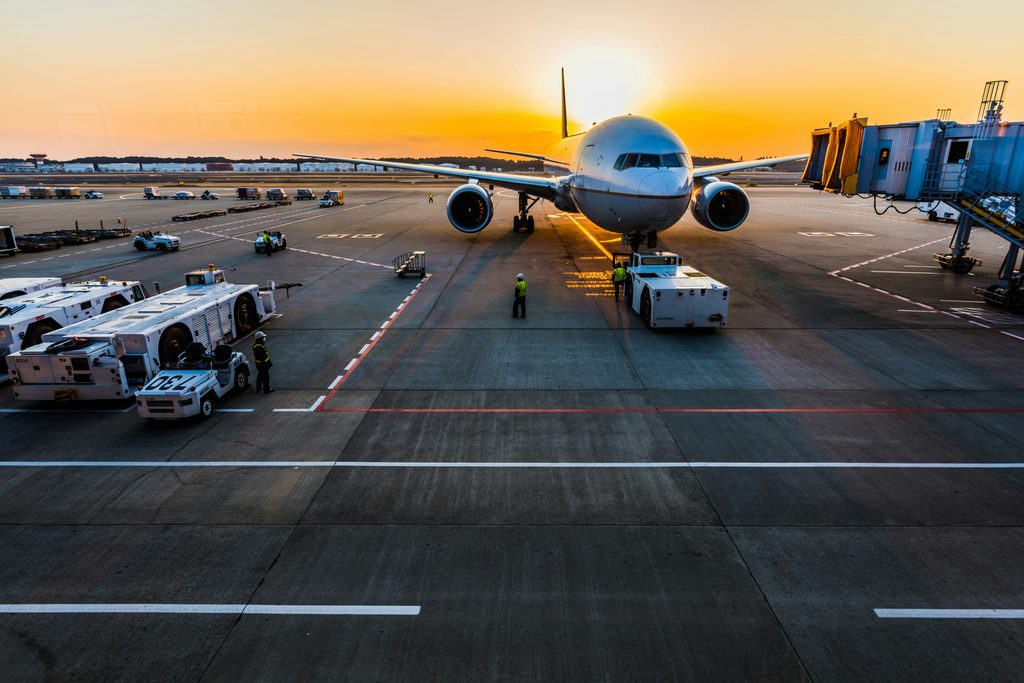
Narita, Haneda, Kansai, and the other international airports have forwarding counters in the arrivals halls, sending to any address in Japan.
This is how to avoid carrying a case on the Narita Express at all: land, clear customs at Narita or Haneda, hand the bag over at the counter, and take the train into Tokyo with hand luggage.
The same counters handle the reverse — sending a case to the airport for collection before departure — and the buffer for that direction is the thing people get wrong. See below.
Convenience Stores
Most convenience stores accept parcels, with the carrier depending on the chain.
This works for boxes and is awkward for a large suitcase, which usually needs to be enclosed or at least have the waybill firmly attached. Staff at a busy konbini are also less able to walk a non-Japanese speaker through the form than a hotel desk is.
Use this route for sending shopping home to yourself, not for your main case.
Station Counters
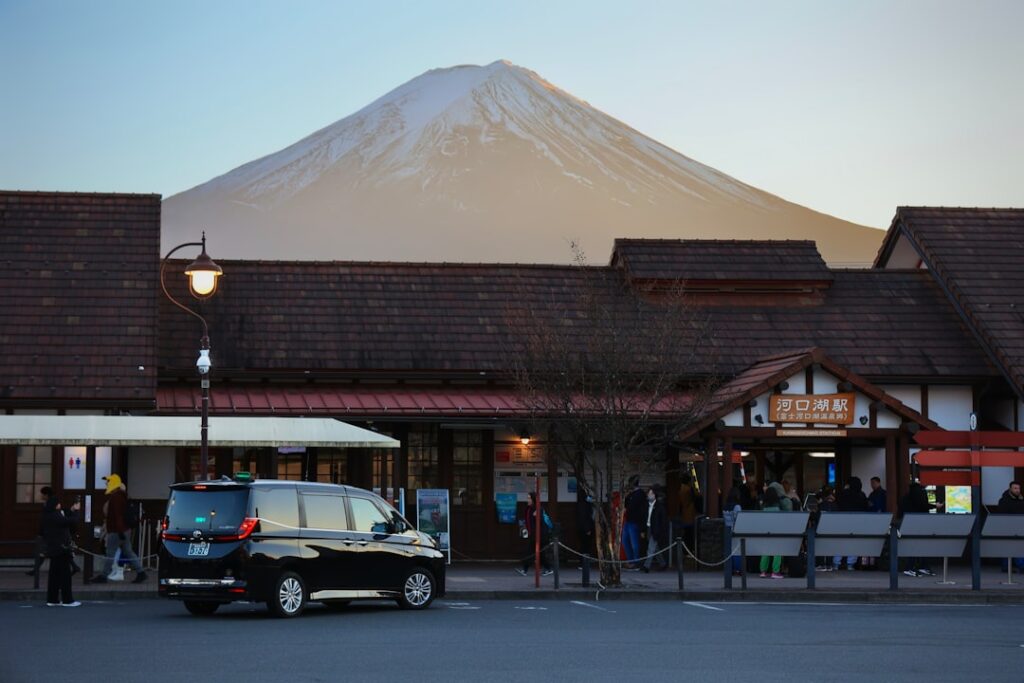
Major stations including Kyoto have luggage service counters offering same-day delivery to hotels within the city, with morning cutoffs.
This is the tool for the arrival day: get off the Shinkansen, hand the case over at the station, sightsee, and find it in your room. Cutoffs are usually late morning, so it works for an early arrival and not an afternoon one.
Costs, Sizes, and Timings
Cheaper than most people assume, and priced on size rather than weight.
How Pricing Works
Japanese carriers price by size tier, calculated as the sum of the three dimensions in centimetres — length plus width plus depth. Tiers run in twenty-centimetre steps, with a weight cap attached to each.
A large 28-inch suitcase typically falls in the 140 or 160 tier. The distance between origin and destination then determines the rate.
Tokyo to Kyoto for a large case sits broadly in the ¥2,000 to ¥3,000 range. Shorter distances cost less; Tokyo to Okinawa or Hokkaido costs more.
How Long It Takes
Next day between and within the main island for anything sent before the afternoon cutoff. Two days to Hokkaido, Okinawa, and remote areas.
Delivery time slots can be selected, typically in two-hour windows through the day and evening.
New Year, Golden Week, and the August holiday period slow the network. Add a day during those.
The Airport Buffer
Sending a bag to an airport for collection before a flight requires more lead time than hotel-to-hotel, and this is where people get caught out.
Allow two to three days rather than one, and confirm the exact cutoff with whoever is sending it. The bag has to reach the airport’s storage facility and be retrievable at your terminal, which is not the same as being delivered to a hotel.
Airlines will not wait. If the timing is tight, take the case with you.
What Cannot Be Sent
Cash, valuables, and important documents — passports above all. Perishables and anything requiring temperature control unless using a chilled service. Dangerous goods, aerosols, and lithium batteries beyond stated limits.
Carriers state their own exclusion lists and the liability caps are modest. Keep your passport, medication, chargers, and anything you would be genuinely upset to lose in the bag you are carrying.
Filling In the Waybill
The form — denpyo — is in Japanese, and hotel staff will fill it in for you. It helps to know what it needs.
What Goes on It
Recipient: the hotel’s name, full address, and telephone number. Then, critically, your own name as the guest and your check-in date, written in the recipient field.
A hotel receiving a parcel addressed to a name it has no booking for will refuse it. Writing “guest arriving 14 May: SMITH” alongside the hotel name solves this entirely.
Sender: your current hotel, or your name with a contactable number. Contents: “clothing” or “personal effects” is sufficient.
Getting the Address Right
The most reliable method is to have your destination hotel’s address in Japanese. Take a screenshot of it from the booking confirmation or the hotel’s Japanese-language website before you travel.
Hotel staff can look most addresses up, and having it saved removes the risk of a transcription error. Japanese addresses do not transliterate cleanly.
Call ahead if you are sending to a small ryokan or a minshuku, which may have limited staffing and specific instructions.
Tracking
Keep the tear-off portion of the waybill. It carries a twelve-digit tracking number.
Yamato and the other carriers have English tracking pages. Status updates in real time, and you can generally see the bag arrive at the destination depot before it reaches the hotel.
Photograph the slip as well as keeping it. It is a small piece of paper in a week of small pieces of paper.
Expert Tip
Pack a soft overnight bag inside your suitcase before you leave home. The whole method depends on being able to separate one night’s necessities from the main case in five minutes — a change of clothes, toiletries, medication, chargers, and your documents. Travelers who forward luggage without this end up unpacking a large case in a hotel lobby, and after doing it once they stop forwarding luggage and go back to dragging the case up station stairs.
The Shinkansen Rule
There is a formal rule about large baggage on bullet trains, and it makes forwarding close to mandatory for big cases on certain routes.
The Oversized Baggage Reservation
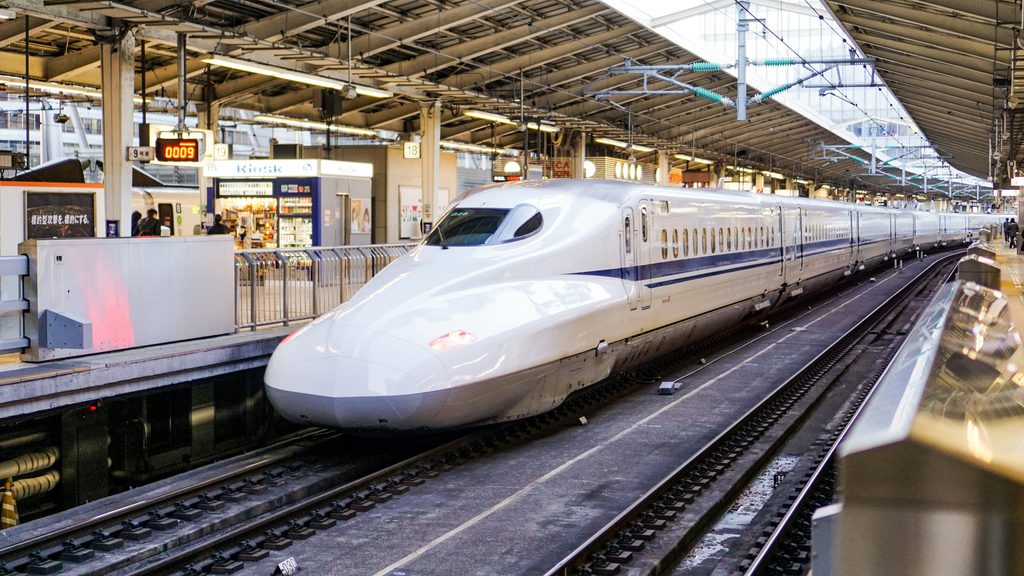
On the Tokaido, Sanyo, and Kyushu Shinkansen — which covers Tokyo, Nagoya, Kyoto, Osaka, Hiroshima, and Hakata — baggage whose three dimensions total between 160 and 250 centimetres requires an advance reservation for a seat with a designated oversized baggage space.
The reservation is free if made when booking. Boarding with such a bag without one incurs a fee and staff will direct you to store it elsewhere.
Baggage over 250 centimetres total is not permitted at all.
What This Means in Practice
A large checked suitcase frequently exceeds 160 centimetres in combined dimensions. Measure yours before assuming otherwise.
The designated spaces are at the rear of certain carriages and there are not many of them. On busy trains they book out, which means your seat choice becomes constrained by your luggage.
Forwarding the case removes the problem entirely and costs roughly the same as a Shinkansen bento.
Local Transport
Kyoto’s city buses are the other common problem — crowded, with narrow aisles, and genuinely difficult with a large case. The city has run campaigns discouraging large luggage on buses for years.
Tokyo’s stations have long transfers, and while lifts exist they are often at the far end of a platform and busy.
Many ryokan and older accommodation have stairs and no lift. This is not a reason to avoid them; it is a reason to send the case ahead.
Luggage Forwarding in Japan: Frequently Asked Questions
Will a hotel hold my bag if it arrives before I check in?
Yes, routinely, and this is the standard arrangement. Hotels receive guest luggage in advance every day and store it until check-in. What matters is that the waybill carries your name as the guest and your check-in date alongside the hotel address, so the front desk can match it to a booking — a parcel addressed only to the hotel with an unrecognised name may be refused. Small ryokan and minshuku with limited staffing appreciate a heads-up, so mention it when you book.
What does it cost to send a large suitcase from Tokyo to Kyoto?
Broadly ¥2,000 to ¥3,000 for a 28-inch case, depending on which size tier it falls into. Japanese carriers price by the sum of the three dimensions in centimetres rather than by weight, with tiers in twenty-centimetre steps and a weight cap on each. Shorter hops within a region cost less; Hokkaido and Okinawa cost more and take an extra day. For context, it is comparable to two station coffees and considerably less than the taxi you would otherwise take to avoid the stairs.
Can I use it with an Airbnb or an unstaffed apartment?
It is possible and it is the weak point of the system, because delivery requires somebody to receive the parcel. If nobody is there, the driver leaves a notice and you arrange redelivery, which requires a Japanese phone number and some ability to navigate the process. Some hosts will accept deliveries or have a lockbox arrangement — ask before sending, and get their answer in writing. Alternatives: send to a hotel you are staying at later in the trip, use a coin locker or a station luggage storage service for the day, or use a carrier’s convenience store pickup option where available.
Related Tours
Conclusion
Ask the front desk on your first morning in Japan, before you have had a chance to develop bad habits. Say the destination hotel and the date, hand over the case, and keep the slip.
Do it once and you will do it for the rest of the trip. The version of a Japan itinerary where you move between five cities with a daypack and the suitcase always arrives before you do is a fundamentally different holiday from the one where you plan every transfer around a staircase.
Plan Your Japan Trip with Local Experts
Our team has guided 40,000+ travelers across Japan. Tell us about your trip and we’ll get back to you within 24 hours.