In this article:
- Why Shibuya Ramen Is Its Own Category
- The Shibuya Bowls We Actually Send People To
- Machines, Queues, and How a Ramen Counter Works
- Timing Your Bowl: Lunch, Dinner, and the Late Shift
- Shibuya Ramen: Frequently Asked Questions
Introduction
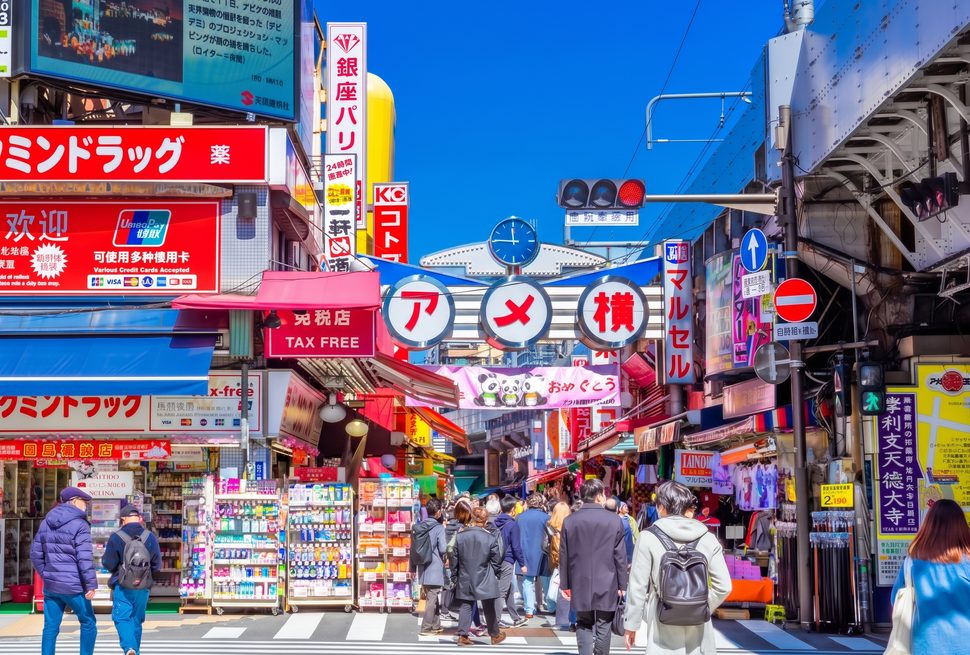
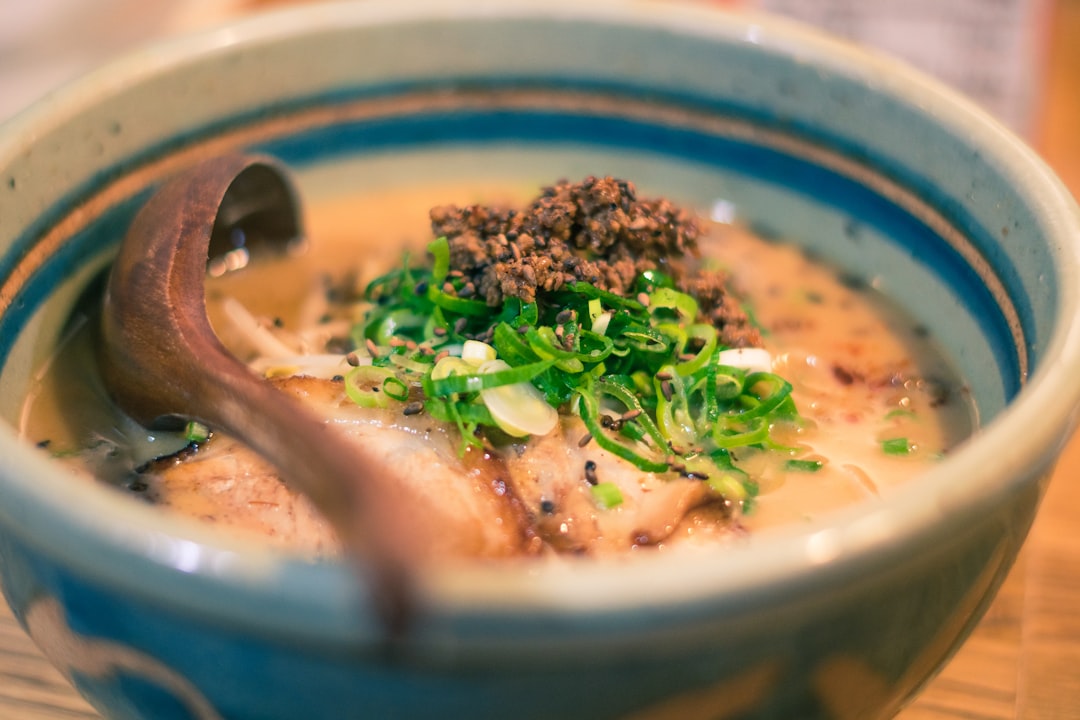
Almost every traveler eats their first bowl of Shibuya ramen within sight of the scramble crossing. However, almost every one of them could have eaten better. They just needed to walk three more minutes.
The geography explains it. Shibuya Station empties tens of thousands of people onto a small flat area. The businesses on that flat area pay for the footfall. They do not compete on the food. Walk uphill in any direction and the rents drop, the signage gets worse, and the ramen gets considerably better.
This is not a secret so much as a habit nobody has. We spend a lot of evenings in Shibuya with guests. At the end of the night, a question comes up most often. Guests ask where to eat before getting on the train. The answer is usually a shop they walked past twice that afternoon without registering that it existed.
Why Shibuya Ramen Is Its Own Category
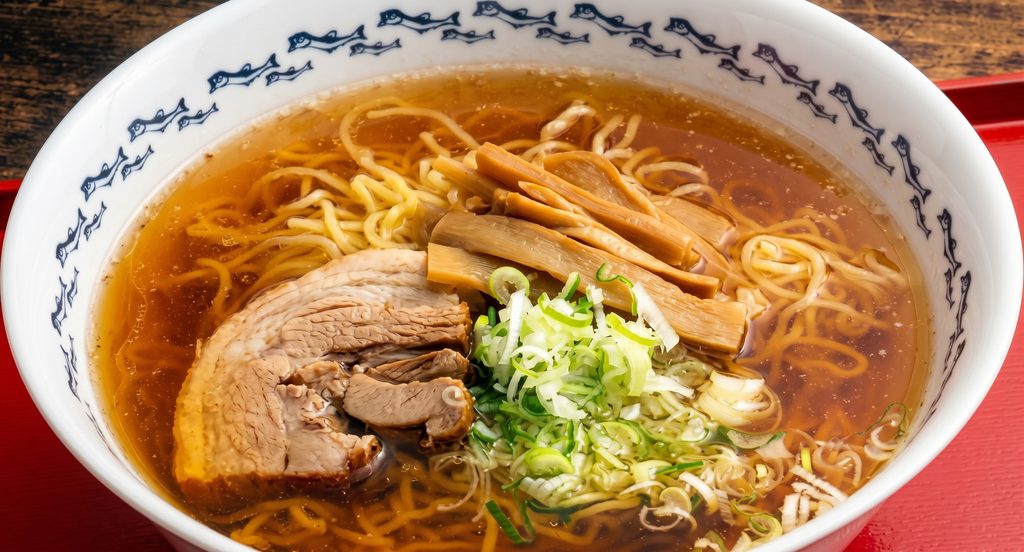
Shibuya is not a ramen destination in the way that Ogikubo or Sugamo are. It has no single defining style and no historic cluster of noodle shops that food writers make pilgrimages to.
What it has instead is volume and pressure. A district feeds students, office workers, club crowds, and tourists in the same twelve hours. Such a district supports shops at every price and quality level. The competition is brutal. In fact, weak shops close within a year.
A Station District, Not a Ramen District
The shops here are not destination restaurants. They are built around certain types of people. These people are already in Shibuya for another reason, such as work, shopping, a film, or a night out. Furthermore, they want to eat in twenty minutes.
That shapes the food. Portions are calibrated to a single bowl rather than a tasting menu, counters turn over fast, and almost nobody lingers. A shop that makes you feel rushed in Kyoto is behaving completely normally in Shibuya.
Shinjuku works differently. The narrow lanes of Omoide Yokocho put the eating itself on display. Our Shinjuku food tour meets outside a ramen counter in that lane. We meet there precisely because the setting does half the explaining. Shibuya has no equivalent stage set, which is why its shops are easy to miss.
The practical consequence is that you should not plan a day around ramen here. Plan the day, then put the bowl where it fits.
The Uphill Rule: Dogenzaka, Hyakkendana, and Shinsen
Shibuya sits in a valley, which is what the name describes. The crossing, Center-gai and the department stores occupy the floor of it, and the ground rises in every direction from there.
Dogenzaka climbs southwest past Shibuya 109, and the Hyakkendana lanes branch off it about four minutes up. Sakuragaokacho sits on the opposite side of the tracks, quieter and more residential. Keep going west and you reach Shinsen, one stop on the Inokashira line and entirely free of tourists.
Those three areas hold most of the ramen worth crossing town for. The pattern holds well enough that we use it as a rule of thumb: if you can see the crossing from the door, keep walking.
Expert Tip
Tabelog is the ranking Japanese diners actually use, and its scores run on a different scale from the ones visitors expect. A ramen shop above 3.5 is genuinely good; anything above 3.7 is among the best in Tokyo. A shop with a 4.2 on Google and a 3.2 on Tabelog is usually a shop that markets to tourists.
The Shibuya Bowls We Actually Send People To
Shibuya covers most of the major ramen styles within a fifteen-minute walk, which is unusual. Rather than list twenty shops, here are the ones we name when a guest asks, organised by what they do.
The Old Guard: Kiraku and Shibuya Shoyu
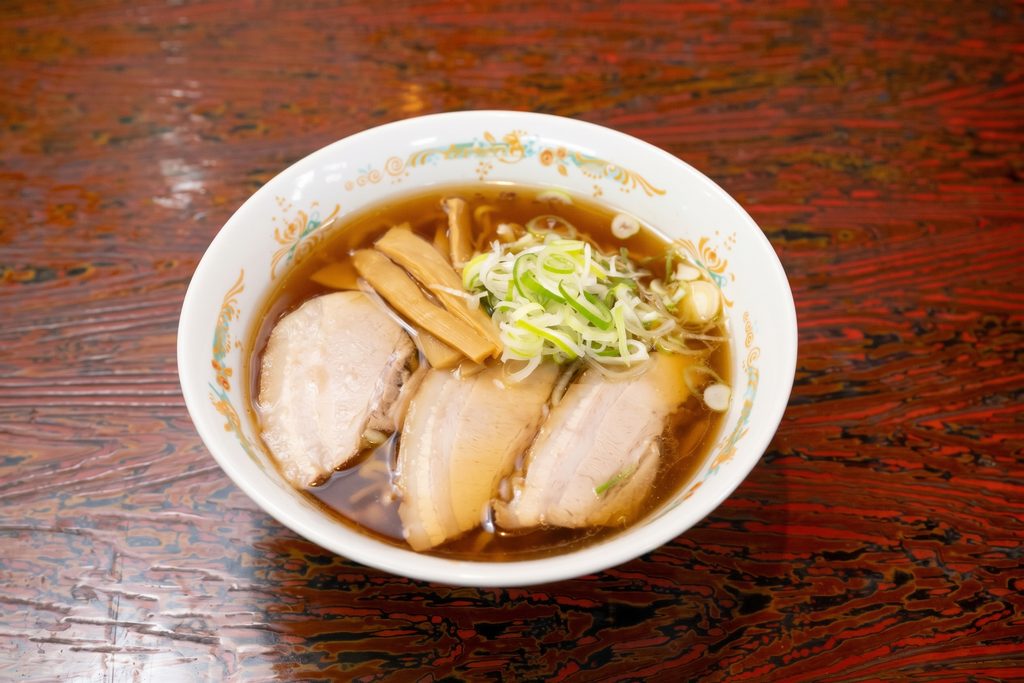
Kiraku has been on Hyakkendana, up Dogenzaka from the station, since 1952. It is a Chinese-noodle shop of the pre-modern Tokyo type — wooden interior, a second-generation owner, and a menu that has barely moved in decades.
The bowl to order is the moyashi wontonmen: soy-sauce broth under a mound of bean sprouts, with wontons and medium-thick noodles underneath. It is not a refined bowl and it is not trying to be. What it gives you is a direct line to what Tokyo ramen tasted like before anyone thought of it as a craft.
We send travelers here who have already eaten a lot of modern ramen elsewhere in the city. Against a contemporary bowl it can read as plain on the first three mouthfuls, then makes complete sense by the last third.
The Modern Benchmark: Hayashi and Kokū
Hayashi is the shop most Tokyo ramen writers name first when Shibuya comes up. The broth is a double stock of pork, chicken and seafood with shoyu tare, and the shop keeps the menu deliberately narrow — one ramen, a few toppings, no side dishes.
It has historically run as a lunch-only operation with a queue before opening, so treat it as a plan rather than an impulse. Check current hours on the day; small Shibuya shops change them without notice and close on irregular weekdays.
Kokū takes the opposite approach to broth. Its wontonmen comes in a clear, light soup in either shoyu or shio, with the delicate dumplings doing the work that fat does elsewhere. It sits on a quiet backstreet behind the Cerulean Tower, which is the kind of address that keeps a shop honest.
Tonkotsu, Tantanmen, and the Late Shift
Ichiran’s Shibuya branch on Inokashira-dori, a few minutes from the Hachiko exit, runs twenty-four hours and seats twenty-one people in individual booths. Ramen purists are sniffy about the chain, and they are missing the point for a first-time visitor — the ordering sheet is in English, the customisation is granular, and you can eat alone at 4am without a word of Japanese.
For tonkotsu with more character, Nagi’s Butao shop in Shibuya pours a heavier, fattier pork-bone bowl. For something spicier, Nakajima does a sesame-and-chilli tantanmen and keeps late hours, which makes it the default answer when someone asks us where to eat after midnight.
None of these are quiet rooms. If you want a considered meal, go at lunch; if you want ramen at the end of a long evening, this is the tier that will be open.
Vegan and Dietary Options: Jikasei Mensho
Ramen is a difficult dish for restricted diets, because the broth is usually the problem and it is never optional. Pork bone, chicken, dried sardine and bonito do the heavy lifting in nearly every bowl in Shibuya.
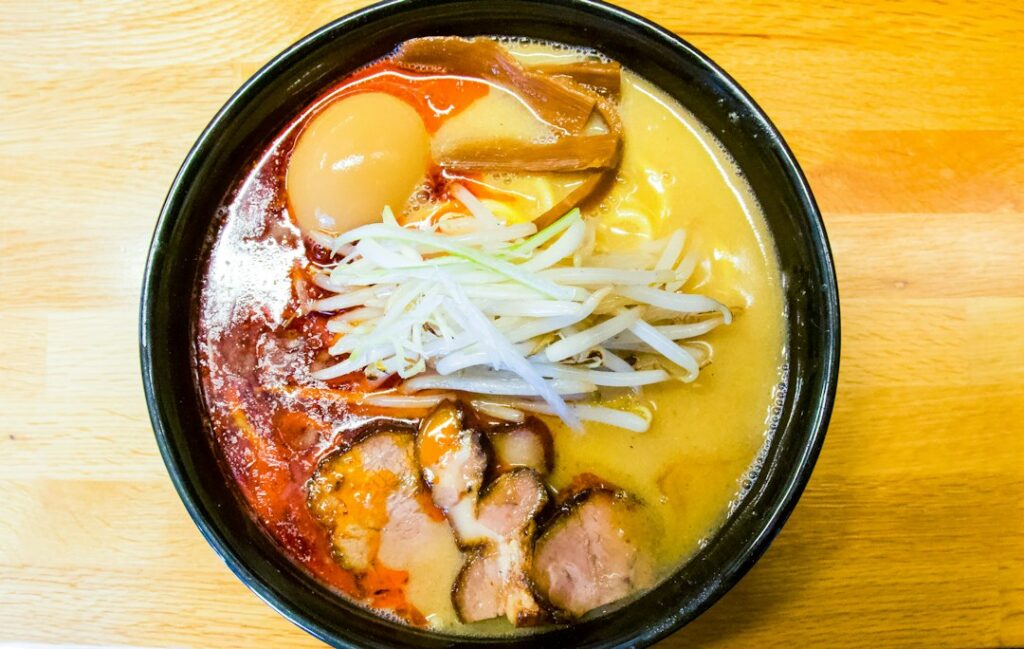
Jikasei Mensho, in the basement of Shibuya PARCO on Udagawacho, is the exception we rely on. The shop runs wagyu-topped chicken paitan alongside a set of clearly labelled vegan bowls built on sesame paste, chilli oil and kelp stock, so a mixed group can eat in the same room without negotiation.
Gluten is a harder problem, since wheat noodles and wheat-based soy sauce are both structural. If that applies to you, read our guide to gluten-free travel in Japan before assuming a shop can adapt a bowl on request.
Machines, Queues, and How a Ramen Counter Works
The mechanics of a ramen shop trip up more visitors than the food does. None of it is complicated, but it happens fast and there is usually someone waiting behind you.
The Ticket Machine
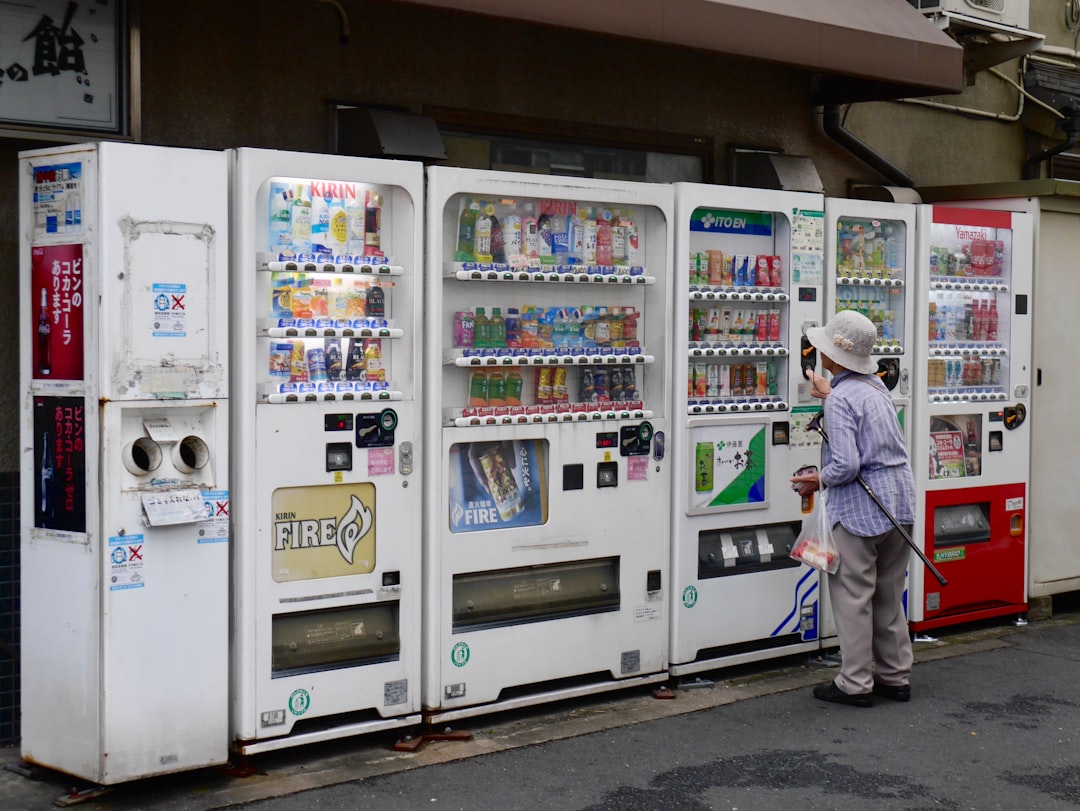
Most independent shops sell food through a vending machine just inside the door. You put money in first, press the button for what you want, take the small paper ticket that comes out, and hand it to the staff when you sit down.
The top-left button is conventionally the shop’s signature bowl, which is a useful shortcut when the machine has no English. Some machines have a language toggle; many have only photographs, and a few have neither.
Cash is the safe assumption. Older machines take coins and ¥1,000 notes only, and some will not accept a ¥5,000 note at all. Our broader guide to ordering food in Japan covers the same process across other restaurant types.
Reading the Queue
A line outside a Shibuya ramen shop is normal and usually shorter than it looks, because the turnover inside is quick. Ten people at the door is often fifteen minutes, not an hour.
Join the back of it and stay in single file against the wall — these are narrow streets with delivery scooters coming through. At some shops, staff will ask you to buy your ticket from the machine while you are still queuing, so keep cash in hand rather than in a bag.
Groups get split. If there are four of you, expect to sit apart at the counter.
Twelve Minutes at the Counter
The bowl arrives quickly and is meant to be eaten while it is hot, which is the entire logic behind the pace. Noodles soften in the broth, and a bowl eaten slowly over half an hour is a different and worse dish than the one the cook sent out.
Slurping is normal and unremarkable here. So is eating alone in complete silence, which for a lot of our guests turns out to be the most surprising part of the experience.
When you finish, put your chopsticks down, stack nothing, and leave. There is no bill to wait for — you paid at the machine — and there is no tipping in Japan, in ramen shops or anywhere else.
Expert Tip
At tonkotsu shops, look for the word kaedama on the machine or a small sign at the counter. It buys a second portion of noodles dropped into your remaining broth for a few hundred yen, and it is the correct way to order more food rather than starting a new bowl. Order it when you are about a third of the way through, not when the bowl is empty.
Timing Your Bowl: Lunch, Dinner, and the Late Shift
When you eat in Shibuya matters more than where, because the same shop delivers a genuinely different experience at noon and at midnight.
Lunch Is the Serious Service
The specialist shops are built around lunch. Several of the best ones open at 11:30 and close mid-afternoon, and a few never open in the evening at all.
Arriving at 11:15 on a weekday costs you fifteen minutes of standing and saves you forty of queuing. By 12:15 the office crowd has arrived and the line doubles.
Between roughly 2pm and 5pm, Shibuya’s lunch-service shops thin out and the ones still open are quiet. That window is the best time to eat if your schedule allows it.
Ramen as the End of a Drinking Night
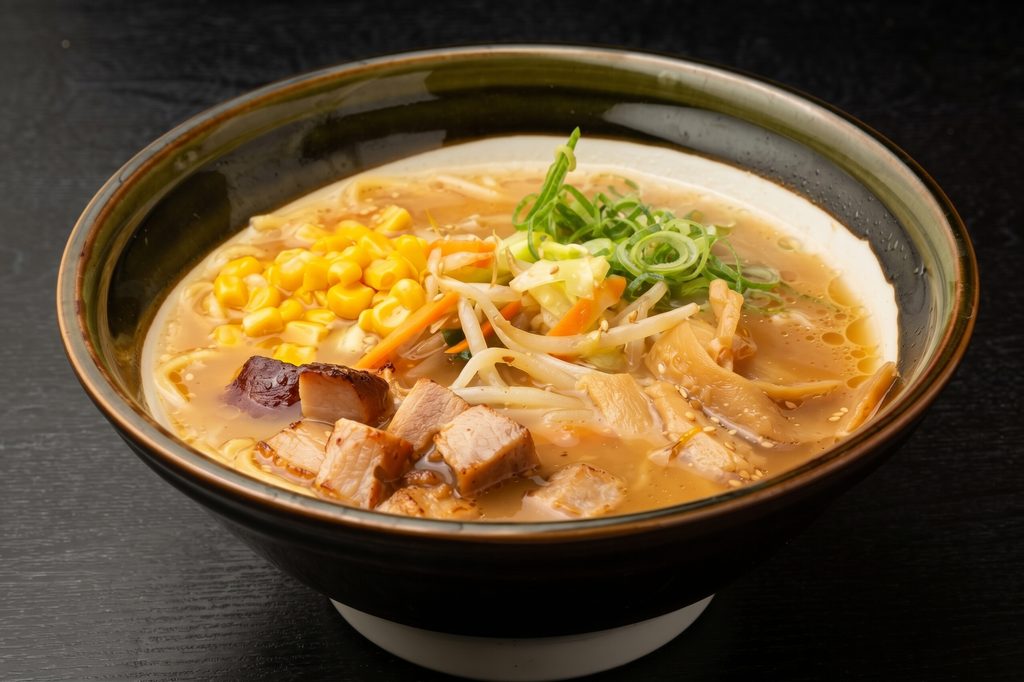
The word for it is shime — the closing dish after drinking, usually noodles, usually eaten somewhere with fluorescent lighting and no atmosphere whatsoever. It is one of the more genuinely local things a visitor can do in Tokyo, and it requires no planning beyond knowing which shops stay open.
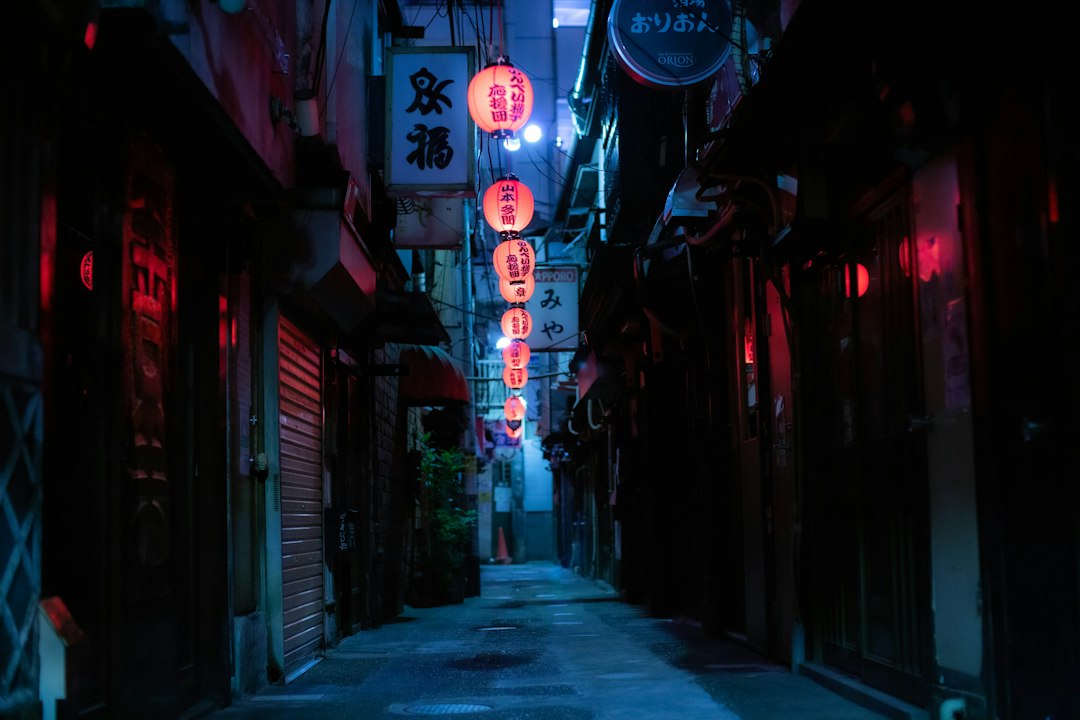
Our Shibuya bar crawl guide covers where the drinking happens, and the tiny counters of Nonbei Yokocho sit close enough to the station that a bowl afterwards is a two-minute walk.
On our Shibuya Local Bar and Izakaya Crawl, the evening finishes in the lanes behind Center-gai after three hours and three bars, and guides are used to pointing people toward a late bowl on the way out. It is the most reliably requested piece of advice we give at the end of a night.
Shibuya Ramen: Frequently Asked Questions
Do Shibuya ramen shops take credit cards or IC cards?
Chains and shops inside department stores generally do. Independent shops with a ticket machine at the door often do not, and the older the machine, the less likely it is to have a card reader. Carry ¥3,000 to ¥5,000 in cash if ramen is on the plan for the day, mostly in ¥1,000 notes, because machines that reject a ¥5,000 note are still common.
Is there vegetarian or vegan ramen in Shibuya?
Yes, though the options are specific rather than general. Jikasei Mensho in the basement of Shibuya PARCO runs a labelled vegan range alongside its meat bowls, which is the straightforward answer for a mixed group. Assume that any shop not advertising vegan bowls cannot make one — the broth is prepared in bulk hours before service and cannot be substituted, and a bowl described as vegetable ramen will often still be built on a pork or fish stock.
How long will I actually queue for ramen in Shibuya?
Fifteen to twenty-five minutes at a well-regarded shop during peak lunch hours, and often nothing at all outside them. The ranked shops draw longer lines than that on weekends, which is the argument for going on a Tuesday. If you arrive to find thirty people waiting and a schedule to keep, walk five minutes and pick another shop — in Shibuya the second choice is rarely a large step down.
Related Tours

Conclusion
Pick one shop before you arrive in Shibuya and treat the rest as opportunistic. The district is dense enough that a planned bowl at lunch and an unplanned one at the end of a night will cover most of what it has to offer, and neither requires a reservation, a guidebook, or any Japanese.
If you only have one attempt, take it at 11:15 on a weekday at a lunch-only shop up Dogenzaka, with cash in your pocket and nothing scheduled for the next hour. That is the version of Shibuya ramen the city built for itself.
The second bowl is the one we would argue for harder. Eat it at one in the morning, after several drinks, at a counter under bad lighting with a row of strangers doing exactly the same thing. Nothing about it will photograph well, and it will be the meal you describe when you get home.
Plan Your Japan Trip with Local Experts
Our team has guided 40,000+ travelers across Japan. Tell us about your trip and we’ll get back to you within 24 hours.