In this article:
- Orienting Yourself in Ginza
- The Shopping, Building by Building
- Kabuki at the Kabukiza
- Where and When to Eat in Ginza
- Things to Do in Ginza: Frequently Asked Questions
Introduction
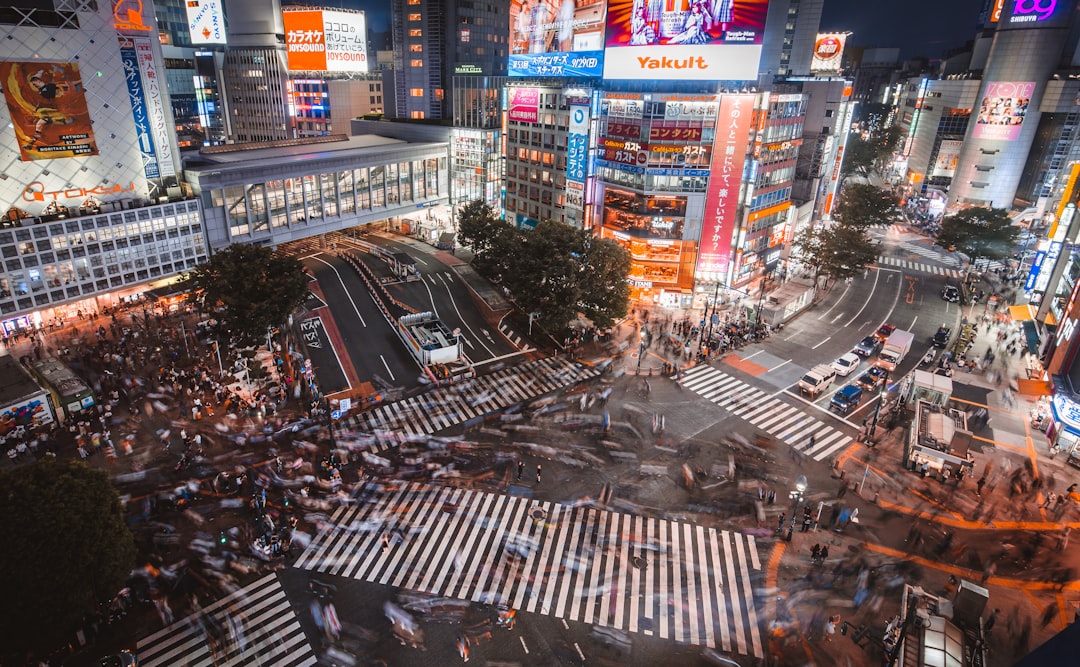
Most lists of things to do in Ginza are really lists of places to spend money, and that framing sends a lot of travelers away from the district entirely. It is an expensive neighbourhood. It is also the only place in Tokyo where you can watch a scene of kabuki for the price of a coffee, stand on a free rooftop above a department store, and walk to a fish market in a quarter of an hour.
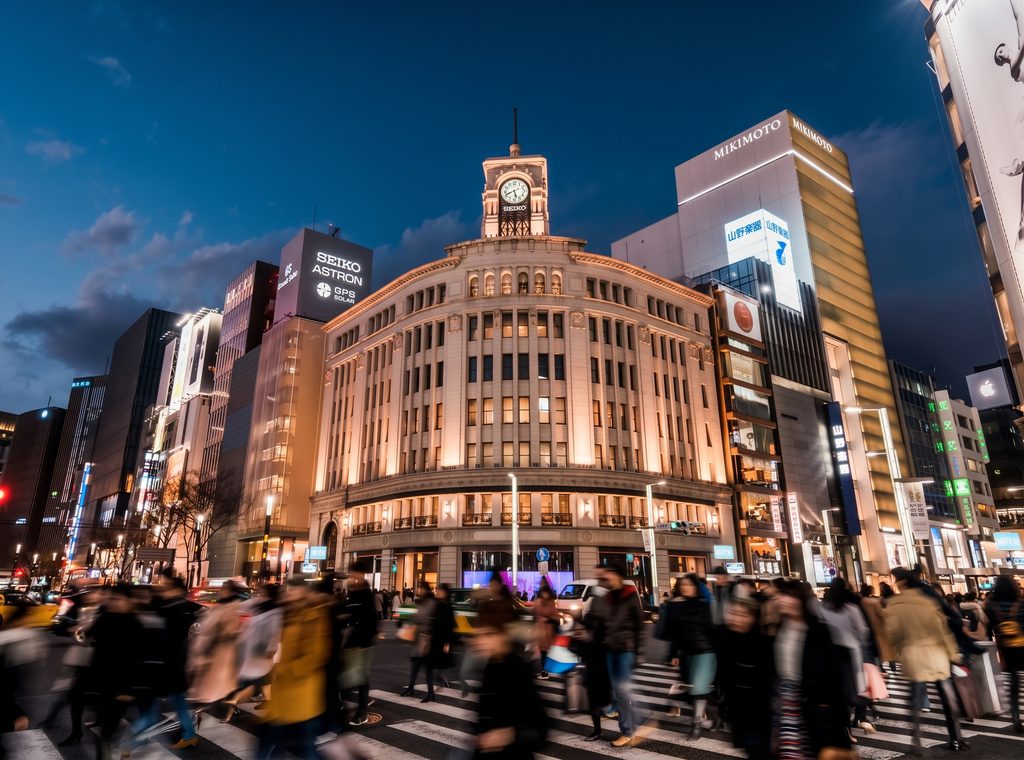
The 4-chome crossing is the centre of it. On one corner stands the clock tower that has kept Ginza’s time since 1932, now operating as Seiko House Ginza after decades as the Wako building. Stand there on a Tuesday at six in the evening and the traffic is heavy, the pavements are full of people in office clothes, and the whole thing reads as a business district with luxury frontage.
Come back on Sunday at one in the afternoon and the cars are gone. That single fact changes what Ginza is, and most visitors arrive without knowing it.
Orienting Yourself in Ginza
Ginza is small. You can cross the whole district on foot in twenty minutes, and almost everything worth your time sits on or one block off a single street.
The Grid Is Simpler Than It Looks
The district runs from Ginza 1-chome in the north to Ginza 8-chome in the south, with the numbers rising as you move away from Tokyo Station. Chuo-dori is the main axis; Harumi-dori crosses it at 4-chome, and that intersection is the one in every photograph.
Ginza Station sits directly under the crossing and is served by three Tokyo Metro lines — Ginza, Marunouchi, and Hibiya. Higashi-Ginza, one stop east on the Hibiya and Toei Asakusa lines, puts you underneath the Kabukiza. Which station you use matters more than it sounds, because the exits deposit you on opposite sides of a very long block.
We tell travelers to treat the chome numbers as a rough map of tone. The lower numbers near Kyobashi are quieter and more office-like. By 7-chome and 8-chome you are in the bar district, where the buildings are narrower and the signage is stacked eight floors high.
The Street Closes on Weekends
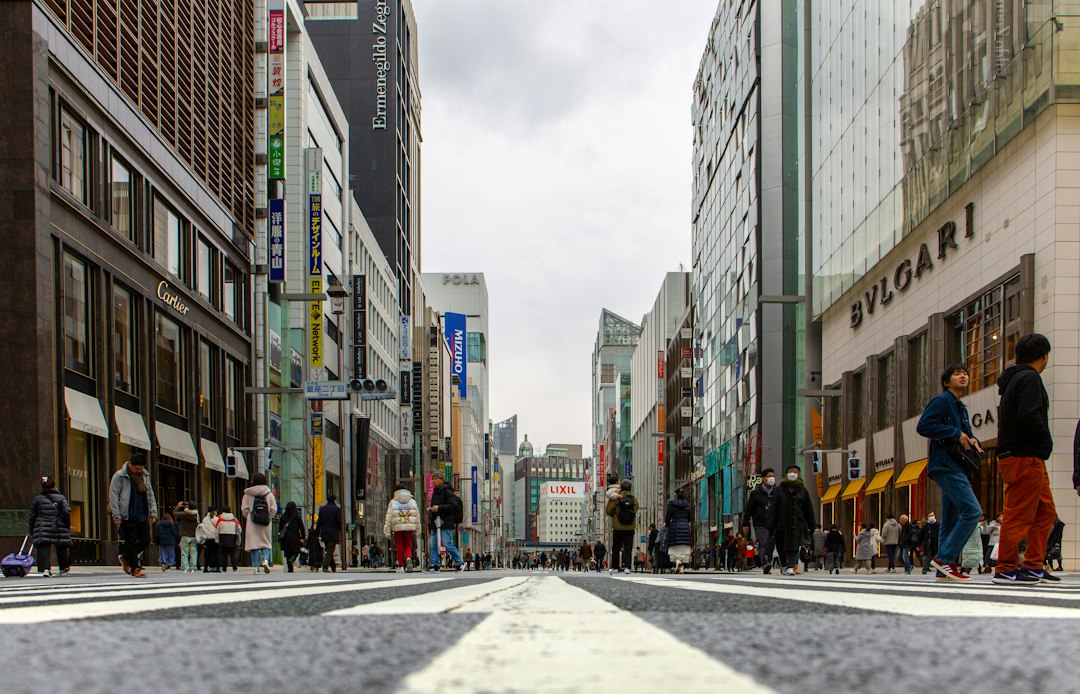
On Saturdays, Sundays, and public holidays, roughly a kilometre of Chuo-dori is closed to traffic from noon. The closure runs until 6pm between April and September and until 5pm from October to March, and it has been happening since 1970.
The Japanese name is hokosha tengoku — pedestrian paradise. Café tables appear in the middle of the carriageway, people walk down the centre line of one of the most expensive streets in Japan, and the noise level drops by an order of magnitude. Severe weather can cancel it.
If you have one afternoon for Ginza, this is the one to take. The same street on a weekday is a road with shops on it.
What Is Within Walking Distance
Tsukiji Outer Market is about three minutes from Higashi-Ginza Station Exit 3, and roughly fifteen minutes on foot from Ginza Station. The inner wholesale market moved to Toyosu in 2018, but the outer market — the lanes of knife shops, tamagoyaki stalls, and standing seafood counters — stayed exactly where it was. Our guides usually run it as an early morning stop before Ginza opens, and there is a full breakdown of what to eat at Tsukiji Outer Market if you want to arrive with a plan.
Hama-rikyu Gardens is a little further south, a former shogunal duck-hunting ground now surrounded by the towers of Shiodome. Admission is ¥300 and the gates are open from 9:00 to 17:00, with last entry at 16:30. The contrast between the tidal pond and the glass behind it is the most photographed thing in the garden for a reason.
Yurakucho sits immediately northwest, and the yakitori places under the elevated railway tracks there are the cheapest good meal in the area by a wide margin.
The Shopping, Building by Building
Ginza’s retail is worth understanding even if you buy nothing, because the buildings are the architecture of the district and several of them are free to walk through.
The Department Stores and Their Basements
Ginza Mitsukoshi and Matsuya Ginza face each other near the 4-chome crossing, both with twelve and eleven floors respectively of the sort of merchandising that Japanese department stores do better than anyone.
Skip the fashion floors and go down. The basement food halls — depachika — are where these buildings earn their reputation: counters of wagashi, a wall of pickles, tuna cut to order, cakes assembled with the precision of watch parts. Nothing is cheap, but a box of six confections from a two-hundred-year-old maker is a better souvenir than anything on the upper floors.
Samples are offered at many counters. Taking one is normal and expected.
Ginza Six
Ginza Six opened in 2017 on the site of the old Matsuzakaya and is the largest complex in the district. Two things in it are worth your time regardless of your shopping intentions.
The rooftop garden covers roughly 4,000 square metres, is open to anyone, and gives you a 360-degree view over central Tokyo without a ticket or a queue. The Tsutaya bookshop on the sixth floor is an art bookstore with a reading area and a coffee counter, and you can sit there for an hour with a ¥12,000 photography book and nobody will hurry you.
There is also a Noh theatre in the basement — the Kanze school’s Tokyo home, moved here when the building went up. Performances are not daily, but if the schedule lines up, it is a rarer thing to see than kabuki.
Itoya, and the Case for Specialist Shops
Itoya has been selling stationery in Ginza since 1904, and the main building, G.Itoya, runs twelve floors. Each floor has a theme: letter paper, fountain pens, desk objects, wrapping. Hours are 10:00 to 20:00 Monday through Saturday and until 19:00 on Sundays and holidays.
This is the shop we send people to when they want something Japanese that is not a fridge magnet. A letterpress card, a set of Japanese inks, a notebook bound in a way that does not exist outside this country.
The same logic applies across Ginza. The district’s specialist shops — knives, brushes, papers, tea — are more interesting than its luxury flagships, which sell the same goods as the flagships in Paris.
Expert Tip
Tax-free purchasing in Japan is handled at a dedicated counter rather than at the register, and in a large department store that counter is usually on a different floor from where you bought the item. Ask for the location before you pay, carry your actual passport rather than a photocopy, and leave fifteen minutes for it. The rules have been under revision, so check the current terms before you plan a large purchase around the refund.
Kabuki at the Kabukiza
The Kabukiza is the reason we push travelers toward Ginza even when they have no interest in the shops. It is the principal kabuki theatre in Japan, it sits directly above Higashi-Ginza Station, and getting into it is far easier than most visitors assume.
Single-Act Tickets
A full kabuki programme runs four hours or more, which is a hard sell on a ten-day trip. The Kabukiza’s answer is the single-act ticket — hitomaku-mi — which buys you one act from the fourth level of the theatre.
Prices are set act by act, by length, and they change every month with the programme. In September 2026 the fourth-level seats ranged from about ¥600 to ¥2,800. A portion of these seats is sold online from noon on the day before the performance, and the remainder is sold same-day at the theatre for cash, from a separate window on the side of the building.
The fourth level is high and the seats are plain. You are still in the room, the sightlines are honest, and forty minutes of one act tells you more about kabuki than any amount of reading.
Making Sense of It in English
Rent the captioning device. It is a tablet that runs English subtitles for the dialogue and the sung passages, plus short explanations of what is happening on stage and why the audience just shouted a name.
At the Kabukiza the captioning service costs ¥1,500 for a full programme and ¥1,000 for a single act, and it is cash only. Bring notes. Without it, a first-time viewer spends the act watching an argument in a language they do not speak, which is a waste of a remarkable thing.
The audio guide is a separate product and the simplified English version gives synopses rather than line-by-line translation. Between the two, the captions are the better purchase.
The Parts That Cost Nothing
Kobikicho Square, on basement level two, is open to anyone without a ticket. It holds souvenir counters selling kabuki-related goods, wagashi, and tenugui hand towels, and it is a genuinely good place to buy gifts.
The Kabukiza Tower behind the theatre also has a rooftop garden on the fifth floor that is free to enter, reached by a dedicated lift from the Showa-dori side. Few people go up.
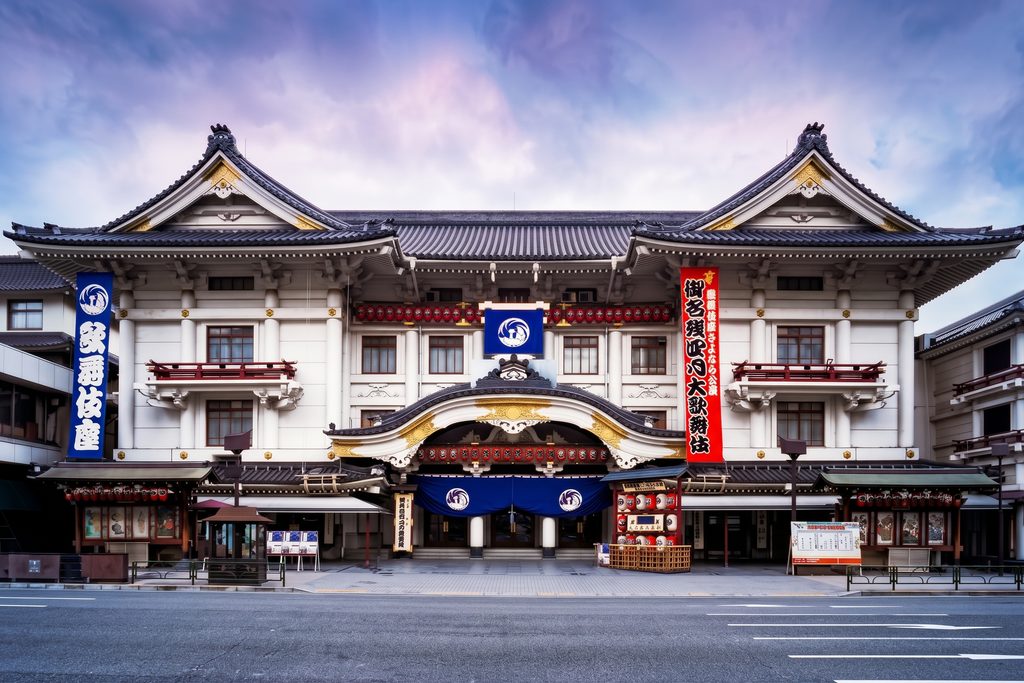
Even the exterior repays five minutes. The current building opened in 2013, designed by Kengo Kuma with Mitsubishi Jisho Sekkei, and holds a traditional theatre façade against a tower behind it without either one apologising for the other.
Where and When to Eat in Ginza
Ginza holds more Michelin stars per square kilometre than almost anywhere on earth, which is true and also not very useful when you are standing on Chuo-dori at half past twelve deciding where to have lunch.
Sushi at Lunch, Not Dinner
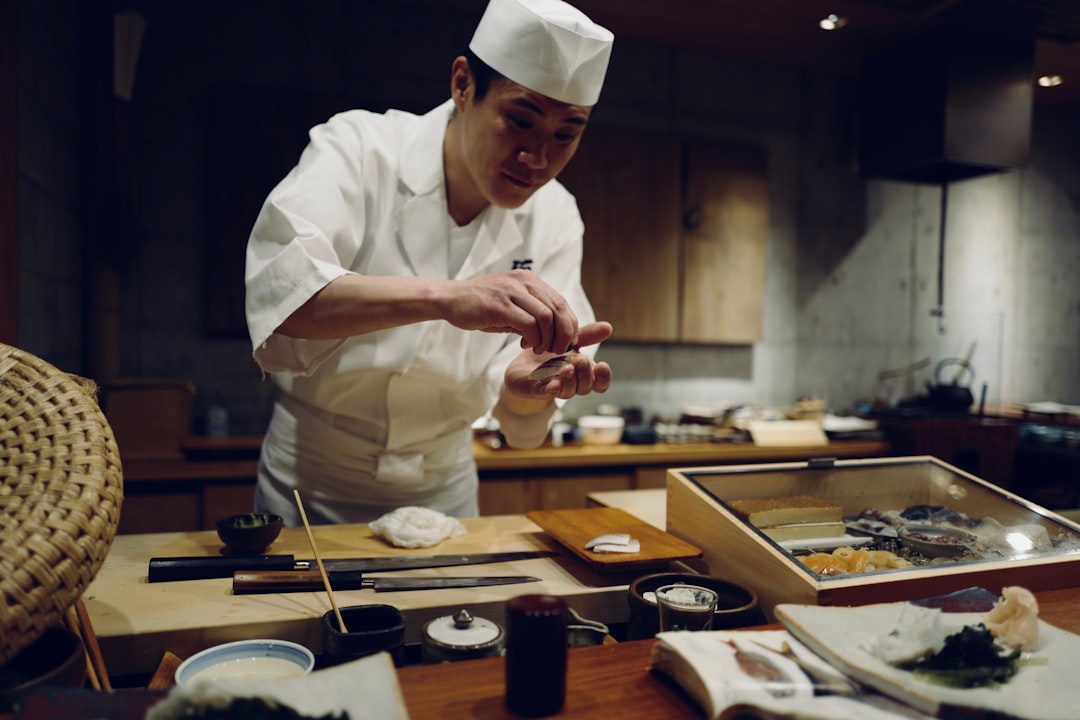
Edomae sushi — the Tokyo style, fish worked with vinegar, salt, and curing rather than served raw off the block — was born in this part of the city, and Ginza is where its most exacting practitioners work.
Dinner at the well-known counters means a reservation made weeks ahead, an introduction in some cases, and a bill that will surprise anyone who has not checked first. Lunch at many of the same counters, with the same chef, costs a fraction of it. The course is shorter and the room is quieter, and in our experience it is the better first encounter with the form. We have written a fuller guide to high-end Ginza omakase counters and where else to eat sushi in Tokyo.
Sit at the counter, not at a table. Eat each piece when it is placed in front of you rather than waiting for the others at your party.
The Basements and the Backstreets
If a counter seat is not happening, the department store basements sell prepared food of a standard that would be a destination restaurant in most cities. Buy a bento, walk to the Ginza Six roof, eat it there.
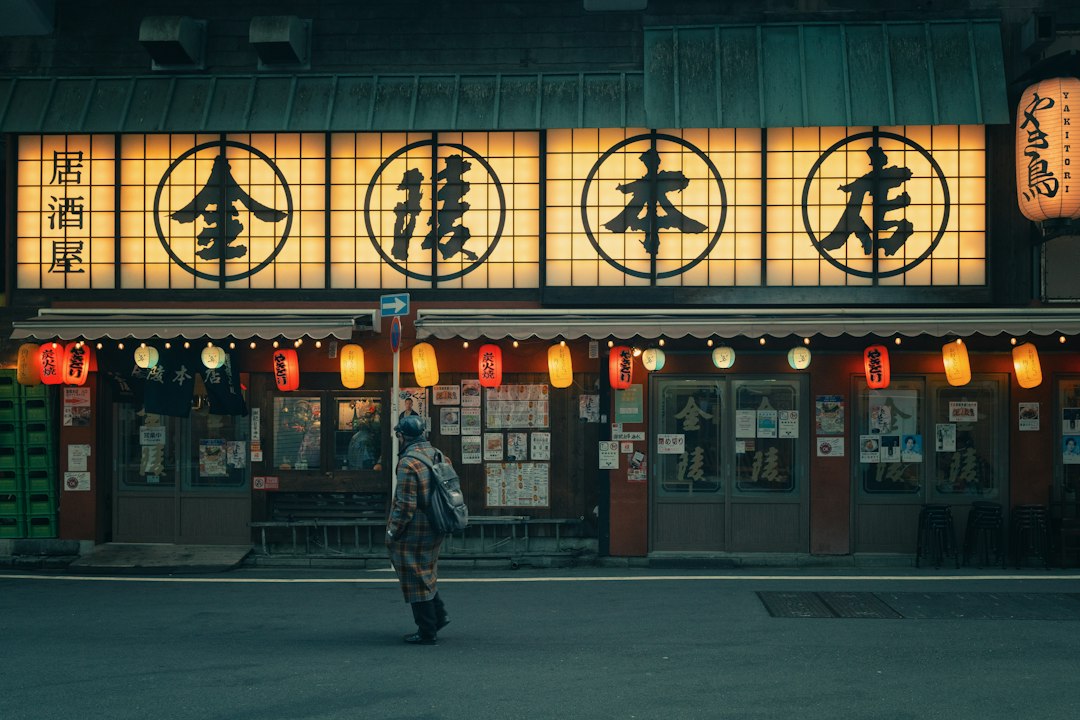
The backstreets of 7-chome and 8-chome are the other answer. Narrow buildings, one small business per floor, a tempura counter above a bar above a soba shop. Many of these places seat eight people and have no English menu, and that is precisely the reason to go. A number of them are cash only.
Yurakucho’s railway arches, five minutes north, cover the other end of the price range — grilled chicken, beer, plastic stools, smoke.
The Evening Ginza Most Visitors Never See
Behind the department stores, Ginza has run on private hospitality for a century: ryotei and members’ clubs where entry works by introduction rather than reservation, and where the evening includes music and conversation rather than only food.
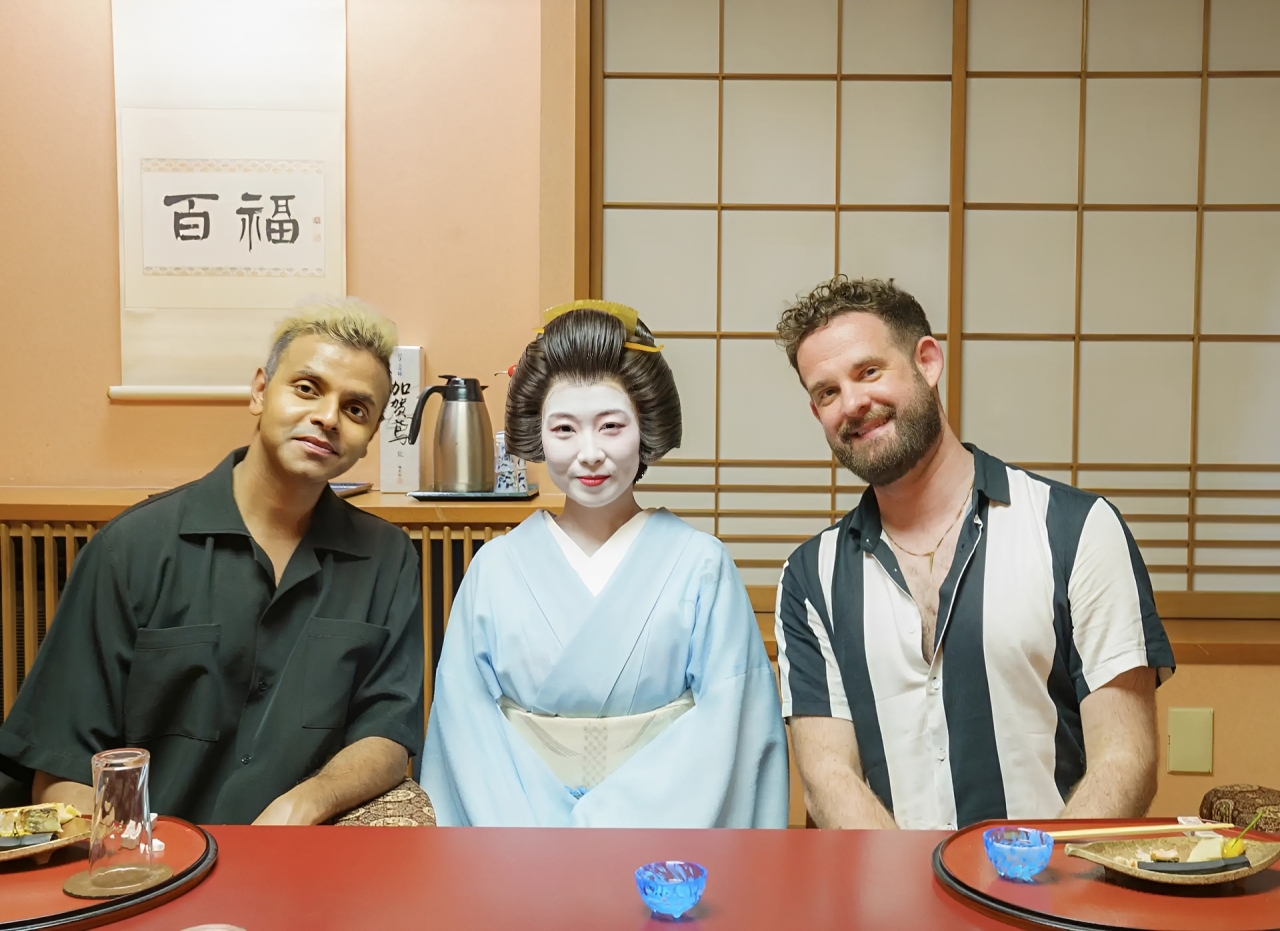
That world is largely closed to visitors in Ginza itself. It is not closed everywhere in Tokyo. Our own private geisha dinner runs in Kagurazaka, the city’s other old entertainment quarter, in a members-only ryotei that does not take walk-ins — a full kaiseki course, dance and live music at close range, and a certified guide interpreting so the conversation goes both ways. Most travelers do not know Tokyo still has this.
If your Ginza evening is staying in Ginza, the bars of 8-chome are the closest thing. Go with someone who knows which door to open.
Expert Tip
The reservation wall at the top Ginza counters is real, but it is not absolute. Two routes work: book the lunch service, which opens closer to the date and fills less aggressively, or go through your hotel concierge or guide, who can call in Japanese and who the restaurant may already know. A restaurant that will not take a booking from an overseas email address will often take one from a voice on the phone at two in the afternoon.
Things to Do in Ginza: Frequently Asked Questions
How much time do I need in Ginza?
Half a day covers the district properly if you are not shopping seriously. Four hours gets you the crossing, one department store basement, the Ginza Six roof, and a single act at the Kabukiza. Add a full day if you want to combine it with Tsukiji in the morning and Hama-rikyu in the afternoon, which is a natural route because all three sit in a straight line heading south.
Can I see kabuki without booking months ahead?
Yes. Single-act tickets at the Kabukiza are designed for exactly this. Part of the allocation goes on sale online from noon the day before, and the rest is sold same-day for cash at the theatre. Popular months and famous actors sell out faster, so treat the same-day queue as a backup rather than a plan, and rent the English captioning tablet when you collect your ticket.
Is Ginza worth visiting if I am not shopping?
It is, though not for a full day on its own. The Kabukiza, the weekend pedestrian street, the free rooftops, the galleries along Chuo-dori, and the food basements are all available to someone spending nothing beyond a theatre ticket and lunch. What Ginza does not offer is the street-level texture of Asakusa or Yanaka. It is a polished district, and if that is not what you want from Tokyo, an hour or two is enough.
Related Tours
Conclusion
Decide first whether your Ginza is a weekend afternoon or a weekday evening, because they are not the same place. The weekend version is the street itself: cars gone, tables in the road, the roof at Ginza Six, a single act at the Kabukiza in the middle of it. The weekday version is the counters and the basements and the narrow buildings in 8-chome, which is the better half if you came to eat.
If you only have one slot, take Sunday afternoon and start at Higashi-Ginza rather than Ginza Station. Check the current month’s single-act listing on the Kabukiza site before you leave the hotel, walk up through Tsukiji if it is early enough, and carry cash — the theatre’s captioning counter, the small restaurants in the backstreets, and a good number of the specialist shops still expect it.
Plan Your Japan Trip with Local Experts
Our team has guided 40,000+ travelers across Japan. Tell us about your trip and we’ll get back to you within 24 hours.