In this article:
- What the Hakone Open Air Museum Actually Is
- Getting There and Fitting It Into a Hakone Day
- Tickets, Hours, and How Long to Allow
- The Parts Most Visitors Underuse
- Hakone Open Air Museum: Frequently Asked Questions
Introduction
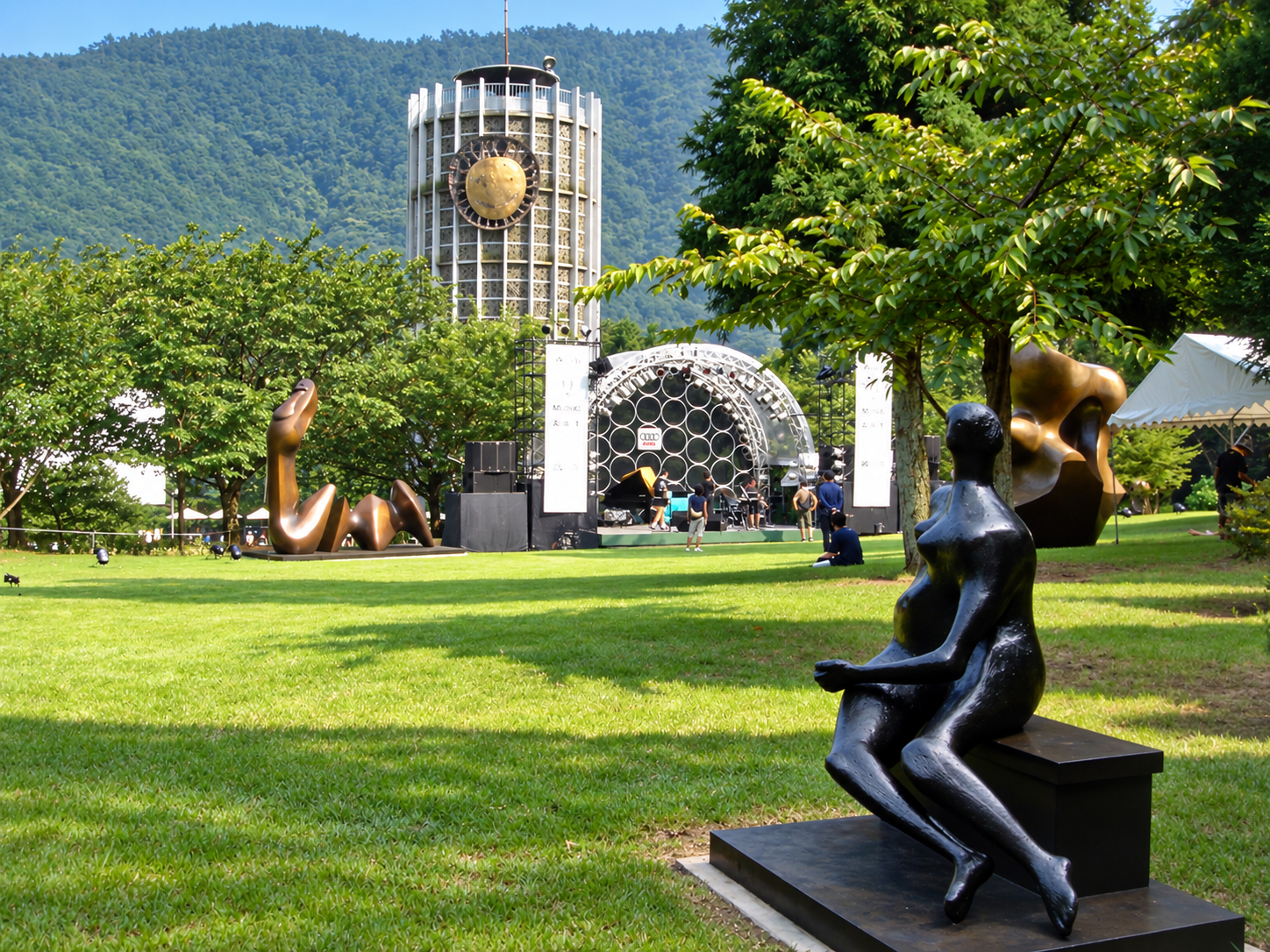
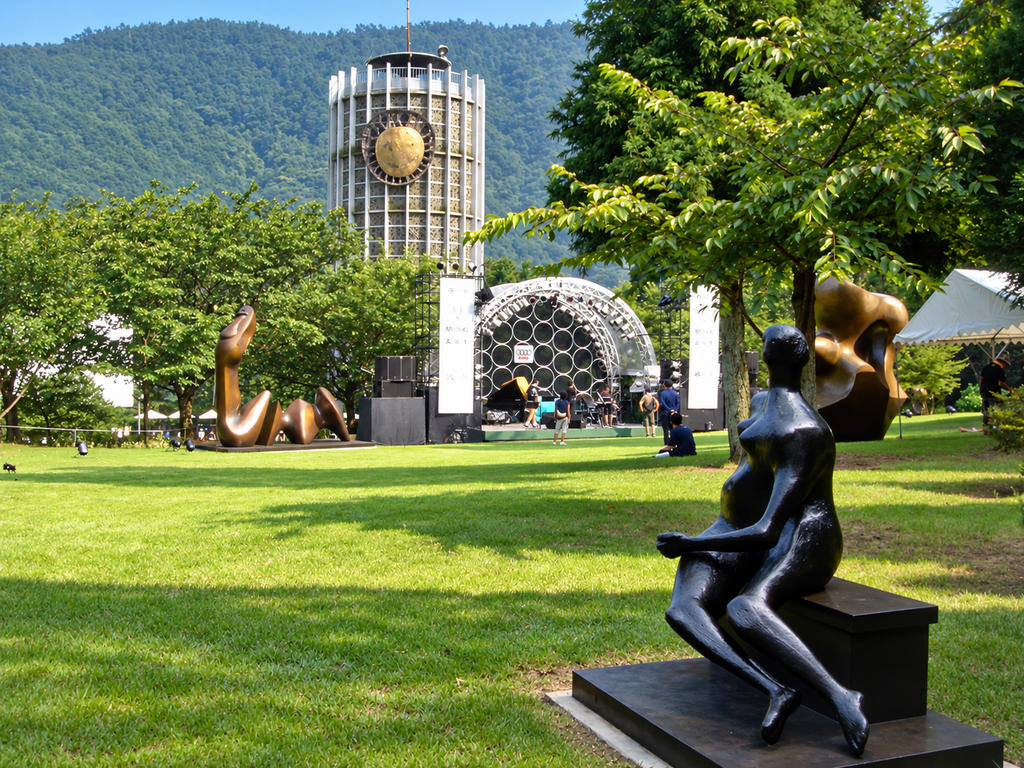
The word museum sets the wrong expectation. The Hakone Open Air Museum is a hillside with sculptures on it, and you spend most of your visit outdoors, walking on grass, with the mountains of the Hakone caldera standing behind every piece you look at.
It opened in 1969 as Japan’s first open-air museum, and the idea behind it has aged well. Bronze under real weather reads differently than bronze under gallery lighting. A Henry Moore figure on a lawn in October, with cloud moving across the ridge behind it, is doing something a white wall cannot do for it.
Most visitors arrive here as part of a wider Hakone circuit and give it ninety minutes because that is what the guidebook suggested. We think that is the single most common planning error people make with this place. Give it a half day, walk it in the right order, and finish with your feet in hot spring water.
What the Hakone Open Air Museum Actually Is
The grounds run to about 70,000 square metres, terraced down a slope, with paths that loop rather than run straight. Around 120 works are on permanent outdoor display, and the collection leans toward twentieth-century sculpture rather than anything classical.
A Sculpture Park First, a Museum Second
Henry Moore, Joan Miro, and Aristide Maillol are among the names you will recognise on the lawns. The pieces are spaced generously, which matters more than it sounds — you approach each one across open ground and see it against the ridge line rather than against the next exhibit.
There are no ropes on most of the outdoor works. Children run between them. Photographers stand where they want. The place is unusually relaxed about how you move through it, and that informality is part of what makes an hour here feel different from an hour in a city gallery.
Several indoor halls hold rotating exhibitions, so the balance between inside and outside shifts depending on when you visit. The outdoor collection is the constant.
The Picasso Pavilion
The indoor centrepiece is a dedicated Picasso hall holding around 300 works, including a substantial body of his ceramics. Pieces rotate, so the specific display changes across the year.
The ceramics are the reason to slow down here. Picasso’s plates and vessels get far less attention than his paintings, and seeing several dozen of them together — the same face and bull motifs pushed through clay rather than canvas — is a genuinely different encounter with an artist most visitors think they already know.
This is also the part of the museum that saves a wet day. When rain comes over the caldera, the Picasso Pavilion is where everyone ends up, and it holds its interest for an hour.

Symphonic Sculpture and the Stained Glass Tower
The single most photographed object on the grounds is a tower of stained glass by the French artist Gabriel Loire. You walk in at ground level and climb a spiral staircase enclosed entirely in coloured glass, and the light changes on you the whole way up.
At the top there is a viewing platform over the park and the surrounding mountains. The climb is not long, but the staircase is narrow and it queues at midday.
Go early, or go late. Between roughly eleven and two the tower absorbs whatever crowd is on the grounds, and standing on the steps waiting to shuffle upward undercuts the point of the piece.
Expert Tip
The stained glass tower reads completely differently depending on the sky. On a bright day the colours throw onto the stairs and onto you; under heavy cloud the glass goes flat and subdued. If the morning is clear and the forecast turns later, climb it first and leave the lawns for the afternoon — the sculptures survive grey light far better than the glass does.
Getting There and Fitting It Into a Hakone Day
Access is the easy part, and it is one of the reasons this museum gets visited more than the other art institutions in the area.
The Tozan Railway to Chokoku-no-Mori
The museum sits beside Chokoku-no-Mori Station on the Hakone Tozan Railway, the last stop before the Gora terminus. From Hakone-Yumoto the ride takes around thirty minutes and costs about ¥460, and the entrance is a short walk from the platform.
The train itself is worth the fare. The Tozan line climbs the mountain by switchback, reversing direction several times, and the carriages pass close enough to the hillside that you can see the vegetation change as you gain height. Our travellers consistently rate this ride higher than they expected to.
If you are staying in Gora, the museum is a ten to fifteen minute walk downhill, which is a reasonable way to start a morning and a less reasonable way to end one.
Where It Sits Relative to Owakudani and Lake Ashi
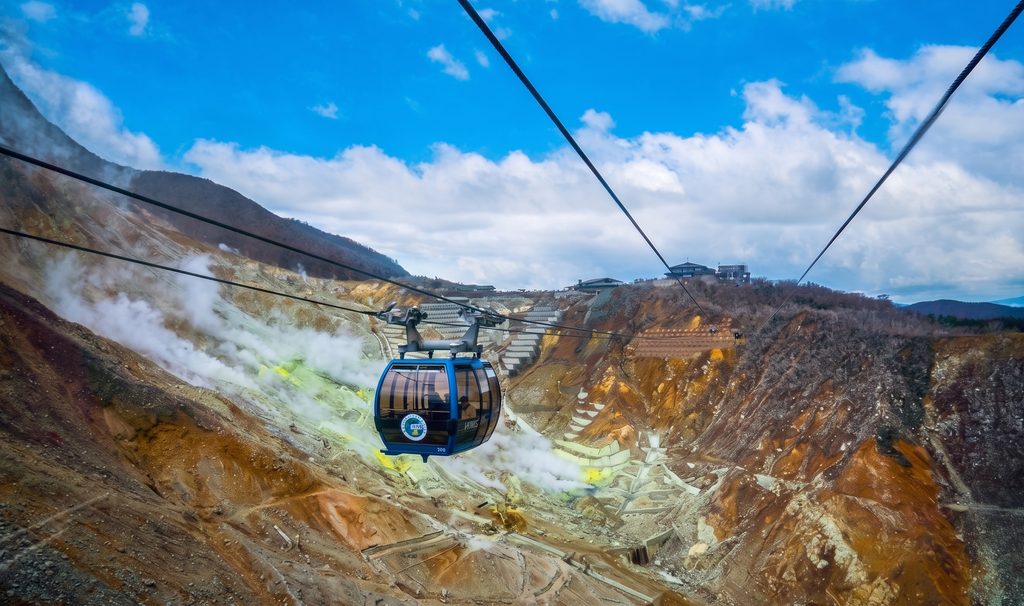
Hakone splits into two halves geographically. The museum, Gora, and the mountain railway occupy the eastern side; the ropeway over Owakudani, the sulphur vents, and Lake Ashi sit beyond the ridge to the west.
Doing both in one day is possible but tight. The standard Hakone loop runs train, cable car, ropeway, boat, and bus in a circle, and adding a proper museum visit to that sequence means cutting something else short.
Our own Fuji and Hakone coach day from Tokyo runs the volcanic side — the ropeway, Owakudani, Hakone Shrine, and a cruise across Lake Ashi — and does not include the museum. That is a deliberate routing choice rather than an oversight. The two halves of Hakone do not combine well inside ten hours, and we would rather do one of them properly.
Season, Weather, and the Part That Closes
This is an outdoor museum in a mountain caldera, and the weather here is not Tokyo’s weather. Hakone runs colder, the wind moves through the valley, and cloud sits on the ridge for days at a time. Bring a layer you would not need in the city.
Autumn is the strongest season. From late October into November the slopes behind the sculptures turn, and the contrast between bronze and colour is the reason a lot of photographers come.
Rain does not close the museum, but it does change it. The outdoor works are all still there and still viewable under an umbrella; the net play structure closes in poor weather, and the lawns become less pleasant to stand on.
Tickets, Hours, and How Long to Allow
Admission is straightforward, and there is no ticket lottery or reservation scramble of the kind that governs a few of Japan’s better-known museums.
Admission and the Online Price
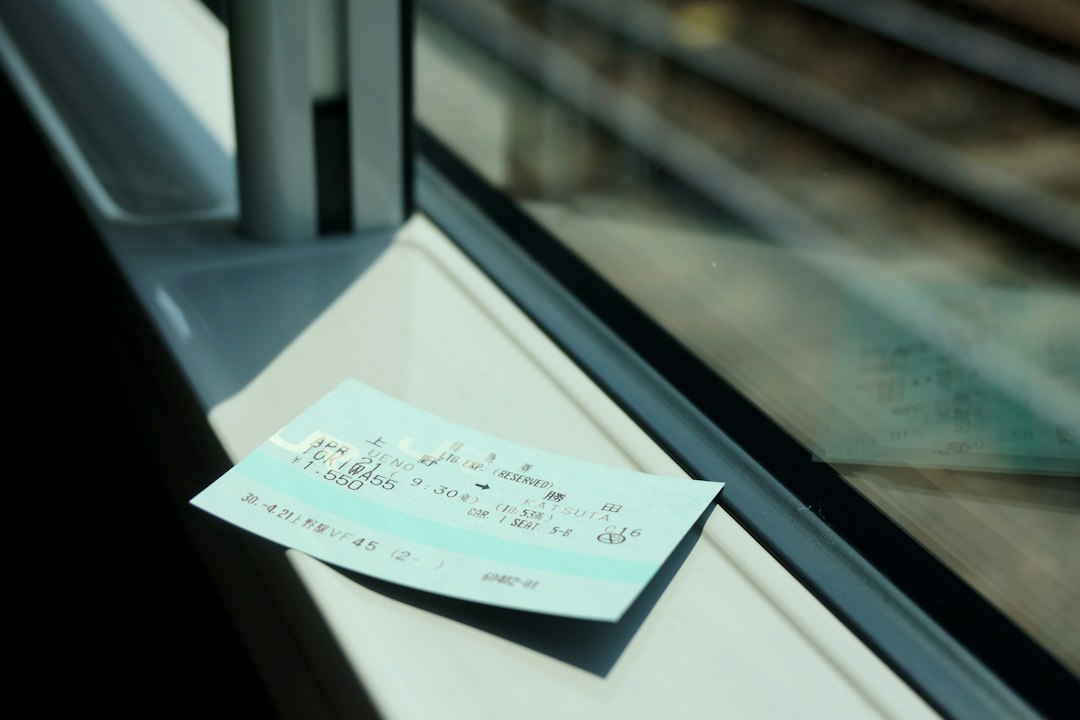
Adult admission is ¥2,000 on the day, or ¥1,800 if you buy online in advance. University and high school students pay ¥1,600 on the day or ¥1,400 online, and junior high and elementary students pay ¥800 or ¥600.
The museum’s own website also carries a ¥100 discount voucher you can present at the counter, usable for a group of up to fourteen people and not combinable with other discounts. Buying online is the larger saving of the two.
Check the current price before you go rather than trusting a figure in an older guide. Admission here has risen more than once in recent years, and a lot of travel pages still quote ¥1,600.
Hours and the Last Admission Trap
The museum is open 9:00 to 17:00, every day of the year, with last admission at 16:30.
Half past four is a hard cutoff, and it catches people who spend the morning on the lake and assume they can add the museum afterwards. Arriving at 16:20 buys you forty minutes on a site that deserves two hours.
If your day is running late, drop the museum and keep it for the following morning rather than compressing it. It is not an attraction that rewards a rushed walk-through.
How Much Time It Actually Takes
Plan two to three hours. One hour is enough to walk the main path and leave, and that is what most day-trippers do, but it skips the Picasso hall or the tower or the foot bath, and usually all three.
Photographers should assume three. The light moves across the terraces through the day and the same sculpture gives you a different picture at ten and at three.
Families with small children should also assume three, for different reasons. There are play structures on site and getting children past them quickly is not a realistic plan.
Expert Tip
Walk the grounds in the order the weather dictates, not the order the map suggests. Clear sky means outdoor first, indoor halls in the afternoon when the light flattens. Rain or heavy cloud means the reverse — Picasso hall and the stained glass tower first, then the lawns if it eases. The site is a loop, so nothing is lost by reversing it.
The Parts Most Visitors Underuse
Three things on this site consistently get skipped by people moving through on a tight circuit, and all three are better than the thing they hurried off to instead.
The Foot Bath at the End
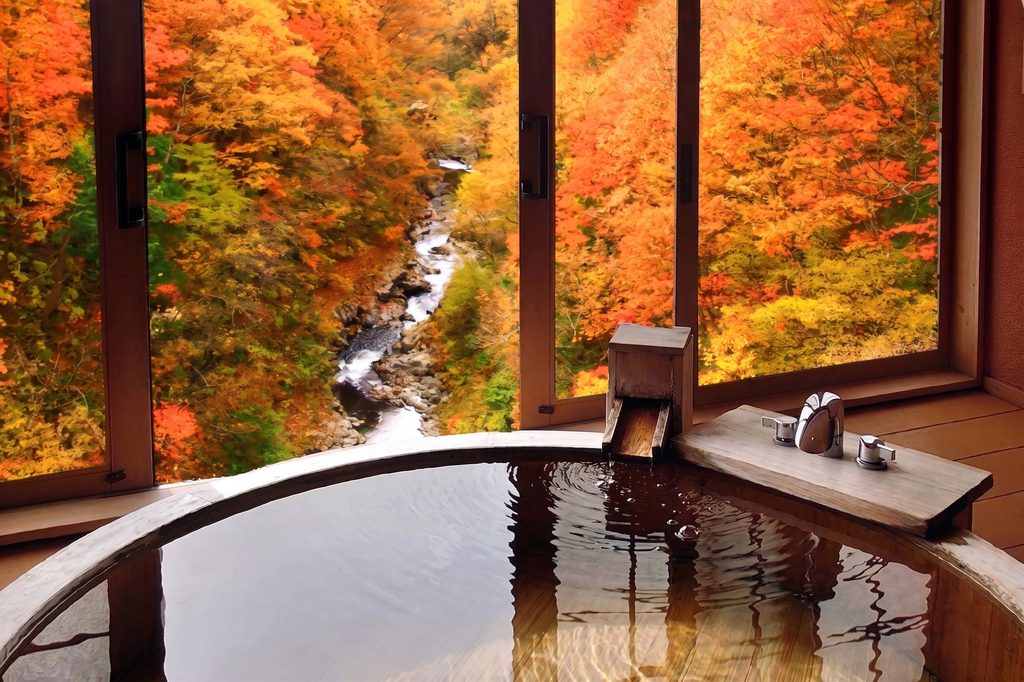
There is a hot spring foot bath on the grounds, fed by Hakone’s own water, with mountain views from the bench. It is included with admission, and small towels are sold on site for those who arrive without one.
Sitting in it after two hours of walking a slope is the correct way to end the visit. We say this to travellers regularly and they still walk past it on the way in and then run out of time.
A foot bath is also a low-commitment introduction to Hakone’s water for anyone unsure about a full onsen later in the trip. No undressing, no rules to learn, no question about tattoos.
Woods of Net and Traveling With Children
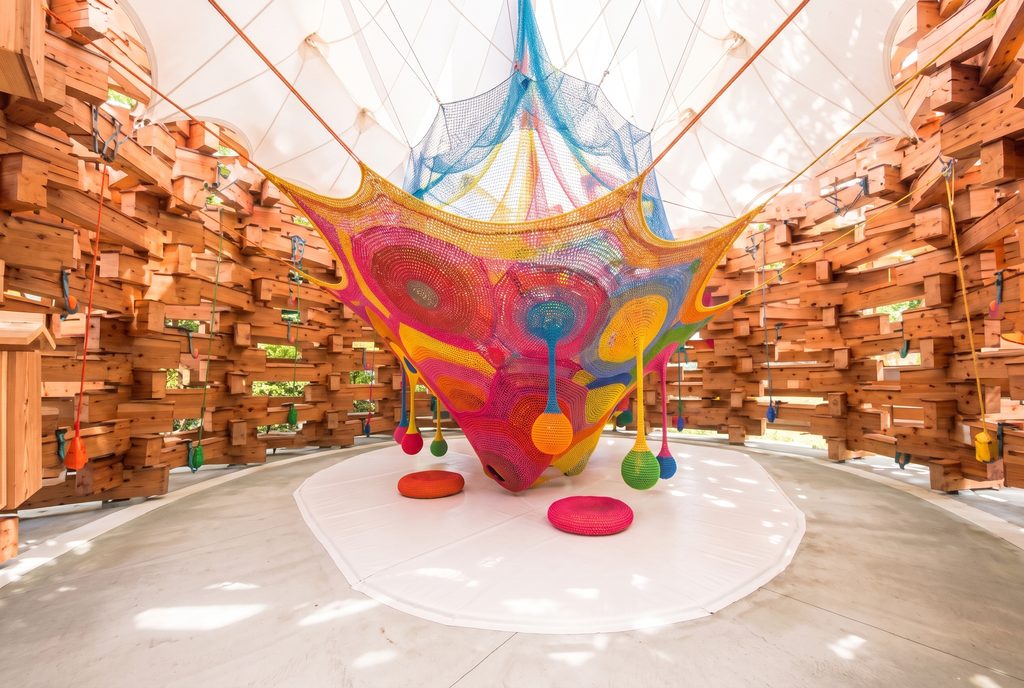
Woods of Net is a large hand-knitted net installation by the textile artist Toshiko Horiuchi MacAdam, housed inside a wooden structure, and children climb inside it. It is an artwork that happens to be a playground.
It closes in poor weather, which is worth knowing if you are travelling with children on a wet day and building your plan around it.
Of all the places we send families in Hakone, this museum is the one that works best across a wide age range. Adults get a serious sculpture collection and children get somewhere to run, and neither group is waiting on the other.
Eating, Resting, and the Order to Walk It
There are cafes and rest areas across the grounds, including sheltered spots designed for sitting rather than eating. Nobody comes to Hakone for museum food, but it removes the need to leave the site and come back.
Our suggested sequence is outdoor terraces first, Picasso hall in the middle when your legs want a break, then the tower, then the foot bath on the way out. That puts the two seated activities in the second half of the visit.
Plan on one continuous visit rather than stepping out for lunch in Gora and coming back. If re-entry matters to you, ask at the counter on the way in.
Hakone Open Air Museum: Frequently Asked Questions
Is the Hakone Open Air Museum worth it if it rains?
Yes, with a change of plan. The Picasso Pavilion, the rotating indoor exhibition halls, and the stained glass tower are all sheltered and account for a reasonable share of the collection. The outdoor sculptures remain viewable under an umbrella, though wet grass makes the terraces less comfortable and the net play structure closes in poor weather. If the forecast is heavy all day, this is a better rain option than the ropeway, which loses its entire view.
Can I visit the museum and Owakudani in the same day?
Yes, but it makes for a long day and something gets shortened. The museum sits on the Gora side of the mountain and Owakudani is beyond the ridge by ropeway, so you are crossing Hakone between them. Starting at the museum at opening and moving west afterwards works better than the reverse, because the museum’s 16:30 last admission is unforgiving and the ropeway runs later. Travellers who want both without rushing usually stay a night in Hakone.
How long should I plan for the Hakone Open Air Museum?
Two to three hours for a proper visit. An hour covers the main outdoor loop and nothing else. Two hours gets you the sculptures plus the Picasso hall or the tower. Three hours covers everything including the foot bath, and is what we suggest for anyone travelling with children or carrying a camera they care about.
Related Tours
Conclusion
Book the museum for a morning rather than an afternoon. Opening at nine gives you the terraces before the coach groups arrive, the tower before it queues, and enough margin that the 16:30 cutoff never enters the conversation.
Buy the ticket online before you leave your hotel. It saves ¥200 a head, removes a queue at the counter, and takes less time than reading this paragraph.
Then walk it in whatever order the sky tells you to, and leave twenty minutes at the end for the foot bath. Of everything on this site, that is the part travellers write to us about afterwards — which says something about what a good museum visit actually consists of.
Plan Your Japan Trip with Local Experts
Our team has guided 40,000+ travelers across Japan. Tell us about your trip and we’ll get back to you within 24 hours.