In this article:
- The Sacred Sport
- Attending a Grand Tournament
- Getting Tickets
- Watching Morning Practice
- Chanko Nabe: The Wrestlers’ Stew
- Sumo Wrestling: Frequently Asked Questions
Introduction
Sumo looks simple — two enormous men try to force each other out of a ring — but it is one of the most ritual-laden sports on earth. Every bout is wrapped in centuries of Shinto ceremony: the salt thrown to purify the ring, the stamping, the slow, tense staredowns, and then an explosive clash that is often over in seconds.
Seeing it live, whether at a grand tournament or a stable’s morning practice, is unforgettable. Here is how to experience Japan’s national sport.
The Sacred Sport
Understanding the ritual transforms sumo from a curiosity into something profound.
Shinto Ritual
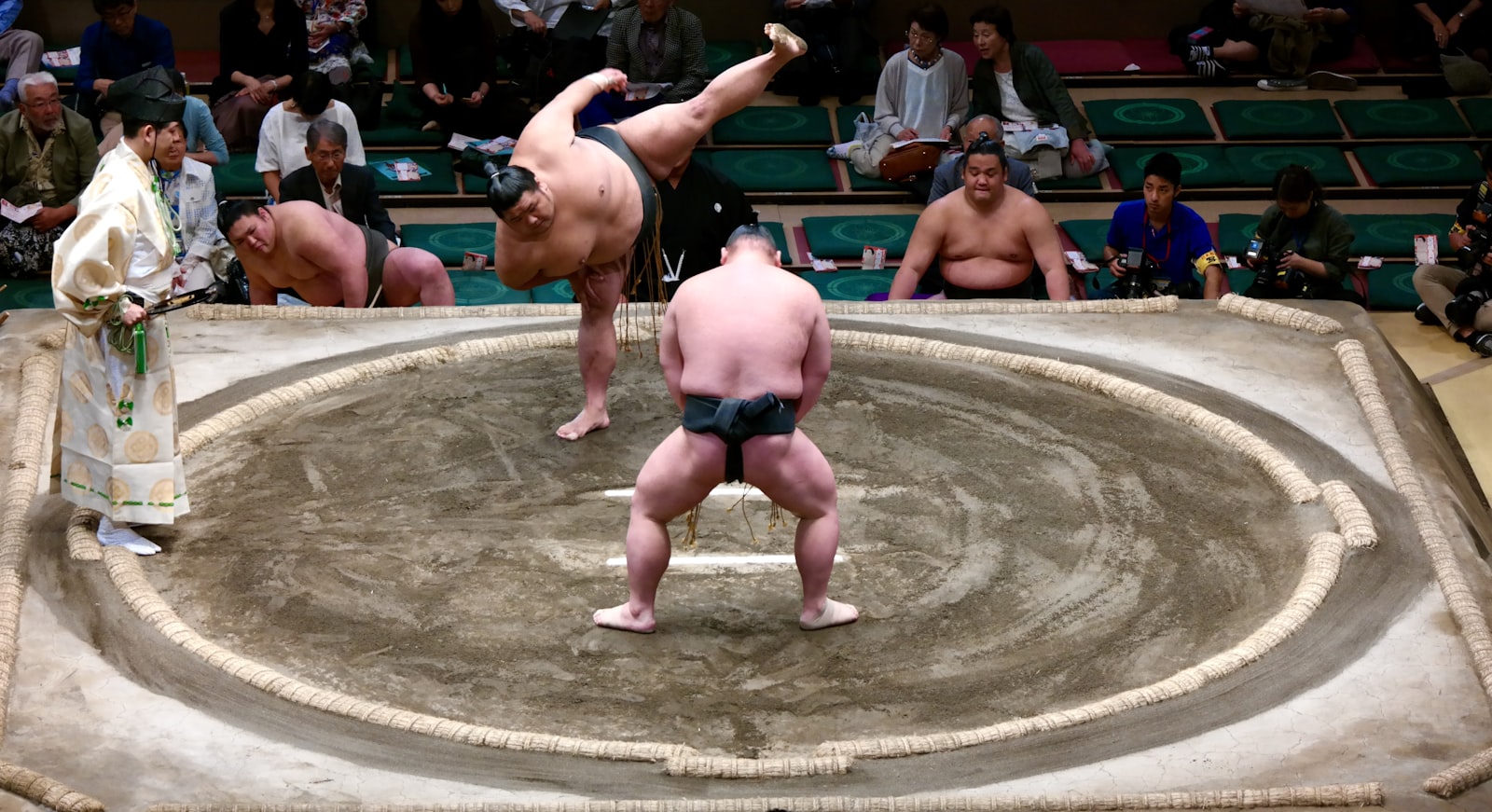
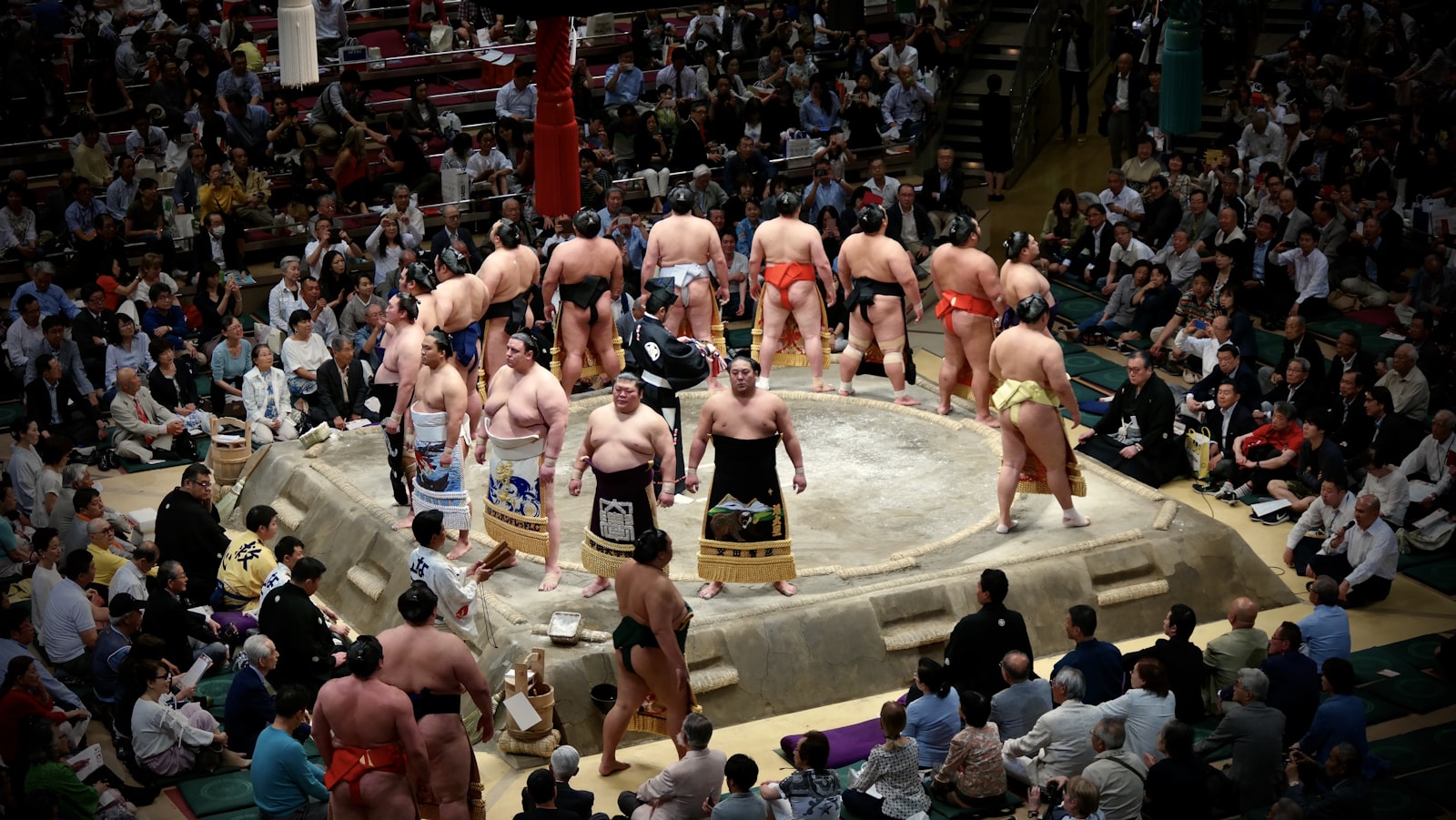
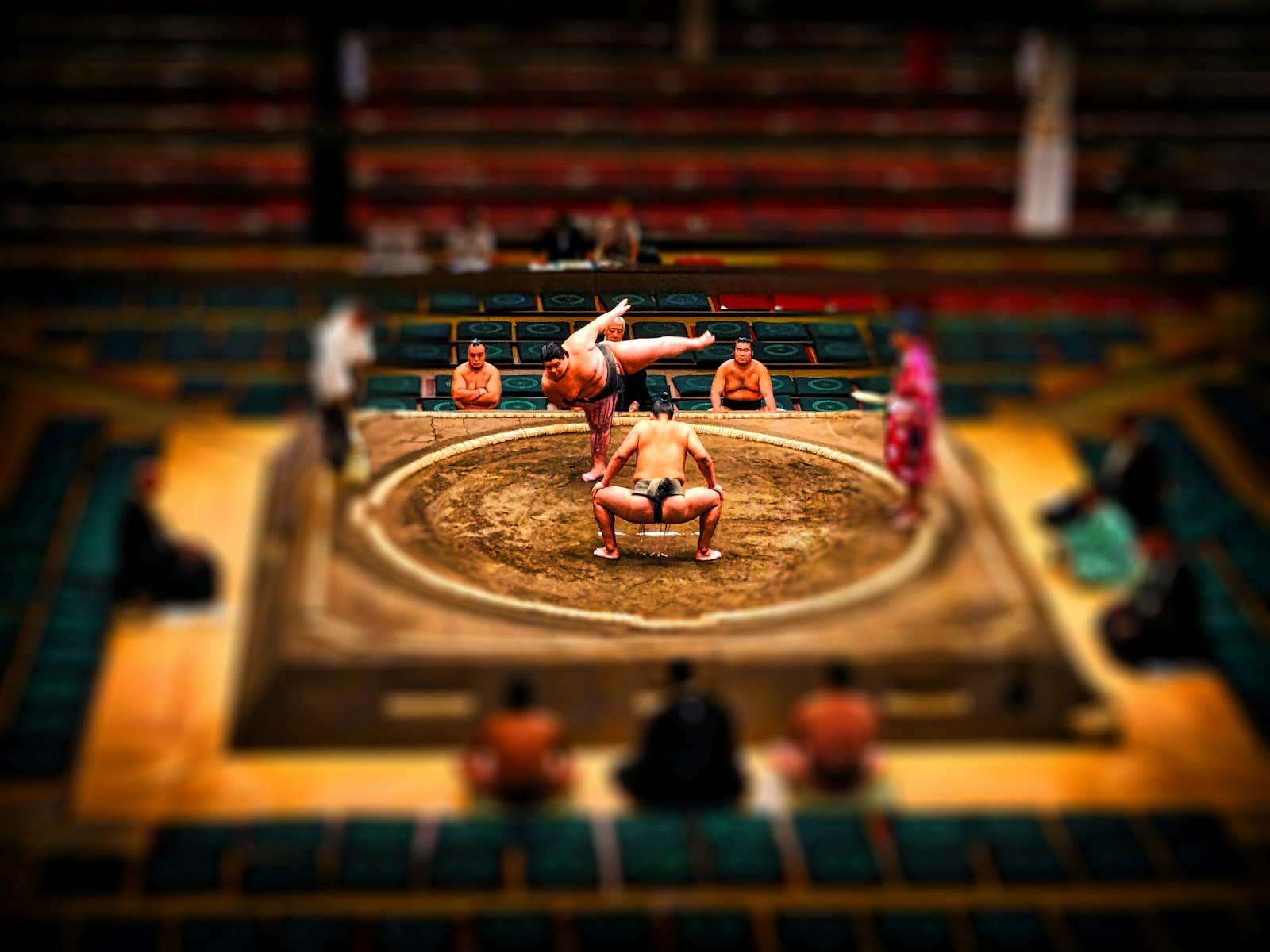
Sumo is steeped in Shinto: wrestlers throw salt to purify the ring, perform the leg-stamping shiko to drive away evil, and compete on a sacred clay ring (dohyo). These are not showmanship but genuine religious ritual, rooted in sumo’s origins as an offering to the gods. The ceremony is as much the point as the fight.
The Ranks
Wrestlers rise through a strict hierarchy of divisions, from the lowest ranks up to the elite makuuchi and, at the very top, the yokozuna grand champion. Following the ranking system, and the rise and fall of wrestlers within it, adds depth to watching. The top ranks carry immense prestige.
The Referee
The gyoji referee, in elaborate silk robes and carrying a ceremonial fan (and, at the highest level, a dagger symbolizing the gravity of their judgment), is a spectacle in themselves. Their traditional dress and ritual role are part of sumo’s rich visual pageantry.
Attending a Grand Tournament

The Six Tournaments
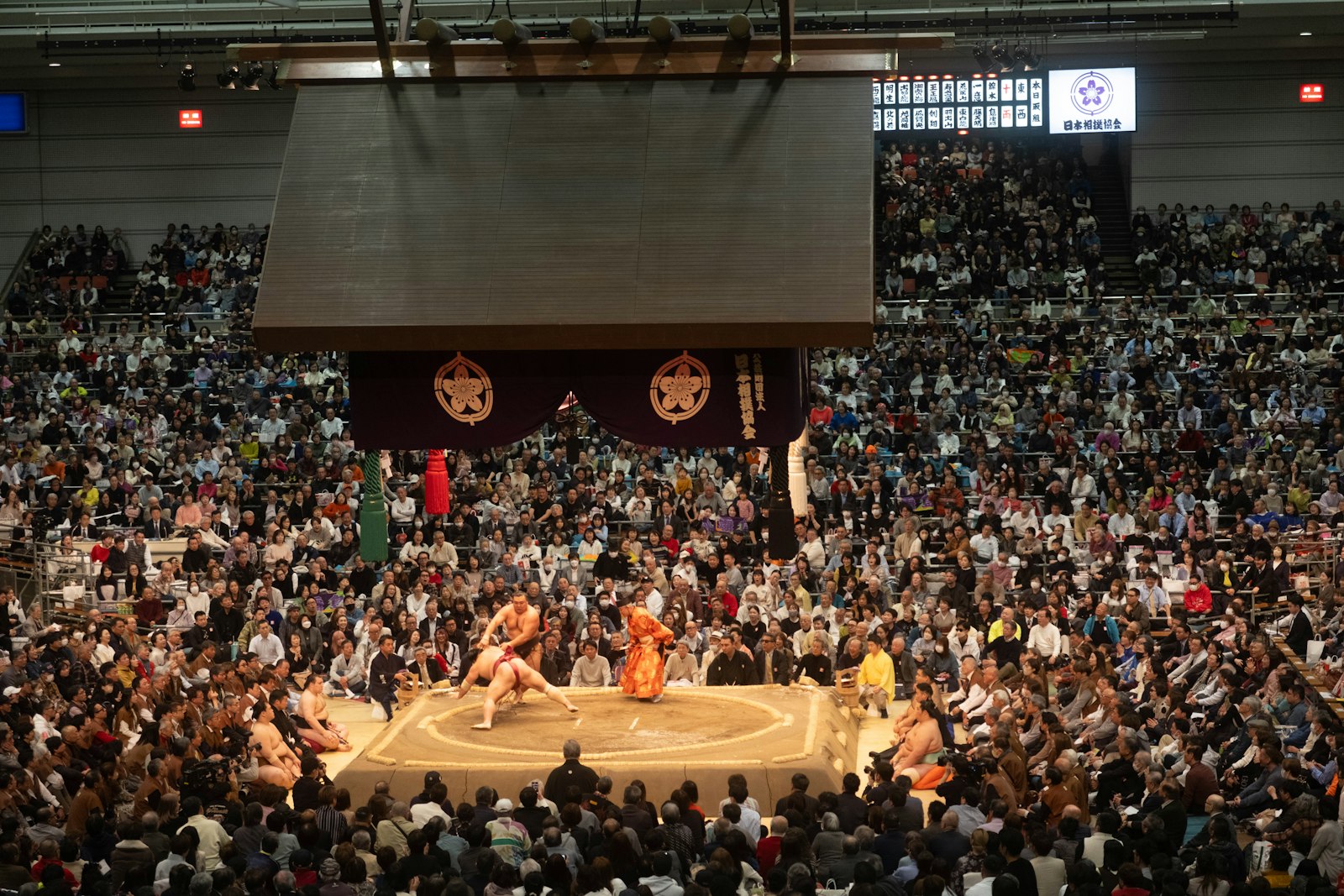
Six grand tournaments (honbasho) are held each year, each lasting fifteen days: three in Tokyo (January, May, September), and one each in Osaka (March), Nagoya (July), and Fukuoka (November). If your trip overlaps with a tournament in one of these cities, attending is a highlight. Check the calendar against your dates.
The Day’s Schedule
A tournament day runs from morning, with the lowest-ranked wrestlers, building through the afternoon to the top makuuchi division bouts in the late afternoon, around 4:00 PM onward. The atmosphere intensifies as the day progresses. Arrive early to see the lower ranks in a quiet arena, or come for the exciting top-division finale.
Following the Tournament
Each tournament follows the banzuke ranking sheet, and wrestlers compete for the Emperor’s Cup championship, with standings shifting daily. Following the bouts and the race for the title over the fifteen days gives the tournament a compelling arc, even for newcomers.
Getting Tickets
Box Seats
Traditional box seats (masu-seki) are floor-level squares where you sit on cushions, usually sold for a group of several people, giving the closest, most atmospheric view. They are pricier and sell out fast for popular days, but they are the classic way to watch. Book early.
Arena Chair Seats
Balcony chair seats offer a more affordable, conventional seated view, well suited to solo travelers and those on a budget. They are further from the ring but still give a fine view of the whole arena and the ceremony.
Buying Tickets
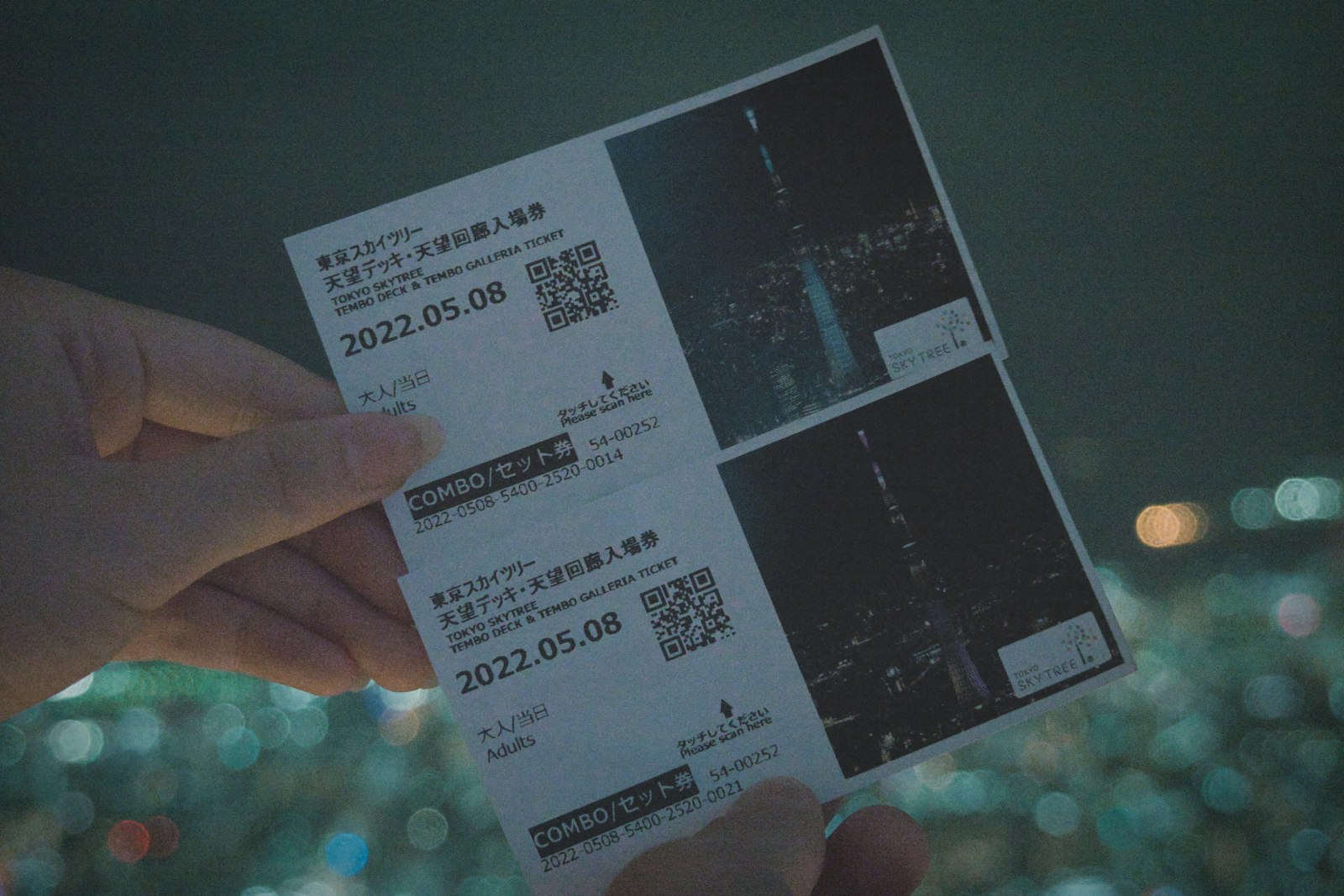
Tickets are sold through the official channels and authorized agencies, and popular days — weekends, and the final days of a tournament — sell out well in advance. Book as early as you can, and check official platforms for English-language purchasing. Some same-day tickets exist but are not guaranteed.
Watching Morning Practice
Visiting a Stable
If no tournament coincides with your trip, you can sometimes watch a sumo stable’s intense early-morning practice (keiko) in Tokyo’s Ryogoku district, the heart of the sumo world. Watching wrestlers train up close, sometimes just feet away, is a rare and powerful experience.
Stable Etiquette
Stable visits demand strict etiquette: sit still and silent, do not disrupt the training, and turn off camera flashes. You are a quiet guest in a serious, disciplined environment. Following the rules exactly is essential, as stables extend this access on the condition of respectful behavior.
Guided Tours
Because access and etiquette are strict, booking an authorized morning-practice tour with an English-speaking guide is the easiest and most reliable way to visit a stable respectfully. The guide arranges access and explains what you are seeing. This is the recommended route for visitors.
Chanko Nabe: The Wrestlers’ Stew
What Is Chanko Nabe?
Chanko nabe is the hearty hot-pot stew that sumo wrestlers eat to build their size — a protein-rich, endlessly varied pot of meat, fish, tofu, and vegetables in a savory broth. Far from bland training food, it is genuinely delicious and warming, and a meal in its own right.
Where to Eat It
The Ryogoku district has restaurants, many run by retired wrestlers, serving authentic chanko nabe. Eating it in the neighborhood that is the home of sumo, perhaps prepared by a former wrestler, connects the meal to the sport. It is a fitting way to round out a sumo day.
Pairing It
Chanko nabe pairs naturally with cold draft beer or sake in a relaxed izakaya setting, making for a convivial, filling meal. It is comfort food built for sharing, and a warm, satisfying end to a day of sumo. Go hungry.
Expert Tip
If your trip does not coincide with a tournament, book an authorized morning-practice (keiko) tour instead — do not try to turn up at a stable on your own. Stable visits require strict silence, stillness, and etiquette, and access is a privilege extended on those terms; arriving uninvited or behaving disruptively can get visitors banned. A guided tour handles the arrangements, explains the training, and lets you watch this intense, private world respectfully and up close, often just feet from the wrestlers.
Sumo Wrestling: Frequently Asked Questions
Can I buy same-day tickets at the arena? A limited number of same-day tickets are sometimes available at the box office, but they are not guaranteed, especially on popular days. Booking in advance through official channels is far safer for securing a seat.
Can I bring outside food and drink? Policies vary by venue, and traditional box seats have historically had a relaxed food-and-drink culture, but confirm the current arena rules. Food and drink are also sold inside, including sumo-themed snacks.
How do I book a stable morning-practice tour? The most reliable way is through an authorized tour operator offering guided keiko visits with an English-speaking guide, who arranges access and briefs you on etiquette. Book in advance, as spots are limited.
Related Tours
Conclusion
Sumo is far more than a sport — it is living ritual, a Shinto ceremony of salt and stamping and centuries of tradition around each brief, explosive clash. Whether at a grand tournament or a hushed morning practice, seeing it live is one of the most powerful cultural experiences Japan offers.
Plan Your Japan Trip with Local Experts
Our team has guided 40,000+ travelers across Japan. Tell us about your trip and we’ll get back to you within 24 hours.