In this article:
- What a Japanese tea ceremony actually involves
- The different types of tea ceremony experience available in Tokyo
- How to choose: tourist-facing vs. authentic
- What happens during the ceremony
- Etiquette and what to know beforehand
- The best areas in Tokyo for a tea ceremony experience
- Practical details: cost, booking, and duration
Introduction
The Japanese tea ceremony (chado or chanoyu) is one of the most misunderstood cultural experiences available to visitors in Japan. The misunderstanding usually goes in one of two directions: either it’s treated as a quaint performance, a photo opportunity in a tatami room with borrowed kimono, or it’s assumed to be an austere, inaccessible art form that requires years of prior study to appreciate.
Neither is accurate. A properly conducted tea ceremony is a disciplined practice built around specific principles — harmony (wa), respect (kei), purity (sei), and tranquility (jaku) — that are expressed through the precise preparation and drinking of matcha. The room, the utensils, the movements, the garden outside the window, the specific sweet served before the tea: each element is chosen to create a coherent aesthetic experience. You don’t need to understand the philosophy to feel that coherence.
What you do need is the right experience. Tokyo has dozens of tea ceremony offerings, ranging from genuinely thoughtful introductions to the practice, to performances staged for tourist throughput with no real contact with the tradition. This guide explains how to tell them apart and what to expect from the real thing.
What a Japanese Tea Ceremony Actually Involves
The Structure
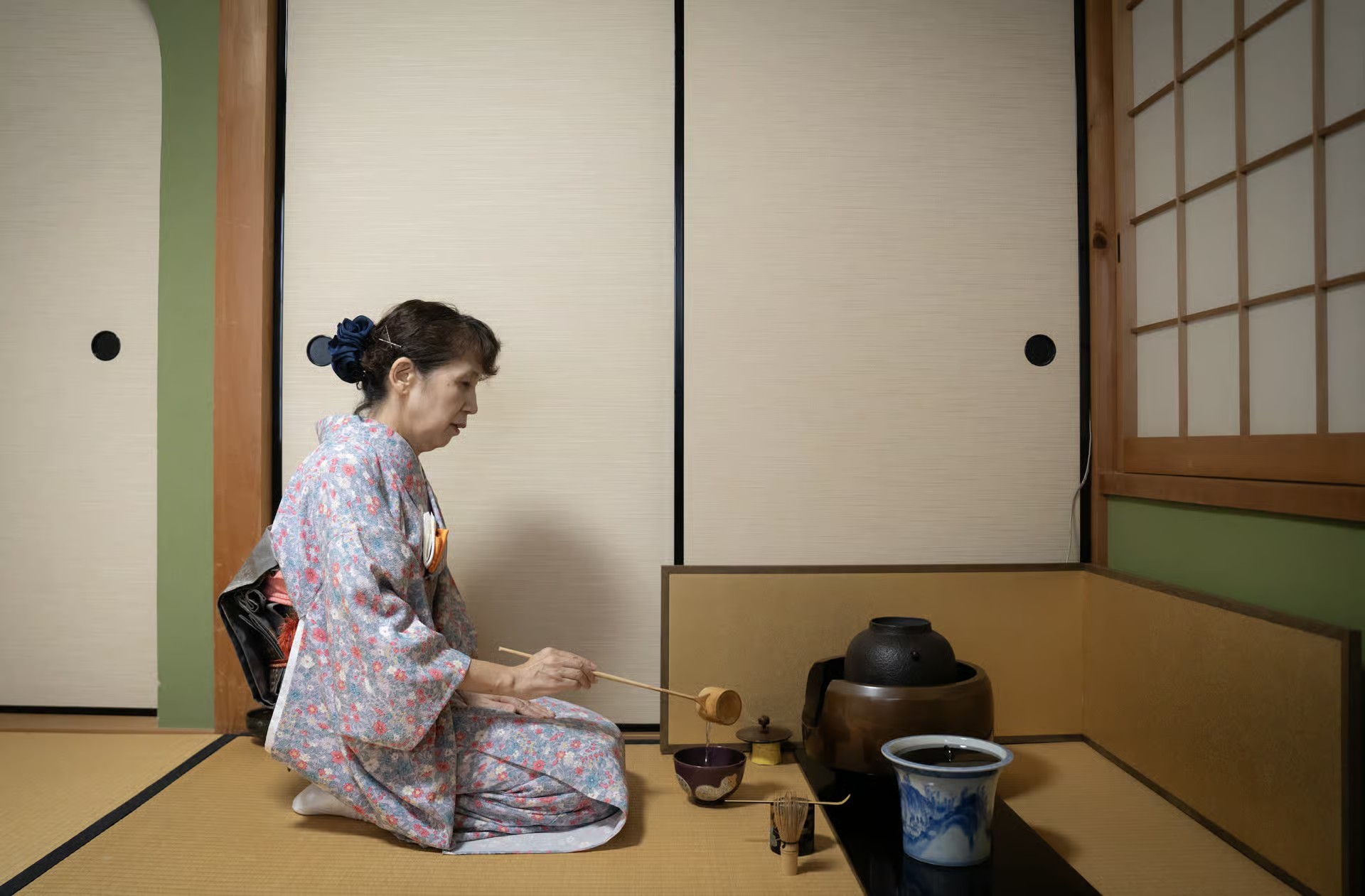
A formal tea ceremony (chaji) can last four hours. The abbreviated version offered to visitors (temae or chakai) runs 45 minutes to two hours and covers the essential elements: entering the tea room, sitting on tatami, receiving a seasonal sweet, watching the host prepare matcha with specific utensils and movements, receiving the bowl, drinking, and examining the utensils.
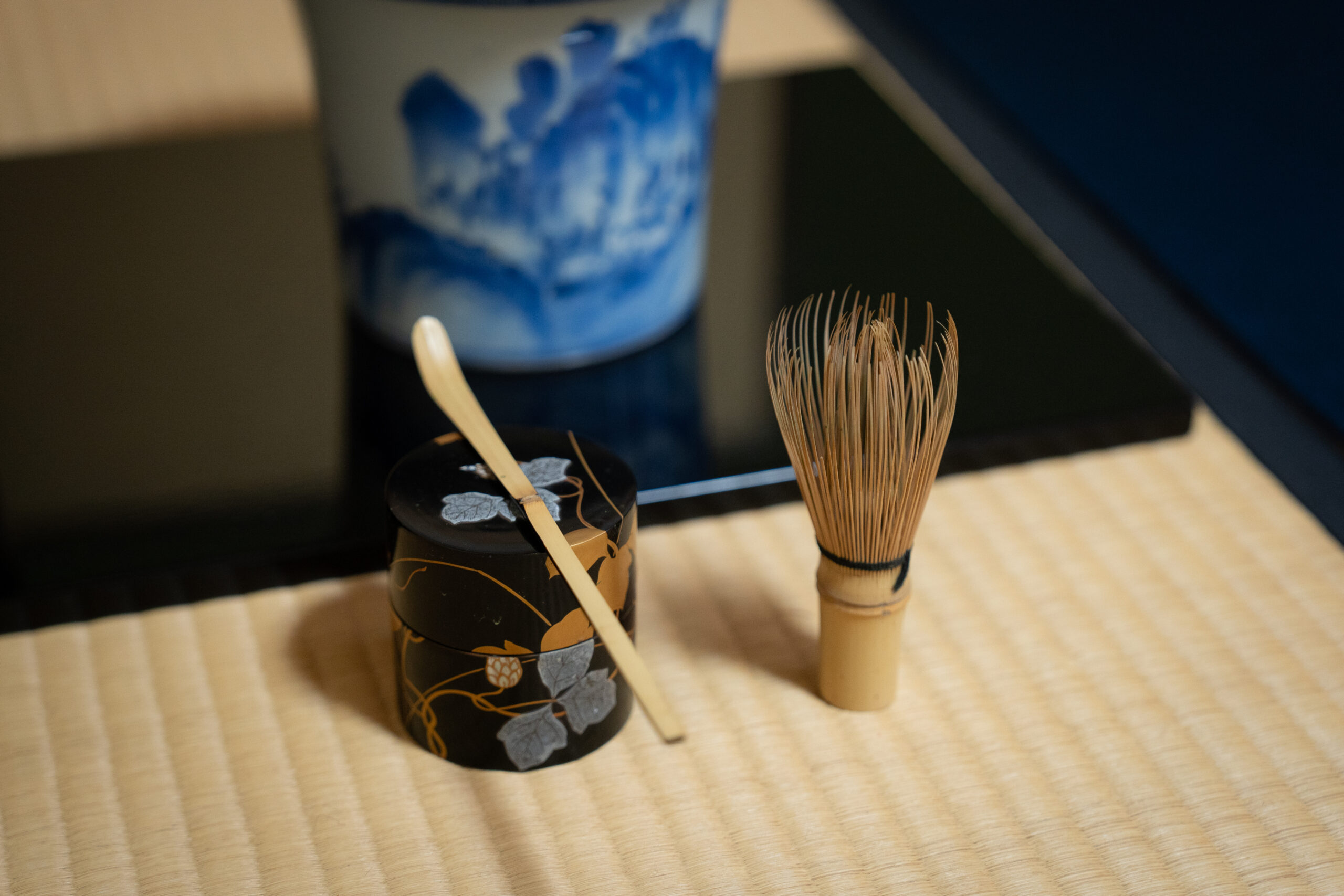
The preparation is not decoration — it’s the content. The way the host holds the chakin (tea cloth), the angle at which the chasen (bamboo whisk) enters the bowl, the specific sound of the water ladled from the iron kettle: these are practiced to a standard that represents decades of training. Watching this is part of the experience.
Matcha and the Sweet
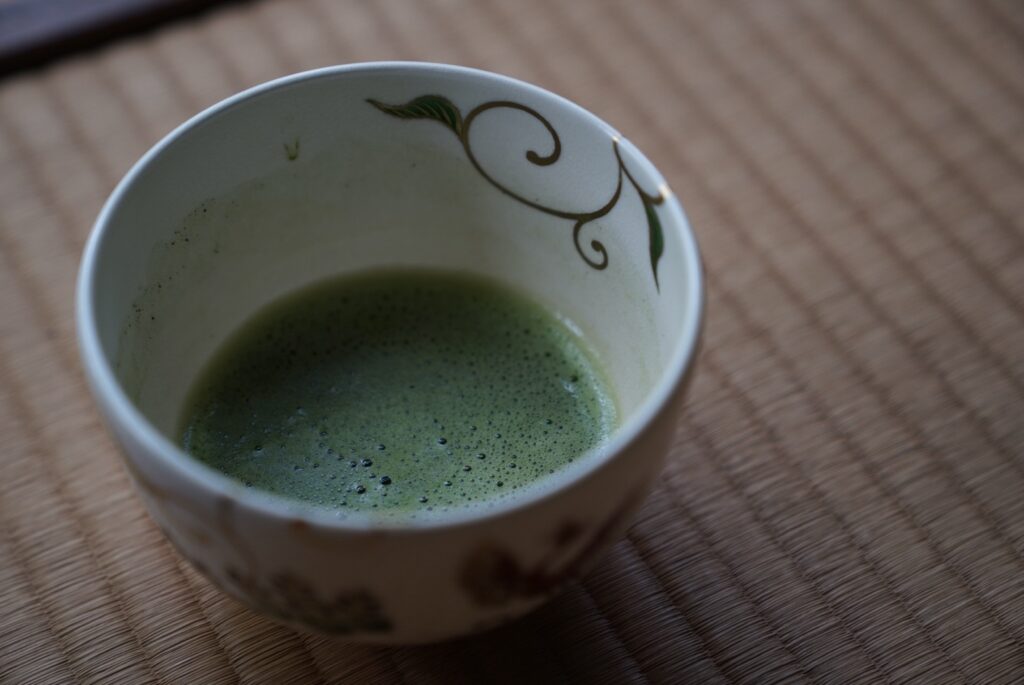
The matcha served in a ceremony is not the same product as the matcha latte at a café. It’s typically ceremonial-grade powder from a specific region (often Uji, Nishio, or Yame), prepared with water at a precise temperature, and produced with a texture and foam specific to the whisk technique. Immediately before the matcha, a small seasonal sweet is served — typically wagashi made from bean paste or rice flour — calibrated to balance the bitterness of the tea.
Types of Tea Ceremony Experience in Tokyo
Tourist-Facing Experiences
The most visible tea ceremony experiences in Tokyo — the ones appearing prominently in search results and booking platforms — are typically 30-45 minute group sessions designed for visitor throughput. Participants sit in a row, watch a brief preparation, receive a bowl and a sweet, and leave. Some include kimono rental and photography. These are not ceremonies — they’re demonstrations.
They’re not worthless. A 30-minute demonstration gives you a basic understanding of the visual structure of the practice. However, if the goal is genuine engagement with chado, these experiences don’t deliver it.
Small Group and Private Introductions
A step up from the demonstration format is the small group or private introduction run by practitioners with genuine training — typically from one of the established schools (Ura Senke, Omote Senke, Mushanokoji Senke). These sessions run 60–90 minutes, involve actual participation (you prepare a bowl under guidance), and include enough explanation of the philosophy to make the practice legible. Budget ¥3,000–6,000 per person.
Traditional Tea House Settings
The highest quality tea ceremony experiences in Tokyo take place in traditional tea houses set in proper gardens. Hamarikyu Gardens and Shinjuku Gyoen both have tea houses operated by trained practitioners — these are not specialist experiences, but the setting (tatami room, garden, correct utensils) places the practice in its intended physical context in a way that a hotel function room cannot. Budget ¥1,000–2,000 plus garden admission.
Expert Tip
When evaluating tea ceremony experiences, look for two things: mention of specific school training (Ura Senke or Omote Senke trained practitioners are the most common), and a maximum group size. A session with more than eight participants typically cannot involve genuine instruction. A session with four or fewer people can produce real engagement with the practice. The price is not a reliable indicator of quality in this category.
What Happens During the Ceremony
Before You Enter
Traditional tea rooms are entered through a nijiriguchi — a small crawling entrance that requires everyone, regardless of status, to bow to enter. This architectural feature deliberately equalizes the space. In most visitor experiences, a modified version of this approach is used, but understanding the intention helps frame the experience.
You’ll remove your shoes before entering. If wearing socks with a hole, patch beforehand — it’s the kind of thing that’s noticed in a tatami room.
During the Ceremony
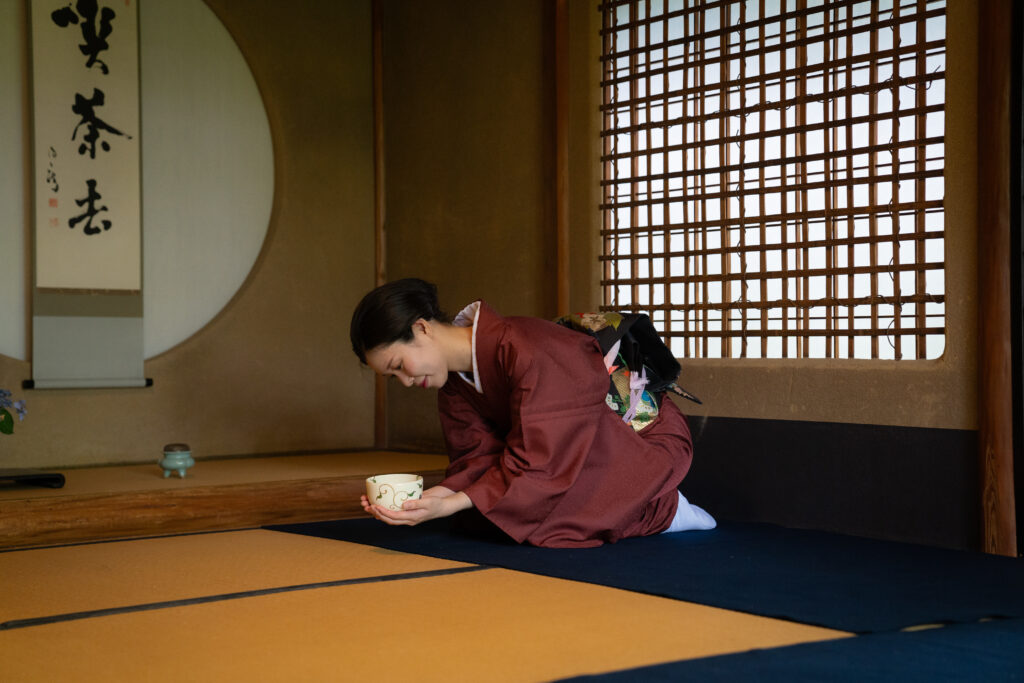
Sit on your heels (seiza) if you can manage it, but many tea rooms now accommodate sitting cross-legged for visitors who find seiza uncomfortable. The host will indicate.
When the sweet is placed before you, eat it before the tea is prepared — not simultaneously. When you receive the bowl, rotate it clockwise twice (about 90 degrees total) before drinking. This turns the “front” of the bowl away from you before drinking, a gesture of respect for the object. After drinking, wipe the rim with the right hand and return the bowl.
These are the gestures. The intention behind them — the attention to the object, the acknowledgement that you’re in a specific practice — is the actual content.
The Best Areas in Tokyo for a Tea Ceremony Experience
Hamarikyu Gardens has a traditional tea house (Nakajima no Ochaya) on an island in the tidal pond, open for casual tea service (¥700 including matcha and a sweet). The setting — a Edo-period garden in the middle of the bay, with contemporary Tokyo towers visible in every direction — is specific to Tokyo and provides a context that tourist-district tea rooms don’t have.
Yanaka and Nezu, the old-city neighborhoods in northeast Tokyo, have several practitioners offering small group experiences in traditional machiya buildings. The setting is less famous than Hamarikyu but more intimate, and the practitioners are often more willing to answer questions about the practice.
Practical Details: Cost, Booking, and Duration
Casual tea service at Hamarikyu: ¥700, no reservation required, 20 minutes. Small group introduction with practitioner: ¥3,000–6,000, book 1–2 weeks in advance. Private session: ¥8,000–15,000 for 60–90 minutes, book 2–4 weeks in advance. Hotel tea ceremony experiences (Four Seasons, Park Hyatt): ¥5,000–10,000, professional quality, book through hotel concierge.
Frequently Asked Questions
Do I need to know anything about tea ceremony before attending? No prior knowledge required. A good practitioner will explain everything. However, reading a single paragraph about the principles beforehand (wa-kei-sei-jaku) makes the experience more legible.
Do I have to wear a kimono? No. Many tourist experiences offer kimono rental; most genuine introductions do not require it. Wear clothing you can comfortably sit on the floor in.
Is tea ceremony in Tokyo as good as in Kyoto? Different, not worse. Tokyo’s tea culture operates within a more urban context; the most famous tea practitioners and schools are based in Kyoto. However, some of Tokyo’s tea houses (Hamarikyu, traditional machiya settings in Yanaka) produce experiences specific to Tokyo that you can’t replicate in Kyoto.
Related Tours

Conclusion
A tea ceremony done well is not entertainment. It’s a practice that asks you to slow down, pay attention to a sequence of precise actions, and sit with the result. In a city moving as fast as Tokyo, that quality of attention is worth seeking out specifically. The right experience is available — it requires some discernment about which one.
Plan Your Japan Trip with Local Experts
Our team has guided 40,000+ travelers across Japan. Tell us about your trip and we’ll get back to you within 24 hours.