In this article:
- Winter Illuminations
- Christmas, Japanese Style
- Onsen in Winter
- Year-End Traditions
- Clear Skies and Early Snow
- Japan in December: Frequently Asked Questions
Introduction
Christmas is not a public holiday in Japan and 25 December is an ordinary working day. What Japan has instead is an illumination season of remarkable scale, a Christmas Eve that functions as a romantic evening rather than a family one, and a New Year that is the most significant holiday in the calendar.
For a visitor, the first three weeks of December are excellent value — clear cold weather, the best Mount Fuji visibility of the year, illuminations everywhere, and none of the crowds or prices of November.
Then from around 28 December the country shuts and travels, and the trip becomes a different proposition entirely.
Winter Illuminations
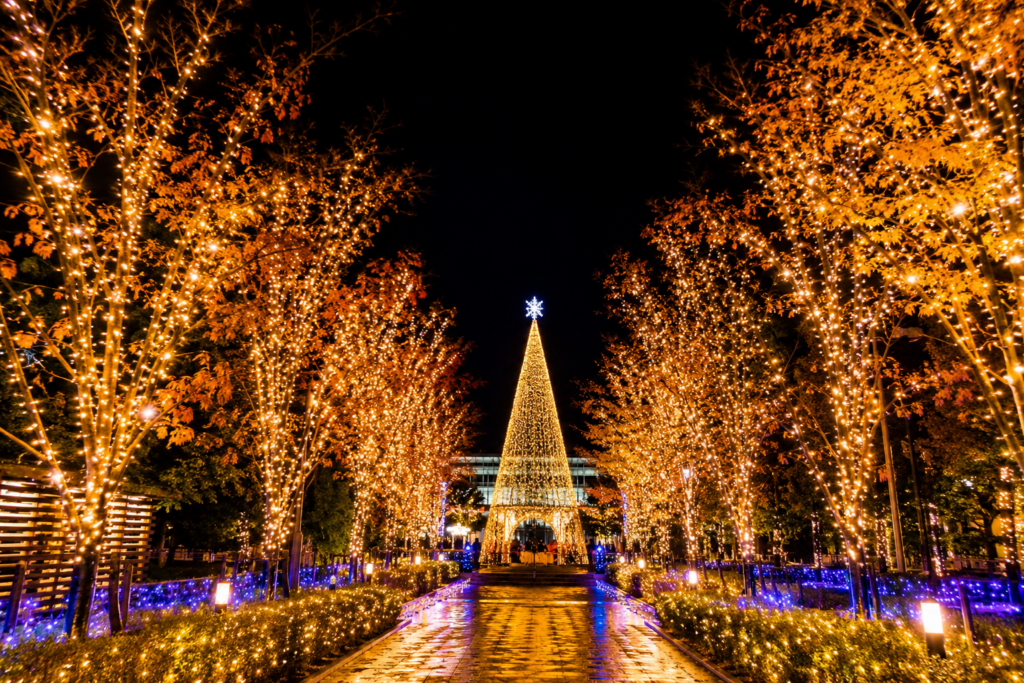
Japan takes illumination seriously in a way that has no real Western equivalent, and December is peak season.
Tokyo
Roppongi’s Keyakizaka slope, with Tokyo Tower framed at the end of it, is the most photographed. Tokyo Midtown, Marunouchi’s tree-lined avenue near Tokyo Station, and Shibuya’s Blue Cave are the other principal displays.
Caretta Shiodome runs a choreographed show set to music on a repeating schedule. Nearly all of these are free and run into late December or early January.
Nabana no Sato
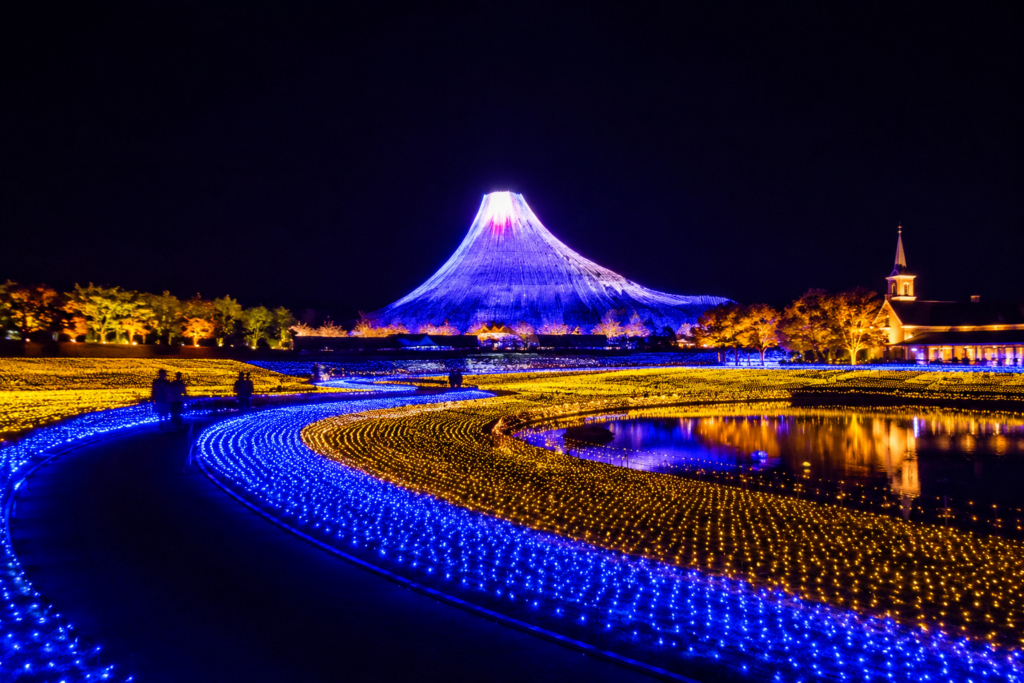
Nabana no Sato in Mie Prefecture is the largest illumination in Japan — many millions of LEDs across a botanical garden, including a 200-metre tunnel of lights and a large-scale animated display on a hillside.
It runs from late October to May and it is a destination in itself, about 30 minutes from Nagoya. It is substantially more impressive than anything in Tokyo and considerably less known internationally.
Theme Parks
Tokyo Disney Resort and Universal Studios Japan both run Christmas seasons through December, with dedicated parades and decoration.
They are extremely busy in the run-up to Christmas, particularly on the weekend before. Weekday visits in early December are the manageable option.
Expert Tip
Illumination sites are at their best in the half hour after sunset, when there is still colour in the sky behind the lights. In December that is roughly 4.30 to 5.15pm in Tokyo — much earlier than visitors expect. Arriving at seven means photographing lights against a black sky, which is a significantly weaker image.
Christmas, Japanese Style
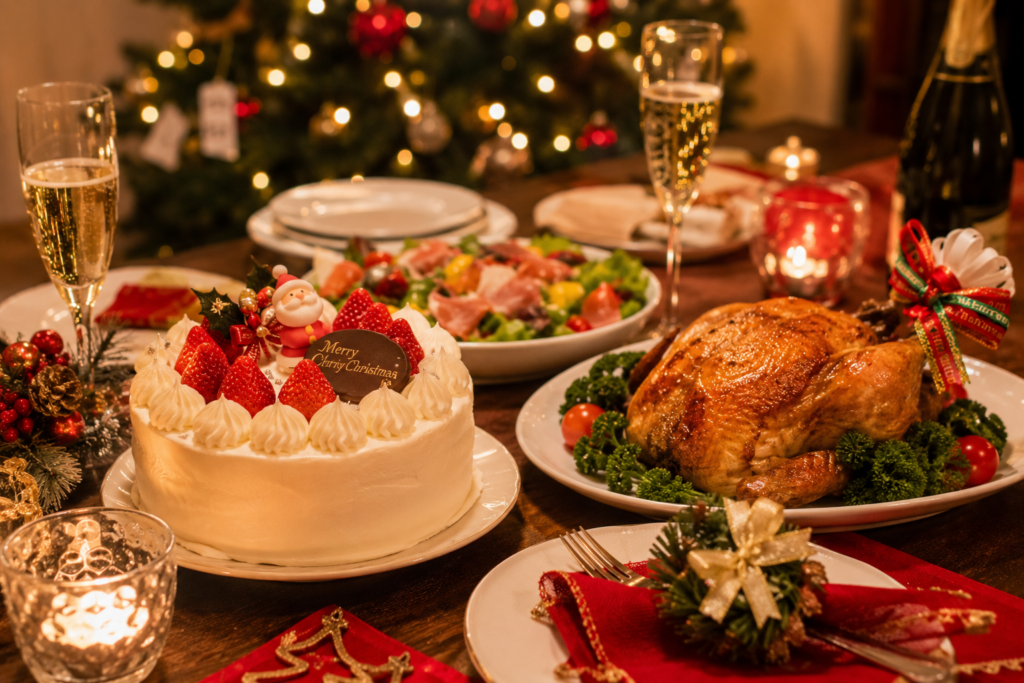
Japanese Christmas is a secular, commercial, and slightly odd occasion, and it is worth understanding before you arrive.
KFC
A 1974 marketing campaign — Kentucky for Christmas — established fried chicken as the Japanese Christmas meal, and it stuck completely.
Families order party buckets weeks in advance and queues at branches on 24 December run long enough that pre-ordering is genuinely necessary. It is one of the more successful advertising campaigns in commercial history and it is now simply what people do.
Christmas Cake
The Japanese Christmas cake is a sponge with whipped cream and strawberries, sold by every bakery, convenience store, and department store, and ordered in advance.
The phrase “Christmas cake” was once used as an unkind idiom about unmarried women past 25, on the basis that nobody wants the cake after the 25th. The idiom has faded; the cake has not.
A Couples’ Holiday
Christmas Eve in Japan is a romantic evening, closer in function to Valentine’s Day in the West. Restaurants run couples’ menus, hotels sell packages, and the illumination sites fill with couples.
Restaurant reservations on 24 December are difficult and premium-priced. If you want to eat well that evening, book weeks ahead or eat on the 25th, which is quiet.
Onsen in Winter
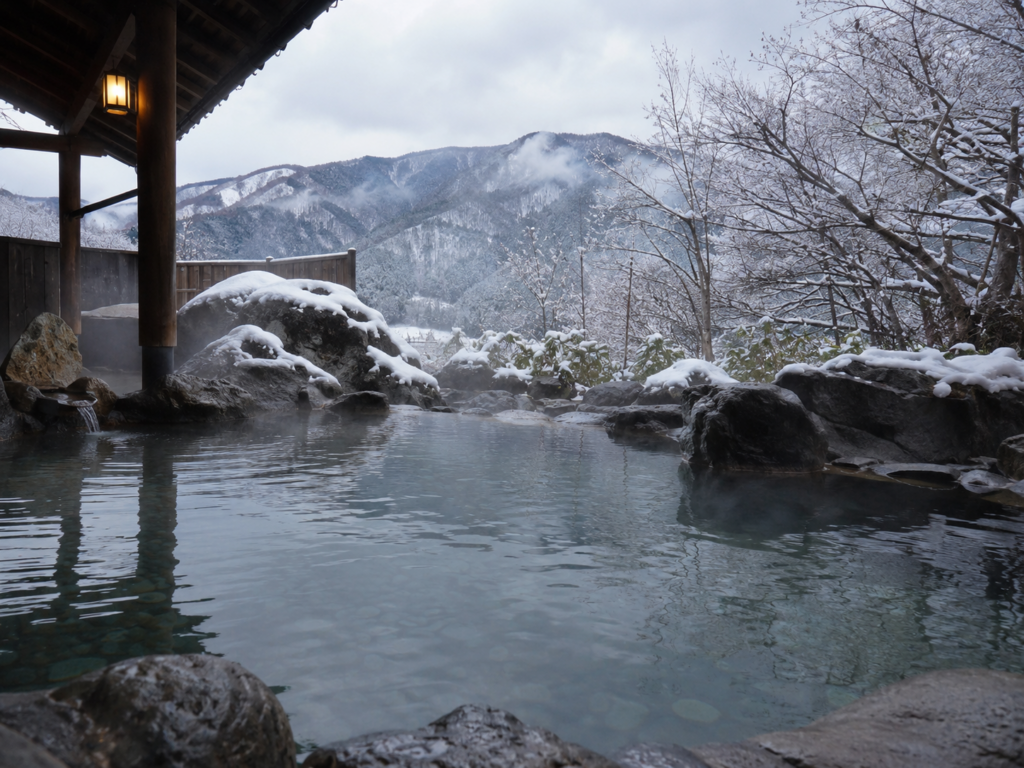
Cold weather is what onsen are for, and December is when they start working properly.
Kusatsu
Kusatsu in Gunma has one of the highest natural water outputs in Japan, and its yubatake — a wooden field of channels cooling the water in the town centre — steams dramatically in winter air.
The water is strongly acidic and genuinely medicinal in character. The yumomi performance, in which the water is cooled by stirring it with long wooden paddles rather than adding cold water, is staged several times daily.
Hakone
Hakone is the closest serious onsen area to Tokyo, about 90 minutes, and December offers its best Mount Fuji views of the year from the lake and the ropeway.
Ryokan with private open-air baths facing Fuji are the reason to come. They are expensive and they book ahead, particularly for weekends.
Kinosaki
Kinosaki in Hyogo is a canal town where guests walk between seven public bathhouses in yukata and wooden geta, and the sound of geta on stone is part of the experience.
It is also crab season. Kinosaki in December combines snow crab kaiseki with bathhouse hopping, and it is one of the more complete winter experiences in Japan.
Year-End Traditions
The last days of December have their own customs and they are more interesting than Christmas.
Bonenkai
Bonenkai — forget-the-year parties — run through December as companies and friend groups hold end-of-year drinking gatherings. Izakaya are fully booked most December evenings.
The atmosphere is noticeably looser than usual. If you want to eat at a popular izakaya in December, book, or go early before the parties arrive around seven.
Toshikoshi Soba
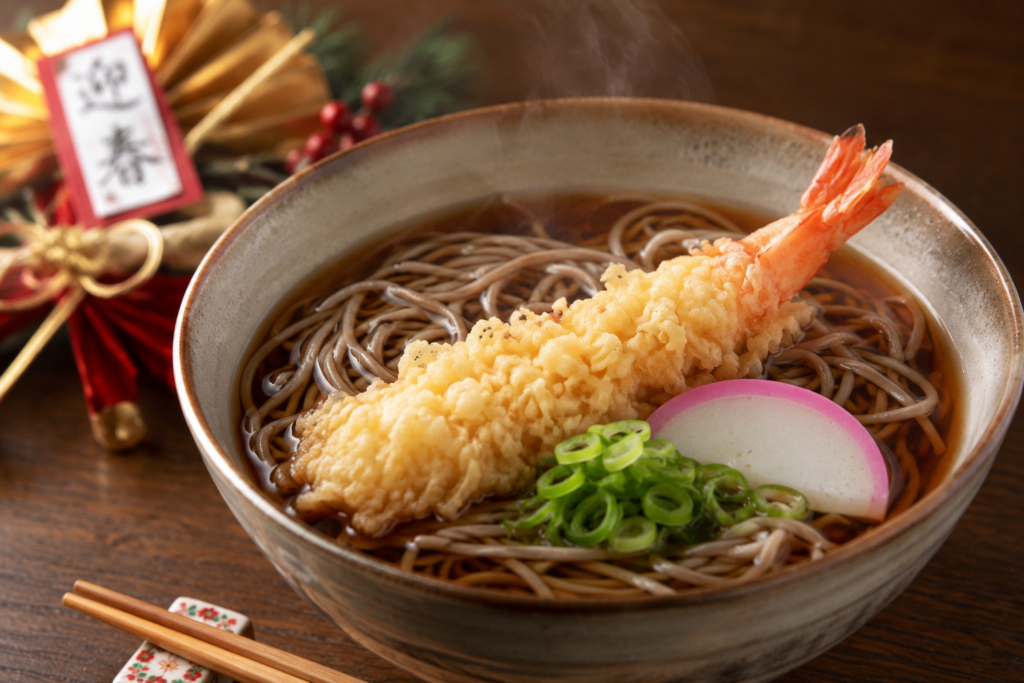
On 31 December, families eat buckwheat noodles — toshikoshi soba, year-crossing soba — because the long noodles symbolise a long life and buckwheat’s brittleness represents cutting off the year’s misfortunes.
Soba restaurants queue on New Year’s Eve. Convenience stores sell a version, and it is entirely normal to eat it that way.
Joya no Kane
At midnight, temples across Japan ring their bells 108 times, one for each of the earthly desires in Buddhist teaching. Many allow visitors to ring the bell themselves, sometimes by queue and sometimes by lottery.
Chion-in in Kyoto uses a bell weighing around 70 tonnes and requires seventeen monks to ring it. Zojo-ji in Tokyo, beneath Tokyo Tower, combines the bells with a balloon release at midnight.
Expert Tip
Japan does not do public countdowns the way Western cities do. Midnight is quiet, reflective, and largely conducted at temples and shrines rather than in squares. Visitors who go looking for a New Year’s Eve party will find a handful in Shibuya and be disappointed; those who go to a temple for joya no kane will find the thing the country actually does.
Clear Skies and Early Snow
December’s weather is cold, dry, and unusually clear.
Temperatures
Tokyo and Kyoto run roughly 4°C to 12°C, dry, with frequent sun. Snow in either city is rare.
Kyoto is colder at night than Tokyo. The Sea of Japan side and the mountains are already under significant snow.
Mount Fuji
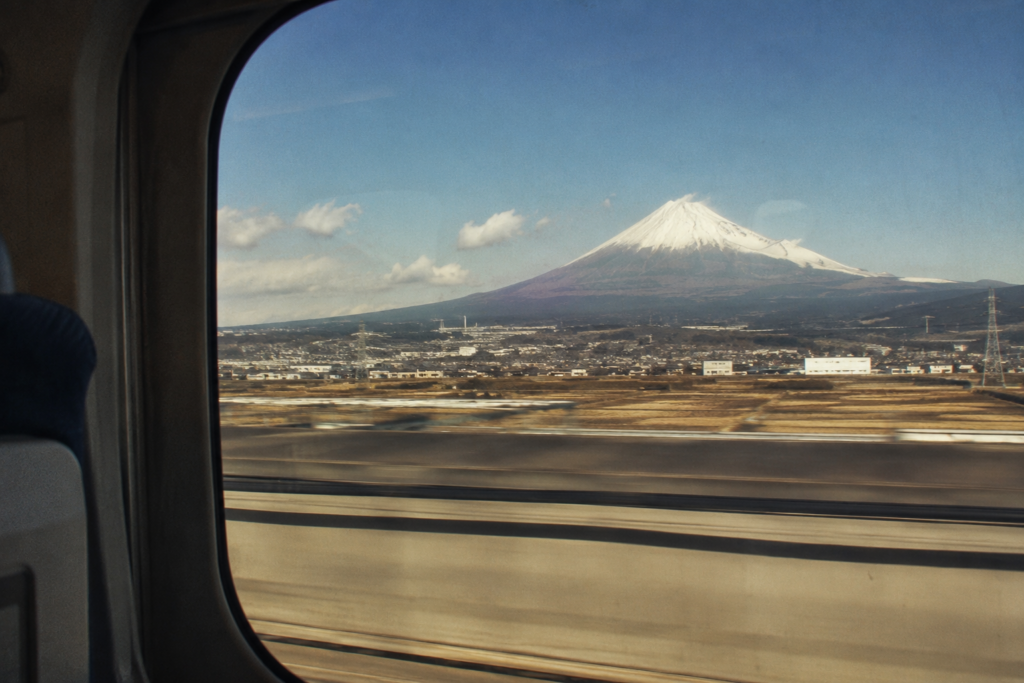
December through February gives the highest annual probability of seeing Fuji clearly. Cold dry continental air produces exceptional visibility, and the mountain is fully snow-capped.
Morning is better than afternoon. From Tokyo, a clear December morning offers a realistic chance from the Roppongi and Shibuya observation decks.
Ski Season Opens
Hokkaido resorts generally open from late November or early December, and Nagano follows through the month. Conditions build steadily toward the January peak.
Early to mid-December has thinner cover than January but far fewer people and lower rates. Late December, from around the 27th, is the domestic holiday peak and books out.
Japan in December: Frequently Asked Questions
Is anything closed on Christmas Day? No. 25 December is a normal working day in Japan — shops, restaurants, museums, and transport all operate as usual. The closures come the following week: many businesses shut from around 29 December to 3 January for the New Year holiday.
What happens on New Year’s Eve? Temples ring their bells 108 times at midnight and people visit shrines for the year’s first prayer. It is quiet and reflective rather than a street party. Zojo-ji in Tokyo and Chion-in in Kyoto are the notable places to be. Some train lines run all night on 31 December.
How cold does it get, and what should I pack? Tokyo and Kyoto sit between about 4°C and 12°C, cold but dry. A proper winter coat, scarf, gloves, and layers you can remove indoors — Japanese heating is aggressive. Add waterproof boots only if you are heading to snow country.
Related Tours
Conclusion
Come in the first three weeks. December before the 25th is one of the quietest and best-value periods in the Japanese calendar, with clear skies, the year’s best Fuji visibility, illuminations in every city, and onsen towns at their most appealing.
If your dates run into the New Year, book everything months ahead and plan to stay in one place. And go to a temple at midnight rather than looking for a countdown — that is where the country actually is.
Plan Your Japan Trip with Local Experts
Our team has guided 40,000+ travelers across Japan. Tell us about your trip and we’ll get back to you within 24 hours.