In this article:
- The Dashi Problem
- Shojin Ryori
- Phrases That Actually Work
- Restaurants, Chains, and Apps
- Convenience Store Options
- Vegetarian Food in Japan: Frequently Asked Questions
Introduction
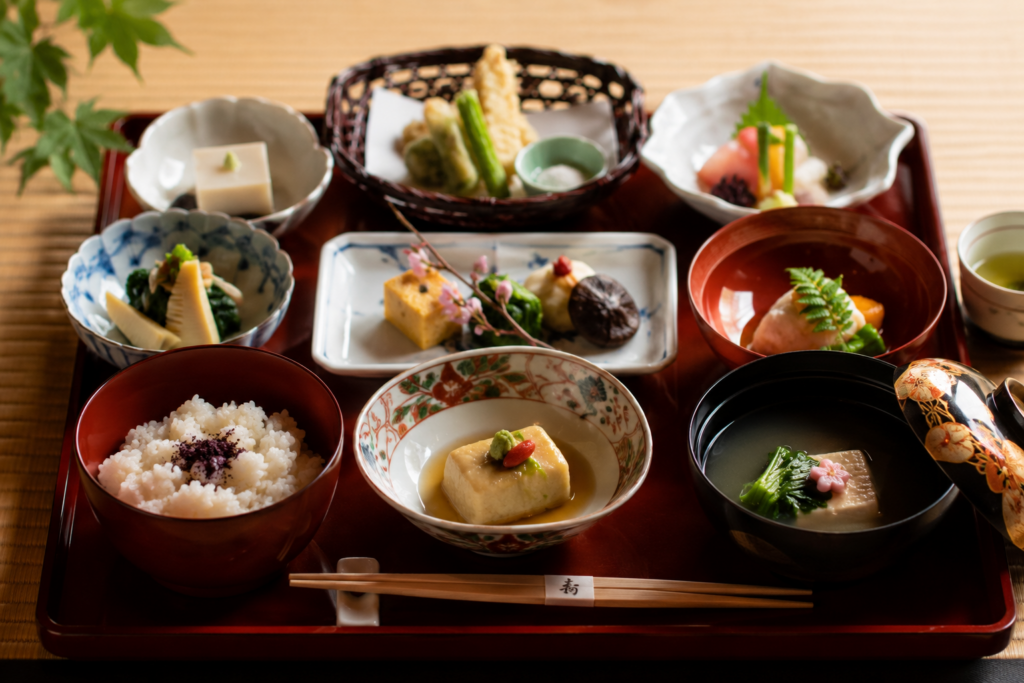
Japan has a thousand-year Buddhist vegetarian tradition and is simultaneously one of the harder countries in the developed world to eat vegetarian in. Both things are true and the reason is dashi.
Nearly every savoury Japanese dish is built on stock made from katsuobushi — dried, smoked, fermented skipjack tuna. It is in miso soup, in the broth under udon and soba, in simmered vegetables, in the dipping sauce for tempura. Nothing about the finished dish signals its presence.
This is manageable, but it requires preparation rather than improvisation. Vegetarians who arrive expecting to work it out on the fly generally end up eating a lot of plain rice.

The Dashi Problem
Understanding what to ask about is most of the work.
Katsuobushi Dashi
The default stock across Japanese cooking is a combination of kombu kelp and katsuobushi. It appears in miso soup, noodle broths, chawanmushi, simmered dishes, and most sauces.
Crucially, most Japanese people do not consider dashi to be “fish” in the sense you mean. Asking whether a dish contains fish will often get a truthful “no” while the dish is built on fish stock. You have to ask about dashi specifically.
Other Hidden Ingredients
Lard — rado — is used in ramen broths and some fried food. Gelatin appears in desserts and some sauces. Bonito flakes are sprinkled on okonomiyaki, takoyaki, and cold tofu as a garnish, often without appearing on the menu.
Kimchi frequently contains fish sauce or salted shrimp. Curry roux blocks commonly contain animal fat. Even vegetable tempura is usually served with a dashi-based dipping sauce.
Kombu Dashi
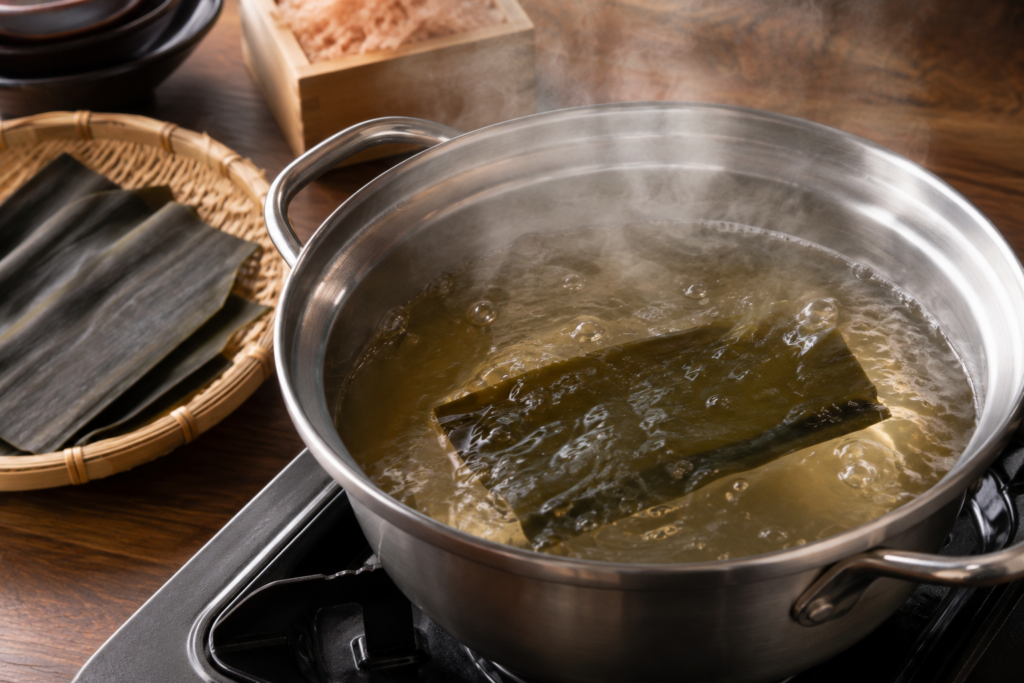
Kombu dashi — kelp alone — is fully vegetarian, as is shiitake dashi made from dried mushrooms. Both are standard in Japanese cooking, just less common than the combination stock.
This is the specific thing to request: kombu dashi rather than katsuo dashi. It is a request that makes sense to a Japanese cook in a way that “vegetarian” often does not.
Expert Tip
The single most useful sentence is not “I am vegetarian” but “does this contain katsuo dashi?” — katsuo dashi wa haitte imasu ka. Asking about the specific ingredient gets an accurate answer; asking about a dietary category frequently does not, because the category is unfamiliar and dashi is not thought of as an animal product.
Shojin Ryori
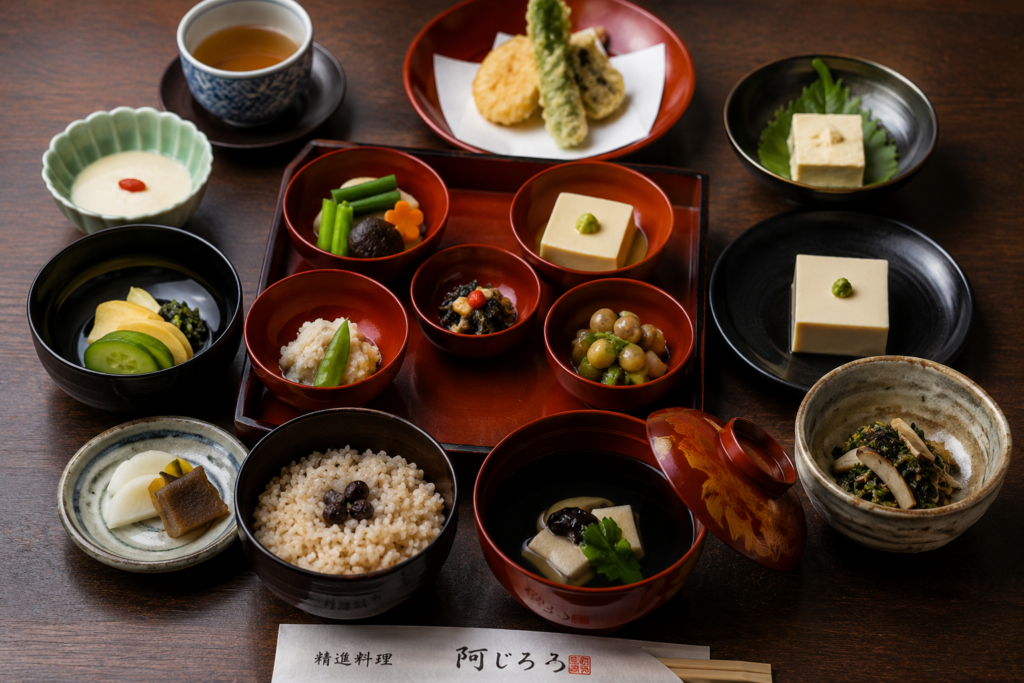
Buddhist temple cuisine is entirely plant-based and it is among the best food in Japan.
What It Is
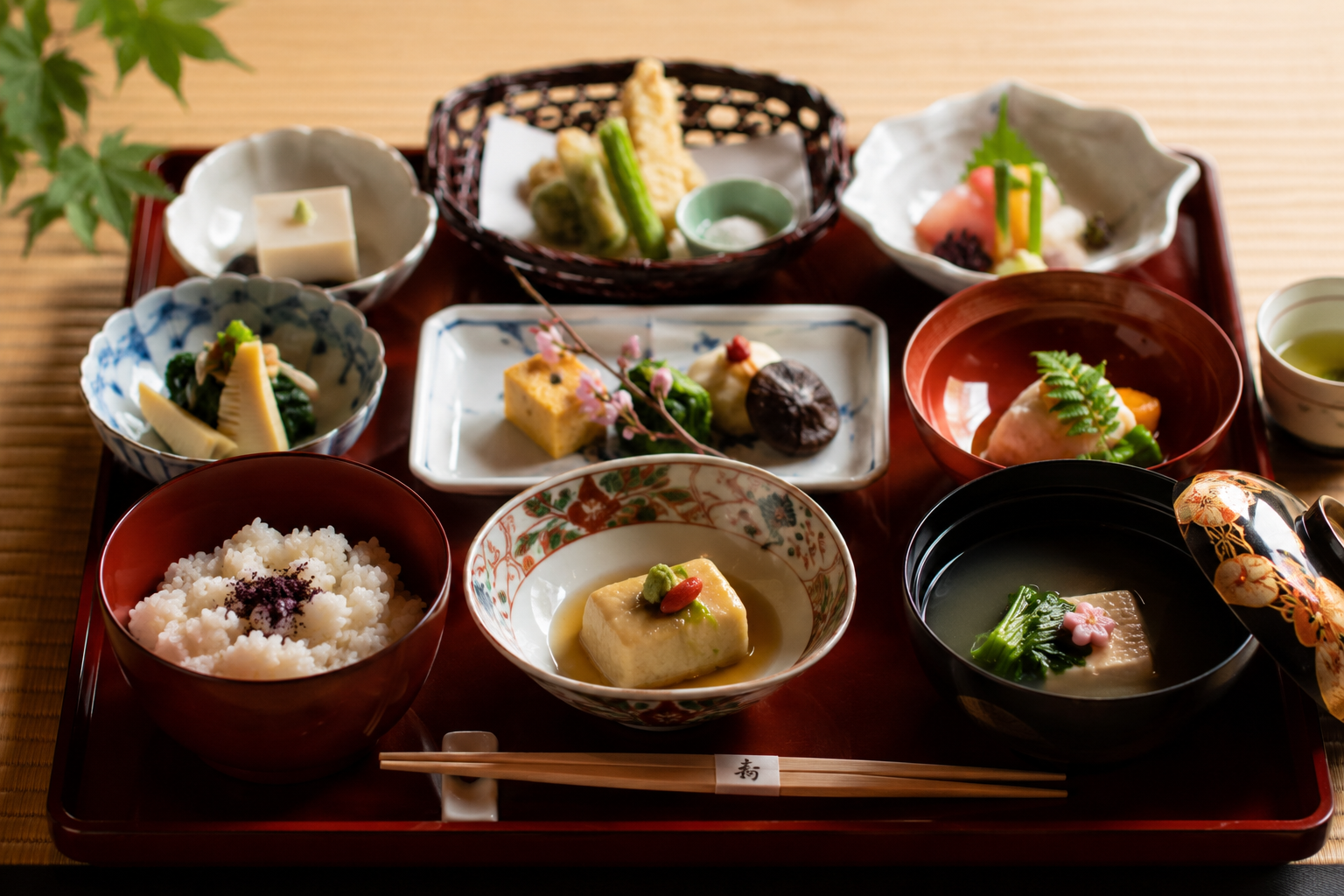
Shojin ryori developed in Zen monasteries and excludes all animal products, and traditionally also the five pungent roots including garlic and onion. Stock is kombu and shiitake.
It is not austere. A shojin ryori meal runs to a dozen small dishes across multiple courses, built on seasonal vegetables, tofu in several forms, and pickles, with the same technical precision as any kaiseki.
Where to Eat It
Koyasan in Wakayama is the destination version — around fifty temples offer overnight stays with shojin ryori dinner and breakfast, and the meals are prepared by monks.
In Kyoto, several temples in the Daitoku-ji complex and around Nanzen-ji serve shojin ryori lunches. Most require reservation at least a day ahead; the temple lodgings at Koyasan need considerably more notice.
Goma-dofu and Yuba
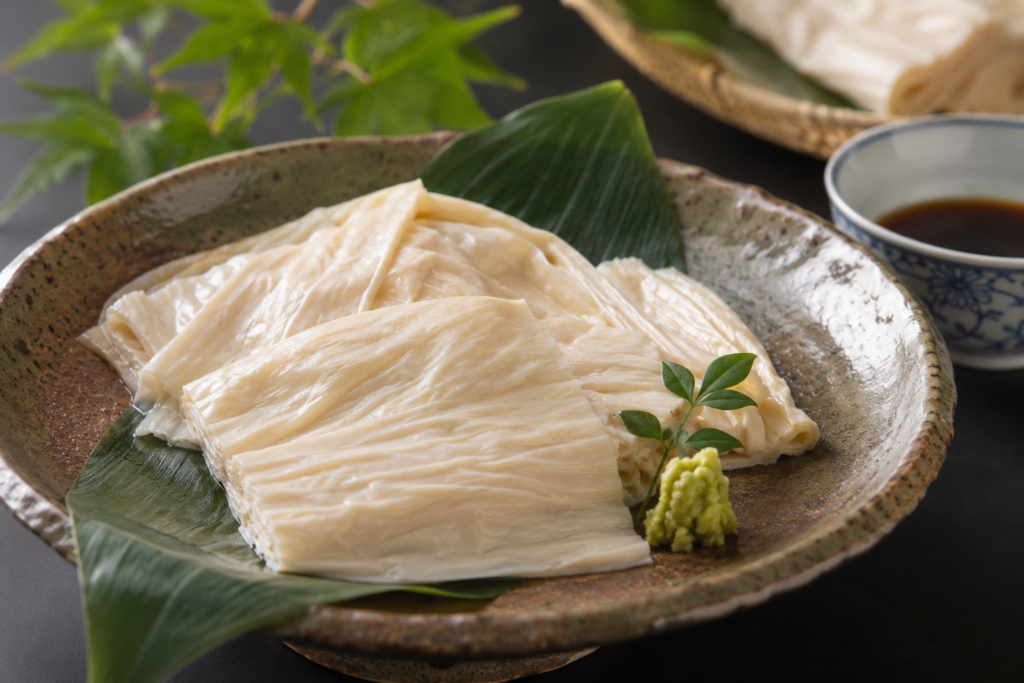
Goma-dofu is sesame “tofu” — ground sesame set with kudzu starch, dense and rich, containing no soy at all. It is a Koyasan speciality.
Yuba is the skin lifted from heating soy milk, served rolled in broth, raw as sashimi, or deep-fried. Kyoto and Nikko are the two centres for it. Both are the core protein of shojin cooking and both are worth seeking out independently.
Phrases That Actually Work
A small amount of specific Japanese goes a long way here.
The Core Phrases
Niku to sakana wo taberaremasen — I cannot eat meat or fish. The “cannot” form is important; the “do not” form reads as a preference and may not be treated as binding.
Katsuo dashi wa haitte imasu ka — does this contain bonito stock. Bejitarian ryori wa arimasu ka — do you have vegetarian dishes. Learn the first two properly; they carry most of the load.
Translation Cards
A printed card in Japanese explaining what you cannot eat, including dashi, bonito flakes, lard, and gelatin, is more reliable than spoken Japanese and considerably more reliable than English.
Several organisations publish free printable versions. Hand it over when you sit down rather than after ordering, and expect some restaurants to say they cannot accommodate you — which is a useful answer, honestly given.
Customising Orders
Many dishes become vegetarian with a simple omission. Okonomiyaki without katsuobushi and without pork, cold tofu without the bonito garnish, and salads without the dressing are all straightforward requests.
Nuki de onegaishimasu — without, please — attached to the ingredient name is the standard construction. Kezurikatsuo nuki de: without bonito flakes.
Restaurants, Chains, and Apps
The dedicated vegetarian scene in Japanese cities has grown substantially and is now genuinely usable.
HappyCow
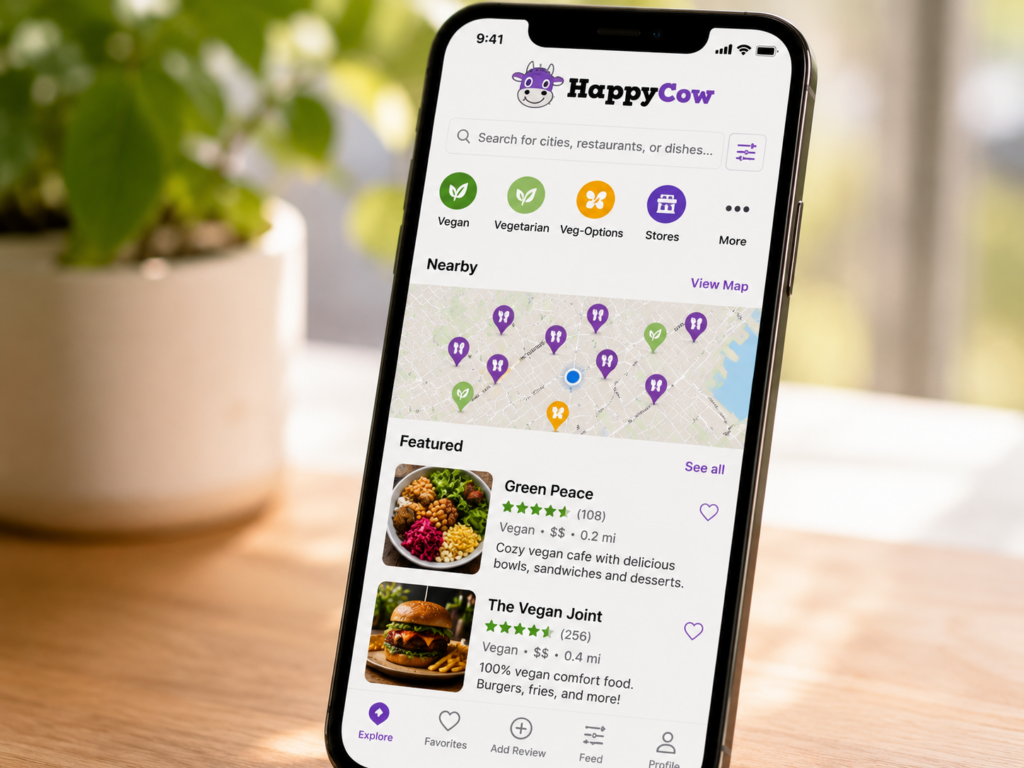
HappyCow is the standard app for finding vegetarian and vegan restaurants and it has solid coverage in Tokyo, Kyoto, and Osaka, with reviews from travelers who have tested the dashi question.
Coverage thins sharply outside major cities. For rural travel, plan around temple lodgings and self-catering rather than expecting to find restaurants.
Vegan Ramen
Ramen is normally impossible — pork bone or chicken stock, often with lard — but a dedicated vegan ramen scene now exists. T’s TanTan has branches inside Tokyo Station and elsewhere, which makes it unusually convenient.
Afuri offers a vegan option at several branches. Several independent shops in Tokyo and Kyoto serve fully plant-based bowls built on vegetable and mushroom stock.
CoCo Ichibanya
CoCo Ichibanya, the nationwide curry chain, offers a vegetarian curry sauce at many branches — a genuinely useful option because the chain is everywhere, including small cities.
Confirm the vegetarian sauce is available at that branch, as it is not universal. The standard curry roux contains animal ingredients.
Convenience Store Options
Konbini are open all night everywhere in Japan and are the practical fallback.
Onigiri
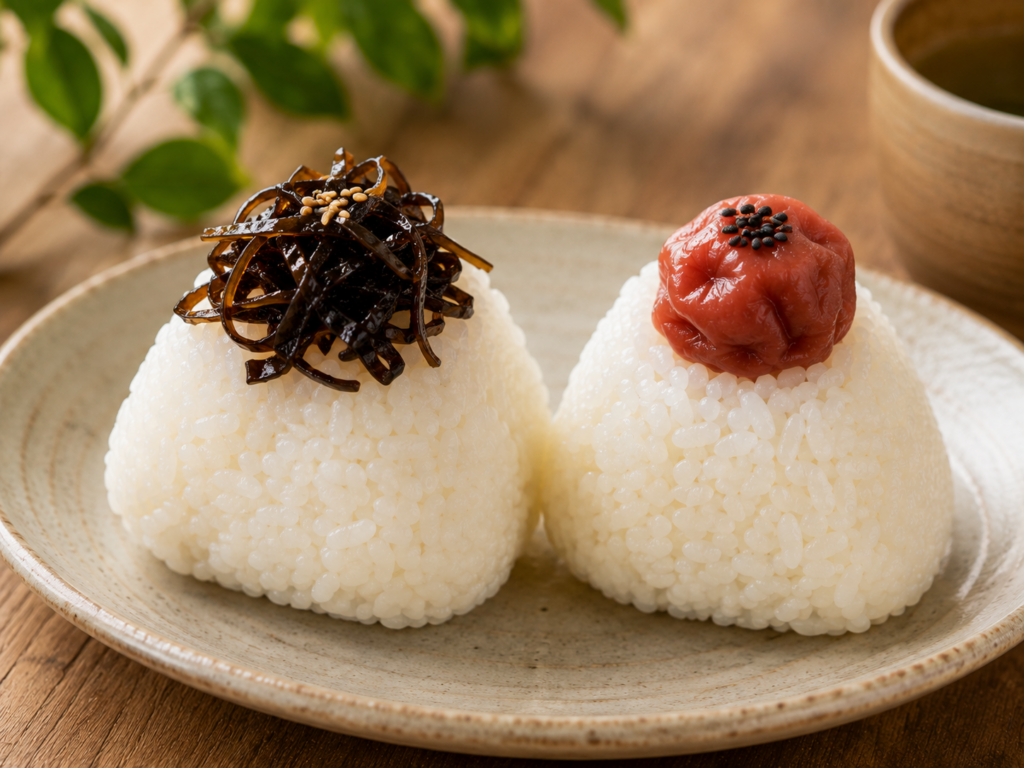
Kombu (kelp) and umeboshi (pickled plum) onigiri are reliably free of meat and fish. Plain salted rice balls likewise.
Avoid tuna mayo, salmon, and anything labelled okaka, which is bonito. Note that some manufacturers add small amounts of dashi to the rice seasoning; strict vegetarians should check the label.
Other Safe Picks
Edamame, plain tofu packs, natto, cut fruit, nuts, plain rice crackers, and packaged salads without dressing are all straightforward.
Boiled eggs and dairy are available for those who eat them. Instant noodles are almost always non-vegetarian, including the vegetable-flavoured varieties.
Reading Labels
Japanese packaged food carries an allergen list, and the useful characters to recognise are 肉 (meat), 魚 (fish), 豚 (pork), 鶏 (chicken), and かつお or 鰹 (bonito).
Also worth knowing: エキス means extract, and 動物性 means animal-derived. A phone camera translation app handles most labels adequately, but recognising these five characters directly is faster.
Expert Tip
Ryokan can almost always accommodate vegetarians, but only with notice — typically at least a week, sometimes more. A kaiseki dinner is planned and provisioned in advance, and a same-day request cannot be met. Tell them when you book, not when you arrive, and specify dashi explicitly; simply saying vegetarian often produces a meal with fish stock in it.
Vegetarian Food in Japan: Frequently Asked Questions
Is it hard outside Tokyo and Kyoto? Considerably harder. Dedicated vegetarian restaurants are concentrated in the major cities. In smaller towns, plan around temple lodgings, convenience stores, supermarkets, and Indian restaurants, which exist in most regional cities and reliably offer vegetarian options.
Are udon and soba broths vegetarian? Almost never. The standard broth is dashi based on bonito. Some shops offer a kombu-based version if asked in advance. Cold soba with a separate dipping sauce has the same issue, since the sauce is dashi-based — but you can eat the noodles plain if you carry your own condiment.
Can a ryokan do a fully vegetarian kaiseki? Yes, with advance notice. Higher-end ryokan handle this routinely and some have a shojin ryori option as standard. Specify no dashi, no bonito flakes, and no fish in writing when booking, and confirm again a few days ahead.
Related Tours


Conclusion
Learn to ask about dashi specifically, carry a printed card, and book one shojin ryori meal early in the trip. That last one reframes the whole thing — it demonstrates that Japanese vegetarian cooking is a tradition rather than a compromise.
Then treat the convenience stores as infrastructure rather than a last resort. Kombu onigiri, edamame, and a tofu pack is a perfectly reasonable meal, and it is available at two in the morning in a town of five thousand people.
Plan Your Japan Trip with Local Experts
Our team has guided 40,000+ travelers across Japan. Tell us about your trip and we’ll get back to you within 24 hours.