In this article:
- How Shinjuku Sushi Is Organized
- Conveyor Belts and Casual Counters
- Omakase Counters and How to Behave at Them
- Shinjuku or Tsukiji: Choosing Where to Eat Fish
- Shinjuku Sushi: Frequently Asked Questions
Introduction
Most people looking for Shinjuku sushi are standing outside the station at seven in the evening. They are hungry. They have phones full of “best of” lists that disagree with each other. The lists are not wrong so much as unhelpful. They mix a ¥150 plate on a conveyor belt with a twenty-piece omakase. The omakase needs booking weeks ahead. They present them as if the two were competing for the same evening.
They are not. Shinjuku is one of the densest eating districts in Tokyo. Its sushi divides cleanly into a handful of very different meals. Each meal is concentrated in a different part of the neighborhood. Once you know which meal you want, the choice of restaurant becomes straightforward.
We walk travelers through Shinjuku most evenings of the week. The question we hear most is not “where is the best sushi.” Instead, people ask, “where should we eat sushi tonight, given that we did not plan ahead.” This guide is written for that traveler. It is also for the one who did plan ahead. That traveler wants to know what a booked counter is actually like.
How Shinjuku Sushi Is Organized
Think of Shinjuku sushi as four separate tiers rather than one long ranking.
Four Tiers, Four Different Meals
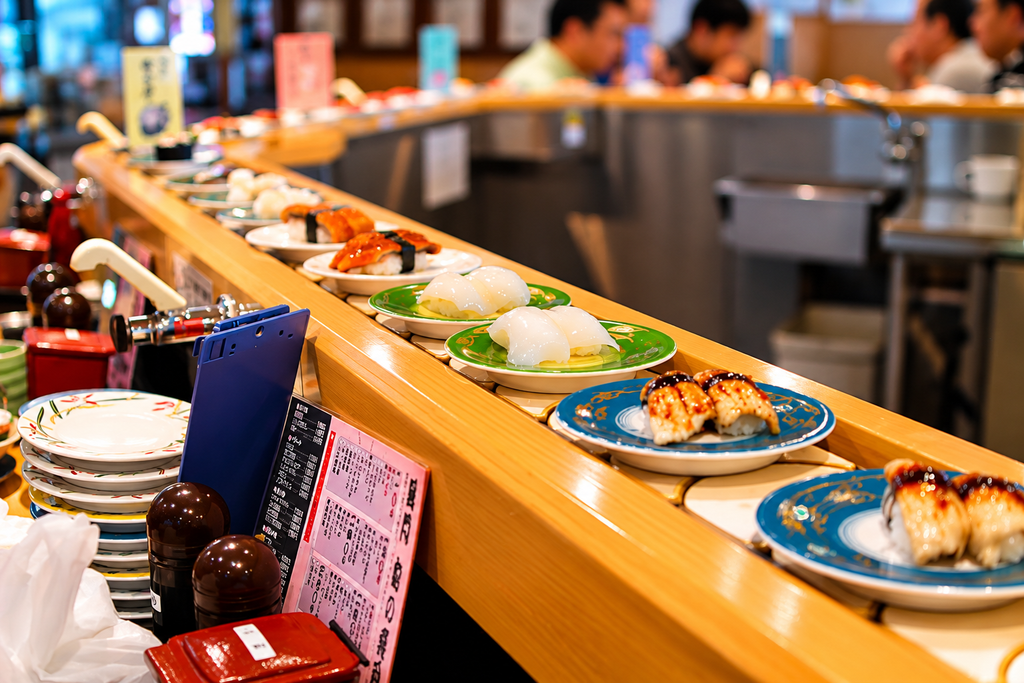
At the bottom sits kaiten-zushi, conveyor-belt sushi, where you order from a tablet or pick plates off the belt and pay by the plate. A full meal here usually costs less than a single drink at a hotel bar. Quality is consistent rather than memorable, and that is fine.
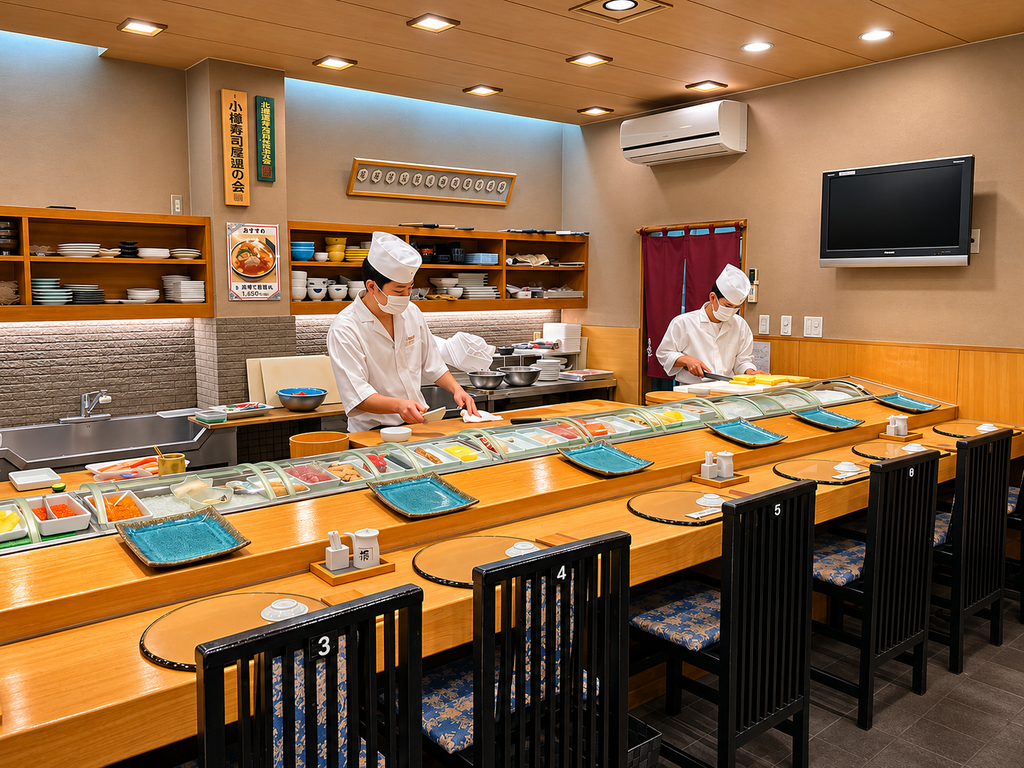
One step up are the casual counters. These are busy, well-lit places with a chef behind the counter, an English menu, and no reservation required. You order piece by piece or choose a set. These are where most visitors have their best value sushi in Tokyo. The fish is noticeably better than on a belt. In addition, nobody expects you to know the rules.
Above that are the mid-range and omakase counters. Here the chef decides what you eat. The chef chooses the order and the serving temperature. The meal runs to a fixed price. Dinner at a serious counter in Shinjuku generally costs well into five figures in yen per person before drinks. Lunch is often a fraction of that.
The fourth tier is not a restaurant at all. The basement food halls of the department stores around Shinjuku-sanchome sell boxed nigiri and chirashi to take away. Late in the day, many of these boxes are marked down. Carrying one back to your hotel room makes a perfectly respectable dinner.
Where Each Tier Clusters
Geography follows price more closely than you might expect. The streets around the East Exit and Shinjuku-sanchome hold most of the conveyor belts and casual counters. That is where the foot traffic is.
West Shinjuku, among the office towers, has a scattering of business-lunch sushi in building basements. These places live on the lunchtime trade of the people who work upstairs. They are good value between noon and two.
The quieter blocks toward Shinjuku-gyoemmae Station are where the small omakase counters sit. They often have six to ten seats behind an unmarked door. Kabukicho, by contrast, is where you find sushi at hours when everything else has closed. Some places there run very late or through the night. The food is exactly what you would expect at three in the morning.
Conveyor Belts and Casual Counters
For a first sushi meal in Tokyo, we usually recommend a casual counter over an omakase. It is cheaper. It is faster. It lets you find out what you like before you pay someone else to decide for you.
Kaiten-Zushi: Tablets, Plates, and Queues
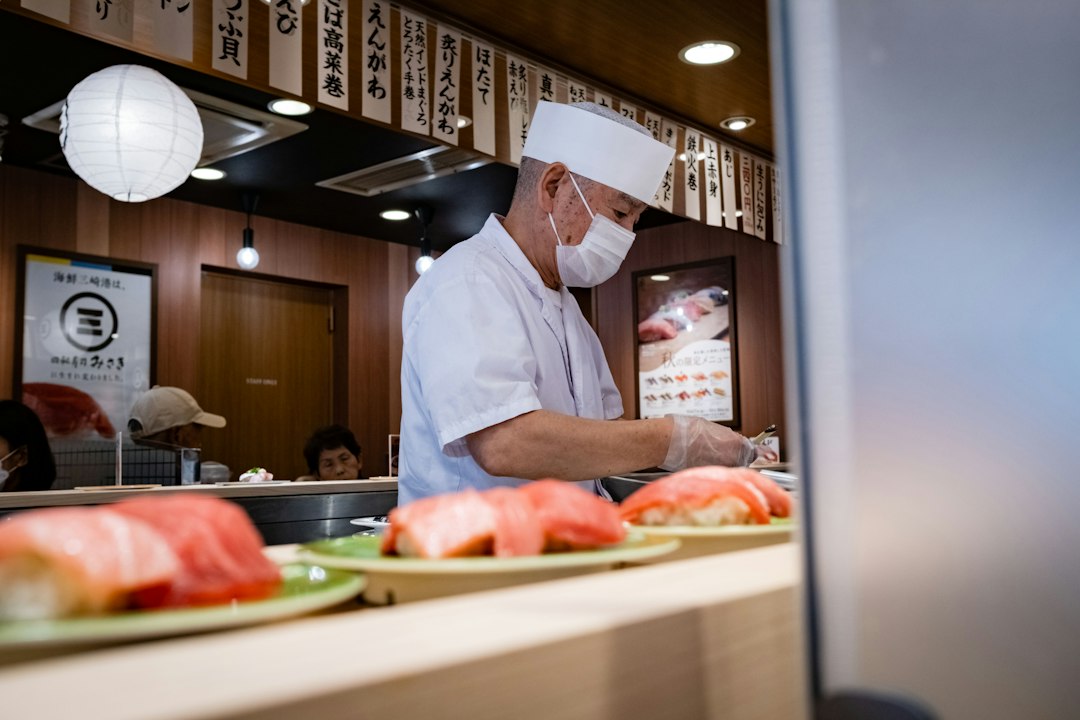
Modern conveyor-belt restaurants in Shinjuku work largely through tablets at each seat, most of which switch to English. You order, the plate arrives on an express lane or is handed over the counter, and you pay at the end according to the plates stacked in front of you. Green tea powder and hot water are usually at your seat; pickled ginger is in a small container you help yourself from.
Order from the tablet rather than taking plates that have been circling. Fish that has done several laps of the belt is the main reason kaiten-zushi has a mixed reputation, and ordering fresh avoids the problem entirely.
The real cost of kaiten-zushi in Shinjuku is time. At seven in the evening, the popular places near the station have queues, and the wait can stretch well past half an hour. Eat at five-thirty or after nine and you will usually walk straight in.
Casual Counters Near the East Exit
Between the East Exit and Shinjuku-sanchome, a short walk covers several of the city’s best-known casual sushi names. Numazuko, a conveyor-belt restaurant named after the fishing port of Numazu in Shizuoka, has its main Shinjuku branch close to Sanchome Station and a counter where chefs work in full view. Sushizanmai, the chain that grew out of Tsukiji, has a branch by the East Exit with an English menu and no reservation required.
Neither will be the most refined sushi of your trip. Both are reliable, open for long hours, and comfortable for travelers who do not speak Japanese, which counts for a great deal on a tired first night.
Our advice for these places is to order a few pieces at a time rather than one large set. Watch what the people at the counter are eating, ask the chef what is good today, and order a second round. That is how regulars eat, and it is the closest thing to omakase you will find without a booking.
Expert Tip
If a casual counter has a “today’s recommendations” board, it is usually handwritten in Japanese only and lists the fish that arrived that morning. Photograph it, run it through a translation app, and order from that rather than the laminated English menu. The board is where the better fish is.
Omakase Counters and How to Behave at Them
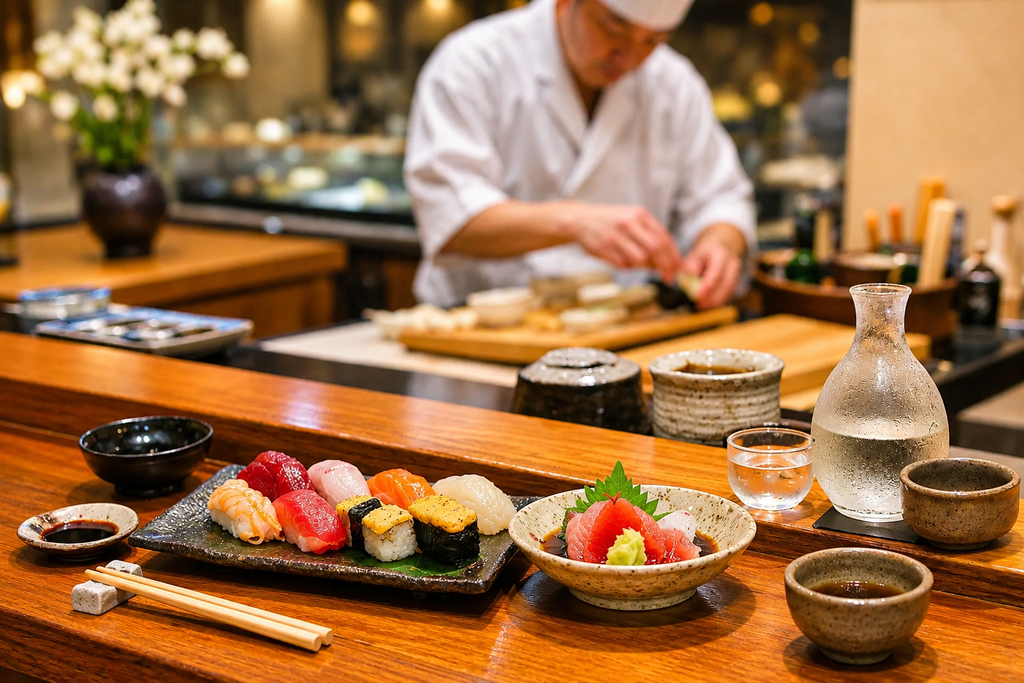
Ginza has the most famous sushi counters in Tokyo, but some of the most rewarding omakase in the city sits quietly in Shinjuku, a few minutes from Shinjuku-gyoemmae Station. Prices tend to be lower than at comparable counters in Ginza, and the rooms are often smaller and more relaxed.
A good omakase is a conversation conducted mostly in fish. The chef reads how quickly you eat, adjusts the rice, and seasons each piece before handing it over, which is why you should not reach for the soy sauce at these counters unless invited to. For a longer explanation of the format and its history, our guide to Edomae sushi covers where these techniques came from.
Booking a Counter as a Visitor
Small omakase counters often have fewer than ten seats and two sittings a night. Many take bookings only by phone, in Japanese, and some accept new guests only through a hotel concierge or an introduction. Others have moved to online reservation platforms that accept international cards.
Book as early as you can, and treat the booking as a firm commitment. Cancellation fees at high-end counters are common and can equal the full course price, because an empty seat cannot be resold at short notice. If you are unsure of your plans, do not book.
We explain the booking process in more detail, including how concierges and reservation platforms work, in our guide to Tokyo omakase dining.
Lunch as the Smart Entry Point
Many Shinjuku counters that charge a high price at dinner also serve lunch, with a shorter set at a far lower price. The fish comes from the same morning’s purchase. The chef is the same. What you lose is a few courses and the evening atmosphere.
For travelers who are curious about omakase but unsure it is worth a large dinner bill, lunch is the honest test. If you love it, book a dinner later in the trip. If you find you prefer choosing your own pieces, you have learned that cheaply.
Hands, Soy Sauce, and Ginger
Sushi etiquette is far less strict than its reputation, and Shinjuku chefs serve visitors every night. A few habits still make the meal better for you and for the chef.
Nigiri can be eaten with your fingers or with chopsticks. Both are correct. Fingers are often easier, because a well-made piece of nigiri is pressed loosely and can fall apart between chopsticks.
When you use soy sauce, dip the fish side lightly rather than the rice. Rice soaks up soy sauce and crumbles, and the piece ends up tasting of nothing but salt. At an omakase counter where the chef has already brushed on a glaze or salt, skip the soy sauce altogether.
Pickled ginger is a palate cleanser between pieces, not a topping. Eat a slice between different fish, especially after something oily like mackerel or fatty tuna.
Dietary Requirements and When to Say So
Allergies and dislikes should be mentioned at the time of booking, not after you sit down. An omakase counter plans its fish for the evening in advance, and a chef who learns at the counter that a guest does not eat shellfish has very few options left.
At casual places this matters less, because you choose your own pieces. However, soy sauce contains wheat, and many pieces are seasoned before they reach you. Travelers with a serious allergy or coeliac disease should carry a written allergy card in Japanese and choose a counter where they can speak to the chef directly.
Expert Tip
At a counter, sit where you can see the chef’s hands and order in small rounds of two or three pieces. Chefs pace their work around the guests in front of them, and a diner who orders gradually tends to get more attention, and often better advice on what to try next, than one who orders everything at once.
Shinjuku or Tsukiji: Choosing Where to Eat Fish
Shinjuku is an evening neighborhood. Tsukiji is a morning one. That difference is a more useful guide to where to eat sushi than any ranking.
The wholesale fish market moved from Tsukiji to Toyosu in 2018, but the outer market stayed, and it remains where a good share of Tokyo’s restaurant cooks shop. Its stalls sell sushi, sea urchin, grilled scallops, and tamagoyaki, mostly eaten standing at a counter. It is busiest in the morning and winds down by early afternoon.
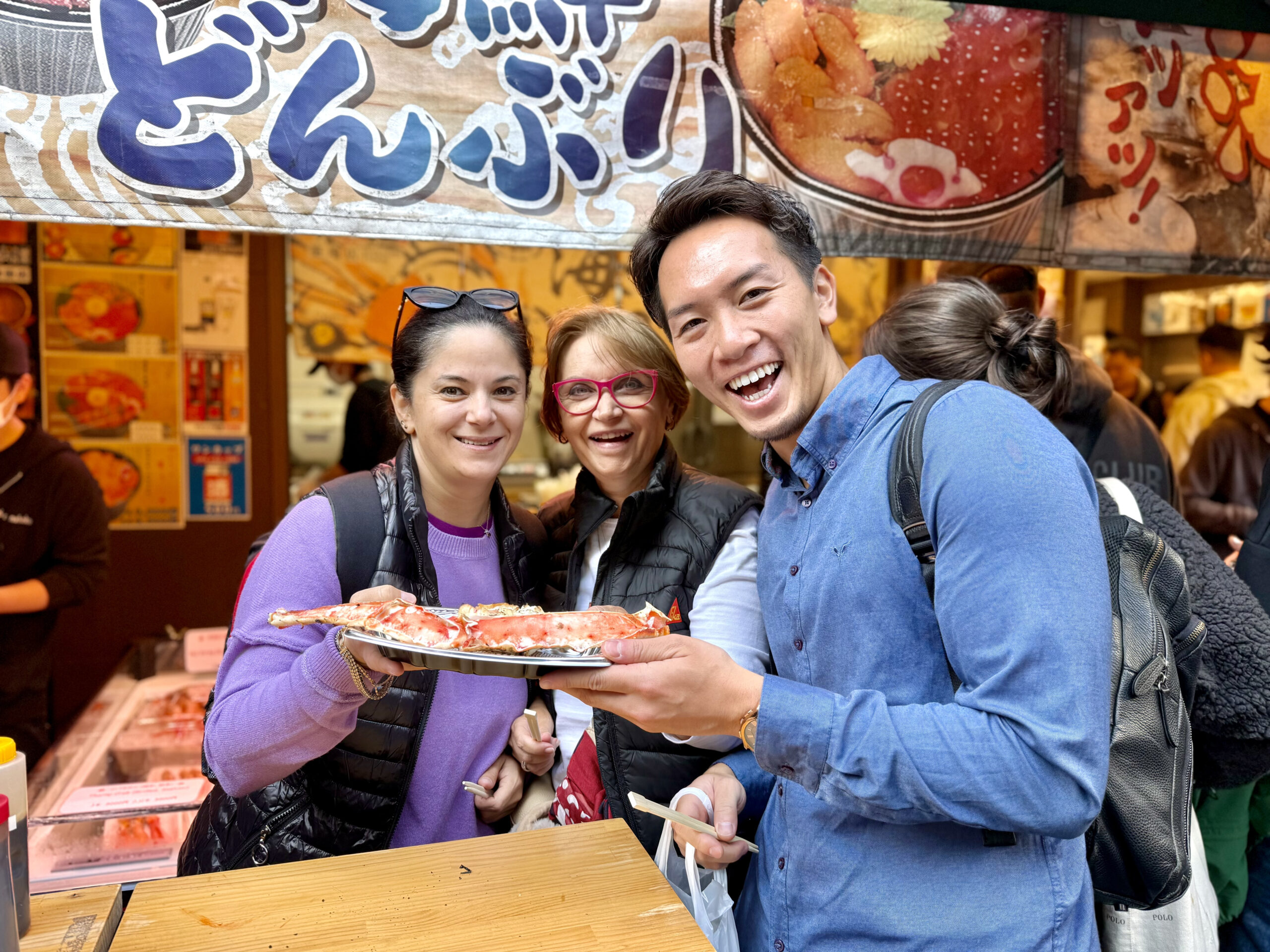
On our Tsukiji walking tour, guests pay for food at each stall as they go, in cash, since most stalls there do not take cards. The guide’s job is to pick which stalls and queues are worth the wait. Seen side by side, the logic is simple: eat fish at Tsukiji in the morning, and save Shinjuku for the evening, when its counters and alleys are at their best.
What Shinjuku Does Best After Dark
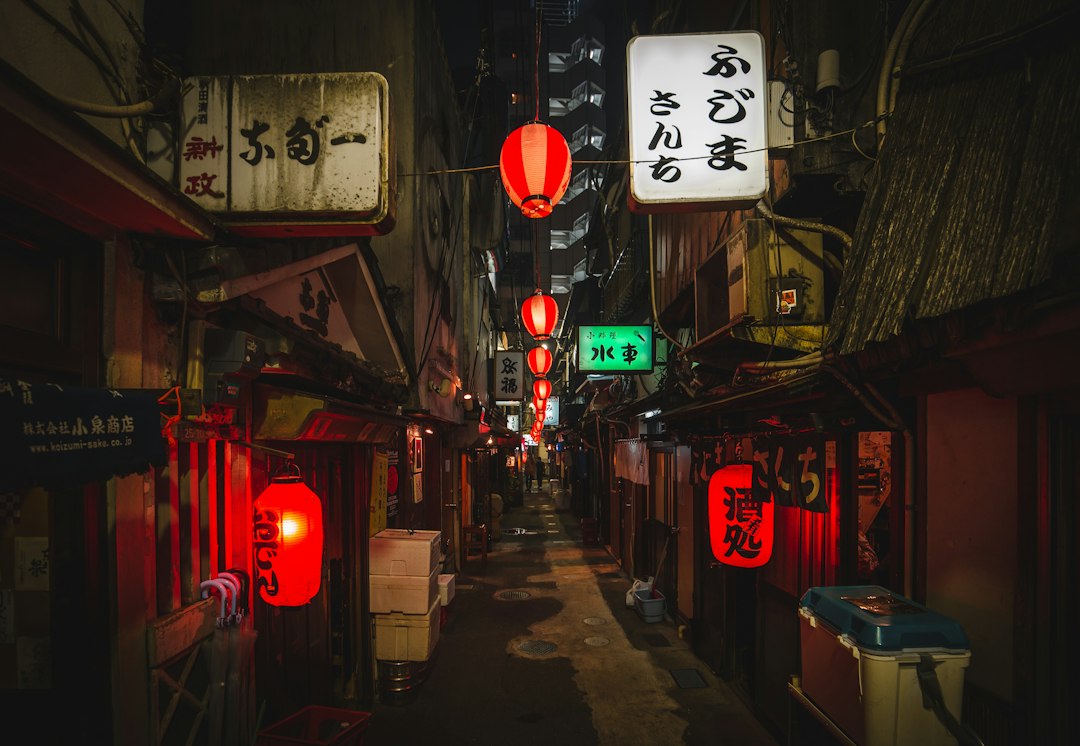
Evening Shinjuku is less about sushi than about the small counters around it. Our Shinjuku evening food tour, for instance, is not a sushi tour at all. It runs for three hours through four eateries around Omoide Yokocho and Kabukicho, with fifteen izakaya-style dishes shared across the table.
That is a deliberate choice. A sushi counter rewards sitting still with one chef for an hour; an evening in Shinjuku rewards moving between rooms. If you want both on the same night, eat sushi early, around five-thirty, and spend the rest of the evening in the alleys. Our guide to Omoide Yokocho explains how those lanes work.
Shinjuku Sushi: Frequently Asked Questions
Do I need a reservation for sushi in Shinjuku?
For conveyor-belt restaurants and casual counters, no. You queue, and the wait depends on the hour. For omakase counters, almost always yes, and the smaller ones can be fully booked weeks ahead. Mid-range counters fall in between: a same-day phone call or an online booking is often enough on weekdays.
Is conveyor-belt sushi in Shinjuku worth it?
Yes, as long as you know what it is. It is inexpensive, fast, and very easy for visitors who do not speak Japanese, and the fish at the better chains is fresher than many travelers expect. Order from the tablet rather than taking plates from the belt, and avoid the seven o’clock rush.
Can I find sushi late at night in Shinjuku?
Yes. Kabukicho and the streets around the East Exit have sushi restaurants that stay open late, and a few run through the night. Hours change often, so check the restaurant’s current listing on the day rather than relying on an older guide.
Related Tours
Conclusion
Decide on the meal before you decide on the restaurant. A quick, cheap dinner points you to a conveyor belt near the East Exit; a relaxed evening of good fish without a booking points you to a casual counter around Sanchome; a once-in-a-trip meal points you to a booked omakase near Gyoenmae, ideally tried at lunch first.
Whichever you choose, eat early. Shinjuku’s sushi is easiest at five-thirty, when the queues are short and the chefs have time to talk, and it leaves the rest of the night free for the alleys that make this neighborhood worth staying in after dark.
Plan Your Japan Trip with Local Experts
Our team has guided 40,000+ travelers across Japan. Tell us about your trip and we’ll get back to you within 24 hours.