In this article:
- What a Japanese Dry Garden Is, and What It Is Not
- Reading the Garden: Stones, Gravel, Moss, and Emptiness
- Four Kyoto Dry Gardens and What Each Teaches
- How to Look at a Dry Garden
- Japanese Dry Garden: Frequently Asked Questions
Introduction
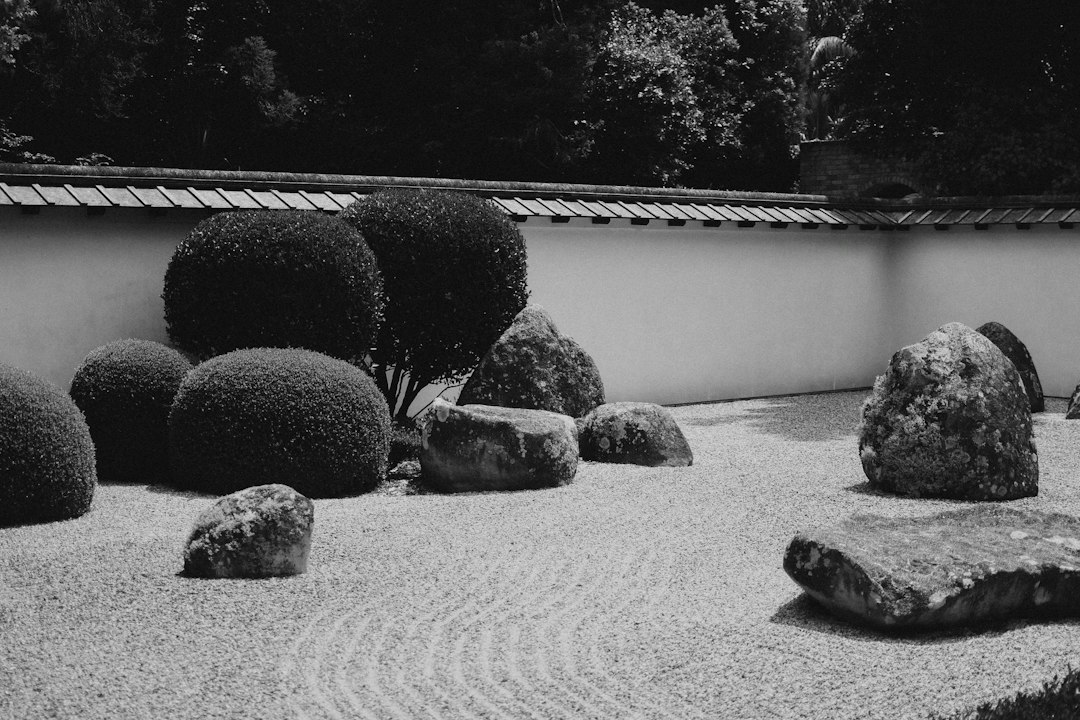
Most people give a Japanese dry garden about four minutes. They arrive at the veranda, count a few rocks, take a photograph over someone’s shoulder, and move on with the faint suspicion that they missed the point.
They usually did. A dry garden is not a view in the way a mountain or a pond is a view. It is closer to a piece of writing in a language you half know: rock for mountain, gravel for water, empty ground for everything the designer chose not to say. Once you can read a few words of it, the same rectangle of stones that looked austere at first glance starts to move.
We spend a lot of time in these gardens with the travelers we guide in Kyoto, and the pattern is consistent. The people who get the most from them are not the ones who know the most history. They are the ones who sit down. What follows is the vocabulary that makes the sitting worthwhile.
What a Japanese Dry Garden Is, and What It Is Not
The Japanese term is karesansui, usually translated as “dry landscape,” and the definition is in the name.
Karesansui: Landscape Without Water
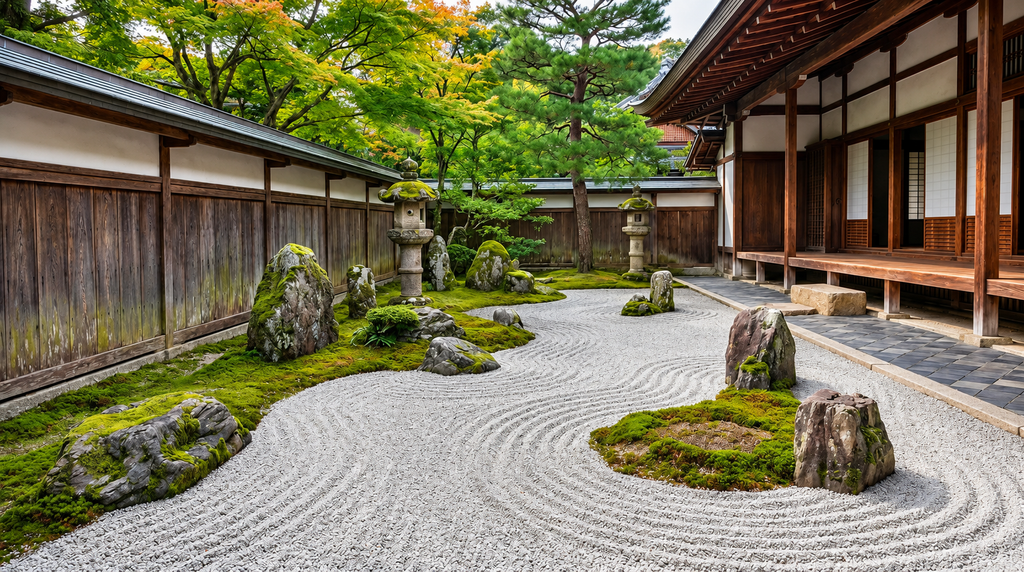
A dry garden represents a landscape of mountains and water using no water at all. Rocks stand in for peaks and islands. Gravel or coarse sand, raked into lines and ripples, stands in for rivers, streams, and open sea. Moss and a few clipped shrubs sometimes soften the edges, but many of the finest examples use almost nothing else.
That economy is the whole idea. A pond garden shows you water. A dry garden asks you to supply it yourself, and the effort of doing so is part of what you are meant to experience.
From the Sakuteiki to the Zen Temples
The phrase predates the gardens most visitors picture. The Sakuteiki, a garden-making manual generally dated to the late eleventh century and the oldest of its kind in Japan, already uses the term for arrangements of stone set apart from any pond or stream.
The form as we know it took shape later, in the Muromachi period (1336 to 1573), inside the Zen temples of Kyoto. This is the same era that gave Japan Noh theatre and the tea ceremony, and the shared instinct is easy to see. Strip away decoration, keep only what carries meaning, and trust the viewer to fill the gap.
Why “Zen Garden” Is Only Half Right
In the West these are almost always called Zen gardens. That is fair as far as it goes: the classic examples belong to Zen temples, were often designed or maintained by monks, and are meant to be looked at in a contemplative frame of mind.
Still, the label can mislead. Dry gardens draw on Chinese ink landscape painting, on older Japanese ideas about sacred stones, and on Buddhist and Daoist imagery that has nothing specifically Zen about it. We prefer “dry garden” because it describes what is in front of you rather than telling you how to feel about it.
Reading the Garden: Stones, Gravel, Moss, and Emptiness
Every element in a dry garden is doing a job, and there are only four of them.
Stones as Mountains, Islands, Cranes, and Turtles
Rocks are the grammar. A tall upright stone is usually a mountain. A low, broad one may be an island. A cluster set in a vertical crease can be a dry waterfall, with smaller stones below as the splash.
Two recurring figures are worth learning to spot. Crane and turtle islands, both symbols of long life, appear across Japanese gardens, and a turtle group is often recognisable by a “head” stone pushing forward from a rounded body. Many gardens also allude to Horai, the mountain island of the immortals in Chinese legend. In practice you rarely need to decode every stone; recognising that a group is meant to be read as an island or a mountain is enough to change how you see it.
How the stones sit matters as much as what they represent. Good garden stones are set deep, so they look as though they continue far below the gravel, and they are almost always arranged in odd-numbered groups that avoid symmetry.
Raked Gravel and the Patterns Called Samon
The gravel is water, and the raking tells you what kind. Straight parallel lines read as calm sea or a slow river. Concentric rings around a stone are the ripples where water meets an island. Wave and scroll patterns suggest current.
These patterns are called samon, and they are redrawn regularly by the temple, often by monks as part of their practice. That is why a dry garden is never quite the same twice. Look closely at where two patterns meet, or at the clean edge where gravel turns around a rock. The care in those few centimetres tells you a great deal about the people who look after the place.
Moss, Walls, and the Space Left Empty
Moss usually marks the boundary between land and water, wrapping the base of a stone so it looks rooted. Walls frame the composition and block the outside world, which is why many of these gardens feel larger than their measurements.
Then there is the empty gravel. That open ground is not filler. It is the sea between islands, the distance between mountains, the quiet that gives the stones their weight. If you remember one thing from this guide, make it this: in a dry garden, the space where nothing has been placed is as deliberate as the stones.
Expert Tip
Before you try to interpret anything, find the place the garden was designed to be seen from. In most temple dry gardens that is the veranda of the abbot’s hall, seen seated. Sit at floor level and the stones line up, the walls disappear behind them, and the proportions make sense in a way they never do from a standing position.
Four Kyoto Dry Gardens and What Each Teaches
Kyoto holds more significant dry gardens than any traveler can see in one trip, so we suggest choosing by what each one teaches rather than by fame.
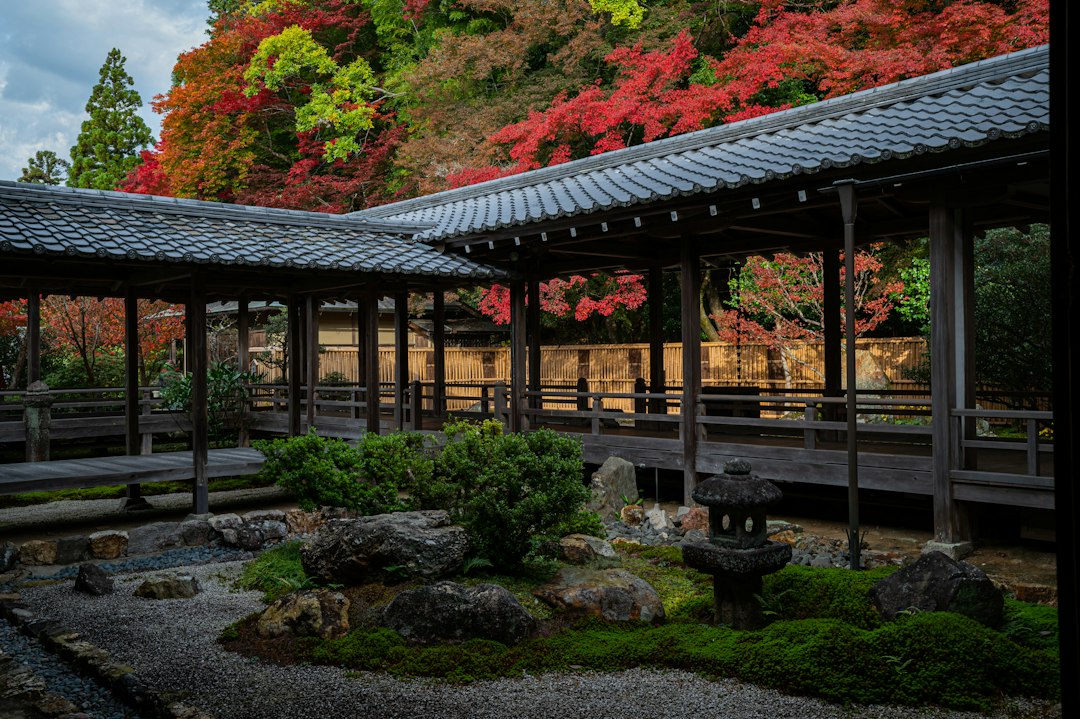
Ryoan-ji: Fifteen Stones You Never See Together
The most famous dry garden in the world is a rectangle of white gravel, roughly twenty-five by ten metres, holding fifteen stones in five groups and enclosed on two sides by a low earthen wall. Nobody knows with certainty who designed it, when its current form was fixed, or what it was meant to mean. Scholars still argue about all three.
The detail most visitors hear about is that from the veranda you cannot see all fifteen stones at once; at least one always hides behind another. Whether that was intended is itself debated. We think it is the most useful thing about the garden anyway, because it stops you counting and starts you looking.
Ryoan-ji is also the garden most damaged by its own reputation. By mid-morning the veranda can be shoulder to shoulder, and a space designed for stillness becomes a queue. Go at opening time or not at all.
Daisen-in: A River of Gravel
If Ryoan-ji is abstract, Daisen-in, a sub-temple within the large Daitoku-ji complex in northern Kyoto, is narrative. Created in the early sixteenth century, its small garden wraps around the abbot’s quarters and tells a story in gravel: a dry waterfall in one corner feeds a river that widens, passes a stone shaped like a boat, and flows out into a broad expanse of raked sea.
Many read it as a picture of a human life, from turbulent youth to calm old age. Whether or not you accept that reading, it is the clearest demonstration anywhere of how stone and gravel can describe moving water. Daisen-in does not permit photography, which we count in its favour. People look harder when they cannot reach for a phone.
Ginkaku-ji: The Sand Cone and the Silver Sea
At Ginkaku-ji, the Silver Pavilion at the northern end of the Philosopher’s Path, the dry elements are unusually sculptural. A broad, flat bed of pale sand raked into stripes sits beside a tall truncated cone of the same sand, often compared to Mount Fuji and traditionally linked with moonlight.
These are later additions to a garden that also includes a pond, moss, and a hillside walk, so Ginkaku-ji shows how dry and wet garden traditions can share one site. Our own guide to Ginkaku-ji covers the rest of the grounds.
Tofuku-ji: A Twentieth-Century Answer
The gardens around the abbot’s hall at Tofuku-ji are proof that the form did not stop evolving in the Muromachi period. They were designed in 1939 by Mirei Shigemori, who surrounded the building with four gardens in four moods.
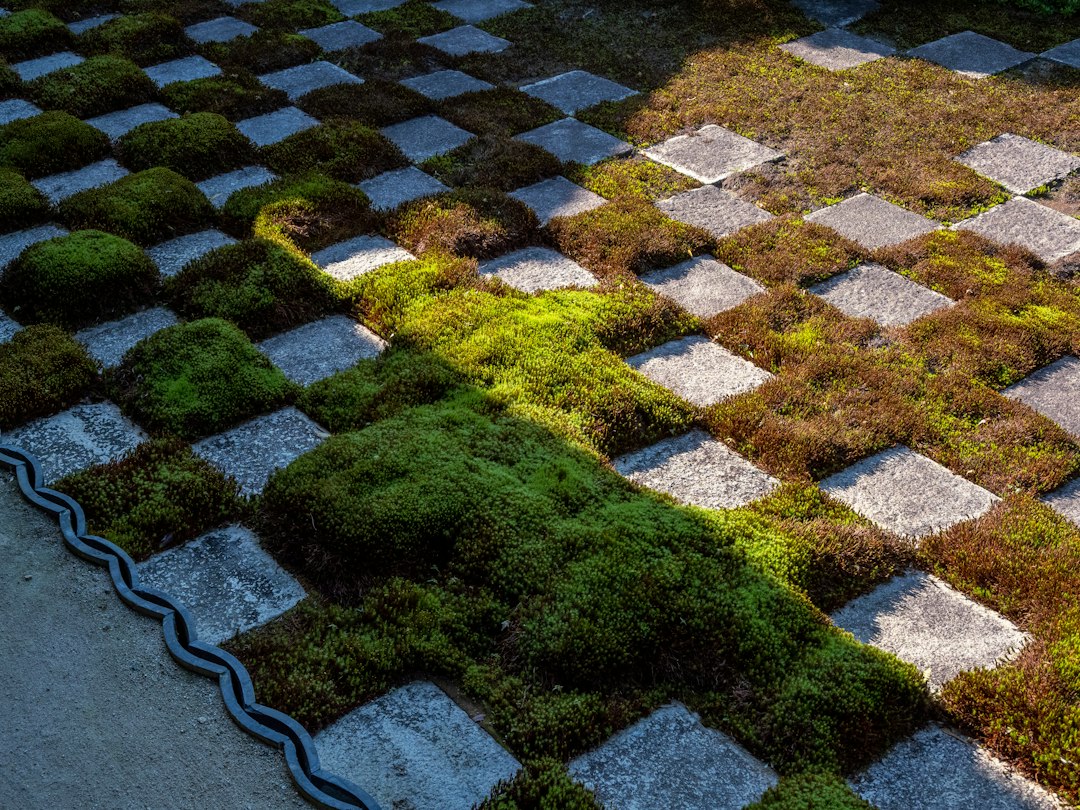
The south garden uses rough stones and raked gravel to evoke the islands of the immortals. The north garden is the one people remember: squares of moss and stone laid out in a checkerboard that gradually dissolves into green. It is modern, graphic, and entirely within the tradition. If you have seen Ryoan-ji and wondered what a designer might do with the same vocabulary four centuries later, this is the answer.
How to Look at a Dry Garden
The single most useful technique is the simplest one: stay put.
Sit Down, and Stay Longer Than Feels Natural
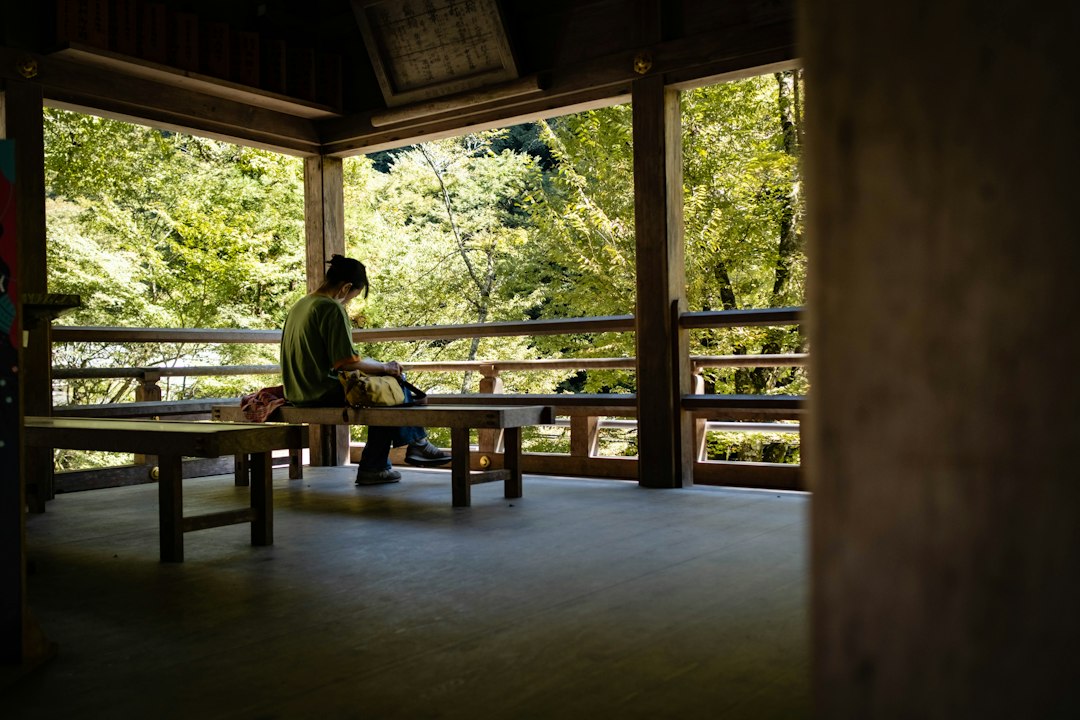
Take your shoes off, sit on the veranda, and give the garden fifteen minutes. The first five are restless. You count stones, check the light, notice the people around you. Somewhere after that the scale shifts, and the gravel starts to read as distance rather than ground.
Let your eye travel instead of fixing on the most dramatic stone. Follow one raked line until it meets a rock, then follow the ring around it. Look at the wall, the roof edge, the trees borrowed from beyond the enclosure. Then look at the open gravel again. That sequence, repeated slowly, is most of what “reading” a dry garden means.
Keep your voice low and stay off the gravel itself. These are working temples, and the garden is not a stage.
Timing: Early Mornings and Weekdays
Light changes everything in a dry garden. Low morning sun throws shadows into the raked lines and gives the stones depth; flat midday light can make the same garden look like a diagram. Rain is underrated, because wet gravel darkens and the moss turns almost luminous.
Crowds matter even more. Kyoto’s busiest hours at the major temples run roughly from ten in the morning to four in the afternoon, and a garden built for contemplation does not survive a full veranda. We plan around opening times whenever we can, for the reasons laid out in our piece on exploring Kyoto early in the morning. On a private day in the city, this is usually the first thing we rearrange: one famous garden at opening time, the quieter ones once the crowds arrive.
The Garden and the Cushion
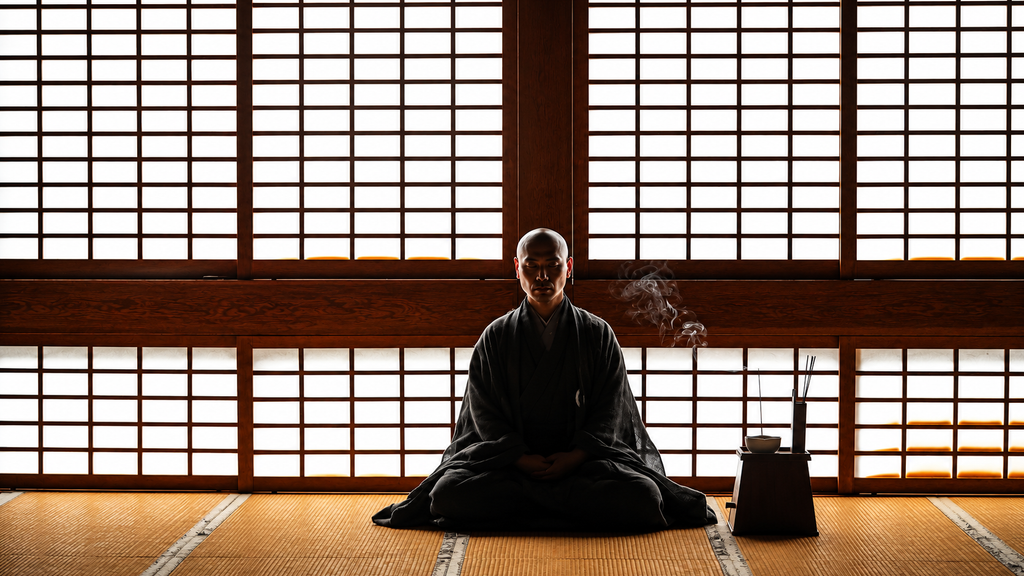
Dry gardens were made in places where people meditated, and the two practices ask for the same thing. Sit still. Breathe. Let attention settle without forcing it toward any particular conclusion.
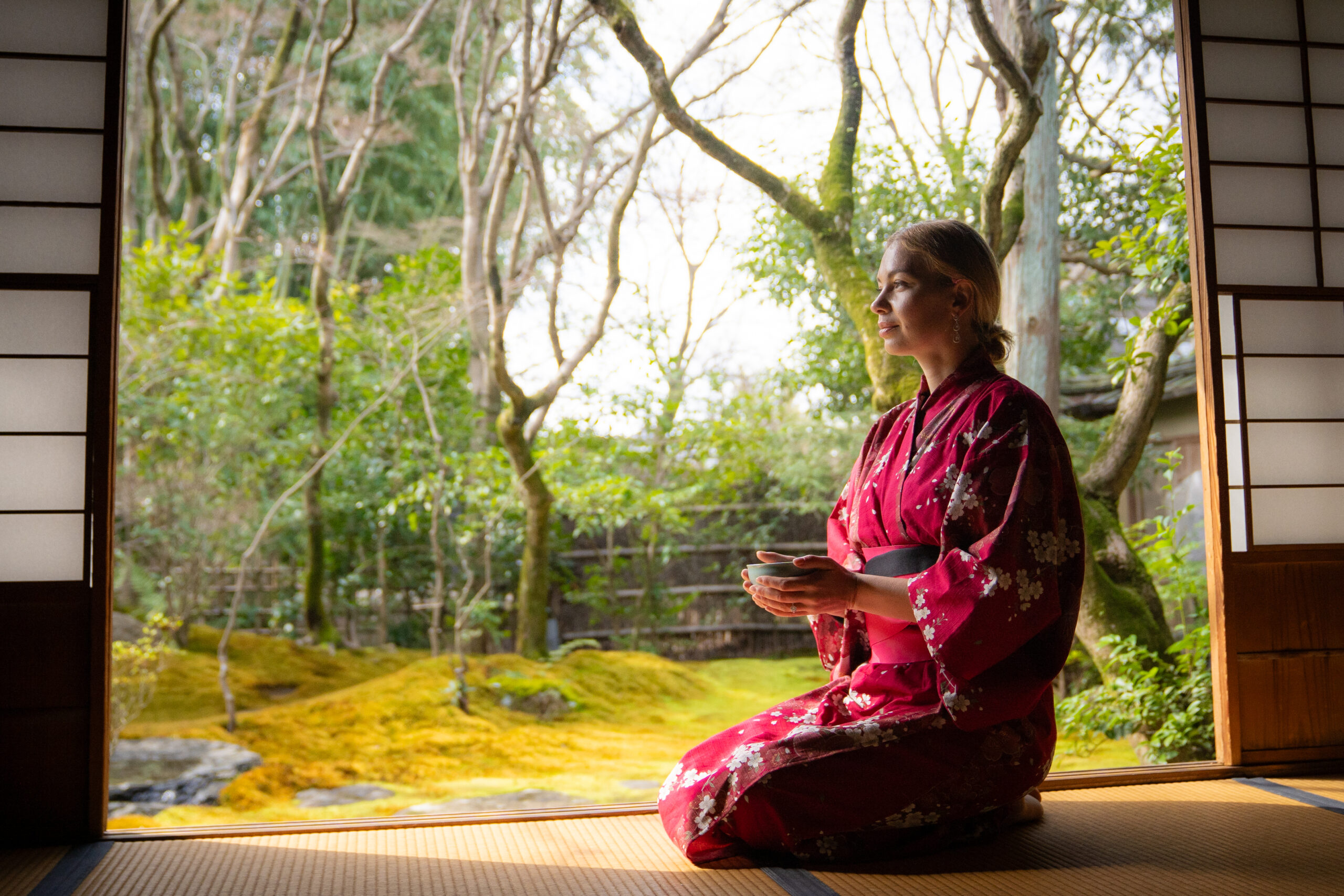
That is why we often pair a garden morning with zazen. Our meditation sessions take place at a small temple in the quiet streets near Kodaiji that does not open its gate to the public, where a monk teaches the posture and breathing and then sits with you, before matcha and an unhurried conversation through an interpreter. Travelers who sit first tend to look at the next dry garden differently, with less hurry and more patience for what is not there. If you are new to the practice, our beginner’s guide to zazen and temple etiquette explains what to expect.
Japanese Dry Garden: Frequently Asked Questions
What is the difference between a dry garden and a Zen garden?
In everyday English they usually mean the same thing. “Dry garden” translates the Japanese term karesansui and describes the form: a landscape made of stone and gravel without water. “Zen garden” is a Western label that reflects where the most famous examples are found. Not every dry garden is in a Zen temple, and not every Zen temple garden is dry.
Can you walk on the gravel in a Japanese dry garden?
No. Temple dry gardens are meant to be viewed from the veranda or a path, never entered, and stepping on the gravel would erase raking that the temple maintains by hand. Stay on the wooden floors and marked walkways, and keep a little distance from the edge so you do not scuff the patterns nearest the building.
What is the best dry garden to visit in Kyoto?
It depends on what you want from it. Ryoan-ji is the essential abstract garden, provided you arrive at opening time. Daisen-in is the best place to understand how gravel can describe water. Tofuku-ji shows the tradition in a modern hand. If you can manage only one, we would choose whichever you can visit when it is quiet, because a famous garden seen in a crowd teaches less than a minor one seen alone.
Related Tours

Conclusion
A Japanese dry garden gives you very little to look at, and that is precisely its point. Learn the basic vocabulary of stone as mountain, gravel as water, and empty space as meaning, and a rectangle of raked gravel that once seemed severe becomes one of the most absorbing things in Kyoto.
The practical advice is short. Pick two or three gardens that each teach something different, go early, take your shoes off, and sit for longer than feels natural. The garden will not explain itself in four minutes. Given fifteen, it usually does.
Plan Your Japan Trip with Local Experts
Our team has guided 40,000+ travelers across Japan. Tell us about your trip and we’ll get back to you within 24 hours.