In this article:
- What a Shukubo Is
- Shojin Ryori
- The Morning Service
- Choosing a Temple
- Etiquette and What to Pack
- Koyasan Temple Stay: Frequently Asked Questions
Introduction
At six in the morning in January, the main hall of a Koyasan temple sits at around four degrees, polished wood covers the floor, and you sit on it while monks chant sutras they have recited daily for centuries.
Nobody performs for you. The service happens whether guests attend or not, and the monks conducting it are doing their job rather than hosting an experience. That distinction is the whole reason a shukubo stay is worth arranging, and it is the reason it disappoints people who booked expecting a spa hotel with religious decoration.
Koyasan sits at 800 metres in the mountains of Wakayama, a monastic settlement founded by Kukai in 816 as the headquarters of Shingon Buddhism. Roughly 117 temples remain. About half of them take overnight guests.
What a Shukubo Is
Temple lodging, in a temple that is otherwise occupied with being a temple.
The Room
A tatami room with sliding paper screens, a low table, and a futon laid out on the floor — by staff while you are at dinner, in the traditional arrangement.
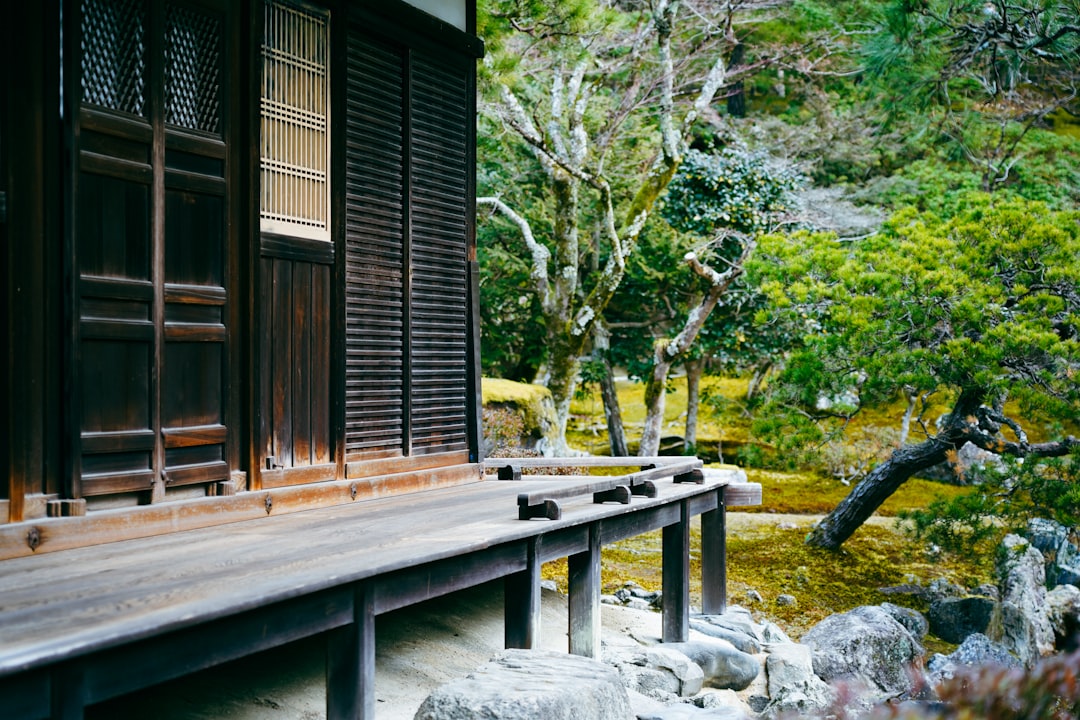
Rooms vary from plain to genuinely beautiful, with painted screens and a private view onto a moss garden at the better temples. Temples usually use kerosene or electric heaters in winter, but they do not heat the corridors. The buildings are wooden and old.
Walls are paper. Sound carries completely, which is worth knowing before you arrive with a family.
Most temples now offer some rooms with private bathrooms at a higher rate, while standard rooms use shared facilities down the corridor.
The Grounds
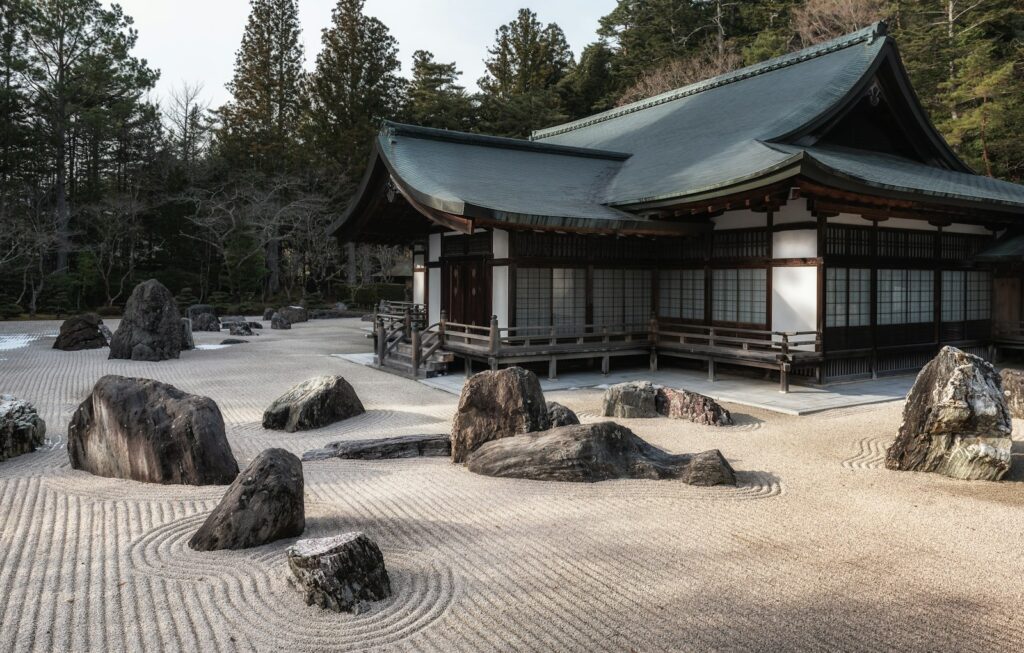
The gardens are the quiet argument for staying rather than day-tripping. Several Koyasan temples have gardens of real distinction, and after the last bus leaves you have them to yourself.
Evening at a shukubo is the point. The town empties, the temperature drops, the lanterns come on, and there is nothing to do except sit on a wooden veranda looking at moss. Travelers who fill the evening with an itinerary miss what they paid for.
Shingon and Kukai
Shingon is esoteric Buddhism, transmitted from China by Kukai — known posthumously as Kobo Daishi — who established Koyasan as its centre.
The belief that shapes the place is that Kukai did not die in 835 but entered eternal meditation, and remains in his mausoleum at Okunoin. Monks deliver meals to him twice daily. This has continued, uninterrupted, for approximately twelve hundred years.
Okunoin itself is a two-kilometre cemetery path from Ichinohashi bridge through 200,000 graves under enormous cedars, ending at the mausoleum. Walking it at night, which several temples run as a guided tour, is the strongest single experience in Koyasan and the reason to time your arrival for the afternoon rather than the evening.
Expert Tip
Photography is prohibited beyond Gobyobashi, the last bridge before Kukai’s mausoleum at Okunoin. This is enforced and it is not a suggestion — it is the most sacred point in Shingon Buddhism. Put the phone away at the bridge, bow before crossing as the Japanese visitors do, and understand that what happens on the other side is a live religious practice rather than a monument.
Shojin Ryori
Temples include both dinner and breakfast in the rate and serve shojin ryori, the vegetarian cuisine of Buddhist monasteries, for both meals. It is the best vegetarian food most travelers will eat in Japan.

What Is and Is Not in It
No meat, no fish, and no dashi made from bonito — which matters, because ordinary Japanese vegetarian dishes are frequently not vegetarian for exactly that reason. Stock here is kombu and shiitake.
Shojin ryori also excludes the five pungent roots—garlic, onion, leek, chives, and scallion—which Buddhist tradition avoids because they are thought to stimulate the senses and disturb concentration.
The cuisine relies on tofu, mountain vegetables, pickles, sesame, and seasonal produce, which temples serve in a series of small dishes on lacquer trays. It is vegan by construction, which makes Koyasan one of the easiest places in Japan for a vegan traveler to eat well.
Goma-dofu
Sesame tofu is Koyasan’s signature dish and bears no relation to soy tofu. Cooks mix ground sesame with kudzu starch to create something dense, cool, and faintly sweet, then serve it with wasabi and a little soy sauce.
The texture is closer to a firm panna cotta than to anything savoury, and it is genuinely one of the distinctive foods of Japan. Shops in town sell it to take away.
Koya-dofu, or freeze-dried tofu, is another local product. Cooks reconstitute it in dashi, which gives it a spongy texture that may take some getting used to.
How Dinner Works
Served early, typically between 5:30 and 6:30, either in your room or in a communal dining hall depending on the temple.
Portions look small and are not. A full tray runs to a dozen dishes and most people do not finish.
Alcohol is available at many temples, which surprises visitors. Ask when booking rather than bringing your own.
Guests should communicate any dietary requirements beyond the standard exclusions in writing when booking. Kitchens are small and cannot improvise on the night.
The Morning Service
The reason to stay overnight rather than visit for the day.
Gongyo
The morning service begins at six, sometimes six-thirty, and runs thirty to forty-five minutes. Guests are invited rather than required, and attendance is the expected thing.
You sit at the back of the main hall while monks chant. There is incense, there are bells, and there is a period at the end where guests may be invited to offer incense at the altar.
It is cold in winter — the halls are unheated and the doors are open. Wear everything you brought. Chairs are usually available for those who cannot sit on the floor, and asking for one is entirely normal.
The Goma Fire Ritual
Not every temple performs goma, but temples that do offer it provide the more dramatic of the two services. The priest burns wooden prayer sticks in a hearth before the altar while chanting and beating a drum, and the flames rise to two metres or more.
The symbolism is the burning away of worldly desire. The effect at close range in a dark hall is considerable.
Eko-in is best known for offering goma to guests every day. If this is what you want, book with that in mind rather than hoping.
Meditation
Several temples run guided meditation sessions in English, most commonly ajikan — a Shingon practice focused on visualising the syllable A, taught in a simplified form for visitors.
Sessions typically run in the evening and last around an hour. They are a genuine introduction rather than a demonstration, and the monks teaching them are generally good at it.
Check availability at booking. Temples usually offer sessions only on certain days, and they fill up quickly.
Choosing a Temple
The fifty-odd temples that take guests differ meaningfully, and price is not the main axis.
Eko-in
The most internationally known and the most set up for foreign guests. Staff speak English, welcome guests to the daily goma fire ritual, run meditation sessions in English, and organise the monk-led Okunoin night tour.
The trade-off is that it is the least quiet of the options and books out furthest ahead. For a first shukubo stay, particularly for travelers who want the practices explained rather than merely witnessed, we still recommend it.
Temples Known for the Food and the Gardens
Rengejo-in has a long-standing reputation among foreign guests and a resident who has hosted them for decades. Visitors know Soji-in, Fudo-in, and Ekoin’s neighbours in the western cluster for their gardens, the quality of their shojin ryori, or both.
Reputations shift as head priests change. Rather than relying on a list, read recent reviews specifically mentioning the food and the garden, and book directly through the temple or the official Koyasan portal where possible.
Booking
The Koyasan Shukubo Association handles reservations across the temples, and most temples also appear on the major booking platforms. Prices generally run ¥12,000 to ¥25,000 per person including both meals.
Book two to three months ahead for autumn colour in November, which is the peak, and for cherry blossom season. Weekends are tighter than weekdays throughout the year.
Confirm three things in writing when booking: whether the temple offers goma, whether the room has private facilities, and any dietary requirement.
Expert Tip
Arrive by early afternoon, not at six. Koyasan’s day visitors leave on the late-afternoon cablecar, and the two hours between their departure and dinner are when the town is at its best — Okunoin nearly empty, the Danjo Garan complex lit low, and no queue anywhere. Travelers who arrive on the evening train check in, eat, and sleep, and see none of it.
Etiquette and What to Pack
The rules are few and they are real. Following them is straightforward once you know them.
Curfew and Timing
Gates are locked in the evening, commonly around nine, and there is no late entry. If you are out at Okunoin after dark, know your temple’s time.
Everything runs early. Dinner at six, lights out shortly after, service at six the next morning, breakfast after it, checkout by ten. This is a working religious institution and the schedule is not built around guests.
The Bath
Temples have communal baths in the standard Japanese arrangement — wash thoroughly at the seated shower first, then enter the bath to soak, and never bring soap into the water.
Bathing hours are fixed and often close by nine or ten. Baths are gender-separated. A few temples have restrictions regarding visible tattoos, so ask when booking if it applies to you.
Conduct in the Halls
Shoes off at the entrance, into the slippers provided, and slippers off again on tatami. Do not photograph the monks during services without asking, and do not photograph inside the main hall at all unless told it is permitted.
Speak quietly in corridors. Other guests are sleeping behind paper.
What to Bring
Warm layers, more than the forecast suggests. Koyasan is at 800 metres and runs several degrees colder than Osaka, with unheated corridors and halls. In autumn and winter this catches people out badly.
Thick socks for sitting on cold floors. Cash, because some temples and many shops in town do not take cards. A torch for the Okunoin walk. Yukata and towels are provided.
Koyasan Temple Stay: Frequently Asked Questions
Do the monks speak English?
At the temples accustomed to foreign guests — Eko-in most notably — yes, and services and meditation are explained in English. At the smaller and more traditional temples, expect limited English and a printed guide instead. This is rarely a practical problem: the routine is simple, the staff are used to gesturing through it, and translation apps handle the rest. If you want the rituals explained rather than simply attended, choose a temple that advertises English support and confirm it at booking.
Can someone with limited mobility stay comfortably?
With planning, in some temples. The obstacles are real: futons on the floor rather than beds, steps between wooden buildings, seated services on tatami, and communal baths reached along corridors. Some temples now offer rooms with beds and private facilities, and chairs are generally available at services on request. Contact temples directly and describe the specific requirement rather than booking through a platform — they will tell you honestly whether their building works, and in our experience they are direct about it.
How do I get to Koyasan from Osaka or Kyoto?
From Osaka, take the Nankai Koya Line from Namba to Gokurakubashi, then the cablecar up the mountain, then a short bus into town — around two hours in total. The Koyasan World Heritage Ticket bundles the round trip, the cablecar, and unlimited local buses at a meaningful discount, and is sold at Nankai stations. From Kyoto, travel to Namba first via Osaka; there is no direct route, and the total is closer to three hours. Note that the Japan Rail Pass does not cover the Nankai line. Walking is not permitted on the cablecar route, though the Choishi-michi pilgrimage trail from Kudoyama is a fine seven-hour alternative for walkers.
Related Tours
Conclusion
Book two nights rather than one. A single night means arriving in the afternoon, eating, sleeping, attending the service, and leaving before eleven — which covers the itinerary and misses the place entirely.
The second night is when Koyasan works. You walk Okunoin twice, once at dusk and once in the morning mist, you sit in the garden with nothing scheduled, and the cold hall at six in the morning stops being an activity and starts being a routine you happen to be inside of.
Plan Your Japan Trip with Local Experts
Our team has guided 40,000+ travelers across Japan. Tell us about your trip and we’ll get back to you within 24 hours.