In this article:
- How a Japanese Game Center Is Laid Out
- Which Akihabara Arcades to Visit
- Paying, Cards, and What a Session Costs
- House Rules and Unwritten Etiquette
- Akihabara Arcade: Frequently Asked Questions
Introduction
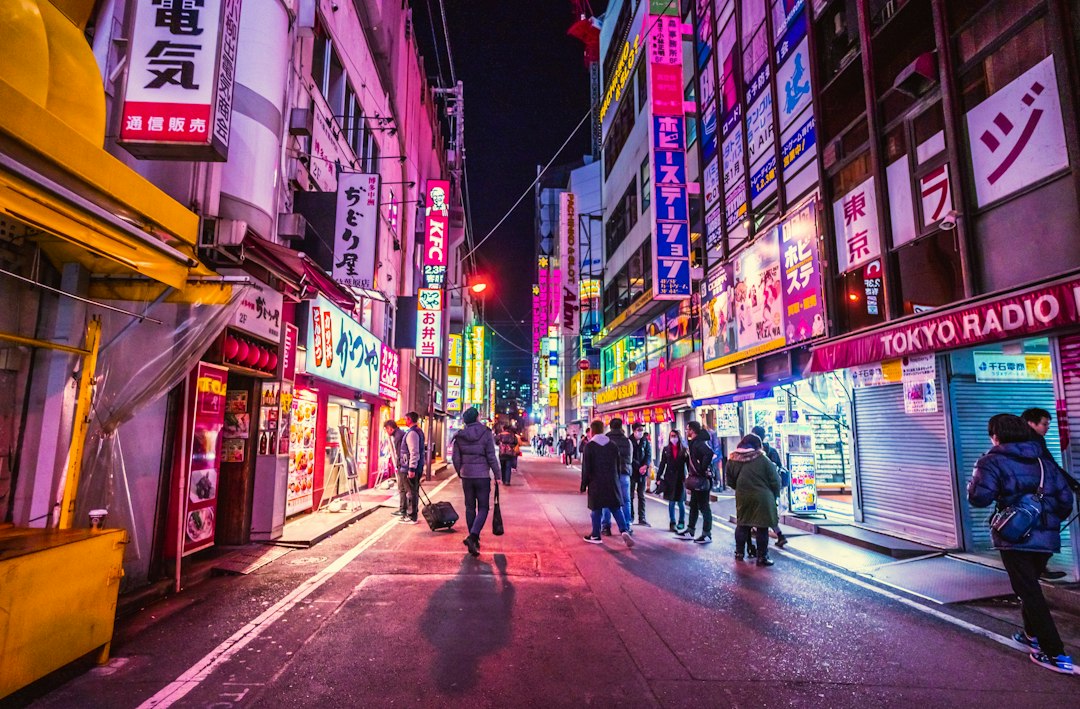
Step out of the Electric Town Exit at Akihabara Station after dark. The first thing you hear is not traffic. The layered noise of an Akihabara arcade spills onto the pavement. Crane machines chime their jingles. Someone hammers a drum game far too hard. Somewhere above it all, a fighting game announcer shouts a round number.
Most visitors walk into the ground floor, put a few coins into a crane game, lose them, and leave. That is a pity. The ground floor is the least interesting part of the building. The floors above it hold some of the most skilled players and best-kept machines in the world.
Locals call them game centers, and they follow a logic that is easy to read once someone explains it. What follows is how we explain it to the travelers we take through Akihabara: what is on each floor, where to go, how to pay, and how not to annoy the regulars.

How a Japanese Game Center Is Laid Out
Every large arcade in Akihabara is a vertical building, and each floor tends to serve a different crowd. Once you know the pattern, you can walk into any of them and find what you want in a minute.
Prize Floors: Crane Games at Street Level
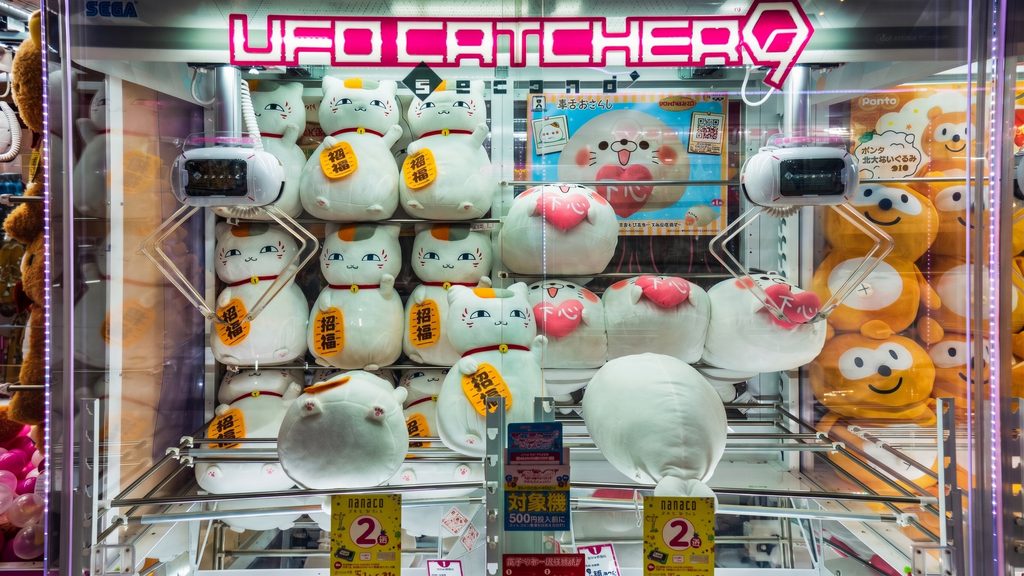
Arcades dedicate the ground floor, and often the two above it, to prize games. Japanese call crane machines UFO catchers, and the prizes inside are mostly anime figures, plush toys, and snacks, many of them made only for arcades and not sold in shops.
These floors are bright, loud, and built for passing foot traffic. They are also where tourists spend the most money for the least return. Treat them as a place to look, not a place to settle.
Rhythm, Fighting, and Card Games Upstairs
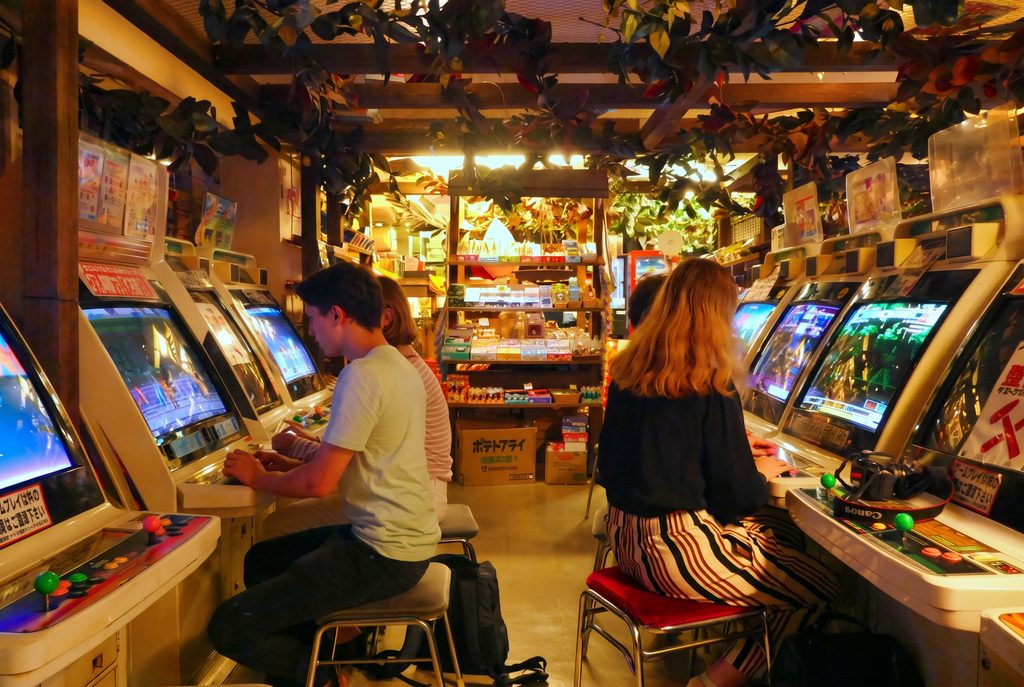
Climb the stairs and the atmosphere changes. Rhythm game floors hold cabinets such as maimai, CHUNITHM, beatmania IIDX, Sound Voltex, and Taiko no Tatsujin, the drum game that first-timers enjoy most because the controls are two sticks and a drum.
Fighting game floors are darker and quieter. Arcades often arrange cabinets back to back, so the person you are playing against may sit across from you without you seeing them. Card games, where players slide physical cards across a reader on the cabinet, take up whole floors in some buildings and draw a devoted adult following.
Purikura and Medal Games
Purikura are photo sticker booths. You pose in a small, brightly lit booth, then decorate the images on a touch screen before they print as stickers. They are usually found on a basement or upper floor, grouped together in one corner.
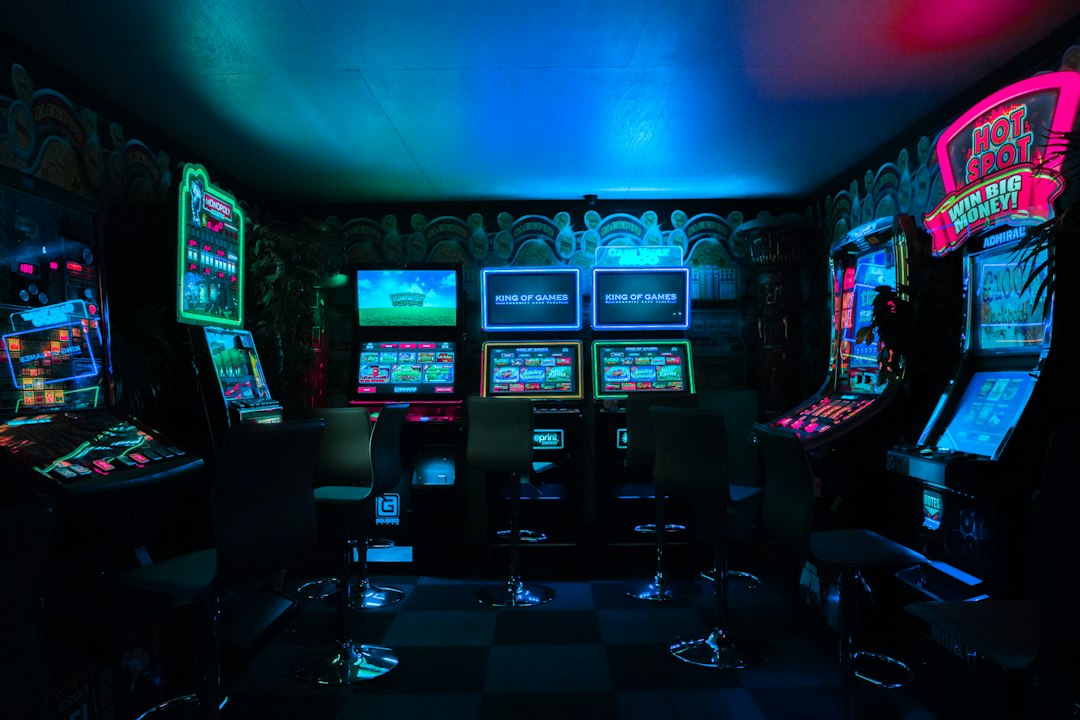
Medal games work like a casino without money: you buy tokens and feed them into pusher machines. They are a slow, calm way to spend an hour, and a natural break between a maid cafe and the figure shops. That said, medals cannot be cashed out, and they are not worth the visit on their own.
Expert Tip
Start at the top floor and walk down. The upper floors are where the character of each arcade shows, and by the time you reach the crane games at street level you will have a sense of which building is worth coming back to later in the evening.
Which Akihabara Arcades to Visit
Akihabara’s arcade map has changed more in the past few years than in the decade before it. The large Sega building on Chuo-dori closed in 2020, Sega’s arcades were rebranded as GiGO in 2022, and several buildings have since changed hands. Older guides often describe venues that no longer exist under those names. The five below are the ones we use, and our Akihabara travel guide covers the shops and streets around them.
Silk Hat Akihabara and GiGO Akihabara 3
Silk Hat Akihabara opened in November 2025 in the red building beside the station that had housed an arcade since 1992, most recently as GiGO. It runs over nine floors, with crane games, rhythm and fighting games, and console areas each given their own level.
GiGO Akihabara 3, a short walk away on Sotokanda, is the one we recommend to anyone curious about rhythm games. Its rhythm floor gathers the major titles in one room, so you can watch several before deciding which to try.
Taito Station and Namco Akihabara
Taito Station Akihabara sits right by the Electric Town Exit and is the easiest building to start in. Its floors run from purikura and Taiko in the basement through prize floors to a rhythm game floor at the top, which makes it a compact sample of the whole format.
Namco Akihabara opened in March 2023 in the former Sega building known as GiGO Akihabara 4. Bandai Namco is the company behind Taiko no Tatsujin and the Gundam arcade series, and the building leans heavily on both. If you have a Gundam fan in the group, this is where to take them.
Between the two, we usually start first-timers at Taito Station. The layout is easy to follow, the basement Taiko machines are forgiving, and it is close enough to the station that you can leave without losing your bearings.
HEY for Retro and Shooting Games
HEY, short for Hirose Entertainment Yard, is on a side street behind Chuo-dori. It is the arcade we take people to when they ask for something that has not changed. Upstairs, rows of Japanese cabinets run shoot ’em ups and fighting games from the 1980s and 1990s, many under black light.
The crowd here is older and more serious. Even so, nobody minds a visitor who plays badly; they mind visitors who stand behind them filming. More on that below.
Paying, Cards, and What a Session Costs
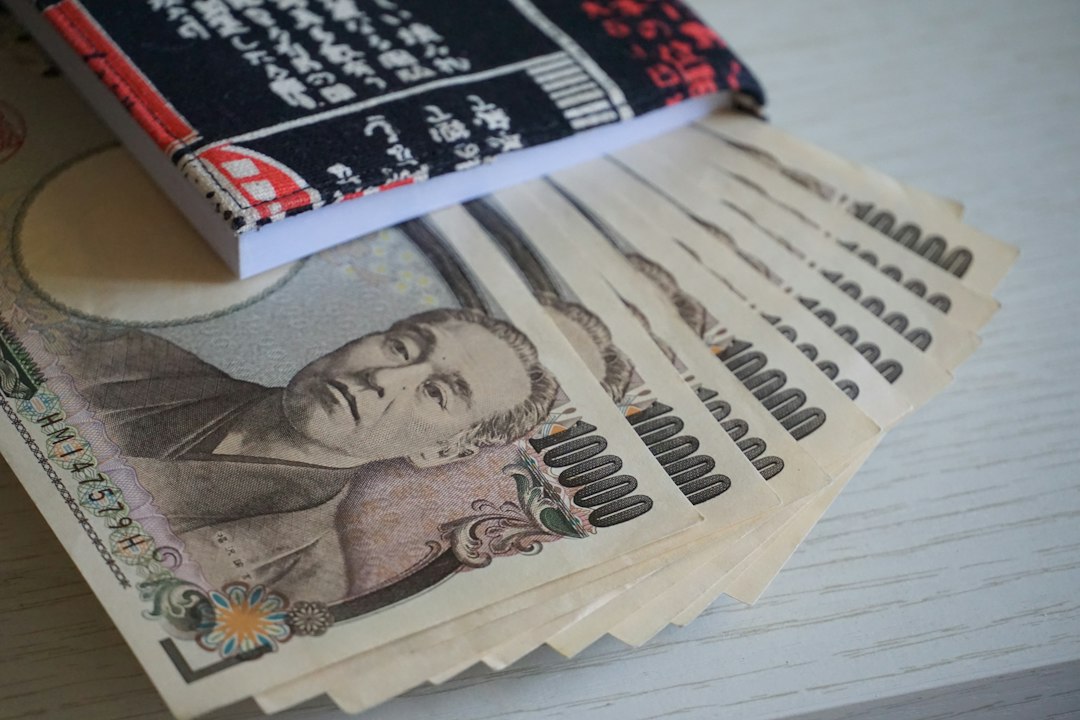
Arcades in Japan still run largely on ¥100 coins. Some buildings now accept IC card or cashless payment at certain machines, but you should expect to play with coins for most of the evening.
Coins, Change Machines, and the 500-Yen Bonus
Every floor has change machines that turn ¥1,000 notes into ¥100 coins. Most games cost ¥100 a play, and some newer cabinets cost more. On a rhythm game, ¥100 usually buys a short session of a few songs.
Many crane machines offer an extra play when you insert a ¥500 coin rather than five ¥100 coins. The bonus varies by machine and is shown on a sticker near the coin slot. Read it before you pay.
Aime, e-amusement, and Banapassport Cards
Each of the big three makers has its own player card: Aime for Sega titles, e-amusement pass for Konami, and Banapassport for Bandai Namco. The cards save your scores and unlocks, and they are sold from vending machines inside the arcades for a few hundred yen.
For a single evening, skip them. Guest play is available without a card, and the cards only start to pay off if you return to the same game over several visits.
Crane Games Without Losing Your Evening
Crane games are where budgets disappear. Our rule is simple: pick one machine with a prize you want, set a limit of around ¥1,000 or ¥2,000, and walk away when it is spent.
Watch someone else play the machine first. Japanese cranes are rarely about grabbing the prize; most are set up so that you nudge a box toward the edge or push it along two bars over several plays. Staff will often reposition a prize if it ends up stuck in an awkward place, and a polite request with a gesture usually works without any Japanese.
Expert Tip
Break a ¥1,000 note at the change machine on your way in and keep the coins in a separate pocket from the rest of your money. When the pocket is empty, the evening is over. In our experience, around ¥3,000 for an hour covers a fair sample of every floor without ending up as a story about one crane machine.
House Rules and Unwritten Etiquette
Japanese arcades are relaxed places with a few firm rules. Most are posted on the walls, though rarely in English, and the rest are the kind regulars notice immediately.
Queuing With a Coin on the Cabinet
On popular rhythm and fighting cabinets, players queue by placing a ¥100 coin on the edge of the machine. The coin means you are next. Put yours behind the others, wait nearby, and play when your turn comes.
On a fighting game, sitting down at the opposite cabinet and inserting a coin is a challenge to whoever is playing. It is accepted practice, and losing quickly is no embarrassment. However, if you only want to practise, look for a cabinet with no one on the other side.
Beyond that, the general courtesies are the ones you would expect anywhere: do not lean on someone else’s machine, keep drinks away from the cabinets, and step back from players rather than crowding them.
Photos, Purikura Corners, and Age Rules
Photography rules differ by building, and many arcades restrict filming other customers. Photographing the room or your own play is usually fine. Filming a stranger’s screen and hands over their shoulder is not, and it is the single habit that most annoys regulars at places like HEY.
Purikura corners often display signs barring men who are not accompanied by a woman. The rule exists because of past harassment and covert photography, it is set by each arcade, and staff enforce it. Mixed groups and families can enter freely.
Tokyo also restricts arcade entry for minors. Under-16s need a guardian with them after 6pm, and no one under 18 may stay after 10pm. Families with teenagers should plan an arcade visit for the afternoon or early evening.
Choosing When to Go
Weekday afternoons are the quietest time, and the best one for a first attempt at a rhythm or fighting game. Cabinets are free, nobody is waiting behind you, and you can fail at the easiest song three times without feeling watched.
Evenings and weekends are a different experience. After work, the upper floors fill with regulars, queues form on the popular cabinets, and the standard of play rises sharply. This is the time to watch rather than play. Standing a respectful distance behind a beatmania IIDX player on the hardest charts is one of the more remarkable things you can see in Tokyo for free.
Our suggestion for most travelers is to do both: an hour in the afternoon to learn, then a short return after dinner to see the same floor at full strength.

Akihabara Arcade: Frequently Asked Questions
Do I need to speak Japanese to play?
No. Most games can be played by watching for a minute and then copying what you saw, and some rhythm titles offer an English language setting. Change machines and coin slots are self-explanatory. For crane games and help from staff, pointing and a short “sumimasen” go a long way.
What time do Akihabara arcades close?
The major arcades in Akihabara generally open at 10am and close around 11:30pm, with some staying open later on Friday and Saturday nights. Hours change, so check the arcade’s own website on the day. An arcade visit fits well after dinner, when the electronics shops nearby have closed.
Can children go to arcades in Tokyo?
Yes, during the day. Under Tokyo rules, under-16s need a guardian after 6pm, and minors are not admitted after 10pm even with a parent. Taiko no Tatsujin and the prize floors are the easiest places for younger children to start.
Related Tours
Conclusion
Arcades reward the second visit more than the first. The first time through, you are reading the building; the second time, you know which floor you want and walk straight to it. For that reason we suggest an early look in the afternoon and a return after dinner, when the regulars arrive and the upper floors are at their best.
If you want company for the first round, our private Tokyo day tour has no fixed route, and a guide can build Akihabara into the day alongside Asakusa or Ueno, then show you how a rhythm cabinet or crane machine works before you go back alone. Travelers who prefer to cover the major landmarks in one go often take the bus tour from Shinjuku on their first day and leave Akihabara for a free evening. Whichever way you arrive, bring a pocket of ¥100 coins, start at the top floor, and leave the crane games for last.
Plan Your Japan Trip with Local Experts
Our team has guided 40,000+ travelers across Japan. Tell us about your trip and we’ll get back to you within 24 hours.