In this article:
- What teamLab Osaka Actually Is
- Tickets, Hours, and Getting to Nagai
- Walking the Garden After Dark
- Fitting teamLab Into an Osaka Day
- teamLab Osaka: Frequently Asked Questions
Introduction
Most people searching for teamLab Osaka expect a version of the Tokyo museums: mirrored rooms, projected walls, a queue outside a building. What they find instead is a park after dark.
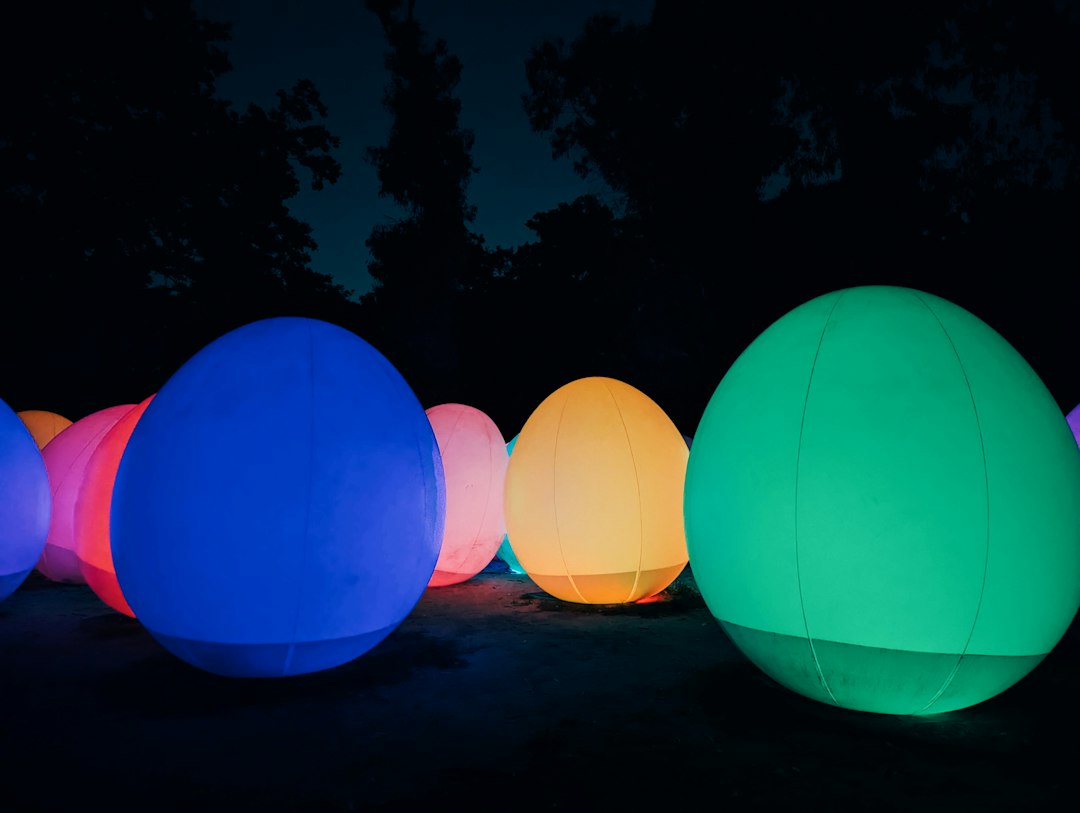
teamLab Botanical Garden Osaka occupies Nagai Botanical Garden, a large municipal garden in the south of the city. It opens only at night. You walk through real woodland, along the edge of a pond and past camellia beds, and the art is placed among the plants rather than in front of them. Lamps on the water brighten as you approach. Large ovoid sculptures shift color in the wind. The sound of the garden at night is part of the work.
That makes it a different kind of evening from almost anything else in Osaka, and an easy one to plan badly. The opening time moves with the sunset, the garden sits well outside the districts where most visitors stay, and the experience changes noticeably from month to month. Here is how we suggest approaching it.

What teamLab Osaka Actually Is
The short answer is a permanent, outdoor, nighttime exhibition run by the art collective teamLab inside an existing public garden. It has been open since 2022.
A Night Museum Inside Nagai Botanical Garden
Nagai Botanical Garden sits within Nagai Park in Higashisumiyoshi Ward. The garden covers roughly 240,000 square meters and holds around 1,200 plant species, which is the scale that matters here: this is a long walk through landscaped woodland, not a gallery with a garden theme.
teamLab describes the works as responding to their environment. In practice, that means wind, rain, and visitors all change what you see. A sculpture that is deep blue when you reach it may turn amber after someone brushes past, and the light ripples outward to the pieces nearby. On a breezy night the whole garden moves more than on a still one.
None of this is projected onto walls. The trees are lit, the pond is lit, and the objects placed among them are lit. The effect is quieter than the indoor museums, and in our view more memorable for it.
How It Differs From teamLab Planets in Tokyo
If you have already been to teamLab Planets in Tokyo, set aside the comparison. Planets is an indoor, barefoot sequence of rooms built for intensity. The Osaka garden is the opposite: outdoors, shoes on, dark between the works, and paced by how slowly you choose to walk.
Neither is the better version. They suit different moods, and travelers who enjoy one do not always enjoy the other. People who found Planets overwhelming often prefer Osaka. People who want spectacle may find Osaka too restrained.
teamLab Osaka or teamLab Biovortex Kyoto
Since October 2025, Kansai has had a second option. teamLab Biovortex Kyoto is a large indoor museum near Kyoto Station, open during the day as well as the evening.
The choice is mostly about time of day. If your evenings are free in Osaka, the botanical garden is the more distinctive experience and costs considerably less. If you are based in Kyoto, or traveling in summer and would rather not walk a dark garden in the humidity, Biovortex is the more practical choice. We would not try to fit both into one trip unless digital art is a central interest.
Tickets, Hours, and Getting to Nagai
Three practical points shape the evening: when you buy, when the gates open, and how long it takes to get down to Nagai.
Timed Tickets and Variable Pricing
Tickets are sold for a specific date and entry time on the official teamLab ticket site. Prices vary by date. Adults (high school age and above) start from ¥1,800, and elementary and junior high school students from ¥500. Preschool children enter free.
Buying at the gate costs more than buying online, and on busy weekend evenings the on-site allocation can run out. We recommend booking ahead. Tickets bought through the official site can have their date changed, which is useful when the forecast turns.
Once you are inside, there is no time limit. The entry slot governs when you walk in, not when you have to leave.

Opening Hours Follow the Sunset
This is the detail that catches people out. The garden opens after dark, so the start time shifts through the year. In midsummer 2026 it did not open until 19:45; by late September the start had moved forward to 18:30. Closing has stayed at 21:30, with last entry at 20:30.
The result is a short window in summer and a longer one in autumn and winter. Check the official site for the exact start time on your date rather than relying on a figure from a blog, including this one.
Closing days are irregular. In 2026 the garden has closed on a handful of Mondays, announced in advance on the official calendar. If your trip has only one possible evening for this, confirm it before you plan the rest of the day around it.
From Namba to Nagai on the Midosuji Line
The garden is in the south of the city, but the journey is simple. Nagai Station is on the Osaka Metro Midosuji Line, the same line that runs through Umeda, Shinsaibashi, Namba, and Tennoji, so from most central hotels there is no transfer at all.
From Nagai Station, take Exit 3 and walk east for about 800 meters to the garden entrance. Allow ten minutes on foot, a little more after dark. An IC card covers the subway fare in both directions; our guide to things to do in Osaka covers the districts along the same line.
Expert Tip
Book an entry slot close to the opening time on your date. The first half hour after the gates open is when the sky still holds a little blue, and the garden reads as landscape and art at once. By nine o’clock it is fully dark and the works carry everything. On weekends, arriving early also means you are well inside before the main entry queue forms.

Walking the Garden After Dark
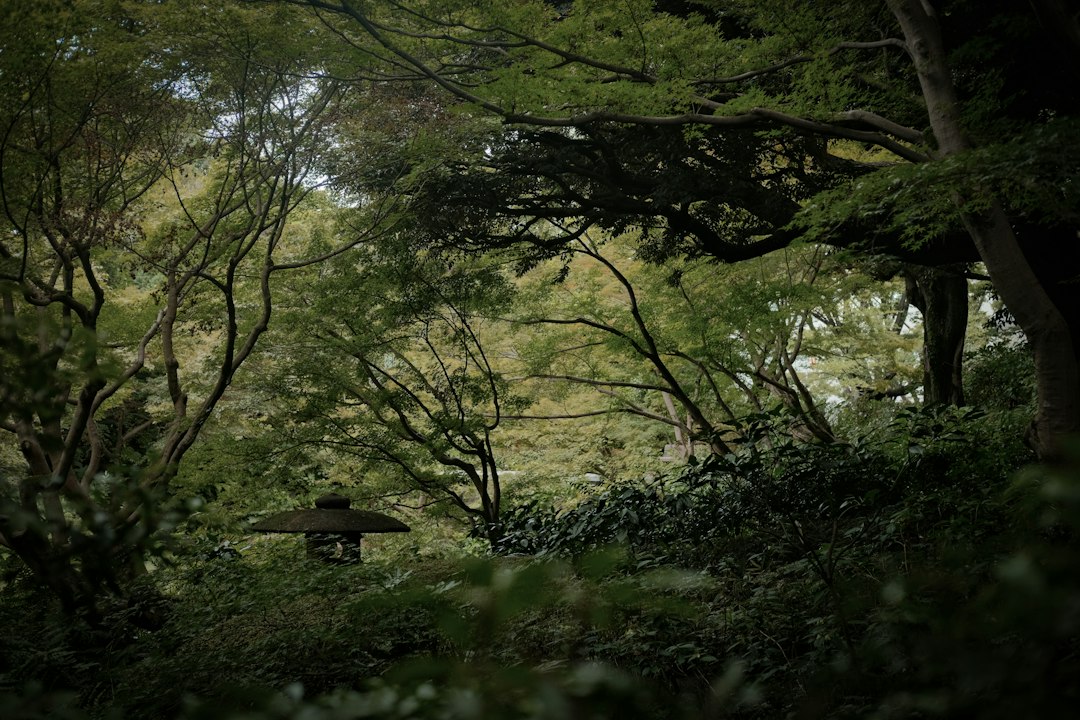
There is no set route. The garden is divided into lettered areas, and you can take them in any order. Most visitors spend between ninety minutes and two hours, which is about right if you stop to watch rather than photograph.
The Works Worth Slowing Down For
Floating Resonating Lamps on Oike Lake is the piece most people remember. Lamps drift across the large pond, and when one is touched or disturbed, its color changes and the change travels lamp to lamp across the water. Walk the edge of the pond slowly. The pattern takes a minute to become legible.
Forest of Autonomous Resonating Life, set among eucalyptus trees, works on the same principle with standing ovoid forms. Stand still for a while and watch the light pass through the grove as other visitors move.
Sculptures of Dissipative Birds in the Wind is subtler and easy to walk past. Its patterns shift with the wind itself, so its appearance depends on the weather that evening. The camellia garden, by contrast, is at its best in the cooler months when the shrubs are in flower.
Seasonal Pieces: Cherry, Nemophila, Sunflower, Cosmos
Several works are tied to what is blooming, and they appear only for a few weeks. In 2026 the garden has shown a cherry blossom piece in early April, blue nemophila from April into May, and white sunflowers in August.
The cosmos work is scheduled for 7 to 28 November 2026, though dates for these pieces shift with flowering conditions. Mid to late November is also when the bald cypress and sweetgum trees in the garden turn color, so a visit in the second half of November gets both. If you have flexibility, that is the window we would choose.
Outside these periods, the permanent works carry the visit on their own. A January evening in Nagai is cold and very quiet, and for some travelers that is the appeal.
What to Wear and What to Bring
The paths are unpaved in places and dark between the installations. Wear flat shoes with grip, and leave the evening heels at the hotel.
There are no restaurants inside the garden. Bring water, and in summer, insect repellent; the woodland sections are humid and mosquitoes are part of a July visit. In winter, dress as you would for a long walk outdoors, because that is what this is. A small backpack is easier than a shoulder bag when you want both hands free for a phone or a child.
Expert Tip
Phone screens at full brightness are the main thing that spoils the darker sections for everyone else. Turn yours down before you go in, and switch off the flash, which flattens the light in photographs anyway. Long exposure or night mode, braced against a railing, gives far better results than a brighter screen.
Fitting teamLab Into an Osaka Day
The garden takes care of the evening. The question is what to do beforehand, and the answer depends on where the Midosuji Line takes you.
An Afternoon in Tennoji, an Evening in Nagai
Tennoji sits a few stops north of Nagai on the same line, which makes it the natural afternoon before the garden. On our Osaka highlights walking tour, the route runs from Osaka Castle by subway to Tennoji Park and the southern districts before finishing in Dotonbori. Travelers who want the garden afterward can head south instead of returning to their hotel, with no transfer involved.
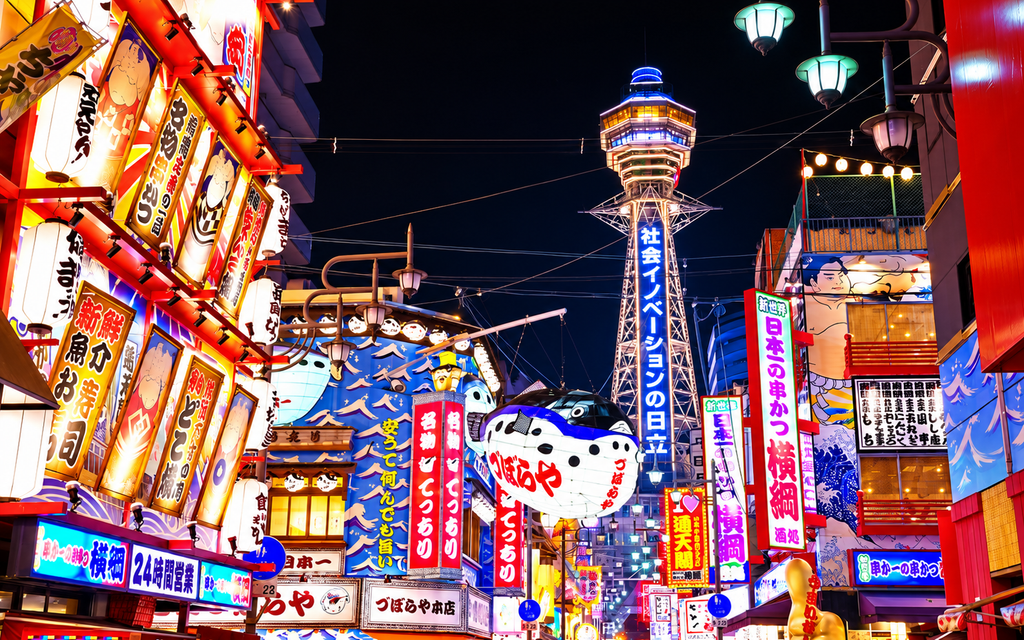
For a less fixed day, a private guide can shape the afternoon around food and neighborhoods and finish within easy reach of the Midosuji Line. Shinsekai and the area below Tsutenkaku are close to Tennoji and suit a late lunch before a night in the garden. Our three-day Osaka itinerary shows how an evening like this slots into a longer stay.
Dinner Before or After
Nagai itself is a residential district, and the options near the station are ordinary. We suggest eating before, in Tennoji or Abeno, or after, back in Namba.
After is often the better choice in summer, when the late opening leaves time for an early dinner and a relaxed walk to the train. In November, when the gates open earlier, eating afterward in Namba works well: the garden closes at 21:30, and the restaurants around Dotonbori are still busy when you get back.
teamLab Osaka: Frequently Asked Questions
Is teamLab Osaka still open?
Yes. teamLab Botanical Garden Osaka is a permanent exhibition and is operating as of autumn 2026. It closes on occasional irregular days, mostly Mondays, which are listed on the official site in advance. Check the calendar for your date before you build an evening around it.
How long do you need at teamLab Botanical Garden Osaka?
Plan for ninety minutes to two hours inside, plus the subway ride and the walk from Nagai Station. From central Osaka, the whole outing usually takes around three hours. Since the gates open at sunset and last entry is 20:30, that fits comfortably into one evening.
Does it run in the rain?
The garden is outdoors, and teamLab describes rain as one of the conditions the works respond to, so a wet evening is not in itself a reason to cancel. In severe weather, operations can change at short notice. Check the official site on the day, and remember that tickets bought on the official site can be moved to another date.
Related Tours

Conclusion
teamLab Osaka rewards people who arrive with time to spare and a willingness to walk slowly. It is not a quick stop, and it is not a substitute for the Tokyo museums. It is a garden at night, with art that changes because the garden does.
Plan the day backward from the sunset. Check the opening time for your date, book a slot close to it, spend the afternoon somewhere on the Midosuji Line, and leave dinner for Namba afterward. If your dates allow it, choose the second half of November, when the cosmos and the autumn trees overlap.
Plan Your Japan Trip with Local Experts
Our team has guided 40,000+ travelers across Japan. Tell us about your trip and we’ll get back to you within 24 hours.