In this article:
- What Fushimi Inari Actually Is
- The Mount Inari Loop
- Timing: Dawn, Night, and the Hours to Avoid
- Food on the Mountain
- Access and Practicalities
- Fushimi Inari Hike: Frequently Asked Questions
Introduction
Fushimi Inari is the most visited site in Kyoto and one of the emptiest, depending entirely on where you stand and when.
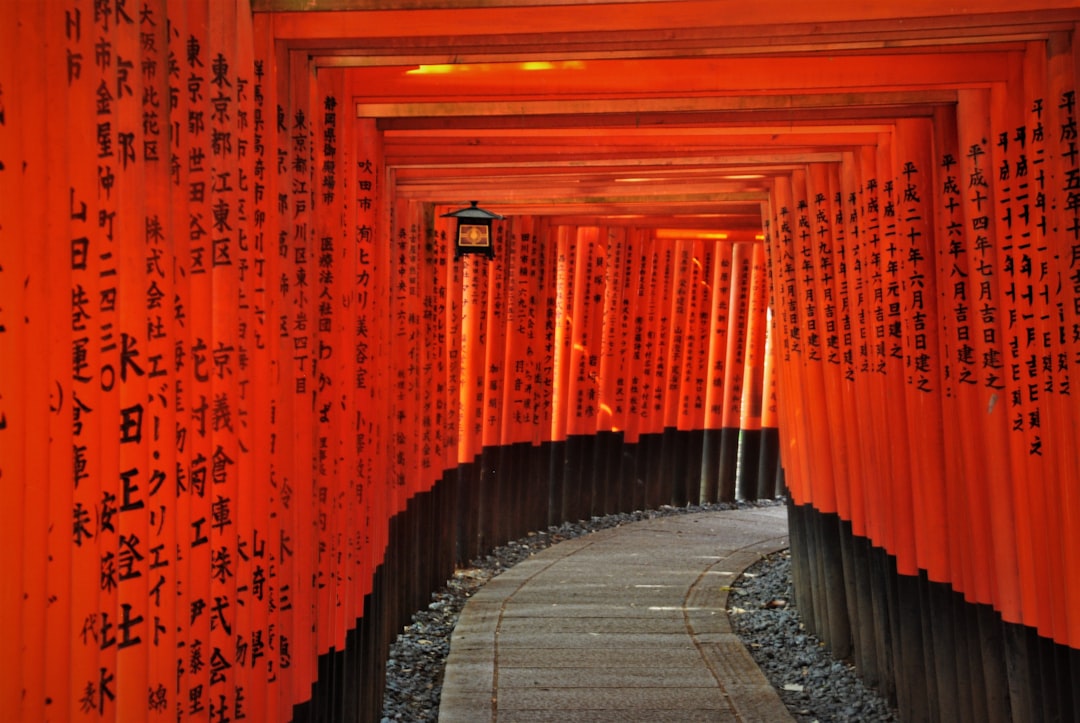
The famous photograph is taken in a stretch of maybe two hundred metres, and by ten in the morning that stretch has several hundred people in it moving at the speed of the slowest phone. Twenty minutes further up, at the Yotsutsuji junction, the crowd thins by perhaps ninety percent. Above that, on the summit loop, you will pass a handful of people in an hour.
The shrine has no gate, no ticket, and no closing time. That combination is rarer in Kyoto than it sounds, and it is what makes this the one major site where a visitor can genuinely control their own experience.
What Fushimi Inari Actually Is
Not a single shrine but an entire mountain covered in them, accumulated over more than a thousand years.
The Head Shrine of Thirty Thousand
Fushimi Inari Taisha, founded in 711, is the head shrine of the Inari cult — and there are roughly 30,000 Inari shrines across Japan, more than any other single deity.
Inari is associated with rice, and by extension with agriculture, prosperity, and commerce. That last association is why the mountain is covered in gates: modern donors are overwhelmingly businesses.
The main hall at the base is a proper Shinto shrine complex and worth ten minutes. The mountain behind it is the reason to come.
The Foxes and What They Carry
The stone foxes throughout the grounds are kitsune, messengers of Inari rather than the deity itself. There are hundreds of them, and they are not identical.
Look at what each holds in its mouth or under a paw. A key opens the rice granary. A jewel represents the spirit of the deity. A sheaf of rice is the harvest. A scroll is wisdom or the teachings.
Many wear red bibs, the same offering given to Jizo statues. The paired arrangement — one fox each side of a gate or altar — repeats up the entire mountain.
The Torii, and Who Pays for Them
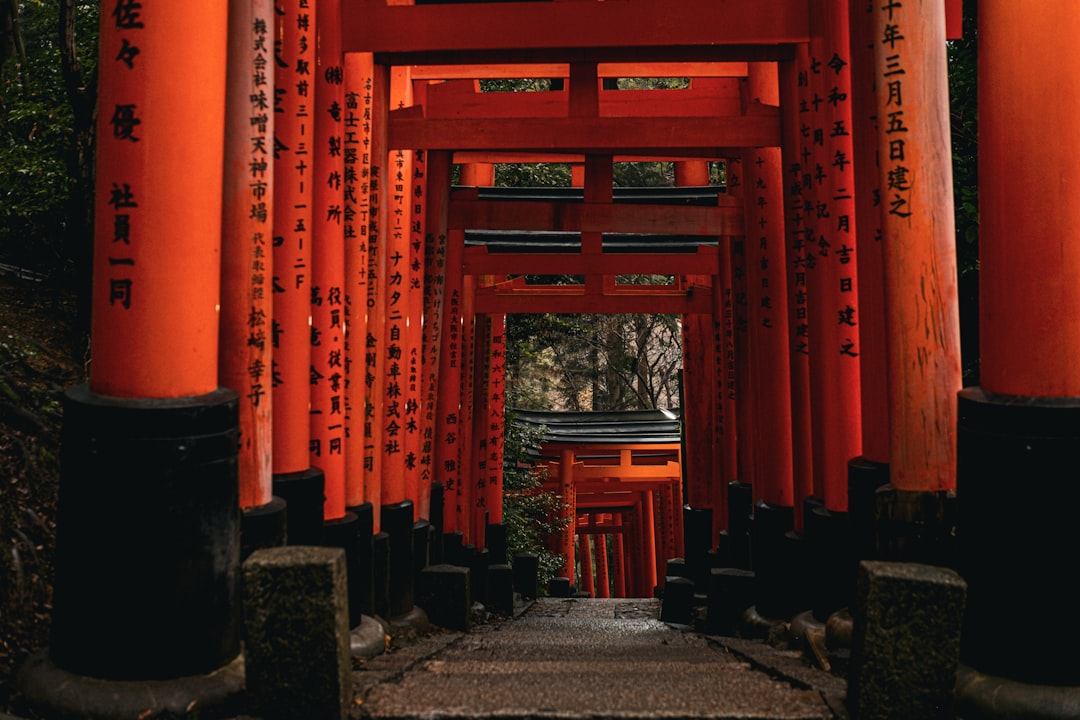
Every gate is a donation. The name of the donating business or individual is painted in black on the right-hand upright as you walk back down, along with the date.
Prices scale with size, from several hundred thousand yen for a small gate to substantially more for the large ones on the main path. There is a waiting list.
This is worth understanding because it changes what you are looking at. The tunnel is not decorative architecture. It is an accumulated record of about a thousand years of people asking for commercial success, and the newest gates were installed this year.
Expert Tip
Walk up one side of the double path at the Senbon Torii and down the other, and read the backs of the gates on the descent. The dates tell you the age of each section, and you will find companies you recognise. It is the difference between photographing a tunnel and understanding why the tunnel exists, and it costs nothing but attention.
The Mount Inari Loop
Mount Inari is 233 metres high. The full loop is about four kilometres and takes most people two to three hours including stops.
The Route
From the main hall, the path climbs through the Senbon Torii to Okusha Hohaisho, the rear shrine, at about fifteen minutes. This is where the majority of visitors stop.
From there it continues climbing to Yotsutsuji, a four-way junction with the only real view, at roughly forty-five minutes from the base. Above Yotsutsuji the path splits into a circuit around the summit and rejoins itself.
The summit is Ichinomine, the highest of the mountain’s altars. Doing the full circuit and returning to Yotsutsuji takes about an hour, then thirty minutes back down.
The gradient is moderate but relentless, and almost all of it is stone steps. This is more tiring than the distance suggests.
Yotsutsuji
The junction opens westward over southern Kyoto, and it is the only substantial view on the mountain — the forest is otherwise continuous.
There are benches, a small teahouse, and vending machines. Most people who make it this far treat it as the destination and turn back, which is a reasonable decision and also the reason everything above it is quiet.
At sunset the view here is genuinely good. Sunrise faces the wrong way.
Above the Junction
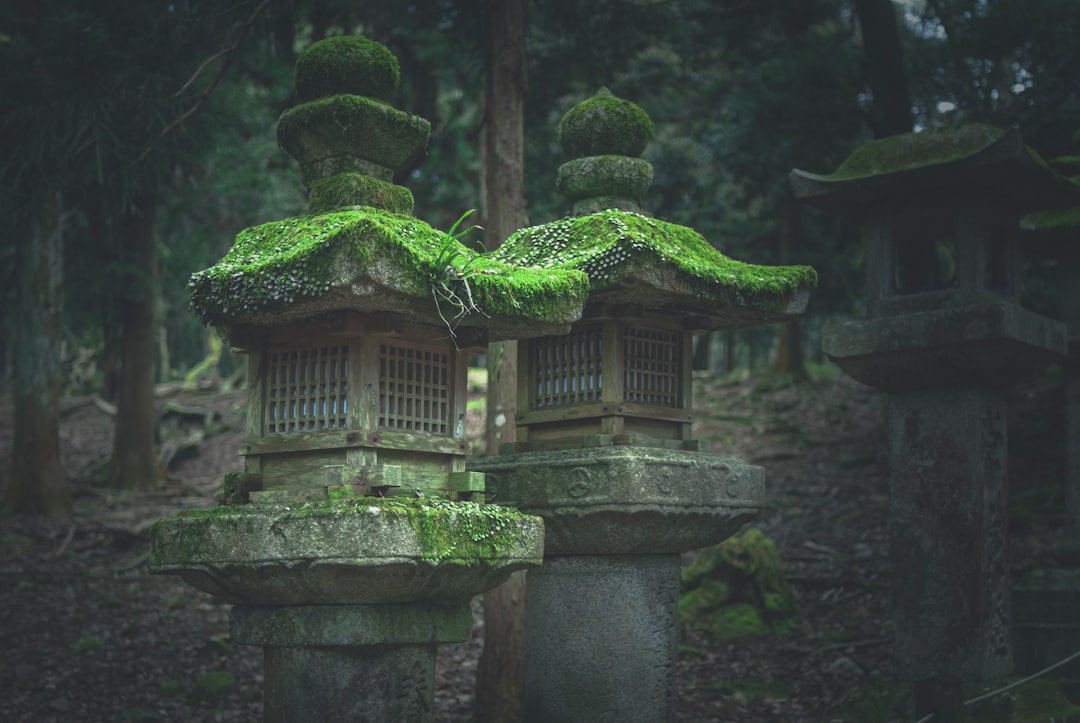
The summit loop is where Fushimi Inari becomes a different place. The gates thin out and are replaced by clusters of small stone altars — otsuka — erected by individual worshippers, thousands of them, mossy and crowded together under the cedars.
Candles burn at some. Many have been there long enough that the inscriptions are unreadable. The atmosphere is closer to a cemetery than a tourist site, and it is quiet enough to hear the cicadas or the rain.
This is the part of the mountain we most want travelers to see, and the part almost nobody does.
Timing: Dawn, Night, and the Hours to Avoid
The shrine is open twenty-four hours a day, every day, free of charge. Almost no other major site in Japan is.
Before Seven in the Morning
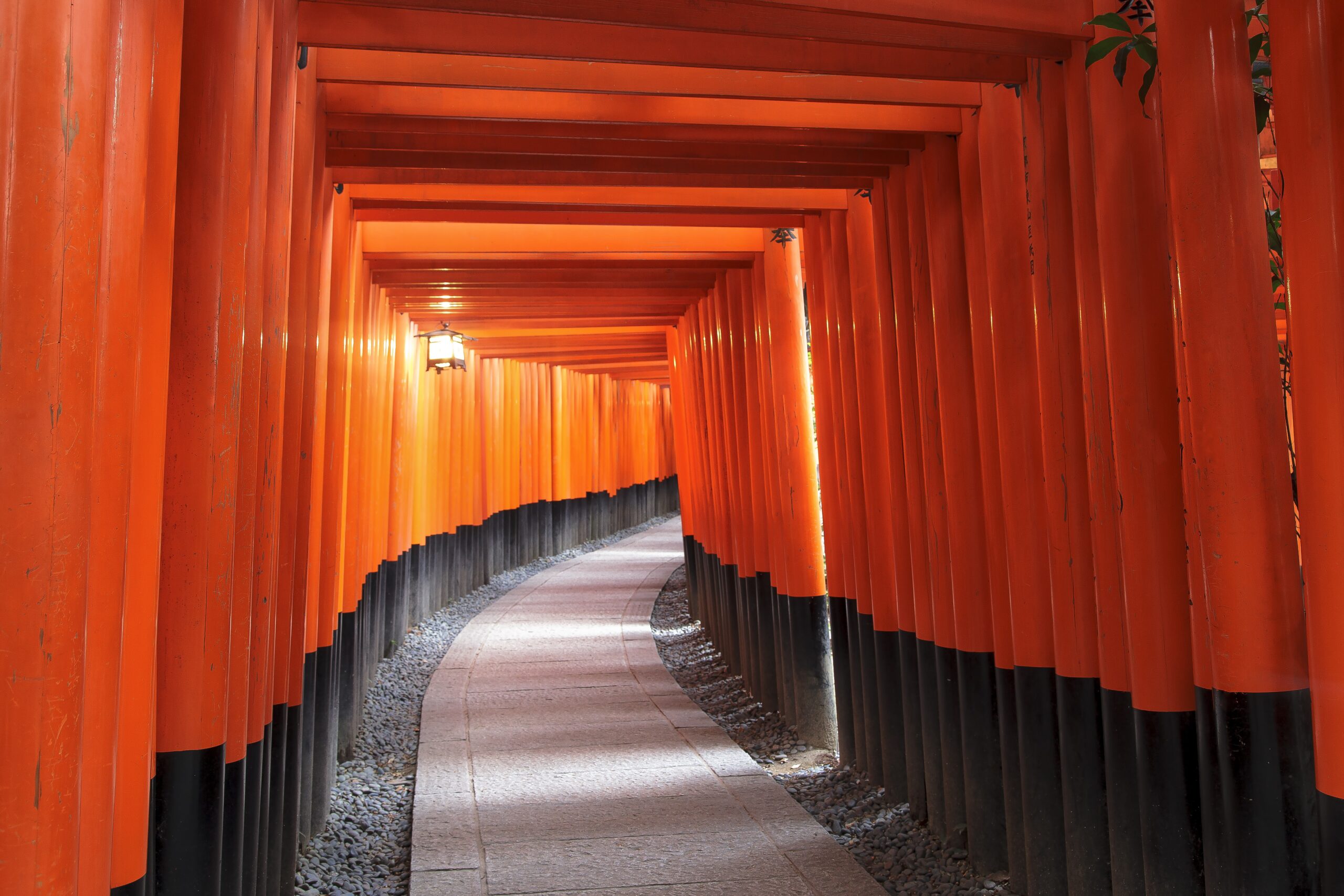
Arrive at six-thirty and the Senbon Torii is empty. Not quiet — empty. You can stand in the tunnel and photograph it with nobody in the frame, which is impossible at any other hour.
The light in the tunnel is best shortly after sunrise, when it comes through the gaps between gates at a low angle and stripes the path. Photographers who care about this arrive before dawn.
The first trains from Kyoto Station reach Inari before six. There is no earlier way to do this, and there is no better one.
After Dark
The lower sections are lit, and walking the torii tunnel at night is a legitimately different experience — the vermilion against black, the lamps, and essentially nobody there.
Above Yotsutsuji lighting becomes intermittent to absent. Going to the summit at night requires a headtorch and reasonable confidence on steps in the dark. It is atmospheric and we would not recommend it alone on a first visit.
Wild boar live on the mountain and are occasionally seen after dark. They avoid people. Make noise and give them room.
The Hours to Avoid
Ten in the morning to four in the afternoon, and worst around midday. The path from the entrance to Okusha becomes a single slow-moving queue, and the double-file torii section develops a genuine bottleneck.
Weekends and Japanese public holidays compound it. New Year is a category of its own — Fushimi Inari receives among the highest first-visit crowds in the country, and the approach becomes impassable.
If midday is your only option, walk straight past the famous section without stopping and photograph on the way down instead. It clears faster than you expect once you are above the crowd.
Food on the Mountain
The approach street and the mountain teahouses serve things you will not easily find elsewhere in Kyoto, and most of them are tied to the fox.
Inari-zushi and Kitsune Udon
Inari-zushi is sushi rice packed into a pouch of sweet fried tofu — aburaage — which is the food associated with foxes and therefore with this shrine. The version sold here is often cone-shaped rather than the rectangular one common elsewhere, a local distinction.
Kitsune udon is the same fried tofu on a bowl of noodles. Both are cheap, sold along the approach and at teahouses on the mountain, and are the correct thing to eat here for reasons that are about eight hundred years old.
Teahouses on the Way Up
Several small teahouses operate along the path, concentrated around Yotsutsuji. They serve matcha, amazake, noodles, and shaved ice in summer.
Prices are modest and the seating is often an outdoor bench facing the view. Sitting at Yotsutsuji with a bowl of green tea, an hour into the climb, is one of the more pleasant twenty minutes available in Kyoto.
Hours vary and most close well before dark. Do not plan a late hike around eating on the mountain.
Tsujiura Senbei and Grilled Sparrow
Two things on the approach street are worth knowing about. Tsujiura senbei are folded miso-and-sesame crackers containing a paper fortune, made by hand at a couple of shops here, and they are the direct ancestor of the American fortune cookie — a Japanese confection that travelled to California with immigrant confectioners.
The other is grilled sparrow and quail, sold on skewers by a few long-standing stalls. Sparrows eat rice, which made them a pest at a rice deity’s shrine, and eating them here is a tradition with the same logic as everything else on this mountain. It is not for everyone and it is genuinely local.
Expert Tip
Combine dawn at Fushimi Inari with breakfast at Nishiki Market or Kyoto Station rather than trying to do a second temple immediately. You will be back at the station by nine having already had the best two hours of your day, and every other major site in Kyoto opens at nine. Travelers who try to chain Fushimi Inari at dawn onto a full temple schedule tend to be finished by two in the afternoon.
Access and Practicalities
Getting here is the easiest part of the visit.
Trains
JR Inari Station on the Nara Line is directly opposite the shrine entrance — five minutes from Kyoto Station on a local train, and the station exit faces the first torii. This is the simplest route and it is covered by the Japan Rail Pass.
Fushimi-Inari Station on the Keihan Main Line is a five-minute walk away and is the better option if you are coming from Gion or Sanjo.
Rapid and express trains on the Nara Line do not stop at Inari. Take the local.
Shoes
The full loop is a few thousand stone steps of varying height and depth, worn smooth in places. Supportive trainers are the minimum.
Sandals and any kind of heel are a genuinely bad idea above Okusha. We see it constantly and we see people turning back because of it.
In rain the stone is slippery and the descent is where people fall. Take the handrails where they exist.
Toilets, Water, and What to Carry
Toilets are at the base near the main hall, and there are facilities partway up around Yotsutsuji. Above the junction, plan on nothing.
Vending machines exist at the base and at intervals to Yotsutsuji, with prices rising as you climb — a small, honest tax on carrying drinks uphill. Bring a bottle in summer, when the humidity on the enclosed path is considerable.
Cash for the teahouses and the approach street. Card acceptance is patchy at the small stalls.
Fushimi Inari Hike: Frequently Asked Questions
Is there an entrance fee or a closing time?
Neither. Fushimi Inari Taisha is free and the grounds are open twenty-four hours a day, all year. The shrine office, the amulet counters, and the teahouses keep their own hours — roughly daylight — but the paths and the torii tunnels have no gate. This is unusual among major Kyoto sites, most of which charge admission and close by five, and it is the entire basis for visiting at dawn or after dark.
Is the summit hike suitable for children?
It depends on the child and how far you commit. Reaching Okusha, at fifteen minutes, is fine for almost anyone. Yotsutsuji at forty-five minutes is manageable for a reasonably active child of seven or eight. The full summit loop is a couple of hours of continuous stone steps with no shortcut back — once you are above the junction, the only ways out are forward or back the way you came. There is no pushchair access above the main hall. For families we suggest Yotsutsuji as the target, with the teahouse as the reward, and treating anything beyond it as a bonus.
How far up do I need to walk for photos without crowds?
Twenty to twenty-five minutes past the Okusha rear shrine puts you beyond nearly all of the foot traffic, at any hour. The gates continue in long stretches well above that point, and they photograph identically — there is nothing structurally special about the famous section beyond its position at the bottom of the hill. If you want the specific dense double-file tunnel at the base with nobody in it, that is a timing problem rather than a distance problem, and the answer is to be there before seven.
Related Tours
Conclusion
Set an alarm. Everything that makes Fushimi Inari worth a morning — the empty tunnel, the light through the gates, the silence in the cedar above Yotsutsuji — is available before seven and gone by ten.
If you only take one instruction from this article, walk past Okusha. Fifteen minutes further up is where the mountain stops being a photograph and starts being a place, and the overwhelming majority of the four million people who come here every year never find that out.
Plan Your Japan Trip with Local Experts
Our team has guided 40,000+ travelers across Japan. Tell us about your trip and we’ll get back to you within 24 hours.