In this article:
- Honoring History at the Hiroshima Peace Memorial Park
- The Day Trip to Miyajima Island (Itsukushima)
- Feudal History and Serene Nature in the City Center
- Savoring Hiroshima’s Gastronomy: Okonomiyaki and Beyond
- Practical Logistics: How to Navigate Hiroshima
- Traveling to Hiroshima: Frequently Asked Questions
Honoring History at the Hiroshima Peace Memorial Park
Most visitors come to Hiroshima for one reason first, and it is right to start there. The Peace Memorial Park occupies the delta between two rivers where the city’s commercial heart once stood, and where, on the morning of August 6, 1945, it was erased. What the city built in that space is not a monument to grief so much as an argument for peace, made calmly and without accusation.
Give the park a full morning, not a rushed hour. It rewards a slow pace, and the emotional weight of it lands differently when you are not checking a watch. Go early, before the tour groups thicken, and walk it in roughly the order below.
The A-Bomb Dome (Genbaku Dome)
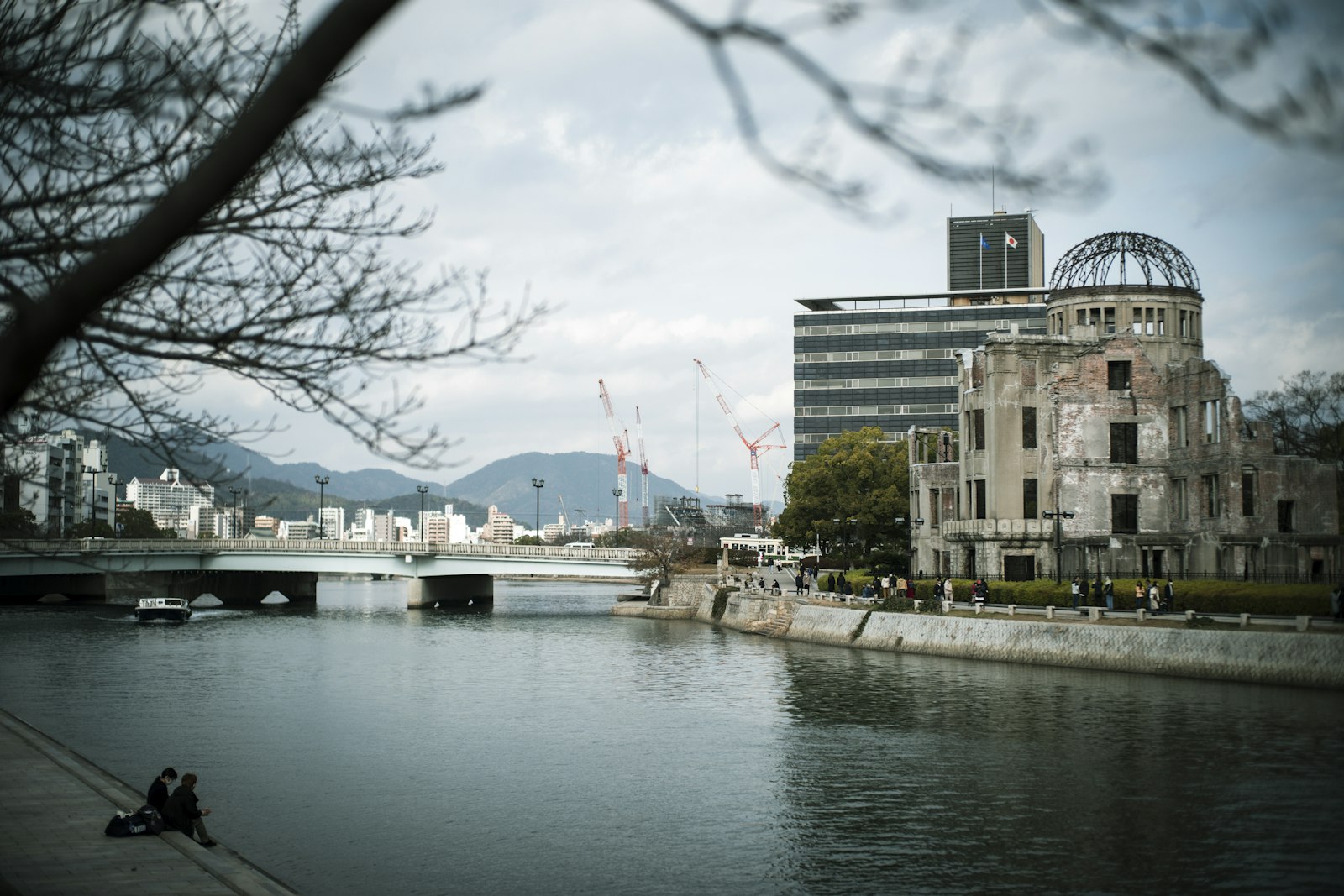
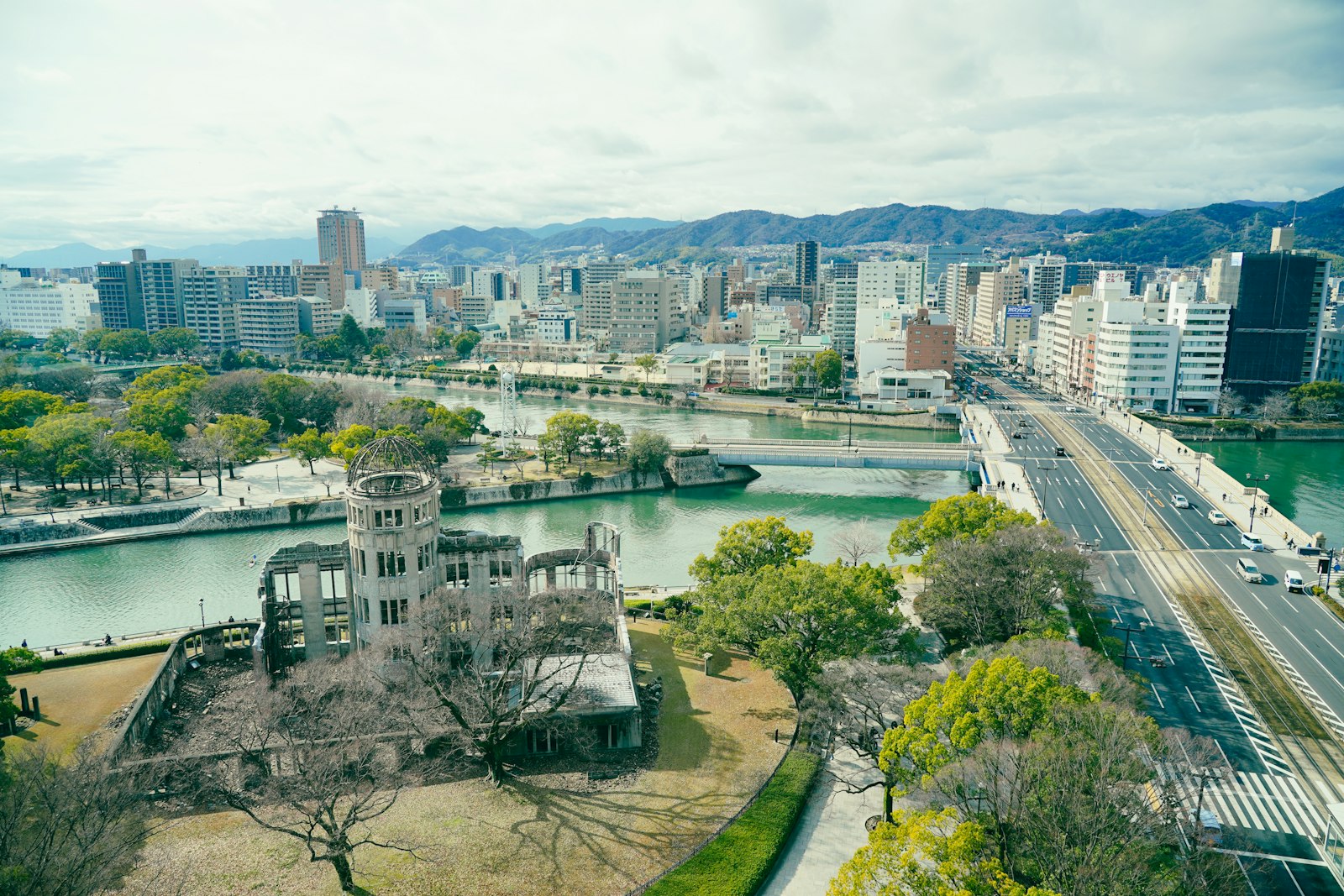
The skeletal shell of the former Industrial Promotion Hall is the single most recognizable structure in the city, and the reason is its proximity to the hypocenter — the bomb detonated almost directly overhead, which is why the walls and dome frame survived when everything around them fell. It has been left deliberately unrepaired, held in the ruined state of that morning, and it is now a UNESCO World Heritage Site. Seen across the river, especially in the low light of early morning or dusk, it is quieter and more affecting than any photograph prepares you for.
The Peace Memorial Museum
The museum is the emotional core of any visit, and it is unflinching. The renewed main exhibition moves away from statistics and toward the personal — a child’s tricycle, a scorched school uniform, a wristwatch stopped at 8:15 — and it is these individual objects, not the numbers, that stay with you. Allow at least ninety minutes, and understand going in that it is a demanding experience rather than a pleasant one. We think that is precisely the point, and worth it.
Expert Tip
The museum is busiest in the middle of the day. Arrive at opening, around 8:30am, and you will move through the personal-effects rooms with space to actually stop and read — a very different experience from shuffling through in a midday crowd. Buy the combined ticket that also covers the National Peace Memorial Hall next door, a separate, silent underground space for remembrance that many visitors miss.
The Children’s Peace Monument
The monument is dedicated to Sadako Sasaki, a girl who developed leukaemia from the radiation and folded paper cranes in the belief that a thousand would grant her a wish. She died before finishing, and her classmates completed them; the folded crane has since become a global symbol of the hope for peace. Glass cases around the monument hold thousands of brightly coloured cranes sent by schoolchildren from around the world, replenished constantly. It is the one part of the park where colour, rather than stone, carries the message.
The Memorial Cenotaph and Flame of Peace
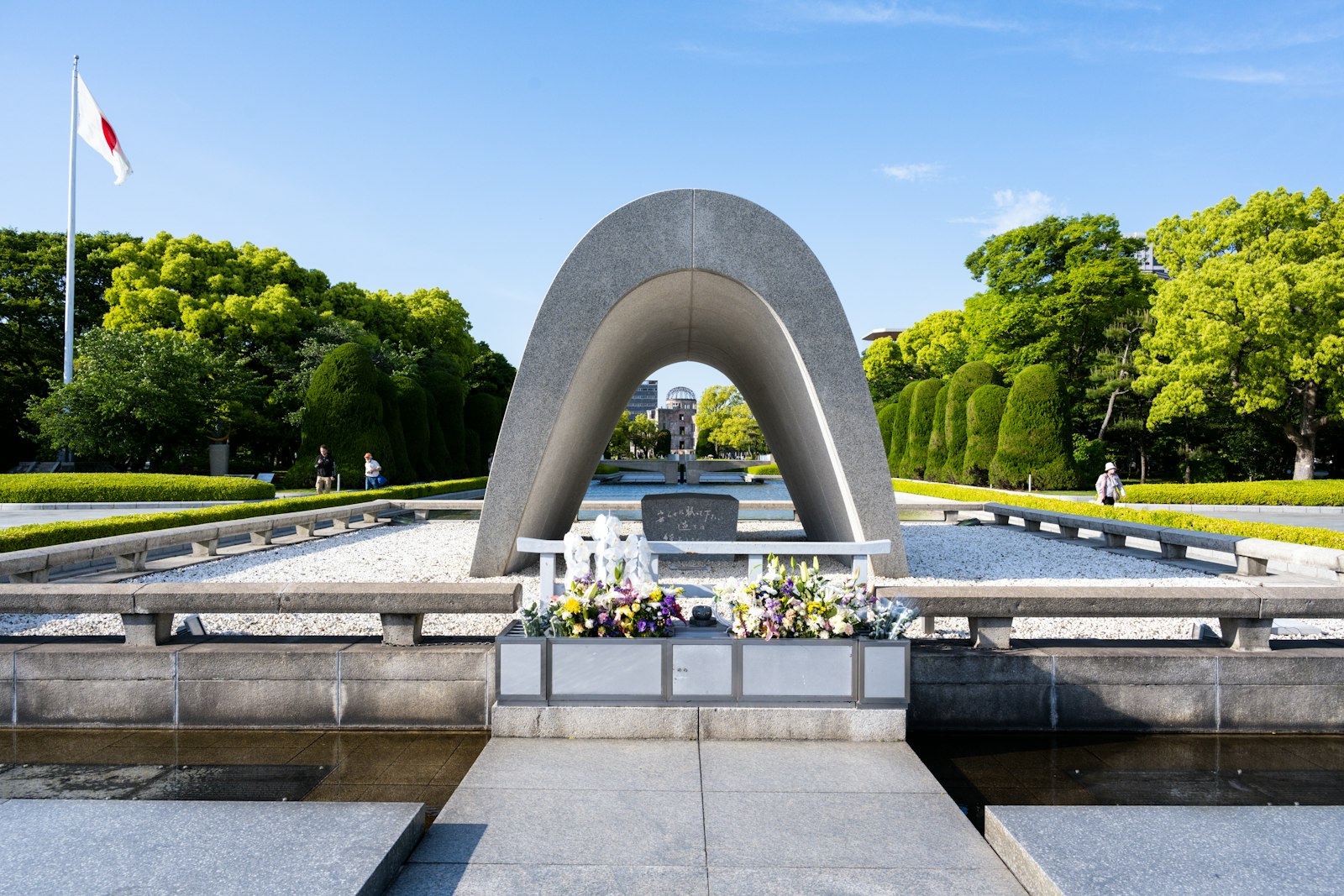
The saddle-shaped cenotaph frames a clear line of sight: stand before it and you look through the arch, across the Flame of Peace, directly to the A-Bomb Dome beyond. The flame will burn, the inscription says, until the last nuclear weapon on earth is gone. This axis — cenotaph, flame, dome — is the deliberate spine of the whole park, and pausing on it for a moment, rather than walking straight past, is the quietest and most reflective thing you can do here.
The Day Trip to Miyajima Island (Itsukushima)
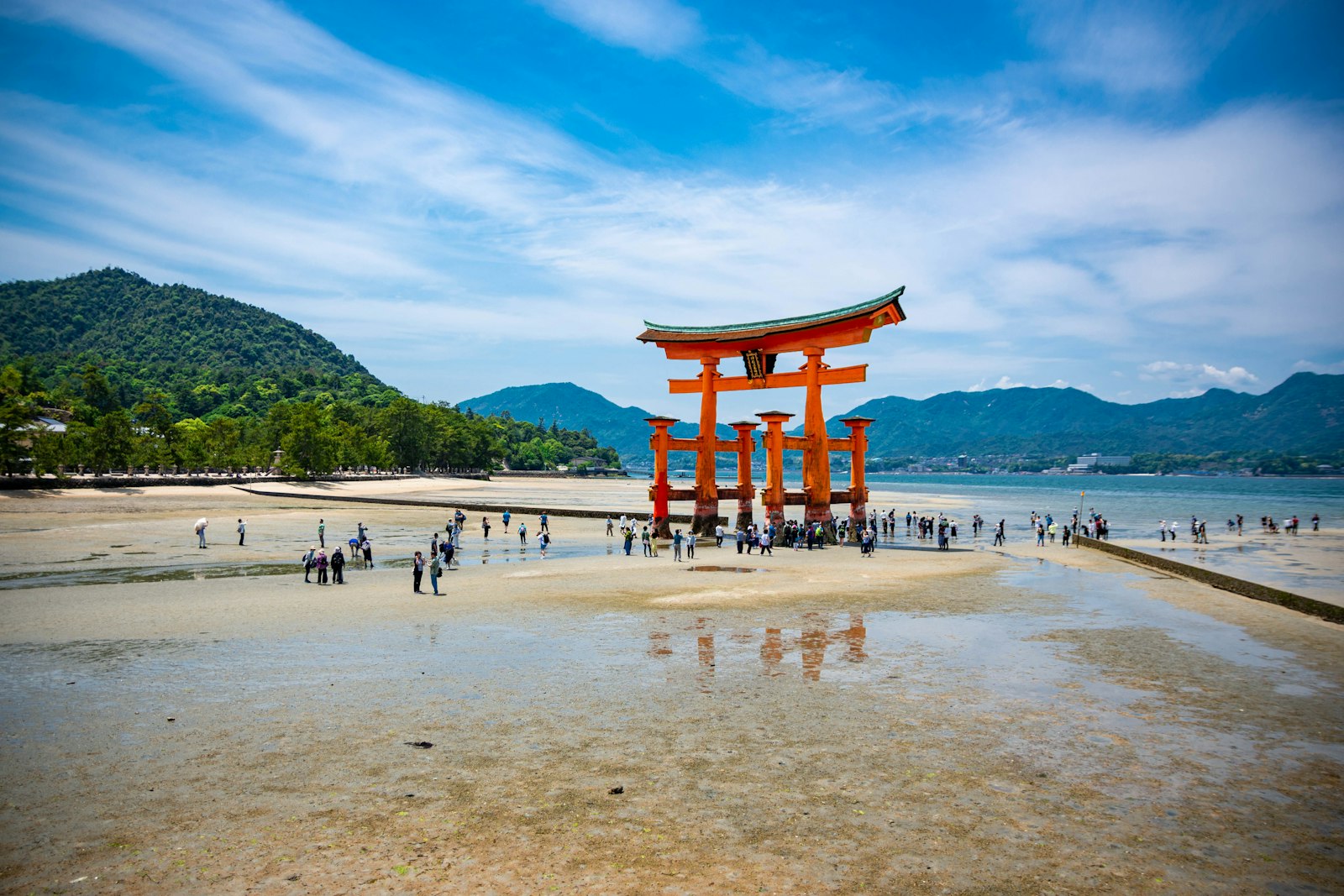
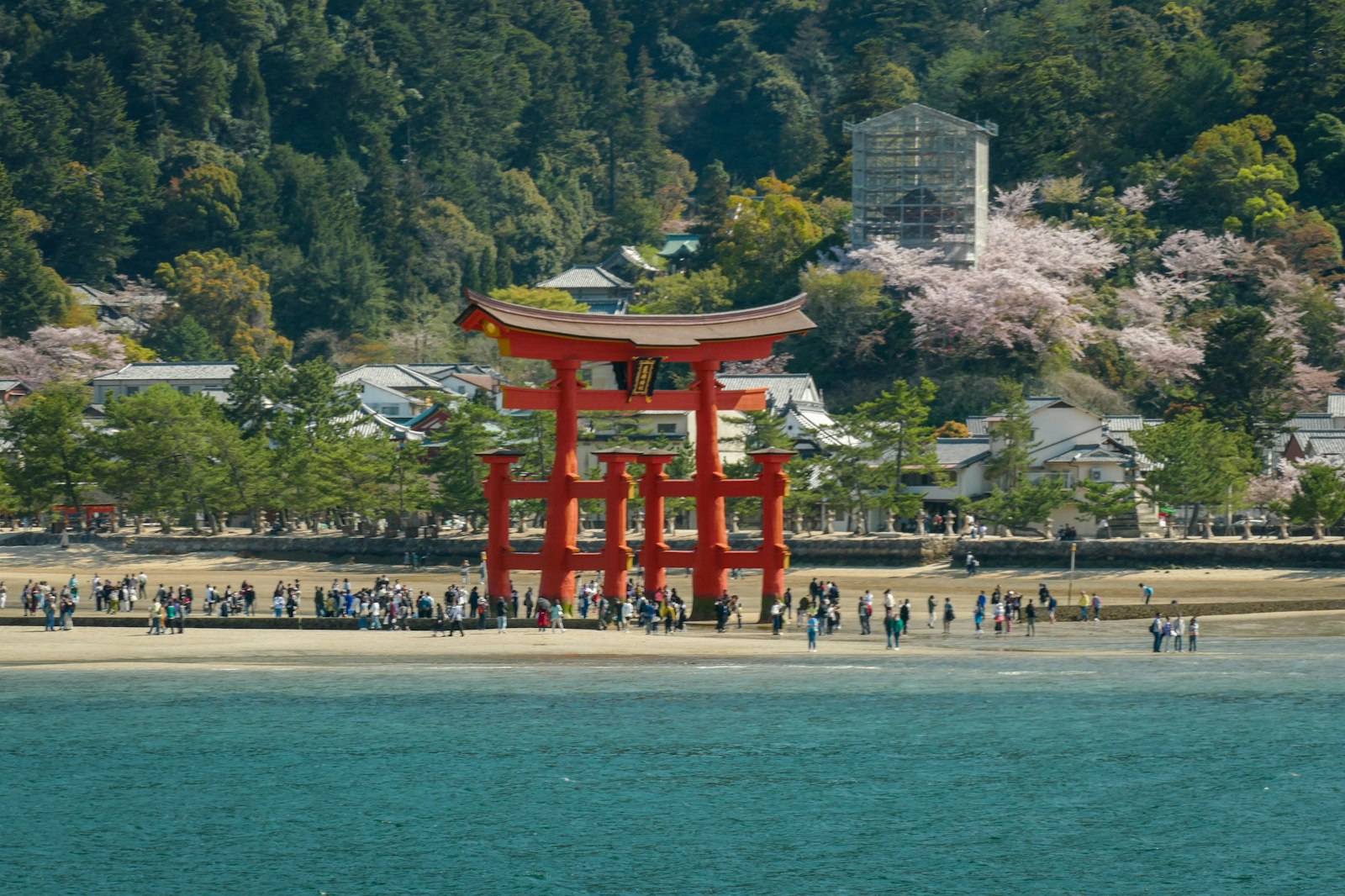
If the Peace Park is Hiroshima’s gravity, Miyajima is its release. The island sits in the Seto Inland Sea a short train-and-ferry hop from the city, and it holds one of the most photographed sights in the country — the great vermilion torii gate that appears to float on the water. Pair a solemn morning in the park with an afternoon here and you have the ideal one-day rhythm.
The Floating Grand Torii Gate
The torii is the image everyone arrives for, and the trick to enjoying it is understanding that it changes completely with the tide. At high water it stands in the sea and appears to float, the classic postcard; at low tide the water withdraws and you can walk out across the flats to stand directly beneath its enormous cypress pillars. Neither is the “correct” version — they are simply different experiences, and knowing which you will get is a matter of checking the tide chart before you go.
Itsukushima Shrine
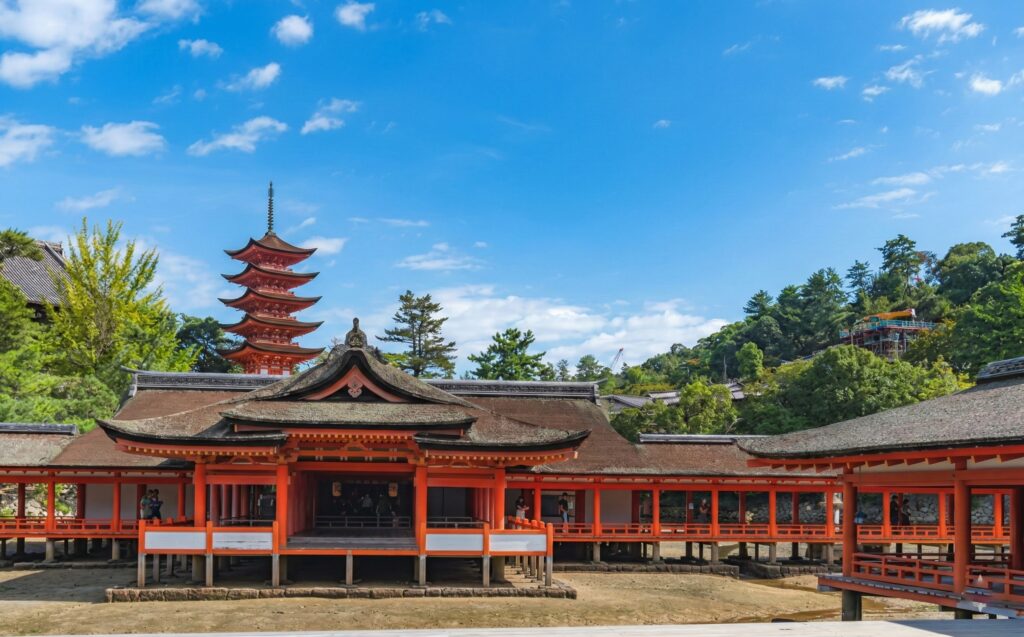
The shrine itself is built out over the water on wooden piers, so that at high tide the entire vermilion complex — corridors, stage, main hall — seems to hover above its own reflection. It dates in its current form to the twelfth century, and the pier-like construction was a deliberate solution to a sacred problem: the whole island was considered so holy that commoners were not permitted to set foot on its soil, so the shrine was built over the sea instead. Walking its raised corridors as the tide moves beneath you is a genuinely unusual sensation.
Ascending Mt. Misen
Above the shrine rises Mt. Misen, the island’s sacred 535-metre peak, and it is worth the effort to get up it. The ropeway carries you most of the way in a few minutes, and from the upper station a rocky final trail leads to a summit with panoramic views over the island-studded Inland Sea. Those who prefer to walk can take one of several hiking routes up from the base through old-growth forest. We recommend riding up and, if your knees allow, walking down — the descending trails pass ancient halls and quiet corners that the ropeway skips entirely.
Meeting the Island’s Deer
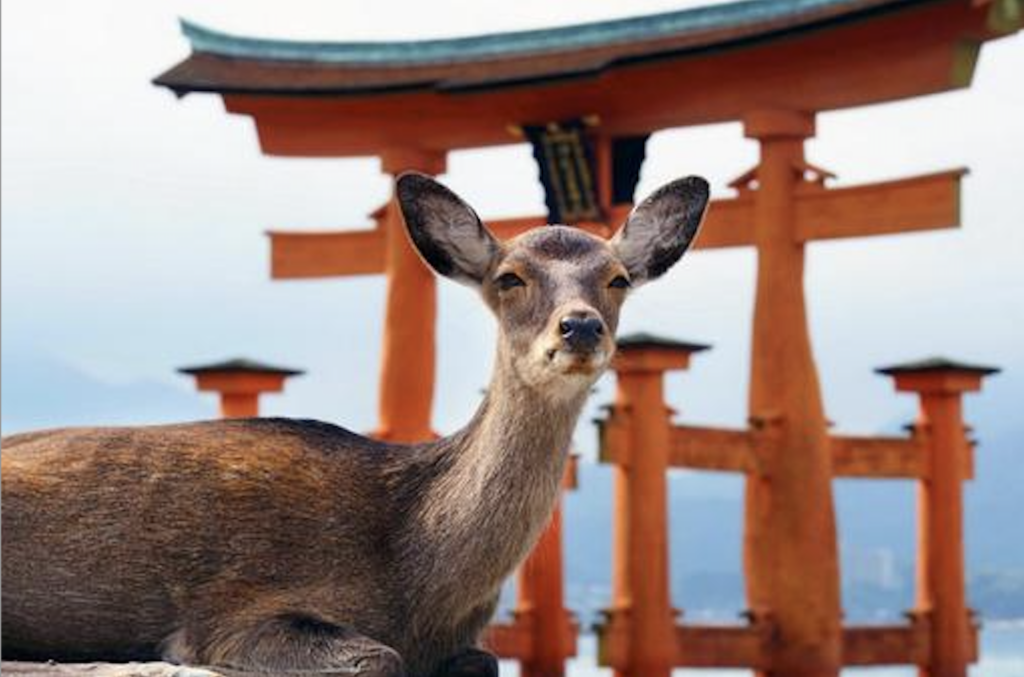
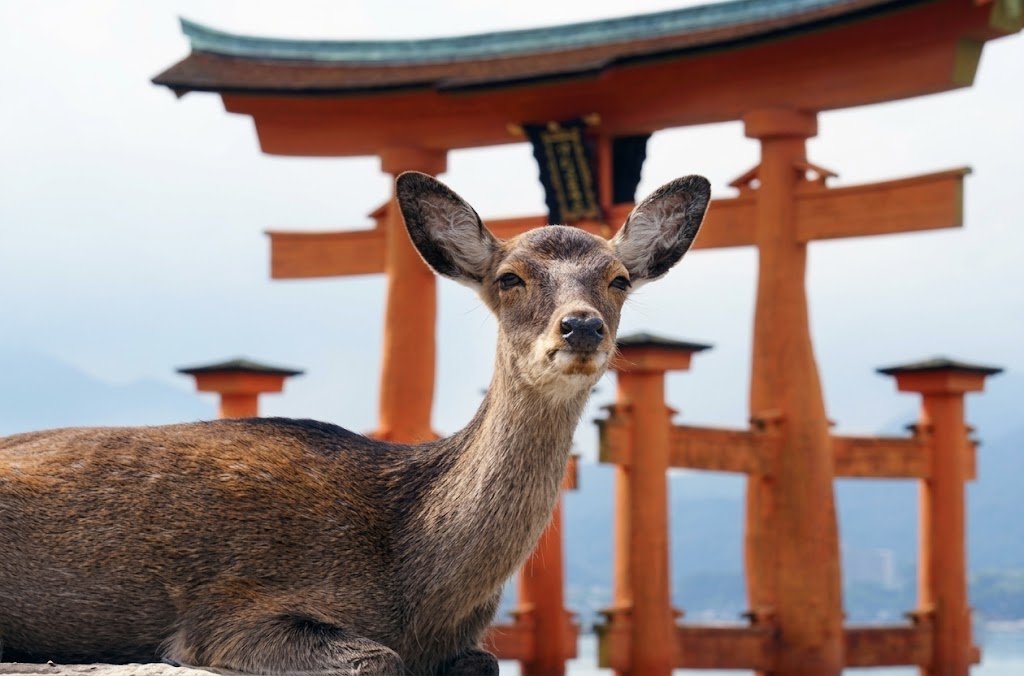
Wild sika deer wander Miyajima freely, particularly around the ferry terminal and shrine, and they are tame to the point of boldness. Unlike Nara, feeding them is discouraged here, and the practical advice is simply to keep your map, your tickets, and any food well out of reach — a Miyajima deer will happily eat a paper ferry ticket straight from an unzipped pocket. Treat them as pleasant company rather than an attraction, and they cause no trouble.
Feudal History and Serene Nature in the City Center
Beyond the park and the island, central Hiroshima holds a compact cluster of sights that most day-trippers skip and shouldn’t. Together they fill an easy half-day, and they show the city as it was before 1945 and as it lives now — a castle, a classical garden, and a covered shopping street, all within walking or a single tram ride of each other.
Hiroshima Castle (The Carp Castle)
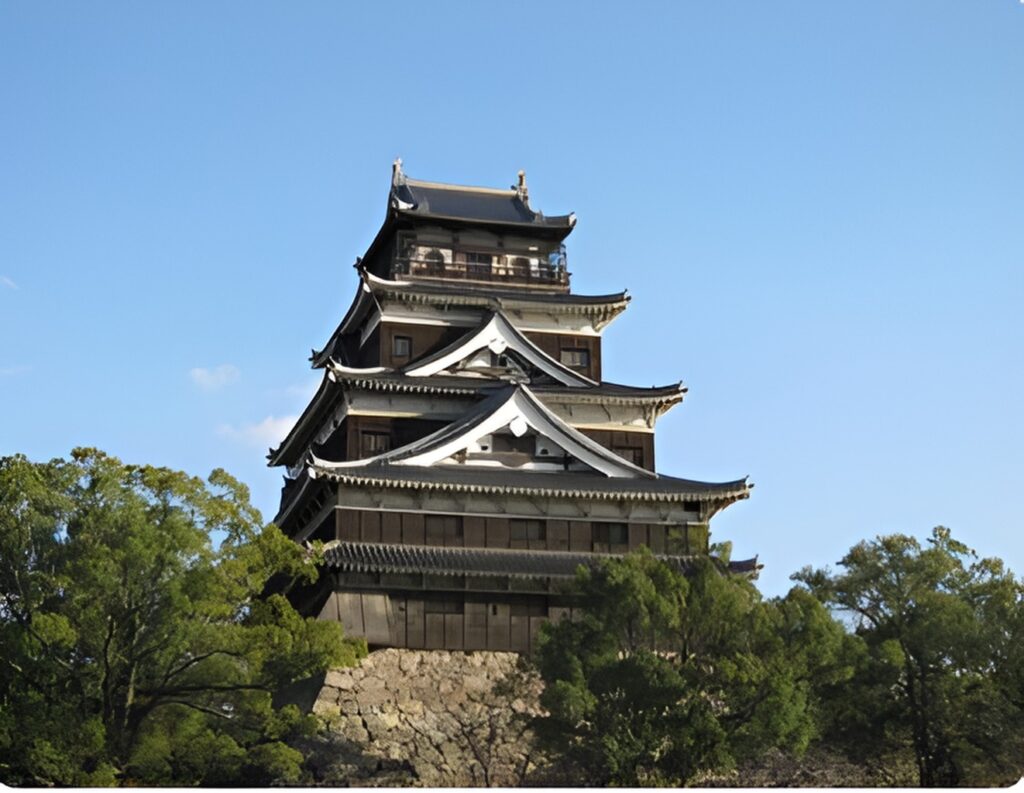
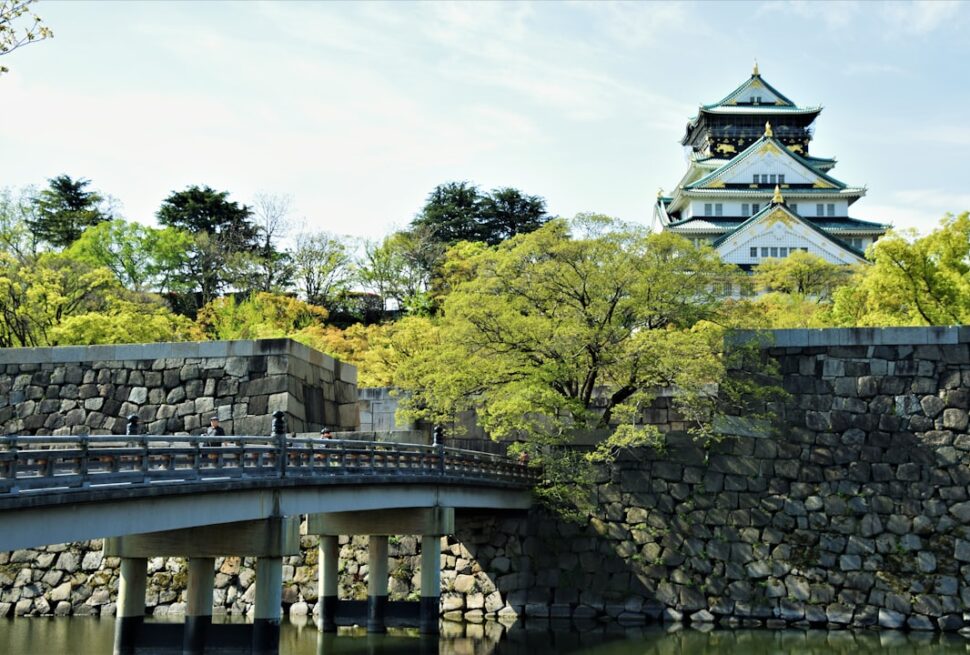
The original castle was destroyed in the blast, and what stands today is a faithful post-war reconstruction of the main keep, nicknamed the Carp Castle for the fish once bred in its moat. The exterior — dark timber over white plaster, rising in tiers from a broad stone base — is handsome from across the water, and inside is a well-organized museum of samurai-era Hiroshima with an observation floor at the top. It is not a twelve-original-castles purist’s pilgrimage, but as context for the city’s feudal past it earns its hour.
Shukkei-en Garden
A short walk from the castle, Shukkei-en is a classical strolling garden built in 1620, its name meaning roughly “shrunken scenery” — a miniaturized landscape of mountains, valleys, and a central pond crossed by an arching stone bridge. It too was devastated in 1945 and painstakingly restored, and today it is the most peaceful green space in the city, especially in autumn when the maples turn. Time a visit for late afternoon, when the light softens and the day-tour crowds have moved on.
Hondori Shopping Street
Hondori is the city’s main covered shopping arcade, a long pedestrian spine of shops, cafés, and okonomiyaki counters that stays busy into the evening. It is where Hiroshima feels most like an ordinary, lived-in city rather than a memorial, and that contrast is part of what makes it worth a stroll. Use it as your dinner-and-drinks base — most of the okonomiyaki worth eating is a short walk from here.
Savoring Hiroshima’s Gastronomy: Okonomiyaki and Beyond
Hiroshima takes its food seriously, and it defends its regional dishes with real pride. Two things define eating here: a style of okonomiyaki that locals will insist is the only correct one, and some of the best oysters in Japan. Come hungry.
Hiroshima-Style Okonomiyaki
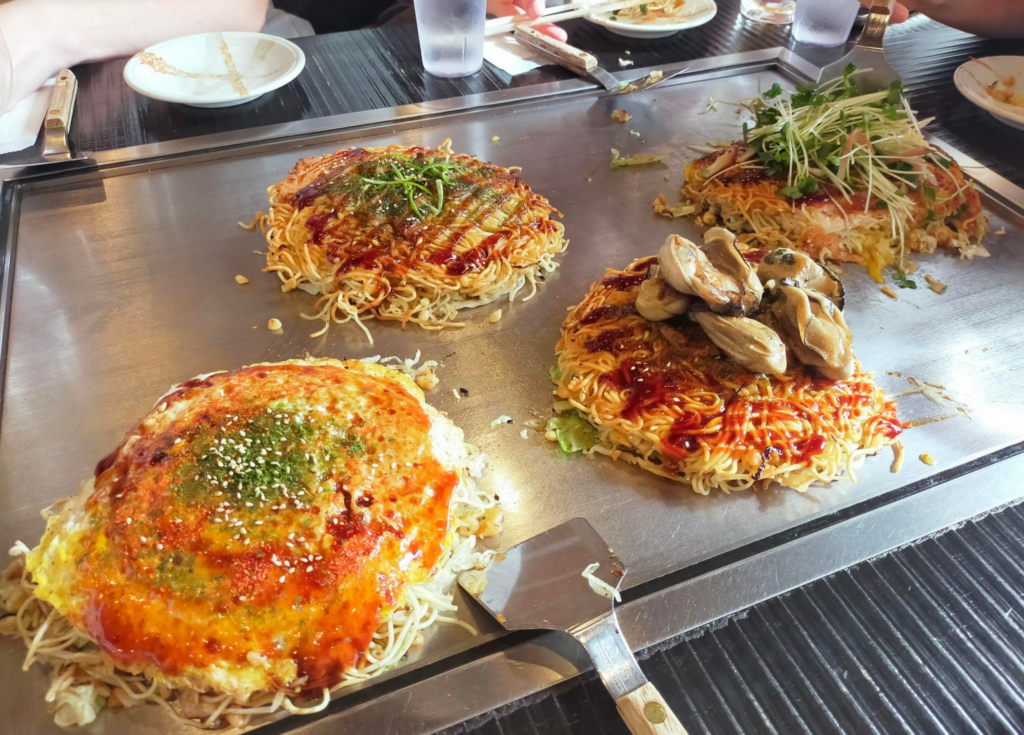
Forget any okonomiyaki you have had elsewhere. Where the Osaka version mixes everything into a single batter, the Hiroshima style is built in careful layers — a thin crêpe base, a mound of cabbage, pork, a nest of yakisoba noodles, and a fried egg, all pressed together on the griddle and lacquered with sweet-savoury sauce. It is bigger, more structured, and in our view more satisfying than its Osaka rival, though saying so out loud in Osaka is asking for trouble. Eat it at the counter, straight off the hotplate.
Okonomimura
Okonomimura, meaning “okonomiyaki village,” is a building given over almost entirely to the dish — several floors packed with small stalls, each an independent cook with a griddle and a handful of counter seats. The choice can be paralysing, so pick a stall with a queue of locals and sit down. Part of the pleasure is watching your okonomiyaki assembled inches in front of you, layer by layer, and eating it off the shared hotplate with a small metal spatula rather than chopsticks.
Local Oysters
Hiroshima produces the majority of Japan’s oysters, and they are plump, briny, and everywhere in the cooler months. You will find them grilled in the shell at street stalls, deep-fried as kaki-fry, and served raw for those who want them straight. Winter is peak season and the best time to eat them, though good restaurants serve them year-round. If you see a stall grilling oysters over charcoal on Miyajima or along Hondori, that is the one to stop at.
Expert Tip
Hiroshima okonomiyaki is a dinner-and-drinks affair, not a quick lunch — the good counters get crowded from around 6pm and many close by 9 or 10pm. Go early, sit at the griddle counter rather than a table if you have the choice, and order a cold beer with it; the pairing is close to mandatory locally. If a place has an English menu it is usually fine, but the stalls with only a handwritten Japanese board and a line of office workers are where the real cooking is.
Practical Logistics: How to Navigate Hiroshima
Hiroshima is one of the easier Japanese cities to get around, largely because of its streetcars, and it slots neatly into a wider trip along the Tokyo–Kyoto–Osaka corridor. A little planning turns it from a rushed stopover into a comfortable day or two.
Riding the Hiroden Streetcars
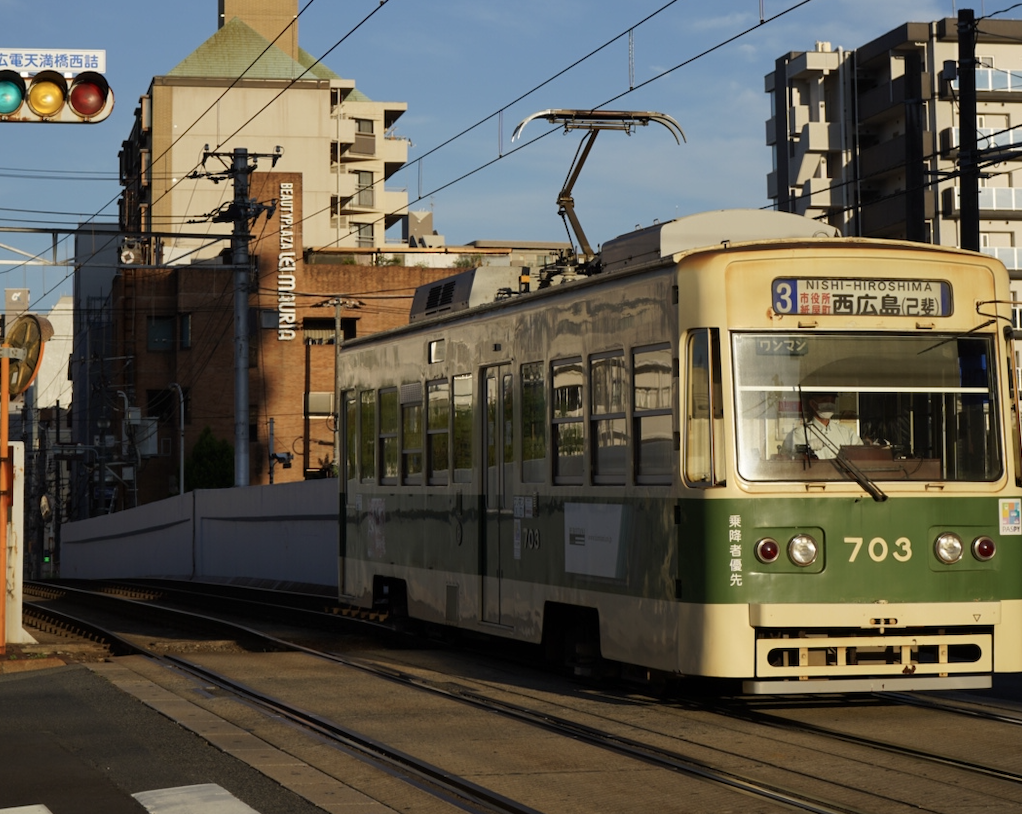
Hiroshima kept its trams when most Japanese cities scrapped theirs, and the Hiroden network — a mix of vintage and modern carriages, some of them decades old — is now both a charming ride and the most practical way around the centre. A flat fare covers most city journeys, you pay as you leave, and IC cards like Suica and Pasmo work on board. The tram to the Peace Park and the tram-and-ferry combination out to Miyajima cover most of what a visitor needs.
A One or Two Day Itinerary
With a single day, do the Peace Park in the morning and Miyajima in the afternoon, and accept that you will skip the castle and gardens. With two days, add the city-centre sights and a proper okonomiyaki dinner, and give Miyajima a full unhurried afternoon including Mt. Misen. We think Hiroshima is worth an overnight rather than a day trip — the park deserves to be seen without one eye on the last train out.
Getting to Hiroshima
The Shinkansen makes Hiroshima easy to reach: it is roughly one and a half hours from Osaka and under two hours from Kyoto on the Tokaido–Sanyo line, and around four hours direct from Tokyo. This puts it comfortably within a standard first-timer’s route if you are willing to head west of Osaka, which many itineraries stop short of. If you hold a Japan Rail Pass, the Hikari and Sakura services are covered; the fastest Nozomi trains are not, so check before you board.
Related Tours
Traveling to Hiroshima: Frequently Asked Questions (Q&A)
Is it realistic to see both the Peace Park and Miyajima in a single day? Yes, and it is the standard way to do it. Spend the morning in the Peace Memorial Park and Museum, then take the tram and ferry out to Miyajima for the afternoon and evening. The one caveat is that both deserve time, so start early and treat the day as full rather than leisurely. If you would rather not rush either, stay a night and split them across a morning and a full afternoon instead.
What is the best time to see the Miyajima torii surrounded by water? You need high tide, which shifts by roughly fifty minutes each day, so there is no fixed “best” hour — you have to check a tide chart for your specific date. High tide gives you the floating gate; low tide lets you walk out to its base. Many visitors try to catch high tide near sunset, when the gate is lit and the light is at its best, but any high-tide window works. Look up the day’s tide times before you commit to a ferry.
Is the Peace Memorial Museum suitable for young children? That is a judgement call for the parents. The exhibits are honest about the human cost of the bombing, including graphic descriptions and personal effects that many adults find hard, and younger children may find parts distressing. Older children and teenagers generally handle it well and often find it genuinely formative. If you are travelling with young ones, the outdoor park, the cranes at the Children’s Monument, and Miyajima are gentler alternatives to the museum interior.
Conclusion
Hiroshima asks something of its visitors that most travel destinations do not: to hold sorrow and pleasure in the same day, the Peace Park in the morning and grilled oysters by night, and to find that the two do not cancel each other out. That is the whole character of the place. A city that was ended and chose to rebuild itself around a plea for peace, and then got on with the ordinary business of making superb okonomiyaki.
Plan Your Japan Trip with Local Experts
Our team has guided 40,000+ travelers across Japan. Tell us about your trip and we’ll get back to you within 24 hours.