In this article:
- Where the Upfront Money Goes
- The Guarantor System
- Finding a Place That Will Rent to You
- Application and Screening
- Moving In
- Renting an Apartment in Japan: Frequently Asked Questions
Introduction
A ¥120,000 apartment in Tokyo will cost you somewhere between ¥500,000 and ¥700,000 to move into, and roughly half of that you never see again.
That is the number to internalise before anything else. Japanese rental practice bundles a set of fees — key money, deposit, agency commission, guarantor fee, fire insurance, key exchange — that in most countries do not exist or are illegal.
The rest of the process is bureaucratic rather than difficult. There is a screening, there are documents, and there is a guarantor company. All of it is navigable, and there is a route that avoids most of the cost, which we come to at the end.

Where the Upfront Money Goes
Six line items, and only one is refundable.
Shikikin, the Deposit
Typically one to two months’ rent, held against damage and unpaid rent, and returned when you leave minus deductions.
The deductions are where this goes wrong. Japanese landlords routinely deduct cleaning costs, tatami replacement, and wallpaper renewal from the deposit as a matter of course, and tenants frequently receive little back.
Guidelines from the Ministry of Land, Infrastructure and Transport distinguish between normal wear, which the landlord bears, and tenant damage. Read the contract’s restoration clause before signing, and photograph the entire apartment on move-in day.
Reikin, the Key Money
One to two months’ rent, paid to the landlord as a gift, and non-refundable.
There is no service attached. It is a historical practice — variously traced to postwar housing shortages and to gratitude payments to landlords — that persists because the market has tolerated it.
It is also declining. Key money is increasingly negotiable, and no-reikin properties are common enough that filtering for them is a realistic strategy, particularly outside central Tokyo.

Agency Commission
One month’s rent plus consumption tax to the estate agent, capped by law at that amount for residential leases.
Some agencies charge half a month, or none, to compete. It is worth asking.
The Rest
Guarantor company fee: typically 50 to 100 percent of one month’s rent up front, plus an annual or biennial renewal fee.
Fire insurance: mandatory, arranged through the agency, roughly ¥15,000 to ¥25,000 for a two-year term.
Key exchange fee: ¥15,000 to ¥25,000 to change the locks, standard and largely non-negotiable.
Plus the first month’s rent and the monthly management fee, and in some cases a cleaning fee charged up front rather than deducted later.
Expert Tip
Look at UR housing before anything else. UR — the Urban Renaissance Agency, a public body — rents apartments with no key money, no agency commission, no guarantor requirement, and no renewal fee. You need to meet an income threshold or pay several months in advance, and the buildings are functional rather than fashionable, but the upfront cost is a fraction of the private market and they rent to foreign residents without the screening problems. It is the single most useful thing a foreign renter in Japan can know and it is rarely mentioned by agents, who earn no commission on it.
The Guarantor System
Japanese landlords require a guarantor, and how you satisfy that requirement is the second big question after money.

What a Guarantor Is
A rentai hoshonin is a person who accepts joint liability for your rent — a Japanese national, employed, with sufficient income, who signs and stamps the contract.
Historically this was a family member or an employer. For a foreign resident without Japanese family, finding one is often impossible, and asking a friend to accept unlimited liability for your rent is a substantial thing to ask.
Guarantor Companies
The near-universal solution now. A hosho-gaisha guarantees your rent to the landlord in exchange for a fee, and screens you as a credit risk.
Cost is typically 50 to 100 percent of one month’s rent at the outset, plus a renewal fee of ¥10,000 or a percentage of a month annually.
Most landlords now require this even if you have a personal guarantor. It is not optional in the great majority of listings.
The Emergency Contact
Separate from the guarantor and still required: a kinkyu renrakusaki, a contact in Japan who can be reached in an emergency.
They take on no financial liability. They need to be contactable and, in practice, to speak Japanese.
A colleague, a friend, or an employer’s HR contact will do. Ask before you put someone’s name on a form.
Finding a Place That Will Rent to You
Worth being direct: some Japanese landlords refuse foreign tenants, and this is legal and reasonably common.
The Reality
Refusals are usually framed around language ability, unfamiliarity with rubbish sorting and noise norms, or concern that the tenant will leave the country abruptly.
It varies enormously by area and by building. Central Tokyo, areas with existing international communities, and newer buildings are considerably easier. Older privately owned buildings in residential suburbs are harder.
It is frustrating and it is best treated as a filtering problem rather than a fight. Agencies that specialise in foreign tenants have already done the filtering.

English-Capable Agencies
GaijinPot Apartments, Wagaya Japan, Real Estate Japan, and Plaza Homes list properties in English with landlords who accept foreign residents.
They cost the same as a Japanese agency for the same property and remove the filtering problem entirely. For a first apartment in Japan, use one.
Lower-Barrier Options
Leopalace21 rents furnished units with no key money and simplified contracts, popular with people arriving on short notice. Village House offers low-cost units, often with no deposit or key money, generally outside city centres.
Share houses — Oakhouse, Sakura House, and a long list of others — rent by the room with minimal upfront cost, no guarantor, and short minimum terms. For a first six months in Japan while you work out where you want to live, this is frequently the sensible choice.
Monthly mansions are furnished apartments let by the month with utilities included, at a premium to normal rent and with almost no paperwork.
Japanese Listing Sites
Suumo, Homes, and At Home carry the full market, which is far larger than the English-language listings.
Browser translation handles them. Two filters are worth knowing: 外国人相談可 indicates the landlord will consider foreign tenants, and 礼金なし filters out key money.
Take listings to an agency rather than contacting landlords directly. The Japanese market runs through agents.
Application and Screening
Nyukyo shinsa — the tenant screening — takes several days to two weeks.

Documents
Residence card (zairyu card) showing a status of residence, passport, proof of income or an employment certificate, and bank details.
Your visa status matters. A landlord looking at a residence card expiring in four months on a two-year lease will hesitate, and this is one of the most common reasons for rejection.
A personal seal — hanko or inkan — is still requested by many agencies, though signatures are increasingly accepted. Getting one made costs very little and removes an obstacle.
The Income Test
The working rule is that rent should not exceed roughly a third of monthly income, or that annual income should be at least thirty-six times the monthly rent.
Employment status carries weight. A permanent employee at a known company clears easily; freelancers, contractors, and the newly arrived face more scrutiny and may be asked for tax documents or a larger deposit.
The guarantor company and the landlord screen separately and both must approve.
The Verification Call
Expect the guarantor company to call you, and possibly your employer, to confirm the details on the application.
The call will be in Japanese. If your Japanese is limited, tell the agency in advance so they can arrange it — being unreachable or unable to answer is read as a red flag.
Signing
The contract is in Japanese and is long. Agencies are legally required to give an explanation of important matters — the juyo jiko setsumei — before signing, delivered verbally by a licensed agent.
Ask for time to read it. Pay attention to the restoration clause, the cancellation notice period (usually one month), the renewal fee, and any cleaning charge.
Standard leases run two years. Renewal typically costs one month’s rent plus the guarantor renewal.
Expert Tip
Photograph and video the entire apartment before you move a single box in — every wall, every corner, the tatami, the fittings, the balcony — and email the files to yourself so they are date-stamped. Deposit disputes in Japan turn on the condition at move-in, the landlord holds the money, and the tenant is the one who has to demonstrate that a mark was already there. Fifteen minutes with a phone at handover is worth more than any clause you could negotiate.

Moving In
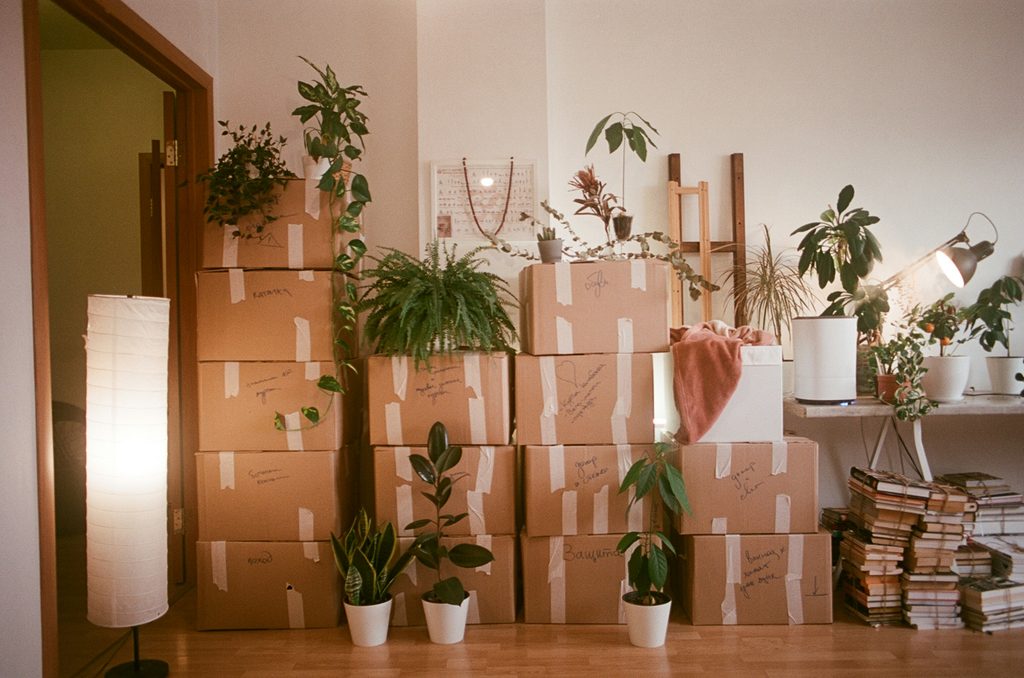
Three practical matters in the first week.
Utilities
Electricity and water can generally be started online or by phone with a few days’ notice, and the market has been deregulated so there are competing suppliers.
Gas is different. Opening a gas account requires an appointment with a technician who must enter the apartment to turn on the supply and check the appliances. Book it before you move, because a Saturday appointment can be two weeks out and you will be without hot water until then.
Bring your residence card and contract details.
Internet
Fibre installation typically takes two to four weeks from application and often requires building management permission, which is the step that causes delays.
Some buildings have pre-installed fibre where activation is quick. Ask before signing.
In the meantime, a pocket wifi rental or a mobile data plan covers the gap. Do not assume you will be online on day one.
Rubbish
Every municipality has its own sorting rules and collection calendar, published in English in most urban wards, and they are followed strictly.
Burnables, non-burnables, PET bottles, cans, glass, cardboard, and oversized items all have separate days. Bags must often be the ward’s designated ones, bought at convenience stores.
Bins are put out on the morning of collection, not the night before. Getting this wrong is the single most common source of friction between foreign tenants and Japanese neighbours, and it feeds directly back into the landlord reluctance described earlier. Read the calendar on day one.
Renting an Apartment in Japan: Frequently Asked Questions
How much should I budget for move-in costs in Tokyo?
Four to six months’ rent in total. For a ¥120,000 apartment that means roughly ¥500,000 to ¥700,000, covering deposit, key money, agency commission, guarantor fee, fire insurance, key exchange, and the first month’s rent and management fee. Of that, only the deposit is potentially refundable and it is routinely reduced by cleaning and restoration deductions. You can cut this substantially by filtering for no-key-money properties, using UR housing, or starting in a share house — but budget for the full figure unless you have specifically found something cheaper.
Can I rent an apartment on a 90-day tourist visa?
Not a standard lease. Screening requires a residence card showing a status of residence, which a temporary visitor does not have, and guarantor companies will not approve an application without one. What is available: monthly mansions, share houses, and serviced apartments, all of which let by the month with minimal paperwork and accept short-term visitors. They cost more per month than a normal lease and require none of the upfront fees, which for a stay under six months usually works out cheaper overall.
How long is a standard lease?
Two years, almost universally, on a renewable fixed-term basis. At the end you either renew — typically paying a renewal fee of one month’s rent plus the guarantor renewal — or leave. Tenants can normally end a lease early with one month’s written notice, which is a more flexible arrangement than the fixed commitment implies, though some contracts carry a penalty for leaving within the first year. Check the cancellation clause specifically before signing, because that is the term that matters if your plans change.
Related Tours

Conclusion
Check UR housing and no-key-money listings before you engage with a conventional agency. Those two filters can halve the upfront cost, and no agent will volunteer either of them because neither pays commission.
If you are new to Japan, start in a share house or a monthly apartment for the first few months. You will pay more per month and save the entire move-in cost, and you will learn which neighbourhood you actually want to live in before committing several hundred thousand yen to a two-year lease in the wrong one.
Plan Your Japan Trip with Local Experts
Our team has guided 40,000+ travelers across Japan. Tell us about your trip and we’ll get back to you within 24 hours.