In this article:
- The Chains
- The Discount Stickers
- The Prepared Food Counter
- Checkout and Bags
- What to Buy to Take Home
- Japanese Supermarkets: Frequently Asked Questions
Introduction
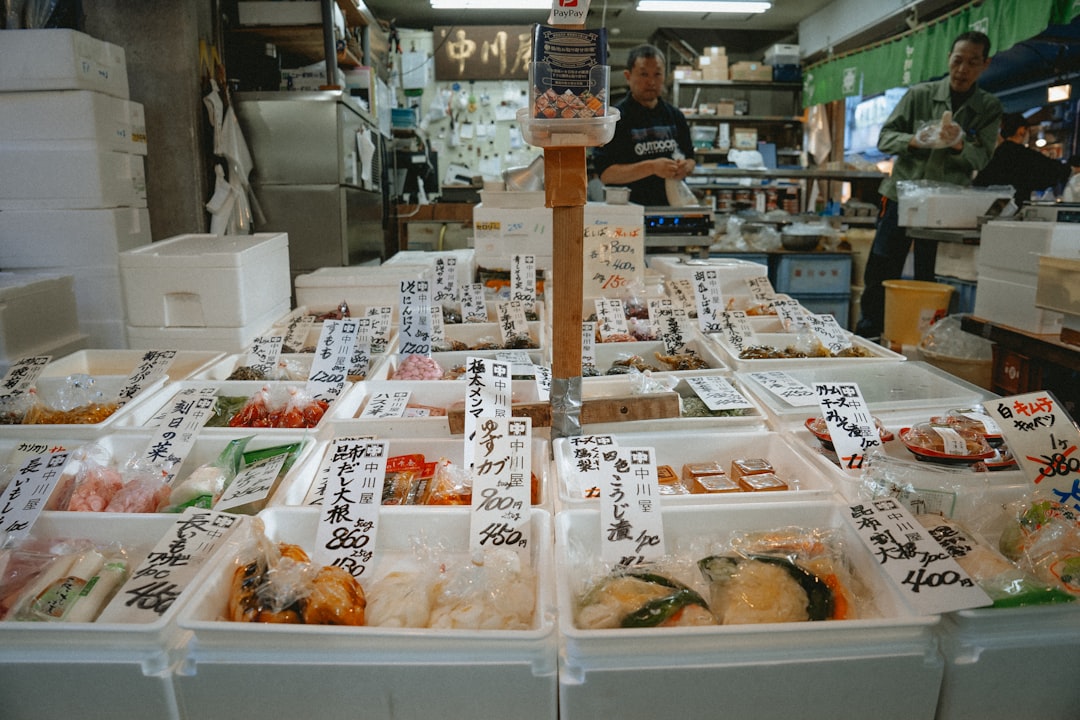
At around seven in the evening a member of staff appears at the prepared food counter with a roll of stickers, and a small crowd of people who have been circling for ten minutes converges.
The stickers say twenty percent off. An hour later a different sticker says half price. What is under them is a tray of sashimi cut that morning, a bento of tonkatsu and rice, a tempura set, or a platter of sushi — all of it made in the shop that day and all of it discarded at closing if unsold.
This is the best-value food in Japan and it is entirely invisible to most visitors, who eat at restaurants and buy from convenience stores. A supermarket dinner for two at half price costs less than one coffee at the hotel.
The Chains
Different chains for different purposes, and they are not interchangeable.
Urban Supermarkets
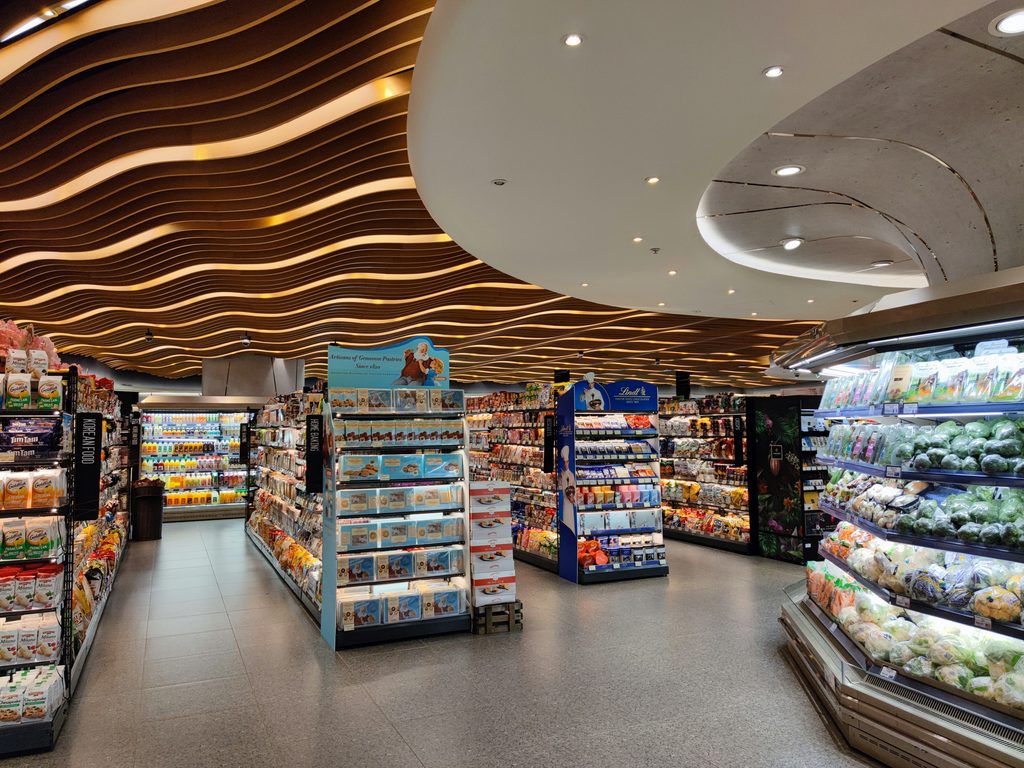
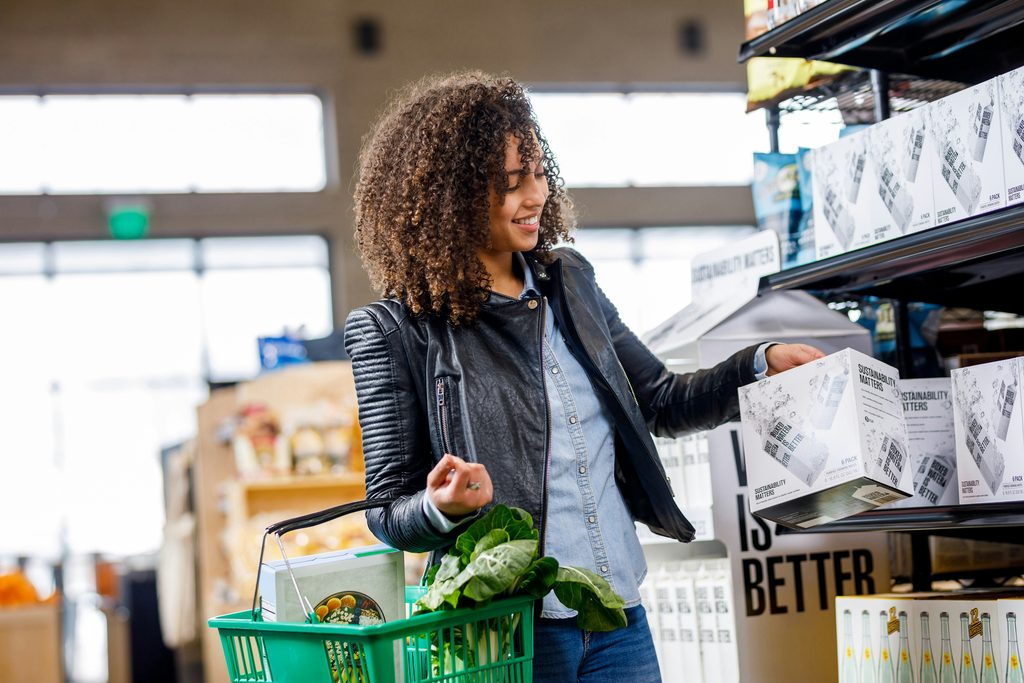
Life, Maruetsu, Summit, Peacock, and Ito-Yokado are the standard urban chains, usually within a few minutes of a station and often in a station building’s basement.
They carry a full range with a good prepared food section, sensible prices, and long hours — many until eleven at night or later. For a visitor staying in a city, this is the type to look for.
Ito-Yokado is larger and carries non-food as well, part of the same group as 7-Eleven.
Large Format
Aeon runs enormous stores, usually attached to a shopping mall and usually requiring a car or a bus. Seiyu, owned in part by Walmart at various points in its history, sits in similar territory.
Cheaper per item and impractical without transport. Relevant if you are staying in a suburb or driving.
Discount and Bulk
Gyomu Super — the name means business supermarket — sells to restaurants and to the public in large formats at low prices, including a substantial range of imports.
OK Store and Hanamasa occupy similar ground. These are worth visiting as an experience if you have any interest in food retail, and they are where Japanese households on a budget actually shop.
Depachika
The other end entirely: the basement food halls of department stores such as Isetan, Mitsukoshi, Takashimaya, and Daimaru.
These are among the most impressive food retail spaces anywhere in the world — counters from individual specialist makers selling wagashi, prepared dishes, pickles, tea, and confectionery at prices to match.
They also discount at the end of the day, and a depachika at half price is a considerably better dinner than a supermarket at half price.
Expert Tip
Depachika discounting runs to a different clock from supermarkets. Department store food halls typically close around eight, and the markdowns on prepared food start roughly ninety minutes before that — often earlier and deeper than a supermarket’s, because the products are more expensive and more perishable. Arriving at a Tokyo depachika at half past six with the intention of eating well for very little money is one of the better-kept pieces of local knowledge in the city.
The Discount Stickers
The system is consistent across the country and takes two minutes to learn.

Reading Them
The stickers carry a percentage and the character for discount. 20%引 or 2割引 is twenty percent off. 3割引 is thirty percent. 半額 is half price and is the one to wait for.
Some shops use a straightforward yen reduction instead — a sticker showing a new price, with the original crossed out.
The character 引 appearing on a sticker means a reduction. That single character is the whole vocabulary you need.
The Timing
Discounting proceeds in waves rather than all at once. A rough pattern in an urban supermarket closing at eleven: first stickers around six or seven, deeper cuts around eight or nine, half price in the last hour or ninety minutes.
It varies by shop, by day, and by how much stock is left. Weekday evenings are more reliable than weekends.
Fresh fish and sashimi go earliest because their sell-by is the same day. Bento and fried items follow. Bread and bakery items are often discounted separately and earlier.
Whether It Is Any Good
Yes, and this is worth being clear about. The food is not old — it was made that morning in the shop’s own kitchen, it is date-labelled for that day, and Japanese food safety practice is conservative.
Half-price sashimi at nine in the evening was cut at nine in the morning. It is fine and it is what a large number of Japanese people eat on a weeknight.
Buy it, take it back to your accommodation, and eat it that evening. Do not save it for tomorrow.
The Prepared Food Counter
Osozai — the prepared food section — is the part of a Japanese supermarket with no real equivalent elsewhere.
Bento
Full meals in a compartmented tray: tonkatsu with rice and shredded cabbage, karaage, chicken nanban, grilled salmon, ginger pork, curry.
Priced from around ¥400 to ¥700 before discount. They are proper food rather than convenience food, and the quality at a decent supermarket is genuinely good.
Most shops will heat one for you, or there is a microwave near the exit.
Side Dishes
Sold by weight or in small trays: croquettes, tempura, yakitori, potato salad, hijiki, kinpira gobo, simmered vegetables, pickles.
This is how to eat a varied Japanese meal without cooking. Three or four small trays and a pack of rice makes a better dinner than most casual restaurants, at a fraction of the price.
The kind of home-style dishes here — nimono, aemono, tsukemono — are exactly the food that is hardest to find in restaurants aimed at visitors.
Sashimi and Sushi
Fish counters in Japanese supermarkets are considerably better than the equivalent almost anywhere else, with sashimi cut in-house and packed in trays.
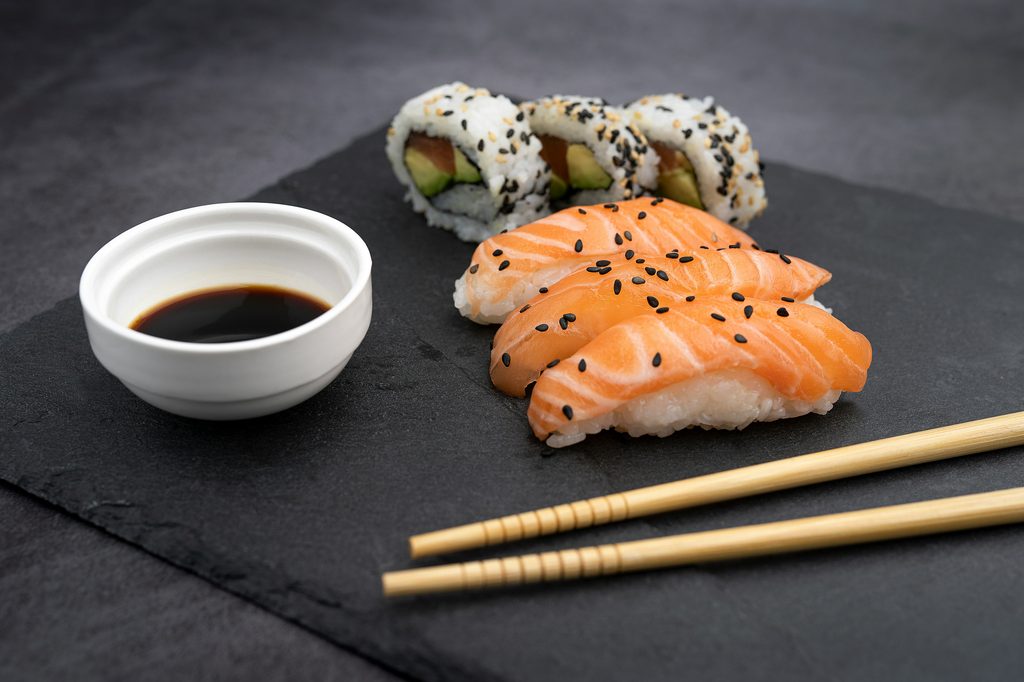
Sushi platters, chirashi bowls, and individual nigiri packs sit alongside. Quality is well above what the format suggests.
The soy sauce and wasabi are in the packet. Chopsticks are given at the till if you ask, or are on a stand near the exit.
Checkout and Bags
The mechanics differ from most countries in a couple of ways that confuse first-time visitors.
The Two-Basket System
You carry your shopping basket to the till and place it on the counter. The cashier scans each item and moves it into a second, empty basket.
You then take that second basket to a separate packing counter — the sacker table — and bag your own shopping there. Do not attempt to bag at the till; there is no room and it holds up the queue.
This is universal in Japanese supermarkets and it works well once you know.
Semi-Self and Self Checkout
Many shops now use semi-self checkout: the cashier scans, then directs you to a payment terminal beside the till where you pay by cash or card yourself.
Fully self-service tills exist as well, generally with an English language option on the screen.
Either way, the packing counter step stays the same.
Bags
Plastic bags have been chargeable by law since 2020, usually ¥3 to ¥5. Most people bring their own.
You will be asked at the till whether you need one — the phrase is fukuro wa irimasu ka. Nod or say hai.
Free plastic bags for wet or frozen items are usually available at the packing counter along with tape and rubber bands.
Paying
Cards, IC transit cards, and QR payments are widely accepted at supermarket chains, more so than at small independent shops.
Point cards are pushed at every till. Decline politely — the phrase used is simply “no thank you” with a small hand gesture, and staff move on immediately.
Note that food carries the reduced 8 percent consumption tax rather than 10 percent, which is why the shelf price and the till total may differ from what you expected.
Expert Tip
A supermarket is the single best place to buy edible souvenirs in Japan, and almost nobody does it. The same Kit Kat flavours, curry roux, furikake, and instant ramen sold at airport gift shops in decorated boxes cost half as much on a supermarket shelf, and the range is far wider. Do your souvenir shopping in a Life or an Aeon on your second-to-last day, and buy a cheap fabric bag at the same time to carry it.
What to Buy to Take Home
Light, cheap, unavailable elsewhere, and permitted through customs — the four criteria.
The Sauce Aisle
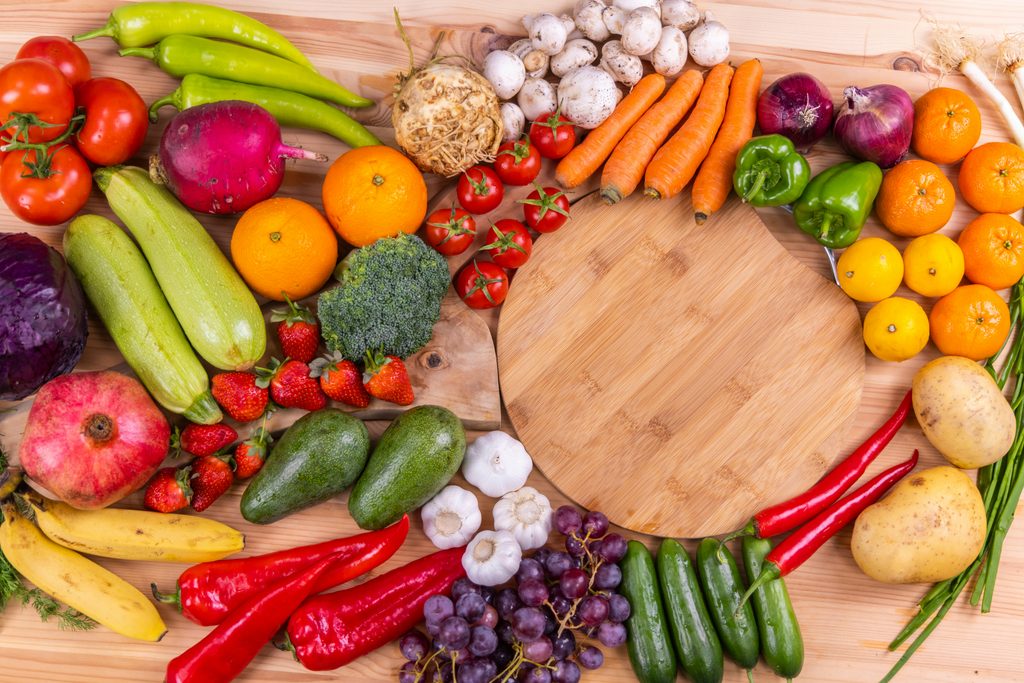
Tonkatsu sauce, okonomiyaki sauce, ponzu, mentsuyu, sesame dressing, yuzu kosho. All cheap, all shelf-stable, and all substantially better than the export versions sold in Western Asian supermarkets.
Dashi packs — sachets of bonito and kombu stock — are the item we would put first. They weigh nothing, they transform home cooking, and they are hard to buy well outside Japan.
Curry Roux and Instant Noodles
Japanese curry roux comes in solid blocks — Golden Curry, Java Curry, Vermont Curry — in mild through hot. It costs a few hundred yen and makes six portions.
The instant ramen aisle is enormous and includes regional varieties that never leave the country. Cup versions are bulky; packet versions travel better.
Snacks and Confectionery
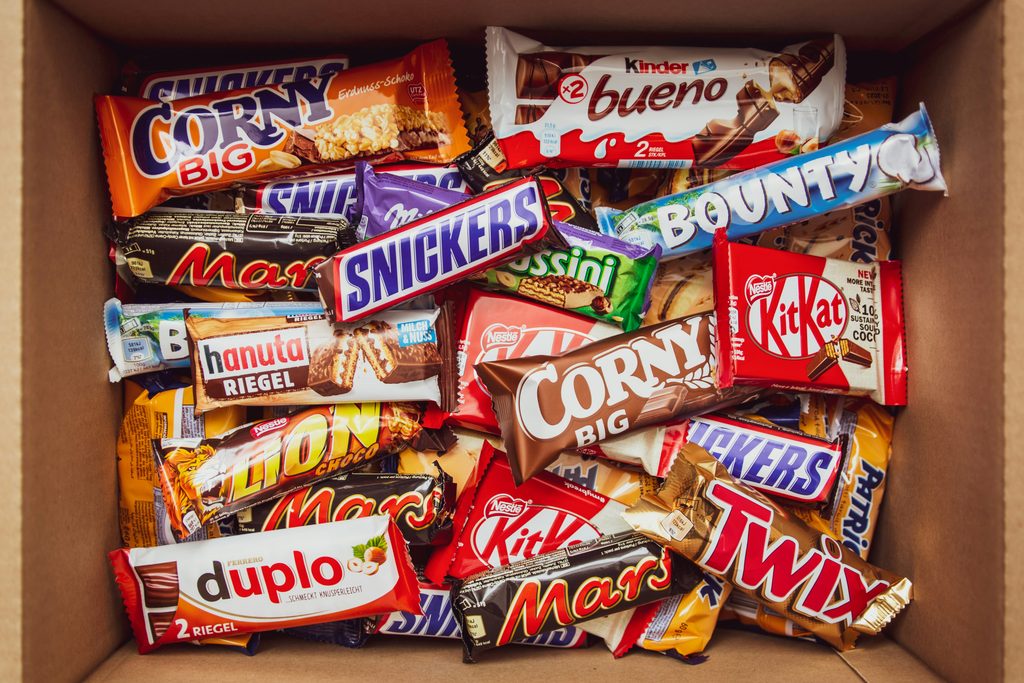
The Kit Kat flavours everyone talks about are here, at supermarket prices rather than gift-shop ones, alongside a considerably larger range of Japanese snacks that never get exported.
Senbei, mochi, and the seasonal confectionery rotate constantly. Buy what looks unfamiliar.
Fruit, and Why It Costs That Much
Do not buy the ¥5,000 melon unless you want to. Japanese premium fruit is a gift category rather than a grocery one, grown to specification, presented in a box, and given rather than eaten casually.
Ordinary fruit is also expensive by international standards, driven by small farms, high standards, and limited imports. Strawberries in winter, peaches in summer, and grapes in autumn are genuinely exceptional and worth buying once.
Fresh fruit cannot generally be taken out of the country, so eat it here.
Japanese Supermarkets: Frequently Asked Questions
What time do half-price stickers appear?
It depends on the shop’s closing time, but the general pattern in an urban supermarket closing at ten or eleven is: first discounts of around twenty percent from six or seven in the evening, deeper cuts from eight or nine, and half price in the final hour or ninety minutes. Fish and sashimi go first because they are same-day products. Weekdays are more reliable than weekends, when stock clears earlier. Department store food halls close earlier, around eight, and start discounting sooner and deeper.
Are cards and IC cards accepted?
Yes at the major supermarket chains — credit cards, transit IC cards like Suica and ICOCA, and QR code payments are all widely accepted, and many tills now handle contactless. Smaller independent grocers and neighbourhood shops are less consistent and some remain cash-only. Carry a few thousand yen in cash as a backup, which is sound advice everywhere in Japan. Note that reloading a physical IC card at the supermarket till is usually possible, which is a convenient way to top up.
How do supermarkets differ from convenience stores?
Supermarkets are cheaper, carry fresh produce, meat, and fish, have a proper prepared food counter with in-house cooking, and discount heavily in the evening. Convenience stores are open around the clock, are far more numerous, and sell a narrower range of packaged items at higher prices, with excellent quality for what they are. For a single onigiri at midnight, the konbini. For dinner for two, or for taking food home, the supermarket — and the price difference on the same category of item is substantial.
Related Tours
Conclusion
Go into a supermarket at half past eight one evening and buy dinner from the discounted prepared food counter. It costs a few hundred yen a head, the food is good, and it is what people here actually eat on a Tuesday.
Then go back on your second-to-last day and buy the souvenirs there instead of at the airport. Dashi packs, curry roux, and a sauce or two weigh almost nothing, cost half the gift-shop price, and are the things you will still be using at home in six months.
Plan Your Japan Trip with Local Experts
Our team has guided 40,000+ travelers across Japan. Tell us about your trip and we’ll get back to you within 24 hours.