In this article:
- Why Bowing Replaces the Handshake
- The Three Primary Bow Angles
- Posture and Hand Placement
- Common Travel Scenarios
- Mistakes to Avoid
- Bowing in Japan: Frequently Asked Questions
Introduction
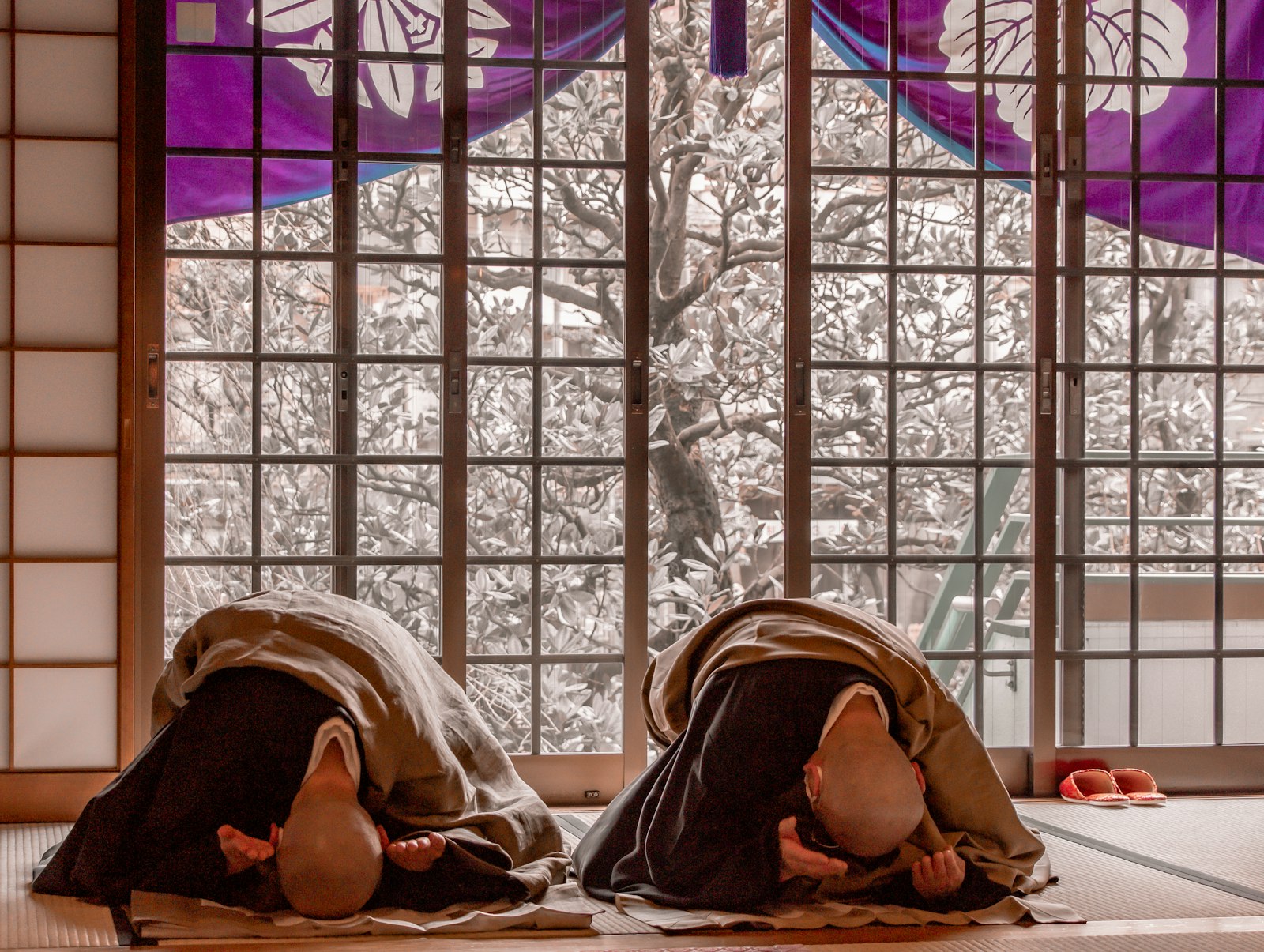
Watch the platform staff at any major Japanese station and you will see the bow used dozens of times an hour — to departing trains, to passengers, to each other. It is so constant that visitors stop noticing it within a day, which is exactly when the mistakes start.
The bow is not a formality layered on top of the interaction. It is the interaction. Depth, duration, and where you put your eyes all carry information, and Japanese people read that information without thinking about it.
None of this means a traveler needs to get it perfect. It does mean that a few minutes of understanding will save you from the two or three errors that visitors make constantly.
Why Bowing Replaces the Handshake
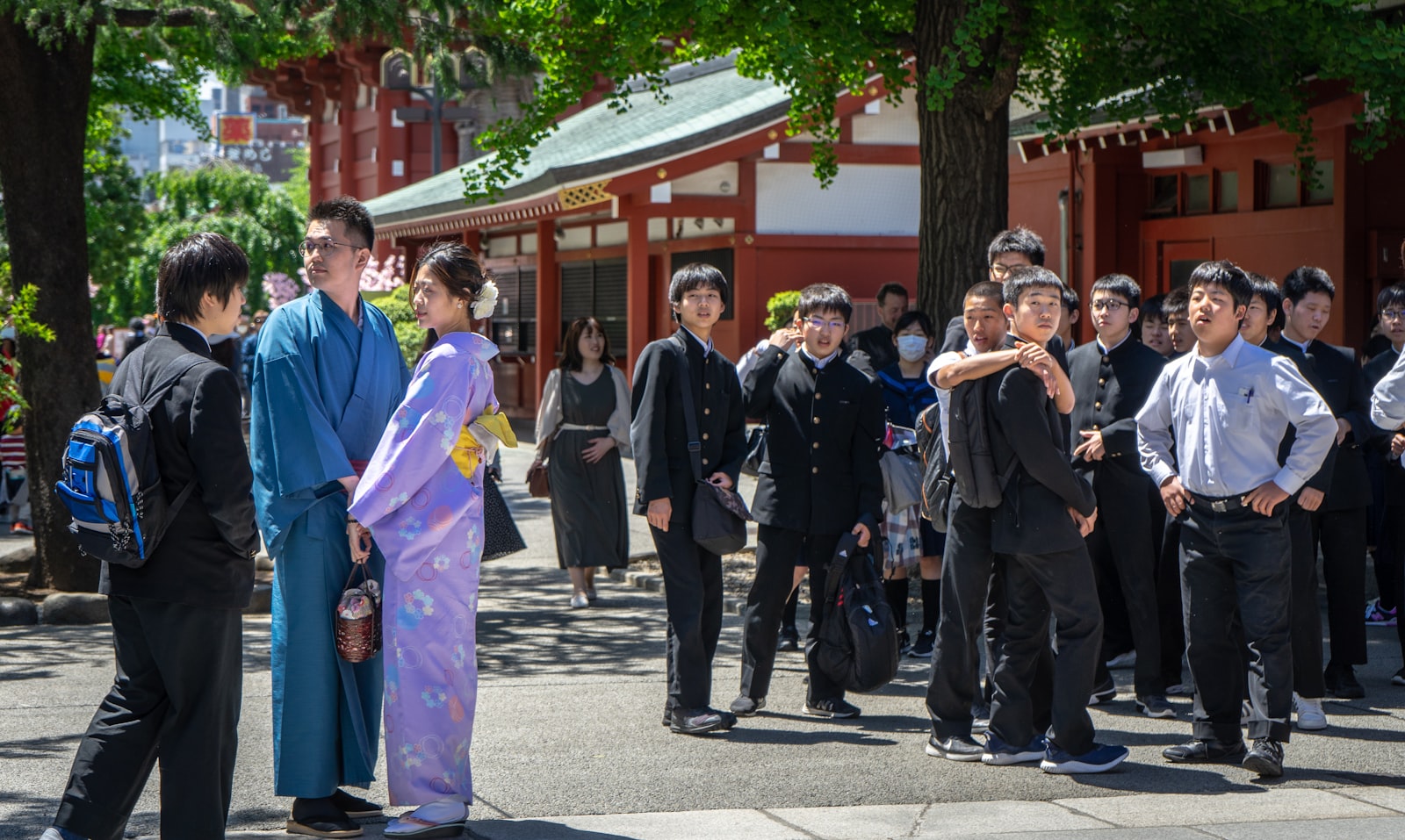
The bow does several jobs at once that a handshake cannot.
Respect Without Contact
Japanese greeting culture developed without physical contact as its default. The bow allows two people to acknowledge each other, establish relative standing, and complete a greeting without touching — and without the awkward negotiation of who initiates.
That non-contact quality has kept it robust. Where handshake cultures had to improvise substitutes during recent years, Japan simply carried on.
Angle as Information
A handshake is binary: you either shake or you don’t. A bow is continuous, and the continuity is what makes it useful. Fifteen degrees to a colleague and forty-five degrees to a client you have kept waiting are different messages delivered through the same gesture.
Depth communicates respect, seniority, gratitude, and contrition. The person receiving it knows immediately how seriously you mean it.
Distance and Daily Practice
Bowing also preserves personal space, which matters in a country where crowding is a daily fact. On a packed platform, two people can complete a full exchange of greetings without either moving.
In practice this makes it faster than a handshake, not slower — one reason it has survived unchanged in a business culture that has otherwise Westernised heavily.
The Three Primary Bow Angles
Japanese etiquette recognises three standard depths. Everything else is a variation on these.
Eshaku: The Fifteen-Degree Bow
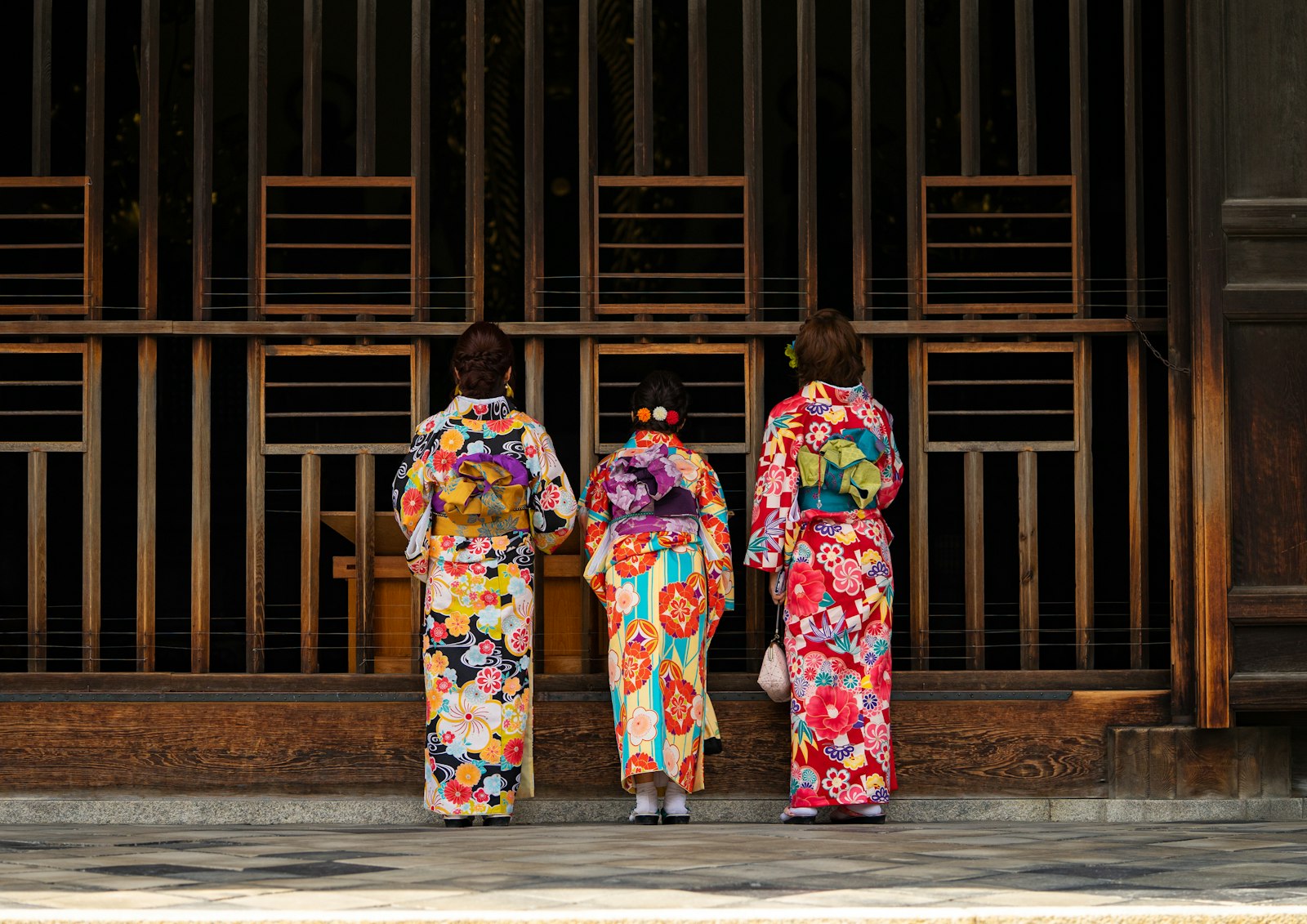
Eshaku is the light bow — a forward inclination of roughly fifteen degrees, held for about a second. It covers casual greetings: passing a colleague in a corridor, acknowledging a neighbour, thanking someone for small everyday help.
For travelers, eshaku is the workhorse. It fits nearly every situation you will encounter: receiving change, being handed a menu, being shown to a table.
Keirei: The Thirty-Degree Bow
Keirei is the standard polite bow, held for two to three seconds. It is what service staff give customers, what employees give clients, and what you would give someone clearly senior to you on first meeting.
If you are introduced to someone in a business context, keirei is correct. It is also right when thanking someone who has gone to real trouble on your behalf.
Saikeirei: The Forty-Five-Degree Bow
Saikeirei is the deepest common bow, held for three seconds or more. It is reserved for sincere apology, profound gratitude, and formal worship at shrines and temples.
Travelers almost never need it, and using it casually is a mistake — a forty-five-degree bow for a handed receipt reads as either sarcastic or badly misjudged. Keep it for the shrine.
Expert Tip
The hold matters as much as the angle. A deep bow snapped back up immediately reads as insincere, while a shallow bow held a beat longer than expected reads as warm. If you are unsure of the correct depth, err shallow and hold slightly longer — that combination is almost never wrong.
Posture and Hand Placement
The line of your back is what separates a bow from a nod.
Bend From the Waist
Head, neck, and back stay in one straight line, and the whole line pivots forward from the hips. The most common error is bending the neck alone, which produces a head-bob rather than a bow.
Keep your gaze following the floor as you incline — roughly where the ground meets the wall for eshaku, closer to your own feet for keirei.
What to Do With Your Hands
Men traditionally keep hands flat at the sides, resting along the trouser seams. Women typically clasp them lightly in front, right hand over left, resting around the top of the thighs.
Neither convention is policed, and nobody will correct a visitor. What does look wrong is hands in pockets or arms folded, both of which undercut the gesture entirely.
Seated Bows on Tatami
Zarei is the seated bow, performed from the formal kneeling position. From seiza, place both hands on the tatami in front of you — fingertips together forming a rough triangle — and incline the upper body forward.
You will encounter this at a tea ceremony or a traditional ryokan dinner. Follow the host’s lead on depth; matching what you are given is always safe.
Common Travel Scenarios
Four situations account for most of the bowing a traveler will do or receive.
Shops and Restaurants
Walking into a shop you will be met with irasshaimase — a welcome call, not a question. No verbal response is expected, and staff are not waiting for one. A small nod as you pass is more than sufficient.
Leaving is different. A brief eshaku with arigatou gozaimashita as you exit is the standard courtesy, and in smaller shops it is genuinely noticed.
Ryokan and Hotel Staff
Ryokan staff bow deeply and often, and travelers frequently overcorrect by trying to match them. Do not. Their bow is professional and reflects their role, not a challenge to reciprocate.
A light eshaku in return is correct and comfortable. Attempting to out-bow the staff creates the small competitive loop that visitors sometimes get trapped in at check-in.
Shrine Protocol
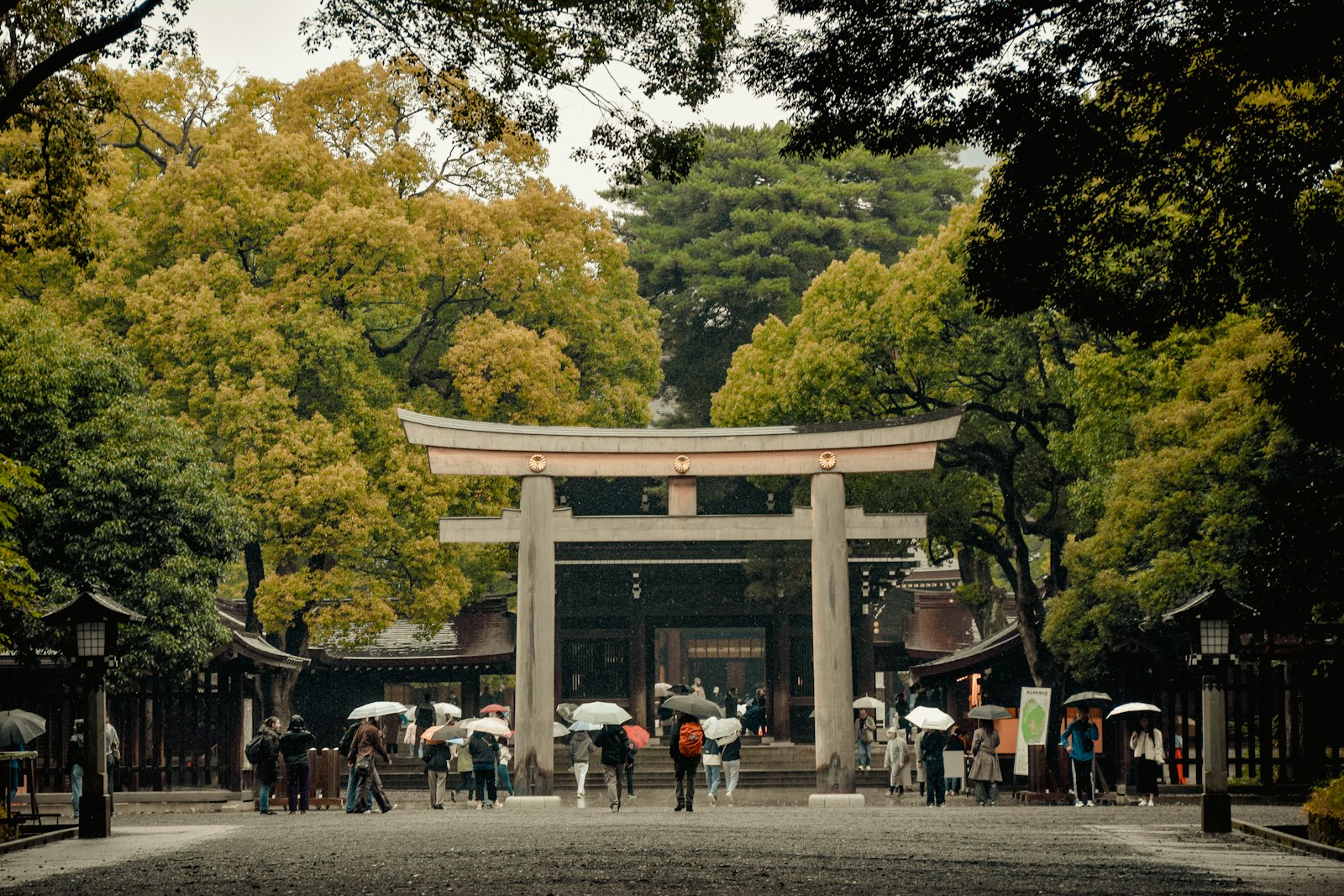
At a Shinto shrine the sequence is fixed: two bows, two claps, one bow — nirei nihakushu ichirei. Bow deeply twice, clap twice at chest height, hold your hands together for a moment of prayer, then bow deeply once more.
Before that, bow once lightly at the torii gate before passing through, and walk to one side of the central path rather than down the middle, which is reserved for the deity.
Expert Tip
At the purification basin before the shrine proper, the ladle is never brought to the lips. Rinse the left hand, then the right, pour a little into the cupped left hand to rinse the mouth, then tip the ladle upright so the remaining water runs down the handle. Doing this correctly is more noticed than the bow itself.
Mistakes to Avoid
Three errors account for nearly everything visitors get wrong.
The Bow-Handshake Hybrid
Attempting both at once produces an awkward stooped handshake that satisfies neither convention. If a Japanese counterpart offers a hand — common in international business — take it and add a small nod, standing upright.
Choose one. If a hand comes out, shake it. If it does not, bow. The hybrid is the only genuinely bad outcome.
Repeated Head-Bobbing
Nervous visitors often produce a rapid series of shallow nods rather than one deliberate bow. It reads as flustered rather than respectful.
One clear inclination, held briefly, is worth five quick ones. Slow down; the pace is part of the message.
Holding Eye Contact Through the Bow
Maintaining eye contact while bending forward forces the head up and the eyes to look through the brow. In Japan this reads as guarded or confrontational rather than sincere.
Meet the person’s eyes before you bow, lower your gaze as you incline, and re-establish contact as you straighten. That sequence is what makes it look natural.
Bowing in Japan: Frequently Asked Questions
Are foreign visitors expected to bow perfectly? No. Nobody expects a visitor to have calibrated angles, and the effort itself is what registers. A sincere fifteen-degree bow covers almost every situation you will meet.
How should I respond when a hotel attendant or train conductor bows to me? A light nod or shallow eshaku. Their bow is part of the job and does not require a matching response. Ignoring it entirely is the only thing to avoid.
Do I need to bow on buses or when paying at a convenience store? No. Routine transactions call for at most a small nod. Bowing at every till interaction quickly looks laboured, and Japanese people do not do it either.
Related Tours
Conclusion
Learn one bow properly — fifteen degrees, bent from the waist, held for a second, eyes down — and you have what you need for a two-week trip. Depth can be adjusted upward when a situation obviously calls for more.
The rest is restraint. Do not match the ryokan staff bow for bow, do not combine a bow with a handshake, and save the deep bow for the shrine, where it belongs.
Plan Your Japan Trip with Local Experts
Our team has guided 40,000+ travelers across Japan. Tell us about your trip and we’ll get back to you within 24 hours.