
In this article:
- What Zazen Actually Is
- Preparing to Sit: Posture and Cushions
- The Three Pillars: Body, Breath, and Mind
- Practising Zazen at a Temple
- The Keisaku, the Wooden Stick
- Beyond Sitting: Walking Meditation
- Zazen: Common Questions
What Zazen Actually Is
Zazen, which translates roughly as “seated meditation,” is the core practice of Zen Buddhism. It looks like the simplest thing in the world — a person sitting still — and that simplicity is the whole point and the whole difficulty. Unlike many meditation techniques aimed at relaxation or visualisation, zazen is largely about not doing: not chasing thoughts, not seeking a particular state, just sitting with full awareness.
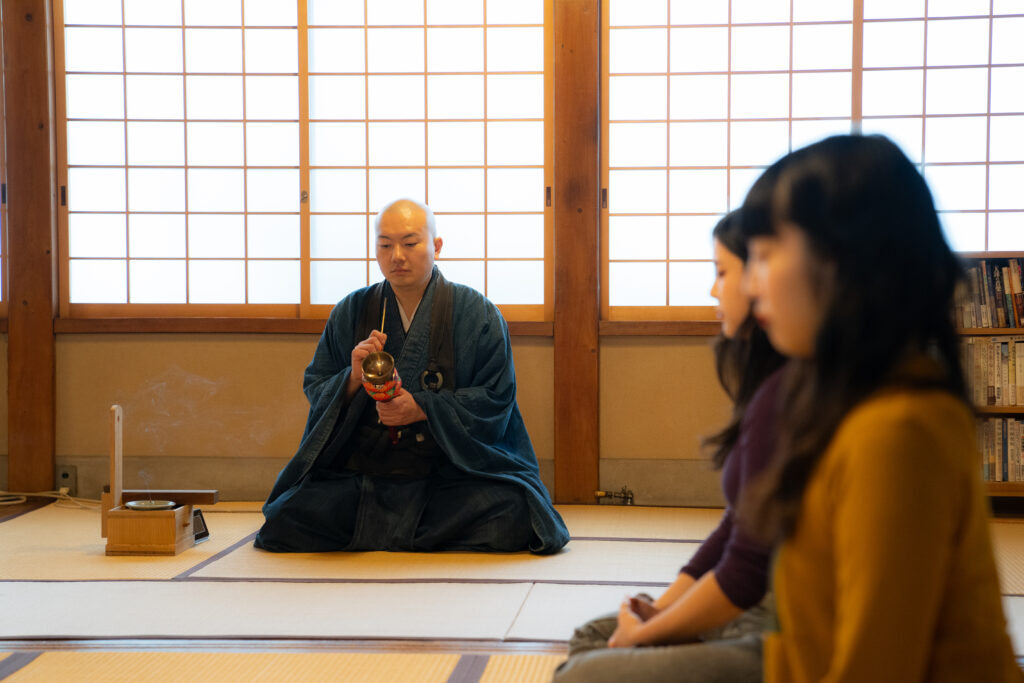
For a visitor to Japan, a temple zazen session is a rare chance to step directly into a living monastic tradition rather than observe it from outside. You do not watch the monks meditate; you sit and do it with them. An hour of it can be one of the quietest, most grounding experiences of a whole trip.
Just Sitting
At the heart of one major Zen tradition is the idea of shikantaza — “just sitting.” There is no mantra to repeat, no object to picture, no goal to reach. You sit in the correct posture, breathe, and remain present, letting whatever arises in the mind come and go without grabbing it. The practice is not a means to an end; the sitting itself is the practice. This is what makes zazen both radically simple and genuinely demanding.
A Living Monastic Tradition
Zazen is not a museum piece. It is practised daily in Zen monasteries across Japan exactly as it has been for centuries, and many temples open sessions to the public, including curious travelers. When you join one, you are entering an unbroken line of practice. The forms — how you enter, sit, and bow — are the same ones the monks follow, which is why a little preparation and respect go a long way.
What It Offers
People come to zazen for different reasons, and it is fine to come simply curious. Regular practice is associated with greater calm, sharper focus, and a steadier relationship with one’s own thoughts — benefits that modern research into meditation broadly supports. But a Zen teacher would gently warn against sitting in order to “get” these things. Paradoxically, the practice works best when you sit without grasping for a result, and let the benefits, if they come, arrive on their own.
Expert Tip
Eat lightly before a zazen session, and not too recently. Sitting still in a quiet hall on a full stomach invites drowsiness, which is the meditator’s constant enemy and the very thing the wooden stick exists to dispel. A small meal an hour or two beforehand keeps you alert without hunger distracting you. Arrive a little early too — rushing in flustered is the worst possible state in which to begin sitting still.
Preparing to Sit: Posture and Cushions
Most of the physical discomfort beginners feel comes from poor setup. Get the cushions and the legs right, and the sitting becomes far more sustainable.
The Zafu and Zabuton
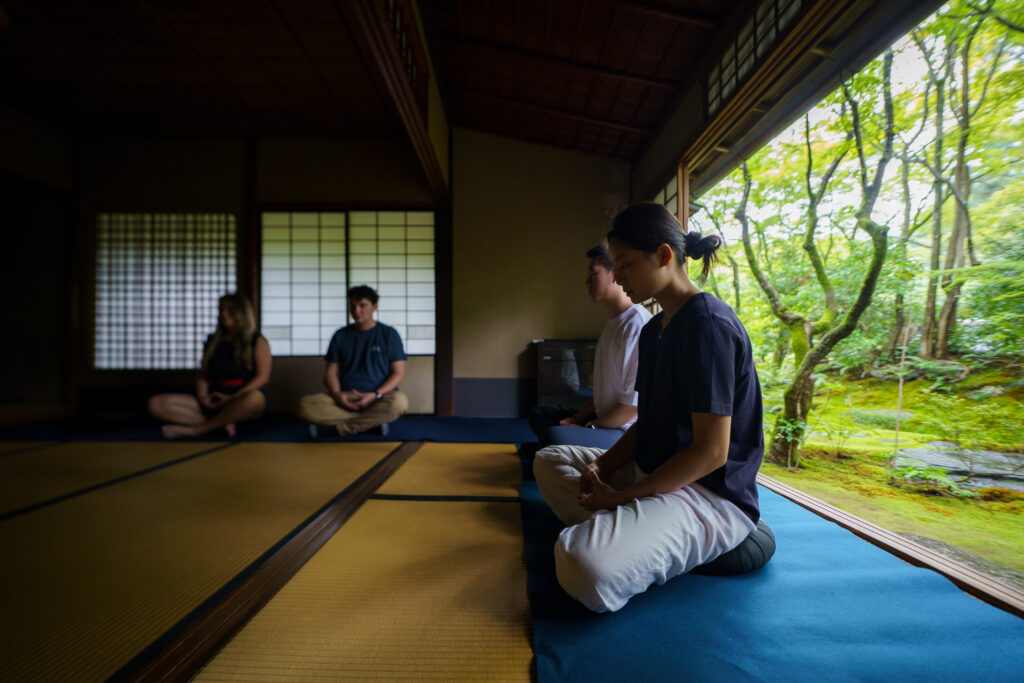
Two cushions support the posture. The zabuton is a flat, padded mat that cushions your knees and ankles from the floor. On top of it sits the zafu, a firm, round cushion you perch on so that your hips are raised above your knees. This elevation is the key to the whole posture — it tilts your pelvis forward and lets your spine stack naturally upright without strain. Sitting flat on the floor without a zafu is what wrecks most beginners’ backs and legs.
The Leg Positions
The classic positions are the full lotus, kekkafuza, with each foot drawn up onto the opposite thigh, and the more accessible half lotus, hankafuza, with one foot on the opposite thigh and the other tucked beneath. Both create a stable, grounded triangle of hips and knees. Do not force either if your body resists — pushing into a lotus your hips are not ready for risks real injury. The stability matters more than the specific form.
If You Can’t Sit Cross-Legged
You do not need to manage a lotus at all. The seiza kneeling posture, often with a small bench or extra cushion taking the weight off your ankles, works well, and many temples now welcome practitioners who sit upright on a chair, feet flat on the floor, hands in the lap. The essential thing is an upright, stable spine and a posture you can hold without constant pain. A comfortable chair beats an agonising lotus every time.
The Three Pillars: Body, Breath, and Mind
Traditional instruction frames zazen as tuning three things in sequence: the body, then the breath, then the mind. Each follows from the last.
Settling the Body
Begin with the body. Stack your spine upright but not rigid, lengthening from the base to the crown. Gently tuck your chin so the back of the neck lengthens, drop your shoulders, and — importantly — keep your eyes half-open, gaze lowered to the floor a metre or so ahead, unfocused. The half-open eyes, hangan, are deliberate: closed eyes invite daydreaming and sleep, while a soft downward gaze keeps you alert and present in the room.
The Hand Position
The hands form the “cosmic mudra,” and it is more useful than it sounds. Rest your dominant hand palm-up in your lap, place the other hand palm-up on top of it, and let the tips of your thumbs lightly touch to form a soft oval, held just below your navel. This shape is a quiet feedback device: if your thumbs press hard together you are tense; if they collapse apart you are drifting or dozing. Keeping them barely touching keeps you balanced.
The Breath
Let the breath settle into slow, deep, abdominal breathing — the belly, not the chest, doing the work. A common beginner’s anchor is susokukan, counting the breath: count each exhalation from one to ten, then start again at one. When you notice you have lost count or sailed past ten, you have simply caught your mind wandering — return gently to one. The counting gives the restless mind a simple task while the deeper stillness develops.
The Mind
The hardest pillar is the mind, and the instruction is counterintuitive: do not try to empty it. Thoughts will arise constantly — plans, memories, itches, judgements. The practice is to let them pass like clouds across the sky, neither chasing them nor fighting to suppress them. You notice a thought, you let it go, you return to the breath. You will do this hundreds of times in a single sitting, and that returning, not some blank silence, is the meditation itself.
Practising Zazen at a Temple
Joining a temple session is the best way to learn, and it is more accessible than many visitors realise. A few practical points smooth the experience.
Finding a Session
A number of temples in Kyoto, Kamakura, Tokyo, and elsewhere run regular zazen sessions, and a growing number offer English-friendly sittings aimed at visitors, with guidance through the posture and form. These range from short introductory sessions to longer, more serious sittings. Look for temples that explicitly welcome beginners and foreigners, book ahead where required, and arrive with time to spare. The guided beginner sessions are by far the best entry point.
What to Wear
Wear loose, comfortable, modest clothing you can sit cross-legged or kneel in without restriction — tight jeans, short skirts, and anything binding will fight you the whole time. Plain, quiet clothing suits the setting, and you will remove your shoes on entering. Think of it as dressing for a yoga class held in a sacred space: unrestrictive, unflashy, and respectful of where you are.
The Silence
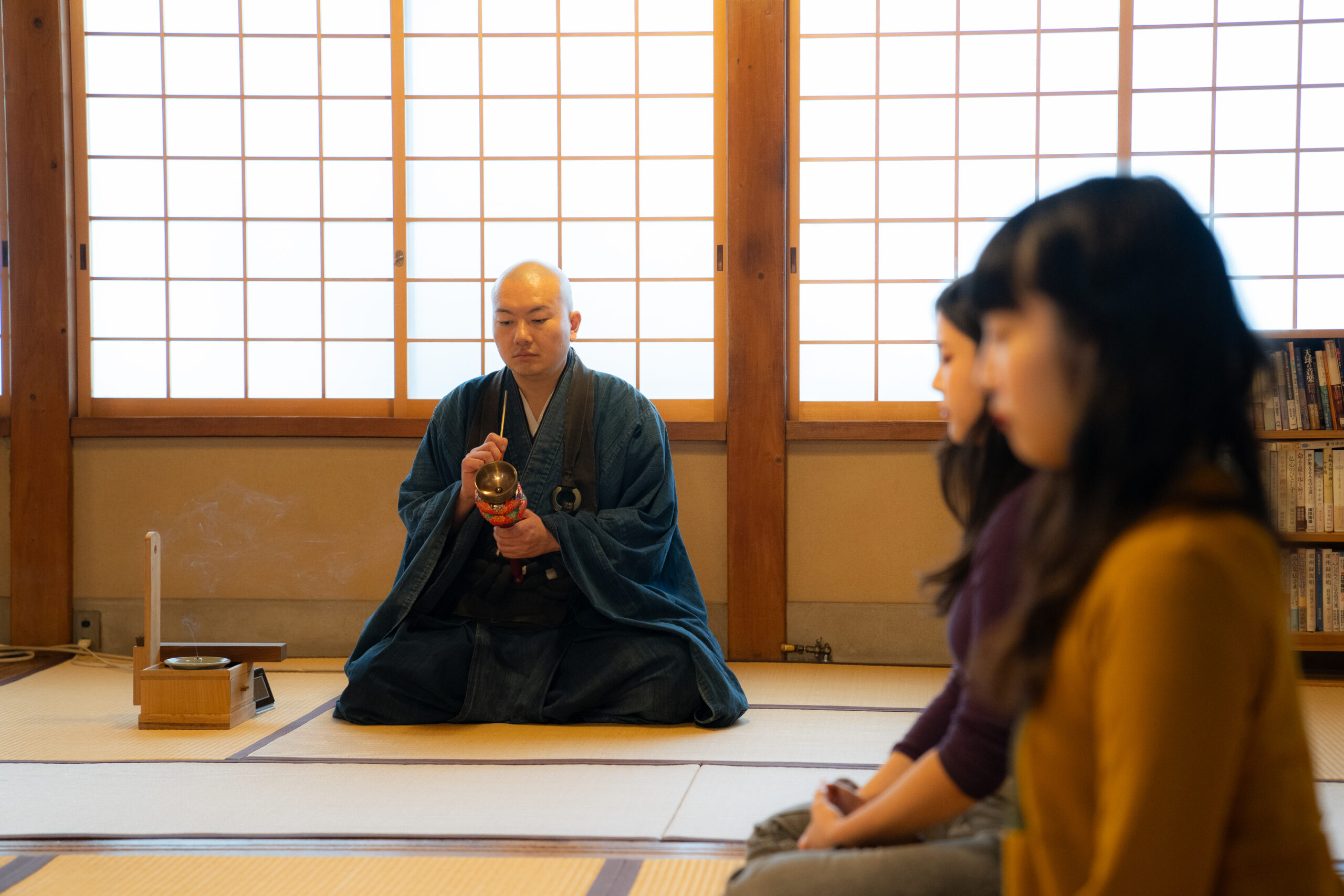
From the moment you cross into the temple, keep silence and move calmly. Phones off, voices stilled, footsteps soft. The quiet is not incidental — it is the shared condition that makes the practice possible for everyone in the hall, and breaking it disturbs the whole room. Follow the lead of the monks and staff for when to sit, bow, and move, and when in doubt, stay still and quiet. The silence is the container the practice happens inside.
The Keisaku, the Wooden Stick
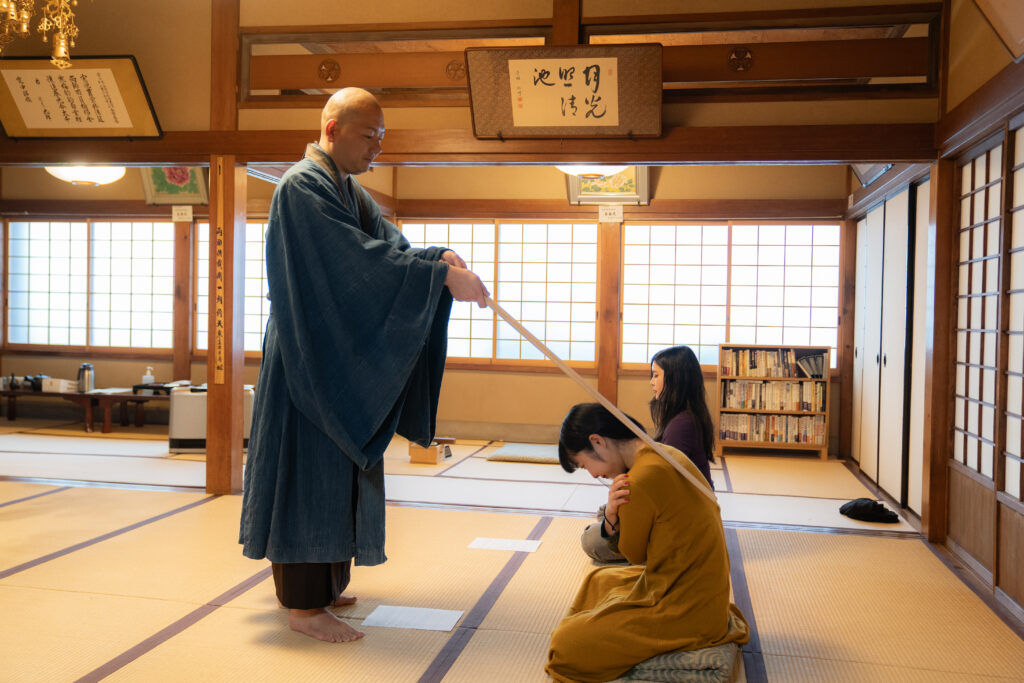
The flat wooden stick a monk carries through the hall is the part of zazen that most alarms newcomers, usually because they misunderstand it entirely.
Not a Punishment
The keisaku — the “encouragement stick” — is exactly that: an aid, not a punishment. A monk walks slowly through the hall during sitting, and a measured strike across the shoulder muscles is given to help a meditator who is drowsy, tense, or losing focus. It is a tool of compassion within the tradition, intended to refresh and re-centre the practitioner, not to discipline them. Reframing it this way removes most of the fear around it.
How It Works
At most sessions, the strike is not random — it is given by request or with consent. Typically you signal that you would like it, often by bowing your head and folding forward to expose the shoulders; the monk bows in return, delivers the strike to the muscle beside the shoulder blade, and you bow again in thanks. The forms vary between temples, so listen to the session’s instructions. If you do not want it, you simply do not request it, and you will be left in peace.
The Physical Release
The strike itself, delivered to the broad muscle and not the spine or bone, lands as a sharp but bearable jolt, and many practitioners find it genuinely useful: it releases the tension that builds in the shoulders during long sitting and dispels the heavy drowsiness that creeps in. There is a reason it has survived centuries of practice. Far from a thing to dread, regulars often welcome it as a small, clarifying reset partway through a long sit.
Beyond Sitting: Walking Meditation
Zazen is not only done seated, and the practice does not have to end when you leave the temple.
Kinhin
Between periods of seated zazen, many sessions include kinhin — slow, mindful walking meditation. You move in a line, very slowly, coordinating each small step with the breath, carrying the same focused awareness from the cushion into motion. It relieves the legs after long sitting and teaches that the meditative attention is not confined to stillness. Kinhin is the bridge between the formal sit and ordinary life, where the real test of the practice lies.
Bringing It Home
You do not need a temple to continue. A small, uncluttered corner with a cushion, a few quiet minutes each morning, and the same upright posture and breath-counting are enough to keep a practice alive after you return home. Even ten minutes of sitting daily, done consistently, carries the calm and focus of the temple into ordinary days. The form you learn in Japan is fully portable — that is rather the point of it.
Zazen: Common Questions
What if my legs go numb or hurt during zazen? Some discomfort is normal, but sharp pain or deep numbness is a signal to adjust, not to endure. Use enough cushion height, choose a leg position your body can actually hold, and shift quietly if you must — most sessions permit small, mindful adjustments, and using a chair or kneeling bench is entirely acceptable. Pushing through serious pain is not a virtue in zazen and risks injury; sustainable stillness beats heroic suffering every time.
Why must I keep my eyes half-open? The half-open, downcast gaze is a deliberate and important instruction. Closing the eyes fully tends to lead either to drifting daydreams or to drowsiness, both of which pull you out of present awareness. A soft, unfocused gaze lowered to the floor keeps you anchored in the actual room, awake and present, without giving the eyes anything to fixate on. It is one of the small details that separates zazen from simply relaxing with your eyes shut.
Can children or elderly people take part? Generally yes, with sensible adaptation. Many temples welcome a range of ages, and the posture can be modified — chairs and kneeling benches make the practice accessible to those who cannot sit cross-legged on the floor, and shorter sessions suit children and beginners. Anyone with knee, hip, or back issues should use a chair without hesitation. The practice is about awareness, not athletic sitting, so the form bends to accommodate the body.
Related Tours

Conclusion
Zazen asks almost nothing of you and, in doing so, asks for everything: to sit upright, breathe, and stay present while your mind does its restless work. Set up the cushions properly, keep the spine tall and the eyes softly open, count the breath, and let your thoughts pass without chasing them. Do that in the silence of a temple hall, and you touch a practice that has run unbroken for centuries.
Plan Your Japan Trip with Local Experts
Our team has guided 40,000+ travelers across Japan. Tell us about your trip and we’ll get back to you within 24 hours.