In this article:
- What Zen meditation (zazen) actually involves
- Where to practice zazen in Tokyo
- The TJT Zen meditation experience at a private temple
- What happens during a zazen session
- The broader context: Zen in Tokyo’s temple culture
- Practical tips for first-time practitioners
- Frequently asked questions
Introduction
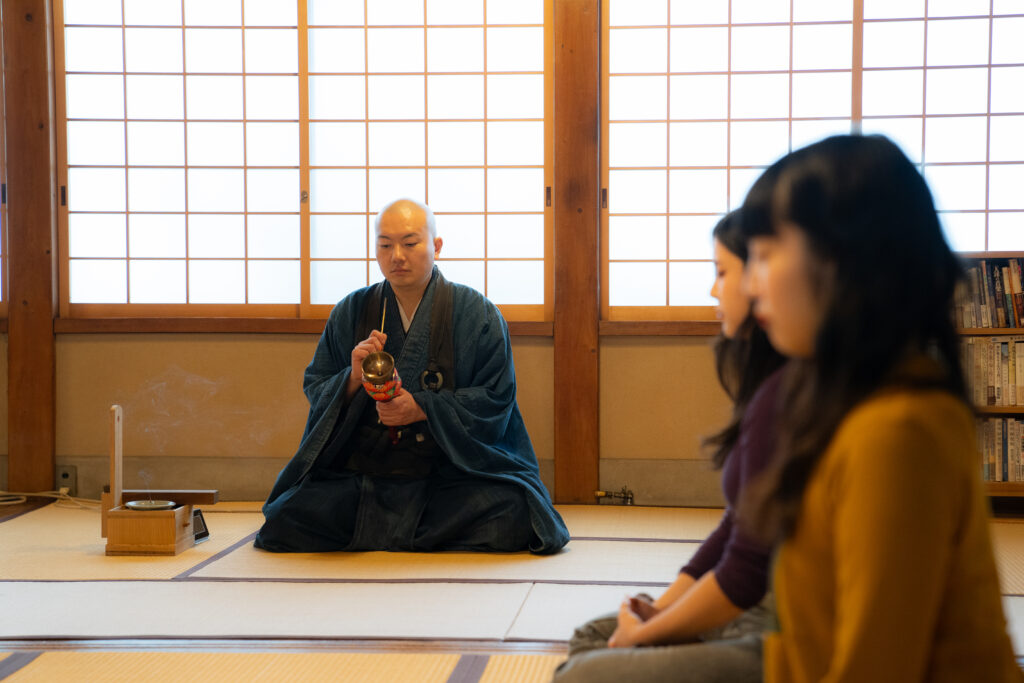
Zazen — seated Zen meditation — is not a relaxation practice. It’s a discipline. The posture is precise. The attention is active. The silence is not passive but directed. Understanding this before you go helps set realistic expectations: you may leave a zazen session feeling more alert than calm, more challenged than peaceful.
That said, a single morning of zazen at a Japanese Zen temple is one of the more genuinely unusual experiences available to visitors in Tokyo — not a cultural performance but a genuine practice, offered in the same physical context where Japanese practitioners have sat for centuries. The difference between zazen at a working temple and a “mindfulness experience” in a hotel conference room is the difference between learning to cook in someone’s kitchen and watching a cooking show.
Tokyo has several Zen temples that offer zazen to visitors, ranging from formal programs with considerable structure to more accessible introductions designed for people with no prior meditation experience. This guide covers both.
What Zazen Actually Involves
The Posture
Zazen is traditionally practiced in full lotus (kekka fuza) or half lotus (hanka fuza) position — cross-legged, with specific alignment of the spine, hands, and gaze. For most Western adults without prior practice, full lotus is not accessible. Most temples that welcome visitors offer alternatives: seiza (kneeling on a bench or cushion), or simple cross-legged sitting. The physical discomfort of an unfamiliar posture is part of the practice — it gives the mind something concrete to work with.
The session typically lasts 20 to 40 minutes for introductory practices. Experienced practitioners sit for significantly longer. One 25-minute sit is enough to give you a direct experience of what the practice is.
The Kyosaku
In some traditional zazen settings, a monitor walks between practitioners carrying a flat wooden stick (kyosaku). This is offered to practitioners who request it — a firm strike on the shoulders that is said to alleviate tension and restore attention. It is not punishment. In introductory sessions for visitors, the kyosaku is typically available but not pressed on participants.
Where to Practice Zazen in Tokyo
Engaku-ji, Kamakura
Strictly speaking, Engaku-ji is in Kamakura (50 minutes from Tokyo), but it’s the most significant Zen training temple accessible from the city and offers regular public zazen sessions on Saturday and Sunday mornings. The setting — a major temple complex with centuries of uninterrupted practice — provides a context that urban Tokyo temples cannot fully replicate. For travelers who can dedicate a morning to the practice, the 5:30am Sunday session at Engaku-ji is as close as most visitors will get to the real thing.
Soji-ji, Yokohama
Soji-ji in Yokohama (40 minutes from central Tokyo) is one of Japan’s two head temples of the Soto school of Zen. Monthly zazen sessions for the public are offered on specific Saturday mornings — check the temple website for dates. The scale of the complex and the formality of the practice are appropriate for visitors who want a genuine engagement with Soto Zen rather than a tourist introduction.
Urban Tokyo Temples
Several temples in central Tokyo offer zazen sessions of varying formality. Jizoji Temple in Shibuya runs monthly public zazen sessions; Kenchoji (within central Tokyo) offers occasional introductory programs. The urban setting lacks the atmospheric weight of Kamakura, but the practice itself is identical. For travelers with limited time or those uncomfortable with early morning logistics, urban options are a legitimate alternative.
Expert Tip
The most common mistake in first-time zazen is trying to “clear the mind.” This is not what zazen asks. The instruction is typically to focus on the breath or a specific point — to return attention to that focus when it wanders, rather than preventing it from wandering. The wandering itself is the material. Going in with this understanding makes the practice considerably more accessible.
The TJT Zen Meditation Experience
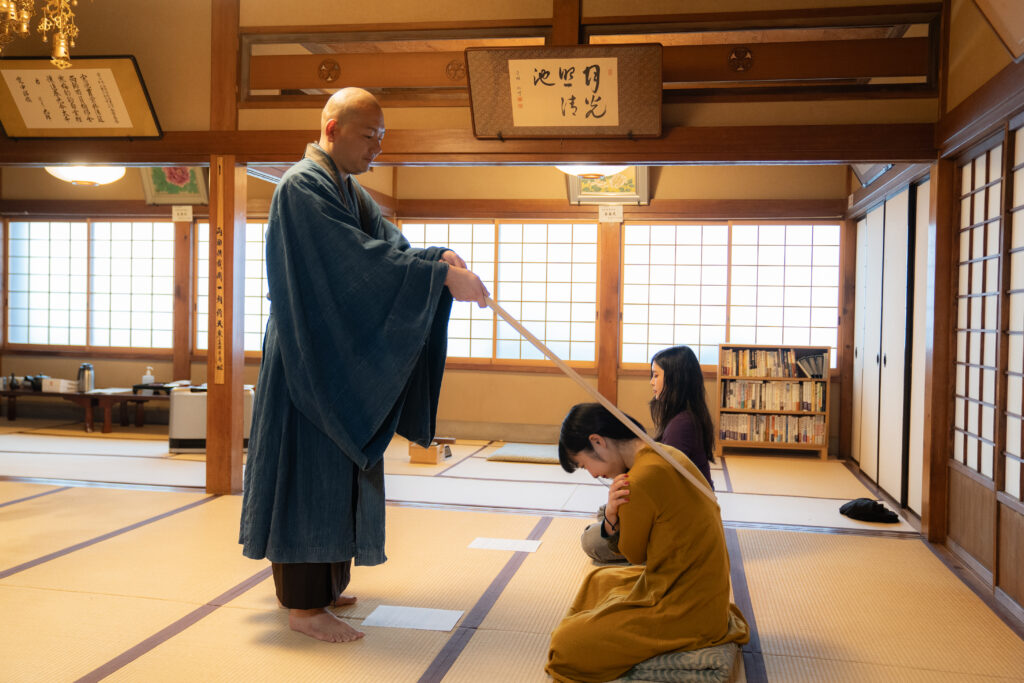
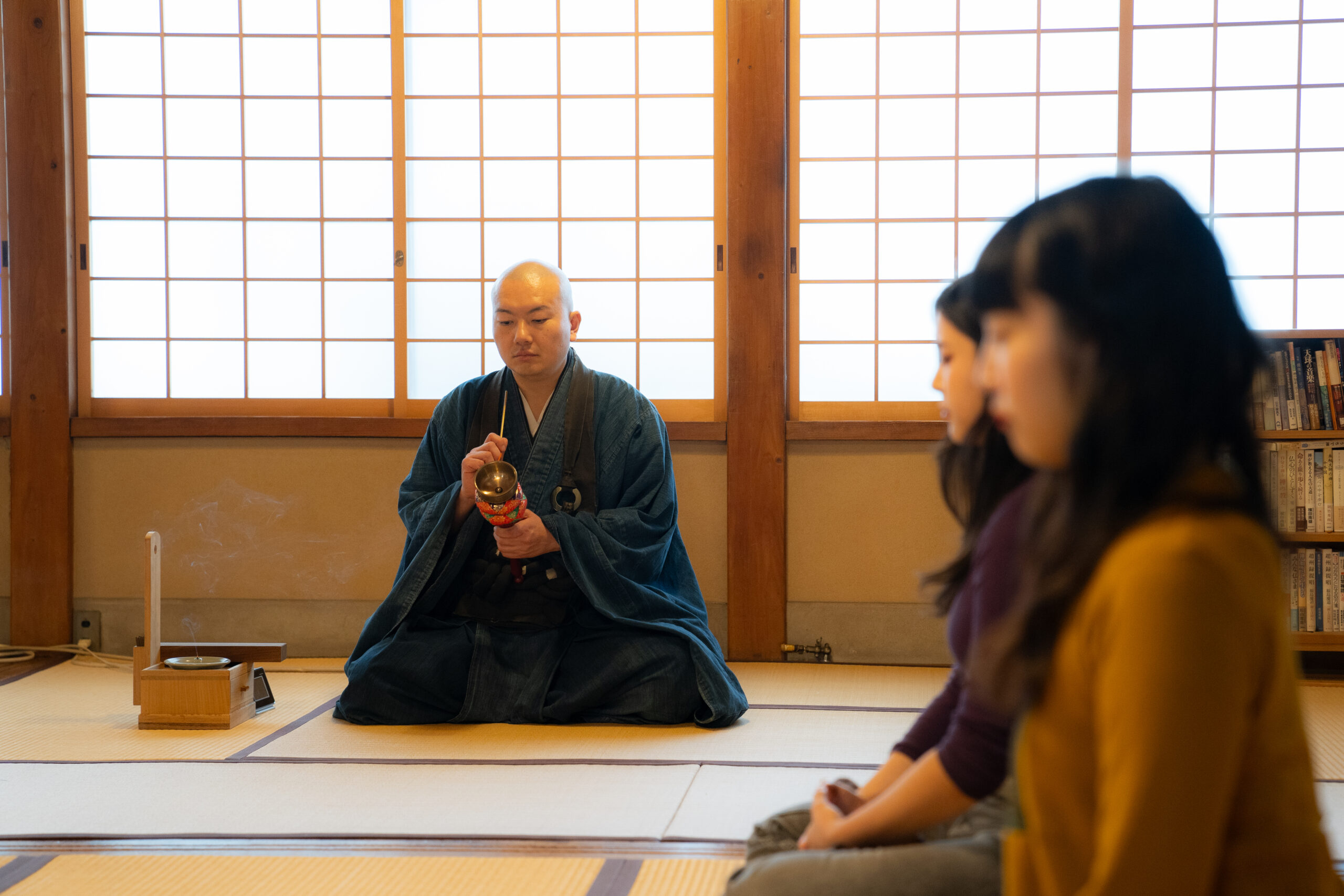
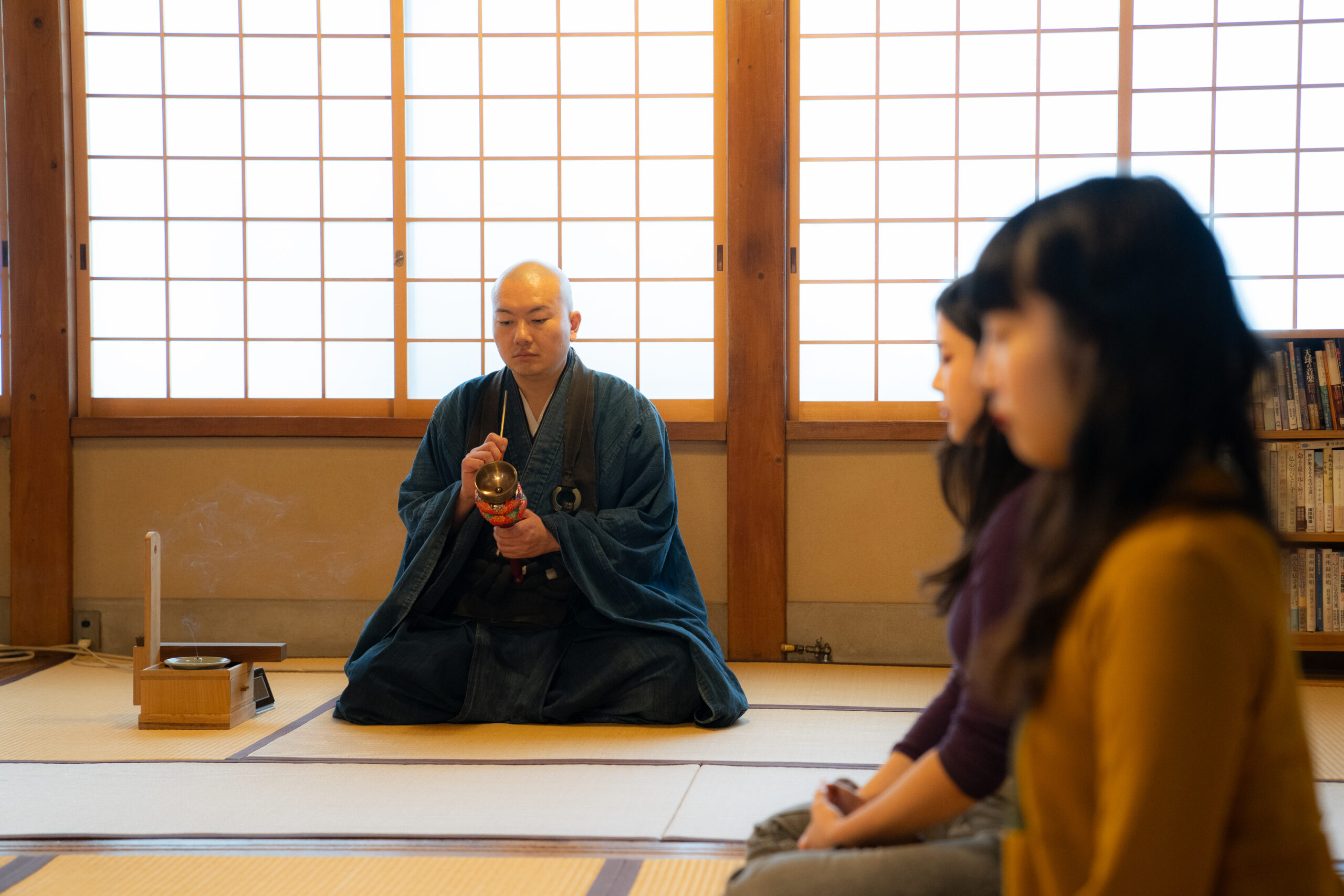
TJT’s Zen meditation experience takes place at a small private temple in Tokyo, led by an English-speaking monk. The session runs approximately 90 minutes and includes an introduction to the history and philosophy of Zen Buddhism in Japan, a guided 25-minute zazen session, and a period of open conversation with the monk afterward. The temple is not open to general visitors — the session is offered specifically for small groups (maximum 6 people).
The conversation after the session is often where the experience opens up. The monk’s perspective on the relationship between the practice and daily life — work, relationships, attention — is specific and grounded in decades of practice. It’s not a lecture; it’s a conversation, and the quality of it depends on what you bring to it.
The Broader Context: Zen in Tokyo’s Temple Culture
Tokyo has approximately 3,000 Buddhist temples. The majority are small, run by a resident monk or maintained by a local community, and not oriented toward visitors. A significant subset of these practice Zen, primarily in the Rinzai and Soto schools. The temples that offer public zazen sessions are deliberately practicing engagement with the broader community — a function that Buddhist temples have served throughout Japanese history.
Understanding that the zazen experience offered to visitors is a continuation of an actual practice tradition — not a cultural performance staged for tourism — changes how you approach the session.
Practical Tips for First-Time Practitioners
Wear loose, comfortable clothing — nothing that restricts movement when sitting cross-legged. Remove shoes before entering the practice hall. Arrive 10 minutes early; arriving late is disruptive to an active session.
Turn your phone completely off, not just silent. The physical act of turning the phone off is part of the transition into the practice space.
You will feel physical discomfort if you’re not accustomed to floor sitting. This is normal and expected. Changing your position during a session is permitted at most introductory programs — ask the instructor beforehand about their approach.
Frequently Asked Questions
Do I need any experience with meditation to participate? No. Most programs offered to visitors are designed for complete beginners. Some physical flexibility helps, but alternatives to lotus position are available.
Is zazen religious? Do I need to be Buddhist? Zazen has Buddhist origins and takes place in temple settings, but the practice itself doesn’t require belief. Many practitioners approach it as a discipline rather than a religious practice. The monk-led sessions at most temples welcome people of all backgrounds.
How is zazen different from other meditation practices? Zazen is highly structured in posture and attention. It’s specifically Zen — associated with the direct transmission of insight through practice rather than scripture. Compared to mindfulness-based practices derived from Theravada Buddhism, zazen is typically more austere in instruction and more demanding in physical posture requirements.
Related Tours
Conclusion
A morning of zazen in Tokyo is not a comfortable experience, and it’s not meant to be. It’s a disciplined practice with a direct quality of attention that most daily life doesn’t demand. For travelers willing to sit with the discomfort and the silence, it produces something that stays — not a memory of what you saw, but of what the practice felt like. That’s a different category of travel experience, and it’s available in Tokyo if you look for the right temple.
Plan Your Japan Trip with Local Experts
Our team has guided 40,000+ travelers across Japan. Tell us about your trip and we’ll get back to you within 24 hours.