In this article:
- What Oshino Hakkai Is
- The Ponds Worth Finding
- Photographing Fuji Here
- Food and Water
- Getting There and When to Go
- Oshino Hakkai: Frequently Asked Questions
Introduction
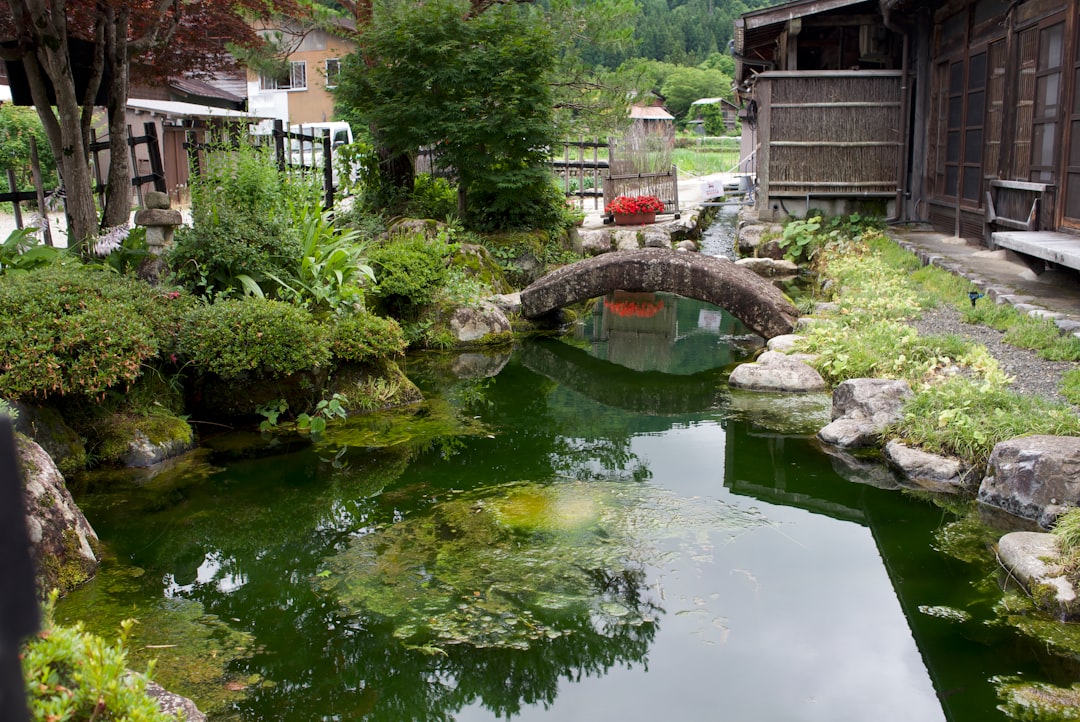
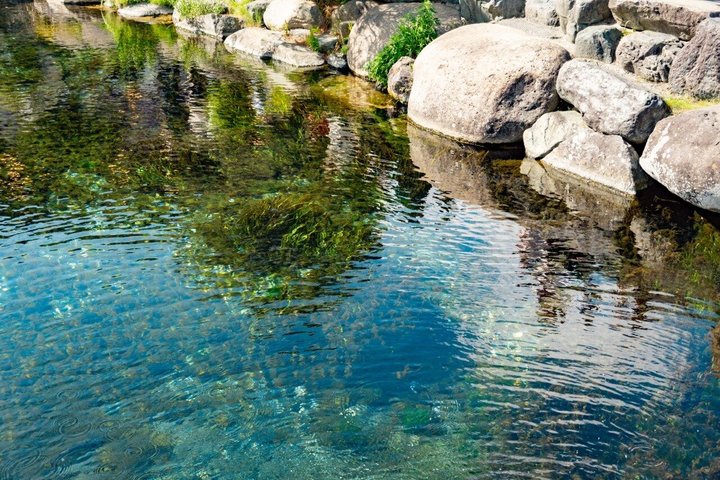
At eight in the morning the water at Waku-ike is so clear that the depth reads wrong. You can see plants moving on the bottom eight metres down and your eye insists it is two.
At eleven the same pond has forty people around it and three coaches idling on the road. Oshino Hakkai is a small village that receives a very large number of visitors, and the entire quality of a visit here is determined by what time you arrive.
The water is snowmelt from Mount Fuji that has percolated down through porous lava beds and re-emerged, filtered, decades later. It is cold, it is among the purest water in Japan, and you can fill a bottle from a tap for nothing.
What Oshino Hakkai Is
Eight ponds in and around a farming village in Yamanashi Prefecture, on the plain between two of the Fuji Five Lakes.
Where the Water Comes From
Rain and snowmelt on Fuji’s slopes sink into layers of porous volcanic rock rather than running off. The water travels underground for a long time — estimates vary widely and figures from twenty to eighty years are quoted locally — before surfacing here through fissures at the base.
That journey is what produces the clarity. The lava filters out suspended particles almost entirely, and the water arrives at a near-constant temperature of around 12 degrees year-round.
It is soft, mineral-light, and genuinely good to drink. Local shops use it, and there are free taps.
The Heritage Listings
The ponds were designated a National Natural Monument in 1934.
More significantly, Oshino Hakkai is one of the component parts of the Fujisan UNESCO World Heritage inscription of 2013 — listed not as a natural site but as a cultural one, under the heading of Fuji worship. Pilgrims climbing the mountain purified themselves in these waters before the ascent, and that ritual function is what the listing recognises.
Understanding this changes what you are looking at. These are not a scenic curiosity; they were part of the apparatus of a mountain religion.
The Pond in the Middle That Is Not One of the Eight
The deep blue pool in the central plaza, beside the shops and the waterwheel — the one that appears in most photographs — is not one of the eight sacred springs. It is an artificial pond, dug later, fed by the same water.
It is beautiful and it is charging you to look at it. The genuine eight are scattered around the village, some of them several minutes’ walk from the plaza, and several are quieter and better.
We mention this not as a complaint but because visitors routinely see the artificial pond, take the photograph, and leave believing they have seen Oshino Hakkai.
Expert Tip
Come before nine in the morning or after four in the afternoon. Oshino Hakkai runs almost entirely on coach traffic from Tokyo, which arrives in a band between roughly ten and three. Outside that window it is a quiet farming village with clear water in it and Fuji at the end of the road; inside it, the paths around the main ponds are shoulder to shoulder. No other decision about this place matters nearly as much.
The Ponds Worth Finding
The eight are spread across a walkable area and vary considerably. Three are worth prioritising.
Waku-ike
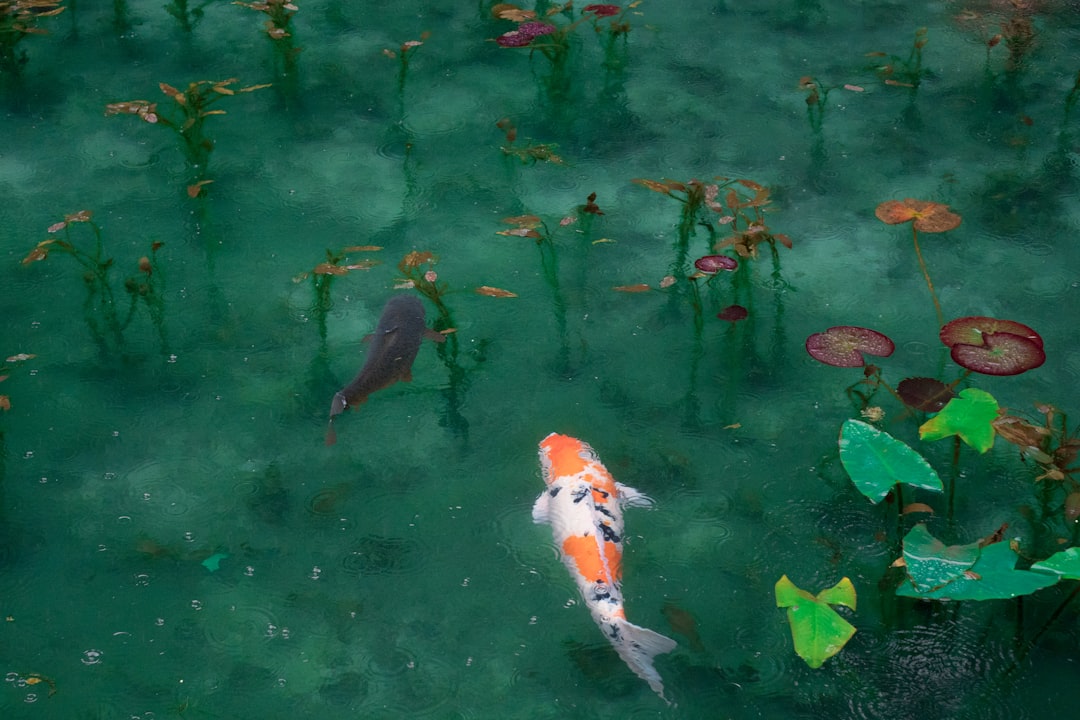
The most famous, the clearest, and the deepest — around eight metres — with trout visible suspended at depth and aquatic plants moving in the current.
It sits near the centre and it is the busiest. The clarity is the point: on a still morning the surface disappears entirely and the pond looks like a hole in the ground with fish hanging in the air.
Photograph it from the shaded side. Direct sun on the surface produces reflections that destroy the effect.
Deguchi-ike
The largest of the eight, and set apart from the main cluster on the far side of the village.
Almost nobody walks the extra few minutes to reach it. It is surrounded by fields rather than shops, it has a view toward Fuji, and on a normal day you may have it entirely to yourself.
If you have twenty minutes and want to understand what this place was like before the coaches, go here.
The Others
The remaining ponds — including Sokonuke-ike, Choshi-ike, Nigori-ike, Kagami-ike, Kama-ike, and Okama-ike — range from substantial to very small, and a couple are little more than a spring in a stone surround beside a house.
Kagami-ike means mirror pond and reflects Fuji on a still day. Sokonuke-ike is beside the Hannoki Bayashi open-air museum area, which is separately ticketed and includes reconstructed thatched buildings and farm implements.
Walking all eight takes about an hour at a slow pace. A printed map is available at the village and there are signposts, though the smaller ponds are genuinely easy to miss.
Photographing Fuji Here
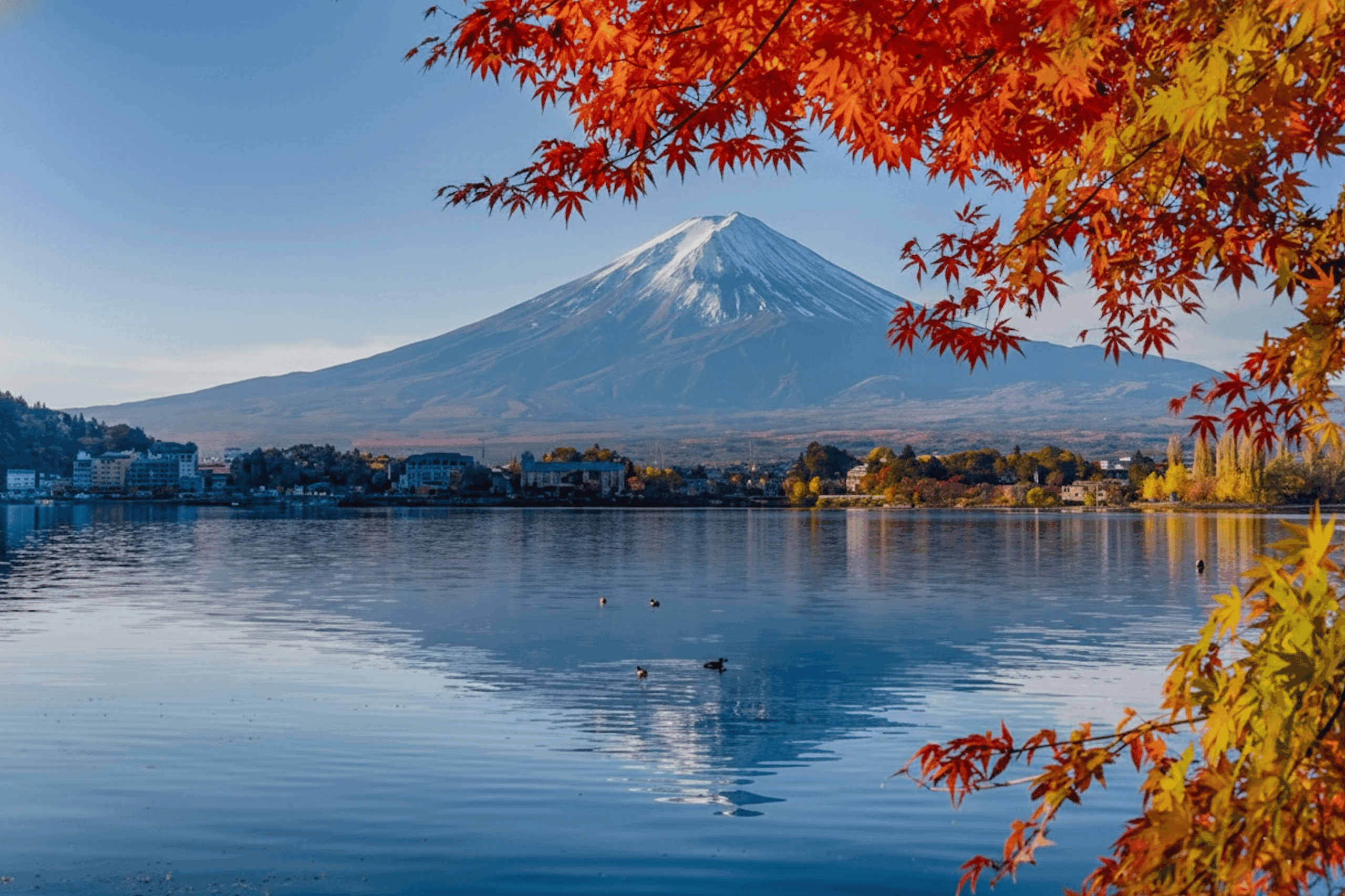
The composition that brings people here is Fuji behind thatched roofs and a waterwheel, and it is achievable on the right day.
The Thatched Houses
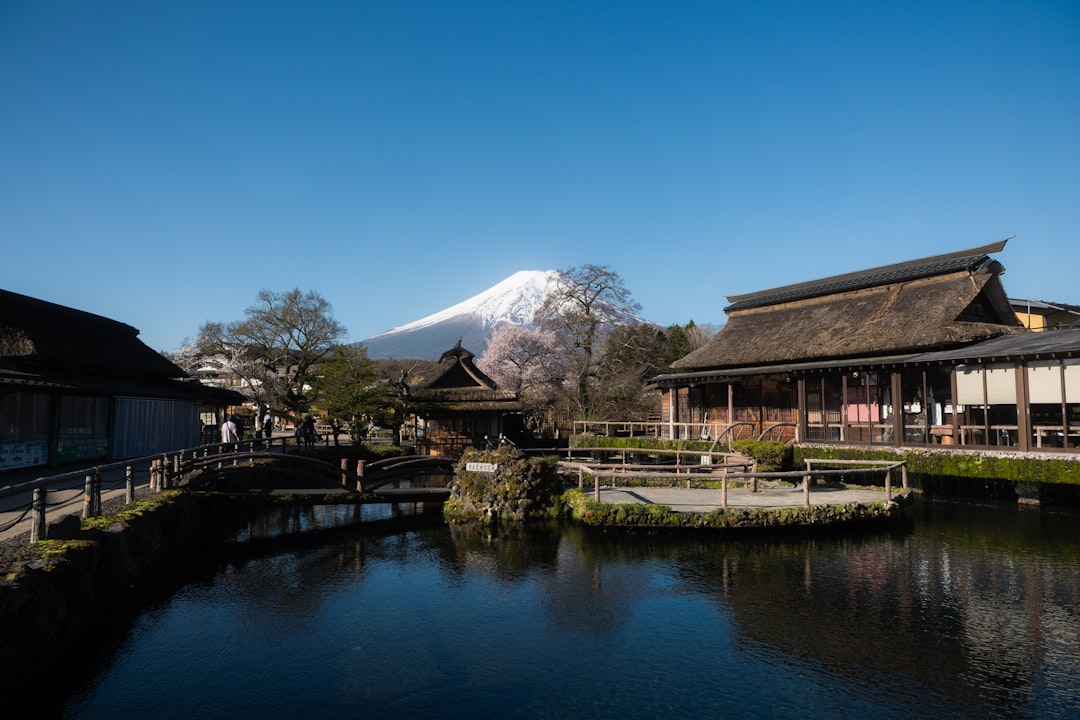
Several kayabuki thatched farmhouses survive in the village, some reconstructed as part of the open-air museum area, and they sit directly under the mountain.
The classic frame places a thatched roof in the middle distance with Fuji filling the background. It works from a handful of specific positions and you will see other photographers standing in them.
Late autumn and winter are strongest: clear air, snow on the cone, and the fields bare rather than green.
The Waterwheels
Wooden waterwheels turn on the streams running through the village, and the reflections in the channels around them are the other standard shot.
Early morning gives still water. By mid-morning enough people are walking the banks that the surface is disturbed.
When Fuji Is Actually Out
The mountain is visible far less often than photographs suggest. Winter mornings — December through February — offer the best odds by a wide margin, with clear dry air and snow cover. Summer is hazy and Fuji can be invisible for a week.
Cloud typically builds from late morning. If you arrive at seven and the mountain is out, photograph it immediately rather than after breakfast.
Treat a clear Fuji as luck. The ponds themselves are worth the trip without it, and the village in mist has a quality of its own.
Food and Water
The souvenir street is what it is. Three things on it are genuinely worth stopping for.
Kusa Mochi
Rice cake made with mugwort, which turns it green and gives it a faintly bitter herbal edge, filled with sweet red bean and grilled over charcoal until the outside blisters.
Sold hot from stalls along the main path for a few hundred yen. Eat it standing, immediately. It does not survive being carried.
This is a genuine local speciality rather than a tourist invention, and the grilled version is considerably better than the packaged ones sold in boxes.
Grilled Trout
Whole freshwater trout, salted, skewered, and grilled upright over charcoal in the traditional manner.
The fish are raised in the spring water, which is the connection to the place. Eaten whole off the skewer, head and all if you want.
Look for the stalls with fish actually cooking rather than sitting under a heat lamp.
Filling Your Bottle
Public taps dispense the spring water free. Bring an empty bottle and use them.
There is a limit on how much you may take — this is drinking water for visitors rather than a commercial supply, and signs ask people not to fill large containers. Some visitors turn up with twenty-litre jerrycans, which is what the signs are about.
The water is cold and noticeably soft. Making tea or coffee with it is the local claim to fame.
Expert Tip
Do not touch the water in the ponds, and do not put your feet in. The signs are not decorative — the ponds are a designated Natural Monument and part of a World Heritage site, coins thrown in are removed by hand, and the aquatic plants that make the water look the way it does are damaged by disturbance. Visitors do this constantly and staff spend real time asking them to stop. The free taps exist precisely so that you can touch the water somewhere it does no harm.
Getting There and When to Go
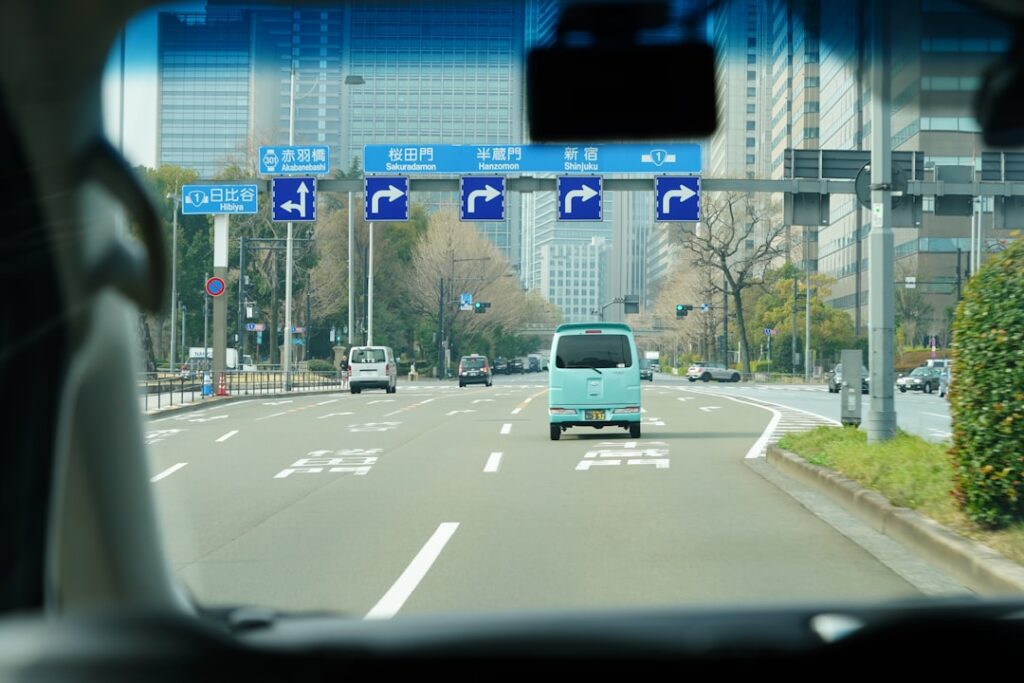
There is no train. Everything runs on buses or a car.
From Kawaguchiko
Fujikyu buses run from Kawaguchiko Station to Oshino Hakkai in roughly twenty-five to thirty minutes. This is the standard route and services are reasonably frequent through the day.
Check the return times when you arrive. Frequency drops in the late afternoon and the last useful service is earlier than you expect, particularly in winter.
The Fuji Five Lakes area has various day passes covering these buses; whether one saves money depends on how much you move around.
From Tokyo
Highway coaches from Shinjuku Expressway Bus Terminal serve the Fuji Five Lakes area, with some services stopping at or near Oshino Hakkai directly. Journey time is around two to two and a half hours depending on traffic.
Weekend traffic on the Chuo Expressway is genuinely bad and can add an hour or more. Book a morning departure.
By train, take the JR Chuo line to Otsuki and the Fujikyu Railway to Kawaguchiko, then the bus. It is slower than the coach and less affected by traffic.
By Car
The most flexible option, and the one that makes an early or late arrival possible. Parking in the village is limited and paid, and it fills during peak hours.
Renting a car at Kawaguchiko or driving from Tokyo opens up the whole Fuji Five Lakes area, which is otherwise awkward to move around.
What to Combine It With
Oshino Hakkai takes an hour to ninety minutes. It is not a day.
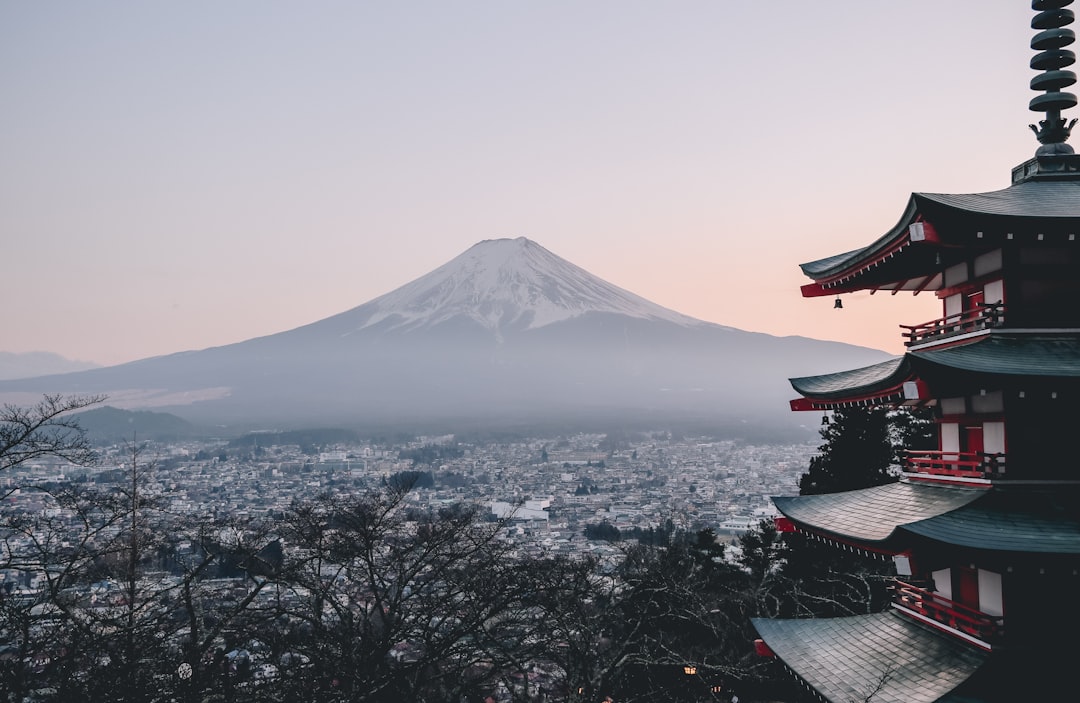
Lake Yamanaka is ten minutes away and is the largest of the five lakes, with good Fuji views and far fewer visitors than Kawaguchiko. Fuji-Q Highland, the amusement park, is close by for anyone travelling with teenagers. The Chureito Pagoda at Arakurayama — the five-storey pagoda with Fuji behind it that appears on every poster of Japan — is about twenty-five minutes away and is best in the early morning.
The strongest single-day shape is Chureito at sunrise, Oshino Hakkai before nine, and Lake Yamanaka or Kawaguchiko for the afternoon.
Oshino Hakkai: Frequently Asked Questions
Is there an entrance fee?
Walking the village and seeing most of the eight ponds is free. There is no gate and no ticket for the area as a whole. Two things do charge: the Hannoki Bayashi open-air museum area, which contains reconstructed thatched buildings and one of the ponds, and the viewing of the deep artificial pond in the central plaza. Both are modest. Parking is paid. A visitor who walks the free areas early in the morning spends nothing at all.
How long does it take to walk all eight ponds?
About an hour at an unhurried pace, longer if you stop to eat. The ponds are spread across a compact area on flat ground, and the walking is easy. Most visitors see three or four, because the others are unsignposted enough to require actually following a map. If you have only thirty minutes, see Waku-ike and walk out to Deguchi-ike, and skip the plaza.
Can I swim or paddle in the ponds?
No. Entering the water is prohibited, including paddling and putting your hands in. The ponds are a designated National Natural Monument and part of the Mount Fuji World Heritage site, and the aquatic vegetation that produces the visual effect is fragile. The water is also around 12 degrees year-round, which discourages most people on its own. Free taps at several points let you drink the same water and fill a bottle, which is the intended way to interact with it.
Related Tours
Conclusion
Everything here depends on the clock. Between ten and three this is a coach stop with a souvenir street; before nine it is a village where snowmelt from a volcano surfaces in ponds you can see the bottom of.
If you are staying at Kawaguchiko, take the first bus. If you are driving up from Tokyo, leave before five. The extra effort buys a completely different place, and it is the only way to see this one properly.
Plan Your Japan Trip with Local Experts
Our team has guided 40,000+ travelers across Japan. Tell us about your trip and we’ll get back to you within 24 hours.