In this article:
- Which Tennoji Temple Are You Looking For?
- Why Shitennoji Matters: 593 AD and a Layout Older Than Kyoto
- What to See: From the Stone Torii to the Pure Land Garden
- Planning Your Visit: Tickets, Hours, Markets, Getting There
- Tennoji Temple: Frequently Asked Questions
Introduction
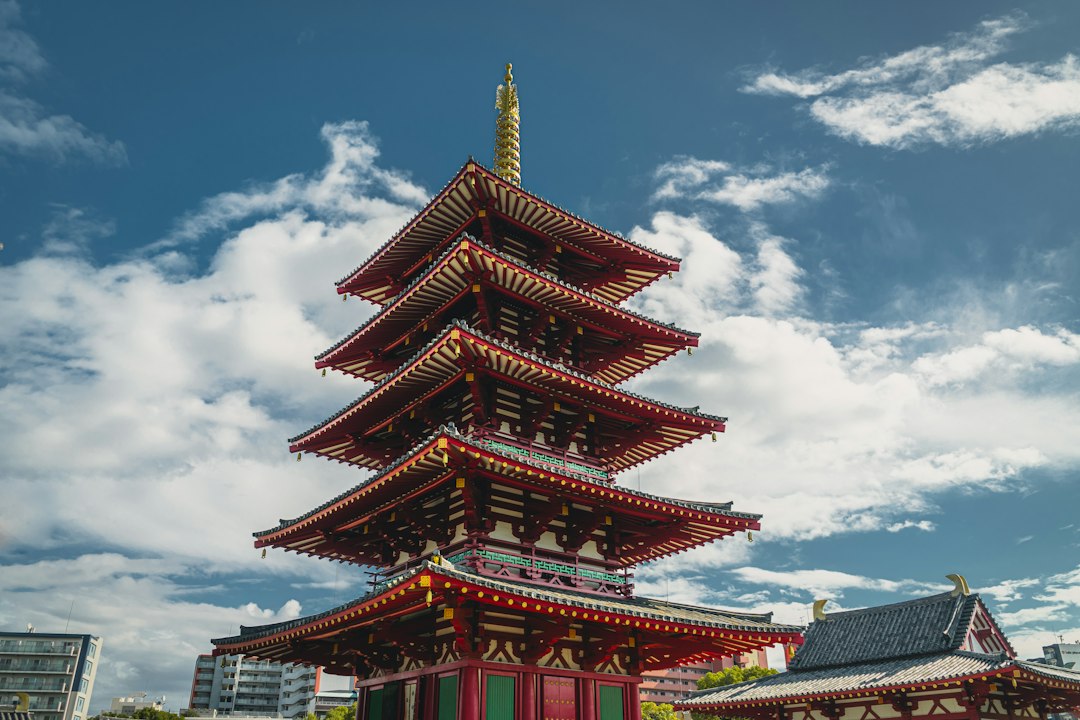
Ask someone in Osaka for Tennoji temple and they will point you north of Tennoji Station, toward a vermilion pagoda rising over low houses. The temple is Shitennoji. The district, the station, the ward and the park all take their name from it, and it has stood on this rise since 593.
That date is the reason to come. Shitennoji predates Kyoto as a capital by two centuries and Nara by more than one. It was among the first Buddhist temples built in Japan with state backing, and the plan of its central precinct is still laid out the way it was in the sixth century, even though almost every building you see is a postwar reconstruction.
We bring travelers here because it explains things the more famous Kyoto temples assume you already know. Below we cover the name confusion first, then the history, the specific things worth looking at, and the practical details of tickets, market days and getting there.
Which Tennoji Temple Are You Looking For?
Two different temples answer to this name in English, and search results mix them freely.
Shitennoji in Osaka: The Temple That Named a District
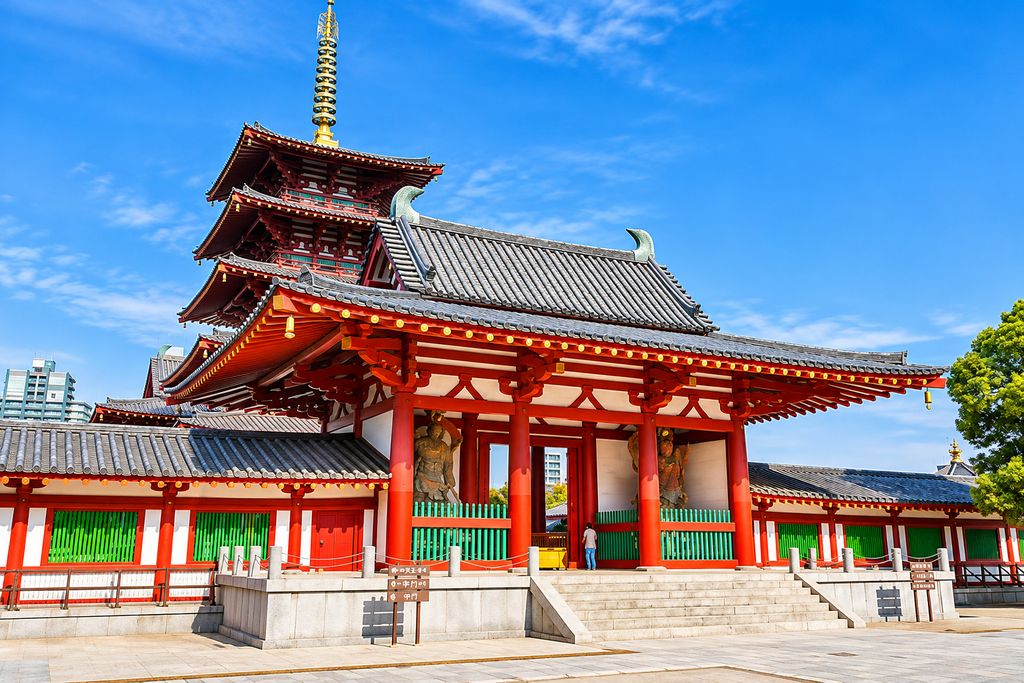
Shitennoji means “Temple of the Four Heavenly Kings.” Over centuries the shortened form, Tennoji, attached itself to the surrounding neighborhood, so today a train announcement for Tennoji refers to the station and the district rather than the temple. The temple itself sits about twelve minutes’ walk north of that station.
This is the one most travelers mean. It is large, historically central, and sits in the same part of southern Osaka as Shinsekai, Tennoji Park and the Tenshiba lawns.
Tennoji in Yanaka, Tokyo: The Bronze Buddha Beside the Cemetery
Tokyo has its own Tennoji, a Tendai temple in Yanaka, a short walk from the south exit of Nippori Station. It is far smaller, and its best-known feature is a seated bronze Buddha dating from 1690, set in a quiet garden at the edge of Yanaka Cemetery.
The Yanaka temple is worth an hour if you are walking the old Yanesen neighborhoods anyway. It is not a destination in the way Shitennoji is. If your trip is in Osaka, the rest of this article is for you.
Why Shitennoji Matters: 593 AD and a Layout Older Than Kyoto
Most temples in Japan are old buildings. Shitennoji is an old idea, rebuilt repeatedly in the same shape, and that distinction changes how you should look at it.
Prince Shotoku’s Vow to the Four Heavenly Kings
According to the temple’s own history, Prince Shotoku vowed to build a temple to the Four Heavenly Kings, the guardian deities of the Buddhist world, if his side won a battle over whether Buddhism would be accepted at court. It won, and the temple was founded in 593, the first year of Empress Suiko’s reign.
Shotoku remains the figure at the center of the place. Halls are dedicated to him, monthly observances mark the anniversary of his death, and you will see his image more often than you see the Four Kings themselves.
The temple’s builders are part of the story too. Kongo Gumi, a construction firm widely cited as the oldest continuously operating company in the world, traces its origin to a carpenter from the Korean peninsula said to have been brought over to build Shitennoji. The founding date of 578 is traditional rather than documented, but the firm still works on temples and shrines today.
The Shitennoji-Style Layout: One Straight Line, North to South
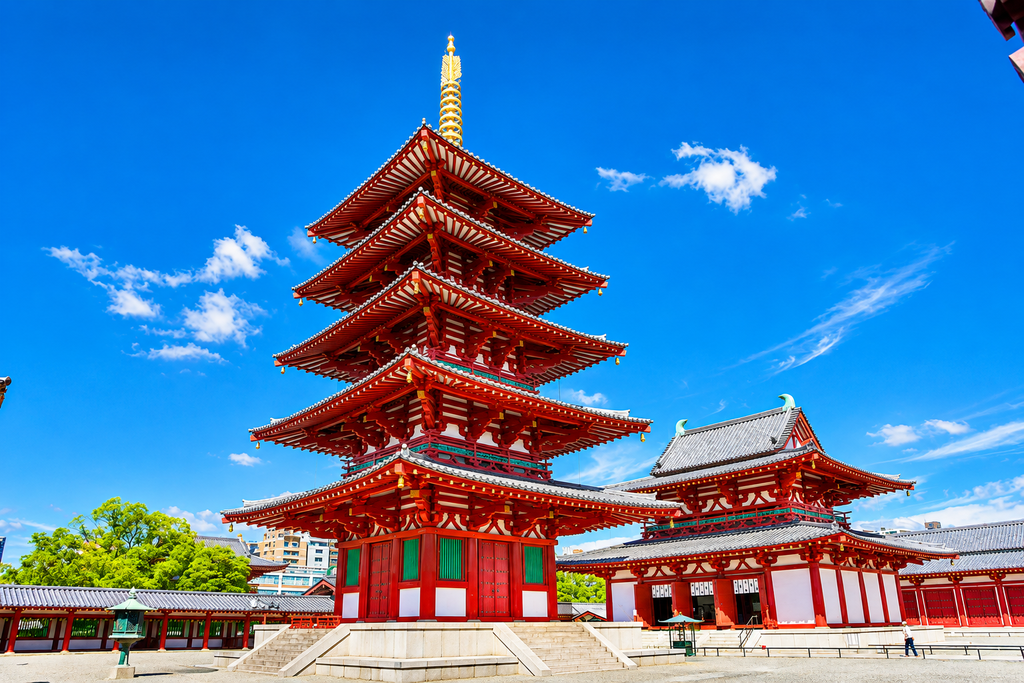
Walk into the central precinct and look along its axis. The middle gate, the five-story pagoda, the Golden Hall and the Lecture Hall stand in a single straight line from south to north, enclosed by a roofed corridor.
Japanese architectural historians call this the Shitennoji-style layout, and it is one of the oldest temple plans in the country. Later temples rearranged these elements, placing the pagoda off to one side or doubling it. Here you see the arrangement before anyone changed it.
That is why we suggest standing at the south end of the corridor for a minute before going in. The whole logic of the precinct is visible from one spot, which is rarely true at the sprawling Kyoto temples.
Burned, Rebuilt, Rebuilt Again: What Is Original and What Is Not
Be clear-eyed about what you are looking at. The 1934 Muroto Typhoon wrecked the pagoda, which was rebuilt in 1940. The air raids on Osaka in 1945 then burned almost the entire precinct, and the central buildings were reconstructed in 1963.
A few structures survived the war, including the Rokujido hall. Still, the pagoda and Golden Hall are modern. Some visitors find this disappointing. We think it misses the point: the plan, the alignment and the continuity of worship are the old things here, and they are intact.
Expert Tip
Go to the south end of the central precinct corridor before you buy anything at the ticket window. From just outside, you can see the gate, pagoda and Golden Hall stacked in one line, which is the single most useful thing to understand about Shitennoji. It costs nothing, and it makes the paid areas far more legible once you are inside.
What to See: From the Stone Torii to the Pure Land Garden
The grounds are large and open, and most of them are free. Here is where we would spend your time, roughly in the order we walk it.
The West Gate Stone Torii and the Equinox Sunset
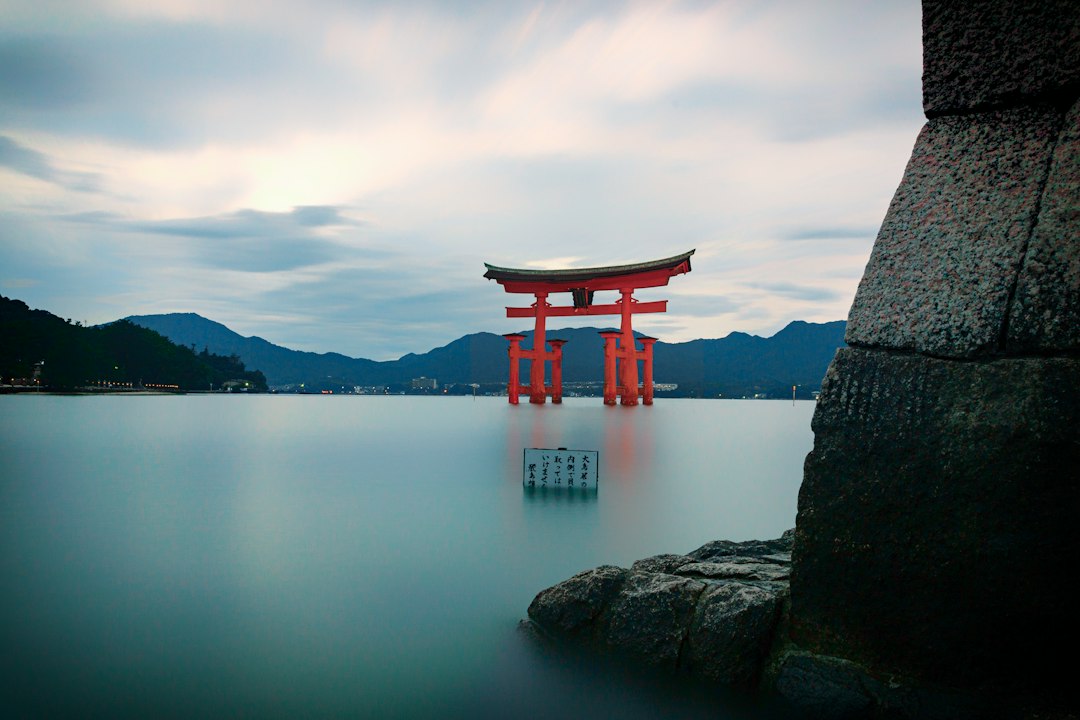
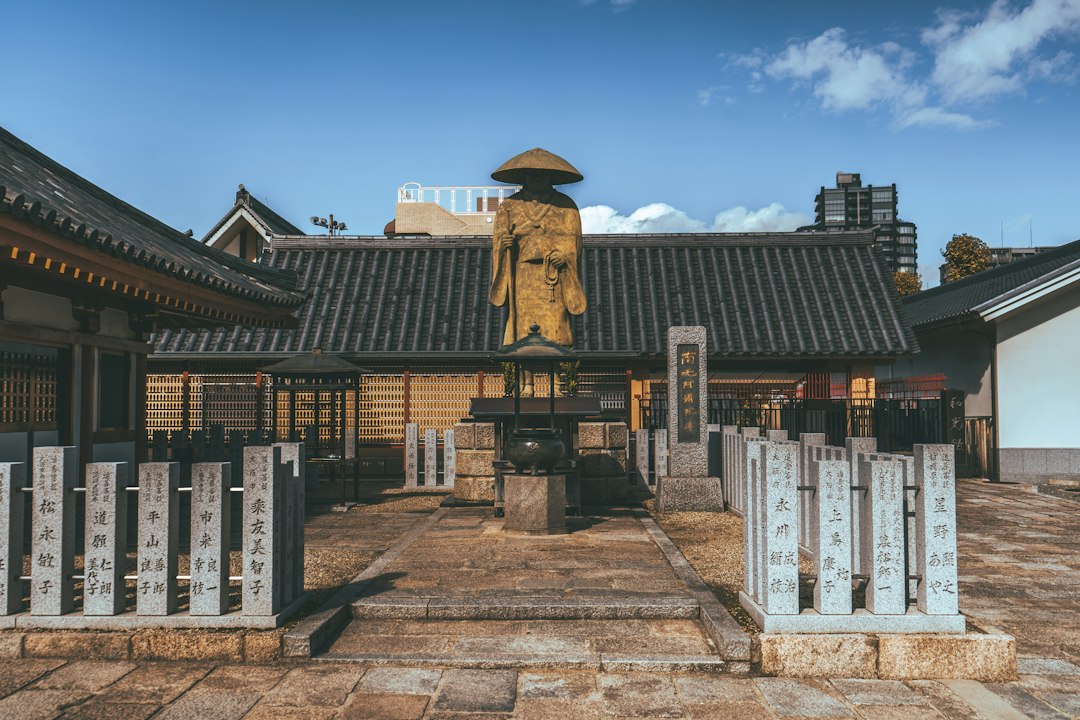
Enter from the west if you can. The gate there is a stone torii, the kind of gateway you normally associate with Shinto shrines, standing at the entrance to a Buddhist temple. The current stone version dates from 1294 and is designated an Important Cultural Property.
Its meaning is tied to direction. In Pure Land belief, paradise lies to the west, and the torii was understood as the eastern gate to that paradise. On the spring and autumn equinoxes, the sun sets through the gate, and people gather to watch it as a form of meditation on the Pure Land. For travelers confused about the difference between a shrine and a temple, this gate is a useful lesson in how blurred the line once was. Our guide to shrines versus temples in Japan covers the wider picture.
The Central Precinct: Pagoda, Golden Hall, Lecture Hall
The paid central precinct is the heart of the visit. Inside the corridor you have the five-story pagoda, the Golden Hall and the Lecture Hall in their line. According to the temple, relics of the Buddha were placed in the pagoda’s foundation stone when it was first built.
The pagoda is normally entered from its north side, and the south face houses a mural and wooden statues of the Four Heavenly Kings. The Golden Hall holds the temple’s principal image. Photography rules vary from hall to hall, so look for signs at each entrance rather than assuming.
The corridor itself deserves slow walking. Its long, shaded run is where the precinct feels most like a sixth-century plan rather than a 1960s building site.
Kameido Hall and the Floating Prayer Tablets
Kameido is the hall we find most moving, and the one most visitors pass without stopping. Spring water from beneath the main hall flows into a stone basin here, and people float thin wooden memorial tablets, called kyogi, on it after a rite for the dead.
It is believed that a tablet carried away on the water helps the person it honors reach paradise. You will see families doing this quietly on an ordinary weekday. Watch from a respectful distance, and do not photograph people mid-ritual.
Gokuraku Jodo Garden and the Treasure House
The garden, whose name translates as the Garden of the Pure Land of Paradise, is a separate paid area. It is a stroll garden built around ponds and streams, and in autumn it is one of the calmer places in southern Osaka to see the leaves turn.
The Treasure House holds rotating exhibitions of the temple’s art and objects. It is worth it if you have a specific interest in Buddhist art. For a first visit with limited time, we would choose the central precinct and the garden over the Treasure House.
Planning Your Visit: Tickets, Hours, Markets, Getting There
Shitennoji is easy to visit and easy to underestimate. Two hours is a comfortable minimum if you want the central precinct and the garden without rushing.
Three Paid Areas, One Free Precinct
The outer grounds are free, and the temple’s gates stay open around the clock, so you can walk through and pray outside the halls at any hour. Three areas charge admission. For adults, the central precinct is ¥500, the garden is ¥300 and the Treasure House is ¥500. High school students pay less, and younger children enter the central precinct and Treasure House free.
From April to September, the central precinct and garden open from 8:30 to 16:30. From October to March they close at 16:00. On the 21st of each month and during major services, they open earlier at 8:00. The Treasure House keeps its own hours and stops admitting visitors 20 minutes before closing.
Our advice is to arrive at opening on a weekday. The light on the pagoda is softer in the morning, and the central precinct is at its quietest before the tour groups arrive.
The 21st and 22nd: Market Days
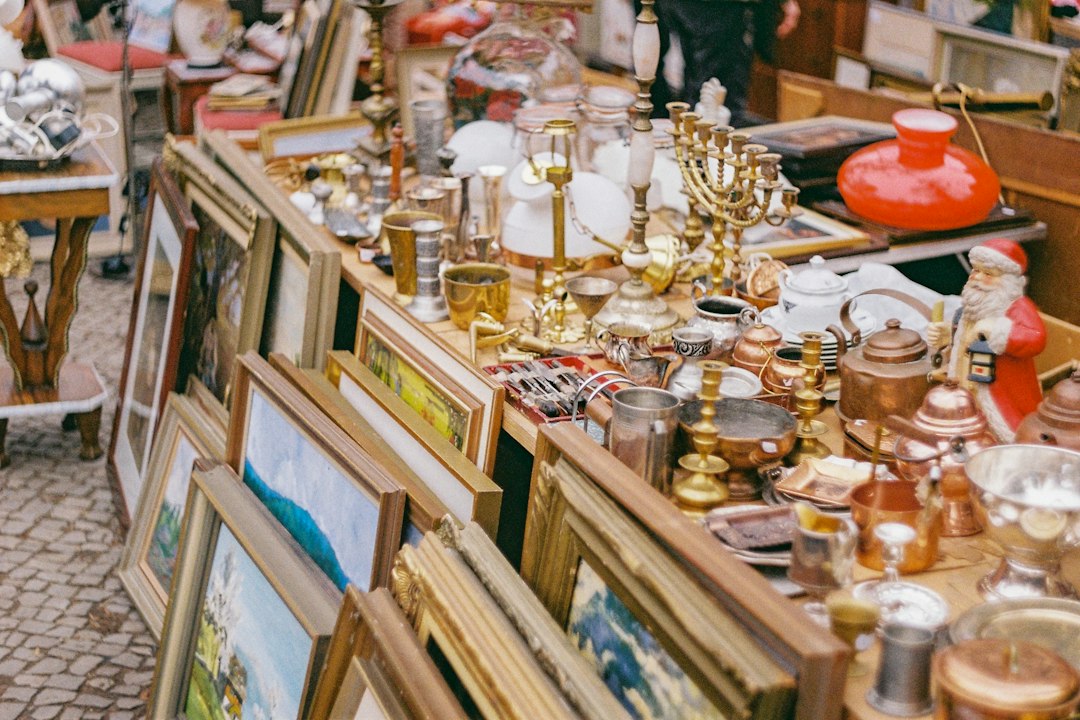
On the 21st and 22nd of every month, the grounds fill with stalls. The 21st honors Kobo Daishi, the founder of Shingon Buddhism, and the 22nd marks the anniversary of Prince Shotoku’s death. Both days bring an antique and secondhand market of several hundred stalls, with old ceramics, vintage kimono, tools and food. The 21st is the larger of the two.
The central precinct is free on both days, which is part of why they are crowded. If you like browsing, come on the 21st and arrive early. If you want the temple itself in quiet, avoid both dates entirely. Bring cash for the stalls.
Expert Tip
If you are visiting in March or September, check the dates of the equinox week. The central precinct is free during the spring and autumn equinox services, and the sunset through the west gate torii is the reason locals come. Arrive at the west gate well before sunset, as the best standing spots go early.
Getting There and Fitting It Into a Tennoji Day
The closest station is Shitennoji-mae Yuhigaoka on the Osaka Metro Tanimachi Line, about five minutes’ walk south to the temple. From Tennoji Station on the JR Loop Line or the Midosuji and Tanimachi subway lines, it is about twelve minutes on foot heading north. Kintetsu’s Osaka-Abenobashi Station is about fourteen minutes away. An IC card covers all of these lines.
Shitennoji works best as the first stop of a southern Osaka day rather than a standalone trip. Tennoji Park and the Tenshiba lawns are a short walk south, and Shinsekai, with its retro streets under Tsutenkaku tower, is just beyond them. Our three-day Osaka itinerary shows how this area fits alongside the castle and Namba.
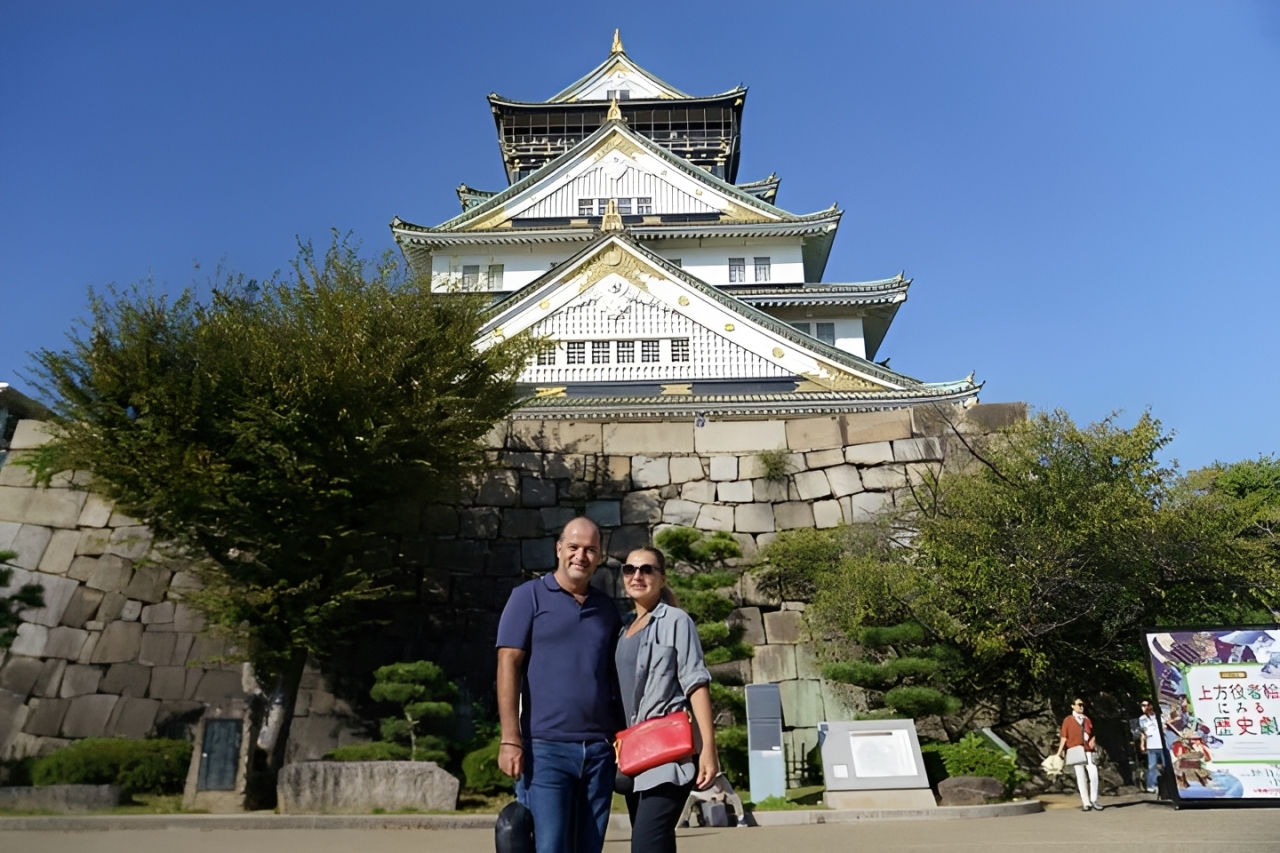
On our Osaka Highlights walking tour, travelers ride the subway south from Osaka Castle to Tennoji Park, and the temple sits close enough to the route that it pairs naturally with a morning at the castle. Seeing the 1930s castle tower and the 1963 pagoda on the same day is a useful way to think about how Osaka rebuilds its landmarks. Our guide to Osaka Castle covers that half of the story.
Tennoji Temple: Frequently Asked Questions
Is Shitennoji the same as Tennoji Temple?
In Osaka, yes. Tennoji is the shortened form of Shitennoji, and the name spread from the temple to the surrounding district and station. The only other common use of the name is Tennoji in Yanaka, Tokyo, which is a separate and much smaller Tendai temple known for its seated bronze Buddha from 1690.
How long should I spend at Shitennoji?
Allow about two hours to walk the outer grounds, the central precinct and the garden without hurrying. Add another 45 minutes if you want the Treasure House. On the 21st or 22nd, when the market is running, half a day disappears easily.
Is Shitennoji worth visiting if the buildings are reconstructions?
We think so. The pagoda and Golden Hall date from the twentieth century, but the layout of the central precinct follows one of the oldest temple plans in Japan, and worship here has continued since the sixth century. The stone torii from 1294 and the Kameido hall, where people still float memorial tablets, are the parts that feel oldest in practice.
Related Tours

Conclusion
Come to Shitennoji early, enter by the west gate, and give the central precinct your attention before the garden. The buildings are new, but the order in which they stand is not, and that order is the most direct link you will find anywhere in Osaka to the moment Buddhism took hold in Japan.
Check the calendar before you go. The 21st and 22nd turn the grounds into a market and make the central precinct free, while the equinox weeks bring the sunset through the torii. Pick one of those days if you want the temple at its liveliest, or a plain weekday morning if you want it to yourself. Then walk south through Tennoji Park and let the rest of the day unfold from there.
Plan Your Japan Trip with Local Experts
Our team has guided 40,000+ travelers across Japan. Tell us about your trip and we’ll get back to you within 24 hours.