In this article:
- How to Shape Two Days in Kyoto
- Day 1: Kiyomizu-dera, Fushimi Inari, and Gion
- Day 2: Arashiyama in the Morning, Kinkaku-ji in the Afternoon
- Adjusting Two Days in Kyoto for November
- Kyoto Itinerary for 2 Days: Frequently Asked Questions
Introduction
The trouble with most attempts at a Kyoto itinerary for 2 days is not the list of places. It is the clock. Somewhere around ten in the morning, the coach tours arrive. School groups step off their buses. The streets that looked empty in the photographs fill from one side to the other.
Kyoto’s famous sites are small, and the visitor numbers are not. Kiyomizu-dera at half past six and Kiyomizu-dera at eleven are the same buildings and a completely different experience. The same holds for the bamboo grove in Arashiyama and the lower gates of Fushimi Inari. A good two days here depends less on how much you see than on when you arrive.
What follows is the plan we would build for a first visit. Spend one day east and one day west. Start early and slow down in the afternoon. It works in any season. In November, the maples turn and the city is at its busiest. The plan needs a few adjustments, which we cover near the end.
How to Shape Two Days in Kyoto
Split the city by geography, and cross it no more than once a day.
East One Day, West the Next
Kyoto’s major sights sit in clusters. Higashiyama — Kiyomizu-dera, the stone lanes of Sannenzaka and Ninenzaka, Yasaka Shrine, Gion — runs along the foot of the eastern hills. Fushimi Inari lies to the south-east, a short train ride from Gion. Arashiyama and Kinkaku-ji are both on the western side, and they pair naturally in a single day.
Itineraries that put Fushimi Inari and Arashiyama on the same morning spend most of that morning on trains. We would rather give each half of the city a full day and see three or four places properly than six in passing. That number is not arbitrary. It is roughly what a day holds once you account for lunch, transfers, and the time it takes to actually stand still in a garden.
Where to Stay: Downtown Over Kyoto Station
For two nights, stay downtown, around Shijo-Kawaramachi or Karasuma. Kyoto Station is convenient for arriving and leaving, and that is most of what it offers. Downtown puts Gion, Pontocho and Nishiki Market within walking distance, which matters on an itinerary where the evenings are part of the plan.
It also puts you close to where the early mornings begin. The Keihan line south to Fushimi Inari starts across the river at Gion-Shijo, and the meeting points our guides use in central Kyoto are a few minutes’ walk from Shijo-Kawaramachi.
Getting Around: Trains, Feet, and One Taxi
Kyoto’s city buses reach everything, and they are the least pleasant way to move between major sights at busy hours. The routes serving Kiyomizu-dera and Kinkaku-ji run full for much of the day, and during the autumn peak they can be too crowded to board comfortably.
Trains and walking handle most of this itinerary. A taxi fills the one real gap, between Arashiyama and Kinkaku-ji, where no train line gives you a sensible connection. Carry an IC card for fares and cash for temple admissions and small shops.
Expert Tip
Buy breakfast at a convenience store the night before your first day. At six in the morning every shop on the Higashiyama slopes is still shuttered, and nothing near Kiyomizu-dera serves food at that hour. A rice ball and a can of hot coffee on a bench below the temple gate is a better start than it sounds, and it keeps you ahead of the crowds instead of hunting for a cafe.

Day 1: Kiyomizu-dera, Fushimi Inari, and Gion
The first day starts before the city does.
We put Kiyomizu-dera first rather than Fushimi Inari, which is the order many itineraries suggest. The reasoning is simple: the crowds at Fushimi Inari can be escaped by climbing, and the crowds at Kiyomizu-dera cannot be escaped at all once they arrive.
6:30am: Kiyomizu-dera and the Higashiyama Slopes
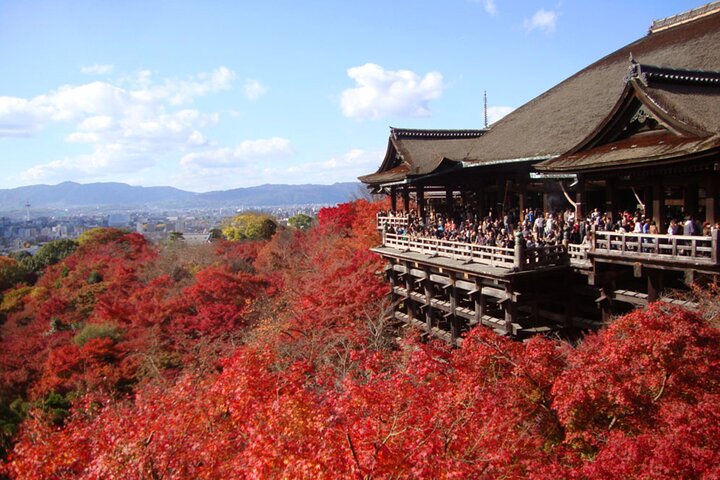
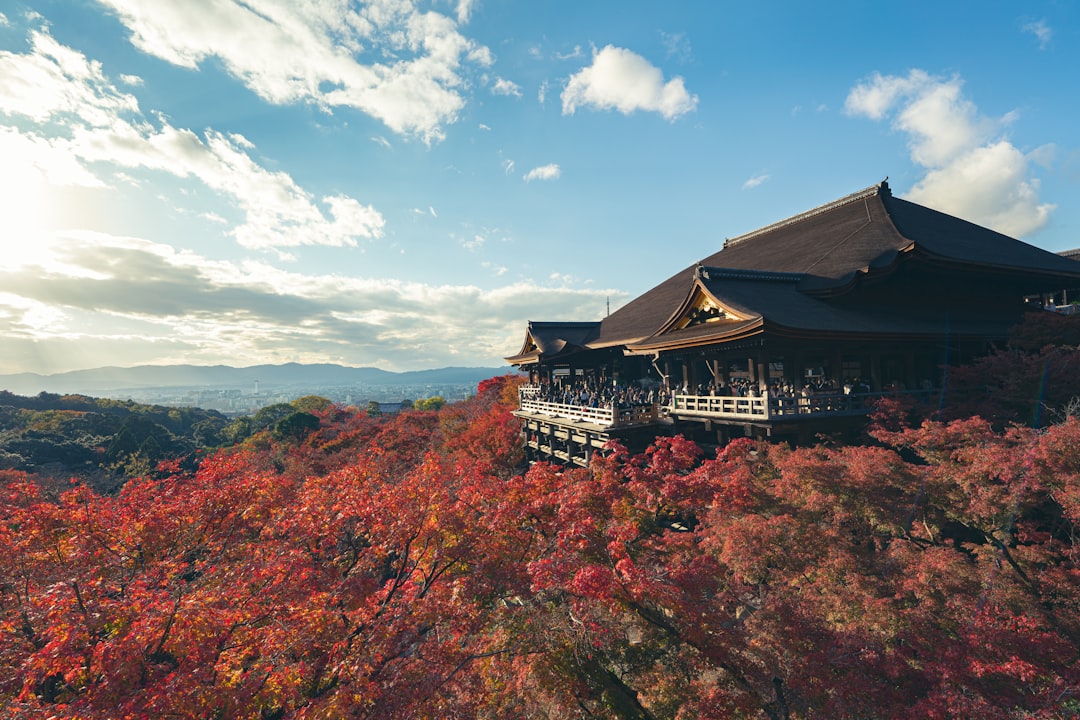
Kiyomizu-dera opens its gates at 6am, hours before most visitors think to come. Arriving by half past six, you climb Kiyomizu-zaka between shuttered shopfronts and reach the great wooden stage with the city still grey below it and room at the railing. The air at that hour smells of wet cedar and incense from the main hall.
Walk down afterwards by Sannenzaka and Ninenzaka, the stepped stone lanes that most photographs of old Kyoto are taken on. Before eight they are close to empty, and the only sound is shop owners sweeping their thresholds. Continue north past the Yasaka pagoda to Yasaka Shrine, and you have seen the core of Higashiyama before the first coach has parked.
Mid-Morning: Fushimi Inari, Above the First Gates
From Gion-Shijo, the Keihan line runs south to Fushimi-Inari station in a handful of stops. By the time you arrive, around ten, the lower gates will be crowded. This is the one place on the first day where a busy hour costs you less than it seems.
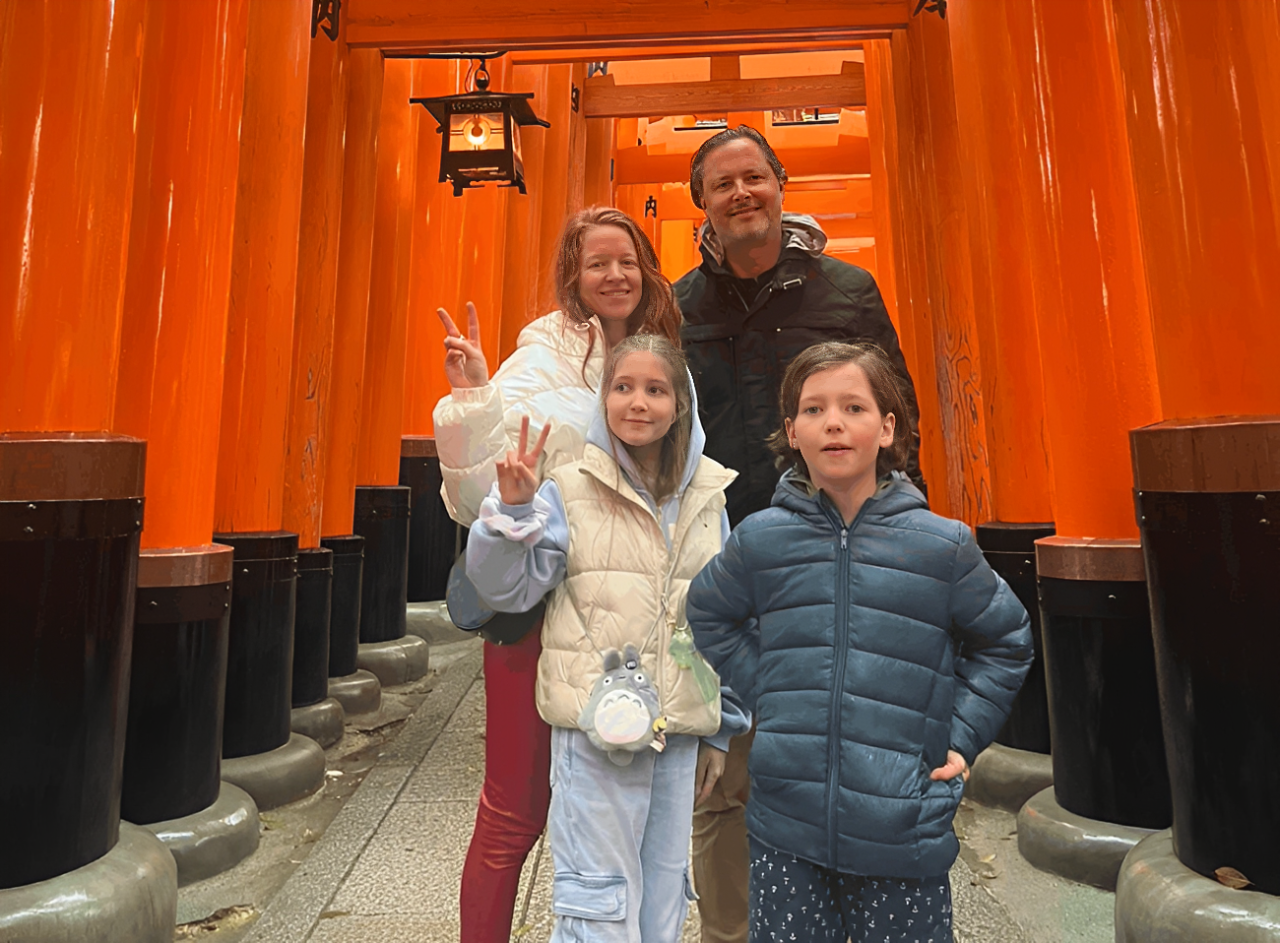
Crowds at Fushimi Inari are thickest at the bottom. Most visitors walk the first stretch of vermilion torii, take their photographs, and turn back. Keep climbing toward the Yotsutsuji intersection, roughly halfway up the mountain, and the path thins steadily; above the lower shrines you can have long stretches of gates to yourself, the light coming through them in orange bands.
The full loop to the summit is a proper hike. Turning back at Yotsutsuji gives you most of the experience for a fraction of the effort, and on a two-day trip that is the right trade. Our guide to the Fushimi Inari hike covers the routes and timings in more detail.
Afternoon: Nishiki Market and a Proper Rest
Take the train back north for lunch downtown. Nishiki Market, the covered food street one block north of Shijo, is the obvious choice and a good one if you treat it correctly. The market asks visitors not to eat while walking; buy at a stall, eat in front of it or inside, and move on. The arcade is narrow, and the rule makes it more pleasant for everyone in it.
Then go back to your hotel for two hours. It is the part of a Kyoto itinerary people skip, and the one we would argue for hardest. By mid-afternoon you have been on your feet since six, the light is flat, and the major sights are at their most crowded. Rest now and the evening becomes something you enjoy rather than endure.
Evening: Gion After Dark
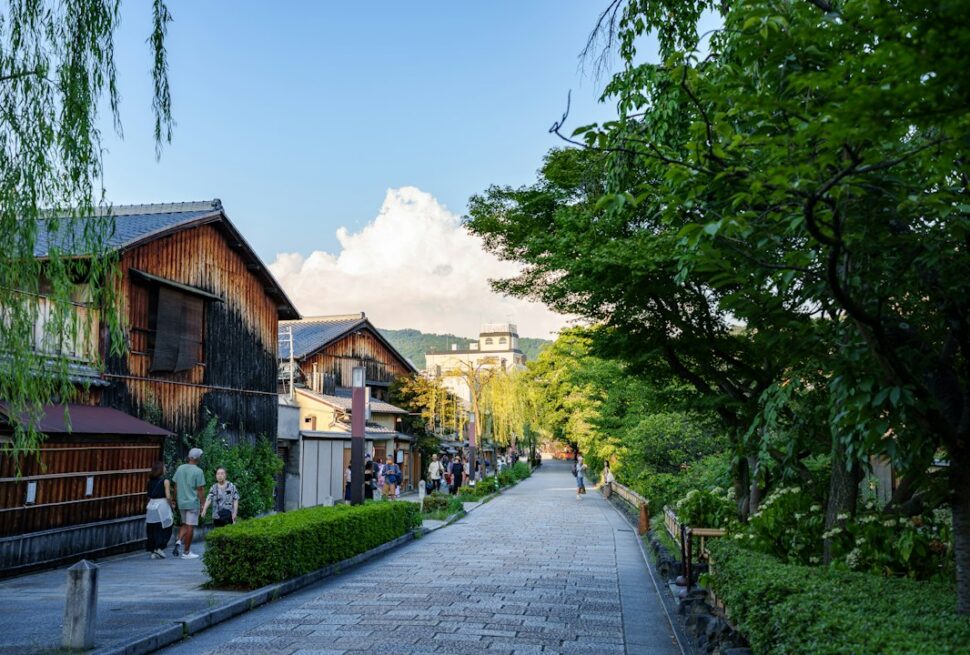
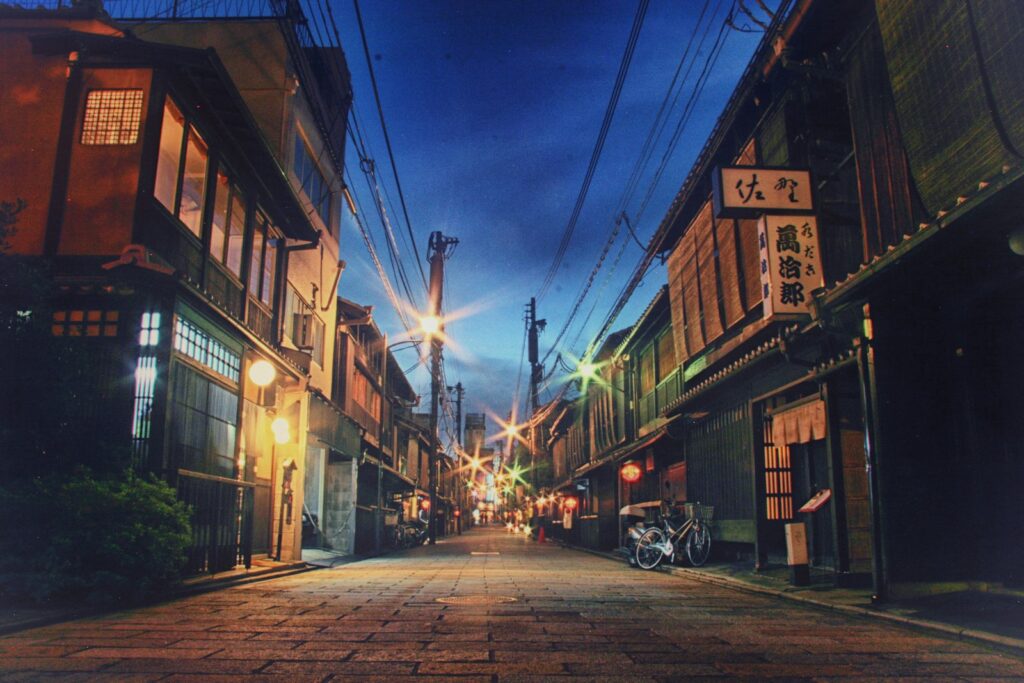
Gion is at its most atmospheric in the hour after dusk, when the lanterns come on along Hanamikoji and the wooden teahouse facades lose their detail in the dark. Start at the Shirakawa canal, where willows hang low over the water, then drift through the lanes around Hanamikoji.
Two points of etiquette apply here. Many of the narrow lanes off Hanamikoji are private roads, and the local residents’ council has banned photography on them, with signs warning of a ¥10,000 fine. If you see a geiko or maiko walking to an appointment, step aside and let them pass. They are on their way to work.
Day 2: Arashiyama in the Morning, Kinkaku-ji in the Afternoon
The second day moves west, and it follows the same rule: the most crowded place goes first.
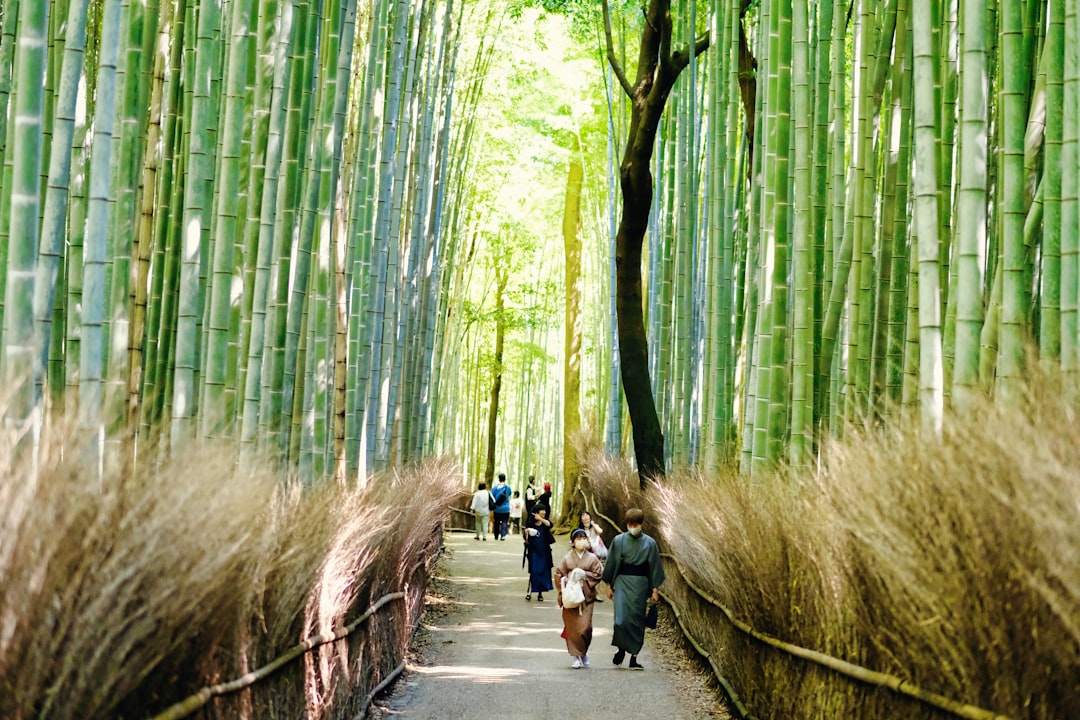
Early: Tenryu-ji and the Bamboo Grove
Take the JR Sagano line or the Randen tram to Arashiyama and aim to arrive around 8:15. The district is busiest between ten and three, and an early start is the only thing that changes that.
Most visitors walk straight into the bamboo and leave with nothing else. We prefer to begin at Tenryu-ji, which opens at 8:30. Its garden was laid out in the fourteenth century around a pond set against the Arashiyama hills, and it has kept its shape ever since; garden admission is ¥500. The temple’s north gate opens onto the bamboo grove, so you walk from the garden directly into the stalks, with the garden as a frame for everything after it.
This is also the order our Arashiyama walking tour follows — Tenryu-ji, then the grove, then Nonomiya Shrine and the river — because it puts the grove at the least crowded point of the morning. That said, the grove is never empty after the first hour, and anyone promising otherwise has not been there recently.
Late Morning: Nonomiya, the River, and the Monkey Park
A minute off the main path, Nonomiya Shrine is small, mossy, and usually quiet. It is where imperial princesses once purified themselves before serving at Ise Shrine, a longer history than most of what surrounds it.
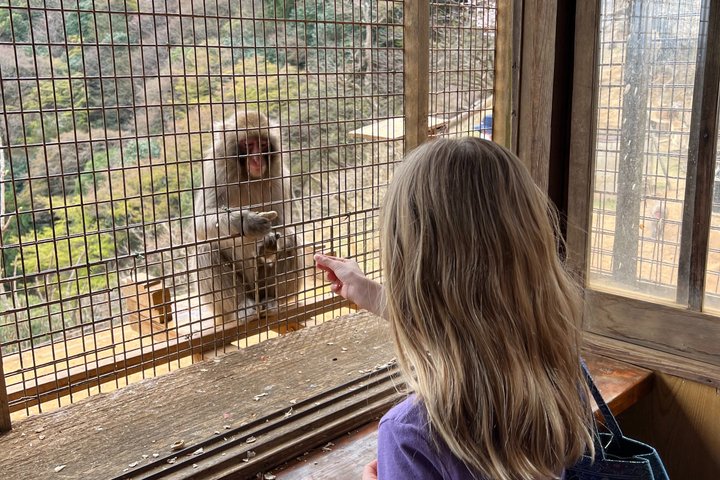
Walk back down to the Togetsukyo bridge. If your knees allow, cross it and climb for about twenty minutes to the Arashiyama Monkey Park Iwatayama, where wild macaques move across the hillside and the view east takes in the whole city. Keep food out of sight while you are up there; the monkeys notice.
Eat lunch in Arashiyama early. By the middle of the day the restaurants along the main street have queues, and yudofu, simmered tofu, is the local dish worth sitting down for, especially on a cool autumn day.
Afternoon: Kinkaku-ji in Low Light
From Arashiyama, take a taxi to Kinkaku-ji. The bus is slow and indirect, and this is the one indulgence on the itinerary we would insist on.
Kinkaku-ji is open from 9am to 5pm, and the path around the pond is narrow and runs one way. Arriving mid-afternoon, you share it with the tail end of the day’s groups. The compensation is the light. In the late afternoon the sun comes in low across the pond, and the gold leaf on the upper floors shifts from bright to a deep amber that the morning never shows. Allow about forty-five minutes.
Evening: Pontocho
Finish downtown in Pontocho, the narrow lane that runs between Kiyamachi and the Kamo river, lined with restaurants on both sides and lit by paper lanterns after dark. It is barely wide enough for two people to pass. The smaller counters fill early, so reserve both of your dinners before you arrive in Kyoto rather than on the day.
Expert Tip
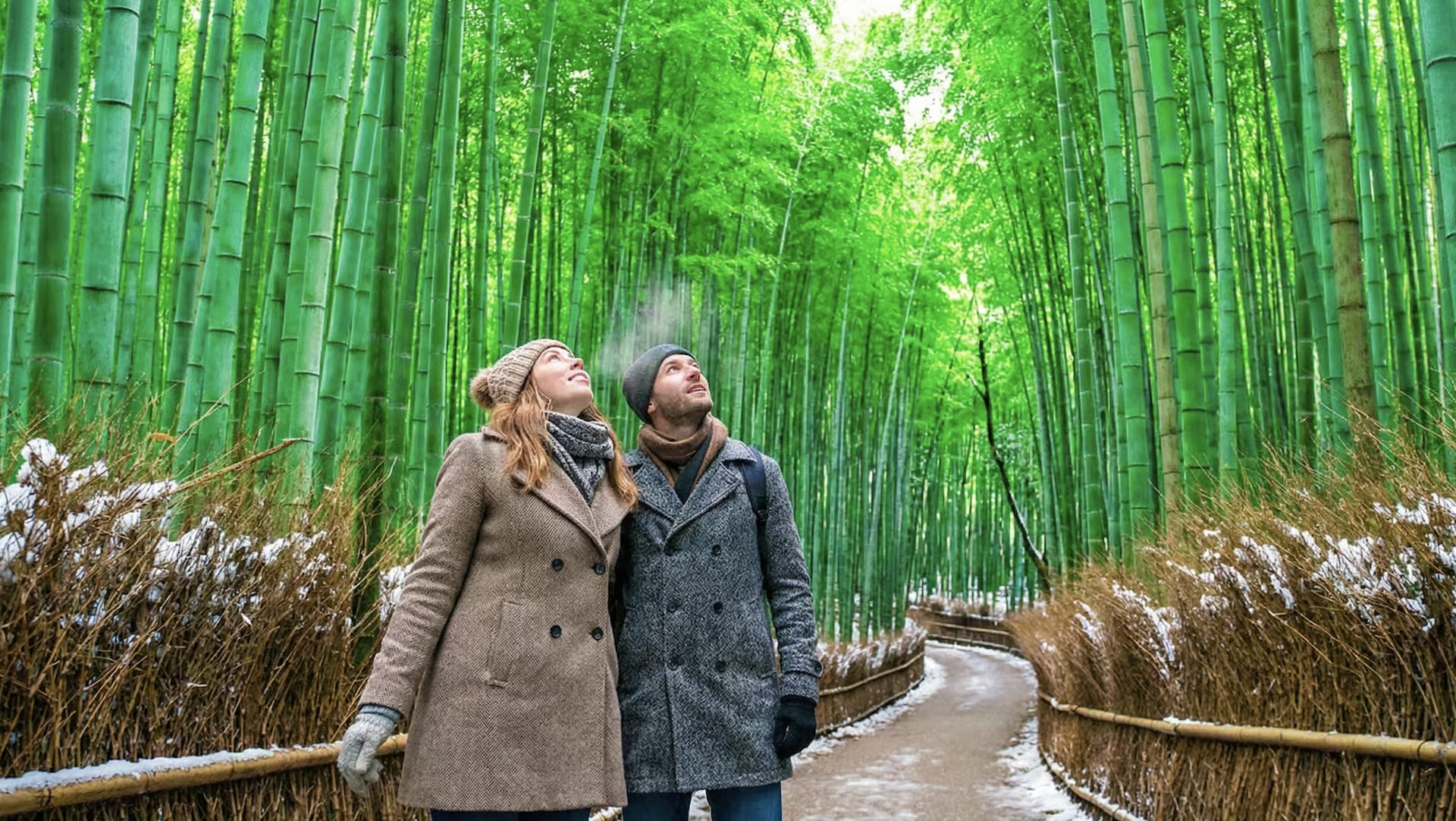
In the bamboo grove, look up rather than down the path. The photograph everyone takes runs straight along the walkway, and after eight it will have people in it. Framed upward, into the canopy where the stalks lean together and the light filters green, the grove is empty at any hour, and the creak of the stalks in the wind is what you will remember.
Adjusting Two Days in Kyoto for November
November is when most people plan this trip, and it is the month in which the plan above needs the most care.
When the Maples Actually Turn
Kyoto’s maples peak later than many visitors expect. In most years the central temples colour through the last two weeks of November, and in a warm year the peak slides into early December. Early November brings green with touches of red, mostly in the hills north of the city, rather than the full effect.
Timing moves with the weather each year, and the forecasts published in autumn are more reliable than any fixed date. Our guide to Japan’s autumn leaves covers regional timing and why so many travelers arrive a week too early.
Trading Mornings for Evening Illuminations
Several temples open after dark in autumn, with the maples lit from below. Kiyomizu-dera’s autumn night viewing runs from 21 to 30 November in 2026, with the temple open until 9:30pm (last entry 9pm). If your dates fall in that window, move Kiyomizu-dera from the first morning to the first evening, and use the dawn slot for Gion instead.
Gion at first light is a good trade. The Shirakawa canal, photographed with a crowd in frame for most of the day, is empty early. Our early morning walking tour is built around exactly that: Gion Shirakawa and Yasaka Shrine before anyone else is out, then Kinkaku-ji ahead of the coach parties. If you take it, swap Kinkaku-ji out of the second afternoon for something slower.
Fushimi Inari is the other evening option. The shrine is open around the clock, and after dark the lantern-lit gates are far quieter than at midday.
Where the Crowds Concentrate
In November, congestion follows the maples. Tofuku-ji, whose Tsutenkyo bridge looks down into a valley of red, is at its most crowded in peak week, and Eikando and Kiyomizu-dera are close behind. Arashiyama on a November weekend is as busy as Kyoto gets.
If you add one autumn temple to this plan, make it Tofuku-ji. It sits on the Keihan line between Gion and Fushimi Inari, so it slots into the first day on the way south without a detour. Beyond that, two changes help more than anything else: travel on weekdays if your dates allow, and move both days an hour earlier. The shape of the itinerary stays right. It just becomes less forgiving of late starts.
Kyoto Itinerary for 2 Days: Frequently Asked Questions
Is two days enough time in Kyoto?
For the city’s defining sights, yes. Two days covers Higashiyama, Fushimi Inari, Gion, Arashiyama and Kinkaku-ji without rushing, provided you start early both days. What two days will not give you is the slower Kyoto: the smaller temples in the north, a morning in Ohara, an hour in a single garden with nowhere else to be. A third day is where that begins, and if you can find one, we would add it before adding another city.
Should I add Nara to a two-day Kyoto itinerary?
We would not. Nara is an easy day trip from Kyoto, but on a two-day visit it costs you half of Kyoto to see a fraction of Nara. If Nara matters to you, extend the trip by a day and give it a full one. Otherwise, save it for a return visit to Kansai.
Is a private guide worth it for only two days?
On a short trip it is worth more, not less. Most of a guide’s value in Kyoto is timing: knowing which site to reach first, when to move on, and which route avoids a crowd. On two days there is no spare morning to lose to bad timing. A private day also re-plans itself as you go. If a garden holds you, you stay; if a temple does nothing for you, you leave.
Related Tours

Conclusion
Plan the clock before you plan the list. Kyoto rewards the traveler who is at Kiyomizu-dera at half past six and back at the hotel by three far more than the one who sees eight places between ten and five.
Before you go, do three things. Reserve both dinners, check whether your dates fall inside Kiyomizu-dera’s autumn night viewing, and buy breakfast the night before the first morning. Once the alarm goes off on day one, the rest of the itinerary largely takes care of itself.
Plan Your Japan Trip with Local Experts
Our team has guided 40,000+ travelers across Japan. Tell us about your trip and we’ll get back to you within 24 hours.