
In this article:
- Getting from Kyoto to Amanohashidate
- Two Viewpoints and a Sandbar
- Planning the Day
- Amanohashidate from Kyoto: Frequently Asked Questions
Introduction
Most travelers who plan a trip to Amanohashidate from Kyoto assume it is a short hop, because it sits inside the same prefecture. It is not. The sandbar lies on the Sea of Japan coast, about two hours north of the city by train or car, and the landscape on arrival has almost nothing in common with the temples and wooden townhouses you left behind that morning.
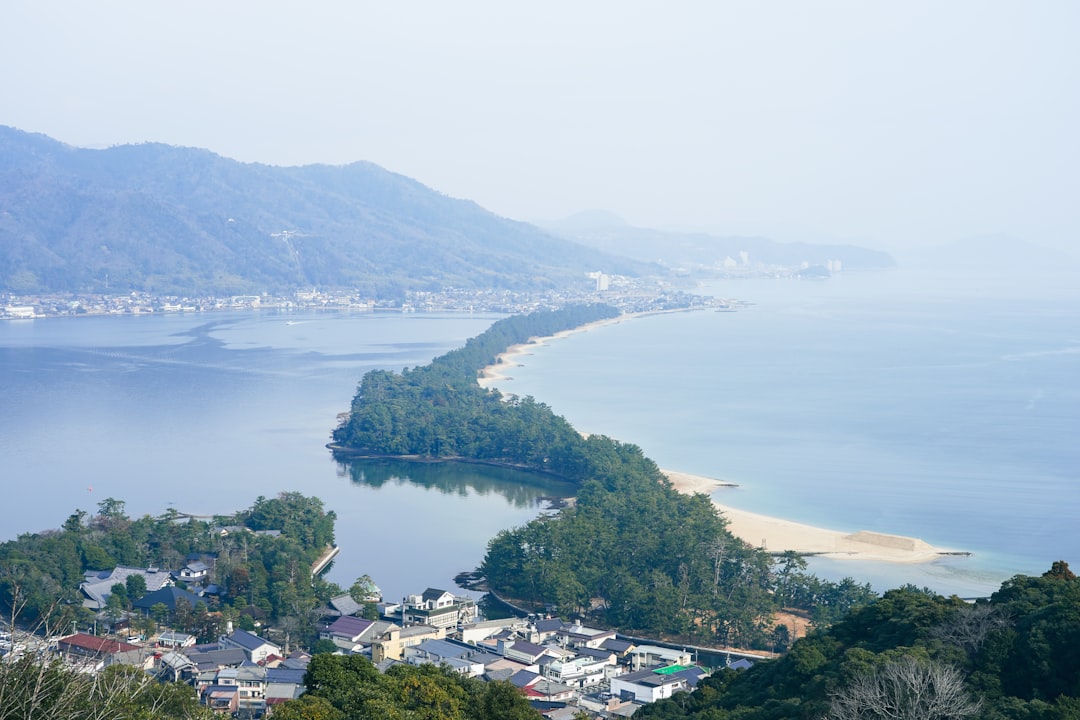
What you find is a long, straight line of pine trees running across a bay, with water on both sides. It has been counted among Japan’s three great views for centuries, alongside Matsushima and Miyajima. Yet on a weekday outside the holiday periods, the crowds are a fraction of what you would meet at Fushimi Inari before nine.
That combination is why we send travelers here. The distance filters out the rushed itineraries, and the people who make the effort tend to get a quieter, slower version of Japan than they expected. The rest of this guide covers how to get there, what to do once you arrive, and how to shape the day so the travel time does not swallow it.
Getting from Kyoto to Amanohashidate
There are four realistic ways to make the trip. The right one depends less on cost than on how much of the day you want to spend waiting for connections.
The Direct Hashidate Limited Express
The JR Hashidate limited express runs from Kyoto Station straight to Amanohashidate Station with no change of train. The ride takes a little over two hours, and seats must be reserved. A one-way ticket costs roughly ¥4,800 to ¥5,400 depending on the day.
This is the easiest option by a clear margin. That said, direct departures are limited, so the timetable decides your day rather than the other way round. Check the morning departure and the evening return before you commit to anything else, and book both seats when you buy the tickets.
The last hour of the ride is the part to stay awake for. After Fukuchiyama the train leaves the JR network, runs through narrow valleys and rice fields, and eventually reaches the coast.
Changing at Fukuchiyama, and the Rail Pass Question
If the direct train does not fit, take a JR limited express from Kyoto to Fukuchiyama and change there to a Kyoto Tango Railway train for Amanohashidate. Allow two and a half to three hours in total, depending on how the connection falls.
The pass question matters on both routes. The section between Fukuchiyama and Amanohashidate belongs to Kyoto Tango Railway, a private company. The nationwide Japan Rail Pass does not cover it, so pass holders pay a separate fare for that stretch, even when riding the through Hashidate train.
JR West’s regional passes are more generous. The Kansai Wide Area Pass, the Kansai Hokuriku Area Pass, and the Kansai Hiroshima Area Pass are valid on this part of Kyoto Tango Railway. If Amanohashidate is one of several trips out of Kyoto or Osaka, one of these regional passes is usually the better purchase. For Kyoto-to-Tokyo travel, our guide to riding the Shinkansen between Tokyo and Kyoto covers the long-distance side.
Highway Bus and Driving
Tango Kairiku Kotsu operates highway buses from Kyoto to the Amanohashidate area. The ride takes about two hours and costs less than the train. However, buses are more exposed to traffic on weekends and holidays, and the seats are less comfortable for a four-hour round trip.
By car, the route runs up the Kyoto Jukan Expressway to Miyazu-Amanohashidate Interchange, then a short drive to the sandbar. Allow around two hours each way from central Kyoto. Driving yourself is possible with an International Driving Permit, and our article on driving in Japan with a US license explains the paperwork.
In practice, the car is the option that changes the day most. With a car you are no longer tied to a train timetable, you can reach both ends of the sandbar without doubling back, and continuing up the coast to Ine becomes easy rather than a logistical puzzle.
Expert Tip
Bring cash. The cable car, the chairlift at View Land, the sightseeing boat, and many of the small restaurants around the station are far less card-friendly than central Kyoto. A few thousand yen per person in notes and coins covers the entrance fees and lunch without a detour to an ATM.
Two Viewpoints and a Sandbar
Amanohashidate is a place you look at from above and walk through at ground level. Both matter, and they are different experiences.
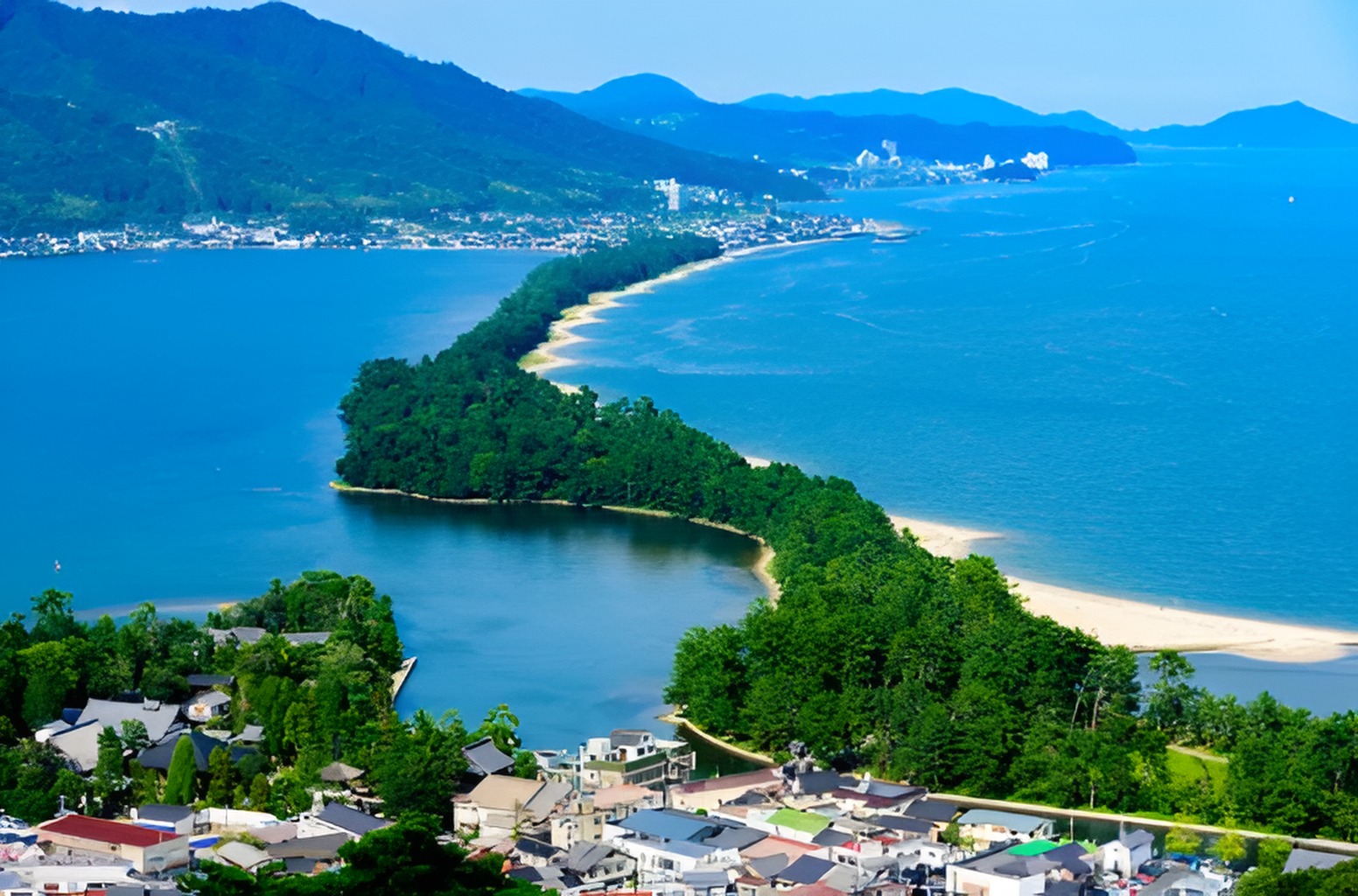
The sandbar itself is roughly 3.6 kilometers long and covered in thousands of pine trees. It connects the southern shore, near Amanohashidate Station, to the northern shore in the Fuchu area. Each end has its own hillside viewpoint, and most visitors only see one.
Kasamatsu Park and the Upside-Down View
Kasamatsu Park sits on the hill above the northern end. You reach it by cable car or by chairlift from the base station in Fuchu, and the adult round-trip fare is ¥800. From the top, the sandbar runs away from you diagonally across the bay toward the southern shore.
This is also where the tradition of matanozoki is strongest. You turn your back to the view, bend over, and look at the sandbar through your legs. Upside down, the line of pines appears to float between sea and sky, which is how Amanohashidate came to be called the bridge to heaven. It looks faintly ridiculous. Everyone does it anyway, and it works better than you would expect.
We suggest taking the enclosed cable car up and the open chairlift down. The chairlift faces the bay on the descent, and the view widens as you drop.
Amanohashidate View Land
View Land is the viewpoint on the southern side, close to Amanohashidate Station. A monorail and a single-seat chairlift carry you up, and the ¥1,000 adult ticket covers the round trip and park entry. The hilltop is part viewpoint, part small amusement park.
The view from here is more frontal. You look straight along the length of the sandbar toward the northern shore, and the pines read as a single dark line. Although it is the more popular choice for train travelers because of the short walk from the station, we think Kasamatsu is the calmer place to spend time. If you only have the energy for one, choose the side that fits your route rather than trying to decide which view is better.
Walking, Cycling, or Crossing by Boat
The path along the sandbar runs through the pines for its full length. Walking it end to end takes under an hour at an easy pace, with sand underfoot and the sound of the bay on both sides. Rental bicycles are available near the station, and cycling cuts the time considerably.
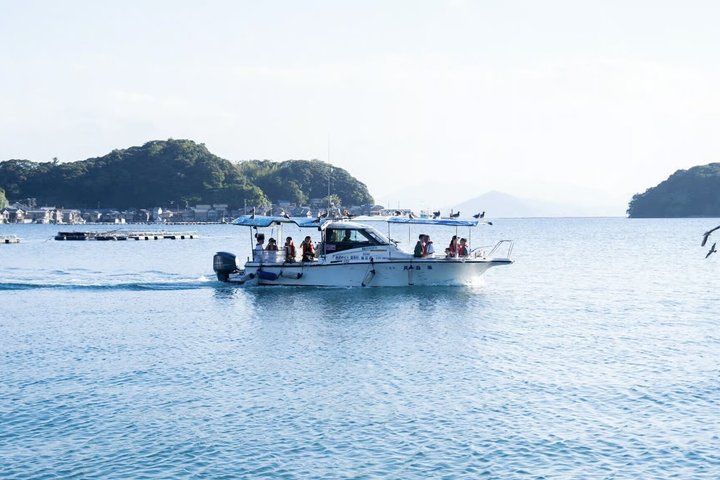
The sightseeing boat is the third option, and the one we recommend for at least one direction. It runs between the southern side near the station and the Ichinomiya pier on the northern side in about 12 minutes, and an adult one-way ticket is ¥800. Seagulls follow the boat most of the way. Walk one direction and take the boat back, and you see the sandbar from inside and from the water in the same afternoon.
At the southern end, two sights are worth your time. Chionji, the temple beside the station, has a small pagoda that the Japan National Tourism Organization dates to around 500 years old. Next to it, the Kaisenkyo bridge swings open to let boats through the narrow channel, which is a strange and satisfying thing to watch while you wait to cross.
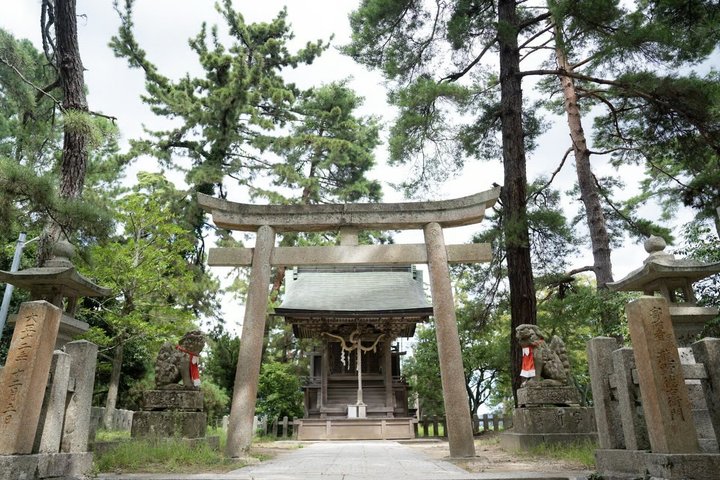
At the northern end, Motoise Kono Shrine stands near the cable car station. It is a quiet, old shrine with a restrained wooden architecture, and it is easy to combine with the climb to Kasamatsu Park.
Planning the Day
The main mistake people make is underestimating the travel time. Four hours of the day go to getting there and back, and the rest has to fit around that.
How Much Time You Actually Need
For Amanohashidate on its own, four to five hours on the ground is comfortable. That covers one viewpoint, a walk along the sandbar, the boat back, a visit to Chionji, and an unhurried lunch.
By train, that means leaving Kyoto in the morning and returning in the early evening. Seeing both viewpoints is possible, although it turns the day into a sequence of transfers. Our advice is to choose one viewpoint, walk the sandbar, and spend the saved hour sitting by the water.
With a private car, the shape of the day changes. You can start at one end and finish at the other without doubling back, and the driver collects you wherever you end up. That flexibility is what makes the longer version of the day possible.
Adding Ine
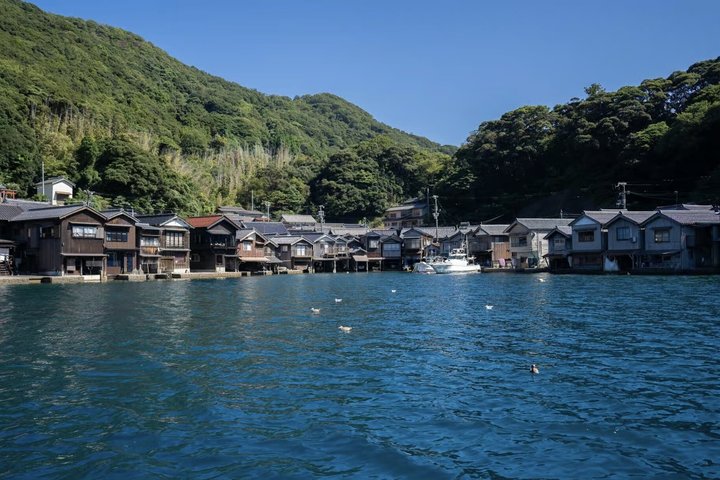
Ine is a fishing village further up the coast, about half an hour north of the sandbar by road. Its funaya boathouses sit directly on the water, with a garage for the boat at sea level and living quarters above. The bay is calm enough that they could be built this way, and nowhere else in Japan looks quite like it.
Combining Amanohashidate and Ine in a single day from Kyoto is where public transport starts to struggle. Local buses connect the two, but you are working around a rural timetable, and a missed bus can end the plan. By car, the two fit together naturally.
This is the day our private tour from Kyoto is built around. Your guide picks you up at the hotel, the sandbar and viewpoints come first, and the afternoon goes to Ine and a short boat trip around the boathouses from the harbor. For travelers already thinking about slower parts of the country, our guide to Japan’s countryside and how to reach it covers similar trips.
Seasons and Weather on the Coast
The coast is cooler and windier than Kyoto in every season. Even in summer, bring a light layer for the viewpoints and the boat, where the wind comes off the bay without anything to break it.
Spring and autumn are the easiest months. The light is soft, and the temperatures suit a long walk on sand in a way the humid weeks of midsummer do not.
Winter is colder and the sea turns rough, but it has its own case. Visitor numbers fall, the pines against a grey sea have a severe beauty, and the crab season is one reason local people make the drive north. If you come between December and February, check the forecast for snow on the expressway and the train line before you set out.
Expert Tip
Do matanozoki on the way up, not as an afterthought before the descent. The light on the bay changes quickly on the coast, and a cloud bank coming in off the Sea of Japan can flatten the view within half an hour. Look first, photograph second, and leave the gift shop for last.
Amanohashidate from Kyoto: Frequently Asked Questions
Is Amanohashidate worth a day trip from Kyoto?
Yes, if you have at least four nights in Kyoto and have already seen the central temples. It is a long day, but it shows a coastal, rural side of Kyoto Prefecture that most visitors never see. On a shorter stay, we would prioritize Arashiyama or Nara instead.
Does the Japan Rail Pass cover the train to Amanohashidate?
Only partly. The nationwide Japan Rail Pass covers the JR section to Fukuchiyama but not the Kyoto Tango Railway section beyond it, so pass holders pay an extra fare for that stretch. JR West’s Kansai Wide Area Pass, Kansai Hokuriku Area Pass, and Kansai Hiroshima Area Pass are valid on that section.
Can I see Amanohashidate and Ine in one day?
Yes, but it is far easier by car than by public transport. By train and local bus, the connections leave little margin, and you will spend much of the afternoon waiting. With a car, you can see the sandbar in the morning, reach Ine by early afternoon, and be back in Kyoto for dinner.
Related Tours
Conclusion
Decide how you are getting there before you decide anything else. Everything else about a day at Amanohashidate, including which viewpoint you use, whether Ine is realistic, and how long you can linger, follows from the choice between the direct train, a change at Fukuchiyama, and a car.
If you go by train, book the direct Hashidate seats in both directions first, pick the viewpoint on the side where you arrive, and take the boat for one leg of the sandbar. If you go by car, start early, see the sandbar in the morning light, and let the afternoon run up the coast. In either case, pack a layer and some cash. The coast rewards people who arrive ready for it.
Plan Your Japan Trip with Local Experts
Our team has guided 40,000+ travelers across Japan. Tell us about your trip and we’ll get back to you within 24 hours.




