In this article:
- What the Chureito Pagoda Actually Is
- Getting There From Tokyo
- When to Go: Seasons, Light, and Cloud
- Crowds, Rules, and the Town Below
- Chureito Pagoda: Frequently Asked Questions
Introduction
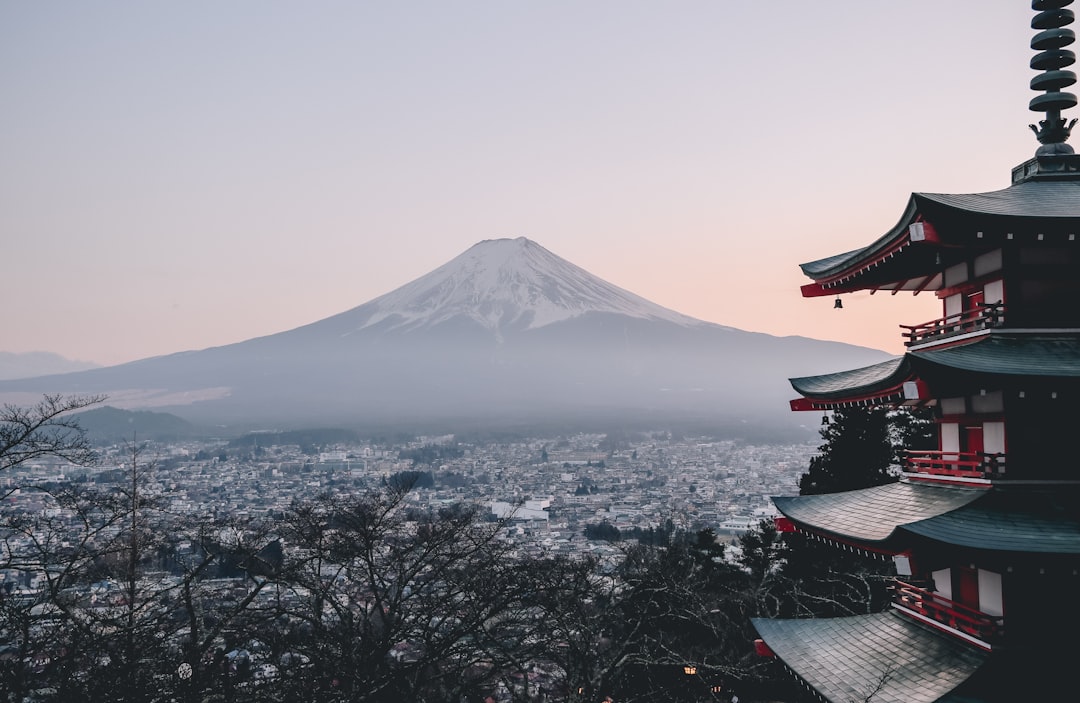
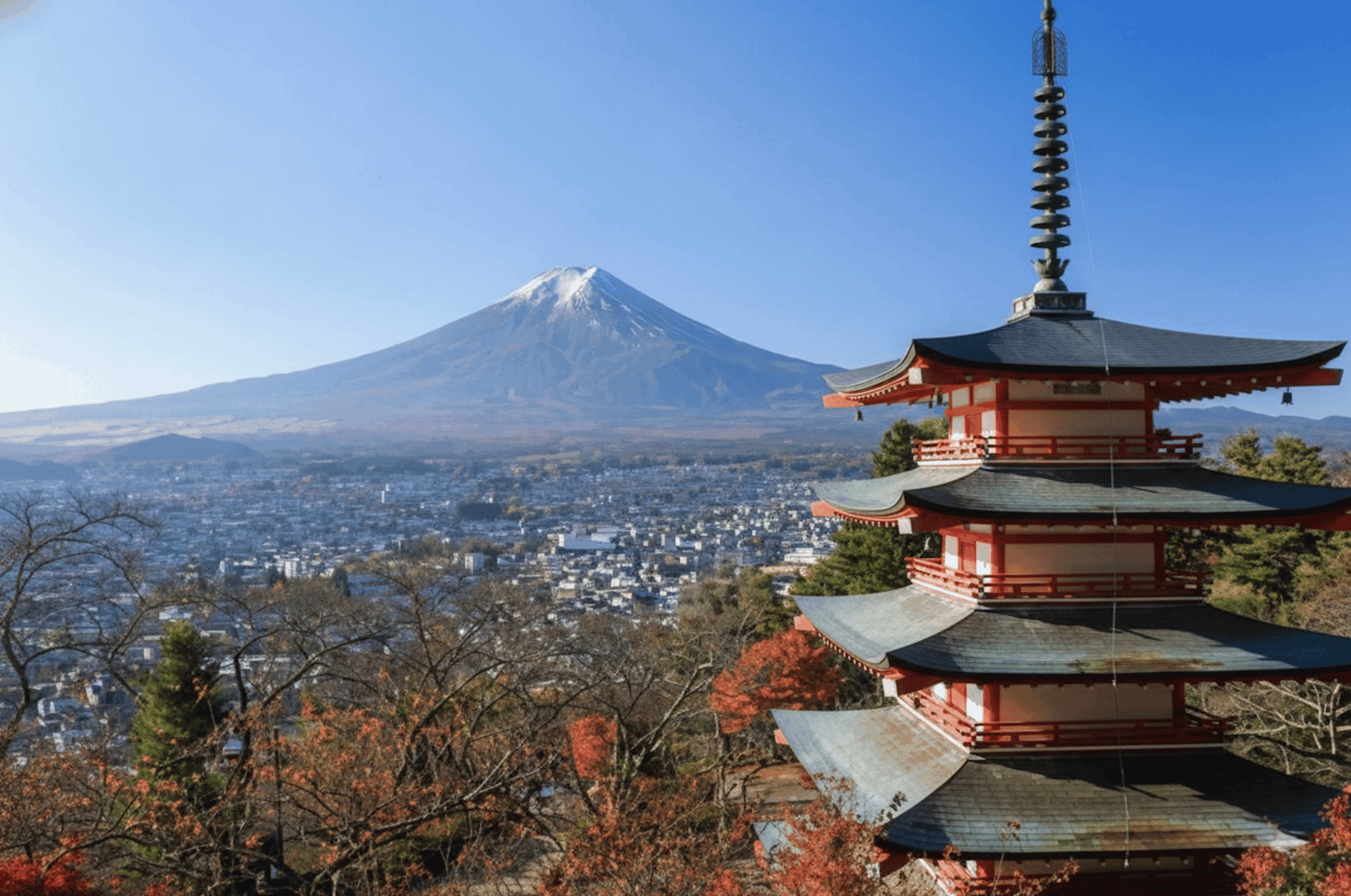
Most people know the Chureito Pagoda before they know its name. The red five-storey pagoda on a forested slope, Mount Fuji rising behind it, a town spread across the valley in between — the image turns up on rail posters, guidebook covers, and a very large share of the phone wallpapers we see on tours.
The real thing is less effortless than the photograph. It sits on a hillside above Fujiyoshida, a working town at the foot of the mountain, and the viewpoint is at the top of a long stone staircase. Fuji itself is hidden behind cloud on a great many days. Get the timing wrong and you climb 398 steps to look at a pagoda in front of a grey sky.
Get it right, though, and it earns its reputation. On a clear winter morning, with the summit sharp against the blue and the deck still quiet, it is one of the quieter pleasures of a Fuji day. What follows is how to give yourself the best odds of that version.
What the Chureito Pagoda Actually Is
The pagoda looks old. It is not.
A Peace Memorial, Not an Ancient Temple
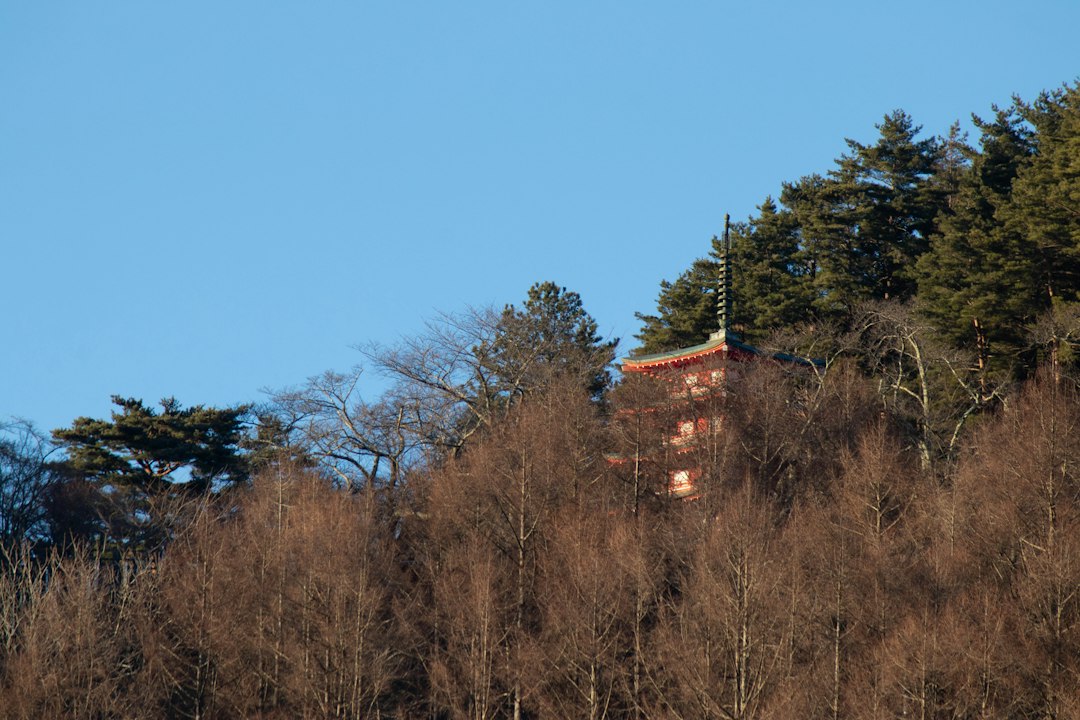
The Chureito was built in the early 1960s as a memorial to people from Fujiyoshida who died in wars from the late nineteenth century through the Second World War. The name itself refers to the loyal war dead. Its form borrows from Buddhist pagoda architecture, but it is a memorial rather than a temple, and there is no interior to visit.
That history changes how the place feels once you know it. The crowd on the deck is there for Fuji; the structure they are photographing is, in effect, a monument to a town’s losses. We think it is worth a moment of quiet before the camera comes out.
Arakurayama Sengen Park and the Shrine Below
The pagoda stands inside Arakurayama Sengen Park, on the slope of Mount Arakura. At the foot of the hill is Arakura Fuji Sengen Shrine, one of the many Sengen shrines around the mountain dedicated to the deity of Fuji. You pass through its grounds on the way up.
Most visitors walk straight past the shrine. That is a small mistake. The approach is shaded by tall cedars, and in the early morning it is often the calmest part of the whole visit. The park also holds several hundred cherry trees, which is why the hillside turns pink in April and why that month is so crowded.
Getting There From Tokyo
Fujiyoshida is roughly 100 kilometres west of central Tokyo, and there are three sensible ways to cover that distance. The right one depends mostly on how early you want to be on the deck.
By Train: Otsuki, the Fujikyu Line, and Shimoyoshida Station
The nearest station is Shimoyoshida, on the Fujikyu Railway. From Shinjuku, the standard route is the JR Chuo Line to Otsuki, then a change to the Fujikyu line for Shimoyoshida. Allow around two hours including the connection.
The more comfortable option is the Fuji Excursion, a limited express that runs directly from Shinjuku onto the Fujikyu line and stops at Shimoyoshida. All seats are reserved, and in busy periods they sell out, so book ahead. A Japan Rail Pass covers only the JR section as far as Otsuki; the Fujikyu portion is paid separately.
From Shimoyoshida Station it is about ten minutes on foot to the shrine at the base of the hill. If you are staying at Lake Kawaguchi, Shimoyoshida is a short hop down the same Fujikyu line, which makes a dawn visit far easier than from Tokyo. Our Lake Kawaguchiko travel guide covers where to base yourself.
By Highway Bus or Organized Day Tour
Highway buses from Shinjuku run to the Fuji Five Lakes area and are often cheaper than the train, though traffic on the Chuo Expressway can stretch the journey badly at weekends. We compare the options in detail in our guide to getting from Tokyo to Mt Fuji.
For many travelers a day tour is the more realistic answer. The Chureito is one stop among several in the area, and the connections between them by public transport are slow. Our coach tour leaves from the LOVE sculpture in Nishi-Shinjuku at 8:30 and pairs the pagoda with the lakeshore at Kawaguchi and the spring-fed ponds of Oshino Hakkai, so the logistics are handled for you.
The trade-off is timing. A coach from Tokyo reaches the pagoda in the middle of the day, when the light is flatter and the deck is busier. That is fine for most people. If the photograph matters more than anything else, a private van leaving earlier, or a night at the lake, changes the picture considerably.
The 398 Steps, and the Slope Path Around Them
The main route to the viewpoint is a stone staircase of 398 steps from the shrine to the observation deck. It is steep in places and uneven in others. A reasonably fit adult takes ten to fifteen minutes with a couple of pauses.
Visitor accounts also describe a paved path beside the staircase that zigzags up the hill at a gentler gradient, taking a few minutes longer. It spares the knees on the way down in particular. Confirm the route on the signboards at the shrine, since paths are sometimes closed or redirected during busy periods.
On our coach tour, the guide explains honestly what the climb involves before anyone starts, and travelers who would rather not attempt it wait at the bottom. There is no shame in that. The shrine grounds are pleasant, and the pagoda is visible from below even if the famous angle is not.
Expert Tip
The observation deck looks southwest toward Fuji, so the mountain is backlit for much of the afternoon and tends to appear hazy and pale in photographs. Morning light falls on the face of the mountain and the front of the pagoda at the same time. If you can only choose one variable, choose the hour rather than the season.
When to Go: Seasons, Light, and Cloud
Fuji is shy. No one can promise you a clear view on a given day, and in summer the odds are poor. Planning around that fact is the single most useful thing you can do.
Cherry Blossom Season and the Cancelled Festival
The cherry trees on the slope usually reach full bloom in early to mid-April, although the exact dates move with each year’s weather. Blossom, pagoda, and a snow-capped Fuji in one frame is the composition everyone is chasing, and for a week or two it draws enormous crowds.
In February 2026, Fujiyoshida cancelled its annual cherry blossom festival at the park, citing traffic jams, litter, and trespassing on residents’ property. The park itself stayed open and the trees bloomed as usual; what disappeared were the stalls, shuttle buses, and promotion. Local officials still warned of very long waits for the deck during peak bloom. We would not plan a first visit around the blossom unless you are prepared to arrive before sunrise. For other spring options, see our guide to visiting Japan in April.
Autumn Leaves and Winter Clarity
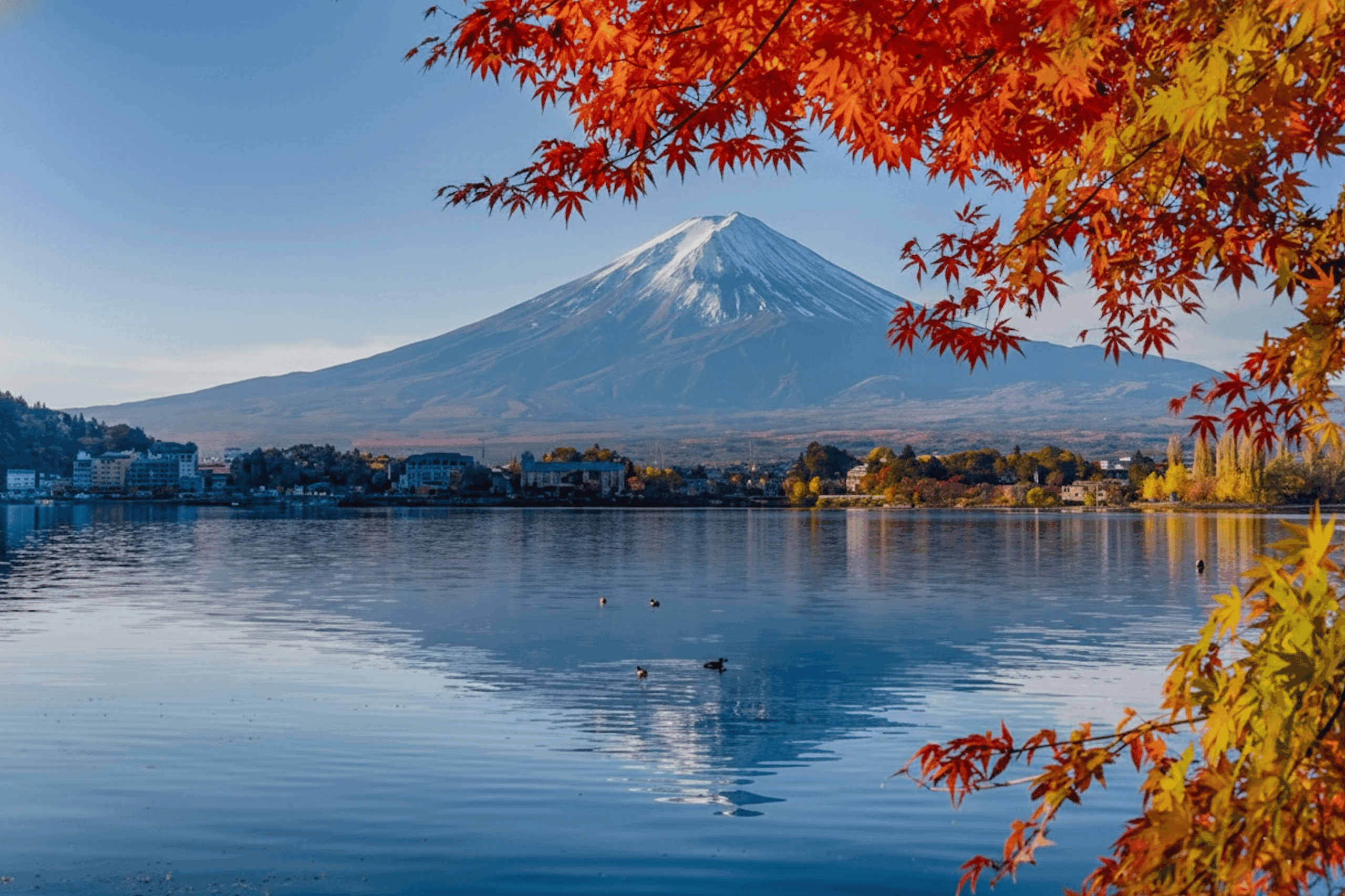
Autumn colour on the hillside generally peaks in the first half of November, with maples turning red around the pagoda. It is a gentler season than spring, and the mountain has usually picked up its first snow by then.
Winter is our quiet recommendation. From December to February the air is cold and dry, the summit is fully white, and clear mornings are far more frequent than at any other time of year. The trees are bare, which removes the colour, yet the view of Fuji is at its sharpest. Dress for it: the deck is exposed, and an hour before sunrise it is cold.
Summer is the hardest season. Humidity and afternoon cloud hide the mountain on a large share of days from June to August, and the summit is mostly bare of snow. If summer is when you can travel, go anyway, but treat the view as a bonus.
Early Morning Is the Real Secret
The park is open at all hours and entry is free, which means dawn is available to anyone who can get there. Cloud tends to build around Fuji as the day warms, so the first two hours after sunrise give the best odds in every season.
In practice, that means staying overnight at Lake Kawaguchi or in Fujiyoshida itself. By mid-morning the tour groups arrive and the deck fills. Before seven on a winter weekday, it can be close to empty.
Crowds, Rules, and the Town Below
Fujiyoshida has become a case study in what happens when one photograph goes viral. The town did not ask for it, and residents have been open about the strain.
Why Fujiyoshida Pushed Back
The pagoda’s fame grew quickly through social media over the last decade, and the neighbourhood below the hill was never designed for the traffic. Narrow residential lanes filled with cars and tour coaches. Visitors walked into private gardens and onto property looking for new angles. Litter and a shortage of toilets made things worse.
The festival cancellation was the city’s clearest signal yet. It was not a rejection of visitors; it was a statement that the current volume could not continue unmanaged. Even without the festival, the city arranged security staff to manage crowds during the 2026 blossom season.
We think travelers should know this before they go. It changes nothing about whether to visit. It changes how.
Honcho Street and Photographing Responsibly
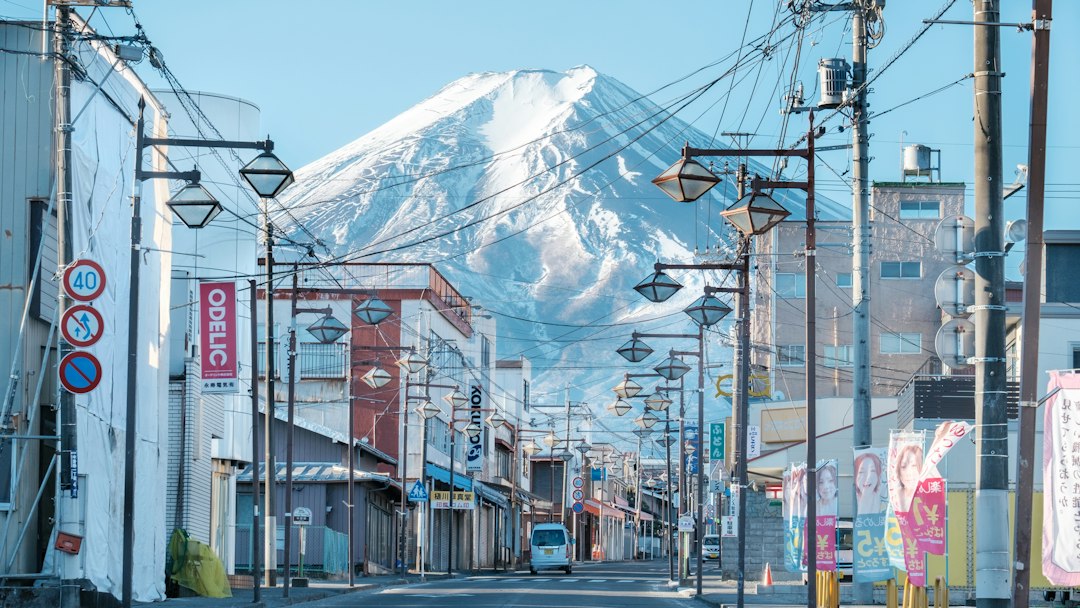
A short walk from Shimoyoshida is Honcho Street, the old shopping street where Fuji appears to rise directly out of the end of the road. It is the second famous photograph in Fujiyoshida, and it has its own problem: people stepping into live traffic to take it. Crossing guards are stationed at the main intersection. Follow their instructions and stay on the pavement.
The broader rules are the ones residents have asked for most often. Stay on public paths and never enter private land for a shot. Take your rubbish with you, since public bins are scarce. Use the toilets at the park and the station rather than assuming there will be more along the way. None of this is complicated, and it is what keeps the place open to everyone.
Expert Tip
Cloud around Fuji is often uneven. The mountain can be clear from one lake and hidden from another an hour later. On a private day, we check the sky first thing and reorder the stops so the pagoda comes when the view is open, rather than at a fixed time. On a train trip, the same logic applies: if Fuji is out when you wake up, go to the pagoda first and leave everything else for later.
Chureito Pagoda: Frequently Asked Questions
Is there an entrance fee for the Chureito Pagoda?
No. Arakurayama Sengen Park and the observation deck are free and open at all hours. Your costs are transport, and parking if you drive. Bring some cash for the shrine and for small purchases in town.
How long do I need at the Chureito Pagoda?
Allow around an hour on an ordinary day: ten minutes from the station, fifteen for the climb, and time on the deck and at the shrine. In peak cherry blossom season, add a long wait for the deck on top of that. If you are combining it with Lake Kawaguchi and Oshino Hakkai, a full day is the realistic minimum.
Can I visit the Chureito Pagoda on a day trip from Tokyo?
Yes, comfortably. The train takes around two hours each way, and most day tours to Fuji include the pagoda. The limitation of a day trip is that you arrive after the clearest morning hours. If a clear view of the mountain is the priority, stay one night near the lake and go at dawn.
Related Tours

Conclusion
The Chureito Pagoda rewards the traveler who plans around the mountain rather than around the calendar. The steps, the crowds, and the train connections are all manageable. The cloud is the variable you cannot control, and the only real lever you have is the hour you arrive.
If you can, spend one night at Lake Kawaguchi and be at the foot of the staircase before sunrise. Check the forecast the evening before, dress for a cold deck, and leave the famous angle to itself for a few minutes while you look at the town below. It is the view the photographs leave out, and it tells you more about the place than the pagoda does.
Plan Your Japan Trip with Local Experts
Our team has guided 40,000+ travelers across Japan. Tell us about your trip and we’ll get back to you within 24 hours.